Integrity & Character
Character is destiny
Who we are when no one is watching: the alignment of word, conscience, and action.
20th century, France
Existential Feminism
There is only one good. And that is to act according to the dictates of one's conscience.

20th century, Britain
Analytic Philosophy & Humanism
How much good it would do if one could exterminate the human race.

18th century, Prussia
Enlightenment Deontology
The death of dogma is the birth of morality.

5th century BCE, China
Classical Chinese Strategy
The enlightened ruler is heedful, and the good general full of caution.

1st century BCE, Rome
Roman Republican Humanism
Honesta enim bonis viris, non occulta quaeruntur.

4th–5th century CE, North Africa
Patristic Theology
The confession of evil works is the first beginning of good works.

17th century, France
Jansenist Philosophy & Mathematics
Nature, which alone is good, is wholly familiar and common.

2nd century CE, Rome
Roman Stoicism
What is not good for the swarm is not good for the bee.
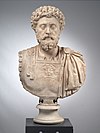
1st century CE, Rome
Roman Stoicism
Seneca's virtue shows forth so live and vigorous in his writings, and the defense is so clear there against some of these imputations, as that of his wealth and excessive spending, that I would not believe any testimony to the contrary.
1st century CE, Hierapolis
Greek Stoicism
If you would be a good reader, read; if a writer, write.

5th century BCE, Athens
Classical Greek Philosophy
The being of all virtues, and chiefly of temperance, depends on the practice of them.
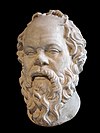
4th century BCE, Athens
Platonic Academy
Then we may begin by assuming that there are three classes of men—lovers of wisdom, lovers of honor, lovers of gain?

4th century BCE, Stagira
Peripatetic Philosophy
While both are dear, Piety requires us to honor truth above our friends.
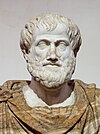
5th century BCE, China
Confucianism
Honesty and trust are promoted, and good neighborliness cultivated.

6th century BCE, China
Classical Taoism
A leader is best when people barely know he exists; Not so good when people obey and acclaim him; worst when they despise him; but a good leader who talks little when his work is done, his aim fulfilled, they will say "We did it our selves!
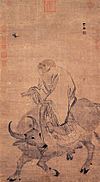
4th century BCE, China
Classical Taoism
The sage finds his place as a quail settles. ... If the whole world has the Tao, he is part of that well-being. When the whole world has lost the Tao, he develops virtue and avoids involvement.

5th century BCE, India
Buddhism
Blessing! Neither fire, nor moisture, nor wind can destroy the blessing of good deeds, and blessings enlighten the whole world.

13th century, Persia/Anatolia
Sufi Mysticism
The cure for pain is in the pain.Good and bad are mixed. If you don't have both,you don't belong with us.

19th century, Germany
Continental & Existential Philosophy
Morality is herd instinct in the individual.

19th century, Denmark
Christian Existentialism
If the ethical – that is, social morality – is the highest ... then no categories are needed other than the Greek philosophical categories.

19th century, Germany
German Idealism & Pessimism
David Strauss, reflecting on civilization's true measure, argues that a nation's treatment of animals reveals its moral standing, praising Schopenhauer's empathy.

17th century, Netherlands
Continental Rationalism
The dominant feature in his character was his devotion to the pursuit of truth

18th century, France
European Enlightenment
All styles are good except the tiresome kind.

19th century, Russia
Russian Literature & Christian Ethics
Honest work is much better than a mansion.

16th–17th century, England
English Renaissance Drama
There is nothing either good or bad, but thinking makes it so.

19th century, Ireland
Aestheticism & Wit
Good kings are the enemies of democracy.

Explore All 30 Cross-Civilizational Wisdom Pillars
Compare how humanity's greatest philosophers, poets, and sages across millennia addressed the foundational questions of human existence.
Resilience
Impermanence
Compassion
Self-Knowledge
Courage
Love & Devotion
Mortality & Legacy
Time & Presence
Solitude & Stillness
Truth & Honesty
Freedom & Autonomy
Purpose & Meaning
Gratitude & Contentment
Forgiveness & Mercy
Humility & Openness
Discipline & Mastery
Suffering & Transformation
Friendship & Community
Justice & Moral Duty
Hope & Perseverance
Creativity & Art
Leadership & Service
Nature & The Cosmos
Doubt & Inquiry
Ambition & Excellence
Patience & Timing
Happiness & Flourishing
Change & Renewal
Mindfulness & Awareness