Purpose & Meaning
He who has a why to live can bear almost any how
Human flourishing depends not on passive comfort, but on dedicating one's finite energies to a calling, responsibility, or ideal larger than oneself.
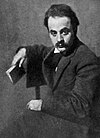
20th century, Lebanon/USA
Levantine Poetic Mysticism
Half of what I say is meaningless, but I say it so that the other half may reach you.
20th century, Germany/USA
Political Philosophy
If a given science accidentally reached its goal, this would by no means stop the workers in the field, who would be driven past their goal by the sheer momentum of the illusion of unlimited progress.

20th century, France
Existential Feminism
Defending the truth is not something one does out of a sense of duty or to allay guilt complexes, but is a reward in itself.

19th century, India
Vedanta Philosophy
Arise, awake and Stop not till the Goal is Reached.

1st century BCE, Rome
Roman Republican Humanism
The first duty of a man is the seeking after and the investigation of truth.

4th–5th century CE, North Africa
Patristic Theology
The confession of evil works is the first beginning of good works.

17th century, France
Jansenist Philosophy & Mathematics
Pascal scornfully said that simple workmen had been able to convince of error those great men that are called 'philosophers'. It was, then, these unlearned men... who were most ready to believe 'what they saw with their eyes and touched with their hands'.

1st century CE, Hierapolis
Greek Stoicism
The essence of the good is a certain kind of moral purpose, and that of the evil is a certain kind of moral purpose.

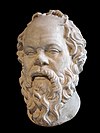
5th century BCE, Athens
Classical Greek Philosophy
And so, from this day forth, we want all the more to let our thoughts revolve around and hover over Socrates and Christ at all times, openly taking pride that they are more alive for us than all those living today and that we listen to and love them as we do none of the living.
4th century BCE, Athens
Platonic Academy
The beginning in every task is the chief thing. • variant: The beginning is the most important part of any work. (Jowett translation)

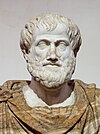
4th century BCE, Stagira
Peripatetic Philosophy
For the purposes of poetry a convincing impossibility is preferable to an unconvincing possibility.
5th century BCE, China
Confucianism
Choose a job you love, and you will never have to work a day in your life.

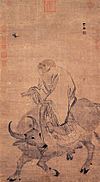
6th century BCE, China
Classical Taoism
A leader is best when people barely know he exists; Not so good when people obey and acclaim him; worst when they despise him; but a good leader who talks little when his work is done, his aim fulfilled, they will say "We did it our selves!
13th century, Persia/Anatolia
Sufi Mysticism
Observe the wonders as they occur around you. Don't claim them. Feel the artistry moving through, and be silent.

20th century, Algeria/France
Existentialism & Absurdism
You will never be happy if you continue to search for what happiness consists of. You will never live if you are looking for the meaning of life.

19th century, Denmark
Christian Existentialism
If the genius is an artist, then he accomplishes his work as art, but neither he nor his work of art has a telos outside him.

19th century, Germany
German Idealism & Pessimism
How every line is of such strong, determined, and consistent meaning! And on every page, we encounter deep, original, hefty thoughts, while the whole is suffused with a high and holy seriousness.

17th century, Netherlands
Continental Rationalism
...nature has no particular goal in view, and final causes are mere human figments. ...everything in nature proceeds from a sort of necessity, and with the utmost perfection.

16th century, France
Renaissance Humanism
Besides, what renown can be compared with his? Nothing lives like his fame and his works on the lips of men... Homer provides a noble farce in which over the centuries Kings, Republics and Emperors all play their parts and for which this great universe serves as the theatre.

18th century, France
European Enlightenment
Aime la vérité, mais pardonne à l'erreur.

19th century, Russia
Russian Literature & Christian Ethics
Honest work is much better than a mansion.

16th–17th century, England
English Renaissance Drama
The meaning of life is to find your gift. The purpose of life is to give it away.

19th century, Ireland
Aestheticism & Wit
The one duty we owe to history is to rewrite it.

19th century, United States
American Realism & Satire
Man was made at the end of the week's work, when God was tired.

19th century, United States
American Transcendentalism
The purpose of life is not to be happy. It is to be useful, to be honorable, to be compassionate, to have it make some difference that you have lived and lived well.

19th century, United States
American Transcendentalism
What you get by achieving your goals is not as important as what you become by achieving your goals.

Explore All 30 Cross-Civilizational Wisdom Pillars
Compare how humanity's greatest philosophers, poets, and sages across millennia addressed the foundational questions of human existence.
Resilience
Impermanence
Compassion
Self-Knowledge
Courage
Love & Devotion
Mortality & Legacy
Time & Presence
Solitude & Stillness
Truth & Honesty
Freedom & Autonomy
Gratitude & Contentment
Forgiveness & Mercy
Humility & Openness
Discipline & Mastery
Suffering & Transformation
Friendship & Community
Justice & Moral Duty
Hope & Perseverance
Creativity & Art
Leadership & Service
Nature & The Cosmos
Doubt & Inquiry
Ambition & Excellence
Patience & Timing
Integrity & Character
Happiness & Flourishing
Change & Renewal
Mindfulness & Awareness