Link Copied!
Sun Tzu Quotes (0-)
Philosopher, Author, King
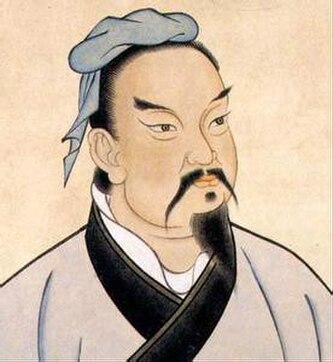




About Sun Tzu
Sun Tzu (孫子 Sūn Zǐ; c. 6th century BC) was a Chinese general, military strategist, and philosopher who lived in the Eastern Zhou period of ancient China. Sun Tzu is traditionally credited as the author of The Art of War, a widely influential work of military strategy that has affected both Western and East Asian philosophy and military thinking. He is also known as Sun Wu (孫武; Sūn Wǔ), and Chang Qing (長卿; Cháng Qīng).
Best Sun Tzu Quotes
Shortest
Earliest
Explore our curated collection of the most famous and impactful Sun Tzu quotes.
“卑則驕之
• Pretend inferiority and encourage his arrogance.”
• Pretend inferiority and encourage his arrogance.”

“圍師必闕
• To a surrounded enemy, you must leave a way of escape.”
• To a surrounded enemy, you must leave a way of escape.”
“怒而撓之
• If your opponent is of choleric temperament, seek to irritate him.”
• If your opponent is of choleric temperament, seek to irritate him.”

“上兵伐謀
• What is of supreme importance in war is to attack the enemy's strategy.”
• What is of supreme importance in war is to attack the enemy's strategy.”

“守則不足,攻則有餘
• One defends when his strength is inadequate; he attacks when it is abundant.”
• One defends when his strength is inadequate; he attacks when it is abundant.”
“故兵貴勝,不貴久。
• What is essential in war is victory, not prolonged operations.”
• What is essential in war is victory, not prolonged operations.”
“是故上攻伐謀
• Thus, what is of supreme importance in war is to attack the enemy's strategy.”
• Thus, what is of supreme importance in war is to attack the enemy's strategy.”
“知可戰與不可戰者勝。
• He who knows when he can fight and when he cannot will be victorious.”
• He who knows when he can fight and when he cannot will be victorious.”

“兵久而國利者,未之有也。
• There is no instance of a nation benefiting from prolonged warfare.”
• There is no instance of a nation benefiting from prolonged warfare.”
“以虞待不虞者勝。
• He who is prudent and lies in wait for an enemy who is not, will be victorious.”
• He who is prudent and lies in wait for an enemy who is not, will be victorious.”

“見勝不過衆人之所識,非善之善者也。
• To see victory only when it is within the ken of the common herd is not the acme of excellence.”
• To see victory only when it is within the ken of the common herd is not the acme of excellence.”
“此兵之要,三軍之所恃而動也。
• Secret operations are essential in war; upon them the army relies to make its every move.”
• Secret operations are essential in war; upon them the army relies to make its every move.”
“''孫子曰:凡治衆如治寡,分數是也;
• Management of many is the same as management of few. It is a matter of organization.”
• Management of many is the same as management of few. It is a matter of organization.”

“''故善戰者,求之於勢,不責於人,故能擇人而任勢。
• A skilled commander seeks victory from the situation and does not demand it of his subordinates.”
• A skilled commander seeks victory from the situation and does not demand it of his subordinates.”
“不遇敵者,必戰無不勝,但每次交鋒,終必敗北。
• A man who never faces any enemies shall be invincible in battle, but will ultimately succumb to defeat in every confrontation.”
• A man who never faces any enemies shall be invincible in battle, but will ultimately succumb to defeat in every confrontation.”
“數賞者,窘也;數罰者,困也;
• Too frequent rewards indicate that the general is at the end of his resources; too frequent punishments that he is in acute distress.”
• Too frequent rewards indicate that the general is at the end of his resources; too frequent punishments that he is in acute distress.”
“''激水之疾,至於漂石者,勢也;鷙鳥之疾,至於毀折者,節也。
• When torrential water tosses boulders, it is because of its momentum. When the strike of a hawk breaks the body of its prey, it is because of timing.”
• When torrential water tosses boulders, it is because of its momentum. When the strike of a hawk breaks the body of its prey, it is because of timing.”
“兵之情主速,乘敵所不及,由不虞之途,攻其所不備也。
• Speed is the essence of war. Take advantage of the enemy's unpreparedness; travel by unexpected routes and strike him where he has taken no precautions.”
• Speed is the essence of war. Take advantage of the enemy's unpreparedness; travel by unexpected routes and strike him where he has taken no precautions.”
“吾士無余財,非惡貨也。無余命,非惡壽也。
• If our soldiers are not overburdened with money, it is not because they have a distaste for riches; if their lives are not unduly long, it is not because they are disinclined to longevity.”
• If our soldiers are not overburdened with money, it is not because they have a distaste for riches; if their lives are not unduly long, it is not because they are disinclined to longevity.”
“故明君賢將,所以動而勝人,成功出於衆者,先知也。
• Now the reason the enlightened prince and the wise general conquer the enemy whenever they move and their achievements surpass those of ordinary men is foreknowledge.”
• Now the reason the enlightened prince and the wise general conquer the enemy whenever they move and their achievements surpass those of ordinary men is foreknowledge.”
“夫未戰而廟算勝者,得算多也;未戰而廟算不勝者,得算少也。
• The general who wins the battle makes many calculations in his temple before the battle is fought. The general who loses makes but few calculations beforehand.”
• The general who wins the battle makes many calculations in his temple before the battle is fought. The general who loses makes but few calculations beforehand.”
“故形兵之極,至於無形,無形,則深間不能窺,上智不能謀。
• The ultimate in disposing one's troops is to be without ascertainable shape. Then the most penetrating spies cannot pry in nor can the wise lay plans against you.”
• The ultimate in disposing one's troops is to be without ascertainable shape. Then the most penetrating spies cannot pry in nor can the wise lay plans against you.”
“微乎微乎,至於無形;神乎神乎,至於無聲;故能為敵之司命。
• Be extremely subtle, even to the point of formlessness. Be extremely mysterious, even to the point of soundlessness. Thereby you can be the director of the opponent's fate.”
• Be extremely subtle, even to the point of formlessness. Be extremely mysterious, even to the point of soundlessness. Thereby you can be the director of the opponent's fate.”

“將弱不嚴,敎道不明,將之過也。
• If words of command are not clear and distinct, if orders are not thoroughly understood, the general is to blame. But if his orders are clear, and the soldiers nevertheless disobey, then it is the fault of their officers.”
• If words of command are not clear and distinct, if orders are not thoroughly understood, the general is to blame. But if his orders are clear, and the soldiers nevertheless disobey, then it is the fault of their officers.”
“敵間之來間我者,因而利之,導而捨之,故反間可得而用也;
• It is essential to seek out enemy agents who have come to conduct espionage against you and to bribe them to serve you. Give them instructions and care for them. Thus doubled agents are recruited and used.”
• It is essential to seek out enemy agents who have come to conduct espionage against you and to bribe them to serve you. Give them instructions and care for them. Thus doubled agents are recruited and used.”
“兵者,國之大事,死生之地,存亡之道,不可不察也。
• The art of war is of vital importance to the State. It is a matter of life and death, a road either to safety or to ruin. Hence it is a subject of inquiry which can on no account be neglected.”
• The art of war is of vital importance to the State. It is a matter of life and death, a road either to safety or to ruin. Hence it is a subject of inquiry which can on no account be neglected.”
“故用兵之法,無恃其不來,恃吾有以待之;無恃其不攻,恃吾有所不可攻也。
• The art of war teaches us to rely not on the likelihood of the enemy's not coming, but on our own readiness to receive him; not on the chance of his not attacking, but rather on the fact that we have made our position unassailable.”
• The art of war teaches us to rely not on the likelihood of the enemy's not coming, but on our own readiness to receive him; not on the chance of his not attacking, but rather on the fact that we have made our position unassailable.”

“Water shapes its course according to the nature of the ground over which it flows; the soldier works out his victory in relation to the foe whom he is facing. Therefore, just as water retains no constant shape, so in warfare there are no constant conditions. He who can modify his tactics in relation to his opponent and thereby succeed in winning, may be called a heaven-born captain.”

“兵者,詭道也。故能而示之不能,用而示之不用,近而示之遠,遠而示之近,
• All warfare is based on deception. Hence, when we are able to attack, we must seem unable; when using our forces, we must appear inactive; when we are near, we must make the enemy believe we are far away; when far away, we must make him believe we are near.”
• All warfare is based on deception. Hence, when we are able to attack, we must seem unable; when using our forces, we must appear inactive; when we are near, we must make the enemy believe we are far away; when far away, we must make him believe we are near.”
“故其疾如風,其徐如林,侵掠如火,不動如山,難知如陰,動如雷霆。
• Fūrinkazan: 故に其の疾きこと風の如く、其の徐かなること林の如く、侵掠すること火の如く、動かざること山の如く、知りがたきこと陰の如く、動くこと雷霆の如し。”
• Fūrinkazan: 故に其の疾きこと風の如く、其の徐かなること林の如く、侵掠すること火の如く、動かざること山の如く、知りがたきこと陰の如く、動くこと雷霆の如し。”
“凡用兵之法,全國爲上;破國次之;全軍爲上,破軍次之;全旅爲上,破旅次之;全卒爲上,破卒次之;全伍爲上,破伍次之。
• In the practical art of war, the best thing of all is to take the enemy's country whole and intact; to shatter and destroy it is not so good. So, too, it is better to recapture an army entire than to destroy it, to capture a regiment, a detachment or a company entire than to destroy them.”
• In the practical art of war, the best thing of all is to take the enemy's country whole and intact; to shatter and destroy it is not so good. So, too, it is better to recapture an army entire than to destroy it, to capture a regiment, a detachment or a company entire than to destroy them.”
“實而備之,強而避之,怒而撓之,卑而驕之,佚而勞之,親而離之,出其不意,攻其不備。
• If your enemy is secure at all points, be prepared for him. If he is in superior strength, evade him. If your opponent is temperamental, seek to irritate him. Pretend to be weak, that he may grow arrogant. If he is taking his ease, give him no rest. If his forces are united, separate them. Attack him where he is unprepared, appear where you are not expected.”
• If your enemy is secure at all points, be prepared for him. If he is in superior strength, evade him. If your opponent is temperamental, seek to irritate him. Pretend to be weak, that he may grow arrogant. If he is taking his ease, give him no rest. If his forces are united, separate them. Attack him where he is unprepared, appear where you are not expected.”
“昔之善戰者,先爲不可勝,以待敵之可勝,不可勝在己,可勝在敵。故善戰者,能爲不可勝,不能使敵必可勝。故曰:勝可知,而不可爲。
• The good fighters of old first put themselves beyond the possibility of defeat, and then waited for an opportunity of defeating the enemy. To secure ourselves against defeat lies in our own hands, but the opportunity of defeating the enemy is provided by the enemy himself. Thus the good fighter is able to secure himself against defeat, but cannot make certain of defeating the enemy.”
• The good fighters of old first put themselves beyond the possibility of defeat, and then waited for an opportunity of defeating the enemy. To secure ourselves against defeat lies in our own hands, but the opportunity of defeating the enemy is provided by the enemy himself. Thus the good fighter is able to secure himself against defeat, but cannot make certain of defeating the enemy.”
“知彼知己,百戰不殆;不知彼而知己,一勝一負;不知彼,不知己,每戰必殆
• It is said that if you know your enemies and know yourself, you will not be imperiled in a hundred battles; if you do not know your enemies but do know yourself, you will win one and lose one; if you do not know your enemies nor yourself, you will be imperiled in every single battle.
• Literal translation: Know [the] other, know [the] self, hundred battles without danger; not knowing [the] other but know [the] self, one win one loss; not knowing [the] other, not knowing [the] self, every battle must [be] lost.”
• It is said that if you know your enemies and know yourself, you will not be imperiled in a hundred battles; if you do not know your enemies but do know yourself, you will win one and lose one; if you do not know your enemies nor yourself, you will be imperiled in every single battle.
• Literal translation: Know [the] other, know [the] self, hundred battles without danger; not knowing [the] other but know [the] self, one win one loss; not knowing [the] other, not knowing [the] self, every battle must [be] lost.”

“非利不動,非得不用,非危不戰。主不可以怒而興師,將不可以慍而致戰;合于利而動,不合于利而止。怒可以復喜,慍可以復悅,亡國不可以復存,死者不可以復生。故明君慎之,良將警之,此安國全軍之道也。
• Move not unless you see an advantage; use not your troops unless there is something to be gained; fight not unless the position is critical. No ruler should put troops into the field merely to gratify his own spleen; no general should fight a battle simply out of pique. If it is to your advantage, make a forward move; if not, stay where you are. Anger may in time change to gladness; vexation may be succeeded by content. But a kingdom that has once been destroyed can never come again into being; nor can the dead ever be brought back to life. Hence the enlightened ruler is heedful, and the good general full of caution. This is the way to keep a country at peace and an army intact.”
• Move not unless you see an advantage; use not your troops unless there is something to be gained; fight not unless the position is critical. No ruler should put troops into the field merely to gratify his own spleen; no general should fight a battle simply out of pique. If it is to your advantage, make a forward move; if not, stay where you are. Anger may in time change to gladness; vexation may be succeeded by content. But a kingdom that has once been destroyed can never come again into being; nor can the dead ever be brought back to life. Hence the enlightened ruler is heedful, and the good general full of caution. This is the way to keep a country at peace and an army intact.”
Sun Tzu Quotes by Topic
Find exactly what you are looking for by browsing this categorized list of Sun Tzu quotes by topic.
Sun Tzu on War 3 quotes
View all 3 quotes on War →Sun Tzu on Victory 2 quotes
“Victorious warriors win first and then go to war, while defeated warriors go to war first and then seek to win.”

Sun Tzu on Deception
Sun Tzu on Caution
“The enlightened ruler is heedful, and the good general full of caution.”
Quotes About Sun Tzu
Gain deeper perspective through quotes about Sun Tzu from others.
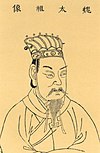
Cao Cao on Sun Tzu
“Sun Tzu’s success teaches us that a successful general is one who fully calculates his approach and plans to fight in a battle. However, the average reader is not able to identify Sun Tzu’s teachings on a deeper or philosophical level. This is my reason for writing and exegeses on the Art of War.”
Maxine Hong Kingston on Sun Tzu
“It seems to me that The Art of War codifies the principles of kung fu, the martial arts: to co-operate with the enemy, to prevent all-out war when possible. I remember reading a lot of pages devoted to fighting with fire, and burning down cities. Devotion to tactics rather than ethics. I have a figurine of Gwan Goong, god of war and literature, reading a book. That book is The Art of War.”

Margaret MacMillan on Sun Tzu 2 quotes
“By contrast, classical China produced many great generals, fought many wars and conquered many peoples but did not elevate military values above civilian. (It helped, perhaps, that the scholars rather than the military wrote the histories.) Fighting was not held up as something admirable but rather as the result of a breakdown in order and propriety. There is no equivalent of the Iliad in Chinese literature and the heroes held up for the young to emulate were the great bureaucrats and wise rulers who maintained the peace. Early on Chinese thinkers such as Confucius and the great strategist Sunzi (also known in the transliteration Sun Tzu) stressed that the state’s authority rested on its virtue as well as on its ability to use force. And for Sunzi, the greatest general was the one who could win a war, through manoeuvre or trickery, without fighting a battle. Prestige in Chinese society came rather from being a scholar, poet or painter; and from the Tang dynasty onwards the examination system to enter the imperial civil service was the favoured path for fame and prestige. Successful generals were sometimes awarded a scholar’s rank and gown as a mark of particular favour where many European societies would have given military decorations to meritorious civilians.”

John Minford on Sun Tzu
“The one thing missing from The Art of War is love, ... any sense of altruism, any sense of loving your neighbor. It's just a[bout] how to take advantage of your neighbor, how to triumph over your neighbor, how to manipulate your neighbor. I'm sorry... It's a very nasty book. How to use your spies — that chapter thirteen on spies — is chilling. The whole book — of course it's very clever, and of course a lot of it is very true, and of course we can go through life treating people in that way if you want to, but I don't happen to believe that's the best way to go. ... The Lúnyǔ [Analects of Confucius] is a superior book to Sūnzi bīngfǎ [The Art of War] because the Lúnyǔ talks about morality, talks about caring for your fellow human being; after all, the whole idea of ren ... doesn't come in Sūnzi bīngfǎ at all. Sūnzi bīngfǎ is: how to use your friends and neighbors in order to get the better of them. That doesn't make me feel good. I'm an old-fashioned kind of guy, and I believe in being nice to people whenever I can. ... You don't go out of your way like Sun Tzu to manipulate everybody including your friends. For me, Sūnzi bīngfǎ is the dark side of Chinese culture. It's the dark side. And, I know it's there. And there's a dark side to Western culture too. And, therefore, it's important to be aware of it, but not to be corrupted by it. Not to be polluted by it. Because it is a very powerfully-polluting little book. Very nasty little book. Let's not pretend otherwise.”

Disputed Quotes
Quotes attributed to Sun Tzu that are questionable.
“Engage people with what they expect; it is what they are able to discern and confirms their projections. It settles them into predictable patterns of response, occupying their minds while you wait for the extraordinary moment — that which they cannot anticipate.”
Misattributed Quotes
Quotes mistakenly credited to Sun Tzu
“Opportunities multiply as they are seized.”
About Sun Tzu
Sun Tzu (孫子 Sūn Zǐ; c. 6th century BC) was a Chinese general, military strategist, and philosopher who lived in the Eastern Zhou period of ancient China. Sun Tzu is traditionally credited as the author of The Art of War, a widely influential work of military strategy that has affected both Western and East Asian philosophy and military thinking. He is also known as Sun Wu (孫武; Sūn Wǔ), and Chang Qing (長卿; Cháng Qīng).