Nature & The Cosmos
Look deep into nature, and then you will understand everything better
Contemplating the living earth and the vast cosmos restores human proportion, reverence, and ecological responsibility.
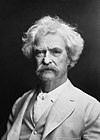
19th century, United States
American Realism & Satire
Nature knows no indecencies; man invents them.
19th century, United States
American Transcendentalism
Wilt thou seal up the avenues of ill? Pay every debt as if God wrote the bill!

19th century, United States
American Transcendentalism
This world is but canvas to our imaginations.

20th century, India
Ahimsa & Satyagraha
The man who does not do yajna can win nothing in this world.

20th century, South Africa
Ubuntu & Liberation Ethics
Coloured communities would like to see coloured representatives. That is not racism, that is how nature works.

20th century, United States
Modern Literature & Civil Rights
The desire to reach for the stars is ambitious. The desire to reach hearts is wise.

20th century, Germany/USA
Scientific Humanism
Joy in looking and comprehending is nature's most beautiful gift.

20th century, United States
Cosmic Humanism & Skepticism
When you make the finding yourself--even if you're the last person on Earth to see the light--you never forget it.

20th century, Austria
Logotherapy & Existential Psychology
There is nothing in the world, I venture to say, that would so effectively help one to survive even the worst conditions, as the knowledge that there is a meaning in one’s life.

19th–20th century, Bengal
Bengali Renaissance & Humanism
We read the world wrong and say that it deceives us.

20th century, Lebanon/USA
Levantine Poetic Mysticism
There must be something strangely sacred about salt. It is in our tears and in the sea

20th century, Germany/USA
Political Philosophy
I've begun so late, really only in recent years, to truly love the world ... Out of gratitude, I want to call my book on political theories Amor Mundi.

20th century, Britain
Analytic Philosophy & Humanism
I should say that the universe is just there, and that is all.

18th century, Prussia
Enlightenment Deontology
Is it reasonable to assume a purposiveness in all the parts of nature and to deny it to the whole?

19th century, India
Vedanta Philosophy
Let us not depend upon the world for pleasure.

1st century BCE, Rome
Roman Republican Humanism
As all the ages of the world have not produced a greater statesman and philosopher united in the same character, his authority should have great weight.

4th–5th century CE, North Africa
Patristic Theology
On Ps 60:3: “To Thee have I cried from the ends of the earth.

17th century, France
Jansenist Philosophy & Mathematics
Nature, which alone is good, is wholly familiar and common.

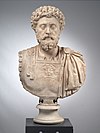
2nd century CE, Rome
Roman Stoicism
Death, like generation, is a secret of Nature.
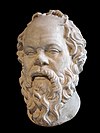
5th century BCE, Athens
Classical Greek Philosophy
I am not an Athenian or a Greek, but a citizen of the world.
4th century BCE, Athens
Platonic Academy
While [Thales] was studying the stars and looking upwards, he fell into a pit, and a neat, witty Thracian servant girl jeered at him, they say, because he was so eager to know the things in the sky that he could not see what was there before him at his very feet.

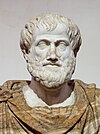
4th century BCE, Stagira
Peripatetic Philosophy
Nature flies from the infinite, for the infinite is unending or imperfect, and Nature ever seeks an end.
5th century BCE, China
Confucianism
Men do not stumble over mountains, but over molehills

6th century BCE, China
Classical Taoism
The Tao is called the Great Mother: empty yet inexhaustible, it gives birth to infinite worlds.
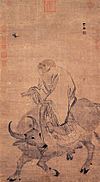
4th century BCE, China
Classical Taoism
Those who seek to satisfy the mind of man by hampering it with ceremonies and music and affecting charity and devotion have lost their original nature.

5th century BCE, India
Buddhism
If he goes forth from the household life into homelessness, then he will become an Arahant, a fully-enlightened Buddha, one who draws back the veil from the world.

Explore All 30 Cross-Civilizational Wisdom Pillars
Compare how humanity's greatest philosophers, poets, and sages across millennia addressed the foundational questions of human existence.
Resilience
Impermanence
Compassion
Self-Knowledge
Courage
Love & Devotion
Mortality & Legacy
Time & Presence
Solitude & Stillness
Truth & Honesty
Freedom & Autonomy
Purpose & Meaning
Gratitude & Contentment
Forgiveness & Mercy
Humility & Openness
Discipline & Mastery
Suffering & Transformation
Friendship & Community
Justice & Moral Duty
Hope & Perseverance
Creativity & Art
Leadership & Service
Doubt & Inquiry
Ambition & Excellence
Patience & Timing
Integrity & Character
Happiness & Flourishing
Change & Renewal
Mindfulness & Awareness