Forgiveness & Mercy
Releasing the weight of resentment
Forgiveness is not the erasure of justice, but the refusal to let past injury poison the present spirit.
5th century BCE, China
Classical Chinese Strategy
圍師必闕 • To a surrounded enemy, you must leave a way of escape.

4th–5th century CE, North Africa
Patristic Theology
The insidious tricks of the enemy may disturb you, but the humility and humanity of Christ should console you. This man emphasizes how high above you Christ has been lifted up; Christ, though, says how low he came down to you.

2nd century CE, Rome
Roman Stoicism
The best revenge is not to be like your enemy.
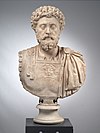
1st century CE, Hierapolis
Greek Stoicism
The anger of an ape—the threat of a flatterer:—these deserve equal regard.

4th century BCE, Athens
Platonic Academy
The wisdom which knows what are and are not dangers is opposed to the ignorance of them

4th century BCE, Stagira
Peripatetic Philosophy
And these riches, that are derived from this art of wealth-getting, are truly unlimited; for just as the art of medicine is without limit in respect to health, and each of the arts is without limit in respect of its end...
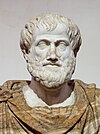
5th century BCE, China
Confucianism
攻乎異端,斯害也己。 • To throw oneself into strange teachings is quite dangerous.

5th century BCE, India
Buddhism
Health is the greatest gift, contentment is the greatest wealth, a trusted friend is the best relative, Nibbana is the greatest bliss.

13th century, Persia/Anatolia
Sufi Mysticism
If you wish mercy, show mercy to the weak.

19th century, Germany
Continental & Existential Philosophy
Pardon me, my friends, I have ventured to paint my happiness on the wall.

20th century, Algeria/France
Existentialism & Absurdism
A punishment that penalizes without forestalling is indeed called revenge.

17th century, Netherlands
Continental Rationalism
Hatred is increased by being reciprocated, and can on the other hand be destroyed by love.

16th century, France
Renaissance Humanism
In his campaigns I find more restraint and reflection than in those of Alexander, who seems to go looking for dangers and charging at them like a rushing torrent which indiscriminately batters and unselectively attacks anything it meets.

18th century, France
European Enlightenment
Aime la vérité, mais pardonne à l'erreur.

16th–17th century, England
English Renaissance Drama
As testy sick men when their deaths be near, No news but health from their physicians know.

19th century, Ireland
Aestheticism & Wit
An idea that is not dangerous is unworthy of being called an idea at all.

19th century, United States
American Realism & Satire
When you want to get revenge on a woman you don't kill her—bosh! you go for her looks. You slit her nostrils—you notch her ears like a sow!

19th century, United States
American Transcendentalism
As soon as there is life there is danger.

19th century, United States
American Transcendentalism
Love is a severe critic. Hate can pardon more than love.

20th century, India
Ahimsa & Satyagraha
Conversion in the sense of self-purification, self-realization, is the crying need of the hour. That, however, is not what is meant by proselytising. To those who would convert India, might it not be said, ‘physician heal thyself’?

20th century, South Africa
Ubuntu & Liberation Ethics
I have always believed that exercise is the key not only to physical health but to peace of mind.

20th century, United States
Modern Literature & Civil Rights
In remembering Maya Angelou, it is important to recall her commitment to the struggle for equality, not just for herself, or for women, or for African Americans. She was committed to peace and justice for all.

19th–20th century, Bengal
Bengali Renaissance & Humanism
I feel assured in my mind that your personality will help to soothe the injured souls and bring peace and unity into an atmosphere of mistrust and chaos.

20th century, Lebanon/USA
Levantine Poetic Mysticism
My enemy said to me, "Love your enemy." And I obeyed him and loved myself.

20th century, Germany/USA
Political Philosophy
Forgiveness is the key to action and freedom.

20th century, France
Existential Feminism
After wars peace, after peace, another war. Every day men are born and others die.

Explore All 30 Cross-Civilizational Wisdom Pillars
Compare how humanity's greatest philosophers, poets, and sages across millennia addressed the foundational questions of human existence.
Resilience
Impermanence
Compassion
Self-Knowledge
Courage
Love & Devotion
Mortality & Legacy
Time & Presence
Solitude & Stillness
Truth & Honesty
Freedom & Autonomy
Purpose & Meaning
Gratitude & Contentment
Humility & Openness
Discipline & Mastery
Suffering & Transformation
Friendship & Community
Justice & Moral Duty
Hope & Perseverance
Creativity & Art
Leadership & Service
Nature & The Cosmos
Doubt & Inquiry
Ambition & Excellence
Patience & Timing
Integrity & Character
Happiness & Flourishing
Change & Renewal
Mindfulness & Awareness