Link Copied!
Laozi Quotes (-600--500)
Philosopher, Leader

-100px.png)


About Laozi
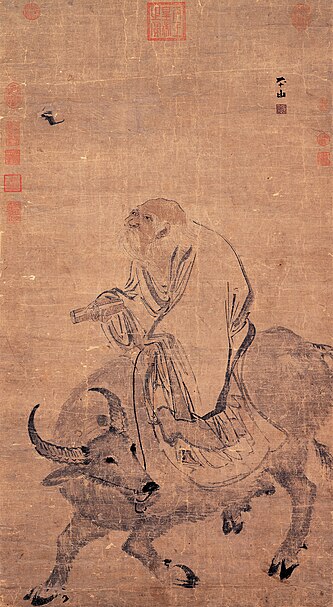
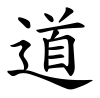
老子 Lǎozi (c. 6th – 5th century BC) was a Chinese monist philosopher; also called Lao Zi, Lao Tzu, Lao Tse, or Lao Tze. The Tao Te Ching (道德經, Pinyin: Dào Dé Jīng, or Dao De Jing) represents the sole document generally attributed to Laozi.
Best Laozi Quotes
Shortest
Earliest
Explore our curated collection of the most famous and impactful Laozi quotes.
“The Tao is called the Great Mother:
empty yet inexhaustible,
it gives birth to infinite worlds.”
empty yet inexhaustible,
it gives birth to infinite worlds.”

“People are difficult to be ruled,
Because the ruler governs with personal desire and establishes too many laws to confuse the people.”
Because the ruler governs with personal desire and establishes too many laws to confuse the people.”
“The Tao is like a bellows:
it is empty yet infinitely capable.
The more you use it, the more it produces;
the more you talk of it, the less you understand.”
it is empty yet infinitely capable.
The more you use it, the more it produces;
the more you talk of it, the less you understand.”
“The Tao is like a well:
used but never used up.
It is like the eternal void:
filled with infinite possibilities.
used but never used up.
It is like the eternal void:
filled with infinite possibilities.
It is hidden but always present.
I don't know who gave birth to it.
It is older than God.”
“The universe is deathless; Is deathless because, having no finite self, it stays infinite. A sound man by not advancing himself stays the further ahead of himself, By not confining himself to himself sustains himself outside himself: By never being an end in himself he endlessly becomes himself.”
“Scholars of the highest class, when they hear about the Tao, take it and practice it earnestly.
Scholars of the middle class, when they hear of it, take it half earnestly.
Scholars of the lowest class, when they hear of it, laugh at it.
Without the laughter, there would be no Tao.”
Scholars of the middle class, when they hear of it, take it half earnestly.
Scholars of the lowest class, when they hear of it, laugh at it.
Without the laughter, there would be no Tao.”
“A leader is best when people barely know that he exists, not so good when people obey and acclaim him, worst when they despise him. Fail to honor people, They fail to honor you. But of a good leader, who talks little, when his work is done, his aims fulfilled, they will all say, "We did this ourselves."”
“Wise men don't need to prove their point;
men who need to prove their point aren't wise.
The Master has no possessions.
The more he does for others, the happier he is.
The more he gives to others, the wealthier he is.
The Tao nourishes by not forcing.
By not dominating, the Master leads.”
men who need to prove their point aren't wise.
The Master has no possessions.
The more he does for others, the happier he is.
The more he gives to others, the wealthier he is.
The Tao nourishes by not forcing.
By not dominating, the Master leads.”
“The more prohibitions that are imposed on people,
The poorer the people become.
The more laws and regulations that exist,
The more thieves and brigands appear.
The more laws and order are made prominent,
the more thieves and robbers there will be.
• Variant translation: The more prohibitions there are, the poorer the people will be.”
The poorer the people become.
The more laws and regulations that exist,
The more thieves and brigands appear.
The more laws and order are made prominent,
the more thieves and robbers there will be.
• Variant translation: The more prohibitions there are, the poorer the people will be.”
“There is a thing inherent and natural,
Which existed before heaven and earth.
Motionless and fathomless,
It stands alone and never changes;
It pervades everywhere and never becomes exhausted.
It may be regarded as the Mother of the Universe.
I do not know its name. If I am forced to give it a name, I call it Tao, and I name it as supreme.”
Which existed before heaven and earth.
Motionless and fathomless,
It stands alone and never changes;
It pervades everywhere and never becomes exhausted.
It may be regarded as the Mother of the Universe.
I do not know its name. If I am forced to give it a name, I call it Tao, and I name it as supreme.”
“'''A good traveler has no fixed plans
and is not intent upon arriving.
A good artist lets his intuition
lead him wherever it wants.
A good scientist has freed himself of concepts
and keeps his mind open to what is.
and is not intent upon arriving.
A good artist lets his intuition
lead him wherever it wants.
A good scientist has freed himself of concepts
and keeps his mind open to what is.
Thus the Master is available to all people
and doesn't reject anyone.
He is ready to use all situations
and doesn't waste anything.
This is called embodying the light.”
“The way you can go
isn't the real way.
The name you can say
isn't the real name.
Heaven and earth
begin in the unnamed:
name's the mother
of the ten thousand things.
So the unwanting soul
sees what's hidden,
and the ever-wanting soul
sees only what it wants.
Two things, one origin,
but different in name,
whose identity is mystery.
Mystery of all mysteries!
The door to the hidden.”
isn't the real way.
The name you can say
isn't the real name.
Heaven and earth
begin in the unnamed:
name's the mother
of the ten thousand things.
So the unwanting soul
sees what's hidden,
and the ever-wanting soul
sees only what it wants.
Two things, one origin,
but different in name,
whose identity is mystery.
Mystery of all mysteries!
The door to the hidden.”
“The Tao that can be told is not the eternal Tao;
The name that can be named is not the eternal name.
The nameless is the beginning of heaven and earth.
The named is the mother of ten thousand things.
Ever desireless, one can see the mystery.
Ever desiring, one can see the manifestations.
These two spring from the same source but differ in name;
this appears as darkness.
Darkness within darkness.
The gate to all mystery.”
The name that can be named is not the eternal name.
The nameless is the beginning of heaven and earth.
The named is the mother of ten thousand things.
Ever desireless, one can see the mystery.
Ever desiring, one can see the manifestations.
These two spring from the same source but differ in name;
this appears as darkness.
Darkness within darkness.
The gate to all mystery.”
“The love of Heaven and Earth is impartial,
and they demand nothing from the myriad things.
The love of the sages is impartial,
and they demand nothing from the people.
The cooperation between Heaven and Earth
is much like how a bellows works!
Within the emptiness there is limitless potential;
in moving, it keeps producing without end.
Complaining too much only leads to misfortune.
It is better to stay in the center of serenity.”
and they demand nothing from the myriad things.
The love of the sages is impartial,
and they demand nothing from the people.
The cooperation between Heaven and Earth
is much like how a bellows works!
Within the emptiness there is limitless potential;
in moving, it keeps producing without end.
Complaining too much only leads to misfortune.
It is better to stay in the center of serenity.”

“The tao that can be told
is not the eternal Tao
The name that can be named
is not the eternal Name.
The unnameable is the eternally real.
Naming is the origin
of all particular things.
Free from desire, you realize the mystery.
Caught in desire, you see only the manifestations.
Yet mystery and manifestations
arise from the same source.
This source is called darkness.
Darkness within darkness.
The gateway to all understanding.”
is not the eternal Tao
The name that can be named
is not the eternal Name.
The unnameable is the eternally real.
Naming is the origin
of all particular things.
Free from desire, you realize the mystery.
Caught in desire, you see only the manifestations.
Yet mystery and manifestations
arise from the same source.
This source is called darkness.
Darkness within darkness.
The gateway to all understanding.”
“The Tao works like the greatest fountain,
it functions perfectly and never overflows.
All things spray out from it and return into it,
it seems to be the origin of them.
It blunts the sharpness of the powerful,
untangle the knot of the powerless;
softens the glare of the noble,
and stays with the humble.
Oh, it is hidden so deep that it seems not existing.
I do not know its source,
but I know it is the source of the Heavenly God.”
it functions perfectly and never overflows.
All things spray out from it and return into it,
it seems to be the origin of them.
It blunts the sharpness of the powerful,
untangle the knot of the powerless;
softens the glare of the noble,
and stays with the humble.
Oh, it is hidden so deep that it seems not existing.
I do not know its source,
but I know it is the source of the Heavenly God.”
“The tao that can be described
is not the eternal Tao.
The name that can be spoken
is not the eternal Name.
The nameless is the boundary of Heaven and Earth.
The named is the mother of creation.
Freed from desire, you can see the hidden mystery.
By having desire, you can only see what is visibly real.
Yet mystery and reality
emerge from the same source.
This source is called darkness.
Darkness born from darkness.
The beginning of all understanding.”
is not the eternal Tao.
The name that can be spoken
is not the eternal Name.
The nameless is the boundary of Heaven and Earth.
The named is the mother of creation.
Freed from desire, you can see the hidden mystery.
By having desire, you can only see what is visibly real.
Yet mystery and reality
emerge from the same source.
This source is called darkness.
Darkness born from darkness.
The beginning of all understanding.”
“Therefore the Sage embraces the One,
And becomes the model of the world.
He does not reveal himself,
And is therefore luminous.
He does not justify himself,
And is therefore far-famed.
He does not boast himself,
And therefore people give him credit.
He does not pride himself,
And is therefore the ruler among men.
It is because he does not contend
That no one in the world can contend against him.”
And becomes the model of the world.
He does not reveal himself,
And is therefore luminous.
He does not justify himself,
And is therefore far-famed.
He does not boast himself,
And therefore people give him credit.
He does not pride himself,
And is therefore the ruler among men.
It is because he does not contend
That no one in the world can contend against him.”
“Those about whom you inquire have moulded with their bones into dust. Nothing but their words remain. When the hour of the great man has struck he rises to leadership; but before his time has come he is hampered in all that he attempts. I have heard that the successful merchant carefully conceals his wealth, and acts as though he had nothing—that the great man, though abounding in achievements, is simple in his manners and appearance. Get rid of your pride and your many ambitions, your affectation and your extravagant aims. Your character gains nothing for all these. This is my advice to you.”
“Truthful words are not fancy;
fancy words are not truthful.
The good are not argumentative;
the argumentative are not quite good.
The wise know the truth not by storing up knowledge;
those who focus on storing up knowledge do not know the truth.
The sage does not hoard for herself.
The more she helps others,
the richer life she lives.
The more she gives to others,
the more abundance she realizes.
The Tao of heaven benefits all beings without harming anyone.
The Tao of the sage assists the people without competing with anyone.”
fancy words are not truthful.
The good are not argumentative;
the argumentative are not quite good.
The wise know the truth not by storing up knowledge;
those who focus on storing up knowledge do not know the truth.
The sage does not hoard for herself.
The more she helps others,
the richer life she lives.
The more she gives to others,
the more abundance she realizes.
The Tao of heaven benefits all beings without harming anyone.
The Tao of the sage assists the people without competing with anyone.”
“The Tao that can be expressed is not the eternal Tao; The name that can be defined is not the unchanging name.
Non-existence is called the antecedent of heaven and earth; Existence is the mother of all things.
From eternal non-existence, therefore, we serenely observe the mysterious beginning of the Universe; From eternal existence we clearly see the apparent distinctions.
These two are the same in source and become different when manifested.
This sameness is called profundity. Infinite profundity is the gate whence comes the beginning of all parts of the Universe.”
Non-existence is called the antecedent of heaven and earth; Existence is the mother of all things.
From eternal non-existence, therefore, we serenely observe the mysterious beginning of the Universe; From eternal existence we clearly see the apparent distinctions.
These two are the same in source and become different when manifested.
This sameness is called profundity. Infinite profundity is the gate whence comes the beginning of all parts of the Universe.”
“A way can be a guide but not a fixed path
names can be given but not permanent labels
Nonbeing is called the beginning of heaven and earth
being is called the mother of all things
Always passionless thereby observe the subtle
ever intent thereby observe the apparent
These two come from the same source but differ in name
both are considered mysteries
The mystery of mysteries is the gateway of marvels”
names can be given but not permanent labels
Nonbeing is called the beginning of heaven and earth
being is called the mother of all things
Always passionless thereby observe the subtle
ever intent thereby observe the apparent
These two come from the same source but differ in name
both are considered mysteries
The mystery of mysteries is the gateway of marvels”
“The Tao is teachable,
yet understanding my words
is not the same as following the Tao.
The guidance is describable,
yet knowing the description
is not the same as following the guidance.
Non-Being guides to the origin of Heaven and Earth.
Being guides to the mother of all particular things.
Thus, through the guidance of Non-Being,
you can observe the beginning;
through the guidance of Being,
you can observe the returning.
Non-Being and Being come out concurrently,
but point to different directions;
both together can be called the mysterious transforming power.
They constantly transform into each other,
and form the gateways for all wonderful things.”
yet understanding my words
is not the same as following the Tao.
The guidance is describable,
yet knowing the description
is not the same as following the guidance.
Non-Being guides to the origin of Heaven and Earth.
Being guides to the mother of all particular things.
Thus, through the guidance of Non-Being,
you can observe the beginning;
through the guidance of Being,
you can observe the returning.
Non-Being and Being come out concurrently,
but point to different directions;
both together can be called the mysterious transforming power.
They constantly transform into each other,
and form the gateways for all wonderful things.”
“Because the eye gazes but can catch no glimpse of it,
It is called elusive.
Because the ear listens but cannot hear it,
It is called the rarefied.
Because the hand feels for it but cannot find it,
It is called the infinitesimal.
These three, because they cannot be further scrutinized,
Blend into one,
Its rising brings no light;
Its sinking, no darkness.
Endless the series of things without name
On the way back to where there is nothing.
They are called shapeless shapes;
Forms without form;
Are called vague semblance.
Go towards them, and you can see no front;
Go after them, and you see no rear.
Yet by seizing on the Way that was
You can ride the things that are now.
For to know what once there was, in the Beginning,
This is called the essence of the Way.”
It is called elusive.
Because the ear listens but cannot hear it,
It is called the rarefied.
Because the hand feels for it but cannot find it,
It is called the infinitesimal.
These three, because they cannot be further scrutinized,
Blend into one,
Its rising brings no light;
Its sinking, no darkness.
Endless the series of things without name
On the way back to where there is nothing.
They are called shapeless shapes;
Forms without form;
Are called vague semblance.
Go towards them, and you can see no front;
Go after them, and you see no rear.
Yet by seizing on the Way that was
You can ride the things that are now.
For to know what once there was, in the Beginning,
This is called the essence of the Way.”
Laozi Quotes by Topic
Find exactly what you are looking for by browsing this categorized list of Laozi quotes by topic.
Laozi on Mystery 5 quotes
“The unwanting soul sees what's hidden, and the ever-wanting soul sees only what it wants. Two things, one origin, but different in name, whose identity is mystery. Mystery of all mysteries! The door to the hidden.”
Laozi on Names 3 quotes
“The unnameable is the eternally real. Naming is the origin of all particular things.”
Laozi on Monism 3 quotes
“Since before time and space were, the Tao is. It is beyond is and is not. How do I know this is true? I look inside myself and see.”

Laozi on Leadership 2 quotes
“A leader is best when people barely know he exists; Not so good when people obey and acclaim him; worst when they despise him; but a good leader who talks little when his work is done, his aim fulfilled, they will say "We did it our selves!"”
What Laozi Said About Others
Discover personal opinions Laozi shared regarding contemporaries.
Quotes About Laozi
Gain deeper perspective through quotes about Laozi from others.
Oliver Benjamin on Laozi
“We believe that the Daoist tradition started as a response to the excesses of civilization. That was Lao Tzu's deal anyway. Lots of similar traditions dealt with issues of work and status and anxiety and nature the same way. But they were all, pretty much, taken over by fascists and real reactionaries. Even Taoism was taken over by charlatans and phonies. But the pure undogmatic centre of lots of traditions (Christianity, Vedism, Buddhism etc) is all the same. And that's Daoism.”
Rev. Dwayne Eutsey on Laozi
“According to religious scholar Huston Smith, Taoism has only one basic text, the Tao Te Ching (or, in English, The Way and Its Power), a slim volume that, as Smith says, can be read in half an hour or a lifetime. Legend has it that a Chinaman by the name of Lao Tzu one day said "Enough!" (loosely translated from the Chinese), hopped on a water buffalo (possibly with rust coloration), and started heading a-way out west to Tibet. On his way out, someone stopped Lao Tzu and asked if he would write down the tenets of his ethos before leaving town. Being a lazy man, Lao Tzu lodged his water buffalo against an abutment long enough to write the Tao Te Ching's 81 short verses. When finished, he kicked his water buffalo into gear and, tossing his ringer to the man, rode off into the misty horizon of legend and myth. Regardless of whether the legend is true, or whether Lao Tzu even really existed, the Chinaman is not the issue here, Dudes. The issue is that the Tao Te Ching is the perfect expression of Taoism's wu wei of life, or in the parlance of Huston Smith, a life of creative quietude in which "the conscious mind must relax, stop standing in its own light, let go" so that it can flow with the Tao (or Way) of the universe.”
William Howitt on Laozi
James Joyce on Laozi
“Helpmeat too, contrasta toga, his fiery goosemother, laotsey taotsey, woman who did, he tell princes of the age about. You sound on me, judges! Suppose we brisken up. Kings! Meet the Mem, Avenlith, all viviparous out of couple of lizards. She just as fenny as he is fulgar. How laat soever her latest still her sawlogs come up all standing. Psing a psalm of psexpeans, apocryphul of rhyme! His cheekmole of allaph foriverever her allinall and his Quran never teach it her the be the owner of thyself.”
Lin Yutang on Laozi 2 quotes
“If there is one book in the whole of Oriental literature which one should read above all the others, it is, in my opinion, Laotse's Book of Tao'''''. If there is one book that can claim to interpret for us the spirit of the Orient, or that is necessary to the understanding of characteristic Chinese behaviour, including literally "the ways that are dark," it is the Book of Tao. For Laotse's book contains the first enunciated philosophy of camouflage in the world; it teaches the wisdom of appearing foolish, the success of appearing to fail, the strength of weakness and the advantage of lying low, the benefit of yielding to your adversary and the futility of contention for power. It accounts in fact for any mellowness that may be seen in Chinese social and individual behaviour. If one reads enough of this Book, one automatically acquires the habit and ways of the Chinese. I would go further and say that if I were asked what antidote could be found in Oriental literature and philosophy to cure this contentious modern world of its inveterate belief in force and struggle for power, I would name this book of "5,000 words" written some 2,400 years ago. For Laotse (born about 570 B.C.) has the knack of making Hitler and other dreamers of world mastery appear foolish and ridiculous. The chaos of the modem world, I believe, is due to the total lack of a philosophy of the rhythm of life such as we find in Laotse and his brilliant disciple Chuangtse, or anything remotely resembling it. And furthermore, if there is one book advising against the multifarious activities and futile busyness of the modern man, I would again say it is Laotse's Book of Tao''. It is one of the profoundest books in the world's philosophy.'''”


Disputed Quotes
Quotes attributed to Laozi that are questionable.
“The mark of a moderate man
is freedom from his own ideas.
Tolerant like the sky,
all-pervading like sunlight,
firm like a mountain,
supple like a tree in the wind,
he has no destination in view
and makes use of anything
life happens to bring his way.”
is freedom from his own ideas.
Tolerant like the sky,
all-pervading like sunlight,
firm like a mountain,
supple like a tree in the wind,
he has no destination in view
and makes use of anything
life happens to bring his way.”
Misattributed Quotes
Quotes mistakenly credited to Laozi
“I am not at all interested in immortality, only in the taste of tea.”
“Kindness in words creates confidence. Kindness in thinking creates profoundness. Kindness in giving creates love.”
“What I hear, I forget. What I say, I remember. What I do, I understand.”
“Life is a series of natural and spontaneous changes. Don't resist them – that only creates sorrow. Let reality be reality. Let things flow naturally forward in whatever way they like.”
“"Go to the people. Live with them. Learn from them. Love them. Start with what they know. Build with what they have. With the best leaders when the work is done, the task accomplished, the people will say, "We have done this ourselves."”
“Be careful what you water your dreams with. Water them with worry and fear and you will produce weeds that choke the life from your dream. Water them with optimism and solutions and you will cultivate success. Always be on the lookout for ways to turn a problem into an opportunity for success. Always be on the lookout for ways to nurture your dream.”
About Laozi
老子 Lǎozi (c. 6th – 5th century BC) was a Chinese monist philosopher; also called Lao Zi, Lao Tzu, Lao Tse, or Lao Tze. The Tao Te Ching (道德經, Pinyin: Dào Dé Jīng, or Dao De Jing) represents the sole document generally attributed to Laozi.