Change & Renewal
Become who you are
The courage to shed outgrown habits, adapt to new realities, and continually renew the mind.
4th–5th century CE, North Africa
Patristic Theology
The confession of evil works is the first beginning of good works.

17th century, France
Jansenist Philosophy & Mathematics
Cleopatra's nose, had it been shorter, the whole face of the world would have been changed.

2nd century CE, Rome
Roman Stoicism
Acquire the contemplative way of seeing how all things change into one another, and constantly attend to it, and exercise thyself about this part [of philosophy]. For nothing is so much adapted to produce magnanimity.
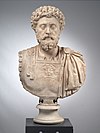
1st century CE, Hierapolis
Greek Stoicism
The Beginning of Philosophy is a Consciousness of your own Weakness and inability in necessary things.

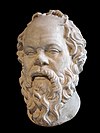
5th century BCE, Athens
Classical Greek Philosophy
Ηe knew nothing except just the fact of his ignorance. • Alternate translation: I know nothing except the fact of my ignorance.
4th century BCE, Athens
Platonic Academy
Then we may begin by assuming that there are three classes of men—lovers of wisdom, lovers of honor, lovers of gain?

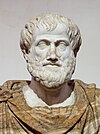
4th century BCE, Stagira
Peripatetic Philosophy
A whole is that which has beginning, middle, and end.
5th century BCE, China
Confucianism
Among the appliances to transform the people, sound and appearances are but trivial influences.

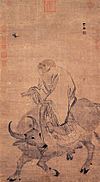
6th century BCE, China
Classical Taoism
The journey of a thousand miles begins with a single step.
5th century BCE, India
Buddhism
If he goes forth from the household life into homelessness, then he will become an Arahant, a fully-enlightened Buddha, one who draws back the veil from the world.

13th century, Persia/Anatolia
Sufi Mysticism
I always thought that I was me — but no,I was you and never knew it.

19th century, Germany
Continental & Existential Philosophy
The desert grows: woe to him in whom deserts hide ...

20th century, Algeria/France
Existentialism & Absurdism
Men of action, when they are without faith, have never believed in anything but action. Hitler's untenable paradox lay precisely in wanting to found a stable order on perpetual change and no negation.

19th century, Denmark
Christian Existentialism
The tyrant dies and his rule is over; the martyr dies and his rule begins.

19th century, Germany
German Idealism & Pessimism
Change alone is eternal, perpetual, immortal.

19th century, Russia
Russian Literature & Christian Ethics
He knew she was there by the joy and fear that overwhelmed his heart.

16th–17th century, England
English Renaissance Drama
As testy sick men when their deaths be near, No news but health from their physicians know.

19th century, Ireland
Aestheticism & Wit
We live in the age of the overworked, and the under-educated; the age in which people are so industrious that they become absolutely stupid.

19th century, United States
American Realism & Satire
As I slowly grow wise I briskly grow cautious.

19th century, United States
American Transcendentalism
As a literary artist he has great merits, beginning with the main one that he never wrote one dull line. How well-read, how adroit, what thousand arts in his one art of writing.

19th century, United States
American Transcendentalism
What you get by achieving your goals is not as important as what you become by achieving your goals.

20th century, India
Ahimsa & Satyagraha
Mysore has been rightly considered one of the most progressive of States in India and, in several respects, far in advance of conditions obtaining in British India. There is progress in all directions.

20th century, South Africa
Ubuntu & Liberation Ethics
In my country we go to prison first and then become President.

20th century, United States
Modern Literature & Civil Rights
We grow despite the horror that we feed upon our own tomorrow. We grow.

20th century, Germany/USA
Scientific Humanism
Attributed to Einstein's 1930 arrival in New York on the Belgenland, the pithy phrase about the future may have been a later reflection inserted into his archives.

20th century, United States
Cosmic Humanism & Skepticism
Many harebrained interpretations were also widely available, especially in weekly newspapers.

Explore All 30 Cross-Civilizational Wisdom Pillars
Compare how humanity's greatest philosophers, poets, and sages across millennia addressed the foundational questions of human existence.
Resilience
Impermanence
Compassion
Self-Knowledge
Courage
Love & Devotion
Mortality & Legacy
Time & Presence
Solitude & Stillness
Truth & Honesty
Freedom & Autonomy
Purpose & Meaning
Gratitude & Contentment
Forgiveness & Mercy
Humility & Openness
Discipline & Mastery
Suffering & Transformation
Friendship & Community
Justice & Moral Duty
Hope & Perseverance
Creativity & Art
Leadership & Service
Nature & The Cosmos
Doubt & Inquiry
Ambition & Excellence
Patience & Timing
Integrity & Character
Happiness & Flourishing
Mindfulness & Awareness