Gratitude & Contentment
Wealth consists not in having great possessions, but in having few wants
Across Stoic, Taoist, Buddhist, and Epicurean traditions, gratitude transforms ordinary existence into abundance.
20th century, Britain
Analytic Philosophy & Humanism
Not enough evidence God! Not enough evidence!

1st century BCE, Rome
Roman Republican Humanism
If I could have known Cicero, and been his friend, and talked with him in his retirement at Tusculum (beau-ti-ful Tusculum l), I could have died contented.

4th–5th century CE, North Africa
Patristic Theology
So the Church too, like Mary, enjoys perpetual virginity and uncorrupted fecundity.

17th century, France
Jansenist Philosophy & Mathematics
I make no doubt... that these rules are simple, artless, and natural.

2nd century CE, Rome
Roman Stoicism
When you arise in the morning, think of what a precious privilege it is to be alive – to breathe, to think, to enjoy, to love.
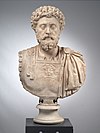
1st century CE, Rome
Roman Stoicism
He who receives a benefit with gratitude repays the first installment on his debt.
1st century CE, Hierapolis
Greek Stoicism
Any one thing in the creation is sufficient to demonstrate a Providence to an humble and grateful mind.

5th century BCE, Athens
Classical Greek Philosophy
Contentment is natural wealth; luxury, artificial poverty.
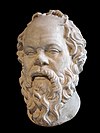
4th century BCE, Athens
Platonic Academy
My love, Alcibiades, which I hardly like to confess, would long ago have passed away, as I flatter myself, if I saw you loving your good things, or thinking that you ought to pass life in the enjoyment of them.

5th century BCE, China
Confucianism
Chi Wen Tzu always thought three times before taking action. When the Master was told of this, he commented, "Twice is quite enough.

6th century BCE, China
Classical Taoism
He who knows that enough is enough will always have enough.
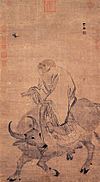
4th century BCE, China
Classical Taoism
Great wisdom is generous; petty wisdom is contentious. Great speech is impassioned, small speech cantankerous.

5th century BCE, India
Buddhism
If a person's mind is pure, then he will see the wonderful blessings that adorn this land.

13th century, Persia/Anatolia
Sufi Mysticism
If you are wholly perplexed and in straits,have patience, for patience is the key to joy.

19th century, Germany
Continental & Existential Philosophy
Thoughts are the shadows of our feelings — always darker, emptier, simpler.

19th century, Denmark
Christian Existentialism
To stand on one leg and prove God's existence is a very different thing from going on one's knees and thanking Him.

16th century, France
Renaissance Humanism
Even opinion is of force enough to make itself to be espoused at the expense of life.

18th century, France
European Enlightenment
L'homme doit être content, dit-on; mais de quoi?

19th century, Russia
Russian Literature & Christian Ethics
He knew she was there by the joy and fear that overwhelmed his heart.

16th–17th century, England
English Renaissance Drama
Haunted by a detached perspective, Shakespeare, at the close of his career within the Sandman universe, confesses to exploiting his own life's joys and tragedies for the sake of his art.

19th century, Ireland
Aestheticism & Wit
I'm not young enough to know everything.

19th century, United States
American Realism & Satire
A baby is an inestimable blessing and bother.

19th century, United States
American Transcendentalism
Never lose an opportunity of seeing anything that is beautiful; for beauty is God's handwriting—a wayside sacrament. Welcome it in every fair face, in every fair sky, in every fair flower, and thank God for it as a cup of blessing.

19th century, United States
American Transcendentalism
Our sadness is not sad, but our cheap joys.

20th century, India
Ahimsa & Satyagraha
I have no other wish in this world but to find light and joy and peace through Hinduism.

20th century, South Africa
Ubuntu & Liberation Ethics
We tried in our simple way to lead our life in a manner that may make a difference to those of others.

Explore All 30 Cross-Civilizational Wisdom Pillars
Compare how humanity's greatest philosophers, poets, and sages across millennia addressed the foundational questions of human existence.
Resilience
Impermanence
Compassion
Self-Knowledge
Courage
Love & Devotion
Mortality & Legacy
Time & Presence
Solitude & Stillness
Truth & Honesty
Freedom & Autonomy
Purpose & Meaning
Forgiveness & Mercy
Humility & Openness
Discipline & Mastery
Suffering & Transformation
Friendship & Community
Justice & Moral Duty
Hope & Perseverance
Creativity & Art
Leadership & Service
Nature & The Cosmos
Doubt & Inquiry
Ambition & Excellence
Patience & Timing
Integrity & Character
Happiness & Flourishing
Change & Renewal
Mindfulness & Awareness