Link Copied!
Blaise Pascal Quotes (1623-1662)
Physicist, Mathematician, Theologian





-100px.jpg)





















About Blaise Pascal
Blaise Pascal (19 June 1623 – 19 August 1662) was a French mathematician, logician, physicist and theologian.
Best Blaise Pascal Quotes
Shortest
Earliest
Explore our curated collection of the most famous and impactful Blaise Pascal quotes.
“If we do not secure the foundation, we cannot secure the edifice.”
“The best books are those, which those who read them believe they themselves could have written.”
“Several particular maxims... are as powerful, although false, in carrying away belief, as those the most true.”
“The whole title by which you possess your property, is not a title of nature but of a human institution.”

“Mahomet established a religion by putting his enemies to death; Jesus Christ, by commanding his followers to lay down their own lives.”
“FEU. Dieu d'Abraham, Dieu d'Isaac, Dieu de Jacob, non des philosophes et savants. Certitude. Certitude. Sentiment. Joie. Paix.”
“People almost invariably arrive at their beliefs not on the basis of proof but on the basis of what they find attractive.”
“As soon as the soul has been made to perceive that a thing can conduct it to that which it loves supremely, it must inevitably embrace it with joy.”
“God only pours out his light into the mind after having subdued the rebellion of the will by an altogether heavenly gentleness which charms and wins it.”
“No one is ignorant that there are two avenues by which opinions are received into the soul, which are its two principal powers: the understanding and the will.”
“God is surrounded with people full of love who demand of him the benefits of love which are in his power: thus he is properly the king of love.”

“These five rules [above] form all that is necessary to render proofs convincing, immutable, and to say all, geometrical; and the eight rules together render them even more perfect.”
“Thus he had a double thought: the one by which he acted as king, the other by which he recognized his true state, and that it was accident alone that had placed him in his present condition.”
“C'est une maladie naturelle à l'homme de croire qu'il possède la vérité directement…
• Variant translation: It is man's natural sickness to believe that he possesses the Truth.”
• Variant translation: It is man's natural sickness to believe that he possesses the Truth.”

“Rules necessary for definitions. Not to leave any terms at all obscure or ambiguous without definition; Not to employ in definitions any but terms perfectly known or already explained.”

“If the public thought elevates you above the generality of men, let the other humble you, and hold you in a perfect equality with all mankind, for this is your natural condition.”
“If you act externally with men in conformity with your rank, you should recognize, by a more secret but truer thought, that you have nothing naturally superior to them.”
“They [men] have corrupted this [God's supernatural] order by making profane things what they should make of holy things, because in fact, we believe scarcely any thing except which pleases us.”

“The mind must not be forced; artificial and constrained manners fill it with foolish presumption, through unnatural elevation and vain and ridiculous inflation, instead of solid and vigorous nutriment.”
“Nothing is more common than good things: the point in question is only to discriminate them; and it is certain that they are all natural and within our reach and even known to all mankind.”

“Rules for Axioms. I. Not to omit any necessary principle without asking whether it is admittied, however clear and evident it may be. II. Not to demand, in axioms, any but things that are perfectly evident in themselves.”
“The art of persuasion consists as much in that of pleasing as in that of convincing, so much more are men governed by caprice than by reason!”

“It is not among extraordinary and fantastic things that excellence is to be found, of whatever kind it may be. We rise to attain it and become removed from it: it is oftenest necessary to stoop for it.”
“A few rules include all that is necessary for the perfection of the definitions, the axioms, and the demonstrations, and consequently of the entire method of the geometrical proofs of the art of persuading.”
“The method of not erring is sought by all the world. The logicians profess to guide it, the geometricians alone attain it, and apart from science, and the imitations of it, there are no true demonstrations.”
“If it had pleased them [the legislators] to order that this wealth, after having been possessed by fathers during their life, should return to the republic after their death, you would have no reason to complain of it.”

“All men are almost led to believe not of proof, but by attraction. This way is base, ignoble, and irrelevant; every one therefore disavows it. Each one professes to believe and even to love nothing but what he knows to be worthy of belief and love.”
“There are hardly any truths upon which we always remain agreed, and still fewer objects of pleasure which we do not change every hour, I do not know whether there is a means of giving fixed rules for adapting discourse to the inconstancy of our caprices.”

“The principles of pleasure are not firm and stable. They are different in all mankind, and variable in every particular with such a diversity that there is no man more different from another than from himself at different times.”

“Logic has borrowed, perhaps, the rules of geometry, without comprehending their force... it does not thence follow that they have entered into the spirit of geometry, and I should be greatly averse... to placing them on a level with that science that teaches the true method of directing reason.”

“Rules necessary for demonstrations. To prove all propositions, and to employ nothing for their proof but axioms fully evident of themselves, or propositions already demonstrated or admitted; Never to take advantage of the ambiguity of terms by failing mentally to substitute definitions that restrict or explain them.”
“This right which you have, is not founded any more than his upon any quality or any merit in yourself which renders you worthy of it. Your soul and your body are, of themselves, indifferent to the state of boatman or that of duke; and there is no natural bond that attaches them to one condition rather than to another.”
“In order to enter into a real knowledge of your condition, consider it in this image: A man was cast by a tempest upon an unknown island, the inhabitants of which were in trouble to find their king, who was lost; and having a strong resemblance both in form and face to this king, he was taken for him, and acknowledged in this capacity by all the people.”
“It is necessary to have regard to the person whom we wish to persuade, of whom we must know the mind and the heart, what principles he acknowledges, what things he loves; and then observe in the thing in question what affinity it has with the acknowledged principles, or with the objects so delightful by the pleasure which they give him.”

“Rules for Definitions. I. Not to undertake to define any of the things so well known of themselves that the clearer terms cannot be had to explain them. II. Not to leave any terms that are at all obscure or ambiguous without definition. III. Not to employ in the definition of terms any words but such as are perfectly known or already explained.”
“If they have entered into the spirit if these rules, and if the rules have made sufficient impression on them to become rooted and established in their minds, they will feel how much difference there is between what is said here and what a few logicians may perhaps have written by chance approximating to it in a few passages of their works.”
“It is not your strength and your natural power that subjects all these people to you. Do not pretend then to rule them by force or to treat them with harshness. Satisfy their reasonable desires; alleviate their necessities; let your pleasure consist in being beneficent; advance them as much as you can, and you will act like the true king of desire.”
“You are in the same manner surrounded with a small circle of persons... full of desire. They demand of you the benefits of desire... You are therefore properly the king of desire. ...equal in this to the greatest kings of the earth... It is desire that constitutes their power; that is, the possession of things that men covet.”
“A doubtful balance is made between truth and pleasure, and... the knowledge of one and the feeling of the other stir up a combat the success of which is very uncertain, since, in order to judge of it, it would be necessary to know all that passes in the innermost spirit of the man, of which man himself is scarcely ever conscious.”

“'''One of the principal reasons that diverts those who are entering upon this knowledge so much from the true path which they should follow, is the fancy that they take at the outset that good things are inaccessible, giving them the name great, lofty, elevated, sublime. This destroys everything. I would call them ''low, common, familiar''''': these names suit it better; I hate such inflated expressions.”
“What would you say of that man who was made king by the error of the people, if he had so far forgotten his natural condition as to imagine that this kingdom was due to him, that he deserved it, and that it belonged to him of right? You would marvel at his stupidity and folly. But is there less in the people of rank who live in so strange a forgetfulness of their natural condition?”
“All the excesses, all the violence, and all the vanity of great men, come from the fact that they know not what they are: it being difficult for those who regard themselves at heart as equal with all men... For this it is necessary for one to forget himself, and to believe that he has some real excellence above them, in which consists this illusion that I am endeavoring to discover to you.”
“If it is pleasing to observe in nature her desire to paint God in all his works, in which we see some traces of him because they are his images, how much more just is it to consider in the productions of minds the efforts which they make to imitate the essential truth, even in shunning it, and to remark wherein they attain it and wherein they wander from it, as I have endeavored to do in this study.”
“This art, which I call the art of persuading, and which, properly speaking, is simply the process of perfect methodical proofs, consists of three essential parts: of defining the terms of which we should avail ourselves by clear definitions, of proposing principles of evident axioms to prove the thing in question; and of always mentally substituting in the demonstrations the definition in the place of the thing defined.”

“There are some men who expose themselves to damnation so foolishly by avarice, by brutality, by debauches, by violence, by excesses, by blasphemies! ...it is always a great folly for a man to expose himself to damnation... He must despise desire and its kingdom, and aspire to that kingdom of love in which all the subjects breathe nothing but love, and desire nothing but the benefits of love.”
“One man will say a thing of himself without comprehending its excellence, in which another will discern a marvelous series of conclusions, which makes us affirm that it is no longer the same expression, and that he is no more indebted for it to the one from whom he has learned it, than a beautiful tree belongs to the one who cast the seed, without thinking of it, or knowing it, into the fruitful soil which caused its growth by its own fertility.”
“As to the objection that these rules are common in the world, that it is necessary to define every thing and to prove every thing, and that logicians themselves have placed them among their art, I would that the thing were true and that it were so well known... But so little is this the case, that, geometricians alone excepted, who are so few in number that they are a single in a whole nation and long periods of time, we see no others that know it.”
“Rules for Demonstrations. I. Not to undertake to demonstrate any thing that is so evident of itself that nothing can be given that is clearer to prove it. II. To prove all propositions at all obscure, and to employ in their proof only very evident maxims or propositions already admitted or demonstrated. III. To always mentally substitute definitions in the place of things defined, in order not to be misled by the ambiguity of terms which have been restricted by definitions.”
“If, being duke and peer, you would not be contented with my standing uncovered before you, but should also wish that I should esteem you, I should ask you to show me the qualities that merit my esteem. If you did this, you would gain it, and I could not refuse it to you with justice; but if you did not do it, you would be unjust to demand it of me; and assuredly you would not succeed, were you the greatest prince in the world.”
“I do not speak here of divine truths... because they are infinitely superior to nature: God alone can place them in the soul... I know that he has desired that they should enter from the heart into the mind, and not from the mind into the heart, to humiliate that proud power of reasoning that pretends to the right to be the judge of the things that the will chooses; and to cure this infirm will which is wholly corrupted by its filthy attachments.”

“What is it, in your opinion, to be a great nobleman? It is to be master of several objects that men covet, and thus to be able to satisfy the wants and the desires of many. It is these wants and these desires that attract them towards you, and that make them submit to you: were it not for these, they would not even look at you; but they hope, by these services... to obtain from you some part of the good which they desire, and of which they see that you have the disposal.”
“In reading this author [ Montaigne ] and comparing him with Epictetus, I have found that they are assuredly the two greatest defenders of the two most celebrated sects of the world, and the only ones conformable to reason, since we can only follow one of these two roads, namely: either that there is a God, and then we place in him the sovereign good; or that he is uncertain, and that then the true good is also uncertain, since he is incapable of it.”
“These two states which it is necessary to know together in order to see the whole truth, being known separately, lead necessarily to one of these two vices, pride or indolence, in which all men are invariably led before grace, since if they do not remain in their disorders through laxity, they forsake them through vanity, so true is that which you have just repeated to me from St. Augustine, and which I find to a great extent; for in fact homage is rendered to them in many ways.”
“All who say the same things do not possess them in the same manner; and hence the incomparable author of the Art of Conversation pauses with so much care to make it understood that we must not judge of the capacity of a man by the excellence of a happy remark that we heard him make. ...let us penetrate, says he, the mind from which it proceeds... it will oftenest be seen that he will be made to disavow it on the spot, and will be drawn very far from this better thought in which he does not believe, to plunge himself into another, quite base and ridiculous.”

“When I consider the short duration of my life, swallowed up in the eternity before and after, the small space which I fill, or even can see, engulfed in the infinite immensity of spaces whereof I know nothing, and which know nothing of me, I am terrified, and wonder that I am here rather than there, for there is no reason why here rather than there, or now rather than then. Who has set me here? By whose order and design have this place and time been destined for me?—Memoria hospitis unius diei prætereuntis.
It is not well to be too much at liberty. It is not well to have all we want.
How many kingdoms know nothing of us!
The eternal silence of these infinite spaces alarms me.”
It is not well to be too much at liberty. It is not well to have all we want.
How many kingdoms know nothing of us!
The eternal silence of these infinite spaces alarms me.”
“The source of the errors of these two sects, is in not having known that the state of man at the present time differs from that of his creation; so that the one, remarking some traces of his first greatness and being ignorant of his corruption, has treated nature as sound and without need of redemption, which leads him to the height of pride; whilst the other, feeling the present wretchedness and being ignorant of the original dignity, treats nature as necessarily infirm and irreparable, which precipitates it into despair of arriving at real good, and thence into extreme laxity.”

“These philosophers of the world place contrarieties in the same subject; for the one attributed greatness to nature and the other weakness to this same nature, which could not subsist; whilst faith teaches us to place them in different subjects: all that is infirm belonging to nature, all that is powerful belonging to grace. Such is the marvelous and novel union which God alone could teach, and which he alone could make, and which is only a type and an effect of the ineffable union of two natures in the single person of a Man-God.”

“I would inquire of reasonable persons whether this principle: Matter is naturally wholly incapable of thought, and this other: I think, therefore I am, are in fact the same in the mind of Descartes, and in that of St. Augustine, who said the same thing twelve hundred years before. ...I am far from affirming that Descartes is not the real author of it, even if he may have learned it only in reading this distinguished saint; for I know how much difference there is between writing a word by chance without making a longer and more extended reflection on it, and perceiving in this word an admirable series of conclusions, which prove the distinction between material and spiritual natures, and making of it a firm and sustained principle of a complete metaphysical system, as Descartes has pretended to do. ...it is on this supposition that I say that this expression is as different in his writings from the saying in others who have said it by chance, as in a man full of life and strength, from a corpse.”
“One, knowing the duties of man and being ignorant of his impotence, is lost in presumption, and that the other, knowing the impotence and being ignorant of the duty, falls into laxity; whence it seems that since the one leads to truth, the other to error, there would be formed from their alliance a perfect system of morals. But instead of this peace, nothing but war and a general ruin would result from their union; for the one establishing certainty, the other doubt, the one the greatness of man, the other his weakness, they would destroy the truths as well as the falsehoods of each other. So that they cannot subsist alone because of their defects, nor unite because of their opposition, and thus they break and destroy each other to give place to the truth of the Gospel. This it is that harmonizes the contrarieties by a wholly divine act, and uniting all that is true and expelling all that is false, thus makes of them a truly celestial wisdom in which those opposites accord that were incompatible in human doctrines.”
Blaise Pascal Quotes by Topic
Find exactly what you are looking for by browsing this categorized list of Blaise Pascal quotes by topic.
Blaise Pascal on Infinity 10 quotes
“We must relax our minds a little; but this opens the door to debauchery. Let us mark the limits. There are no limits in things. Laws would put them there, and the mind cannot suffer it.”

Blaise Pascal on Faith 4 quotes
“Faith is different from proof; the latter is human, the former is a Gift from God.”

Blaise Pascal on Happiness 3 quotes
“Happiness is neither within us nor without us, it is the union of ourselves with God.”
Blaise Pascal on Clarity 2 quotes
View all 2 quotes on Clarity →Blaise Pascal on Thought 2 quotes
View all 2 quotes on Thought →What Blaise Pascal Said About Others
Discover personal opinions Blaise Pascal shared regarding contemporaries.
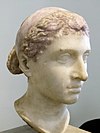
Blaise Pascal on Cleopatra
“Cleopatra's nose, had it been shorter, the whole face of the world would have been changed.”
Blaise Pascal on Michel de Montaigne
“The manner in which Epictetus, Montaigne, and Salomon de Tultie wrote, is the most usual, the most suggestive, the most remembered, and the oftener quoted; because it is entirely composed of thoughts born from the common talk of life.”

Quotes About Blaise Pascal
Gain deeper perspective through quotes about Blaise Pascal from others.
Donald Adamson on Blaise Pascal
“During the years that followed the writing of the Provincial Letters and lesser religious works Pascal began to devote his life to the advancement of Christianity. At the the heart of this activity were the Thoughts, which, begun around September 1656, date mainly from 1657 and 1658. ... This is a largely unfinished work, and (in the view of many commentators) is the most ambitious of all attempts to convert the agnostic and the atheist to religious belief.”
Tobias Dantzig on Blaise Pascal
“It is significant that we owe the first explicit formulation of the principle of recurrence to the genius of Blaise Pascal... Pascal stated the principle in a tract called The Arithmetic Triangle which appeared in 1654. Yet... the gist of the tract was contained in the correspondence between Pascal and Fermat regarding a problem in gambling, the same correspondence which is now regarded as the nucleus from which developed the theory of probabilities. It surely is a fitting subject for mystic contemplation that the principle of reasoning by recurrence, which is so basic in pure mathematics, and the theory of probabilities, which is the basis of all deductive sciences, were both conceived while devising a scheme for the division of stakes in an unfinished match of two gamblers.”
Eric Hoffer on Blaise Pascal

Pope Paul VI on Blaise Pascal
“Man infinitely surpasses man.”

Reijer Hooykaas on Blaise Pascal
“Pascal scornfully said that simple workmen had been able to convince of error those great men that are called 'philosophers'. It was, then, these unlearned men... who were most ready to believe 'what they saw with their eyes and touched with their hands'.”


Disputed Quotes
Quotes attributed to Blaise Pascal that are questionable.
“La netteté d’esprit cause aussi la netteté de la passion; c’est pourquoi un esprit grand et net aime avec ardeur, et il voit distinctement ce qu’il aime.”
Misattributed Quotes
Quotes mistakenly credited to Blaise Pascal
About Blaise Pascal
Blaise Pascal (19 June 1623 – 19 August 1662) was a French mathematician, logician, physicist and theologian.