Link Copied!
Augustine of Hippo Quotes (354-430)
Philosopher, Theologian




































About Augustine of Hippo
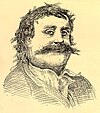
St. Augustine of Hippo (13 November 354 – 28 August 430) was a Christian theologian, rhetor, North African bishop, Doctor of the Catholic Church, saint, and a philosopher influenced in his early years by Manichaeism and the Neo-Platonism of Plotinus.
Best Augustine of Hippo Quotes
Shortest
Earliest
Explore our curated collection of the most famous and impactful Augustine of Hippo quotes.
“Timeo Dominum transeuntem”
“Patientia comes est sapientiae”

“Date ergo pauperibus: rogo, moneo, praecipio, iubeo.”


“The confession of evil works is the first beginning of good works.”


“Give, O Lord, what Thou commandest, and then command what Thou wilt.”

“Non ergo accedas, si potes, nisi liberorum procreandorum causa.”
“Ergo noli quaerere intelligere ut credas, sed crede ut intelligas.”
“So the Church too, like Mary, enjoys perpetual virginity and uncorrupted fecundity.”

Augustine of Hippo Quotes by Topic
Find exactly what you are looking for by browsing this categorized list of Augustine of Hippo quotes by topic.
Augustine of Hippo on Christ 9 quotes
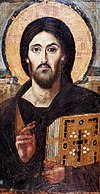
“The insidious tricks of the enemy may disturb you, but the humility and humanity of Christ should console you. This man emphasizes how high above you Christ has been lifted up; Christ, though, says how low he came down to you.”
Augustine of Hippo on Love 8 quotes
View all 8 quotes on Love →Augustine of Hippo on Religious views on love 6 quotes
“It is love that asks, that seeks, that knocks, that finds, and that is faithful to what it finds.”
Augustine of Hippo on Christianity 6 quotes
“We must be on our guard against giving interpretations which are hazardous or opposed to science, and so exposing the word of God to the ridicule of unbelievers.”

Augustine of Hippo on Perfection 3 quotes
“That is the true perfection of man to find out his imperfections.”
Augustine of Hippo on Knowledge 3 quotes
“To wisdom belongs the intellectual apprehension of things eternal; to knowledge, the rational apprehension of things temporal.”

Augustine of Hippo on Habit (psychology) 2 quotes
View all 2 quotes on Habit (psychology) →Augustine of Hippo on Prayer 2 quotes
View all 2 quotes on Prayer →Augustine of Hippo on Ecumenism 2 quotes
View all 2 quotes on Ecumenism →Augustine of Hippo on Faith 2 quotes
“Faith is to believe what you do not see; the reward of this faith is to see what you believe.”

Augustine of Hippo on Beauty 2 quotes
“Inasmuch as love grows in you, in so much beauty grows; for love is itself the beauty of the soul.”

What Augustine of Hippo Said About Others
Discover personal opinions Augustine of Hippo shared regarding contemporaries.
Augustine of Hippo on Jesus
“The heathen ... begins to praise Christ, not in order to do him honor, but to make you despair. It is the deadly cunning of the serpent, to turn you away from Christ by praising Christ, to extol deceitfully the one he doesn’t dare to disparage. He exaggerates the sovereign majesty of Christ in order to make him out quite unique, to stop you hoping for anything like what was demonstrated in his rising.”
Augustine of Hippo on Epicurus
“For if they imagine infinite spaces of time before the world, during which God could not have been idle, in like manner they may conceive outside the world infinite realms of space, in which, if any one says that the Omnipotent cannot hold His hand from working, will it not follow that they must adopt Epicurus' dream of innumerable worlds? with this difference only, that he asserts that they are formed and destroyed by the fortuitous movements of atoms, while they will hold that they are made by God's hand, if they maintain that, throughout the boundless immensity of space, stretching interminably in every direction round the world, God cannot rest, and that the worlds which they suppose Him to make cannot be destroyed. ... there is no place beside the world ...no time before the world.”
Quotes About Augustine of Hippo
Gain deeper perspective through quotes about Augustine of Hippo from others.
Joe Biden on Augustine of Hippo
“Many centuries ago, Saint Augustine, a saint of my church, wrote that a people was a multitude defined by the common objects of their love—defined by the common objects of their love. What are the common objects we as Americans love? That define us as Americans? I think we know: opportunity, security, liberty, dignity, respect, honor, and yes, the truth.”

Louis-Victor-Emile Bougaud on Augustine of Hippo
“St. Augustine occupied himself with several religious works, and among others, a Treatise on the Trinity. One day, as he was walking up and down the shore, meditating on this mystery with his mother, they saw a little child, who, having dug a tiny hole in the sand, was filling it with sea-water out of a cockle-shell. Augustine, smiling, asked him whether he thought to empty the whole ocean into it? The child replied, "Why not? It would be easier than to get into your head the incomprehensible ocean of the Holy Trinity!"”
Donald Burt on Augustine of Hippo
Fernand Braudel on Augustine of Hippo
“A Berber, born in 354 at Thagaste (now Souk-Ahras) in Africa... The exceptional brilliance of his works (The City of God, The Confessions), his contradictory nature, his desire to bring together faith and intelligence, classical and Christian civilization, the old wine and the new — these deliberate efforts made him in some ways a rationalist. For him, faith came first: but he nevertheless declared 'Credo ut intelligam' — 'I believe in order to understand.' He also said 'Si fallor, sum' — 'If I am mistaken, I exist' — and 'Si dubitat, vivit' — 'If he doubts, he is alive'... Posterity undoubtedly concentrated its attention on St Augustine as a theologian, and on what he wrote about predestination. But Augustinianism gave Western Christianity some of its colour and its ability to adapt and debate — if only by insisting on the vital need to embrace the faith in full awareness, after deep personnal reflection, and with the will to act accordingly.”

Norman Cantor on Augustine of Hippo
“Of all the fathers of the church, St. Augustine was the most admired and the most influential during the Middle Ages. He was well suited by background and experience to conduct a fundamental examination of the relationship of the Christian experience to classical culture. Augustine was an outsider — a native North African whose family was not Roman but Berber (today regarded as "Arabs"). … Not born to the imperial power elite, he could disassociate himself from the empire and its destiny. Augustine was enormously learned. He was a genius — an intellectual giant — and he received a thorough classical education. He was not much of a linguist (his Greek was poor, and he never learned Hebrew) but he was a master of Latin rhetoric; certain passages in The City of God equal the writings of Cicero in complexity and eloquence.”
Paul Davies on Augustine of Hippo
“His considered answer to what God was doing before creating the universe was "the world was made with time and not in time." Augustine's God is a being who transcends time, a being located outside time altogether and responsible for creating time as well as space and matter. Thus Augustine skillfully avoided the problem of why the creation happened at that moment rather than some earlier moment. There were no earlier moments. Identical reasoning applies to the scientific problem. If the universe originated in time, then it cannot have been caused by any physical process that has a finite probability, because if it did, then the event would already have happened, an infinite time ago. ...He wasn't even the first person to hit on the idea of time coming into being with the universe. Plato said much the same thing hundreds of years earlier. The history of philosophy is so rich and diverse that it would be astonishing if theories emerging from science hadn't been foreshadowed in some vague way by somebody.”

Christopher Dawson on Augustine of Hippo
“He was himself a true African. Indeed, we may say he was an African first and a Roman afterwards, since, in spite his genuine loyalty towards the Empire, he shows none of the specifically Roman patriotism which marks Ambrose or Prudentius.”

Paul Henry on Augustine of Hippo
“In the history of thought and civilization, Saint Augustine appears to me to be the first thinker who brought into prominence and undertook an analysis of the philosophical and psychological concepts of person and personality. These ideas, so vital to contemporary man, shape not only Augustine's own doctrine on God but also his philosophy of man: man as an individual, man as a member of societies and institutions — the family, the city, the state and the church.”
Harriet Hogarth on Augustine of Hippo
“The paper emphasizes that ideas about masturbation are crucial to understanding any societal attitudes toward sex. It examines attitudes to masturbation in ancient Egypt, Tigris Euphrates Valley, India, and China. It looks at Biblical views and their misinterpretations and at the Greek and Roman descriptions of masturbatory practices. Key to the development of western attitudes was the Augustinian version of sex which was influenced by Augustine's personal background in Manichaeanism, a religion which was based on ancient Persian beliefs. The Augustinian view of all non-procreative sex as a sin was carried over into medicine in the eighteenth century which changed sins into pathologies.”
Arthur Koestler. source on Augustine of Hippo
“The greatest influence during the dark ages was Augustine, who was influenced by Plotinus, who was influenced by Indian mysticism. Long before Aldous Huxley found Yoga a remedy for our Brave New World, Schopenhauer called the Upanishads the consolation of his life.”
Disputed Quotes
Quotes attributed to Augustine of Hippo that are questionable.
“Charity is no substitute for justice withheld.”
“To wisdom belongs the intellectual apprehension of things eternal; to knowledge, the rational apprehension of things temporal.”
“By faithfulness we are collected and wound up into unity within ourselves, whereas we had been scattered abroad in multiplicity.”
“Woman, compared to other creatures, is the image of God, for she bears dominion over them. But compared unto man, she may not be called the image of God, for she bears not rule and lordship over man, but ought to obey him. The woman shall be subject to man as unto Christ. For woman, has not her example from the body and from the flesh, that so she shall be subject to man, as the flesh is unto the Spirit, because that the flesh in the weakness and mortality of this life lusts and strives against the Spirit, and therefore would not the Holy Ghost give example of subjection to the woman of any such thing.”
Misattributed Quotes
Quotes mistakenly credited to Augustine of Hippo
“Inter faeces et urinas nascimur.
• Variant: We are born amid feces and urine.”
• Variant: We are born amid feces and urine.”
“Our bodies are shaped to bear children, and our lives are a working out of the processes of creation. All our ambitions and intelligence are beside that great elemental point.”
About Augustine of Hippo
St. Augustine of Hippo (13 November 354 – 28 August 430) was a Christian theologian, rhetor, North African bishop, Doctor of the Catholic Church, saint, and a philosopher influenced in his early years by Manichaeism and the Neo-Platonism of Plotinus.