Freedom & Autonomy
Outer liberty and inner emancipation
True freedom requires both civic justice in society and philosophical mastery over one's own desires, fears, and prejudices.
20th century, Austria
Logotherapy & Existential Psychology
Between stimulus and response there is a space. In that space is our power to choose our response. In our response lies our growth and our freedom.

19th–20th century, Bengal
Bengali Renaissance & Humanism
That side of our existence whose direction is towards the infinite seeks not wealth, but freedom and joy.

20th century, Germany/USA
Political Philosophy
Forgiveness is the key to action and freedom.

20th century, France
Existential Feminism
I wish that every human life might be pure transparent freedom.

18th century, Prussia
Enlightenment Deontology
Metaphysics has as the proper object of its enquiries three ideas only: God, freedom, and immortality.

19th century, India
Vedanta Philosophy
Karma is the eternal assertion of human freedom. If we can bring ourselves down by our karma, surely it is in our power to raise ourselves by our own karma.

1st century BCE, Rome
Roman Republican Humanism
The evil was not in bread and circuses, per se, but in the willingness of the people to sell their rights as free men for full bellies and the excitement of the games which would serve to distract them from the other human hungers which bread and circuses can never appease.

4th–5th century CE, North Africa
Patristic Theology
There is no greater freedom than the freedom to obey.

17th century, France
Jansenist Philosophy & Mathematics
Do not imagine that it is less an accident by which you find yourself master of the wealth which you possess, than that by which this man found himself king.

2nd century CE, Rome
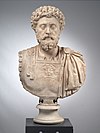
Roman Stoicism
No thefts of free will reported.” (Hays translation)
1st century CE, Hierapolis
Greek Stoicism
No man is free who is not master of himself.

4th century BCE, Athens
Platonic Academy
By the golden chain Homer meant nothing else than the sun.

4th century BCE, Stagira
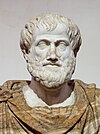
Peripatetic Philosophy
If liberty and equality, as is thought by some, are chiefly to be found in democracy, they will be best attained when all persons alike share in the government to the utmost.
5th century BCE, China
Confucianism
Chi Wen Tzu always thought three times before taking action. When the Master was told of this, he commented, "Twice is quite enough.

6th century BCE, China
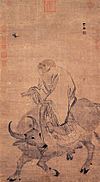
Classical Taoism
Knowing others is intelligence; knowing yourself is true wisdom. Mastering others is strength; mastering yourself is true power.
19th century, Germany
Continental & Existential Philosophy
To draw up such a law–book as Manu’s means to lay before a people the possibility of future mastery, of attainable perfection—it permits them to aspire to the highest reaches of the art of life.

20th century, Algeria/France
Existentialism & Absurdism
The only way to deal with an unfree world is to become so absolutely free that your very existence is an act of rebellion.

19th century, Denmark
Christian Existentialism
A master and way out of the league that the rest of us play in.

19th century, Germany
German Idealism & Pessimism
Einstein, echoing Schopenhauer's exploration of free will in Zucker's 1945 translation, highlights humanity's ability to act on desires while lacking control over the desires themselves.

17th century, Netherlands
Continental Rationalism
The real disturbers of the peace are those who, in a free state, seek to curtail the liberty of judgment which they are unable to tyrannize over.

19th century, Russia
Russian Literature & Christian Ethics
Patriotism … for rulers is nothing else than a tool for achieving their power-hungry and money-hungry goals, and for the ruled it means renouncing their human dignity, reason, conscience, and slavish submission to those in power. … Patriotism is slavery.

19th century, Ireland
Aestheticism & Wit
Art is individualism, and individualism is a disturbing and disintegrating force. There lies its immense value. For what it seeks is to disturb monotony of type, slavery of custom, tyranny of habit, and the reduction of man to the level of a machine.

19th century, United States
American Realism & Satire
Guides cannot master the subtleties of the American joke.

19th century, United States
American Transcendentalism
Eastward I go only by force; but westward I go free.

20th century, India
Ahimsa & Satyagraha
You can chain me, you can torture me, you can even destroy this body, but you will never imprison my mind.

20th century, South Africa
Ubuntu & Liberation Ethics
Real leaders must be ready to sacrifice all for the freedom of their people.

Explore All 30 Cross-Civilizational Wisdom Pillars
Compare how humanity's greatest philosophers, poets, and sages across millennia addressed the foundational questions of human existence.
Resilience
Impermanence
Compassion
Self-Knowledge
Courage
Love & Devotion
Mortality & Legacy
Time & Presence
Solitude & Stillness
Truth & Honesty
Purpose & Meaning
Gratitude & Contentment
Forgiveness & Mercy
Humility & Openness
Discipline & Mastery
Suffering & Transformation
Friendship & Community
Justice & Moral Duty
Hope & Perseverance
Creativity & Art
Leadership & Service
Nature & The Cosmos
Doubt & Inquiry
Ambition & Excellence
Patience & Timing
Integrity & Character
Happiness & Flourishing
Change & Renewal
Mindfulness & Awareness