Ambition & Excellence
Striving toward the highest human potential
How to pursue greatness of craft and spirit without losing one's soul to vanity or restless greed.
20th century, Germany/USA
Scientific Humanism
Try to become not a man of success, but try rather to become a man of value.

20th century, United States
Cosmic Humanism & Skepticism
Those at too great a distance may, I am well aware, mistake ignorance for perspective.

19th–20th century, Bengal
Bengali Renaissance & Humanism
We come nearest to the great when we are great in humility.

20th century, Lebanon/USA
Levantine Poetic Mysticism
To understand the heart and mind of a person, look not at what he has already achieved, but what he aspires to.
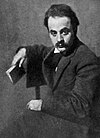
20th century, Germany/USA
Political Philosophy
Man cannot be free if he does not know that he is subject to necessity, because his freedom is always won in his never wholly successful attempts to liberate himself from necessity.

20th century, France
Existential Feminism
There is an element of failure in all success.

20th century, Britain
Analytic Philosophy & Humanism
Spinoza (1634-77) is the noblest and most lovable of the great philosophers. Intellectually, some others have surpassed him, but ethically he is supreme.

18th century, Prussia
Enlightenment Deontology
The science of mathematics presents the most brilliant example of how pure reason may successfully enlarge its domain without the aid of experience.

19th century, India
Vedanta Philosophy
Superstition is our great enemy, but bigotry is worse.

5th century BCE, China
Classical Chinese Strategy
見勝不過衆人之所識,非善之善者也。 • To see victory only when it is within the ken of the common herd is not the acme of excellence.

1st century BCE, Rome
Roman Republican Humanism
...the greatest Greek city and the most beautiful of them all...

4th–5th century CE, North Africa
Patristic Theology
The greatest influence during the dark ages was Augustine, who was influenced by Plotinus, who was influenced by Indian mysticism. Long before Aldous Huxley found Yoga a remedy for our Brave New World, Schopenhauer called the Upanishads the consolation of his life.

17th century, France
Jansenist Philosophy & Mathematics
Pascal scornfully said that simple workmen had been able to convince of error those great men that are called 'philosophers'. It was, then, these unlearned men... who were most ready to believe 'what they saw with their eyes and touched with their hands'.

1st century CE, Rome
Roman Stoicism
Every pleasure defers to its last its greatest delights.
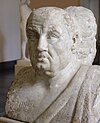
1st century CE, Hierapolis
Greek Stoicism
Those of our pleasures which come most rarely give the greatest delight.

5th century BCE, Athens
Classical Greek Philosophy
The man who eats with the greatest appetite has the least need of delicacies.
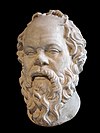
4th century BCE, Athens
Platonic Academy
As you hope to prove your own great value to the state, and having proved it, to attain at once to absolute power, so do I indulge a hope that I shall be the supreme power over you, if I am able to prove my own great value to you.

4th century BCE, Stagira
Peripatetic Philosophy
We are what we repeatedly do. Excellence, then, is not an act, but a habit. • Variant: We are what we repeatedly do, therefore excellence is not an act, but a habit.
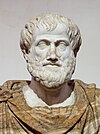
5th century BCE, China
Confucianism
It is not truth that makes man great, but man that makes truth great.

6th century BCE, China
Classical Taoism
The Tao is called the Great Mother: empty yet inexhaustible, it gives birth to infinite worlds.
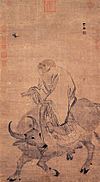
4th century BCE, China
Classical Taoism
Away then with wisdom and knowledge, and great robbers will disappear!

5th century BCE, India
Buddhism
For a noble disciple, O householder, who wishes to have long life, it is not befitting that he should pray for long life or take delight in so doing. He should rather follow a path of life that is conducive to longevity.

13th century, Persia/Anatolia
Sufi Mysticism
Come, seek, for search is the foundation of fortune: every success depends upon focusing the heart.

19th century, Germany
Continental & Existential Philosophy
To draw up such a law–book as Manu’s means to lay before a people the possibility of future mastery, of attainable perfection—it permits them to aspire to the highest reaches of the art of life.

20th century, Algeria/France
Existentialism & Absurdism
Great novelists are philosopher-novelists who write in images instead of arguments.

19th century, Denmark
Christian Existentialism
The individuals of the contemporary generation are fearful of existence ... only in great masses do they dare to live, and they cluster together en masse in order to feel that they amount to something.

Explore All 30 Cross-Civilizational Wisdom Pillars
Compare how humanity's greatest philosophers, poets, and sages across millennia addressed the foundational questions of human existence.
Resilience
Impermanence
Compassion
Self-Knowledge
Courage
Love & Devotion
Mortality & Legacy
Time & Presence
Solitude & Stillness
Truth & Honesty
Freedom & Autonomy
Purpose & Meaning
Gratitude & Contentment
Forgiveness & Mercy
Humility & Openness
Discipline & Mastery
Suffering & Transformation
Friendship & Community
Justice & Moral Duty
Hope & Perseverance
Creativity & Art
Leadership & Service
Nature & The Cosmos
Doubt & Inquiry
Patience & Timing
Integrity & Character
Happiness & Flourishing
Change & Renewal
Mindfulness & Awareness