Link Copied!
Plato Quotes (-427--347)
Philosopher













-100px.jpg)


































-100px.png)








-100px.jpg)








-100px.jpg)







About Plato
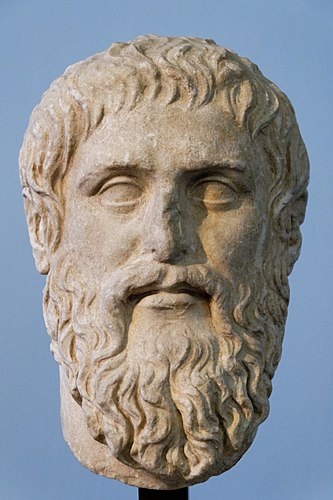
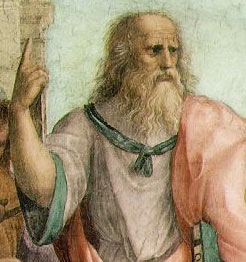
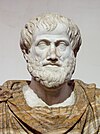
Plato (Πλάτων Plátōn; c. 427 BC – c. 347 BC) was a Greek philosopher from Athens during the Classical period in Ancient Greece, founder of the Platonist school of thought and the Academy (Akademia), the first institution of higher learning in the Western world.
Best Plato Quotes
Shortest
Earliest
Explore our curated collection of the most famous and impactful Plato quotes.

“The beginning in every task is the chief thing.
• variant: The beginning is the most important part of any work. (Jowett translation)”
• variant: The beginning is the most important part of any work. (Jowett translation)”

“There is no one who ever acts honestly in the administration of states, nor any helper who will save any one who maintains the cause of the just.”
“to seek office oneself and not await compulsion is thought disgraceful. But the chief penalty is to be governed by someone worse if a man will not himself hold office and rule.”
“My love, Alcibiades, which I hardly like to confess, would long ago have passed away, as I flatter myself, if I saw you loving your good things, or thinking that you ought to pass life in the enjoyment of them.”

“Democracy does not contain any force which will check the constant tendency to put more and more on the public payroll. The state is like a hive of bees in which the drones display, multiply and starve the workers so the idlers will consume the food and the workers will perish.”

“Since those who rule in the city do so because they own a lot, I suppose they're unwilling to enact laws to prevent young people who've had no discipline from spending and wasting their wealth, so that by making loans to them, secured by the young people's property, and then calling those loans in, they themselves become even richer and more honored.”
“Knowledge is the food of the soul; and we must take care, my friend, that the Sophist does not deceive us when he praises what he sells, like the dealers wholesale or retail who sell the food of the body; for they praise indiscriminately all their goods, without knowing what are really beneficial or hurtful.”

“Your pride has been too much for the pride of your admirers; they were numerous and high-spirited, but they have all run away, overpowered by your superior force of character; not one of them remains. And I want you to understand the reason why you have been too much for them. You think that you have no need of them or of any other man, for you have great possessions and lack nothing, beginning with the body, and ending with the soul.”

“The inexperienced in wisdom and virtue, ever occupied with feasting and such, are carried downward, and there, as is fitting, they wander their whole life long, neither ever looking upward to the truth above them nor rising toward it, nor tasting pure and lasting pleasures. Like cattle, always looking downward with their heads bent toward the ground and the banquet tables, they feed, fatten, and fornicate. In order to increase their possessions they kick and butt with horns and hoofs of steel and kill each other, insatiable as they are.”
“I will tell you, in order that you may not share the impiety of the multitude: for there cannot conceivably be anything more impious or more to be guarded against than being mistaken in word and deed with regard to the gods, and after them, with regard to divine men; you must take very great precaution, whenever you are about to blame or praise a man, so as not to speak incorrectly. For this reason you must learn to distinguish honest and dishonest men: for God feels resentment when one blames a man who is like himself, or praises a man who is the opposite; and the former is the good man. For you must not suppose that while stocks and stones and birds and snakes are sacred, men are not; nay, the good man is the most sacred of all these things, and the wicked man is the most defiled.”

“μόγις δὲ τριβόμενα πρὸς ἄλληλα αὐτῶν ἕκαστα, ὀνόματα καὶ λόγοι ὄψεις τε καὶ αἰσθήσεις, ἐν εὐμενέσιν ἐλέγχοις ἐλεγχόμενα καὶ ἄνευ φθόνων ἐρωτήσεσιν καὶ ἀποκρίσεσιν χρωμένων, ἐξέλαμψε φρόνησις περὶ ἕκαστον καὶ νοῦς, συντείνων ὅτι μάλιστ᾽ εἰς δύναμιν ἀνθρωπίνην.
• After much effort, as names, definitions, sights, and other data of sense, are brought into contact and friction one with another, in the course of scrutiny and kindly testing by men who proceed by question and answer without ill will, with a sudden flash there shines forth understanding about every problem, and an intelligence whose efforts reach the furthest limits of human powers.”
• After much effort, as names, definitions, sights, and other data of sense, are brought into contact and friction one with another, in the course of scrutiny and kindly testing by men who proceed by question and answer without ill will, with a sudden flash there shines forth understanding about every problem, and an intelligence whose efforts reach the furthest limits of human powers.”

“Socrates: The shoemaker, for example, uses a square tool, and a circular tool, and other tools for cutting?
Alcibiades: Yes.
Socrates: But the tool is not the same as the cutter and user of the tool?
Alcibiades: Of course not. …
Socrates: Then what shall we say of the shoemaker? Does he cut with his tools only or with his hands?
Alcibiades: With his hands as well.
Socrates: He uses his hands too?
Alcibiades: Yes. …
Socrates: And does not a man use the whole body?
Alcibiades: Certainly.
Socrates: And that which uses is different from that which is used?
Alcibiades: True.
Socrates: Then a man is not the same as his own body?
Alcibiades: That is the inference.
Socrates: What is he, then?
Alcibiades: I cannot say.
Socrates: Nay, you can say that he is the user of the body.
Alcibiades: Yes.
Socrates: And the user of the body is the soul?
Alcibiades: Yes, the soul.”
Alcibiades: Yes.
Socrates: But the tool is not the same as the cutter and user of the tool?
Alcibiades: Of course not. …
Socrates: Then what shall we say of the shoemaker? Does he cut with his tools only or with his hands?
Alcibiades: With his hands as well.
Socrates: He uses his hands too?
Alcibiades: Yes. …
Socrates: And does not a man use the whole body?
Alcibiades: Certainly.
Socrates: And that which uses is different from that which is used?
Alcibiades: True.
Socrates: Then a man is not the same as his own body?
Alcibiades: That is the inference.
Socrates: What is he, then?
Alcibiades: I cannot say.
Socrates: Nay, you can say that he is the user of the body.
Alcibiades: Yes.
Socrates: And the user of the body is the soul?
Alcibiades: Yes, the soul.”
Plato Quotes by Topic
Find exactly what you are looking for by browsing this categorized list of Plato quotes by topic.
Plato on Love 4 quotes
View all 4 quotes on Love →Plato on Philosophy 3 quotes
“Philosophy is the acquisition of knowledge.”
Plato on Skepticism 3 quotes
“We need to use every argument we can to fight against anyone who does away with knowledge, understanding and intelligence but at the same time asserts anything at all about anything.”

Plato on Beauty 3 quotes
“Beauty of style and harmony and grace and good rhythm depend on simplicity—I mean the true simplicity of a rightly and nobly ordered mind and character, not that other simplicity which is only a euphemism for folly.”

Plato on Vegetarianism 3 quotes
“Again, the practice of men sacrificing one another still exists among many nations; while, on the other hand, we hear of other human beings who did not even venture to taste the flesh of a cow and had no animal sacrifices, but only cakes and fruits dipped in honey, and similar pure offerings, but no flesh of animals; from these they abstained under the idea that they ought not to eat them, and might not stain the altars of the Gods with blood. For in those days men are said to have lived a sort of Orphic life, having the use of all lifeless things, but abstaining from all living things.”

What Plato Said About Others
Discover personal opinions Plato shared regarding contemporaries.
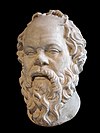
Plato on Socrates 6 quotes
“Anyone who holds a true opinion without understanding is like a blind man on the right road.”
Plato on Politicians 2 quotes
“If they acquire private land, houses, and money themselves, they will be household managers and farmers instead of guardians—hostile masters of the other citizens, instead of their allies. They will spend their whole lives hating and being hated, plotting and being plotted against, much more afraid of internal than of external enemies.”

Plato on Friedrich Nietzsche
“Plato ist langweilig.”

Plato on Stephen Hawking
“I have hardly ever known a mathematician who was able to reason.”

Quotes About Plato
Gain deeper perspective through quotes about Plato from others.
The epigram on his tomb on Plato
“Here, first of all men for pure justice famed, And moral virtue, Aristocles lies; And if there e'er has lived one truly wise, This man was wiser still; too great for envy.”
Agni Yoga on Plato 2 quotes
“Let us not link ourselves with the vilifiers of Plato and the persecutors of Confucius. They were oppressed by citizens who were considered the pride of the country. Thus has the world raised its hand against the great Servitors. Be assured that the Brotherhood formed by Pythagoras appeared dangerous in the eyes of the city guard. Paracelsus was a target for mockery and malignance. Thomas Vaughan seemed to be an outcast, and few wished to meet with him. Thus was the reign of darkness manifested.”

Danielle Allen on Plato
“Why write about Plato nearly 2400 years after his death? Don’t we understand him by now? We do and we don’t. But more important than whether humanity’s collective knowledge about Plato, built up over centuries, includes mastery of his systematic philosophy is whether our generation understands Plato at all.”
Aristobulus of Paneas on Plato
William Walker Atkinson on Plato 3 quotes
“Following Pythagoras, Plato, the great Grecian philosopher, taught the old-new doctrine of Rebirth. He taught that the souls of the dead must return to earth, where, in new lives, they must wear out the old earth deeds, receiving benefits for the worthy ones, and penalties for the unworthy ones, the soul profiting by these repeated experiences, and rising step by step toward the divine. Plato taught that the reincarnated soul has flashes of remembrance of its former lives, and also instincts and intuitions gained by former experiences. He classed innate ideas among these inherited experiences of former lives. It has been well said that "everything can be found in Plato," and therefore one who seeks for the ancient Grecian ideas concerning Reincarnation, and the problems of the soul, may find that which he seeks in the writings of the old sage and philosopher. Plato was the past master of the inner teachings concerning the soul, and all who have followed him have drawn freely from his great store of wisdom. His influence on the early Christian church was enormous, and in many forms it continues even unto this day. Many of the early Christian fathers taught that Plato was really one of the many forerunners of Christ, who had prepared the pagan world for the coming of the Master.”

















Disputed Quotes
Quotes attributed to Plato that are questionable.
“Successful people never worry about what others are doing.”
“The highest form of pure thought is in mathematics.”
Misattributed Quotes
Quotes mistakenly credited to Plato
“Atheism is a disease of the soul, before it becomes an error of the understanding.”
“Music is a moral law. It gives a soul to the universe, wings to the mind, flight to the imagination, a charm to sadness, gaiety and life to everything. It is the essence of order, and leads to all that is good, just, and beautiful, of which it is the invisible, but nevertheless dazzling, passionate, and eternal form.”
About Plato
Plato (Πλάτων Plátōn; c. 427 BC – c. 347 BC) was a Greek philosopher from Athens during the Classical period in Ancient Greece, founder of the Platonist school of thought and the Academy (Akademia), the first institution of higher learning in the Western world.