Solitude & Stillness
Where the mind recovers its sovereignty
In an age of perpetual noise, the philosophers, poets, and contemplatives remind us that creative depth and inner peace require the sanctuary of solitude.
19th century, United States
American Transcendentalism
I remember that she made me laugh more than I liked; for I was, at that time, an eager scholar of ethics, and had tasted the sweets of solitude and stoicism, and I found something profane in the hours of amusing gossip into which she drew me...

19th century, United States
American Transcendentalism
I never found the companion that was so companionable as solitude.

20th century, India
Ahimsa & Satyagraha
The very word Islam means peace, which is non-violence.

20th century, South Africa
Ubuntu & Liberation Ethics
I have always believed that exercise is the key not only to physical health but to peace of mind.

20th century, United States
Modern Literature & Civil Rights
You may write me down in history With your bitter, twisted lies, You may trod me in the very dirt But still, like dust, I'll rise.

20th century, United States
Cosmic Humanism & Skepticism
If we are alone in the Universe, it sure seems like an awful waste of space.

19th–20th century, Bengal
Bengali Renaissance & Humanism
The fountain of death makes the still water of life play.

20th century, Lebanon/USA
Levantine Poetic Mysticism
If you sing of beauty though alone in the heart of the desert you will have an audience.

20th century, Germany/USA
Political Philosophy
Totalitarianism in power invariably replaces all first-rate talents, regardless of their sympathies, with those crackpots and fools whose lack of intelligence and creativity is still the best guarantee of their loyalty.

20th century, France
Existential Feminism
They were walking side by side, but each was alone.

5th century BCE, China
Classical Chinese Strategy
In war, numbers alone confer no advantage. Do not advance relying on sheer military power.

17th century, France
Jansenist Philosophy & Mathematics
Nature, which alone is good, is wholly familiar and common.

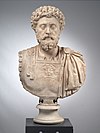
2nd century CE, Rome
Roman Stoicism
You may break your heart, but men will still go on as before.
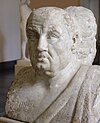
1st century CE, Rome
Roman Stoicism
Inwardly everything should be different but our outward face should conform to the crowd.
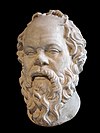
5th century BCE, Athens
Classical Greek Philosophy
He who has studied Pythagoras and his speculations on the Monad, which, after having emanated the Duad retires into silence and darkness, and thus creates the Triad can realize whence came the philosophy of the great Samian Sage, and after him that of Socrates and Plato.
4th century BCE, Athens
Platonic Academy
[Aristotle] was the most eminent of all the pupils of Plato…. He seceded from Plato while he was still alive; so that they tell a story that [Plato] said, "Aristotle has kicked us off, just as chickens do their mother after they have been hatched.

5th century BCE, China
Confucianism
The superior man is quiet and calm, waiting for the appointments of Heaven, while the mean man walks in dangerous paths, looking for lucky occurrences.

5th century BCE, India
Buddhism
Although a man may wear fine clothing, if he lives peacefully; and is good, self-possessed, has faith and is pure; and if he does not hurt any living being, he is a holy man.

13th century, Persia/Anatolia
Sufi Mysticism
Move outside the tangle of fear-thinking. Live in silence.

19th century, Germany
Continental & Existential Philosophy
God himself cannot subsist without wise men," said Luther, and with good reason; but "God can still less subsist without unwise men,"—good Luther did not say that!

20th century, Algeria/France
Existentialism & Absurdism
The absurd is born of the confrontation between the human call and the unreasonable silence of the world.

19th century, Denmark
Christian Existentialism
God creates out of nothing. Wonderful you say. Yes, to be sure, but He does what is still more wonderful: He makes saints out of sinners.

19th century, Germany
German Idealism & Pessimism
Change alone is eternal, perpetual, immortal.

17th century, Netherlands
Continental Rationalism
Peace is not an absence of war, it is a virtue, a state of mind, a disposition for benevolence, confidence, justice.

18th century, France
European Enlightenment
Hindus are "a peaceful and innocent people, equally incapable of hurting others or of defending themselves.

16th–17th century, England
English Renaissance Drama
Farewell, good Strato. — Caesar now be still: I kill'd not thee with half so good a will.

Explore All 30 Cross-Civilizational Wisdom Pillars
Compare how humanity's greatest philosophers, poets, and sages across millennia addressed the foundational questions of human existence.
Resilience
Impermanence
Compassion
Self-Knowledge
Courage
Love & Devotion
Mortality & Legacy
Time & Presence
Truth & Honesty
Freedom & Autonomy
Purpose & Meaning
Gratitude & Contentment
Forgiveness & Mercy
Humility & Openness
Discipline & Mastery
Suffering & Transformation
Friendship & Community
Justice & Moral Duty
Hope & Perseverance
Creativity & Art
Leadership & Service
Nature & The Cosmos
Doubt & Inquiry
Ambition & Excellence
Patience & Timing
Integrity & Character
Happiness & Flourishing
Change & Renewal
Mindfulness & Awareness