Suffering & Transformation
The wound is the place where the Light enters you
Every profound philosophy addresses the reality of human suffering and reveals how grief can deepen empathy and wisdom.
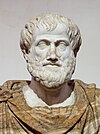
4th century BCE, Stagira
Peripatetic Philosophy
And these riches, that are derived from this art of wealth-getting, are truly unlimited; for just as the art of medicine is without limit in respect to health, and each of the arts is without limit in respect of its end...
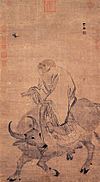
6th century BCE, China
Classical Taoism
Life is a series of natural and spontaneous changes. Don't resist them – that only creates sorrow. Let reality be reality. Let things flow naturally forward in whatever way they like.
5th century BCE, India
Buddhism
4. Magga: In order to end suffering... follow the Eightfold Path ...a path for accomplishing this.

13th century, Persia/Anatolia
Sufi Mysticism
Christ is the population of the world, and every object as well. There is no roomfor hypocrisy. Why use bitter soup for healing when sweet water is everywhere?

19th century, Germany
Continental & Existential Philosophy
Pardon me, my friends, I have ventured to paint my happiness on the wall.

19th century, Germany
German Idealism & Pessimism
English Translation: "All wanting springs from need, thus from lack, thus from suffering."Original (German): "Alles Wollen entspringt aus Bedürfnis, also aus Mangel, also aus Leiden.

16th century, France
Renaissance Humanism
Montaigne is one of those perennial sources of mental health to which there needs no excuse for returning. He is always necessary and always being rediscovered.

19th century, Russia
Russian Literature & Christian Ethics
Pure and complete sorrow is as impossible as pure and complete joy.

16th–17th century, England
English Renaissance Drama
And all my mother came into mine eyes And gave me up to tears.

19th century, Ireland
Aestheticism & Wit
Where there is sorrow there is holy ground.

19th century, United States
American Realism & Satire
Be careful about reading health books. You may die of a misprint.

19th century, United States
American Transcendentalism
that new saint than whom none purer or more brave was ever led by love of men into conflict and death,—the new saint awaiting his martyrdom, and who, if he shall suffer, will make the gallows glorious like the cross.

20th century, India
Ahimsa & Satyagraha
To me...Rama, described as the Lord of Sita, son of Dasharatha, is the all-powerful essence whose name, inscribed in the heart, removes all suffering-mental, moral and physical

20th century, South Africa
Ubuntu & Liberation Ethics
I have always believed that exercise is the key not only to physical health but to peace of mind.

20th century, United States
Modern Literature & Civil Rights
Children's talent to endure stems from their ignorance of alternatives.

20th century, United States
Cosmic Humanism & Skepticism
If the press descended, the science would surely suffer.

20th century, Austria
Logotherapy & Existential Psychology
If there is a meaning in life at all, then there must be a meaning in suffering. Suffering is an ineradicable part of life, even as fate and death.

19th–20th century, Bengal
Bengali Renaissance & Humanism
If you shed tears when you miss the sun, you also miss the stars.

20th century, Lebanon/USA
Levantine Poetic Mysticism
There must be something strangely sacred about salt. It is in our tears and in the sea

20th century, Britain
Analytic Philosophy & Humanism
In all affairs – love, religion, politics, or business – it's a healthy idea, now and then, to hang a question mark on the things you have long taken for granted.

4th–5th century CE, North Africa
Patristic Theology
What does love look like? It has the hands to help others. It has the feet to hasten to the poor and needy. It has eyes to see misery and want. It has the ears to hear the sighs and sorrows of men. That is what love looks like.

17th century, France
Jansenist Philosophy & Mathematics
We must relax our minds a little; but this opens the door to debauchery. Let us mark the limits. There are no limits in things. Laws would put them there, and the mind cannot suffer it.

2nd century CE, Rome
Roman Stoicism
Nothing happens to anyone that he can't endure. (Hays translation)
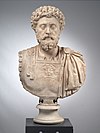
4th century BCE, Athens
Platonic Academy
The first teacher and beginner of all these beauties of tragedy.

18th century, Prussia
Enlightenment Deontology
All our knowledge falls with the bounds of experience.

Explore All 30 Cross-Civilizational Wisdom Pillars
Compare how humanity's greatest philosophers, poets, and sages across millennia addressed the foundational questions of human existence.
Resilience
Impermanence
Compassion
Self-Knowledge
Courage
Love & Devotion
Mortality & Legacy
Time & Presence
Solitude & Stillness
Truth & Honesty
Freedom & Autonomy
Purpose & Meaning
Gratitude & Contentment
Forgiveness & Mercy
Humility & Openness
Discipline & Mastery
Friendship & Community
Justice & Moral Duty
Hope & Perseverance
Creativity & Art
Leadership & Service
Nature & The Cosmos
Doubt & Inquiry
Ambition & Excellence
Patience & Timing
Integrity & Character
Happiness & Flourishing
Change & Renewal
Mindfulness & Awareness