Leo Tolstoy Quotes (1828-1910)







-100px.png)










-100px.png)





































-100px.jpg)
-100px.jpg)
About Leo Tolstoy
Best Leo Tolstoy Quotes
Explore our curated collection of the most famous and impactful Leo Tolstoy quotes.




















And he suddenly understood that the disgust which he had lately felt toward everybody ... was disgust with himself.”



'What dwells in man" I already knew. Now I learnt what is not given him. It is not given to man to know his own needs.”
• Variant: It is possible to live only as long as life intoxicates us; once we are sober we cannot help seeing that it is all a delusion, a stupid delusion.”




• A real work of art destroys, in the consciousness of the receiver, the separation between himself and the artist.”


• Variant:”


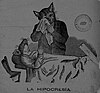
• Variant Translation: Hypocrisy with good reason means the same as acting, and anybody can pretend — act a part.”


• Variant translation: Government is an association of men who do violence to the rest of us.”

"No; how so?" she replied. "He's seen a great deal, anyway; he's cultured?"
"It's an utterly different culture—their culture. He's cultivated, one sees, simply to be able to despise culture, as they despise everything but animal pleasures."”

• Variant translation: The sole meaning of life is to serve humanity by contributing to the establishment of the kingdom of God, which can only be done by the recognition and profession of the truth by every man.”

"Lord, help me, teach me; come and enter within me and purify me of all this abomination."
He prayed, asked God to help him and purify him, while that which he was praying for had already happened. Not only did he feel the freedom, vigor and gladness of life, but he also felt the power of good. He felt himself capable of doing the best that man can do.”
How is this revolution to take place? Nobody knows how it will take place in humanity, but every man feels it clearly in himself. And yet in our world everybody thinks of changing humanity, and nobody thinks of changing himself.
• Variant: Everyone thinks of changing the world, but no one thinks of changing himself.”


If only free men would not rely on that which has no power, and is always fettered — upon external aids; but would trust in that which is always powerful and free — the truth and its expression!”









• Feelings, the most diverse, very strong and very weak, very significant and very worthless, very bad and very good, if only they infect the reader, the spectator, the listener, constitute the subject of art.”


Ask our savage Russifiers of Poland and the Baltic provinces, ask the persecutors of the Jews, why they act thus. They will tell you it is in defence of their native religion and language; they will tell you that if they do not act thus, their religion and language will suffer—the Russians will be Polonised, Teutonised, Judaised.”




If the purpose of history be to give a description of the movement of humanity and of the peoples, the first question — in the absence of a reply to which all the rest will be incomprehensible — is: what is the power that moves peoples? To this, modern history laboriously replies either that Napoleon was a great genius, or that Louis XIV was very proud, or that certain writers wrote certain books.
All that may be so and mankind is ready to agree with it, but it is not what was asked.”



Or better yet:
God is that infinite All of which man knows himself to be a finite part.
God alone exists truly. Man manifests Him in time, space and matter. The more God's manifestation in man (life) unites with the manifestations (lives) of other beings, the more man exists. This union with the lives of other beings is accomplished through love.
God is not love, but the more there is of love, the more man manifests God, and the more he truly exists...
We acknowledge God only when we are conscious of His manifestation in us. All conclusions and guidelines based on this consciousness should fully satisfy both our desire to know God as such as well as our desire to live a life based on this recognition.”
It is as if a man should come into a peaceful company, and commence energetically to assure everyone present that he has not the least intention to knock out anyone's teeth, blacken their eyes, or break their arms, but has only the most peaceful ideas for passing the evening.”


And to accomplish this change no exertions of the mind are needed, nor the refutation of anything in existence, nor the invention of any extraordinary novelty; it is only needful that we should not succumb to the erroneous, already defunct, public opinion of the past, which governments have induced artificially; it is only needful that each individual should say what he really feels or thinks, or at least that he should not say what he does not think.”

• Variant: I know that most men, including those at ease with problems of the greatest complexity, can seldom accept even the simplest and most obvious truth if it be such as would oblige them to admit the falsity of conclusions which they have delighted in explaining to colleagues, which they have proudly taught to others, and which they have woven, thread by thread, into the fabric of their lives.”


• Translation: Never did Christ utter a single word attesting to a personal resurrection and a life beyond the grave.”

"Seek the truth and the Kingdom of God, and the rest will come of itself. We seek that which is to come, and do not find it, and not only do we not build the Kingdom of God, but we destroy it.
"So this will henceforth be the task of my life!"
And indeed, from that night a new life began for Nekhludoff; not so much because he had risen into a new stage of existence, but because all that had happened to him till then assumed for him an altogether new meaning.”
The government assures the people that they are in danger from the invasion of another nation, or from foes in their midst, and that the only way to escape this danger is by the slavish obedience of the people to their government. This fact is seen most prominently during revolutions and dictatorships, but it exists always and everywhere that the power of the government exists. Every government explains its existence, and justifies its deeds of violence, by the argument that if it did not exist the condition of things would be very much worse. After assuring the people of its danger the government subordinates it to control, and when in this condition compels it to attack some other nation. And thus the assurance of the government is corroborated in the eyes of the people, as to the danger of attack from other nations.”
Slavery exists in full vigor, but we do not perceive it, just as in Europe at the end of the Eighteenth Century the slavery of serfdom was not perceived.
People of that day thought that the position of men obliged to till the land for their lords, and to obey them, was a natural, inevitable, economic condition of life, and they did not call it slavery.
It is the same among us: people of our day consider the position of the laborer to be a natural, inevitable economic condition, and they do not call it slavery. And as, at the end of the Eighteenth Century, the people of Europe began little by little to understand that what formerly seemed a natural and inevitable form of economic life-namely, the position of peasants who were completely in the power of their lords-was wrong, unjust and immoral, and demanded alteration, so now people today are beginning to understand that the position of hired workmen, and of the working classes in general, which formerly seemed quite right and quite normal, is not what it should be, and demands alteration.
”

I have learnt that all men live not by care for themselves, but by love.
It was not given to the mother to know what her children needed for their life. Nor was it given to the rich man to know what he himself needed. Nor is it given to any man to know whether, when evening comes, he will need boots for his body or slippers for his corpse.
I remained alive when I was a man, not by care of myself, but because love was present in a passer-by, and because he and his wife pitied and loved me. The orphans remained alive, not because of their mother's care, but because there was love in the heart of a woman a stranger to them, who pitied and loved them. And all men live not by the thought they spend on their own welfare, but because love exists in man.
I knew before that God gave life to men and desires that they should live; now I understood more than that.
I understood that God does not wish men to live apart, and therefore he does not reveal to them what each one needs for himself; but he wishes them to live united, and therefore reveals to each of them what is necessary for all.
I have now understood that though it seems to men that they live by care for themselves, in truth it is love alone by which they live. He who has love, is in God, and God is in him, for God is love.”
The whole world knows that virtue consists in the subjugation of one's passions, or in self-renunciation. It is not just the Christian world, against whom Nietzsche howls, that knows this, but it is an eternal supreme law towards which all humanity has developed, including Brahmanism, Buddhism, Confucianism, and the ancient Persian religion. And suddenly a man appears who declares that he is convinced that self-renunciation, meekness, submissiveness and love are all vices that destroy humanity (he has in mind Christianity, ignoring all the other religions).
One can understand why such a declaration baffled people at first. But after giving it a little thought and failing to find any proof of the strange propositions, any rational person ought to throw the books aside and wonder if there is any kind of rubbish that would not find a publisher today. But this has not happened with Nietzsche´s books. The majority of pseudo-enlightened people seriously look into the theory of the Übermensch, and acknowledge its author to be a great philosopher, a descendant of Descartes, Leibniz and Kant. And all this has come about because the majority of pseudo-enlightened men of today object to any reminder of virtue, or to its chief premise: self-renunciation and love—virtues that restrain and condemn the animal side of their life. They gladly welcome a doctrine, however incoherently and disjointedly expressed, of egotism and cruelty, sanctioning the idea of personal happiness and superiority over the lives of others, by which they live.
”
One serves as emperor, king, minister, government functionary, or soldier, and assures himself and others that the deviation from truth indispensable to his condition is redeemed by the good he does. Another, who fulfils the duties of a spiritual pastor, does not in the depths of his soul believe all he teaches, but permits the deviation from truth in view of the good he does. A third instructs men by means of literature, and notwithstanding the silence he must observe with regard to the whole truth, in order not to stir up the government and society against himself, has no doubt as to the good he does. A fourth struggles resolutely with the existing order as revolutionist or anarchist, and is quite assured that the aims he pursues are so beneficial that the neglect of the truth, or even of the falsehood, by silence, indispensable to the success of his activity, does not destroy the utility of his work.
In order that the conditions of a life contrary to the consciousness of humanity should change and be replaced by one which is in accord with it, the outworn public opinion must be superseded by a new and living one. And in order that the old outworn opinion should yield its place to the new living one, all who are conscious of the new requirements of existence should openly express them.''' And yet all those who are conscious of these new requirements, one in the name of one thing, and one in the name of another, not only pass them over in silence, but both by word and deed attest their exact opposites.”
And that which yesterday was the novel opinion of one man, to-day becomes the general opinion of the majority.
And as soon as this opinion is established, immediately by imperceptible degrees, but beyond power of frustration, the conduct of mankind begins to alter.
Whereas at present, every man, even, if free, asks himself, "What can I do alone against all this ocean of evil and deceit which overwhelms us? Why should I express my opinion? Why indeed possess one? It is better not to reflect on these misty and involved questions. Perhaps these contradictions are an inevitable condition of our existence. And why should I struggle alone with all the evil in the world? Is it not better to go with the stream which carries me along ? If anything can be done, it must be done not alone but in company with others."
And leaving the most powerful of weapons — thought and its expression — which move the world, each man employs the weapon of social activity, not noticing that every social activity is based on the very foundations against which he is bound to fight, and that upon entering the social activity which exists in our world every man is obliged, if only in part, to deviate from the truth and to make concessions which destroy the force of the powerful weapon which should assist him in the struggle. It is as if a man, who was given a blade so marvelously keen that it would sever anything, should use its edge for driving in nails.
We all complain of the senseless order of life, which is at variance with our being, and yet we refuse to use the unique and powerful weapon within our hands — the consciousness of truth and its expression; but on the contrary, under the pretext of struggling with evil, we destroy the weapon, and sacrifice it to the exigencies of an imaginary conflict'.”
But besides this Christianity, from the time of the wholesale conversion of whole nations by order of the authorities, as in the days of Constantine, Charlemagne and Vladimir, there appeared another , a Church Christianity, which was nearer to paganism than to Christ's teaching. And this Church Christianity ... did not acknowledge the fundamental and essential positions of true Christianity — the direct relationship of each individual to the Father, the consequent brotherhood and equality of all people, and the substitution of humility and love in place of every kind of violence — but, on the contrary, having founded a heavenly hierarchy similar to the pagan mythology, and having introduced the worship of Christ, of the Virgin, of angels, of apostles, of saints, and of martyrs, but not only of these divinities themselves but of their images, it made blind faith in its ordinances an essential point of its teachings.
However foreign this teaching may have been to true Christianity, however degraded, not only in comparison with true Christianity, but even with the life-conception of the Romans such as Julian and others, it was for all that, to the barbarians who accepted it, a higher doctrine than their former adoration of gods, heroes, and good and bad spirits. And therefore this teaching was a religion to them, and on the basis of that religion the art of the time was assessed. And art transmitting pious adoration of the Virgin, Jesus, the saints, and the angels, a blind faith in and submission to the Church, fear of torments and hope of blessedness in a life beyond the grave, was considered good; all art opposed to this was considered bad.”
This divergence and perversion of the essential question is most striking in what goes today by the name of philosophy. There would seem to be only one question for philosophy to resolve: What must I do? Despite being combined with an enormous amount of unnecessary confusion, answers to the question have at any rate been given within the philosophical tradition on the Christian nations. For example, in Kant´s Critique of Practical Reason, or in Spinoza, Schopenhauer and specially Rousseau.
But in more recent times, since Hegel´s assertion that all that exists is reasonable, the question of what one must do has been pushed to the background and philosophy has directed its whole attention to the investigation of things as they are, and to fitting them into a prearranged theory. This was the first step backwards.
The second step, degrading human thought yet further, was the acceptance of the struggle for existence as a basic law, simply because that struggle can be observed among animals and plants. According to this theory the destruction of the weakest is a law which should not be opposed. And finally, the third step was taken when the childish originality of Nietzsche´s half-crazed thought, presenting nothing complete or coherent, but only various drafts of immoral and completely unsubstantiated ideas, was accepted by the leading figures as the final word in philosophical science. In reply to the question: what must we do? the answer is now put straightforwardly as: live as you like, without paying attention to the lives of others.
If anyone doubted that the Christian world of today has reached a frightful state of torpor and brutalization (not forgetting the recent crimes committed in the Boers and in China, which were defended by the clergy and acclaimed as heroic feats by all the world powers), the extraordinary success of Nietzsche´s works is enough to provide irrefutable proof of this.
Some disjointed writings, striving after effect in a most sordid manner, appear, written by a daring, but limited and abnormal German, suffering from power mania. Neither in talent nor in their basic argument to these writings justify public attention. In the days of Kant, Leibniz, or Hume, or even fifty years ago, such writings would not only have received no attention, but they would not even have appeared. But today all the so called educated people are praising the ravings of Mr. N, arguing about him, elucidating him, and countless copies of his works are printed in all languages.
”
Leo Tolstoy Quotes by Topic
Find exactly what you are looking for by browsing this categorized list of Leo Tolstoy quotes by topic.
Leo Tolstoy on Christian anarchism 14 quotes

Leo Tolstoy on Love 8 quotes
Leo Tolstoy on Philosophical pessimism 8 quotes

Leo Tolstoy on Death 7 quotes

Leo Tolstoy on Christian pacifism 7 quotes
What Leo Tolstoy Said About Others
Discover personal opinions Leo Tolstoy shared regarding contemporaries.
Leo Tolstoy on Afrikan Spir 2 quotes

Leo Tolstoy on Women 2 quotes

Leo Tolstoy on Maria Lvovna Tolstaya 2 quotes

Leo Tolstoy on Sergei Tolstoy 2 quotes

Leo Tolstoy on Friedrich Nietzsche 2 quotes

Quotes About Leo Tolstoy
Gain deeper perspective through quotes about Leo Tolstoy from others.
Jane Addams on Leo Tolstoy

Kathleen Alcalá on Leo Tolstoy

Isaak Babel on Leo Tolstoy
Anton Chekhov on Leo Tolstoy
G. K. Chesterton on Leo Tolstoy








Disputed Quotes
Quotes attributed to Leo Tolstoy that are questionable.
The Jew — is the symbol of eternity. ... He is the one who for so long had guarded the prophetic message and transmitted it to all mankind. A people such as this can never disappear. The Jew is eternal. He is the embodiment of eternity.”