Link Copied!
Oscar Wilde Quotes (1854-1900)
Poet, Novelist































-100px.png)




































-100px.jpg)

-100px.jpg)














About Oscar Wilde
Oscar Fingal O'Flahertie Wills Wilde (16 October 1854 – 30 November 1900) was an Irish dramatist, essayist, novelist and poet.
Best Oscar Wilde Quotes
Shortest
Earliest
Explore our curated collection of the most famous and impactful Oscar Wilde quotes.




“Experience, the name men give to their mistakes.”


“The supreme vice is shallowness.”
“Only the shallow know themselves.”
“Patriotism is the vice of nations.”


“Starvation, and not sin, is the parent of modern crime.”
“Women are never disarmed by compliments. Men always are.”
“There is always more brass than brains in an aristocracy.”

“It is always the unreadable that occurs.”
“Oh! journalism is unreadable, and literature is not read.”

“Friendship is far more tragic than love. It lasts longer.”

“One should always be a little improbable.”
“I can resist everything except temptation.”
“Indifference is the revenge the world takes on mediocrities.”

“A poet can survive everything but a misprint.”

“The note of the perfect personality is not rebellion, but peace.”

“One can survive everything nowadays except death.”
“Fool, nothing is impossible in Russia but reform.”



“Consistency is the last refuge of the unimaginative.”
“A thing is not necessarily true because a man dies for it.”


“Moderation is a fatal thing, Lady Hunstanton. Nothing succeeds like excess.”
“It is a very sad thing that nowadays there is so little useless information.”

“A simile committing suicide is always a depressing spectacle.”
“It is better to have a permanent income than to be fascinating.”
“The growing influence of women is the one reassuring thing in our political life.”
“I am always astonishing myself. It is the only thing that makes life worth living.”
“Fashion is what one wears oneself. What is unfashionable is what other people wear.”

“A little sincerity is a dangerous thing, and a great deal of it is absolutely fatal.”

“I am the only person in the world I should like to know thoroughly.”




“I've now realized for the first time in my life the vital Importance of Being Earnest.”

“In examinations the foolish ask questions that the wise cannot answer.”
“Men marry because they are tired; women because they are curious. Both are disappointed.”
“In America the President reigns for four years, and Journalism governs for ever and ever.”

“Never speak disrespectfully of Society, Algernon. Only people who can't get into it do that.”

“Women have a wonderful instinct about things. They can discover everything except the obvious.”

“All charming people, I fancy, are spoiled. It is the secret of their attraction.”
“Now don't stir. I'll be back in five minutes. And don't fall into any temptations while I am away.”
“Selfishness is not living as one wishes to live, it is asking others to live as one wishes to live.”

“An engagement should come on a young girl as a surprise, pleasant or unpleasant as the case may be.”
“I never travel without my diary. One should always have something sensational to read in the train.”

“Lord Illingworth: Discontent is the first step in the progress of a man or a nation.”

“Science can never grapple with the irrational. That is why it has no future before it, in this world.”

“Oh, why will parents always appear at the wrong time? Some extraordinary mistake in nature, I suppose.”
“For a sentimentalist is simply one who desires to have the luxury of an emotion without paying for it.”
“My experience is that as soon as people are old enough to know better, they don't know anything at all.”
“We have really everything in common with America nowadays, except, of course, language.”

“It is always a silly thing to give advice, but to give good advice is absolutely fatal.”

“The English country gentleman galloping after a fox — the unspeakable in full pursuit of the uneatable.”
“The old believe everything; the middle-aged suspect everything; the young know everything.”
“Prayer must never be answered: if it is, it ceases to be prayer and becomes correspondence.”

“To lose one parent may be regarded as a misfortune ... to lose both seems like carelessness.”
“I have always been of opinion that a man who desires to get married should know either everything or nothing.”

“Between men and women there is no friendship possible. There is passion, enmity, worship, love, but no friendship.”

“The only link between Literature and the Drama left to us in England at the present moment is the bill of the play.”

“Criticism will annihilate race-prejudices by insisting upon the unity of the human mind in the variety of its forms.”

“The English are always degrading truths into facts. When a truth becomes a fact it loses all its intellectual value.”

“Be warned in time, James, and remain, as I do, incomprehensible: to be great is to be misunderstood.”
“The final revelation is that Lying, the telling of beautiful untrue things, is the proper aim of Art.”

“Psychology is in its infancy, as a science. I hope in the interests of Art, it will always remain so.”


“A man who knows the price of everything and the value of nothing. [Answering the question, what is a cynic?]”

“Nowadays we are all of us so hard up that the only pleasant things to pay are compliments. They're the only things we can pay.”
“The things people say of a man do not alter a man. He is what he is. Public opinion is of no value whatsoever.”

“The only way to atone for being occasionally a little over-dressed is by being always absolutely over-educated.”

“A dreamer is one who can only find his way by moonlight, and his punishment is that he sees the dawn before the rest of the world.”

“Lo! with a little rod
I did but touch the honey of romance —
And must I lose a soul's inheritance?”
I did but touch the honey of romance —
And must I lose a soul's inheritance?”

“It is immoral to use private property in order to alleviate the horrible evils that result from the institution of private property.”

“I hope you have not been leading a double life, pretending to be wicked and being really good all the time. That would be hypocrisy.”
“And down the long and silent street,
The dawn, with silver-sandalled feet,
Crept like a frightened girl.”
The dawn, with silver-sandalled feet,
Crept like a frightened girl.”

“I have invented an invaluable permanent invalid called Bunbury, in order that I may be able to go down into the country whenever I choose.”
“If it took Labouchere three columns to prove that I was forgotten, then there is no difference between fame and obscurity.”
“And alien tears will fill for him
Pity's long-broken urn,
For his mourners will be outcast men,
And outcasts always mourn.”
Pity's long-broken urn,
For his mourners will be outcast men,
And outcasts always mourn.”
“I have never admitted that I am more than twenty-nine, or thirty at the most. Twenty-nine when there are pink shades, thirty when there are not.”
“Musical people are so absurdly unreasonable. They always want one to be perfectly dumb a the very moment when one is longing to be absolutely deaf.”

“One is tempted to define man as a rational animal who always loses his temper when he is called upon to act in accordance with the dictates of reason.”
“As long as war is regarded as wicked, it will always have its fascination. When it is looked upon as vulgar, it will cease to be popular.”
“The number of women in London who flirt with their own husbands is perfectly scandalous. It looks so bad. It is simply washing one's clean linen in public.”
“As for modern Journalism, its not my business to defend it. It justifies its own existence by the great Darwinian principle of the survival of the vulgarest.”
“Lord Illingworth: The Book of Life begins with a man and a woman in a garden.
Mrs. Allonby: It ends with Revelations.”
Mrs. Allonby: It ends with Revelations.”
“And it is only fair to state, with regard to modern journalists, that they always apologise to one in private for what they have written against one in public.”
“The absence of old friends one can endure with equanimity. But even a momentary separation from anyone to whom one has just been introduced is almost unbearable.”
“Thirty-five is a very attractive age. London society is full of women of the very highest birth who have, of their own free choice, remained thirty-five for years.”
“The home seems to me to be the proper sphere for the man. And certainly once a man begins to neglect his domestic duties he becomes painfully effeminate, does he not?”
“I am but too conscious of the fact that we are born in an age when only the dull are treated seriously, and I live in terror of not being misunderstood.”
“To make a good salad is to be a brilliant diplomatist – the problem is so entirely the same in both cases. To know exactly how much oil one must put with one's vinegar.”
“It is through art, and through art only, that we can realize our perfection; through art and art only that we can shield ourselves from the sordid perils of actual existence.”

“And, after all, what is a fashion? From the artistic point of view, it is usually a form of ugliness so intolerable that we have to alter it every six months.”
“Most modern calendars mar the sweet simplicity of our lives by reminding us that each day that passes is the anniversary of some perfectly uninteresting event.”

“People who count their chickens before they are hatched act very wisely because chickens run about so absurdly that it's impossible to count them accurately...”

“Gerald: I suppose society is wonderfully delightful?
Lord Illingworth: To be in it is merely a bore. But to be out of it simply a tragedy.”
Lord Illingworth: To be in it is merely a bore. But to be out of it simply a tragedy.”
“To speak frankly, I am not in favour of long engagements. They give people the opportunity of finding out each other's character before marriage, which I think is never advisable.”
“I cannot understand your nature. If my nature had been made to suit your comprehension rather than my own requirements, I am afraid I would have made a very poor figure in the world.”

“I hope, Cecily, I shall not offend you if I state quite frankly and openly that you seem to me to be in every way the visible personification of absolute perfection.”
“Art finds her own perfection within, and not outside of herself. She is not to be judged by any external standard of resemblance. She is a veil, rather than a mirror.”
“Do you really think, Arthur, that it is weakness that yields to temptation? I tell you that there are terrible temptations that it requires strength, strength and courage, to yield to.”
“Lady Hunstanton: But do you believe all that is written in the newspapers?
Lord Illingworth: I do. Nowadays it is only the unreadable that occurs.”
Lord Illingworth: I do. Nowadays it is only the unreadable that occurs.”

“For to disagree with three-fourths of the British public on all points is one of the first elements of sanity, one of the deepest consolations in all moments of spiritual doubt.”
“It is to do nothing that the elect exist. Action is limited and relative. Unlimited and absolute is the vision of him who sits at ease and watches, who walks in loneliness and dreams.”

“Lord Illingworth: Women have become too brilliant. Nothing spoils a romance so much as a sense of humour in the woman.
Mrs. Allonby: Or the want of it in the man.”
Mrs. Allonby: Or the want of it in the man.”
“Disobedience, in the eyes of any one who has read history, is man's original virtue. It is through disobedience that progress has been made, through disobedience and through rebellion.”

“Experience is the name everyone gives to their mistakes. [First used by Wilde in Vera; or, The Nihilists.]”
“England has done one thing; it has invented and established Public Opinion, which is an attempt to organize the ignorance of the community, and to elevate it to the dignity of physical force.”

“The more we study Art, the less we care for Nature. What Art really reveals to us is Nature's lack of design, her curious crudities, her extraordinary monotony, her absolutely unfinished condition.”
“Keep love in your heart. A life without it is like a sunless garden when the flowers are dead. The consciousness of loving and being loved brings warmth and richness to life that nothing else can bring.”
“If Nature had been comfortable, mankind would never have invented architecture...In a house, we all feel of the proper proportions. Everything is subordinated to us, fashioned for our use and our pleasure.”


“To be good, according to the vulgar standard of goodness, is obviously quite easy. It merely requires a certain amount of sordid terror, a certain lack of imaginative thought, and a certain low passion for middle-class respectability.”
“Yet each man kills the thing he loves
By each let this be heard,
Some do it with a bitter look,
Some with a flattering word,
The coward does it with a kiss,
The brave man with a sword!”
By each let this be heard,
Some do it with a bitter look,
Some with a flattering word,
The coward does it with a kiss,
The brave man with a sword!”
“Art is Individualism, and Individualism is a disturbing and disintegrating force. Therein lies its immense value. For what it seeks to disturb is monotony of type, slavery of custom, tyranny of habit, and the reduction of man to the level of a machine.”

“Misery and poverty are so absolutely degrading, and exercise such a paralysing effect over the nature of men, that no class is ever really conscious of its own suffering. They have to be told of it by other people, and they often entirely disbelieve them.”
“People sometimes inquire what form of government is most suitable for an artist to live under. To this question there is only one answer. The form of government that is most suitable to the artist is no government at all. Authority over him and his art is ridiculous.”

“Mrs. Allonby: They say, Lady Hunstanton, that when good Americans die they go to Paris.
Lady Hunstanton: Indeed? And when bad Americans die, where do they go to?
Lord Illingworth: Oh, they go to America.”
Lady Hunstanton: Indeed? And when bad Americans die, where do they go to?
Lord Illingworth: Oh, they go to America.”
“I really don't see anything romantic in proposing. It is very romantic to be in love. But there is nothing romantic about a definite proposal. Why, one may be accepted. One usually is, I believe. Then the excitement is all over. The very essence of romance is uncertainty.”

“With the abolition of private property, then, we shall have true, beautiful, healthy Individualism. Nobody will waste his life in accumulating things, and the symbols for things. One will live. To live is the rarest thing in the world. Most people exist, that is all.”
“There are three kinds of despots. There is the despot who tyrannises over the body. There is the despot who tyrannises over the soul. There is the despot who tyrannises over the soul and body alike. The first is called the Prince. The second is called the Pope. The third is called the People.”
“Be happy, be happy; you shall have your red rose. I will build it out of music by moonlight, and stain it with my own heart's-blood. All that I ask of you in return is that you will be a true lover, for Love is wiser than Philosophy, though she is wise, and mightier than Power, though he is mighty.”
“The chief advantage that would result from the establishment of Socialism is, undoubtedly, the fact that Socialism would relieve us from that sordid necessity of living for others which, in the present condition of things, presses so hardly upon almost everybody. In fact, scarcely any one at all escapes.”

“Agitators are a set of interfering, meddling people, who come down to some perfectly contented class of the community, and sow the seeds of discontent amongst them. That is the reason why agitators are so absolutely necessary. Without them, in our incomplete state, there would be no advance towards civilisation.”
“Kelvil: May I ask, Lord Illingworth, if you regard the House of Lords as a better institution than the House of Commons?
Lord Illingworth: A much better institution of course. We in the House of Lords are never in touch with public opinion. That makes us a civilised body.”
Lord Illingworth: A much better institution of course. We in the House of Lords are never in touch with public opinion. That makes us a civilised body.”

“Just as the worst slave-owners were those who were kind to their slaves, and so prevented the horror of the system being realised by those who suffered from it, and understood by those who contemplated it, so, in the present state of things in England, the people who do most harm are the people who try to do most good.”
“The fact is, that civilisation requires slaves. The Greeks were quite right there. Unless there are slaves to do the ugly, horrible, uninteresting work, culture and contemplation become almost impossible. Human slavery is wrong, insecure, and demoralizing. On mechanical slavery, on the slavery of the machine, the future of the world depends.”
“And he related also, with much gusto, how in a country-house he had told his host one evening that he had spent the day in hard literary work, and that, when asked what he had done, he had said, "I was working on the proof of one of my poems all the morning and took out a comma." "And in the afternoon?" "In the afternoon–well, I put it back again."”
“All modes of government are failures. Despotism is unjust to everybody, including the despot, who was probably made for better things. Oligarchies are unjust to the many, and ochlocracies are unjust to the few. High hopes were once formed of democracy; but democracy means simply the bludgeoning of the people by the people for the people.”

“The honest ratepayer and his healthy family have no doubt often mocked at the dome-like forehead of the philosopher, and laughed over the strange perspective of the landscape that lies beneath him. If they really knew who he was, they would tremble. For Chuang Tsǔ spent his life in preaching the great creed of Inaction, and in pointing out the uselessness of all things.”
“Puritans cannot destroy a beautiful thing, yet, by means of their extraordinary prurience, they can almost taint beauty for a moment. It is chiefly, I regret to say, through journalism that such people find expression. I regret it because there is much to be said in favour of modern journalism. By giving us the opinions of the uneducated, it keeps us in touch with the ignorance of the community.”
“There is much to be said in favor of modern journalism. By giving us the opinions of the uneducated, it keeps us in touch with the ignorance of the community. By carefully chronicling the current events of contemporary life, it shows us of what very little importance such events really are. By invariably discussing the unnecessary, it makes us understand what things are requisite for culture, and what are not.”
“God knows; I won't be an Oxford don anyhow. I'll be a poet, a writer, a dramatist. Somehow or other I'll be famous, and if not famous, I'll be notorious. Or perhaps I'll lead the life of pleasure for a time and then—who knows?—rest and do nothing. What does Plato say is the highest end that man can attain here below? To sit down and contemplate the good. Perhaps that will be the end of me too.”
“For what man has sought for is, indeed, neither pain nor pleasure, but simply Life. Man has sought to live intensely, fully, perfectly. When he can do so without exercising restraint on others, or suffering it ever, and his activities are all pleasurable to him, he will be saner, healthier, more civilised, more himself. Pleasure is Nature's test, her sign of approval. When man is happy, he is in harmony with himself and his environment.”
“To drift with every passion till my soul
Is a stringed lute on which all winds can play,
Is it for this that I have given away
Mine ancient wisdom, and austere control?
Methinks my life is a twice-written scroll
Scrawled over on some boyish holiday
With idle songs for pipe and virelay,
Which do but mar the secret of the whole.”
Is a stringed lute on which all winds can play,
Is it for this that I have given away
Mine ancient wisdom, and austere control?
Methinks my life is a twice-written scroll
Scrawled over on some boyish holiday
With idle songs for pipe and virelay,
Which do but mar the secret of the whole.”
“The one thing that the public dislike is novelty. Any attempt to extend the subject matter of art is extremely distasteful to the public; and yet the vitality and progress of art depend in a large measure on the continual extension of subject-matter. The public dislike novelty because they are afraid of it. It represents to them a mode of Individualism, an assertion on the part of the artist that he selects his own subject, and treats it as he chooses.”
“A work of art is the unique result of a unique temperament. Its beauty comes from the fact that the author is what he is. It has nothing to do with the fact that other people want what they want. Indeed, the moment that an artist takes notice of what other people want, and tries to supply the demand, he ceases to be an artist, and becomes a dull or an amusing craftsman, an honest or a dishonest tradesman. He has no further claim to be considered as an artist.”

“An individual who has to make things for the use of others, and with reference to their wants and their wishes, does not work with interest, and consequently cannot put into his work what is best in him. Upon the other hand, whenever a community or a powerful section of a community, or a government of any kind, attempts to dictate to the artist what he is to do, Art either entirely vanishes, or becomes stereotyped, or degenerates into a low and ignoble form of craft.”
“The fact is, that the public have an insatiable curiosity to know everything, except what is worth knowing. Journalism, conscious of this, and having tradesmanlike habits, supplies their demands Wilde, Oscar, (1891 / 1912) The Soul of Man Under Socialism, London, Arthur L. Humphreys. Retrieved from University of California Libraries Archive.org 26 February 2018 https://archive.org/details/soulofmanunderso00wildiala”
“In Art, the public accept what has been, because they cannot alter it, not because they appreciate it. They swallow their classics whole, and never taste them. They endure them as the inevitable, and, as they cannot mar them, they mouth about them...A fresh mode of Beauty is absolutely distasteful to them, and whenever it appears they get so angry and bewildered that they always use two stupid expressions - one is that the work of art is grossly unintelligible; the other, that the work of art is grossly immoral.”
“It is chiefly, I regret to say, through journalism that such people find expression. I regret it because there is much to be said in favour of modern journalism. By giving us the opinions of the uneducated, it keeps us in touch with the ignorance of the community. By carefully chronicling the current events of contemporary life, it shows us of what very little importance such events really are. By invariably discussing the unnecessary, it makes us understand what things are requisite for culture, and what are not.”
“Art is the most intense mode of individualism that the world has known. I am inclined to say that it is the only real mode of individualism that the world has known. Crime, which, under certain conditions, may seem to have created individualism, must take cognisance of other people and interfere with them. It belongs to the sphere of action. But alone, without any reference to his neighbours, without any interference, the artist can fashion a beautiful thing; and if he does not do it solely for his own pleasure, he is not an artist at all.”
“The only thing that one really knows about human nature is that it changes. Change is the one quality we can predicate of it. The systems that fail are those that rely on the permanency of human nature, and not on its growth and development. The error of Louis XIV was that he thought human nature would always be the same. The result of his error was the French Revolution. It was an admirable result. All the results of the mistakes of governments are quite admirable.”
“Don't imagine that your perfection lies in accumulating or possessing external things. Your perfection is inside of you. If only you could realise that, you would not want to be rich. Ordinary riches can be stolen from a man. Real riches cannot. In the treasury-house of your soul, there are infinitely precious things, that may not be taken from you. And so, try to so shape your life that external things will not harm you. And try also to get rid of personal property. It involves sordid preoccupation, endless industry, continual wrong. Personal property hinders Individualism at every step.”
“If a man approaches a work of art with any desire to exercise authority over it and the artist, he approaches it in such a spirit that he cannot receive any artistic impression from it at all. The work of art is to dominate the spectator: the spectator is not to dominate the work of art. The spectator is to be receptive. He is to be the violin on which the master is to play. And the more completely he can suppress his own silly views, his own foolish prejudices, his own absurd ideas of what Art should be, or should not be, the more likely he is to understand and appreciate the work of art in question.”
“Here we allow absolute freedom to the journalist and entirely limit the artist. English public opinion, that is to say, tries to constrain and impede and warp the man who makes things that are beautiful in effect, and compels the journalist to retail things that are ugly, or disgusting, or revolting in fact, so that we have the most serious journalists in the world and the most indecent newspapers. Wilde, Oscar, (1891 / 1912) The Soul of Man Under Socialism, London, Arthur L. Humphreys. Retrieved from University of California Libraries Archive.org 13 February 2018 https://archive.org/details/soulofmanunderso00wildiala”
“Art is this intense form of individualism that makes the public try to exercise over it an authority that is as immoral as it is ridiculous, and as corrupting as it is contemptible. It is not quite their fault. The public have always, and in every age, been badly brought up. They are continually asking Art to be popular, to please their want of taste, to flatter their absurd vanity, to tell them what they have been told before, to show them what they ought to be tired of seeing, to amuse them when they feel heavy after eating too much, and to distract their thoughts when they are wearied of their own stupidity. Now Art should never try to be popular. The public should try to make itself artistic.”
“For the recognition of private property has really harmed Individualism, and obscured it, by confusing a man with what he possesses. It has led Individualism entirely astray. It has made gain not growth its aim. So that man thought that the important thing was to have, and did not know that the important thing is to be. The true perfection of man lies, not in what man has, but in what man is. Private property has crushed true Individualism, and set up an Individualism that is false. It has debarred one part of the community from being individual by starving them. It has debarred the other part of the community from being individual by putting them on the wrong road and encumbering them.”
“In the old days men had the rack. Now they have the Press. That is an Improvement certainly. but still it is very bad, and wrong, and demoralising. Somebody - was it Burke? - called journalism the fourth estate. That was true at the time, no doubt. But at the present moment it really is the only estate. It has eaten up the other three. The Lords Temporal say nothing, The Lords Spiritual have nothing to say and the House of Commons has nothing to say and says it. We are dominated by journalism. Wilde, Oscar, (1891 / 1912) The Soul of Man Under Socialism, London, Arthur L. Humphreys. Retrieved from University of California Libraries Archive.org 13 February 2018 https://archive.org/details/soulofmanunderso00wildiala”
“It will be a marvellous thing--the true personality of man--when we see it. It will grow naturally and simply, flowerlike, or as a tree grows. It will not be at discord. It will never argue or dispute. It will not prove things. It will know everything. And yet it will not busy itself about knowledge. It will have wisdom. Its value will not be measured by material things. It will have nothing. And yet it will have everything, and whatever one takes from it, it will still have, so rich will it be. It will not be always meddling with others, or asking them to be like itself. It will love them because they will be different. And yet while it will not meddle with others, it will help all, as a beautiful thing helps us, by being what it is. The personality of man will be very wonderful. It will be as wonderful as the personality of a child.”
“It was a fatal day when the public discovered that the pen is mightier than the paving-stone, and can be made as offensive as the brickbat. They at once sought for the journalist, found him, developed him, and made him their industrious and well-paid servant. It is greatly to be regretted, for both their sakes. Behind the barricade there may be much that is noble and heroic. But what is there behind the leading-article but prejudice, stupidity, cant, and twaddle? And when these four are joined together they make a terrible force, and constitute the new authority. Wilde, Oscar, (1891 / 1912) The Soul of Man Under Socialism, London, Arthur L. Humphreys. Retrieved from University of California Libraries Archive.org 13 February 2018 https://archive.org/details/soulofmanunderso00wildiala”
“In America, the President reigns for four years, and journalism governs for ever and ever. Fortunately, in America journalism has carried its authority to the grossest and most brutal extreme. As a natural consequence it has begun to create a spirit of revolt, people are amused by it, or disgusted by it, according to their temperaments. but it is no longer the real force it was. It is not seriously treated. In England, journalism, except in a few well-known instances, not having been carried to such excesses of brutality, is still a great factor, a remarkable power. The tyranny that it proposes to exercise over people's private lives seems to me to be quite extraordinary. Wilde, Oscar, (1891 / 1912) The Soul of Man Under Socialism, London, Arthur L. Humphreys. Retrieved from University of California Libraries Archive.org 13 February 2018 https://archive.org/details/soulofmanunderso00wildiala”
“If after I am free a friend of mine gave a feast, and did not invite me to it, I should not mind a bit. I can be perfectly happy by myself. With freedom, flowers, books, and the moon, who could not be perfectly happy? [...] But if after I am free a friend of mine had a sorrow and refused to allow me to share it, I should feel it most bitterly. If he shut the doors of the house of mourning against me, I would come back again and again and beg to be admitted, so that I might share in what I was entitled to share in. If he thought me unworthy, unfit to weep with him, I should feel it as the most poignant humiliation, as the most terrible mode in which disgrace could be inflicted on me. But that could not be. I have a right to share in sorrow, and he who can look at the loveliness of the world and share its sorrow, and realise something of the wonder of both, is in immediate contact with divine things, and has got as near to God’s secret as any one can get.”

“From its earliest years every American child spends most of its time in correcting the faults of its father and mother; and no one who has had the opportunity of watching an American family on the deck of an Atlantic steamer, or in the refined seclusion of a New York boarding-house, can fail to have been struck by this characteristic of their civilisation. In America the young are always ready to give to those who are older than themselves the full benefits of their inexperience. A boy of only eleven or twelve years of age will firmly but kindly point out to his father his defects of manner or temper; will never weary of warning him against extravagance, idleness, late hours, unpunctuality, and the other temptations to which the aged are so particularly exposed; and sometimes, should he fancy that he is monopolising too much of the conversation at dinner, will remind him, across the table, of the new child's adage, 'Parents should be seen, not heard.'”
Oscar Wilde Quotes by Topic
Find exactly what you are looking for by browsing this categorized list of Oscar Wilde quotes by topic.
Oscar Wilde on Love 9 quotes
View all 9 quotes on Love →Oscar Wilde on Journalism 9 quotes
“In America the president reigns for four years, and journalism governs forever and ever.”
Oscar Wilde on Hedonism 4 quotes
“The senses, no less than the soul, have their spiritual mysteries to reveal.”
Oscar Wilde on Education 4 quotes
“We live in the age of the overworked, and the under-educated; the age in which people are so industrious that they become absolutely stupid.”

Oscar Wilde on Dreams 3 quotes
View all 3 quotes on Dreams →What Oscar Wilde Said About Others
Discover personal opinions Oscar Wilde shared regarding contemporaries.
Oscar Wilde on Women 7 quotes
“Oh! no one. No one in particular. A woman of no importance.”

Oscar Wilde on Frank Harris 2 quotes
“Frank Harris has no feelings. It is the secret of his success. Just as the fact that he thinks other people have none either is the secret of the failure that lies in wait for him somewhere on the way of Life.”

Oscar Wilde on Rudyard Kipling 2 quotes
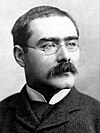
“As one turns over the pages of his Plain Tales from the Hills, one feels as if one were seated under a palm-tree reading life by superb flashes of vulgarity. The bright colours of the bazaars dazzle one's eyes.”
Oscar Wilde on Herbert Beerbohm Tree
Quotes About Oscar Wilde
Gain deeper perspective through quotes about Oscar Wilde from others.
W. H. Auden on Oscar Wilde

Max Beerbohm on Oscar Wilde 3 quotes
“Despite the number of his books and plays, Mr. Wilde was not, I think, what one calls a born writer. His writing seemed always to be rather an overflow of intellectual temperamental energy than an inevitable, absorbing function. That he never concentrated himself on any one form of literature is a proof that the art of writing never really took hold of him.”
Ambrose Bierce on Oscar Wilde
“That sovereign of insufferables, Oscar Wilde has ensued with his opulence of twaddle and his penury of sense. He has mounted his hind legs and blown crass vapidities through the bowel of his neck, to the capital edification of circumjacent fools and foolesses, fooling with their foolers. He has tossed off the top of his head and uttered himself in copious overflows of ghastly bosh. The ineffable dunce has nothing to say and says it—says it with a liberal embellishment of bad delivery, embroidering it with reasonless vulgarities of attitude, gesture and attire. There never was an impostor so hateful, a blockhead so stupid, a crank so variously and offensively daft. Therefore is the she fool enamored of the feel of his tongue in her ear to tickle her understanding. The limpid and spiritless vacuity of this intellectual jellyfish is in ludicrous contrast with the rude but robust mental activities that he came to quicken and inspire. Not only has he no thoughts, but no thinker. His lecture is mere verbal ditch-water—meaningless, trite and without coherence. It lacks even the nastiness that exalts and refines his verse. Moreover, it is obviously his own; he had not even the energy and independence to steal it. And so, with a knowledge that would equip and idiot to dispute with a cast-iron dog, and eloquence to qualify him for the duties of a caller on a hog-ranch, and an imagination adequate to the conception of a tom-cat, when fired by contemplation of a fiddle-string, this consummate and star-like youth, missing everywhere his heaven-appointed functions and offices, wanders about, posing as a statue of himself, and, like the sun-smitten image of Memnon, emitting meaningless murmurs in the blaze of women's eyes. He makes me tired. And this gawky gowk has the divine effrontery to link his name with those of Swinburne, Rossetti and Morris—this dunghill he-hen would fly with eagles. He dares to set his tongue to the honored name of Keats. He is the leader, quoth'a, of a renaissance in art, this man who cannot draw—of a revival of letters, this man who cannot write! This little and looniest of a brotherhood of simpletons, whom the wicked wits of London, haling him dazed from his obscurity, have crowned and crucified as King of the Cranks, has accepted the distinction in stupid good faith and our foolish people take him at his word. Mr. Wilde is pinnacled upon a dazzling eminence but the earth still trembles to the dull thunder of the kicks that set him up.”

Reading on Oscar Wilde

Like Chesterton on Oscar Wilde



Disputed Quotes
Quotes attributed to Oscar Wilde that are questionable.
Misattributed Quotes
Quotes mistakenly credited to Oscar Wilde
“Why was I born with such contemporaries?”
“I'm not young enough to know everything.”
“I like work: it fascinates me. I can sit and look at it for hours.”
About Oscar Wilde
Oscar Fingal O'Flahertie Wills Wilde (16 October 1854 – 30 November 1900) was an Irish dramatist, essayist, novelist and poet.