Link Copied!
Confucius Quotes (-551--479)
Philosopher












-100px.png)





-100px.jpg)




-100px.jpg)






About Confucius
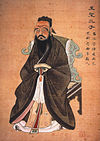
Confucius (traditionally 28 September 551 B.C. – 479 B.C.) was a Chinese social philosopher, whose teachings deeply influenced East Asian life and thought. "Confucius" is a latinization of the Chinese 孔夫子, Kong Fu Zi or K'ung-fu-tzu, literally "Master Kong", but he is usually referred to in China with a simpler version of this honorific as 孔子, Kongzi, or Kǒng Zǐ.
Best Confucius Quotes
Shortest
Earliest
Explore our curated collection of the most famous and impactful Confucius quotes.
“【第三章】【一節】司馬牛問仁。”
“去食、自古皆有死、民無信不立。”
“【第四章】【一節】司馬牛問君子。子曰”

“Honesty and trust are promoted, and good neighborliness cultivated.”
“Benevolence is the characteristic element of humanity.”


“【十五章】子曰、博學於文、約之以禮、亦可以弗畔矣夫。”
“There is no body but eats and drinks. But they are few who can distinguish flavors.”
“If the people have no faith in their rulers, there is no standing for the state.
• VII”
• VII”
“Among the appliances to transform the people, sound and appearances are but trivial influences.”
“This is the ideal world – a perfect world of equality, fraternity, harmony, welfare, and justice.”

“君子敬而無失,與人恭而有禮,四海之內,皆兄弟也,君子何患乎無兄弟也!”

“They hate not to make use of their abilities... they do not necessarily work for their own self-interest.”

“名不正,則言不順
• If names be not correct, language is not in accordance with the truth of things.”
• If names be not correct, language is not in accordance with the truth of things.”

“The man of virtue makes the difficulty to be overcome his first business, and success only a subsequent consideration.”

“Thus intrigues and conspiracies do not arise, and thievery and robbery do not occur; therefore doors need never be locked.”
“When the Great Dao (Tao, perfect order) prevails, the world is like a Commonwealth State shared by all, not a dictatorship.”


“Sincerity is that whereby self-completion is effected, and its way is that by which man must direct himself.”

“To no one but the Son of Heaven does it belong to order ceremonies, to fix the measures, and to determine the written characters.”
“The superior man, even when he is not moving, has a feeling of reverence, and while he speaks not, he has the feeling of truthfulness.”


“Follow the seasons of Ha,
Ride in the state carriage of Yau,
Wear the ceremonial cap of Chan,
Let the music be the Shiu with its pantomimes.”
Ride in the state carriage of Yau,
Wear the ceremonial cap of Chan,
Let the music be the Shiu with its pantomimes.”
“好知不好學,其蔽也蕩
• There is the love of knowing without the love of learning; the beclouding here leads to dissipation of mind.”
• There is the love of knowing without the love of learning; the beclouding here leads to dissipation of mind.”

“To be fond of learning is to be near to knowledge. To practice with vigor is to be near to magnanimity. To possess the feeling of shame is to be near to energy.”

“不患人之不己知,患不知人也。
• I am not bothered by the fact that I am not understood. I am bothered when I do not know others.”
• I am not bothered by the fact that I am not understood. I am bothered when I do not know others.”
“By extensively studying all learning, and keeping himself under the restraint of the rules of propriety, one may thus likewise not err from what is right.
• XV”
• XV”
“The superior man has neither anxiety nor fear. When internal examination discovers nothing wrong, what is there to be anxious about, what is there to fear?
• IV”
• IV”

“Man has three ways of acting wisely. First, on meditation; that is the noblest. Secondly, on imitation; that is the easiest. Thirdly, on experience; that is the bitterest.”

“君子周而不比,小人比而不周。
• The Superior Man is all-embracing and not partial. The inferior man is partial and not all-embracing.”
• The Superior Man is all-embracing and not partial. The inferior man is partial and not all-embracing.”

“The superior man accords with the course of the Mean. Though he may be all unknown, unregarded by the world, he feels no regret — It is only the sage who is able for this.”
“By the ruler's cultivation of his own character, the duties of universal obligation are set forth. By honoring men of virtue and talents, he is preserved from errors of judgment.”
“The way of the superior man may be found, in its simple elements, in the intercourse of common men and women; but in its utmost reaches, it shines brightly through Heaven and Earth.”
“The way of Heaven and Earth may be completely declared in one sentence: They are without any doubleness, and so they produce things in a manner that is unfathomable.”
“Let the states of equilibrium and harmony exist in perfection, and a happy order will prevail throughout heaven and earth, and all things will be nourished and flourish.”
“里仁為美、擇不處仁、焉得知。
• Being in humaneness is good. If we select other goodness and thus are far apart from humaneness, how can we be the wise?”
• Being in humaneness is good. If we select other goodness and thus are far apart from humaneness, how can we be the wise?”

“人而不仁、如禮何。人而不仁、如樂何。
• If a man has no humaneness what can his propriety be like? If a man has no humaneness what can his happiness be like?”
• If a man has no humaneness what can his propriety be like? If a man has no humaneness what can his happiness be like?”
“Sincerity is the end and beginning of things; without sincerity there would be nothing. On this account, the superior man regards the attainment of sincerity as the most excellent thing.”
“The kingdom, its states, and its families, may be perfectly ruled; dignities and emoluments may be declined; naked weapons may be trampled under the feet; but the course of the Mean cannot be attained to.”

“主忠信。毋友不如己者。過,則勿憚改。
• Be loyal and trustworthy. Do not befriend anyone who is lower than yourself in this regard. When making a mistake, do not be afraid to correct it.”
• Be loyal and trustworthy. Do not befriend anyone who is lower than yourself in this regard. When making a mistake, do not be afraid to correct it.”
“How abundantly do spiritual beings display the powers that belong to them! We look for them, but do not see them; we listen to, but do not hear them; yet they enter into all things, and there is nothing without them.”
“Heaven, in the production of things, is sure to be bountiful to them, according to their qualities. Hence the tree that is flourishing, it nourishes, while that which is ready to fall, it overthrows.”

“務民之義、敬鬼神而遠之。可謂知矣。
• To give one's self earnestly to the duties due to men, and, while respecting spiritual beings, to keep aloof from them, may be called wisdom.”
• To give one's self earnestly to the duties due to men, and, while respecting spiritual beings, to keep aloof from them, may be called wisdom.”
“仁者先難而後獲,可謂仁矣。
• The man of virtue makes the difficulty to be overcome his first business, and success only a subsequent consideration: this may be called perfect virtue.”
• The man of virtue makes the difficulty to be overcome his first business, and success only a subsequent consideration: this may be called perfect virtue.”
“He that in his studies wholly applies himself to labour and exercise, and neglects meditation, loses his time, and he that only applies himself to meditation, and neglects labour and exercise, only wanders and loses himself.”
“默而識之,學而不厭,誨人不倦,何有於我哉?
• The silent treasuring up of knowledge; learning without satiety; and instructing others without being wearied: which one of these things belongs to me?”
• The silent treasuring up of knowledge; learning without satiety; and instructing others without being wearied: which one of these things belongs to me?”
“When one cultivates to the utmost the principles of his nature, and exercises them on the principle of reciprocity, he is not far from the path. What you do not like when done to yourself, do not do to others.”

“The aged are cared for until death; adults are employed in jobs that make full use of their abilities; and children are nourished, educated, and fostered;...orphans... the disabled and the diseased are all well taken care of....”
“君子博學於文、約之以禮、亦可以弗畔矣夫。
• The superior man, extensively studying all learning, and keeping himself under the restraint of the rules of propriety, may thus likewise not overstep what is right.”
• The superior man, extensively studying all learning, and keeping himself under the restraint of the rules of propriety, may thus likewise not overstep what is right.”
“It is characteristic of the most entire sincerity to be able to foreknow. When a nation or family is about to flourish, there are sure to be happy omens; and when it is about to perish, there are sure to be unlucky omens.”
“中人以上、可以語上也、中人以下、不可以語上也。
• To those whose talents are above mediocrity, the highest subjects may be announced. To those who are below mediocrity, the highest subjects may not be announced.”
• To those whose talents are above mediocrity, the highest subjects may be announced. To those who are below mediocrity, the highest subjects may not be announced.”
“巧言令色、鮮矣仁。
• Fine words and an insinuating appearance are seldom associated with true virtue.
• Variant: Someone who is a clever speaker and maintains a 'too-smiley' face is seldom considered a humane person.”
• Fine words and an insinuating appearance are seldom associated with true virtue.
• Variant: Someone who is a clever speaker and maintains a 'too-smiley' face is seldom considered a humane person.”
“唯女子與小人爲難養也!近之則不孫,遠之則怨。
• Of all people, girls and servants are the most difficult to behave to. If you are familiar with them, they lose their humility. If you maintain a reserve towards them, they are discontented.”
• Of all people, girls and servants are the most difficult to behave to. If you are familiar with them, they lose their humility. If you maintain a reserve towards them, they are discontented.”
“The administration of government lies in getting proper men. Such men are to be got by means of the ruler's own character. That character is to be cultivated by his treading in the ways of duty. And the treading those ways of duty is to be cultivated by the cherishing of benevolence.”
“It is soft, smooth and shining—like intelligence. Its edges seem sharp but do not cut—like justice. It hangs down to the ground—like humility. When struck, it gives a clear, ringing sound—like music. The strains in it are not hidden and add to its beauty—like truthfulness.' What imagination!”

“事父母幾諫,見志不從,又敬不違,勞而不怨。
• When you serve your mother and father it is okay to try to correct them once in a while. But if you see that they are not going to listen to you, keep your respect for them and don't distance yourself from them. Work without complaining.”
• When you serve your mother and father it is okay to try to correct them once in a while. But if you see that they are not going to listen to you, keep your respect for them and don't distance yourself from them. Work without complaining.”

“君子無所爭、必也射乎、揖譲而升下、而飲、其爭也君子。
• The Superior Man has nothing to compete for. But if he must compete, he does it in an archery match, wherein he ascends to his position, bowing in deference. Descending, he drinks (or has [the winner] drink) the ritual cup.”
• The Superior Man has nothing to compete for. But if he must compete, he does it in an archery match, wherein he ascends to his position, bowing in deference. Descending, he drinks (or has [the winner] drink) the ritual cup.”
“【第一章】子曰、爲政以德、譬如北辰、居其所、而眾星共之。
• The Master said, "He who exercises government by means of his virtue may be compared to the north polar star, which keeps its place and all the stars turn towards it."”
• The Master said, "He who exercises government by means of his virtue may be compared to the north polar star, which keeps its place and all the stars turn towards it."”

“When we have intelligence resulting from sincerity, this condition is to be ascribed to nature; when we have sincerity resulting from intelligence, this condition is to be ascribed to instruction. But given the sincerity, and there shall be the intelligence; given the intelligence, and there shall be the sincerity.”
“All things are nourished together without their injuring one another. The courses of the seasons, and of the sun and moon, are pursued without any collision among them. The smaller energies are like river currents; the greater energies are seen in mighty transformations. It is this which makes heaven and earth so great.”
“父在,觀其志;父殁,觀其行;三年无改於父之道,可謂孝矣。
• When your father is alive, observe his will. When your father is dead observe his former actions. If, for three years [after the death of your father] you do not change from the ways of your father, you can be called a 'real son (xiào/hsiao)'.”
• When your father is alive, observe his will. When your father is dead observe his former actions. If, for three years [after the death of your father] you do not change from the ways of your father, you can be called a 'real son (xiào/hsiao)'.”

“Sincerity becomes apparent. From being apparent, it becomes manifest. From being manifest, it becomes brilliant. Brilliant, it affects others. Affecting others, they are changed by it. Changed by it, they are transformed. It is only he who is possessed of the most complete sincerity that can exist under heaven, who can transform.”
“學而時習之、不亦說乎。有朋自遠方來、不亦樂乎。人不知而不慍、不亦君子乎。
• Isn't it a pleasure to study and practice what you have learned? Isn't it also great when friends visit from distant places? If one remains not annoyed when he is not understood by people around him, isn't he a sage?”
• Isn't it a pleasure to study and practice what you have learned? Isn't it also great when friends visit from distant places? If one remains not annoyed when he is not understood by people around him, isn't he a sage?”

“德之不修,學之不講,聞義不能徒,不善不能改,是吾憂也。
• Leaving virtue without proper cultivation; not thoroughly discussing what is learned; not being able to move towards righteousness of which a knowledge is gained; and not being able to change what is not good: — these are the things which occasion me solicitude.”
• Leaving virtue without proper cultivation; not thoroughly discussing what is learned; not being able to move towards righteousness of which a knowledge is gained; and not being able to change what is not good: — these are the things which occasion me solicitude.”

“不憤不啟;不悱不發。擧一隅,不以三隅反,則不復也。
• I do not open up the truth to one who is not eager to get knowledge, nor help out any one who is not anxious to explain himself. When I have presented one corner of a subject to any one, and he cannot from it learn the other three, I do not repeat my lesson.”
• I do not open up the truth to one who is not eager to get knowledge, nor help out any one who is not anxious to explain himself. When I have presented one corner of a subject to any one, and he cannot from it learn the other three, I do not repeat my lesson.”
“子曰、飽食終日、無所用心、難矣哉、不有博弈者乎、爲之猶賢乎已。
• The Master said, "Hard is it to deal with him, who will stuff himself with food the whole day, without applying his mind to anything good! Are there not gamesters and chess players? To be one of these would still be better than doing nothing at all."”
• The Master said, "Hard is it to deal with him, who will stuff himself with food the whole day, without applying his mind to anything good! Are there not gamesters and chess players? To be one of these would still be better than doing nothing at all."”
“弟子,入則孝,出則弟,謹而信,凡愛眾,而親仁。行有餘力,則以學文。
• A young man should serve his parents at home and be respectful to elders outside his home. He should be earnest and truthful, loving all, but become intimate with humaneness. After doing this, if he has energy to spare, he can study literature and the arts.”
• A young man should serve his parents at home and be respectful to elders outside his home. He should be earnest and truthful, loving all, but become intimate with humaneness. After doing this, if he has energy to spare, he can study literature and the arts.”

“道千乘之國,敬事而信,節用而愛人,使民以時。
• If you would govern a state of a thousand chariots (a small-to-middle-size state), you must pay strict attention to business, be true to your word, be economical in expenditure and love the people. You should use them according to the seasons (i.e. You should not enlist farmers during seeding or harvest time).”
• If you would govern a state of a thousand chariots (a small-to-middle-size state), you must pay strict attention to business, be true to your word, be economical in expenditure and love the people. You should use them according to the seasons (i.e. You should not enlist farmers during seeding or harvest time).”

“What Heaven has conferred is called The Nature; an accordance with this nature is called The Path of duty; the regulation of this path is called Instruction. The path may not be left for an instant. If it could be left, it would not be the path. On this account, the superior man does not wait till he sees things, to be cautious, nor till he hears things, to be apprehensive.”

“君子不重則不威,學則不固。主忠信。無友不如己者。過則勿憚改。
• If the Superior Man is not serious, then he will not inspire awe in others. If he is not learned, then he will not be on firm ground. He takes loyalty and good faith to be of primary importance, and has no friends who are not of equal (moral) caliber. When he makes a mistake, he doesn't hesitate to correct it.”
• If the Superior Man is not serious, then he will not inspire awe in others. If he is not learned, then he will not be on firm ground. He takes loyalty and good faith to be of primary importance, and has no friends who are not of equal (moral) caliber. When he makes a mistake, he doesn't hesitate to correct it.”

“君子安而不忘危,存而不忘亡,治而不忘亂。是以身安而國家可保也。
• The superior man, when resting in safety, does not forget that danger may come. When in a state of security he does not forget the possibility of ruin. When all is orderly, he does not forget that disorder may come. Thus his person is not endangered, and his States and all their clans are preserved.”
• The superior man, when resting in safety, does not forget that danger may come. When in a state of security he does not forget the possibility of ruin. When all is orderly, he does not forget that disorder may come. Thus his person is not endangered, and his States and all their clans are preserved.”
“It is said in the Book of Poetry, "In silence is the offering presented, and the spirit approached to; there is not the slightest contention." Therefore the superior man does not use rewards, and the people are stimulated to virtue. He does not show anger, and the people are awed more than by hatchets and battle-axes.”
“Earnest in practicing the ordinary virtues, and careful in speaking about them, if, in his practice, he has anything defective, the superior man dares not but exert himself; and if, in his words, he has any excess, he dares not allow himself such license. Thus his words have respect to his actions, and his actions have respect to his words; is it not just an entire sincerity which marks the superior man?”

“How great is the path proper to the Sage! Like overflowing water, it sends forth and nourishes all things, and rises up to the height of heaven. All-complete is its greatness! It embraces the three hundred rules of ceremony, and the three thousand rules of demeanor. It waits for the proper man, and then it is trodden. Hence it is said, "Only by perfect virtue can the perfect path, in all its courses, be made a fact." ”
“多聞闕疑,慎言其餘,則寡尤。多見闕殆,慎行其餘,則寡悔。言寡無,行寡悔,祿在其中矣。
• Listen widely to remove your doubts and be careful when speaking about the rest and your mistakes will be few. See much and get rid of what is dangerous and be careful in acting on the rest and your causes for regret will be few. Speaking without fault, acting without causing regret: 'upgrading' consists in this.”
• Listen widely to remove your doubts and be careful when speaking about the rest and your mistakes will be few. See much and get rid of what is dangerous and be careful in acting on the rest and your causes for regret will be few. Speaking without fault, acting without causing regret: 'upgrading' consists in this.”
“What the great learning teaches, is to illustrate illustrious virtue; to renovate the people; and to rest in the highest excellence.
The point where to rest being known, the object of pursuit is then determined; and, that being determined, a calm unperturbedness may be attained to. To that calmness there will succeed a tranquil repose. In that repose there may be careful deliberation, and that deliberation will be followed by the attainment of the desired end.”
The point where to rest being known, the object of pursuit is then determined; and, that being determined, a calm unperturbedness may be attained to. To that calmness there will succeed a tranquil repose. In that repose there may be careful deliberation, and that deliberation will be followed by the attainment of the desired end.”

“In all things success depends on previous preparation, and without such previous preparation there is sure to be failure. If what is to be spoken be previously determined, there will be no stumbling. If affairs be previously determined, there will be no difficulty with them. If one's actions have been previously determined, there will be no sorrow in connection with them. If principles of conduct have been previously determined, the practice of them will be inexhaustible.”

“吾十有五而志於學,三十而立,四十而不惑,五十而知天命,六十而耳順,七十而从心所欲,不逾矩。
• At fifteen my heart was set on learning; at thirty I stood firm; at forty I had no more doubts; at fifty I knew the will of heaven; at sixty my ear was obedient; at seventy I could follow my heart's desire without overstepping the boundaries of what was right.”
• At fifteen my heart was set on learning; at thirty I stood firm; at forty I had no more doubts; at fifty I knew the will of heaven; at sixty my ear was obedient; at seventy I could follow my heart's desire without overstepping the boundaries of what was right.”

“君子食無求飽,居無求安,敏於事而慎於言,就有道而正焉,可謂好學也已。
• When the Superior Man (Junzi) eats he does not try to stuff himself; at rest he does not seek perfect comfort; he is diligent in his work and careful in speech. He avails himself to people of the Tao and thereby corrects himself. This is the kind of person of whom you can say, "he loves learning."”
• When the Superior Man (Junzi) eats he does not try to stuff himself; at rest he does not seek perfect comfort; he is diligent in his work and careful in speech. He avails himself to people of the Tao and thereby corrects himself. This is the kind of person of whom you can say, "he loves learning."”
“Sincerity is the way of Heaven. The attainment of sincerity is the way of men. He who possesses sincerity is he who, without an effort, hits what is right, and apprehends, without the exercise of thought — he is the sage who naturally and easily embodies the right way. He who attains to sincerity is he who chooses what is good, and firmly holds it fast. To this attainment there are requisite the extensive study of what is good, accurate inquiry about it, careful reflection on it, the clear discrimination of it, and the earnest practice of it.”
“殷因於夏禮,所損益,可知也;周因於殷禮,所損益,可知也。其或繼周者,雖百世,可知也。
• The Yin based its propriety on that of the Xia, and what it added and subtracted is knowable. The Zhou has based its propriety on that of the Shang and what it added and subtracted is knowable. In this way, what continues from the Chou, even if 100 generations hence, is knowable.”
• The Yin based its propriety on that of the Xia, and what it added and subtracted is knowable. The Zhou has based its propriety on that of the Shang and what it added and subtracted is knowable. In this way, what continues from the Chou, even if 100 generations hence, is knowable.”
“It is the way of the superior man to prefer the concealment of his virtue, while it daily becomes more illustrious, and it is the way of the mean man to seek notoriety, while he daily goes more and more to ruin. It is characteristic of the superior man, appearing insipid, yet never to produce satiety; while showing a simple negligence, yet to have his accomplishments recognized; while seemingly plain, yet to be discriminating. He knows how what is distant lies in what is near. He knows where the wind proceeds from. He knows how what is minute becomes manifested. Such a one, we may be sure, will enter into virtue.”
“It is only the individual possessed of the most entire sincerity that can exist under Heaven, who can adjust the great invariable relations of mankind, establish the great fundamental virtues of humanity, and know the transforming and nurturing operations of Heaven and Earth; — shall this individual have any being or anything beyond himself on which he depends? Call him man in his ideal, how earnest is he! Call him an abyss, how deep is he! Call him Heaven, how vast is he! Who can know him, but he who is indeed quick in apprehension, clear in discernment, of far-reaching intelligence, and all-embracing knowledge, possessing all Heavenly virtue?”

“The superior man honors his virtuous nature, and maintains constant inquiry and study, seeking to carry it out to its breadth and greatness, so as to omit none of the more exquisite and minute points which it embraces, and to raise it to its greatest height and brilliancy, so as to pursue the course of the Mean. He cherishes his old knowledge, and is continually acquiring new. He exerts an honest, generous earnestness, in the esteem and practice of all propriety. Thus, when occupying a high situation he is not proud, and in a low situation he is not insubordinate. When the kingdom is well governed, he is sure by his words to rise; and when it is ill governed, he is sure by his silence to command forbearance to himself.”
“It is only he who is possessed of the most complete sincerity that can exist under heaven, who can give its full development to his nature. Able to give its full development to his own nature, he can do the same to the nature of other men. Able to give its full development to the nature of other men, he can give their full development to the natures of animals and things. Able to give their full development to the natures of creatures and things, he can assist the transforming and nourishing powers of Heaven and Earth. Able to assist the transforming and nourishing powers of Heaven and Earth, he may with Heaven and Earth form a ternion.”
“The institutions of the Ruler are rooted in his own character and conduct, and sufficient attestation of them is given by the masses of the people. He examines them by comparison with those of the three kings, and finds them without mistake. He sets them up before Heaven and Earth, and finds nothing in them contrary to their mode of operation. He presents himself with them before spiritual beings, and no doubts about them arise. He is prepared to wait for the rise of a sage a hundred ages after, and has no misgivings. His presenting himself with his institutions before spiritual beings, without any doubts arising about them, shows that he knows Heaven. His being prepared, without any misgivings, to wait for the rise of a sage a hundred ages after, shows that he knows men.”
“To show forbearance and gentleness in teaching others; and not to revenge unreasonable conduct — this is the energy of southern regions, and the good man makes it his study. To lie under arms; and meet death without regret — this is the energy of northern regions, and the forceful make it their study. Therefore, the superior man cultivates a friendly harmony, without being weak — How firm is he in his energy! He stands erect in the middle, without inclining to either side — How firm is he in his energy! When good principles prevail in the government of his country, he does not change from what he was in retirement. How firm is he in his energy! When bad principles prevail in the country, he maintains his course to death without changing — How firm is he in his energy!”

“The way which the superior man pursues, reaches wide and far, and yet is secret. Common men and women, however ignorant, may intermeddle with the knowledge of it; yet in its utmost reaches, there is that which even the sage does not know. Common men and women, however much below the ordinary standard of character, can carry it into practice; yet in its utmost reaches, there is that which even the sage is not able to carry into practice. Great as heaven and earth are, men still find some things in them with which to be dissatisfied. Thus it is that, were the superior man to speak of his way in all its greatness, nothing in the world would be found able to embrace it, and were he to speak of it in its minuteness, nothing in the world would be found able to split it.”
“To entire sincerity there belongs ceaselessness. Not ceasing, it continues long. Continuing long, it evidences itself. Evidencing itself, it reaches far. Reaching far, it becomes large and substantial. Large and substantial, it becomes high and brilliant. Large and substantial; this is how it contains all things. High and brilliant; this is how it overspreads all things. Reaching far and continuing long; this is how it perfects all things. So large and substantial, the individual possessing it is the co-equal of Earth. So high and brilliant, it makes him the co-equal of Heaven. So far-reaching and long-continuing, it makes him infinite. Such being its nature, without any display, it becomes manifested; without any movement, it produces changes; and without any effort, it accomplishes its ends.”
“昔者天子有爭臣七人,雖無道,不失其天下; [...] 父有爭子,則身不陷於不義。 故當不義,則子不可以不爭於父,臣不可以不爭於君; 故當不義,則爭之。 從父之令,又焉得爲孝乎!
• Anciently, if the Son of Heaven had seven ministers who would remonstrate with him, although he had not right methods of government, he would not lose his possession of the kingdom. [...] And the father who had a son that would remonstrate with him would not sink into the gulf of unrighteous deeds. Therefore when a case of unrighteous conduct is concerned, a son must by no means keep from remonstrating with his father, nor a minister from remonstrating with his ruler. Hence, since remonstrance is required in the case of unrighteous conduct, how can (simple) obedience to the orders of a father be accounted filial piety?”
• Anciently, if the Son of Heaven had seven ministers who would remonstrate with him, although he had not right methods of government, he would not lose his possession of the kingdom. [...] And the father who had a son that would remonstrate with him would not sink into the gulf of unrighteous deeds. Therefore when a case of unrighteous conduct is concerned, a son must by no means keep from remonstrating with his father, nor a minister from remonstrating with his ruler. Hence, since remonstrance is required in the case of unrighteous conduct, how can (simple) obedience to the orders of a father be accounted filial piety?”
“It is only he, possessed of all sagely qualities that can exist under heaven, who shows himself quick in apprehension, clear in discernment, of far-reaching intelligence, and all-embracing knowledge, fitted to exercise rule; magnanimous, generous, benign, and mild, fitted to exercise forbearance; impulsive, energetic, firm, and enduring, fitted to maintain a firm hold; self-adjusted, grave, never swerving from the Mean, and correct, fitted to command reverence; accomplished, distinctive, concentrative, and searching, fitted to exercise discrimination. All-embracing is he and vast, deep and active as a fountain, sending forth in their due season his virtues. All-embracing and vast, he is like Heaven. Deep and active as a fountain, he is like the abyss. He is seen, and the people all reverence him; he speaks, and the people all believe him; he acts, and the people all are pleased with him.”

“The superior man, while there is anything he has not studied, or while in what he has studied there is anything he cannot understand, Will not intermit his labor. While there is anything he has not inquired about, or anything in what he has inquired about which he does not know, he will not intermit his labor. While there is anything which he has not reflected on, or anything in what he has reflected on which he does not apprehend, he will not intermit his labor. While there is anything which he has not discriminated or his discrimination is not clear, he will not intermit his labor. If there be anything which he has not practiced, or his practice fails in earnestness, he will not intermit his labor. If another man succeed by one effort, he will use a hundred efforts. If another man succeed by ten efforts, he will use a thousand. Let a man proceed in this way, and, though dull, he will surely become intelligent; though weak, he will surely become strong.”
“The superior man does what is proper to the station in which he is; he does not desire to go beyond this. In a position of wealth and honor, he does what is proper to a position of wealth and honor. In a poor and low position, he does what is proper to a poor and low position. Situated among barbarous tribes, he does what is proper to a situation among barbarous tribes. In a position of sorrow and difficulty, he does what is proper to a position of sorrow and difficulty. The superior man can find himself in no situation in which he is not himself. In a high situation, he does not treat with contempt his inferiors. In a low situation, he does not court the favor of his superiors. He rectifies himself, and seeks for nothing from others, so that he has no dissatisfactions. He does not murmur against Heaven, nor grumble against men. Thus it is that the superior man is quiet and calm, waiting for the appointments of Heaven, while the mean man walks in dangerous paths, looking for lucky occurrences.”
“The ancients who wished to illustrate illustrious virtue throughout the Kingdom, first ordered well their own states. Wishing to order well their states, they first regulated their families. Wishing to regulate their families, they first cultivated their persons. Wishing to cultivate their persons, they first rectified their hearts. Wishing to rectify their hearts, they first sought to be sincere in their thoughts. Wishing to be sincere in their thoughts, they first extended to the utmost their knowledge. Such extension of knowledge lay in the investigation of things.
Things being investigated, knowledge became complete. Their knowledge being complete, their thoughts were sincere. Their thoughts being sincere, their hearts were then rectified. Their hearts being rectified, their persons were cultivated. Their persons being cultivated, their families were regulated. Their families being regulated, their states were rightly governed. Their states being rightly governed, the whole kingdom was made tranquil and happy.
From the Son of Heaven down to the mass of the people, all must consider the cultivation of the person the root of everything besides.”
Things being investigated, knowledge became complete. Their knowledge being complete, their thoughts were sincere. Their thoughts being sincere, their hearts were then rectified. Their hearts being rectified, their persons were cultivated. Their persons being cultivated, their families were regulated. Their families being regulated, their states were rightly governed. Their states being rightly governed, the whole kingdom was made tranquil and happy.
From the Son of Heaven down to the mass of the people, all must consider the cultivation of the person the root of everything besides.”
Confucius Quotes by Topic
Find exactly what you are looking for by browsing this categorized list of Confucius quotes by topic.
Confucius on Junzi 18 quotes
“The superior man understands what is right; the inferior man understands what will sell.”
Confucius on Path 6 quotes
“The superior man is quiet and calm, waiting for the appointments of Heaven, while the mean man walks in dangerous paths, looking for lucky occurrences.”
Confucius on Truth 4 quotes
View all 4 quotes on Truth →Confucius on Benevolence 3 quotes
“Benevolence is the characteristic element of humanity.”
Confucius on Thought 3 quotes
“Chi Wen Tzu always thought three times before taking action. When the Master was told of this, he commented, "Twice is quite enough."”
What Confucius Said About Others
Discover personal opinions Confucius shared regarding contemporaries.
Confucius on Nicolaus Copernicus
Confucius on Women
“Of all people, girls and servants are the most difficult to behave to. If you are familiar with them, they lose their humility. If you maintain a reserve towards them, they are discontented.”

Confucius on Saints
“There are truly moral people who unconsciously live a life in entire harmony with the universal moral order and who live unknown to the world and unnoticed by others without any concern. It is only people of holy, divine natures who are capable of this.”
Quotes About Confucius
Gain deeper perspective through quotes about Confucius from others.
Agni Yoga on Confucius 2 quotes
“Let us not link ourselves with the vilifiers of Plato and the persecutors of Confucius. They were oppressed by citizens who were considered the pride of the country. Thus has the world raised its hand against the great Servitors. Be assured that the Brotherhood formed by Pythagoras appeared dangerous in the eyes of the city guard. Paracelsus was a target for mockery and malignance. Thomas Vaughan seemed to be an outcast, and few wished to meet with him. Thus was the reign of darkness manifested.”

Brian Brown on Confucius
“What Confucius contributes to our religious thought is no theory, but emphasis on individual conscience in belief.”
Koot Hoomi on Confucius 2 quotes
“Plato and Confucius were fifth round men and our Lord a sixth round man (the mystery of his avatar is spoken of in my forthcoming letter) not even Gautama Buddha's son was anything but a fourth round man.”

Joel Kotkin on Confucius
“China's Communist leaders, while officially genuflecting to Maoist ideology, are finding something of value in folk religion and even Confucianism―so reviled by the founders of the People's Republic. It turns out that old virtues like honesty, filial obedience, and respect for hierarchy have their uses in the modern age. Singapore's long-term premier, Lee Kuan Yew, has urged the Chinese regime to adopt Confucianism as a defining feature of Asian capitalism.”

Charles W. Leadbeater on Confucius
“The Lord Maitreya,... took up the office of Bodhisattva when the Lord Gautama laid it down, and since then He has made many efforts for the promotion of Religion. One of His first steps on assuming office was to take advantage of the tremendous magnetism generated in the world by the presence of the Buddha, to arrange that great Teachers should simultaneously appear in many different parts of the earth; so that within a comparatively short space of time we find not only the Buddha Himself, Shri Shankaracharya and Mahavira in India, but also Mithra in Persia, Laotse and Confucius in China, and Pythagoras in ancient Greece. p. 296”



Misattributed Quotes
Quotes mistakenly credited to Confucius
“I hear and I forget. I see and I remember. I do and I understand.”
“No matter how busy you may think you are, you must find time for reading, or surrender yourself to self-chosen ignorance.”
“Life is really simple, but we insist on making it complicated.”
About Confucius
Confucius (traditionally 28 September 551 B.C. – 479 B.C.) was a Chinese social philosopher, whose teachings deeply influenced East Asian life and thought. "Confucius" is a latinization of the Chinese 孔夫子, Kong Fu Zi or K'ung-fu-tzu, literally "Master Kong", but he is usually referred to in China with a simpler version of this honorific as 孔子, Kongzi, or Kǒng Zǐ.