Link Copied!
Epictetus Quotes (55-135)
Philosopher




-100px.jpg)
-100px.png)










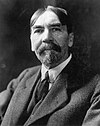
About Epictetus
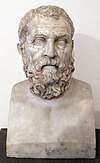
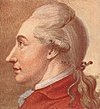
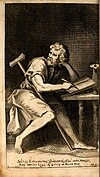
Epictetus (c. 55 – c. 135 AD), born a slave, was a Greek Stoic philosopher. His words were recorded by his student Arrian in the Discourses and Enchiridion written in the early 2nd-century.
Best Epictetus Quotes
Shortest
Earliest
Explore our curated collection of the most famous and impactful Epictetus quotes.
“It is difficulties that show what men are.”
“Know, first, who you are, and then adorn yourself accordingly.”

“For human beings, the measure of every action is the impression of the senses.”
“Little is needed to ruin and upset everything, only a slight aberration from reason.”
“Materials are indifferent, but the use which we make of them is not a matter of indifference.”
“Were I a nightingale, I would act the part of a nightingale; were I a swan, the part of a swan.”
“Any one thing in the creation is sufficient to demonstrate a Providence to an humble and grateful mind.”
“For freedom is not acquired by satisfying yourself with what you desire, but by destroying your desire.”
“Although life is a matter of indifference, the use which you make of it is not a matter of indifference.”

“The propositions which are true and evident must of necessity be employed even by those who contradict them”

“"But to be hanged—is that not unendurable?" Even so, when a man feels that it is reasonable, he goes off and hangs himself.”
“For what is a child? Ignorance. What is a child? Want of instruction. For where a child has knowledge, he is no worse than we are.”

“Don't you know that a good and excellent person does nothing for the sake of appearances, but only for the sake of having acted right?”
“Every habit and faculty is confirmed and strengthened by the corresponding actions, that of walking by walking, that of running by running.”

“Who is not tempted by attractive and wide-awake children to join their sports, and crawl on all fours with them, and talk baby talk with them?”

“Two principles we should always have ready — that there is nothing good or evil save in the will; and that we are not to lead events, but to follow them.”

“"If the room is smoky, if only moderately, I will stay; if there is too much smoke I will go. Remember this, keep a firm hold on it, the door is always open."”
“In a word, neither death, nor exile, nor pain, nor anything of this kind is the real cause of our doing or not doing any action, but our inward opinions and principles.”
“Be not swept off your feet by the vividness of the impression, but say, "Impression, wait for me a little. Let me see what you are and what you represent. Let me try you."”
“Shall I show you the sinews of a philosopher? "What sinews are those?" — A will undisappointed; evils avoided; powers daily exercised, careful resolutions; unerring decisions.”
“For what is it that everyone is seeking? To live securely, to be happy, to do everything as they wish to do, not to be hindered, not to be subject to compulsion.”
“Why, what is weeping and sighing? A judgement. What is misfortune? A judgement. What are strife, disagreement, fault-finding, accusing, impiety, foolishness? They are all judgements.”
“What should a philosopher say, then, in the face of each of the hardships of life? "It was for this that I've been training myself, it was for this that I was practising."”
“What is the first business of one who practices philosophy? To get rid of self-conceit. For it is impossible for anyone to begin to learn that which he thinks he already knows.”


“Men are disturbed, not by things, but by the principles and notions which they form concerning things. (5). (Enchiridion 5)”
“Be bold to look towards God and say, "Use me henceforward for whatever you want; I am of one mind with you; I am yours; I refuse nothing that seems good to you; lead me where you will; wrap me in what clothes you will."”

“Why, then, do we wonder any longer that, although in material things we are thoroughly experienced, nevertheless in our actions we are dejected, unseemly, worthless, cowardly, unwilling to stand the strain, utter failures one and all?”
“For on these matters we should not trust the multitude who say that none ought to be educated but the free, but rather to philosophers, who say that the educated alone are free.
• Variant: ...Only the educated are free.”
• Variant: ...Only the educated are free.”
“To the rational being only the irrational is unendurable, but the rational is endurable.
• Variant translation: To a reasonable creature, that alone is insupportable which is unreasonable; but everything reasonable may be supported.”
• Variant translation: To a reasonable creature, that alone is insupportable which is unreasonable; but everything reasonable may be supported.”

“Yet God hath not only granted these faculties, by which we may bear every event without being depressed or broken by it, but like a good prince and a true father, hath placed their exercise above restraint, compulsion, or hindrance, and wholly within our own control.”
“For it is not death or pain that is to be feared, but the fear of pain or death.
• Variant: For death or pain is not formidable, but the fear of pain or death. (Book II, ch. 1)”
• Variant: For death or pain is not formidable, but the fear of pain or death. (Book II, ch. 1)”

“It is the act of an ill-instructed man to blame others for his own bad condition; it is the act of one who has begun to be instructed, to lay the blame on himself; and of one whose instruction is completed, neither to blame another, nor himself. (5) [tr. George Long (1888)].”
“Appearances to the mind are of four kinds. Things either are what they appear to be; or they neither are, nor appear to be; or they are, and do not appear to be; or they are not, and yet appear to be. Rightly to aim in all these cases is the wise man's task.”
“Some things are in our control and others not. Things in our control are opinion, pursuit, desire, aversion, and, in a word, whatever are our own actions. Things not in our control are body, property, reputation, command, and, in one word, whatever are not our own actions. (1).”

“When you do anything from a clear judgment that it ought to be done, never shun the being seen to do it, even though the world should make a wrong supposition about it; for, if you don't act right, shun the action itself; but, if you do, why are you afraid of those who censure you wrongly? (35).”
“If what the philosophers say be true,—that all men's actions proceed from one source; that as they assent from a persuasion that a thing is so, and dissent from a persuasion that it is not, and suspend their judgment from a persuasion that it is uncertain,—so likewise they seek a thing from a persuasion that it is for their advantage.”

“Let not that which in the case of another is contrary to nature become an evil for you; for you are born not to be humiliated along with others, nor to share in their misfortunes, but to share in their good fortune. If, however, someone is unfortunate, remember that his misfortune concerns himself. For God made all mankind to be happy, to be serene.”
“But tell me this: did you never love any person... were you never commanded by the person beloved to do something which you did not wish to do? Have you never flattered your little slave? Have you never kissed her feet? And yet if any man compelled you to kiss Caesar's feet, you would think it an insult and excessive tyranny. What else then is slavery?”

“These reasonings are unconnected: "I am richer than you, therefore I am better"; "I am more eloquent than you, therefore I am better." The connection is rather this: "I am richer than you, therefore my property is greater than yours;" "I am more eloquent than you, therefore my style is better than yours." But you, after all, are neither property nor style. (44).”
“Everything has two handles, the one by which it may be carried, the other by which it cannot. If your brother acts unjustly, don't lay hold on the action by the handle of his injustice, for by that it cannot be carried; but by the opposite, that he is your brother, that he was brought up with you; and thus you will lay hold on it, as it is to be carried. (43).”
“Remember that you ought to behave in life as you would at a banquet. As something is being passed around it comes to you; stretch out your hand, take a portion of it politely. It passes on; do not detain it. Or it has not come to you yet; do not project your desire to meet it, but wait until it comes in front of you. So act toward children, so toward a wife, so toward office, so toward wealth. (15).”
“Does anyone bathe in a mighty little time? Don't say that he does it ill, but in a mighty little time. Does anyone drink a great quantity of wine? Don't say that he does ill, but that he drinks a great quantity. For, unless you perfectly understand the principle from which anyone acts, how should you know if he acts ill? Thus you will not run the hazard of assenting to any appearances but such as you fully comprehend. (45).”
“Look now, this is the starting point of philosophy: the recognition that different people have conflicting opinions, the rejection of mere opinion so that it comes to be viewed with mistrust, an investigation of opinion to determine whether it is rightly held, and the discovery of a standard of judgement, comparable to the balance that we have devised for the determining of weights, or the carpenter's rule for determining whether things are straight or crooked.”

“Upon all occasions we ought to have these maxims ready at hand:
Conduct me, Jove, and you, O Destiny,
Wherever your decrees have fixed my station. ~ Cleanthes.
I follow cheerfully; and, did I not,
Wicked and wretched, I must follow still
Whoever yields properly to Fate, is deemed
Wise among men, and knows the laws of heaven. ~ Euripides, Frag. 965.
And this third: O Crito, if it thus pleases the gods, thus let it be.
Anytus and Melitus may kill me indeed, but hurt me they cannot. ~ Socrates in Plato's Crito and Apology. (52).”
Conduct me, Jove, and you, O Destiny,
Wherever your decrees have fixed my station. ~ Cleanthes.
I follow cheerfully; and, did I not,
Wicked and wretched, I must follow still
Whoever yields properly to Fate, is deemed
Wise among men, and knows the laws of heaven. ~ Euripides, Frag. 965.
And this third: O Crito, if it thus pleases the gods, thus let it be.
Anytus and Melitus may kill me indeed, but hurt me they cannot. ~ Socrates in Plato's Crito and Apology. (52).”
“Whatever moral rules you have deliberately proposed to yourself abide by them as they were laws, and as if you would be guilty of impiety by violating any of them. Don't regard what anyone says of you, for this, after all, is no concern of yours. How long, then, will you put off thinking yourself worthy of the highest improvements and follow the distinctions of reason? You have received the philosophical theorems, with which you ought to be familiar, and you have been familiar with them. What other master, then, do you wait for, to throw upon that the delay of reforming yourself?... Let whatever appears to be the best be to you an inviolable law.(50).”
“The first and most necessary topic in philosophy is that of the use of moral theorems, such as, "We ought not to lie;" the second is that of demonstrations, such as, "What is the origin of our obligation not to lie;" the third gives strength and articulation to the other two, such as, "What is the origin of this is a demonstration." For what is demonstration? What is consequence? What contradiction? What truth? What falsehood? The third topic, then, is necessary on the account of the second, and the second on the account of the first. But the most necessary, and that whereon we ought to rest, is the first. But we act just on the contrary. For we spend all our time on the third topic, and employ all our diligence about that, and entirely neglect the first. (51).”
“If a person gave your body to any stranger he met on his way, you would certainly be angry. And do you feel no shame in handing over your own mind to be confused and mystified by anyone who happens to verbally attack you? (28) [tr. Elizabeth Carter]
Alternative translation: If someone turned your body over to just any person who happened to meet you, you would be angry. But are you not ashamed that you turn over your own faculty of judgment to whoever happens along, so that if he abuses you it is upset and confused? (28) tr. Nicholas P. White”
Alternative translation: If someone turned your body over to just any person who happened to meet you, you would be angry. But are you not ashamed that you turn over your own faculty of judgment to whoever happens along, so that if he abuses you it is upset and confused? (28) tr. Nicholas P. White”
“Ἐφ' ἑκάστου τῶν προσπιπτόντων μέμνησο ἐπιστρέφων ἐπὶ σεαυτὸν ζητεῖν, τίνα δύναμιν ἔχεις πρὸς τὴν χρῆσιν αὐτοῦ. ἐὰν καλὸν ἴδῃς ἢ καλήν, εὑρήσεις δύναμιν πρὸς ταῦτα ἐγκράτειαν· ἐὰν πόνος προσφέρηται, εὑρήσεις καρτερίαν· ἂν λοιδορία, εὑρήσεις ἀνεξικακίαν. καὶ οὕτως ἐθιζόμενόν σε οὐ συναρπάσουσιν αἱ φαντασίαι.
• With every accident, ask yourself what abilities you have for making a proper use of it. If you see an attractive person, you will find that self-restraint is the ability you have against your desire. If you are in pain, you will find fortitude. If you hear unpleasant language, you will find patience. And thus habituated, the appearances of things will not hurry you away along with them. (10).”
• With every accident, ask yourself what abilities you have for making a proper use of it. If you see an attractive person, you will find that self-restraint is the ability you have against your desire. If you are in pain, you will find fortitude. If you hear unpleasant language, you will find patience. And thus habituated, the appearances of things will not hurry you away along with them. (10).”
“Never call yourself a philosopher, nor talk a great deal among the unlearned about theorems, but act conformably to them. Thus, at an entertainment, don't talk how persons ought to eat, but eat as you ought. For remember that in this manner Socrates also universally avoided all ostentation. And when persons came to him and desired to be recommended by him to philosophers, he took and recommended them, so well did he bear being overlooked. So that if ever any talk should happen among the unlearned concerning philosophic theorems, be you, for the most part, silent. For there is great danger in immediately throwing out what you have not digested. And, if anyone tells you that you know nothing, and you are not nettled at it, then you may be sure that you have begun your business. For sheep don't throw up the grass to show the shepherds how much they have eaten; but, inwardly digesting their food, they outwardly produce wool and milk. Thus, therefore, do you likewise not show theorems to the unlearned, but the actions produced by them after they have been digested. (46).”
Epictetus Quotes by Topic
Find exactly what you are looking for by browsing this categorized list of Epictetus quotes by topic.
Epictetus on Reason 3 quotes
“Study how to give as one that is sick: that thou mayest hereafter give as one that is whole. Fast; drink water only; abstain altogether from desire, that thou mayest hereafter confirm thy desire to Reason.”
Epictetus on Love 2 quotes
View all 2 quotes on Love →Epictetus on Godhead 2 quotes
“Give thyself more diligently to reflection: know thyself: take counsel with the Godhead; without God put thine hand into nothing.”

What Epictetus Said About Others
Discover personal opinions Epictetus shared regarding contemporaries.
Epictetus on Socrates 3 quotes
“It was the first and most striking characteristic of Socrates never to become heated in discourse, never to utter an injurious or insulting word—on the contrary, he persistently bore insult from others and thus put an end to the fray.”
Epictetus on Francis Bacon
Quotes About Epictetus
Gain deeper perspective through quotes about Epictetus from others.
Arrian on Epictetus
“I have not composed these Words of Epictetus as one might be said to "compose" books of this kind, nor have I of my own act published them to the world; indeed, I acknowledge that I have not "composed" them at all. But whatever I heard him say I used to write down, word for word, as best I could, endeavouring to preserve it as a memorial, for my own future use, of his way of thinking and the frankness of his speech. They are, accordingly, as you might expect, such remarks as one man might make off-hand to another, not such as he would compose for men to read in after time.”
Note on Epictetus
“The manner in which Epictetus, Montaigne, and Salomon de Tultie wrote, is the most usual, the most suggestive, the most remembered, and the oftener quoted; because it is entirely composed of thoughts born from the common talk of life.”
Hannah Arendt on Epictetus
“The phenomenon of the will [in Epictetus ] [...] a different mental ability whose chief characteristic is that it speaks an imperative even when it commands nothing but our ability to think. The goal is to annihilate reality insofar it concerns me.”

A. A. Long on Epictetus
“Epictetus is a thinker we cannot forget, once we have encountered him, because he gets under our skin. He provokes and he irritates, but he deals so trenchantly with life’s everyday challenges that no one who knows his work can simply dismiss it as theoretically invalid or practically useless. In times of stress, as modern Epictetans have attested, his recommendations make their presence felt.”
Misattributed Quotes
Quotes mistakenly credited to Epictetus
“The greater the difficulty, the more glory in surmounting it. Skilful pilots gain their reputation from storms and tempests.”
“Other people’s views and troubles can be contagious. Don’t sabotage yourself by unwittingly adopting negative, unproductive attitudes through your associations with others.”
“Tentative efforts lead to tentative outcomes. Therefore, give yourself fully to your endeavors. Decide to construct your character through excellent actions, and determine to pay the price for a worthy goal. The trials you encounter will introduce you to your strengths. Remain steadfast... and one day you will build something that endures, something worthy of your potential.”
“Don't explain your philosophy. Embody it.”
About Epictetus
Epictetus (c. 55 – c. 135 AD), born a slave, was a Greek Stoic philosopher. His words were recorded by his student Arrian in the Discourses and Enchiridion written in the early 2nd-century.