Leadership & Service
The best leader is the one who serves first
From Laozi and Marcus Aurelius to Mandela and Lincoln, enduring leadership is measured by stewardship, humility, and moral example.
19th century, Ireland
Aestheticism & Wit
Only good questions deserve good answers.

19th century, United States
American Realism & Satire
France has usually been governed by prostitutes.
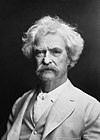
19th century, United States
American Transcendentalism
There was an influence on the young people from the genius of this eminent scholar which was almost comparable to that of Pericles in Athens.

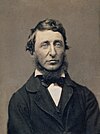
19th century, United States
American Transcendentalism
Any fool can make a ruleAnd every fool will mind it.
20th century, India
Ahimsa & Satyagraha
Muslims must realize and admit the wrongs perpetrated under the Islamic rule.

20th century, South Africa
Ubuntu & Liberation Ethics
Real leaders must be ready to sacrifice all for the freedom of their people.

20th century, United States
Modern Literature & Civil Rights
When people show you who they are, believe them, the first time. Not the 29th time!

20th century, Germany/USA
Scientific Humanism
Faced with humanity's atomic predicament, Einstein, in 1946, wryly observed that political solutions proved far more challenging than the scientific mastery of physics itself.

20th century, United States
Cosmic Humanism & Skepticism
People are rarely grateful for a demonstration of their credulity.

20th century, Austria
Logotherapy & Existential Psychology
Between stimulus and response there is a space. In that space is our power to choose our response. In our response lies our growth and our freedom.

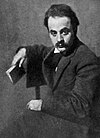
20th century, Lebanon/USA
Levantine Poetic Mysticism
Travel and tell no one. Have a true love story and tell no one. Live happily and tell no one. People ruin beautiful things.
20th century, Germany/USA
Political Philosophy
The sad truth of the matter is that most evil is done by people who never made up their minds to be or do either evil or good.

20th century, Britain
Analytic Philosophy & Humanism
Power may be defined as the production of intended effects.

18th century, Prussia
Enlightenment Deontology
The science of mathematics presents the most brilliant example of how pure reason may successfully enlarge its domain without the aid of experience.

19th century, India
Vedanta Philosophy
The power of purity — it is a definite power.

5th century BCE, China
Classical Chinese Strategy
In war, numbers alone confer no advantage. Do not advance relying on sheer military power.

1st century BCE, Rome
Roman Republican Humanism
Wherever you are, remember that you are equally within the power of the conqueror.

17th century, France
Jansenist Philosophy & Mathematics
I make no doubt... that these rules are simple, artless, and natural.

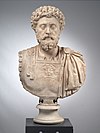
2nd century CE, Rome
Roman Stoicism
Use these rules then, and trouble thyself about nothing else.
1st century CE, Rome
Roman Stoicism
[Seneca] would have denounced the opinion to which most philosophers, tacitly or otherwise, have come round in the last half-century, that it is no part of the business of philosophy to turn people into better persons, as tantamount to desertion or lèse-majesté.
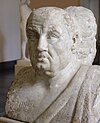
1st century CE, Hierapolis
Greek Stoicism
Some of their faults people readily admit, but others not so readily.
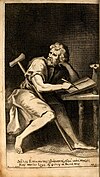
4th century BCE, Athens
Platonic Academy
to seek office oneself and not await compulsion is thought disgraceful. But the chief penalty is to be governed by someone worse if a man will not himself hold office and rule.

4th century BCE, Stagira
Peripatetic Philosophy
If liberty and equality, as is thought by some, are chiefly to be found in democracy, they will be best attained when all persons alike share in the government to the utmost.
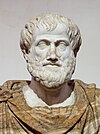
5th century BCE, China
Confucianism
Virtuous, worthy, wise and capable people are chosen as leaders.

6th century BCE, China
Classical Taoism
Governing a large country is like frying a small fish.
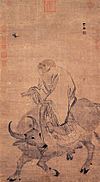
4th century BCE, China
Classical Taoism
Resolve your mental energy into abstraction, your physical energy into inaction. Allow yourself to fall in with the natural order of phenomena, without admitting the element of self,—and the empire will be governed.

Explore All 30 Cross-Civilizational Wisdom Pillars
Compare how humanity's greatest philosophers, poets, and sages across millennia addressed the foundational questions of human existence.
Resilience
Impermanence
Compassion
Self-Knowledge
Courage
Love & Devotion
Mortality & Legacy
Time & Presence
Solitude & Stillness
Truth & Honesty
Freedom & Autonomy
Purpose & Meaning
Gratitude & Contentment
Forgiveness & Mercy
Humility & Openness
Discipline & Mastery
Suffering & Transformation
Friendship & Community
Justice & Moral Duty
Hope & Perseverance
Creativity & Art
Nature & The Cosmos
Doubt & Inquiry
Ambition & Excellence
Patience & Timing
Integrity & Character
Happiness & Flourishing
Change & Renewal
Mindfulness & Awareness