Link Copied!
Marcus Aurelius Quotes (121-180)
Philosopher, Emperor
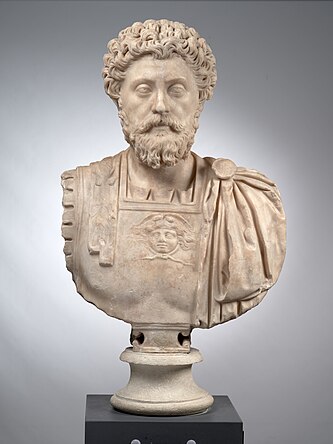









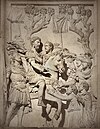






About Marcus Aurelius
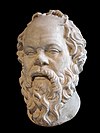
Marcus Aurelius Antoninus (26 April 121 – 17 March 180) was Roman emperor from 161 to 180 and a Stoic philosopher. He was the last of the rulers known as the Five Good Emperors (a term coined some 13 centuries later by Niccolò Machiavelli), and the last emperor of the Pax Romana (27 BC to 180), an age of relative peace and stability for the Roman Empire. He served as Roman consul in 140, 145, and 161.
Best Marcus Aurelius Quotes
Shortest
Earliest
Explore our curated collection of the most famous and impactful Marcus Aurelius quotes.
“IV, 13”


“Death, like generation, is a secret of Nature.”



““No thefts of free will reported.” (Hays translation)”

“The intelligence of the universe is social.”


“Each of us lives only now, this brief instant. (Hays translation)”
“You have a mind? —Yes. Well, why not use it? (Hays translation)”
“Choose what's best.—Best is what benefits me. (Hays translation)”
“Nothing happens to anyone that he can't endure. (Hays translation)”
“The rottenness of the matter which is the foundation of everything!”
“If thou canst see sharp, look and judge wisely, says the philosopher.”
“Pain is the opposite of strength, and so is anger. (Hays translation)”
“And you can also commit injustice by doing nothing. (Hays translation)”
“To live your brief life rightly, isn't that enough? (Hays translation)”
“I do what is mine to do; the rest doesn't disturb me. (Hays translation)”
“From Antisthenes: It is royal to do good and be abused.”



“No matter what anyone says or does, my task is to be good. (Hays translation)”
“It is satisfaction to a man to do the proper works of a man.”


“Disturbance comes only from within—from our own perceptions. (Hays translation)”
“Shame on the soul, to falter on the road of life while the body still perseveres.”

“"Let your occupations be few," says the sage, "if you would lead a tranquil life."”
“To accept it without arrogance, to let it go with indifference. (Hays translation)”
“Put an end once for all to this discussion of what a good man should be, and be one.”
““The world is nothing but change. Our life is only perception.” (Hays translation)”
“I can control my thoughts as necessary; then how can I be troubled? (Hays translation)”

“Where have they gone, the brilliant, the insightful ones, the proud? (Hays translation)”
“For we carry our fate with us — and it carries us. (Hays translation)”
“How much more damage anger and grief do than the things that cause them. (Hays translation)”
“You're better off not giving the small things more time than they deserve. (Hays translation)”
“The controlling Intelligence understands its own nature, and what it does, and whereon it works.”
“The longest-lived and the shortest-lived man, when they come to die, lose one and the same thing.”

“Whatever this is that I am, it is flesh and a little spirit and an intelligence. (Hays translation)”
“You could leave life right now. Let that determine what you do and say and think. (Hays translation)”
“He was a man who looked at what ought to be done, not to the reputation which is got by a man's acts.”
“Look to the essence of a thing, whether it be a point of doctrine, of practice, or of interpretation.”
“Not to display anger or other emotions. To be free of passion and yet full of love. (Hays translation)”
“It is crazy to want what is impossible. And impossible for the wicked not to do so. (Hays translation)”
“Learn to ask of all actions, “Why are they doing that?” Starting with your own. (Hays translation)”
“Nothing earthly succeeds by ignoring heaven, nothing heavenly by ignoring the earth. (Hays translation)”
“As for life, it is a battle and a sojourning in a strange land; but the fame that comes after is oblivion.”
“Prize that which is best in the universe; and this is that which useth everything and ordereth everything.”

“Self-control and resistance to distractions. Optimism in adversity—especially illness. (Hays translation)”
“Men exist for the sake of one another. Teach them then or bear with them. (Long translation)”
“No carelessness in your actions. No confusion in your words. No imprecision in your thoughts. (Hays translation)”
““If you don’t have a consistent goal in life, you can’t live it in a consistent way.” (Hays translation)”
“Choose not to be harmed—and you won't feel harmed. Don't feel harmed—and you haven't been. (Hays translation)”
“Search men's governing principles, and consider the wise, what they shun and what they cleave to.”

“To change your mind and to follow him who sets you right is to be nonetheless the free agent that you were before.”

“Think not disdainfully of death, but look on it with favor; for even death is one of the things that Nature wills.”

“Be straightforward. Look at things like a man, like a human being, like a citizen, like a mortal. (Hays translation)”
“It needs to realize that what happens to everyone—bad and good alike—is neither good nor bad. (Hays translation)”

“External things are not the problem. It's your assessment of them. Which you can erase right now. (Hays translation)”

“Many the lumps of frankincense on the same altar; one falls there early and another late, but it makes no difference.”
“Always take the short cut; and that is the rational one. Therefore say and do everything according to soundest reason.”
“It's silly to try to escape other people's faults. They are inescapable. Just try to escape your own. (Hays translation)”
“It is not fit that I should give myself pain, for I have never intentionally given pain even to another.”

“Never esteem anything as of advantage to you that will make you break your word or lose your self-respect.”

“Waste not the remnant of thy life in those imaginations touching other folk, whereby thou contributest not to the common weal.”
“Deem not life a thing of consequence. For look at the yawning void of the future, and at that other limitless space, the past.”
“Understand however that every man is worth just so much as the things are worth about which he busies himself.”
“The things you think about determine the quality of your mind. Your soul takes on the color of your thoughts. (Hays translation)”
“To live each day as though one's last, never flustered, never apathetic, never attitudinizing – here is perfection of character.”

“All those things at which thou wishest to arrive by a circuitous road, thou canst have now, if thou dost not refuse them to thyself.”
“Not to live as if you had endless years ahead of you. Death overshadows you. While you're alive and able—be good. (Hays translation)”
“Today I escaped from anxiety. Or no, I discarded it, because it was within me, in my own perceptions—not outside. (Hays translation)”
“Remember this— that there is a proper dignity and proportion to be observed in the performance of every act of life.”
“How easy it is to repel and to wipe away every impression which is troublesome or unsuitable, and immediately to be in all tranquility.”
“There is a limit to the time assigned you, and if you don't use it to free yourself it will be gone and never return. (Hays translation)”
“But true good fortune is what you make for yourself. Good fortune: good character, good intentions, and good actions. (Hays translation)”

“All things are changing; and thou thyself art in continuous mutation and in a manner in continuous destruction and the whole universe to.”

“The only thing that isn't worthless: to live this life out truthfully and rightly. And be patient with those who don't. (Hays translation)”
“A straightforward, honest person should be like someone who stinks: when you're in the same room with him, you know it. (Hays translation)”
“Everything is in a state of metamorphosis. Thou thyself art in everlasting change and in corruption to correspond; so is the whole universe.”

“Nothing has such power to broaden the mind as the ability to investigate systematically and truly all that comes under thy observation in life.”

“Direct thy attention to what is said. Let thy understanding enter into the things that are doing and the things which do them.”
“The cucumber is bitter? Then throw it out. There are brambles in the path? Then go around them. That's all you need to know. (Hays translation)”
“He would be the finer gentleman that should leave the world without having tasted of lying or pretence of any sort, or of wantonness or conceit.”
“Death,—a stopping of impressions through the senses, and of the pulling of the cords of motion, and of the ways of thought, and of service to the flesh.”
“Be not unwilling in what thou doest, neither selfish nor unadvised nor obstinate; let not over-refinement deck out thy thought; be not wordy nor a busybody.”

“I have often wondered how it should come to pass, that every man loving himself best, should more regard other men's opinions concerning himself than his own.”
“Remember this, then, that this little compound, thyself, must either be dissolved, or thy poor breath must be extinguished, or be removed and placed elsewhere.”
“Does the light of a lamp shine and keep its glow until its fuel is spent? Why shouldn't your truth, justice, and self-control shine until you are extinguished?”
“An arrow has one motion and the mind another. Even when pausing, even when weighing conclusions, the mind is moving forward, toward its goal. (Hays translation)”

“You see how few things you have to do to live a satisfying and reverent life? If you can manage this, that's all even the gods can ask of you. (Hays translation)”
“So remember this principle when something threatens to cause you pain: the thing itself was no misfortune at all; to endure it and prevail is great good fortune.”
“Only to the rational animal is it given to follow voluntarily what happens; but simply to follow is a necessity imposed on all.”

“If man reflects on the changes and transformations which follow one another like wave after wave and their rapidity, he will despise everything which is perishable.”

“If you are distressed by anything external, the pain is not due to the thing itself, but to your estimate of it; and this you have the power to revoke at any moment.”
“Think on this doctrine,—that reasoning beings were created for one another's sake; that to be patient is a branch of justice, and that men sin without intending it.”
“All things are the same,—familiar in enterprise, momentary in endurance, coarse in substance. All things now are as they were in the day of those whom we have buried.”

“In the constitution of that rational animal I see no virtue which is opposed to justice, but I see a virtue which is opposed to love of pleasure, and that is temperance.”
“The art of life is more like the wrestler's art than the dancer's, in respect of this, that it should stand ready and firm to meet onsets which are sudden and unexpected.”

“...be tolerant with others and strict with yourself. Remember, nothing belongs to you but your flesh and blood—and nothing else is under your control. (Hays translation)”
“The happiness and unhappiness of the rational, social animal depends not on what he feels but on what he does; just as his virtue and vice consist not in feeling but in doing.”
“The ruling power within, when it is in its natural state, is so related to outer circumstances that it easily changes to accord with what can be done and what is given it to do.”
“..If you are troubled by external circumstances, it is not the circumstances that trouble you, but your own perception of them - and they are in your power to change at any time.”

“Drama, combat, terror, numbness, and subservience – every day these things wipe out your sacred principles, whenever your mind entertains them uncritically or lets them slip in.”

“Observe always that everything is the result of a change, and get used to thinking that there is nothing Nature loves so well as to change existing forms and to make new ones like them.”
“Yes, boorish people do boorish things. What's strange or unheard-of about that? Isn't it yourself you should reproach—for not anticipating that they'd act this way? (Hays translation)”
“...that to expect a bad person not to harm others is like expecting fig trees not to secrete juice, babies not to cry, horses not to neigh—the inevitable not to happen. (Hays translation)”

“Retire into thyself. The rational principle which rules has this nature, that it is content with itself when it does what is just, and so secures tranquility.”
“What is divine is full of Providence. Even chance is not divorced from nature, from the inweaving and enfolding of things governed by Providence. Everything proceeds from it. (Hays translation)”
“Just that you do the right thing. The rest doesn't matter. Cold or warm. Tired or well-rested. Despised or honored. Dying . . . or busy with other assignments. (Hays translation)”
“Her reverence for the divine, her generosity, her inability not only to do wrong but even to conceive of doing it. And the simple way she lived—not in the least like the rich. (Hays translation)”
“In your actions, don't procrastinate. In your conversations, don't confuse. In your thoughts, don't wander. In your soul, don't be passive or aggressive. In your life, don't be all about business.”
“Objective judgment, now, at this very moment. Unselfish action, now, at this very moment. Willing acceptance—now, at this very moment—of all external events. That's all you need. (Hays translation)”

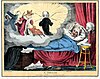
“Turn thy thoughts now to the consideration of thy life, thy life as a child, as a youth, thy manhood, thy old age, for in these also every change was a death. Is this anything to fear?”

“You want praise from people who kick themselves every fifteen minutes, the approval of people who despise themselves. (Is it a sign of self-respect to regret nearly everything you do?) (Hays translation)”
“Constantly contemplate the whole of time and the whole of substance, and consider that all individual things as to substance are a grain of a fig, and as to time the turning of a gimlet.”

“No state sorrier than that of the man who keeps up a continual round, and pries into "the secrets of the nether world," as saith the poet, and is curious in conjecture of what is in his neighbour's heart.”
“Every being ought to do that which is according to its constitution; and all other things have been constituted for the sake of the superior, but the rational for the sake of one another.”
““Those who have forgotten where the road leads.” “They are at odds with what is all around them”—the all-directing logos. And “they find alien what they meet with every day.” (Hays translation)”
“If...it be a thing external that causes thy grief, know, that it is not that properly that doth cause it, but thine own conceit and opinion concerning the thing: which thou mayest rid thyself of, when thou wilt.”
“Things have no hold on the soul. They have no access to it, cannot move or direct it. It is moved and directed by itself alone. It takes the things before it and interprets them as it sees fit. (Hays translation)”
“In the case of most pains let this remark of Epicurus aid thee, that the pain is neither intolerable nor everlasting, if thou bear in mind that it has its limits, and if thou addest nothing to it in imagination...”
“Everything that happens is either endurable or not. If it's endurable, then endure it. Stop complaining. If it's unendurable . . . then stop complaining. Your destruction will mean its end as well. (Hays translation)”
“That to expect bad people not to injure others is crazy. It's to ask the impossible. And to let them behave like that to other people but expect them to exempt you is arrogant—the act of a tyrant. (Hays translation)”
“Constantly and, if it be possible, on the occasion of every impression on the soul, apply to it the principles of Physic, of Ethic, and of Dialectic.”
“...undefiled by pleasures, invulnerable to any pain, untouched by arrogance, unaffected by meanness, an athlete in the greatest of all contests—the struggle not to be overwhelmed by anything that happens. (Hays translation)”
“Consider that everything is opinion, and opinion is in thy power. Take away then, when thou choosest, thy opinion, and like a mariner, who has doubled the promontory, thou wilt find calm, everything stable, and a waveless bay.”

“The abyss of endless time that swallows it all. The emptiness of all those applauding hands. The people who praise us—how capricious they are, how arbitrary. And the tiny region in which it all takes place. (Hays translation)”
“Of Fronto, to how much envy and fraud and hypocrisy the state of a tyrannous king is subject unto, and how they who are commonly called [Eupatridas Gk.], i.e. nobly born, are in some sort incapable, or void of natural affection.”
“Concentrate every minute like a Roman—like a man—on doing what's in front of you with precise and genuine seriousness, tenderly, willingly, with justice. And on freeing yourself from all other distractions. (Hays translation)”
“Adorn thyself with simplicity and with indifference towards the things which lie between virtue and vice. Love mankind. Follow God. The poet says that Law rules all. And it is enough to remember that law rules all.”

“Then what should we work for? Only this: proper understanding; unselfish action; truthful speech. A resolve to accept whatever happens as necessary and familiar, flowing like water from that same source and spring. (Hays translation)”
“Remember that neither the future nor the past pains thee, but only the present. But this is reduced to a very little, if thou only circumscribest it, and chidest thy mind, if it is unable to hold out against even this.”
“A man standing by a spring of clear, sweet water and cursing it. While the fresh water keeps on bubbling up. He can shovel mud into it, or dung, and the stream will carry it away, wash itself clean, remain unstained. (Hays translation)”


“The span we live is small—small as the corner of the earth in which we live it. Small as even the greatest renown, passed from mouth to mouth by short-lived stick figures, ignorant alike of themselves and those long dead. (Hays translation)”
“The things... which are proper to the understanding no other man is used to impede, for neither fire, nor iron, nor tyrant, nor abuse, touches it in any way. When it has been made a sphere, it continues a sphere.”
“Yes, you can--if you do everything as if it were the last thing you were doing in your life, and stop being aimless, stop letting your emotions override what your mind tells you, stop being hypocritical, self-centered, irritable. (Hays translation)”

“Not to feel exasperated or defeated or despondent because your days aren't packed with wise and moral actions. But to get back up when you fail, to celebrate behaving like a human—however imperfectly—and fully embrace the pursuit you've embarked on.”
“Another may be more expert in casting [throwing] his opponent; but he is not more social, nor more modest, nor better disciplined to meet all that happens, nor more considerate with respect to the faults of his neighbors.”
“Wipe out the imagination. Stop pulling the strings. Confine thyself to the present. ...Divide and distribute every object into the causal [formal] and the material. ...Let the wrong which is done by a man stay there where the wrong was done.”
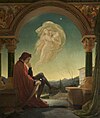
“Look at everything that exists, and observe that it is already in dissolution and change, and as it were putrefaction or dispersion, or that everything is so constituted in nature as to die.”
“Short-lived are both the praiser and the praised, and rememberer and the remembered: and all this in a nook of this part of the world; and not even here do all agree, no, not any one with himself: and the whole earth too is a point.”
“He who fears death either fears to lose all sensation or fears new sensations. In reality, you will either feel nothing at all, and therefore nothing evil, or else, if you can feel any sensations, you will be a new creature, and so will not have ceased to have life.”
“It is a base thing for the countenance to be obedient and to regulate and compose itself as the mind commands, and for the mind not to be regulated and composed by itself.”
“Do what nature now requires. Set thyself in motion, if it is in thy power, and do not look about thee to see if any one will observe it; nor yet expect Plato's Republic: but be content if the smallest thing goes on well, and consider such an event to be no small matter.”

“This is a fine saying of Plato: That he who is discoursing about men should look also at earthly things as if he viewed them from some higher place; should look at them... a mixture of all things and an orderly combination of contraries.”
“As surgeons keep their instruments and knives always at hand for cases requiring immediate treatment, so shouldst thou have thy thoughts ready to understand things divine and human, remembering in thy every act, even the smallest, how close is the bond that unites the two.”
“Everywhere and at all times it is in thy power piously to acquiesce in thy present condition, and to behave justly to those who are about thee, and to exert thy skill upon thy present thoughts, that nothing shall steal into them without being well examined.”

“All that is harmony for you, my Universe, is in harmony with me as well. Nothing that comes at the right time for you is too early or too late for me. Everything is fruit to me that your seasons bring, Nature. All things come of you, have their being in you, and return to you.”

“Not to feel exasperated, or defeated, or despondent because your days aren't packed with wise and moral actions. But to get back up when you fail, to celebrate behaving like a human--however imperfectly--and fully embrace the pursuit that you've embarked on. (Hays translation)”
“Whatever is in any way beautiful hath its source of beauty in itself, and is complete in itself; praise forms no part of it. So it is none the worse nor the better for being praised.
• Variant: That which is really beautiful has no need of anything. (trans. George Long)”
• Variant: That which is really beautiful has no need of anything. (trans. George Long)”
“The whole contains nothing which is not or its advantage; and all natures indeed have this common principle, but the nature of the universe has this principle besides, that it cannot be compelled even by any external cause to generate anything harmful to itself.”
“Mark how fleeting and paltry is the estate of man - yesterday in embryo, tomorrow a mummy or ashes. So for the hairsbreadth of time assigned to thee, live rationally, and part with life cheerfully, as drops the ripe olive, extolling the season that bore it and the tree that matured it.”
“[...] As for others whose lives are not so ordered, he reminds himself constantly of the characters they exhibit daily and nightly at home and abroad, and of the sort of society they frequent; and the approval of such men, who do not even stand well in their own eyes has no value for him.”
“Some people, when they do someone a favor, are always looking for a chance to call it in. And some aren't, but they're still aware of it--still regard it as a debt. But others don't even do that. They're like a vine that produces grapes without looking for anything in return. (Hays translation)”
“Whatever may happen to thee, it was prepared for thee from all eternity; and the implication of causes was from eternity spinning the thread of thy being, and of that which is incident to it.
• Alternate Translation: Whatever may befall you, it was preordained for you from everlasting.”
• Alternate Translation: Whatever may befall you, it was preordained for you from everlasting.”

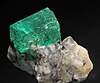
“Whatsoever any man either doth or saith, thou must be good; not for any man's sake, but for thine own nature's sake; as if either gold, or the emerald, or purple, should ever be saying to themselves, Whatsoever any man either doth or saith, I must still be an emerald, and I must keep my colour.'”
“Look round at the courses of the stars, as if thou wert going along with them; and constantly consider the changes of the elements into one another; for such thoughts purge away the filth of the terrene life.”
“Nature has had regard in everything no less to the end than to the beginning and the continuance, just like a man who throws up a ball. What good is it then for the ball to be thrown up, or harm for it to come down... what good is it to the bubble while it holds together, or what harm when it is burst?”
“People try to get away from it all—to the country, to the beach, to the mountains. You always wish that you could too. Which is idiotic: you can get away from it anytime you like. By going within. Nowhere you can go is more peaceful—more free of interruptions—than your own soul. (Hays translation)”
“In the case of all things which have a certain constitution, whatever harm may happen to any of them, that which is affected becomes consequently worse; but in like case, a man becomes both better... and more worthy of praise, by making the right use of these accidents.”
“Art thy not content that thou hast done something conformable to thy nature, and dost thou seek to be paid for it? Just as if the eye demanded recompense for seeing, or the feet for walking. For as these members are formed for a particular purpose... so also is man formed by nature to acts of benevolence.”

“Consider all that you've gone through, all that you've survived. And that the story of your life is done, your assignment complete. How many good things have you seen? How much pain and pleasure have you resisted? How many honors have you declined? How many unkind people have you been kind to? (Hays translation)”

“Of things that are external, happen what will to that which can suffer by external accidents. Those things that suffer let them complain themselves, if they will; as for me, as long as I conceive no such thing, that that which is happened is evil, I have no hurt; and it is in my power not to conceive any such thing.”
“Remember, that to change thy mind upon occasion, and to follow him that is able to rectify thee, is equally ingenuous, as to find out at the first, what is right and just, without help. For of thee nothing is required, that is beyond the extent of thine own deliberation and judgment, and of thine own understanding.”
“Does anything genuinely beautiful need supplementing? No more than justice does—or truth, or kindness, or humility. Are any of those improved by being praised? Or damaged by contempt? Is an emerald suddenly flawed if no one admires it? Or gold, or ivory, or purple? Lyres? Knives? Flowers? Bushes? (Hays translation)”
“What is my ruling faculty now to me? and of what nature am I now making it? and for what purpose am I now using it? is it void of understanding? is it loosed and rent asunder from social life? is it melted and mixed with the poor flesh so as to move together with it?”
“For thus it is, men of Athens, in truth: wherever a man has placed himself thinking it is the best place for him, or has been placed by a commander, there in my opinion he ought to stay and to abide the hazard, taking nothing into the reckoning, either death or anything else, before the baseness [of deserting his post].”
“And finally remember that nothing harms him who is really a citizen, which does not harm the state; nor yet does anything harm the state which does not harm law [order]; and of these things which are called misfortunes not one harms law. What then does not harm law does not harm either state or citizen.”
“Because most of what we say and do is not essential. If you can eliminate it, you'll have more time, and more tranquillity. Ask yourself at every moment, “Is this necessary?” But we need to eliminate unnecessary assumptions as well. To eliminate the unnecessary actions that follow. (Hays translation)”
“Thou mayest foresee... the things which will be. For they will certainly be of like form, and it is not possible that they should deviate from the order of things now: accordingly to have contemplated human life for forty years is the same as to have contemplated it for ten thousand years.”
“Marcus Aurelius wrote the following about Severus (a person who is not clearly identifiable according to the footnote): Through him [...] I became acquainted with the conception of a community based on equality and freedom of speech for all, and of a monarchy concerned primarily to uphold the liberty of the subject.”
“A horse at the end of the race...A dog when the hunt is over...A bee with its honey stored...And a human being after helping others. They don't make a fuss about it. They just go on to something else, as the vine looks forward to bearing fruit again in season. We should be like that. Acting almost unconsciously. (Hays translation)”
“At dawn, when you have trouble getting out of bed, tell yourself: ‘I have to go to work – as a human being. What do I have to complain of, if I’m going to do what I was born for – the things I was brought into the world to do? Or is this what I was created for? To huddle under the blankets and stay warm?’ (Hays translation)”
“The universal intelligence puts itself in motion for every separate effect... or it puts itself in motion once, and everything else comes by way of a sequence in a manner; or individual elements are the origin of all things. In a word, if there is a god, all is well; and if chance rules, do not thou be governed by it.”

“Human life. Duration: momentary. Nature: changeable. Perception: dim. Condition of Body: decaying. Soul: spinning around. Fortune: unpredictable. Lasting Fame: uncertain. Sum Up: The body and its parts are a river, the soul a dream and mist, life is warfare and a journey far from home, lasting reputation is oblivion. (Hays translation)”
“Stir up thy mind, and recall thy wits again from thy natural dreams, and visions, and when thou art perfectly awoken, and canst perceive that they were but dreams that troubled thee, as one newly awakened out of another kind of sleep look upon these worldly things with the same mind as thou didst upon those, that thou sawest in thy sleep.”
“Let this always be plain to thee, that this piece of land is like any other; and that all things here are the same with all things on the top of a mountain, or on the sea-shore, or wherever thou chooses to be. For thou wilt find just what Plato says, Dwelling within the walls of the city as in a shepherd's fold on a mountain.”

“Let there be freedom from perturbations with respect to the things which come from the external cause; and let there be justice in the things done by virtue of the internal cause, that is, let there be movement and action terminating in this, in social acts, for this is according to thy nature.”
“From Apollonius, true liberty, and unvariable steadfastness, and not to regard anything at all, though never so little, but right and reason: and always..that it was possible for the same man to be both vehement and remiss: a man not subject to be vexed, and offended with the incapacity of his scholars and auditors in his lectures and expositions.”
“Every soul, the philosopher says, is involuntarily deprived of truth; consequently in the same way it is deprived of justice and temperance and benevolence and everything of the kind. It is most necessary to keep this in mind, for thus thou wilt be more gentle towards all.”
“A person who doesn't know what the universe is doesn't know who they are. A person who doesn't know their purpose in life doesn't know who they are or what the universe is. A person who doesn't know any of these things doesn't know why they are here. So what to make of people who seek or avoid the praise of those who have no knowledge of where or who they are?”
“The mind which is free from passions is a citadel, for man has nothing more secure to which he can fly for refuge and for the future be inexpugnable. He then who has not seen this is an ignorant man: but he who has seen it and does not fly to this refuge is unhappy.”
“Rememberest the gods, and that they wish not to be flattered, but wish all reasonable beings to be made like themselves; and... rememberest that what does the work of a fig-tree is a fig-tree, and that what does the work of a dog is a dog, and that what does the work of a bee is a bee, and that what does the work of a man is a man.”
“Οἷς συγκεκλήρωσαι πράγμασι, τούτοις συνάρμοζε σεαυτόν, καὶ οἷς συνείληχας ἀνθρώποις, τούτους φίλει, ἀλλ ἀληθινῶς.
• Adapt yourself to the environment in which your lot has been cast, and show true love to the fellow-mortals with whom destiny has surrounded you.”
• Adapt yourself to the environment in which your lot has been cast, and show true love to the fellow-mortals with whom destiny has surrounded you.”
“What if someone despises me? Let me see to it. But I will see to it that I won't be found doing or saying anything contemptible. What if someone hates me? Let me see to that. But I will see to it that I'm kind and good-natured to all, and prepared to show even the hater where they went wrong. Not in a critical way, or to show off my patience, but genuinely and usefully.”
“Continuously thou wilt look at human things as smoke and nothing at all; especially if thou reflectest at the same time, that what has once changed will never exist again in the infinite duration of time. But thou, in what a brief space of time is thy existence? And why art thou not content to pass through this short time in an orderly way?”
“Of my grandfather Verus I have learned to be gentle and meek, and to refrain from all anger and passion... I have learned both shamefastness and manlike behaviour. Of my mother I have learned to be religious, and bountiful; and to forbear, not only to do, but to intend any evil; to content myself with a spare diet, and to fly all such excess as is incidental to great wealth.”
“Hasten [to examine] thy own ruling faculty and that of the universe and that of thy neighbor: thy own, that thy may make it just; and that of the universe, that thou mayst remember of what thou art a part; and that of thy neighbor, that thy mayst know whether he has acted ignorantly or with knowledge, and that thou mayst also consider that his ruling faculty is akin to thine.”
“One man prays thus: How shall I be able to lie with that woman? Do thou pray thus: How shall I not desire to lie with her? Another prays: How shall I be released from this? Another prays: How shall I not desire to be released? Another thus: How shall I not lose my little son? Thou thus: How shall I not be afraid to lose him? In fine, turn thy prayers this way, and see what comes.”
“When thou art offended at any man's fault, forthwith turn to thyself and reflect in what manner thou doest error thyself... For by attending to this thou wilt quickly forget thy anger, if this consideration is also added, that the man is compelled; for what else could he do? or, if thou art able, take away from him the compulsion.”
“Keep this thought handy when you feel a bit of rage coming on – it isn't manly to be enraged. Rather, gentleness and civility are more human, and therefore manlier. A real person doesn't give way to anger and discontent, and such a person has strength, courage, and endurance – unlike the angry and complaining. The nearer a man comes to a calm mind, the closer he is to strength.”
“Where any work can be done conformably to the reason which is common to gods and men, there we have nothing to fear; for where we are able to get profit by means of the activity which is successful and proceeds according to our constitution, there no harm is to be suspected.”
“If mind is common to us, then also the reason, whereby we are reasoning beings, is common. If this be so, then also the reason which enjoins what is to be done or left undone is common. If this be so, law also is common; if this be so, we are citizens; if this be so, we are partakers in one constitution; if this be so, the Universe is a kind of Commonwealth.”
“Don't tell yourself anything more than what the initial impressions report. It's been reported to you that someone is speaking badly about you. This is the report – the report wasn't that you've been harmed. I see that my son is sick – but not that his life is at risk. So always stay within your first impressions, and don't add to them in your head – this way nothing can happen to you.”
“Constantly regard the universe as one living being, having one substance and one soul; and observe how all things have reference to one perception, the perception of this one living being; and how all things act with one movement; and how all things are the cooperating causes of all things which exist; observe too the continuous spinning of the thread and the contexture of the web.”
“Whensoever by some present hard occurrences thou art constrained to be in some sort troubled and vexed, return unto thyself as soon as may be, and be not out of tune longer than thou must needs. For so shalt thou be the better able to keep thy part another time, and to maintain the harmony, if thou dost use thyself to this continually; once out, presently to have recourse unto it, and to begin again.”
“The other reason is that what happens to the individual is a cause of well-being in what directs the world--of its well-being, its fulfillment, or its very existence, even. Because the whole is damaged if you cut away anything--anything at all--from its continuity and its coherence. Not only its parts, but its purposes. And that's what you're doing when you complain: hacking and destroying. (Hays translation)”
“Enough of this miserable, whining life. Stop monkeying around! Why are you troubled? What’s new here? What’s so confounding? The one responsible? Take a good look. Or just the matter itself? Then look at that. There’s nothing else to look at. And as far as the gods go, by now you could try being more straightforward and kind. It’s the same, whether you’ve examined these things for a hundred years, or only three.”
“When you wake up in the morning, tell yourself: The people I deal with today will be meddling, ungrateful, arrogant, dishonest, jealous, and surly. They are like this because they can't tell good from evil. But I have seen the beauty of good, and the ugliness of evil, and have recognized that the wrongdoer has a nature related to my own—not of the same blood or birth, but the same mind, and possessing a share of the divine.”

“Either all things proceed from one intelligent source and come together as in one body, and the part ought not to find fault with what is done for the benefit of the whole; or there are only atoms, and nothing else than a mixture and dispersion. Why, then, art thou disturbed? Say to this ruling faculty, Art thou dead, art thou corrupted, art thou playing the hypocrite, art thou become a beast, dost thou herd and feed with the rest?”
“He who flies from his master is a runaway; but the law is master, and he who breaks the law is a runaway. And he also who is grieved or angry or afraid, is dissatisfied because something has been or is or shall be of the things which are appointed by Him who rules all things, and He is Law, and assigns to every man what is fit. He then who fears or is grieved or is angry is a runaway.”
“Be like a rocky promontory against which the restless surf continually pounds; it stands fast while the churning sea is lulled to sleep at its feet. I hear you say, "How unlucky that this should happen to me!" Not at all! Say instead, "How lucky that I am not broken by what has happened and am not afraid of what is about to happen. The same blow might have struck anyone, but not many would have absorbed it without capitulation or complaint."”
“If you do the job in a principled way, with diligence, energy and patience, if you keep yourself free of distractions, and keep the spirit inside you undamaged, as if you might have to give it back at any moment— If you can embrace this without fear or expectation—can find fulfillment in what you're doing now, as Nature intended, and in superhuman truthfulness (every word, every utterance)—then your life will be happy. (Hays translation)—”
“Don't let yourself forget how many doctors have died, after furrowing their brows over how many deathbeds. How many astrologers, after pompous forecasts about others' ends. How many philosophers, after endless disquisitions on death and immortality. How many warriors, after inflicting thousands of casualties themselves. How many tyrants, after abusing the power of life and death atrociously, as if they were themselves immortal. (Hays translation)”
“In contemplating thyself never include the vessel which surrounds thee, and these instruments which are attached about it. For they are like an ax, differing only in this, that they grow to the body. For indeed there is no more use in these parts without the cause which moves and checks them than in the weaver's shuttle, and the writer's pen, and the driver's whip.”
“An angry countenance is much against nature, and it is oftentimes the proper countenance of them that are at the point of death. But were it so, that all anger and passion were so thoroughly quenched in thee, that it were altogether impossible to kindle it any more, yet herein must not thou rest satisfied, but further endeavour by good consequence of true ratiocination, perfectly to conceive and understand, that all anger and passion is against reason.”
“Μή, εἴ τι αὐτῷ σοὶ δυσκαταπόνητον, τοῦτο ἀνθρώπῳ ἀδύνατον ὑπολαμβάνειν, ἀλλ εἴ τι ἀνθρώπῳ δυνατὸν καὶ οἰκεῖον, τοῦτο καὶ σεαυτῷ ἐφικτὸν νομίζειν.
• Do not think that what is hard for you to master is humanly impossible; but if a thing is humanly possible, consider it to be within your reach.”
• Do not think that what is hard for you to master is humanly impossible; but if a thing is humanly possible, consider it to be within your reach.”
“The mind is the ruler of the soul. It should remain unstirred by agitations of the flesh--gentle and violent ones alike. Not mingling with them, but fencing itself off and keeping those feelings in their place. When they make their way into our thoughts, through the sympathetic link between mind and body, don't try to resist the sensation. The sensation is natural. But don't let the mind start in with judgments, calling it 'good' or 'bad.' (Hays translation)”
“As thou thyself art a component part of a social system, so let every act of thine be a component part of social life. Whatever act of thine that has no reference, either immediately or remotely, to a social end, this tears asunder thy life, and does not allow it to be one, and it is of the nature of a mutiny, just as when in a popular assembly a man acting by himself stands apart from the general agreement.”
“As the nature of the universal has given to every rational being all the powers that it has, so we have received from it this power also. For as the universal nature converts and fixes in its predestined place everything which stands in the way and opposes it, and makes such things a part of itself, so also the rational animal is able to make every hindrance its own material, and to use it for such purpose as it may have designed.”
“No longer let thy breathing only act in concert with the air which surrounds thee, but let thy intelligence also now be in harmony with the intelligence which embraces all things. For the intelligent power is no less diffused in all parts and pervades all things for him who is willing to draw it to him than the aërial power for him who is able to respire it.”
“For a man can lose neither the past nor the future; for how can one take from him that which is not his? So remember these two points: first, that each thing is of like form from everlasting and comes round again in its cycle, and that it signifies not whether a man shall look upon the same things for a hundred years or two hundred, or for an infinity of time; second, that the longest lived and the shortest lived man, when they come to die, lose one and the same thing.”
“He who does not know what the world is, does not know where he is. And he who does not know for what purpose the world exists, does not know who he is, nor what the world is. But he who has failed in any one of these things could not even say for what purpose he exists himself. What then dost thou think of him who [avoids or] seeks the praise of those who applaud, of men who know not either where they are or who they are?”

“By remembering then that I am a part of such a whole, I shall be content with everything that happens. And inasmuch as I am in a manner intimately related to the parts which are of the same kind with myself, I shall do nothing unsocial, but I shall rather direct myself to the things which are of the same kind with myself, and I shall turn all my efforts to the common interest, and divert them from the contrary.”
“γεγόναμεν γὰρ πρὸς συνεργίαν ὡς πόδες, ὡς χεῖρες, ὡς βλέφαρα, ὡς οἱ στοῖχοι τῶν ἄνω καὶ κάτω ὀδόντων. τὸ οὖν ἀντιπράσσειν ἀλλήλοις παρὰ φύσιν.
• We are all made for mutual assistance, as the feet, the hands, and the eyelids, as the rows of the upper and under teeth, from whence it follows that clashing and opposition is perfectly unnatural.”
• We are all made for mutual assistance, as the feet, the hands, and the eyelids, as the rows of the upper and under teeth, from whence it follows that clashing and opposition is perfectly unnatural.”
“Why then dost thou choose to act in the same way? and why dost thou not leave these agitations which are foreign to nature, to those who cause them and those who are moved by them? And why art thou not altogether intent upon the right way of making use of things which happen to thee? for then thou wilt use them well, and they will be material for thee. Only attend to thyself, and resolve to be a good man in every act which thou doest; and remember...”
“If any man can convince me and bring home to me that I do not think or act aright, gladly will I change; for I search after truth, by which man never yet was harmed. But he is harmed who abideth on still in his deception and ignorance.
• Variant translation: If someone is able to show me that what I think or do is not right, I will happily change, for I seek the truth, by which no one ever was truly harmed. Harmed is the person who continues in his self-deception and ignorance.”
• Variant translation: If someone is able to show me that what I think or do is not right, I will happily change, for I seek the truth, by which no one ever was truly harmed. Harmed is the person who continues in his self-deception and ignorance.”
“Men seek retreats for themselves, houses in the country, sea-shores, and mountains; and thou too art wont to desire such things very much. But this is altogether a mark of the most common sort of men, for it is in thy power whenever thou shalt choose to retire into thyself. For nowhere either with more quiet or more freedom from trouble does a man retire than into his own soul.
• Variant translation: Nowhere can man find a quieter or more untroubled retreat than in his own soul.”
• Variant translation: Nowhere can man find a quieter or more untroubled retreat than in his own soul.”
“Suppose that thou hast detached thyself from the natural unity... yet here there is this beautiful provision, that it is in thy power again to unite thyself. God has allowed this to no other part, after it has been separated and cut asunder, to come together again. ...he has distinguished man, for he has put it in his power not to be separated at all from the universal ...he has allowed him to be returned and to be united and to resume his place as a part.”
“Think not so much of what thou hast not as of what thou hast: but of the things which thou hast, select the best, and then reflect how eagerly they would have been sought, if thou hadst them not. At the same time, however, take care that thou dost not, through being so pleased with them, accustom thyself to overvalue them, so as to be disturbed if ever thou shouldst not have them.
• Variant Translation: Let not thy mind run on what thou lackest as much as on what thou hast already.”
• Variant Translation: Let not thy mind run on what thou lackest as much as on what thou hast already.”
“What matter and opportunity [for thy activity] art thou avoiding? For what else are all these things, except exercises for the reason, when it has viewed carefully and by examination into their nature the things which happen in life? Persevere then until thou shalt have made these things thy own, as the stomach which is strengthened makes all things its own, as the blazing fire makes flame and brightness out of everything that is thrown into it.”
“That which had grown from the earth, to the earth, But that which has sprung from heavenly seed, Back to the heavenly realms returns. This is either a dissolution of the mutual involution of the atoms, or a similar dispersion of the unsentient elements.”

“In a sense, people are our proper occupation. Our job is to do them good and put up with them. But when they obstruct our proper tasks, they become irrelevant to us--like sun, wind, and animals. Our actions may be impeded by them, but there can be no impeding our intentions or our dispositions. Because we can accommodate and adapt. The mind adapts and converts to its own purposes the obstacle to our acting. The impediment to action advances action. What stands in the way becomes the way. (Hays translation)”

“[Before making a decision] The first thing to do – don't get worked up. For everything happens according to the nature of all things, and in a short time you'll be nobody and nowhere even as the great emperors Hadrian and Augustus are now. The next thing to do – consider carefully the task at hand for what it is, while remembering that your purpose is to be a good human being. Get straight to doing what nature requires of you, and speak as you see most just and fitting – with kindness, modesty, and sincerity.”
“All things are interwoven with one another; a sacred bond unites them; there is scarcely one thing that is isolated from another. Everything is coordinated, everything works together in giving form to one universe. The world-order is a unity made up of multiplicity: God is one, pervading all things; all being is one, all law is one (namely, the common reason which all thinking persons possess) and all truth is one– if, as we believe, there can be but one path to perfection for beings that are alike in kind and reason.”
“The universal nature has no external space; but the wondrous part of her art is that though she has circumscribed herself, everything which is within her which appears to decay and to grow old and to be useless she changes into herself, and again makes other new things from these very same, so that she requires neither substance from without nor wants a place into which she may cast that which decays. She is content then with her own space, and her own matter, and her own art.”

“There is no man so fortunate that there shall not be by him when he is dying some who are pleased with what is going to happen. Suppose that he was a good and a wise man, will there not be at least some one to say to himself, Let us at last breathe freely, being relieved from this schoolmaster? It is true that he was harsh to none of us, but I perceive that he tacitly condemns us.—This is what is said of a good man. But in our own case how many other things are there for which there are many who wish to get rid of us.”
“You don't love yourself enough. Or you'd love your nature too, and what it demands of you. People who love what they do wear themselves down doing it, they even forget to wash or eat. Do you have less respect for your own nature than the engraver does for engraving, the dancer for the dance, the miser for money or the social climber for status? When they're really possessed by what they do, they'd rather stop eating and sleeping than give up practicing their arts. Is helping others less valuable to you? Not worth your effort? (Hays translation)”

“Everything harmonizes with me, which is harmonious to thee, O Universe. Nothing for me is too early or too late, which is in due time for thee. There is one light of the sun, though it is interrupted by walls, mountains and infinite other things. There is one common substance, though it is distributed among countless bodies which have their several qualities. There is one soul, though it is distributed among several natures and individual limitations. There is one intelligent soul, though it seems to be divided.”
“Whenever you suffer pain, keep in mind that it's nothing to be ashamed of and that it can't degrade your guiding intelligence, nor keep it from acting rationally and for the common good. And in most cases you should be helped by the saying of Epicurus, that pain is never unbearable or unending, so you can remember these limits and not add to them in your imagination. Remember too that many common annoyances are pain in disguise, such as sleepiness, fever and loss of appetite. When they start to get you down, tell yourself you are giving in to pain.”
“Ἕωθεν προλέγειν ἑαυτῷ: συντεύξομαι περιέργῳ, ἀχαρίστῳ, ὑβριστῇ, δολερῷ, βασκάνῳ, ἀκοινωνήτῳ: πάντα ταῦτα συμβέβηκεν ἐκείνοις παρὰ τὴν ἄγνοιαν τῶν ἀγαθῶν καὶ κακῶν.
• When you wake up in the morning, tell yourself: The people I deal with today will be meddling, ungrateful, arrogant, dishonest, jealous, and surly. They are like this because they can't tell good from evil. (Hays translation)”
• When you wake up in the morning, tell yourself: The people I deal with today will be meddling, ungrateful, arrogant, dishonest, jealous, and surly. They are like this because they can't tell good from evil. (Hays translation)”
“What need is there of suspicious fear, since it is in thy power to inquire what ought to be done? And if thy seest clear, go by this way content, without turning back: but if thy dost not see clear, stop and take the best advisers. But if any other things oppose thee, go on according to thy powers with due consideration, keeping to that which appears to be just. For it is best to reach this object, and if thou dost fail, let thy failure be in attempting this. He who follows reason in all things is both tranquil and active at the same time, and also cheerful and collected.”
“The healthy eye ought to see all visible things and not to say, I wish for green things; for this is the condition of the diseased eye. And the healthy hearing and smelling ought to be ready to perceive all that can be heard and smelled. And the healthy stomach ought to be with respect to all food just as the mill with respect to all things which it is formed to grind. And accordingly the healthy understanding ought to be prepared for everything which happens; but that which says, Let my dear children live, and let all men praise whatever I may do, is an eye which seeks for green things, or teeth which seek for soft things.”
“"Earth loves the rain, the proud sky loves to give it." The whole world loves to create futurity. I say then to the world, "I share your love." Is this not the source of the phrase, "This loves to happen"? ῾Ἐρᾷ μὲν ὄμβρου γαῖα, ἐρᾷ δὲ ὁ σεμνὸς αἰθήρ,᾿ ἐρᾷ δὲ ὁ κόσμος ποιῆσαι ὃ ἂν μέλλῃ γίνεσθαι. λέγω οὖν τῷ κόσμῳ ὅτι σοὶ συνερῶ. μήτι δὲ οὕτω κἀκεῖνο λέγεται, ὅτι: φιλεῖ τοῦτο γίνεσθαι; (The last phrase is quoted in J.D. Salinger's Franny and Zooey as "It loved to happen"; the tense is ambiguous in Greek.)”
“"Leaves, some the wind scatters on the ground—So is the race of man." Leaves, also, are thy children; and leaves, too, are they who cry out so if they are worthy of credit, or bestow their praise, or on the contrary curse, or secretly blame and sneer; and leaves, in like manner, are those who shall receive and transmit a man's fame to after-times. For all such things as these "are produced in the season of spring," as the poet says; then the wind casts them down; then the forest produces other leaves in their places. But a brief existence is common to all things, and yet thou avoidest and pursuest all things as if they would be eternal.”

“Remember that the term Rational was intended to signify a discriminating attention to every several thing and freedom from negligence; and that Equanimity is the voluntary acceptance of things which are assigned to thee by the common nature; and the Magnanimity is the elevation of the intelligent part above the pleasurable or painful sensations of the flesh, and above that poor thing called fame, and death, and all such things. If then, thou maintainest thyself in the possession of these names, without desiring to be called by these names by others, thou wilt be another person and wilt enter into another life.”
“Acquire the contemplative way of seeing how all things change into one another, and constantly attend to it, and exercise thyself about this part [of philosophy]. For nothing is so much adapted to produce magnanimity. ...But as to what any man shall say or think about him, or do against him, he never even thinks of it, being himself contented with these two things: with acting justly in what he now does, and being satisfied with what is now assigned to him; and he lays aside all distracting and busy pursuits, and desires nothing else than to accomplish the straight course through the law, and by accomplishing the straight course to follow God.”
“Words that everyone once used are now obsolete, and so are the men whose names were once on everyone's lips: Camillus, Caeso, Volesus, Dentatus, and to a lesser degree Scipio and Cato, and yes, even Augustus, Hadrian, and Antoninus are less spoken of now than they were in their own days. For all things fade away, become the stuff of legend, and are soon buried in oblivion. Mind you, this is true only for those who blazed once like bright stars in the firmament, but for the rest, as soon as a few clods of earth cover their corpses, they are 'out of sight, out of mind.' In the end, what would you gain from everlasting remembrance? Absolutely nothing. So what is left worth living for? This alone: justice in thought, goodness in action, speech that cannot deceive, and a disposition glad of whatever comes, welcoming it as necessary, as familiar, as flowing from the same source and fountain as yourself.”
“It is not given to a cylinder to move everywhere by its own motion, nor yet to water nor to fire nor to anything else which is governed by nature or an irrational soul, for the things which check them and stand in the way are many. But intelligence and reason are able to go through everything that opposes them, and in such manner as they are formed by nature and as they choose. Place before thy eyes this facility with which the reason will be carried through all things, as fire upwards, as a stone downwards, as a cylinder down an inclined surface, and seek for nothing further. For all other obstacles either affect the body only, which is a dead thing; or, except for opinion and the yielding of reason itself, they do not crush nor do any harm of any kind; for if they did, he who felt it would immediately become bad.”
“Πάντα ἀλλήλοις ἐπιπέπλεκται καὶ ἡ σύνδεσις ἱερά, καὶ σχεδόν τι οὐδὲν ἀλλότριον ἄλλο ἄλλωι· συγκατατέτακται γὰρ καὶ συγκοσμεῖ τὸν αὐτὸν κόσμον. κόσμος τε γὰρ εἷς ἐξ ἁπάντων καὶ θεὸς εἷς δι᾽ ἁπάντων καὶ οὐσία μία καὶ νόμος εἷς, λόγος κοινὸς πάντων τῶν νοερῶν ζώιων, καὶ ἀλήθεια μία, εἴγε καὶ τελειότης μία τῶν ὁμογενῶν καὶ τοῦ αὐτοῦ λόγου μετεχόντων ζώιων.
• All things are implicated with one another, and the bond is holy; and there is hardly anything unconnected with any other things. For things have been co-ordinated, and they combine to make up the same universe. For there is one universe made up of all things, and one god who pervades all things, and one substance, and one law, and one reason.”
• All things are implicated with one another, and the bond is holy; and there is hardly anything unconnected with any other things. For things have been co-ordinated, and they combine to make up the same universe. For there is one universe made up of all things, and one god who pervades all things, and one substance, and one law, and one reason.”
“Ὅρα μὴ ἀποκαισαρωθῇς, μὴ βαφῇς· γίνεται γάρ. τήρησον οὖν σεαυτὸν ἁπλοῦν, ἀγαθόν, ἀκέραιον, σεμνόν, ἄκομψον, τοῦ δικαίου φίλον, θεοσεβῆ, εὐμενῆ, φιλόστοργον, ἐρρωμένον πρὸς τὰ πρέποντα ἔργα. ἀγώνισαι, ἵνα τοιοῦτος συμμείνῃς, οἷόν σε ἠθέλησε ποιῆσαι φιλοσοφία. αἰδοῦ θεούς, σῷζε ἀνθρώπους. βραχὺς ὁ βίος· εἷς καρπὸς τῆς ἐπιγείου ζωῆς, διάθεσις ὁσία καὶ πράξεις κοινωνικαί.
• Take heed not to be transformed into a Caesar, not to be dipped in the purple dye, for it does happen. Keep yourself therefore, simple, good, pure, grave, unaffected, the friend of justice, religious, kind, affectionate, strong for your proper work. Wrestle to be the man philosophy wished to make you. Reverence the gods, save men. Life is brief; there is but one harvest of earthly existence, a holy disposition and neighborly acts.”
• Take heed not to be transformed into a Caesar, not to be dipped in the purple dye, for it does happen. Keep yourself therefore, simple, good, pure, grave, unaffected, the friend of justice, religious, kind, affectionate, strong for your proper work. Wrestle to be the man philosophy wished to make you. Reverence the gods, save men. Life is brief; there is but one harvest of earthly existence, a holy disposition and neighborly acts.”
“Wilt thou then, my soul, never be good and simple and one and naked, more manifest than the body which surrounds thee? Wilt thou never enjoy an affectionate and contented disposition? Wilt thou never be full and without a want of any kind, longing for nothing more, nor desiring anything, either animate of inanimate, for the enjoyment of pleasures? nor yet desiring time wherein thou shalt have longer enjoyment, or place, or pleasant climate, or society of men with whom thou mayst live in harmony? but wilt thou be satisfied with thy present condition, and pleased with all that is around thee, and wilt thou convince thyself that thou hast everything and that it comes from the gods, that everything is well for thee, and will be well whatever shall please them, and whatever they shall give for the conservation of the perfect living being, the good and just and beautiful, which generates and holds together all things, and contains and embraces all things which are dissolved for the production of other like things? Wilt thou never be such that thou shalt so dwell in community with gods and men as neither to find fault with them at all, nor to be condemned by them?”
“The Emperor Cæsar Marcus Aurelius Antoninus, Germanicus, Parthicus, Sarmaticus, to the People of Rome, and to the sacred Senate greeting: I explained to you my grand design, and what advantages I gained on the confines of Germany, with much labour and suffering, in consequence of the circumstance that I was surrounded by the enemy; I myself being shut up in Carnuntum by seventy-four cohorts, nine miles off. And the enemy being at hand, the scouts pointed out to us, and our general Pompeianus showed us that there was close on us a mass of a mixed multitude of 977,000 men, which indeed we saw; and I was shut up by this vast host, having with me only a battalion composed of the first, tenth, double and marine legions. Having then examined my own position, and my host, with respect to the vast mass of barbarians and of the enemy, I quickly betook myself to prayer to the gods of my country. But being disregarded by them, I summoned those who among us go by the name of Christians. And having made inquiry, I discovered a great number and vast host of them, and raged against them, which was by no means becoming; for afterwards I learned their power. Wherefore they began the battle, not by preparing weapons, nor arms, nor bugles; for such preparation is hateful to them, on account of the God they bear about in their conscience. Therefore it is probable that those whom we suppose to be atheists, have God as their ruling power entrenched in their conscience. For having cast themselves on the ground, they prayed not only for me, but also for the whole army as it stood, that they might be delivered from the present thirst and famine. For during five days we had got no water, because there was none; for we were in the heart of Germany, and in the enemy's territory. And simultaneously with their casting themselves on the ground, and praying to God (a God of whom I am ignorant), water poured from heaven, upon us most refreshingly cool, but upon the enemies of Rome a withering hail. And immediately we recognised the presence of God following on the prayer -- a God unconquerable and indestructible. Founding upon this, then, let us pardon such as are Christians, lest they pray for and obtain such a weapon against ourselves. And I counsel that no such person be accused on the ground of his being a Christian. But if any one be found laying to the charge of a Christian that he is a Christian, I desire that it be made manifest that he who is accused as a Christian, and acknowledges that he is one, is accused of nothing else than only this, that he is a Christian; but that he who arraigns him be burned alive. And I further desire, that he who is entrusted with the government of the province shall not compel the Christian, who confesses and certifies such a matter, to retract; neither shall he commit him. And I desire that these things be confirmed by a decree of the Senate. And I command this my edict to be published in the Forum of Trajan, in order that it may be read. The prefect Vitrasius Pollio will see that it be transmitted to all the provinces round about, and that no one who wishes to make use of or to possess it be hindered from obtaining a copy from the document I now publish.”
Marcus Aurelius Quotes by Topic
Find exactly what you are looking for by browsing this categorized list of Marcus Aurelius quotes by topic.
Marcus Aurelius on Open individualism 4 quotes
“All things proceed from the universal governing mind, either by direct and primary intention, or by necessary consequence and connexion with things primarily intended.”
Marcus Aurelius on Dignity 3 quotes
“Remember this,—that there is a proper dignity and proportion to be observed in the performance of every act of life.”
Marcus Aurelius on Ephemerality 2 quotes
View all 2 quotes on Ephemerality →Marcus Aurelius on Quality 2 quotes
View all 2 quotes on Quality →Marcus Aurelius on Happiness 2 quotes
“Those who do not observe the movements of their own minds must of necessity be unhappy.”
What Marcus Aurelius Said About Others
Discover personal opinions Marcus Aurelius shared regarding contemporaries.
Marcus Aurelius on Plato 2 quotes
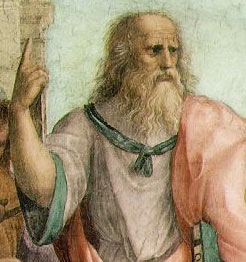
“This is a fine saying of Plato: That he who is discoursing about men should look also at earthly things as if he viewed them from some higher place; should look at them…a mixture of all things and an orderly combination of contraries.”

Marcus Aurelius on Adam Silvera
Marcus Aurelius on Henry Adams
“Never esteem anything as of advantage to you that will make you break your word or lose your self-respect.”

Marcus Aurelius on Kenneth Rexroth
“The moral issues with which Marcus struggles would be, as he points out, unchanged whether the universe were mechanical and devoid of meaning or value or ruled by deity or Providence; whether the will were in fact free or determined; whether there were or were not a future life, or any even fugitive rewards and punishments at all.”

Quotes About Marcus Aurelius
Gain deeper perspective through quotes about Marcus Aurelius from others.
George Long on Marcus Aurelius
“A man's greatness lies not in wealth and station, as the vulgar believe, not yet in his intellectual capacity, which is often associated with the meanest moral character, the most abject servility to those in high places and arrogance to the poor and lowly; but a man's true greatness lies in the consciousness of an honest purpose in life, founded on a just estimate of himself and everything else, on frequent self-examination, and a steady obedience to the rule which he knows to be right, without troubling himself, as the emperor [Marcus Aurelius] says he should not, about what others may think or say, or whether they do or do not do that which he thinks and says and does.”
Antoine de Rivarol on Marcus Aurelius

Werner Sombart on Marcus Aurelius
“[W]e shall observe that Jewish intellectual qualities have remained constant, that certain characteristics, certain peculiar features of the Jewish soul may be traced as far back as the formation of the Jewish ethnical group. We cannot prove all this directly, because we have no reliable accounts of the Jewish popular character dating from early times. What we do possess are brief and scanty expressions of opinions, valuable, however, as far as they go. It is of great interest, for example, to note that the Pentateuch (in four places— Exod. xxxii. 9, xxxiv. 9; Deut. ix. 13 and 27) asserts of the Jews what Tacitus said of them later—that they are a stiff-necked people. No less interesting is Cicero’s statement that they hang together most fraternally, or Marcus Aurelius’s that they are a restless people, to whom he cries, “O ye Marcomanni, O ye Quadi, O ye Sarmatae, at length have I found a race more restless than you!”; or finally Juan de la Huarte's that their intellect is keen and well fitted for worldly things. [...] Under the Caesars their lot [the Jews] was no different [than in other nations of antiquity]: “I am just sick of these filthy, noisy Jews,” said Marcus Aurelius.”
Ted Tally on Marcus Aurelius
“Hannibal Lecter: I've read the case files. Have you? Everything you need to find him is right there in those pages. Clarice Starling: Then tell me how. Hannibal Lecter: First principles, Clarice: simplicity. Read Marcus Aurelius, "Of each particular thing, ask: What is it in itself? What is its nature?" What does he do, this man you seek? Clarice Starling: He kills women. Hannibal Lecter: No, that is incidental. What is the first and principal thing he does, what needs does he serve by killing? Clarice Starling: Anger, social acceptance, and, uh, sexual frustration ... Hannibal Lecter: No, he covets. That's his nature. And how do we begin to covet, Clarice? Do we seek out things to covet? Make an effort to answer, now. Clarice Starling: No. We just ... Hannibal Lecter: No. We begin by coveting what we see every day.”
Oscar Wilde on Marcus Aurelius
“Marcus Aurelius was the perfect man, says Renan. Yes; the great emperor was a perfect man. But how intolerable were the endless claims upon him! He staggered under the burden of the empire. He was conscious how inadequate one man was to bear the weight of that Titan and too vast orb.”

Disputed Quotes
Quotes attributed to Marcus Aurelius that are questionable.
Misattributed Quotes
Quotes mistakenly credited to Marcus Aurelius
“Live a good life. If there are gods and they are just, then they will not care how devout you have been, but will welcome you based on the virtues you have lived by. If there are gods, but unjust, then you should not want to worship them. If there are no gods, then you will be gone, but will have lived a noble life that will live on in the memories of your loved ones.”
“Everything we hear is an opinion, not a fact. Everything we see is a perspective, not the truth.”
About Marcus Aurelius
Marcus Aurelius Antoninus (26 April 121 – 17 March 180) was Roman emperor from 161 to 180 and a Stoic philosopher. He was the last of the rulers known as the Five Good Emperors (a term coined some 13 centuries later by Niccolò Machiavelli), and the last emperor of the Pax Romana (27 BC to 180), an age of relative peace and stability for the Roman Empire. He served as Roman consul in 140, 145, and 161.