Mindfulness & Awareness
The quality of attention we bring to the living moment
Training the wandering mind to see clearly, respond wisely, and inhabit the present with full awareness.
1st century CE, Hierapolis
Greek Stoicism
Any one thing in the creation is sufficient to demonstrate a Providence to an humble and grateful mind.

5th century BCE, Athens
Classical Greek Philosophy
You will know that the divine is so great and of such a nature that it sees and hears everything at once, is present everywhere, and is concerned with everything.
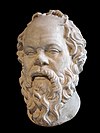
4th century BCE, Athens
Platonic Academy
to seek office oneself and not await compulsion is thought disgraceful. But the chief penalty is to be governed by someone worse if a man will not himself hold office and rule.

4th century BCE, Stagira
Peripatetic Philosophy
If liberty and equality, as is thought by some, are chiefly to be found in democracy, they will be best attained when all persons alike share in the government to the utmost.
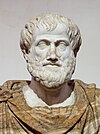
5th century BCE, China
Confucianism
The more man meditates upon good thoughts, the better will be his world and the world at large.

6th century BCE, China
Classical Taoism
The Tao is like a well: used but never used up. It is like the eternal void: filled with infinite possibilities. It is hidden but always present. I don't know who gave birth to it. It is older than God.
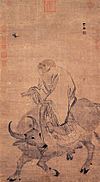
4th century BCE, China
Classical Taoism
Those who seek to satisfy the mind of man by hampering it with ceremonies and music and affecting charity and devotion have lost their original nature.

5th century BCE, India
Buddhism
Listen well, listen well, and mull it over in your thoughts!

13th century, Persia/Anatolia
Sufi Mysticism
When in Love, body, mind, heart and soul don't even exist.

19th century, Germany
Continental & Existential Philosophy
No power can maintain itself if only hypocrites represent it.

20th century, Algeria/France
Existentialism & Absurdism
An intellectual is someone whose mind watches itself.

19th century, Denmark
Christian Existentialism
I have needed God every day to defend myself against the abundance of thoughts.

19th century, Germany
German Idealism & Pessimism
English Translation: "The presence of a thought is like the presence of a beloved."Original (German): "Die Gegenwart eines Gedankens ist wie die Gegenwart einer Geliebten.

17th century, Netherlands
Continental Rationalism
The human mind has an adequate knowledge of the eternal and infinite essence of God.

16th century, France
Renaissance Humanism
There is nothing more remarkable in the life of Socrates than that he found time in his old age to learn to dance and play on instruments, and thought it was time well spent.

18th century, France
European Enlightenment
Hindus are "a peaceful and innocent people, equally incapable of hurting others or of defending themselves.

19th century, Russia
Russian Literature & Christian Ethics
By words one transmits thoughts to another, by means of art, one transmits feelings.

16th–17th century, England
English Renaissance Drama
Let me not to the marriage of true mindsAdmit impediments.

19th century, United States
American Realism & Satire
To my mind Judas Iscariot was nothing but a low, mean, premature Congressman.

19th century, United States
American Transcendentalism
Nothing is at last sacred but the integrity of your own mind.

19th century, United States
American Transcendentalism
The eye may see for the hand, but not for the mind.

20th century, India
Ahimsa & Satyagraha
You can chain me, you can torture me, you can even destroy this body, but you will never imprison my mind.

20th century, South Africa
Ubuntu & Liberation Ethics
I have always believed that exercise is the key not only to physical health but to peace of mind.

20th century, United States
Modern Literature & Civil Rights
In remembering Maya Angelou, it is important to recall her commitment to the struggle for equality, not just for herself, or for women, or for African Americans. She was committed to peace and justice for all.

20th century, Germany/USA
Scientific Humanism
Einstein's groundbreaking equation E=mc², initially presented as m = L/c² in his 1905 paper, reveals the profound relationship between energy released and the corresponding decrease in mass.

20th century, United States
Cosmic Humanism & Skepticism
It's hard to kill a creature once it lets you see its consciousness.

Explore All 30 Cross-Civilizational Wisdom Pillars
Compare how humanity's greatest philosophers, poets, and sages across millennia addressed the foundational questions of human existence.
Resilience
Impermanence
Compassion
Self-Knowledge
Courage
Love & Devotion
Mortality & Legacy
Time & Presence
Solitude & Stillness
Truth & Honesty
Freedom & Autonomy
Purpose & Meaning
Gratitude & Contentment
Forgiveness & Mercy
Humility & Openness
Discipline & Mastery
Suffering & Transformation
Friendship & Community
Justice & Moral Duty
Hope & Perseverance
Creativity & Art
Leadership & Service
Nature & The Cosmos
Doubt & Inquiry
Ambition & Excellence
Patience & Timing
Integrity & Character
Happiness & Flourishing
Change & Renewal