Humility & Openness
The beginning of all genuine learning
Only by acknowledging the limits of our certainty can we remain open to wonder, correction, and deeper understanding.
17th century, France
Jansenist Philosophy & Mathematics
If the public thought elevates you above the generality of men, let the other humble you, and hold you in a perfect equality with all mankind, for this is your natural condition.

1st century CE, Rome
Roman Stoicism
[Seneca] would have denounced the opinion to which most philosophers, tacitly or otherwise, have come round in the last half-century, that it is no part of the business of philosophy to turn people into better persons, as tantamount to desertion or lèse-majesté.
1st century CE, Hierapolis
Greek Stoicism
Any one thing in the creation is sufficient to demonstrate a Providence to an humble and grateful mind.

5th century BCE, Athens
Classical Greek Philosophy
Ηe knew nothing except just the fact of his ignorance. • Alternate translation: I know nothing except the fact of my ignorance.
4th century BCE, Athens
Platonic Academy
The wisdom which knows what are and are not dangers is opposed to the ignorance of them

4th century BCE, Stagira
Peripatetic Philosophy
For the things we have to learn before we can do, we learn by doing.
5th century BCE, China
Confucianism
Virtuous, worthy, wise and capable people are chosen as leaders.

6th century BCE, China
Classical Taoism
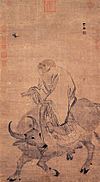
Go to the people. Live with them. Learn from them. Love them. Start with what they know. Build with what they have. With the best leaders when the work is done, the task accomplished, the people will say, "We have done this ourselves.
4th century BCE, China
Classical Taoism
Thus, the wise man looks into space, and does not regard the small as too little, nor the great as too much; for he knows that there is no limit to dimension.

13th century, Persia/Anatolia
Sufi Mysticism
Our caravan leader is the pride of the world, Mustafa [Muhammad]

19th century, Germany
Continental & Existential Philosophy
He who humbleth himself wants to be exalted.

19th century, Denmark
Christian Existentialism
The question is asked in ignorance, by one who does not even know what can have led him to ask it.

19th century, Germany
German Idealism & Pessimism
The fundament upon which all our knowledge and learning rests is the inexplicable.

16th century, France
Renaissance Humanism
A wise man never loses anything, if he has himself.

18th century, France
European Enlightenment
Likewise, there is much truth in Voltaire's enthusiastic Orientalist assumption that unlike Judaism, Christianity and Islam, the Indian and Chinese "religions" were not based on prophetic "revelations" but on a purely human contemplation of reality.

19th century, Russia
Russian Literature & Christian Ethics
People do not argue with the teaching of George; they simply do not know it. And it is impossible to do otherwise with his teaching, for he who becomes acquainted with it cannot but agree.

16th–17th century, England
English Renaissance Drama
Of one that lov'd not wisely but too well.

19th century, United States
American Realism & Satire
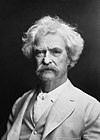
As I slowly grow wise I briskly grow cautious.
19th century, United States
American Transcendentalism
We, as we read," Ralph Waldo Emerson wrote in an essay on history, "must become Greeks, Romans, Turks, priest and king, martyr and executioner; must fasten these images to some reality in our secret experience, or we shall learn nothing rightly.

19th century, United States
American Transcendentalism
You must ascend a mountain to learn your relation to matter, and so to your own body, for it is at home there, though you are not.

20th century, India
Ahimsa & Satyagraha
Live as if you were to die tomorrow. Learn as if you were to live forever.

20th century, South Africa
Ubuntu & Liberation Ethics
It is in the character of growth that we should learn from both pleasant and unpleasant experiences.

20th century, United States
Modern Literature & Civil Rights
Children's talent to endure stems from their ignorance of alternatives.

20th century, Germany/USA
Scientific Humanism
I believe the main task of the spirit is to free man from his ego.

20th century, United States
Cosmic Humanism & Skepticism
Those at too great a distance may, I am well aware, mistake ignorance for perspective.

19th–20th century, Bengal
Bengali Renaissance & Humanism
We come nearest to the great when we are great in humility.

Explore All 30 Cross-Civilizational Wisdom Pillars
Compare how humanity's greatest philosophers, poets, and sages across millennia addressed the foundational questions of human existence.
Resilience
Impermanence
Compassion
Self-Knowledge
Courage
Love & Devotion
Mortality & Legacy
Time & Presence
Solitude & Stillness
Truth & Honesty
Freedom & Autonomy
Purpose & Meaning
Gratitude & Contentment
Forgiveness & Mercy
Discipline & Mastery
Suffering & Transformation
Friendship & Community
Justice & Moral Duty
Hope & Perseverance
Creativity & Art
Leadership & Service
Nature & The Cosmos
Doubt & Inquiry
Ambition & Excellence
Patience & Timing
Integrity & Character
Happiness & Flourishing
Change & Renewal
Mindfulness & Awareness