Link Copied!
Baruch Spinoza Quotes (1632-1677)
Philosopher, King


















About Baruch Spinoza
Benedictus de Spinoza (24 November 1632 – 21 February 1677) was a social and metaphysical philosopher known for the elaborate development of his monist philosophy, which has become known as Spinozism. Controversy regarding his ideas led to his excommunication from the Jewish community of his native Amsterdam. He was named Baruch ("blessed" in Hebrew) Spinoza by his synagogue elders and known as Bento de Spinoza or Bento d'Espiñoza, but afterwards used the name Benedictus ("blessed" in Latin) de Spinoza.
Best Baruch Spinoza Quotes
Shortest
Earliest
Explore our curated collection of the most famous and impactful Baruch Spinoza quotes.
“sub specie aeternitatis”
“Sentimus experimurque, nos aeternos esse.”
“Maxima superbia vel abjectio est maxima sui ignorantia.”
“There is no other philosophy than that of Spinoza.”

“Every philosopher has two philosophies: his own and Spinoza's.”
“Meum institutum non est verborum significationem sed rerum naturam explicare”
“[Spinoza] — A God-intoxicated man. [Original in German: Ein Gottbetrunkener Mensch.]”

“Spinoza: the absolute philosopher, whose Ethics is the foremost book on concepts.”
“Spinoza is the originator of speculative philosophy, Schelling its restorer, Hegel its perfecter.”
“Tota felicitas aut infelicitas in hoc solo sita est; videlicet in qualitate obiecti, cui adhaeremus amore.”
“[Spinoza] — the philosopher whom I trust most,... [Original in German: Der Philosoph, dem ich zumeist vertraue,...]”
“...Descartes who misled the whole chorus of modern philosophers, except Spinoza, by making them fall in love with themselves.”
“My ancestors Heraclitus, Empedocles, Spinoza, Goethe. [Original in German: meine Vorfahren Heraclit Empedocles Spinoza Goethe.]”
“No great philosopher has so much to offer in the way of clarification and articulation of basic ecological attitudes as Baruch Spinoza.”
“"Spinoza did not seek to found a sect, and he founded none"; yet all philosophy after him is permeated with his thought.”

“My intellect has been shaped under the sign of Spinoza's words, and it has tried not to be astounded, not to laugh, not to cry, but to understand.”

“Nothing is less Greek than the conceptual web-spinning of a hermit—amor intellectualis dei—after the fashion of Spinoza.”
“[Spinoza] this pure soul, this great realist, the first human being to attempt to become a citizen of the world. . . this down-to-earth passion.”
“I will not attempt to describe here the many lessons that I learned in the study of Spinoza, lessons that in several respects laid the foundation of my philosophy.”
“Spinoza (1634-77) is the noblest and most lovable of the great philosophers. Intellectually, some others have surpassed him, but ethically he is supreme.”
“Sed amor erga rem aeternam et infinitam sola laetitia pascit animum, ipsaque omnis tristitiae est expers; quod valde est desiderandum totisque viribus quaerendum.”
“The philosopher Spinoza likened our existence to that of a cell in the bloodstream: the lone cell would be unaware of the fact that it is merely a part of a greater whole.”


“The greatest philosophical genius Judaism has given to the world, Spinoza, is the only one of the great philosophers for whom, in reality, God is the sole subject of thought;...”
“From the great creations of Spinoza, as from distant stars, light takes several centuries to reach us. Only the psychology of the future will be able to realize the ideas of Spinoza.”

“Of all heroes, Spinoza was Einstein's greatest. No one expressed more strongly than he a belief in the harmony, the beauty, and, most of all, the ultimate comprehensibility of nature.”
“I proposed not to bore you with any more of my metaphysics or ethics, but I will say a word by way of conclusion. If you want any more, go to Spinoza and Schopenhauer, where I get mine.”

“Spinoza helps me to see myself objectively. This makes life bearable even in experiencing suffering; and with the teachings from the Ethics the world is perceived as manageable.”
“Of all the philosophers of the seventeenth century, perhaps none have more relevance today than Spinoza.”
“I ought to love the Jews, as they seem to be my only friends intellectually, beginning with Edman—not to go back to Spinoza.”
“When sending his Short Treatise to his Amsterdam friends he begs of them to be sure that nothing but the good of their neighbours will ever induce them to communicate its doctrines to others.”


“Even in the case of philosophers who give systematic form to their work, Spinoza for instance, the true inner structure of the system is quite unlike the form in which it was consciously presented by him.”
“Every philosophy of philosophy that excludes Spinoza must be spurious. [Original in German: Jede Philosophie der Philosophie, nach der Spinosa kein Philosoph ist muß verdächtig scheinen.]”
“Although during these years Rolland's chief interest was directed towards philosophy, although he was a diligent student of the pre-Socratic philosophers of ancient Greece, of the Cartesians, and of Spinoza,...”
“What can be said is that Spinoza is, without question, one of history's most eloquent proponents of a secular, democratic society and the strongest advocate for freedom and toleration in the early modern period.”
“The piety of philosophers is theory, pure intuition of the divinity, calm and gay in silent solitude. Spinoza is the ideal of the species. The religious state of the poet is more passionate and more communicative.”
“Goethe—not a German event, but a European one: a magnificent attempt to overcome the eighteenth century by a return to nature, [...] He sought help from history, natural science, antiquity, and also Spinoza, [...]”
“Since I always like Zhuangzi and I am close to Tagore, I am greatly affected by the thought of pantheism. Hence, my works are close to works of the great philosopher of Europe Spinoza and poetry of German poet Goethe.”
“...The doctrine of Spinoza was of great importance, if for nothing more than having brought about the first crisis in modern Philosophy.”


“Last night, I was diligently reluctant to read last in our saint [i.e. Spinoza] and thought of you. [Original in German: Gestern Abend war ich nur wider Willen fleisig und las noch zuletzt in unserm Heiligen und dachte an dich.]”
“I have resolved to demonstrate by a certain and undoubted course of argument, or to deduce from the very condition of human nature, not what is new and unheard of, but only such things as agree best with practice.”
“Et sane arduum debet esse, quod adeo raro reperitur. Qui enim posset fieri, si salus in promptu esset et sine magno labore reperiri posset, ut ab omnibus fere negligeretur? Sed omnia praeclara tam difficilia, quam rara sunt.”
“I find no evidence that Jefferson read Spinoza, although his library does contain a copy of his works. Enlightenment thought is so saturated with Spinoza's ideas, however, that they could have reached Jefferson by innumerable routes.”
“Let him who wishes weep bitter tears because history moves ahead so perplexingly: two steps forward, one step back. But tears are of no avail. It is necessary according to Spinoza's advice, not to laugh, not to weep, but to understand!”

“Spinoza is the Christ of philosophers, and the greatest philosophers are hardly more than apostles who distance themselves from or draw near to this mystery.”
“...The teaching of Spinoza, the product of the Jewish genius and modern science [Wissenschaft], does not stand in contradiction with the Jewish teaching of unity - at most it may contradict its rationalistic and super-naturalistic approach.”
“This I know, that between finite and infinite there is no comparison; so that the difference between God and the greatest and most excellent created thing is no less than the difference between God and the least created thing.”
“Humanam impotentiam in moderandis et coercendis affectibus servitutem voco; homo enim affectibus obnoxius sui juris non est sed fortunæ in cujus potestate ita est ut sæpe coactus sit quanquam meliora sibi videat, deteriora tamen sequi.”
“Now I am working on an 'Ethics' à la Spinoza. It is designed to establish the highest principles of all philosophy, in which theoretical and practical reason are united.
I have become a Spinozist! Don't be astonished. You will soon hear how.”
I have become a Spinozist! Don't be astonished. You will soon hear how.”

“...Lately I have been re-reading Spinoza (much read and little understood in my youth). But that noblest of Jews must have planted no end of germs in my brains, for I see that what I have to say is in principle what he had to say, in modern language.”
“Regarding my reputation among physicians, it really does not mean much. They know me through my textbooks, which are to me what lens polishing was to the great philosopher Spinoza. I have to do this as a secondary occupation, necessary to sustenance.”
“I will never forget that, in the hurricane of my adolescence, I found refuge in the deep nest of the Ethics. [Original in French: Je n'oublierai jamais que, dans le cyclone de mon adolescence, j'ai trouvé refuge au nid profond de l'Éthique.]”
“His [Spinoza's] correspondence is the most interesting book one can read in the world of uprightness and of humanity. [Original in German: Sei Briefwechsel sei das interessanteste Buch, das man in der Welt von Aufrichtigkeit, Menschenliebe lesen könne.]”
“...I love Spinoza, because he, more than any other philosopher, led me to the complete conviction that certain things cannot be explained, that because of this one need not close one's eyes to them, but rather take them as one finds them.”
“It is doubtful whether the translation “moral” is adequate anywhere in the Ethics where Spinoza rigorously exhibits his system. The opinion that he is one of the greatest opponents of moralism that ever lived seems not altogether unreasonable.”

“I believe that the absolute point of view which Spinoza has so impressively, so overpoweringly enforced cannot be avoided; it is the ocean in which every stream of thought is lost; and for that very reason Spinoza's apparent optimism seems to be deceptive.”
“Descartes... fell back on his original confusion of matter with space—space being, according to him, the only form of substance, and all existing things but affections of space. This error... forms one of the ultimate foundations of the system of Spinoza.”
“Some have spoken of a liberal Spinoza, and others, of a democratic Spinoza. By the same standard one could also speak of an artistocratic Spinoza or a monarchical Spinoza — and it has been done. Perhaps also an anarchic Spinoza? No one has ever said that.”
“He was in a certain sense the first Zionist of the last three hundred years, [...] Through keen insight into Jewish and world history he prophesied the rebirth of the State of Israel.”
“I confess without hesitation my dependence regarding the teachings of Spinoza. If I never cared to cite his name directly, it is because I never drew the tenets of my thinking from the study of that author but rather from the atmosphere he created.”

“It is well known that Marx was familiar with Spinoza; indeed, he hand-copied whole passages of Spinoza's Tractatus Theologico-Politicus into his notebooks. Less clear is the significance of this fact, and the extent of Spinoza's influence on Marx's thought.”

“...I am not so well read in Hobbes or Spinoza, as to be able to say what were their opinions in this matter [the life after death]. But, possibly, there be those who will think your lordship's authority of more use to them in the case than those justly decried names;”

“For Spinoza, by contrast, there is to be no criminalization of ideas in the well-ordered state. Libertas philosophandi, the freedom of philosophizing, must be upheld for the sake of a healthy, secure and peaceful commonwealth and material and intellectual progress.”
“Hegel's History of Philosophy presents French materialism as the realization of Spinozistic Substance, which in any case is more comprehensible than the "French school of Spinoza."”

“It is generally agreed that Spinoza fell into nominalism. But he did in any case take measures to protect himself from idealism, both in developing his theory of a substance with infinite attributes, and in arguing for the parallelism of the two attributes extension and thought.”
“...As to feeling a difference in Jews, I feel it I think, only if they do; and then it doesn't signify a preference or the opposite, but only a diversity. My best pupils were Jews, as was my only modern “master” in philosophy, Spinoza. But many are not happy, and that is a pity.”
“...We may deny his conclusions; we may consider his system of thought preposterous and even pernicious, but we cannot refuse him the respect which is the right of all sincere and honourable men. [...] Spinoza's influence over European thought is too great to be denied or set aside...”
“I always carry the Ethics of Spinoza with me. [Original in German: Ich führe, die Ethik von Spinoza immer bei mir; er hat die Mathematik in die Ethik gebracht, so ich in die Farbenlehre, das heißt: da steht nichts im Hintersatz, was nicht im Vordersatz schon begründet ist.]”
“My dear Tyndall—I find that in the midst of my work in Edinburgh I omitted to write to De Vrij, so I have just sent him a letter expressing my pleasure in my being able to co-operate in any plan for doing honour to old Benedict, for whom I have a most special respect.”

“...Spinoza was not only atheist, but he taught atheism; it was not he assuredly who took part in the judicial assassination of Barneveldt; it was not he who tore the brothers De Wit in pieces, and who ate them grilled.”
“Before I became a Marxist in 1924, I was in favor of pantheism, Zhuangzi, the Indian Buddhist thought of the Upanisads, and the Western philosopher Spinoza. I felt close to Johann W. Goethe also because of this inclination.”

“I have had, for my entire life, an extraordinary esteem for the person and for the thinking of that great philosopher. But I do not believe that attitude gives me the right to say anything publically about him, for the good reason that I would have nothing to say that has not been said by others.”
“Spinozism dominated the eighteenth century both in its later French variety, which made matter into substance, and in deism, which conferred on matter a more spiritual name.... Spinoza's French school and the supporters of deism were but two sects disputing over the true meaning of his system....”

“He [Deleuze] said of Spinoza that he was the Christ of philosophy. To do Deleuze full justice, let us say that, of this Christ and his inflexible announcement of salvation by the All — a salvation that promises nothing, a salvation that is always already there — he was truly a most eminent apostle.”
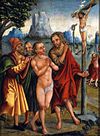
“Monist is, in fact, every philosophy that is not an eclectic patchwork. Therefore, I gladly admit to you that I myself consider my positions even more monist than yours, because I try to give my monism a broader extension, following as far as possible the example of the greatest of all monists: Spinoza.”
“Man can, indeed, act contrarily to the decrees of God, as far as they have been written like laws in the minds of ourselves or the prophets, but against that eternal decree of God, which is written in universal nature, and has regard to the course of nature as a whole, he can do nothing.”

“But in his search for the divine, Spinoza delved down far below the roots of the Jewish religion. Deep in the depths of his own soul, he discovered the wellspring of the world, the secret source that sustained all things. Spinoza basked in the waters of this sacred spring until they saturated his whole being.”
“...The more a man knows about individual objects, the more he knows about God. Translating Spinoza's language into ours, we can say: The more a man knows about himself in relation to every kind of experience, the greater his chance of suddenly, one fine morning, realizing who in fact he is...”

“I can always say to myself that my atheism, like that of Spinoza, is true piety towards the universe and denies only gods fashioned by men in their own image, to be servants of their human interests; and that even in this denial I am no rude iconoclast, but full of secret sympathy with the impulses of idolaters.”
“Of all the things that are beyond my power, I value nothing more highly than to be allowed the honor of entering into bonds of friendship with people who sincerely love truth. For, of things beyond our power, I believe there is nothing in the world which we can love with tranquility except such men.”
“The rise of Spinozism in the late eighteenth century is a phenomenon of no less significance than the emergence of Kantianism itself. By the beginning of the nineteenth century, Spinoza's philosophy had become the main competitor to Kant's, and only Spinoza had as many admirers or adherents as Kant.”
“All the better; they do not force me to do anything that I would not have done of my own accord if I did not dread scandal. But since they want it that way, I enter gladly on the path that is opened to me, with the consolation that my departure will be more innocent than was the exodus of the early Hebrews from Egypt.”

“...But I was indeed on Spinoza's "line" by insisting with Marx and Hegel on the distinction between the "real concrete," therefore, the universal singular (all the "cases" that constitute the world from the beginning of knowledge of the first kind), and the concrete-in-thought that constitutes knowledge of the third kind.”
“...But when it comes to the subject of the arts, Spinoza is oddly reticent. His failure to consider the aesthetic response—surely a profound facet of human experience—is all the stranger when one compares him, again, to Plato who directs as much conflicted pondering to the arts, particularly to poetry, as to erotic love.”
“The great Voltaire once accused Spinoza of ‘abusing metaphysics’. Is not the uncompromising nature of metaphysics more important today than ever? Has not liberated thinking become the most valued freedom at a time when political systems, social constraints, moral codes and political correctness often control our thinking?”
“When I speak of Plato, Pascal, Spinoza and Goethe, I know that their blood flows in mine—I am proud, when I tell the truth about them—the family is good enough not to have to poeticize or to conceal; and thus I stand to everything that has been, I am proud of the humanity, and especially proud of unconditional truthfulness.”
“Wie lieb ich diesen edlen Mann
Mehr als ich mit Worten sagen kann.
Doch fürcht' ich, dass er bleibt allein
Mit seinem strahlenen Heiligenschein.
(How much do I love that noble man
More than I could tell with words
I fear though he'll remain alone
With a holy halo of his own.)”
Mehr als ich mit Worten sagen kann.
Doch fürcht' ich, dass er bleibt allein
Mit seinem strahlenen Heiligenschein.
(How much do I love that noble man
More than I could tell with words
I fear though he'll remain alone
With a holy halo of his own.)”
“It was on Spinoza that I worked the most seriously according to the norms of the history of philosophy — but he more than any other gave me the feeling of a gust of air from behind each time you read him, of a witch's broom which he makes you mount. We have not yet begun to understand Spinoza, and I myself no more than others.”
“When Plato writes his dialogues or his didactic works, he takes great care to differentiate them from any other literary, rhetorical or sophistic discourse. When Descartes or Spinoza writes, no one can mistake it for 'literature'. When Kant or Hegel writes, we are not dealing with a moral exhortation, a religious sermon, or a novel.”
“Lovingly facing the “one is everything”
amor dei, happy from comprehension—
Take off your shoes! That three times holy land—
—Yet secretly beneath this love, devouring,
A fire of revenge was shimmering,
The Jewish God devoured by Jewish hatred . . .
Hermit! Have I recognized you?”
amor dei, happy from comprehension—
Take off your shoes! That three times holy land—
—Yet secretly beneath this love, devouring,
A fire of revenge was shimmering,
The Jewish God devoured by Jewish hatred . . .
Hermit! Have I recognized you?”
“...Subsequently, he [Romain Rolland] discovered a third master, a liberator of his faith. This was Spinoza, whose acquaintance he made during an evening spent alone at school, and whose gentle intellectual light was henceforward to illumine Rolland's soul throughout life. The greatest of mankind have ever been his examples and companions.”
“An important part of Deleuze's oeuvre is devoted to the reading of philosophers: the Stoics, Leibniz, Hume, Kant, Nietzsche, Bergson, etc. But a rather singular position in this list would be assigned to Spinoza, owing to the philosophical interest that corresponds to him [...]”
“I have a great respect for the Nazarenism of Jesus — very little for later Christianity. But the only religion that appeals to me is prophetic Judaism. Add to it something from the best Stoics and something from Spinoza and something from Goethe, and there is a religion for men.”

“Time carries him as the river carries
A leaf in the downstream water.
No matter. The enchanted one insists
And shapes God with delicate geometry.
Since his illness, since his birth,
He goes on constructing God with the word.
The mightiest love was granted him
Love that does not expect to be loved.”
A leaf in the downstream water.
No matter. The enchanted one insists
And shapes God with delicate geometry.
Since his illness, since his birth,
He goes on constructing God with the word.
The mightiest love was granted him
Love that does not expect to be loved.”

“...For millennia, wrongdoers overtaken by punishment have felt no different than Spinoza with regard to their 'offence': 'something has gone unexpectedly wrong here', not 'I ought not to have done that'–, they submitted to punishment as you submit to illness or misfortune or death, with that brave, unrebellious fatalism that still gives the Russians...”

“Speaking of Spinoza he [Nietzsche] says: "How much of personal timidity and vulnerability does this masquerade of a sickly recluse betray!" Exactly the same may be said of him, with the less reluctance since he has not hesitated to say it of Spinoza. It is obvious that in his day-dreams he is a warrior, not a professor; all the men he admires were military.”

“Twenty-some years ago, when at the age of forty I returned to the study of the Ethics, which had been 'my book' during adolescence, the theoretical climate in which I found myself immersed had changed to such an extent that it was difficult to tell if the Spinoza standing before me then was the same one who had accompanied me in my earliest studies.”
“We can conceive of various kinds of democracy. But my intention is not to treat of every kind, but of that only, "wherein all, without exception, who owe allegiance to the laws of the country only, and are further independent and of respectable life, have the right of voting in the supreme council and of filling the offices of the dominion." ”
“My views are near those of Spinoza: admiration for the beauty of and belief in the logical simplicity of the order which we can grasp humbly and only imperfectly. I believe that we have to content ourselves with our imperfect knowledge and understanding and treat values and moral obligations as a purely human problem—the most important of all human problems.”

“I love our old Chuang-tzu
because I love his pantheism,
because he got a living by making straw shoes.
I love the Dutchman Spinoza
because I love his pantheism,
because he got a living by grinding lenses.
I love the Indian Kabir
because I love his pantheism,
because he got a living by knotting fishing-nets.”
because I love his pantheism,
because he got a living by making straw shoes.
I love the Dutchman Spinoza
because I love his pantheism,
because he got a living by grinding lenses.
I love the Indian Kabir
because I love his pantheism,
because he got a living by knotting fishing-nets.”
“Nature as conceived by many ecologists, and expressed philosophically by James Lovelock and others, is not the passive, dead, value-neutral nature of mechanistic science but is akin to the active, "naturing" nature of Spinoza. It is all-inclusive, creative (as natura naturans), infinitely diverse, and alive in the broad sense of Spinozistic so-called panpsychism.”
“Spinoza in particular belongs to the immortal authors. He is great because of the sublime simplicity of his thoughts and his way of writing, great because of his distance from all scholasticism, and, on the other hand, from all false embellishment or ostentation of language.”
“In America we are such rowdies in church and state and the very boys are so soon ripe, that I think no philosophical skepticism will make much sensation. Spinoza pronounced that there was but one substance; yea, verily, but that boy yonder told me yesterday he thought the pinelog was God, and that God was in the jakes. What can Spinoza tell the boy?”

“...Of the Weimarian trio, Herder theologian, poet, historian, critic, philosopher, and metrician was the first to apply Spinozism to historiography and to literary history. He was also the only one to recognize in Spinoza the renovator of a form of ancient theism. Living under the shadow of Goethe and his personality cult, he conceived pantheism under the aspect of personality.”

“I think Spinoza was a complete monist. Unity is good, multiplicity cannot lead you to the truth. His political theory is in some ways like that of Hobbes. From his point of view, in politics you have to govern. In order to govern, a rational person might have to do things which are not strictly honourable. Spinoza is a surprisingly tough-minded political thinker.”
“And then, a little Jew, with a long nose and a pale complexion, Poor but satisfied, pensive and reserved, A subtle but hollow spirit, less read than celebrated, Hidden under the mantle of Descartes, his mentor, Walking with measured steps, comes close to the great being: Excuse me, he says, addressing him in a whisper, But I think, just between us, that you do not exist at all.”
“Is Spinoza baroque? No, but if we find, through this line of thinking, a spurious and worn-out figure that rejects the crisis, that repeats the utopia in its ingenuous Renaissance form, what we have found is merely Spinozism. When classical idealism takes up Spinoza, in effect it only takes up (or invents?) Spinozism, a Renaissance philosophy of the bourgeois revolution of the capitalist market!”
“Spinoza's true politics is his metaphysics. Against the potentialities of this metaphysics, the polemic of bourgeois thought and all the mystificatory attempts that go under the emblem of "Spinozism" discharge their weapons. But Spinoza's metaphysics is articulated in his political discourse, and some of its potentialities are developed specifically in this field. Here we must try to identify them.”
“It is clear that the origins of the discourse on multitude are to be found in the subversive interpretation of the thinking of Spinoza. I can never tire of stressing the importance of the Spinozan premise in the treatment of this thematic. And one highly Spinozist theme is that of the body, and particularly that of the potent body.”
“Spinoza, too, whom I was reading under Royce himself, filled me with joy and enthusiasm: I gathered at once from him a doctrine which has remained axiomatic with me ever since, namely that good and evil are relative to the natures of animals, irreversible in that relation, but indifferent to the march of cosmic events, since the force of the universe infinitely exceeds the force of any of its parts.”

“Herr Bauer picked out French materialism as a school of Spinoza from Hegel's History of Philosophy. But when he found in another of Hegel's works that deism and materialism are two parties with one and the same fundamental principle, he concluded that Spinoza had two schools which disputed over the meaning of his system.”
“Leo Strauss (never to be confused with our plague of his disciples' disciples) implicitly manifested a distaste for Spinoza, in surprising contrast to his high regard for Machiavelli. After expending a recent month in constantly rereading Spinoza, I find myself ambivalent toward this grandest of Jewish secular philosophers. (Wittgenstein was uneasily aware of his Jewish lineage, and reticent about it.)”
“As is well known, a great flowering of Neo-Spinozism occurred in German philosophy and literature in the late eighteenth and early nineteenth centuries. Lessing, Herder, and Goethe; Hölderlin; the German Romantics Schleiermacher, Friedrich Schlegel, and Novalis; the German Idealists Schelling and Hegel — all of them subscribed to one or another version of Spinoza's monistic, deterministic metaphysics.”
“To Spinoza the Jew, it is declared two-hundred-fifty years after his death, from the heights of Mount Scopus, from our Temple-in-miniature (mikdash-ha-me'at)—the Hebrew University in Jerusalem: ...The herem (ban) is nullified! The sin of Judaism against you is removed and your offense against her atoned for! Our brother are you, our brother are you, our brother are you! (Ahinu ata, ahinu ata, ahinu ata!)”
“When a poet's mind is perfectly equipped for its work, it is constantly amalgamating disparate experience; the ordinary man's experience is chaotic, irregular, fragmentary. The latter falls in love, or reads Spinoza, and these two experiences have nothing to do with each other, or with the noise of the typewriter or the smell of cooking; in the mind of the poet these experiences are always forming new wholes.”

“...For the present it would be a vain undertaking to try to make all these people understand this frank principle of communist ethics, a principle which declares that gratitude and admiration should come as a spontaneous gift from our fellow-beings. Many of them would not care to reach out for progress, were they sure of being told, in the words of Baruch Spinoza, that virtue is its own reward.”
“These old philosophers were heartless; philosophizing was always a kind of vampirism. Looking at these figures, even Spinoza, don't you have a sense of something profoundly enigmatic and uncanny? [...] I mean categories, formulas, words (for, forgive me, what was left of Spinoza, amor intellectualis dei, is mere clatter and no more than that: What is amor, what is deus, if there is not a drop of blood in them?)”
“Just as Hegel later developed the metaphysical and rationalistic bases of the Spinoza philosophy giving the only possible refutation to Spinozism, that is, by converting the substance of Spinoza into an absolute idea, into the absolute spirit, and in this way, presented an antithesis to Spinozist teaching, so in his time, Spinoza presented an antithesis with respect to Descartes, but a materialistic antithesis.”
“He flew through the nets of Judaism, Calvinism, Aristotelianism and the Cartesian dualism, but nevertheless Descartes was his starting point. Could he have become Spinoza without Descartes? Did he beget himself, as Socrates did, or even as Hobbes largely was self-generated? Spinoza's "Nature or God" is not one of the Cartesian formulations, but Spinoza relies upon a number of Cartesian concepts.”
“Hegel is (unknowingly) an admirable 'theoretician' of ideology insofar as he is a 'theoretician' of Universal Recognition who unfortunately ends up in the ideology of Absolute Knowledge. Feuerbach is an astonishing 'theoretician' of the mirror connexion, who unfortunately ends up in the ideology of the Human Essence. To find the material with which to construct a theory of the guarantee, we must turn to Spinoza.”

“[In the 18th century] Whether one reads the underground texts or those of the great Enlightenment authors, one has the impression that Spinozism was everywhere; but at the same time, it can be said, strictly speaking, there were no Spinozists (except as convenient phantoms for apologists); there were only thinkers who make use of Spinoza. Naturally, they could do so with more or less creativity, style, and depth.”
“Can any one doubt that if the noblest saint among the Buddhists, the best Mahometan, the highest Stoic of Athens, the purest and wisest Christian, — Buddha and Menu in India, Confucius in China, Spinoza in Holland, could somewhere meet and converse, — they would all find themselves of one religion, — would find themselves denounced by their own sects, and sustained by these believed adversaries of their sects.”
“Vygotsky studied the classical German philosophy on a professional level. In his student years began his acquaintance with the philosophy of Marxism, which he studied mainly using illegal editions. At this time was born Vygotsky's interest in the philosophy of Spinoza, who would remain his favorite thinker for the rest of his life.”
“You were one of the noblest, the most genuine people, who have ever walked this earth. And though both friend and foe know this, I don't think it unwarranted to verbally bear witness to it before your grave. For we know the world, we know Spinoza's fate. For the world could lay shadows around Nietzsche's memory as well. And therefore I conclude with the words: Peace to your ashes! Holy be thy name to all those to come!”

“In Hegel there are three elements, Spinoza's Substance, Fichte's Self-Consciousness and Hegel's necessarily antagonistic unity of the two, the Absolute Spirit. The first element is metaphysically disguised nature separated from man; the second is metaphysically disguised spirit separated from nature; the third is the metaphysically disguised unity of both, real man and the real human species.”
“...Leibniz's Theodicy is an intelligent abstract of Christian doctrine, exhibiting what it would be if it were essentially scientific, whereas it is essentially moralistic, so that its inspiration is missed, while its dogmas are harmonized as much as possible. Spinoza does much the same thing for the natural universe. He misplaces nothing, but draws it all in purely intellectual concepts. He is a great master.”

“...[I]t was the Goethe problem. He [Alfred Rosenberg] worshipped Goethe. And Goethe worshipped Spinoza. Alfred could not rid himself of this cursed book because Goethe loved it enough to carry it in his pocket for an entire year. This obscure Jewish nonsense had calmed Goethe's unruly passions and made him see the world more clearly than ever before. How could that be? Goethe saw something in it that he could not discern.”
“He [Johann Wolfgang von Goethe] tells me about his philosophical development. Philosophical thinking; without any actual philosophical system. At first Spinoza exerted a great and lasting influence on him. [Original in German: Er [Goethe] erzählt mir von seiner philosophischen Entwicklung. Philosophisches Denken; ohne eigentliches philosophisches System. Spinoza hat zuerst großen und immer bleibenden Einfluß auf ihn geübt.]”
“In 1676 Leibniz found a pretext to visit Spinoza in The Hague, having learned that Spinoza was at work on a philosophical treatise of great importance. Spinoza showed Leibniz the manuscript of the 'Ethics', and the two men discussed philosophy together over several days. Although there is no written record of their conversation, it seems likely that these discussions were among the most rewarding in the whole history of philosophy.”
“If I had as clear an idea of ghosts, as I have of a triangle or a circle, I should not in the least hesitate to affirm that they had been created by God; but as the idea I possess of them is just like the ideas, which my imagination forms of harpies, gryphons, hydras, &c., I cannot consider them as anything but dreams, which differ from God as totally as that which is not differs from that which is.”
“It is to the highest credit of the philosophy of the time that it did not let itself be led astray by the restricted state of contemporary natural knowledge, and that — from Spinoza down to the great French materialists — it insisted on explaining the world from the world itself and left the justification in detail to the natural science of the future.”
“...It is because of this that one can admittedly also attribute to Spinozism that calming effect, which, among other things, Goethe praised in it; Spinozism is really the doctrine which sends thought into retirement, into complete quiescence; in its highest conclusions it is the system of perfect theoretical and practical quietism, which can appear beneficient in the tempestuousness of a thought which never rests and always moves...”
“Surely, Spinoza's parallelism of attributes expressing differently but equivalently one and the same substance was a feat of genius and far superior to all other treatments of the problem at the time. Without interposing a synchronizing deity, as did others, it overcame Descartes' dualistic rift by a monistic reduction, yet retained the full severity of the disjunctions which that dualism had been designed to ensure.”
“There is really very little of Machiavelli's one can accept or use in the contemporary world. The one thing I find interesting in Machiavelli is his estimate of the prince's will. Interesting, but not such as to influence me. If you want to know who has influenced me most, I'll answer with two philosophers' names: Spinoza and Kant. Which makes it all the more peculiar that you choose to associate me with Machiavelli.”
“When reading the story of Yeshu one is reminded of another Jew who, like Yeshu, became one of the most influential people in all of history but was also condemned and rejected by the Jews – Baruch Spinoza of Amsterdam (1632-1677). He, too, had been fully part of the Jewish community, then started to oppose Judaism, broke away at a young age and became one of the greatest secular Jewish philosophers ever. He, too, is admired by millions.”
“Can the seventeenth-century rationalist, who produced one of the most ambitious philosophical systems in the history of Western philosophy, be considered, by any stretch of interpretation, a Jewish thinker? Can he even be considered a Jew? Benedictus Spinoza is the greatest philosopher that the Jews ever produced, which adds a certain irony to his questionable Jewishness.”
“We literally understand, then, a thorough study and assimilation of all the scientific works of primary importance on which the knowledge of Marxist theory rests. We might use a striking formula of Spinoza's to represent this objective: Spinoza said that a science solely of conclusions is not a science, that a true science is a science of premisses (principles) and conclusions in the integral movement of the demonstration of their necessity.”

“For years my mind was divided between Hegel and Spinoza. With youthful ingenuity I defended the dialectics of the former against Zeller, the founder of neo-Kantianism. The writings of Spinoza I knew by heart, and with loving understanding I gave expositions of his theory of affections and passions.”
“I also believe that Spinoza, like Nietzsche and Schopenhauer, on whose lives and philosophy I have based two earlier novels, wrote much that is highly relevant to my field of psychiatry and psychotherapy—for example, that ideas, thoughts, and feelings are caused by previous experiences, that passions may be studied dispassionately, that understanding leads to transcendence—and I wished to celebrate his contributions through a novel of ideas.”

“In the state of nature, wrong-doing is impossible ; or, if anyone does wrong, it is to himself, not to another. For no one by the law of nature is bound to please another, unless he chooses, nor to hold anything to be good or evil, but what he himself, according to his own temperament, pronounces to be so ; and, to speak generally, nothing is forbidden by the law of nature, except what is beyond everyone's power.”
“There is no substitute for knowledge, self-knowledge, or a metaphysical understanding of the score and one's relationship to it; and no amount of talent or even training can compensate for the lack of all these elements. 'Man thinks,' says Spinoza, and this thinking is the result of a dialogue between the intellect, the emotions and the intuition. This is not only true of the thinking of each individual, but of groups of people and even of nations.”
“That our modern natural sciences have become so thoroughly entangled in this Spinozistic dogma (most recently and worst of all, Darwinism with its incomprehensibly onesided doctrine of the “struggle for existence”) is probably due to the origins of most natural scientists: In this respect they belong to the “common people”; their ancestors were poor and undistinguished people who knew the difficulties of survival only too well at firsthand.”
“...We know at least since Spinoza that joy and its variant lead to a greater functional perfection, and that sorrow and related effects are unhealthy and should therefore be avoided. But music allows us to feel pain and pleasure simultaneously, both as players, and as listeners. [...] Music to me is sound with thought, and as Spinoza believed that rationality was the saving grace of the human being, then we must learn to look at music like this too.”

“Spinoza shows that the history of metaphysics comprehends radical alternatives. Metaphysics, as the highest form of the organization of Modern thought, is not a unitary whole. It comprehends the alternatives that the history of class struggle produces. There exists an "other" history of metaphysics, the blessed history against the damned. And we should not forget that it is still only in the complexity of metaphysics that the Modern age can be read.”
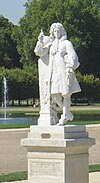
“Woe to him who in passing should hurl an insult at this gentle and pensive head. He would be punished, as all vulgar souls are punished, by his very vulgarity, and by his incapacity to conceive what is divine. This man, from his granite pedestal, will point out to all men the way of blessedness which he found; and ages hence, the cultivated traveler, passing by this spot, will say in his heart, "The truest vision ever had of God came, perhaps, here."”
“He put forth his pantheism in a series of propositions and proofs—and what he hoped to prove was that mind and matter were merely two different manifestations of a single sacred Substance. It took a special kind of mind to deduce Nature’s divinity, step by step, from a simple set of axioms. Never has pantheism been proclaimed in such a punctilious fashion. Never before, and never since, has the world seen such a meticulous mystic.”
“As interpolation instead of interpretation was not then so common or so honourable as at present, I believed that a part of my work was well done. How was I to expect that, because I ascribed piety to Spinoza, I would myself be taken for a Spinozist ? Yet I had never defended his system, and anything philosophic that was in my book was manifestly inconsistent with the characteristics of his views and had quite a different basis than the unity of substance.”
“[Alberto Knox] Spinoza belonged to the Jewish community of Amsterdam, but he was excommunicated for heresy. Few philosophers in more recent times have been so blasphemed and so persecuted for their ideas as this man. It happened because he criticized the established religion. He believed that Christianity and Judaism were only kept alive by rigid dogma and outer ritual. He was the first to apply what we call a historico-critical interpretation of the Bible.”
“Baruch Spinoza, the excommunicated Jew, made the Jewish cultural position in the West not only tenable, but impregnable. But the same Baruch Spinoza was actually responsible for the cultural anti-Semitism of modern Europe. He shaped the strong anti-Jewish attitude of his greatest admirers, followers, and adepts Herder, Goethe, Hegel, and Fichte. They were outspoken Jew-haters. They admired Spinoza, but with their master hated his race and its world-picture.”
“Spinoza's ethics has nothing to do with a morality; he conceives it as an ethology, that is, as a composition of fast and slow speeds, of capacities for affecting and being affected on this plane of immanence. That is why Spinoza calls out to us in the way he does: you do not know beforehand what good or bad you are capable of; you do not know beforehand what a body or a mind can do, in a given encounter, a given arrangement, a given combination.”
“It may be observed, however, that Spinoza was not the first prominent monist and pantheist in modern Europe. A generation before him Bruno conveyed a similar message to humanity. Yet Bruno is merely a beautiful episode in the history of the human mind, while Spinoza is one of its most potent forces. Bruno was a rhapsodist and a poet, who was overwhelmed with artistic emotions; Spinoza, however, was spiritus purus and in his method the prototype of the philosopher.”
“If slavery, barbarism and desolation are to be called peace, men can have no worse misfortune. No doubt there are usually more and sharper quarrels between parents and children, than between masters and slaves ; yet it advances not the art of household management to change a father's right into a right of property, and count children but as slaves. Slavery, then, and not peace, is furthered by handing the whole authority to one man.”

“Previously, the world in my eyes is just a graphic drawing of death. Now it comes to life and becomes a subject as exquisite as rock quartz. I always like reading Zhuangzi, but I only appreciate his diction and ignore his meaning. I can't understand his meaning. At this moment, I understand him thoroughly. I know what “Tao” and “Hua” mean. From then on, I am led to Laozi, Confucius philosophy and especially Spinoza, so I found an all-directional solemn world.”
“The German and English Romantics (Shelley aside) got Spinoza wrong. Reading his superbly cryptic masterwork, the "Ethics," I find myself agreeing with Strauss that Spinoza pragmatically was an Epicurean materialist. As in Epicurus and Lucretius, Spinoza's God is scarcely distinguishable from Nature, and is altogether indifferent to us, even to our intellectual love for him as urged upon us by Spinoza.”
“Civitas, cuius subditi metu territi arma non capiunt, potius dicenda est, quod sine bello sit, quam quod pacem habeat. Pax enim non belli privatio, sed virtus est, quae ex animi fortitudine oritur; est namque obsequium constans voluntas id exsequendi, quod ex communi civitatis decreto fieri debet. Illa praeterea civitas, cuius pax a subditorum inertia pendet, qui scilicet veluti pecora ducuntur, ut tantum servire discant, rectius solitudo, quam civitas dici potest.”
“I practice Spinoza, I read and read it again, and wait with longing for the fight over his corpse. I abstain from all judgment, but I confess that I am very much in agreement with Herder in these matters. [Original in German: Ich übe mich an Spinoza, ich lese und lese ihn wieder, und erwarte mit Verlangen biß der Streit über seinen Leichnam losbrechen wird. Ich enthalte mich alles Urtheils doch bekenne ich, daß ich mit Herdern in diesen Materien sehr einverstanden bin.]”
“But it seems to me much better to read a man's own writings than to read what others say about him. Especially when the man is first-rate and the “others” are third-rate. As Goethe said long ago about Spinoza, “Ich immer vorzog, von dem Menschen zu efrahren wie er dachte, als von einem andern zu hören, wie er hätte denken sollen.” However, I am not fond of expressing criticism or disapprobation. The difficulty is, to digest and live upon any valuable truth oneself.”
“Spinoza, the most logical and consistent of atheists—I mean of those who deny the persistence of individual consciousness through indefinite future time—and at the same time the most pious, Spinoza devoted the fifth and last part of his Ethics to elucidating the path that leads to liberty and to determining the concept of happiness. [...] For Spinoza, who was a terrible intellectualist, happiness (beatitudo) is a concept, and the love of God an intellectual love.”

“Nature offers nothing that can be called this man's rather than another's ; but, under nature, everything belongs to all — that is, they have authority to claim it for themselves. But, under dominion, where it is by common law determined what belongs to this man, and what to that, he is called just who has a constant will to render to every man his own, but he, unjust who strives, on the contrary, to make his own that which belongs to another.”
“The wish to preserve oneself is the symptom of a condition of distress, of a limitation of the really fundamental instinct of life which aims at the expansion of power and, wishing for that, frequently risks and even sacrifices self-preservation. It should be considered symptomatic when some philosophers–for example, Spinoza who was consumptive–considered the instinct of self-preservation decisive and had to see it that way; for they were individuals in conditions of distress.”

“...To the extent that we are committed to the ideal of a secular society free of ecclesiastic influence and governed by toleration, liberty, and a conception of civic virtue; and insofar as we think of true religious piety as consisting in treating other human beings with dignity and respect, and regard the Bible simply as a profound work of human literature with a universal moral message, we are the heirs of Spinoza's scandalous treatise [Tractatus Theologico-Politicus].”
“In Spinoza, at the origin of the Modern world, metaphysical theory and the theory of science are given in complete agreement for the first time. They represent the alternative to the entire subsequent path of metaphysics and of the bourgeois theory of science. Spinoza lives as an alternative: Today this alternative is real. The Spinozian analytic of full space and open time are becoming an ethics of liberation in all the dimensions that this discourse constructs and makes available.”

“...I had just finished my first semester (at the university) and had brought along Spinoza's Ethics to read during that vacation. I was never found without the small book. If we went into the woods, I carried it in the pocket of my rainproof cape; and while the others lolled around under the trees, I would search out a deer lookout, climb up to it, and then become absorbed, alternately, in deductions about the sole substance, and then in the view of sky, mountains, and woods.”
“I would not claim that Spinoza is the only philosopher who can help maintain equilibrium, but whenever I have been in a difficult situation, professional or personal, it has been Spinoza's emphasis on our ability to reason in everyday life that has come to my rescue. We must understand the possibility, even the necessity of negative aspects of our lives, such as depression, lack of energy or unhappiness. Reason can show us the difference between what is temporary, and what is permanent.”
“Spinoza's teachings were already known outside of Holland during the final years of his life [approximately in his late 30s to early 40s]. So fast did his fame spread that at a time when no Jew could occupy an academic position in Central and Western Europe he was invited to fill the chair of philosophy in the University of Heidelberg [1673], one of the most important seats of learning of the time in Germany.”
“I believe there is another reason also why Spinoza seems to me so pre-eminent: that in spite of being traditional, or because he was not distracted by side issues, he was an entire and majestic mind, a singularly consecrated soul. All these trite dogmas and problems lived in him and were the natural channels for his intuitions and emotions. That is what I feel to make a real philosopher and not, what we are condemned to be, professors of the philosophy of other people, or of our own opinions.”
“...His [Lessing's] pantheism is so outspoken and defended with so much courage and his admiration for Spinoza is so deep that he was more of a Spinozist than many of those of his contemporaries who took pride in calling themselves Spinozists. [...] Lessing and Goethe can be said to be the two most potent forces of Spinozism in the fatherland. Through Lessing's mediation Spinoza became a force of general cultural progress in Germany while through Goethe he became the great literary inspiration.”
“Of Bruno, as of Spinoza, it may be said that he was "God-intoxicated." He felt that the Divine Excellence had its abode in the very heart of Nature and within his own body and spirit. Indwelling in every dewdrop as in the innumerable host of heaven, in the humblest flower and in the mind of man, he found the living spirit of God, setting forth the Divine glory, making the Divine perfection and inspiring with the Divine love.”
“...This contrariety between Reason and Necessity, which Spinoza threw out in so strong a light, I, strangely enough, applied to my own being; and what has been said is, properly speaking, only for the purpose of rendering intelligible what follows. [Original in German: Diesen Gegensatz, welchen Spinoza so kräftig heraushebt, wendete ich aber auf mein eignes Wesen sehr wunderlich an, und das Vorhergesagte soll eigentlich nur dazu dienen, um das, was folgt, begreiflich zu machen.]”
“To the very end of the nineteenth and the beginning of the twentieth century Spinozism remained an important factor in Western philosophy. Herbert Spencer in England, Wundt and Lotze in Germany, Bergson and Renouvier in France, found many elements in Spinoza's philosophy to which they felt themselves attracted and by which they were greatly influenced. Spinozism as a rigid system dissolved itself into many component parts, and each part became an element in the systems of the modern philosophers.”
“Spinoza's naturalist and rationalist project demands that we provide these notions with a proper intellectualist interpretation. Thus, the love of God is simply an awareness of the ultimate natural cause of the joy that accompanies the improvement in one's condition that the highest knowledge brings; to love God is nothing but to understand nature. And the eternity in which one participates is represented solely by the knowledge of eternal truths that makes up a part of the rational person's mind.”
“...Jews seem to have superiority as actors, chess-players, doctors, merchants (chiefly financiers), in metaphysics, music, poetry, and philology.... Of course, Jews have no Darwin. It took England 180 years after Newton before she could produce a Darwin, and as Britishers are five times the number of Jews, even including those of Russia, it would take, on the same showing, 900 years before they produce another Spinoza, or, even supposing the double superiority to be true, 450 years would be needed.”
“...This divergence and perversion of the essential question is most striking in what goes today by the name of philosophy. There would seem to be only one question for philosophy to resolve: What must I do? Despite being combined with an enormous amount of unnecessary confusion, answers to the question have at any rate been given within the philosophical tradition on the Christian nations. For example, in Kant's Critique of Practical Reason, or in Spinoza, Schopenhauer and specially Rousseau.”

“In Spinoza, Hegel finds the fully developed “standpoint of substance” which cannot, however, be the highest standpoint because Being is not yet thought equally fundamentally and resolutely as thinking thinking itself. Being, as substance and substantiality, has not yet developed into the subject in its absolute subjectivity. Still, spinoza appeals always afresh to the whole thinking of German Idealism, and at the same time provokes its contradiction, because he lets thinking begin with the absolute.”
“He denied personal immortality, and worshiped reason alone. He appears to have had no sexual life, existed austerely, and sensibly allowed his most important writings, including the "Ethics," only a posthumous publication. As a teacher of reality, he practiced his own wisdom, and was surely one of the most exemplary human beings ever to have lived. He troubles me most by his extraordinary autonomy, all but unique in that Jewish history of which he did not desire to be a participant, in any way whatsoever.”
“I assert, that the doctrine of the immateriality, simplicity, and indivisibility of a thinking substance is a true atheism, and will serve to justify all those sentiments, for which Spinoza is so universally infamous. From this topic, I hope at least to reap one advantage, that my adversaries will not have any pretext to render the present doctrine odious by their declamations, when they see that they can be so easily retorted on them.”
“Spinoza had no particular interest in music. Nonetheless, his logic was influenced by his approach to music. My father, who studied philosophy, was the first to introduce me to Spinoza. He advised me to look at scores philosophically and rationally. Spinoza's principle that reason and emotion cannot be separated, became for me a primary approach to music. I believe that one can approach a concept and a piece of music only if the logical structure can be established simultaneously with the emotional content.”
“I do not have the professional knowledge to write a scholarly article about Spinoza. But what I think about this man I can express in a few words. Spinoza was the first to apply with strict consistency the idea of an all-pervasive determinism to human thought, feeling, and action. In my opinion, his point of view has not gained general acceptance by all those striving for clarity and logical rigor only because it requires not only consistency of thought, but also unusual integrity, magnamity, and — modesty.”
“What knowing means. - Non ridere, non lugere, neque detestari, sed intelligere! says Spinoza as simply and sublimely as is his wont. Yet in the final analysis, what is this intelligere other than the way we become sensible of the other three? A result of the different and conflicting impulses to laugh, lament, and curse? Before knowledge is possible, each of these impulses must first have presented its one-sided view of the thing or event; then comes the fight between these one-sided views,...”
“[When Leibniz and Spinoza met in The Hague in 1676] The encounter between the two greatest philosophers of the seventeenth century in fact extended over several days. From a letter Leibniz posted to the Duke of Hanover's secretary from Holland, it is possible to infer that the courtier arrived in The Hague on or before November 18 and remained for at least three days and possibly as much as one week. Leibniz later told his Parisian friend Gallois that he had conversed with Spinoza "many times and at great length".”
“In the year 1888, before leaving the Normal School to face the experiences of actual life, he wrote Credo quia verum. This is a remarkable document, a spiritual testament, a moral and philosophical confession. It remains unpublished, but a friend of Rolland's youth assures us that it contains the essential elements of his untrammeled outlook on the world. Conceived in the Spinozist spirit, based not upon "Cogito ergo sum" but upon "Cogito ergo est," it builds up the world, and thereon establishes its god.”
“Spinoza believed that he had, through metaphysical inquiry, discovered important truths about God, nature and human beings, truths that led to principles of great consequence for our happiness and our emotional and physical flourishing. This, in fact, is what he called “true religion.” There is a lesson here: By enforcing conformity of belief and punishing deviations from dogma, religious authorities may end up depriving the devoted of the possibility of achieving in religion that which they most urgently seek.”
“The Jewish tradition has two distinct tendencies: the more fundamental one, represented by the philosophers and poets and scholars who were interested only in Jewish issues and in the Jewish Weltanschauung; and the other tendency associated with great figures such as Spinoza or Einstein, and to a certain extent also Heinrich Heine, and which applied the traditions of Jewish thinking to other cultures, including German culture, and to other issues. It is not difficult to see how a double identity developed among Jews.”
“...I depart tonight to spend a few days in Münster and am on that account very busy and distracted, else I would be writing more as to the possible advantages there might be in presenting to the public Spinoza's system in its true form and according to the intrinsic coherence of its parts. Its spectre has been haunting Germany for lo these many years, in all shapes and sizes and is regarded with reverence by believers and doubters alike. I am speaking not just of the petty-minded but of people with the finest minds.”
“[From Schopenhauer's assessments of other philosophers] Bruno and Spinoza are to be entirely excepted. Each stands by himself and alone; and they do not belong either to their age or to their part of the globe, which rewarded the one with death, and the other with persecution and ignominy. Their miserable existence and death in this Western world are like that of a tropical plant in Europe. The banks of the Ganges were their spiritual home ; there, they would have led a peaceful and honoured life among men of like mind.”

“This work [The Savage Anomaly] was written in prison. And it was also conceived, for the most part, in prison. Certainly, I have always known Spinoza well. Since I was in school, I have loved the Ethics (and here I would like to fondly remember my teacher of those years). I continued to work on it, never losing touch, but a full study required too much time. Once in prison I started from the beginning: reading and making notes, tormenting my colleagues to send me books. I thank them all with all my heart.”
“I make this chief distinction between religion and superstition, that the latter is founded on ignorance, the former on knowledge; this, I take it, is the reason why Christians are distinguished from the rest of the world, not by faith, nor by charity, nor by the other fruits of the Holy Spirit, but solely by their opinions, inasmuch as they defend their cause, like everyone else, by miracles, that is by ignorance, which is the source of all malice; thus they turn a faith, which may be true, into superstition.”

“...Those individuals to whom we owe the great creative achievements of science were all of them imbued with a truly religious conviction that this universe of ours is something perfect, and susceptible through the rational striving for knowledge. If this conviction had not been a strongly emotional one, and if those searching for knowledgehad not been inspired by Spinoza's amor dei intellectualis, they would hardly have been capable of that untiring devotion which alone enables man to attain his greatest achievements.”
“[B]y Natura naturans we must understand what is in itself and is conceived through itself, or such attributes of substance as express an eternal and infinite essence, that is … God, insofar as he is considered as a free cause.
But by Natura naturata I understand whatever follows from the necessity of God's nature, or from God's attributes, that is, all the modes of God's attributes insofar as they are considered as things which are in God, and can neither be nor be conceived without God.”
But by Natura naturata I understand whatever follows from the necessity of God's nature, or from God's attributes, that is, all the modes of God's attributes insofar as they are considered as things which are in God, and can neither be nor be conceived without God.”
“How then could such a figure, seemingly the least ‘historical’ of philosophers, provide thinkers concerned with transformation, novelty, the event, with the wherewithal to advance radical projects of thought? Why is Spinoza repeatedly be invoked in the most urgent of political and ideological polemics? How could a philosophy turned toward the eternity of being (an ontology) link up with the attempt to understand the collective construction of a common political space and the sometimes catastrophic incursion of worldly events?”
“The attention that literary artists have lavished on Spinoza is remarkable. Writers have not only shaped their aesthetics by reflection on Spinoza, have not only inserted his views into the inner lives and dialogues of their characters, but have molded the man himself into a protagonist in their novels, poems, and plays. This last aspect of the literary fascination with Spinoza is particularly noteworthy. The person of Benedictus Spinoza has drawn, over the centuries, unusual attention, and not only from literary writers.”

“Spinozism is a last-ditch salvationist movement, aimed at redeeming the status of isms. It stands for ‘ismhood’, a necessarily total secular faith fusing conceptual satisfaction and moral-political guidance. The aim is redemption, guaranteeing the future of the intelligentsia in this postmodern, and post-everything sense. Entrancing the globe by multitude-speak, the role of intellectuals is to fuse the coat of many colours into a consummate internationalism. And what can the warp and woof of this fabric be, but politically correct love?”
“Without a doubt, the Theologico-Politicus Theological-Political Treatise is one of the most important and influential books in the history of philosophy, in religious and political thought, and even in Bible studies. More than any other work, it laid the foundation for modern critical and historical approaches to the Bible. And while often overlooked in books on the history of political thought, the Treatise also has a proud and well-deserved place in the rise of democratic theory, civil liberties, and politcal liberalism.”

“Goethe found such a point of view early in Spinoza, and he gladly recognizes how much the views of this great thinker have been in keeping with the needs of his youth. He found himself in him, and so he could fix himself to him in the most beautiful way. [Original in German: Einen solchen Standpunkt fand Goethe früh in Spinoza, und er erkennet mit Freuden, wie sehr die Ansichten dieses großen Denkers den Bedürfnissen seiner Jugend gemäß gewesen. Er fand in ihm sich selber, und so konnte er sich auch an ihm auf das schönste befestigen.]”
“Today I have been reading Linné again and am quite unnerved by this extraordinary man. I have learned an infinite amount from him, not just in botany. Outside of Shakespeare and Spinoza, I know of no one who has had such a wrenching effect on me. [Original in German: Dieser Tage habe ich wieder Linné gelesen und bin über diesen außerordentlichen Mann erschrocken. Ich habe unendlich viel von ihm gelernt, nur nicht Botanik. Außer Shakespeare und Spinoza wüßte ich nicht, daß irgend ein Abgeschiedener eine solche Wirkung auf mich getan.]”
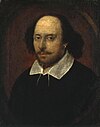
“The book recognized as containing the most complete attempt at explaining and defending pantheism from a philosophical perspective is Spinoza's Ethics, finished in 1675 two years before his death. In 1720 John Toland wrote the Pantheisticon: or The Form of Celebrating the Socratic-Society in Latin. He (possibly) coined the term “pantheist” and used it as a synonym for “Spinozist.””
“Offer with me reverently a tribute to the manes of the holy, rejected Spinoza. The high World-Spirit pervaded him; the Infinite was his beginning and his end; the Universe was his only and his everlasting love. In holy innocence and in deep humility he beheld himself mirrored in the eternal world, and perceived how he also was its most worthy mirror. He was full of religion, full of the Holy Spirit. Wherefore, he stands there alone and unequalled; master in his art, yet without disciples and without citizenship, sublime above the profane tribe.”
“I shall not attempt to speculate as to what Spinoza might have been if he had lived in our time. For me, in any case, one thing is not open to doubt: Spinoza would never have been an agent of the League of Nations. The second point that I wish to emphasize is that we do not agree to yield Spinoza to our enemies in any case. There is no reason at all for this. Spinoza was a great materialistic thinker, and in this respect he should be considered a predecessor of dialectical materialism. The contemporary proletariat is Spinoza's only genuine heir.”
“[The journey to Hades] I, too, have been in the underworld, like Odysseus, and shall be there often yet, and not only rams have I sacrificed to be able to speak with a few of the dead, but I have not spared my own blood. Four pairs it was that did not deny themselves to my sacrifice: Epicurus and Montaigne, Goethe and Spinoza, Plato and Rousseau, Pascal and Schopenhauer. With these I must come to terms when I have long wandered alone; they may call me right and wrong; to them will I listen when in the process they call each other right and wrong.”
“The perfection of a thing does not annul its existence, but, on the contrary, asserts it. Imperfection, on the other hand, does annul it ; therefore we cannot be more certain of the existence of anything, than of the existence of a being absolutely infinite or perfect—that is, of God. For inasmuch as his essence excludes all imperfection, and involves absolute perfection, all cause for doubt concerning his existence is done away, and the utmost certainty on the question is given. This, I think, will be evident to every moderately attentive reader.”

“The religious geniuses of all ages have been distinguished by this kind of religious feeling, which knows no dogma and no God conceived in man's image ; so that there can be no church whose central teachings are based on it. Hence it is precisely among the heretics of every age that we find men who were filled with this highest kind of religious feeling and were in many cases regarded by their contemporaries as atheists, sometimes also as saints. Looked at in this light, men like Democritus, Francis of Assisi, and Spinoza are closely akin to one another.”
“As early as the 1670s, and continually, right through the eighteenth century, one finds numerous references in the contemporary controversial literature, theological, philosophical and historical, in all the Western European countries, to ‘Spinoza’ as supposedly the foremost and most dangerous of the ‘atheists’ threatening Christianity, society and the moral order generally, and the ‘sect of Spinozists’ specifically as the veritable hard-core of the libertine underground challenging all the structures of authority then in place.”
“One of the ideas that I play around with in the book [Betraying Spinoza: The Renegade Jew Who Gave Us Modernity] is tracing a possible path from Spinoza's influence in Amsterdam to the founding fathers of America, by way of John Locke, who spent time in Amsterdam a few years after Spinoza's death and fraternized with people of the same liberal persuasion as those in whom Spinoza had confided his ideas. No matter whether Madison and Jefferson really did read Spinoza (Spinoza was in Jefferson's library) they often sound just like him in their letters.”
“From Descartes and Malebranche onward, the metaphysical value of the “idea” or archetype steadily deteriorated. It became a “thought,” an internal condition of cognition, as clearly formulated by Spinoza: “By 'idea' I understand a conception of the mind which the mind forms by reason of its being a thinking thing.” Finally Kant reduced the archetypes to a limited number of categories of understanding.”

“After experience had taught me that all the usual surroundings of social life are vain and futile; seeing that none of the objects of my fears contained in themselves anything either good or bad, except in so far as the mind is affected by them, I finally resolved to inquire whether there might be some real good having power to communicate itself, which would affect the mind singly, to the exclusion of all else: whether, in fact, there might be anything of which the discovery and attainment would enable me to enjoy continuous, supreme, and unending happiness.”
“He [Spinoza] believes in authority. And, of course, he believed in freedom of thought and expression, whereas Hobbes does not. There is a book on Spinoza written by an American ex-Marxist, called Spinoza and the Rise of Liberalism, on these lines. But Spinoza is not a theorist in whom I am particularly interested, because he is too rationalistic for me. But the Ethics is a wonderful book, and full of deep insights and noble feeling. It is totally unhistorical: the idea of timeless truths about human beings seems suspect to me.”
“Philopon: The misfortune of this man has always touched me in an extraordinary way. He lived in moderation, alone and irreproachable; he renounced all human idols and devoted his entire life to reflection, and look what happened! In the labyrinth of his meditations, he goes astray and, out of error, maintains much that agrees very little with his innocent way of life and that the most depraved scoundrel might wish for in order to be able to indulge his evil desires with impunity. How unjust is the irreconcilable hatred of scholars towards someone so unfortunate!”

“Speaking generally, he holds dominion, to whom are entrusted by common consent affairs of state — such as the laying down, interpretation, and abrogation of laws, the fortification of cities, deciding on war and peace, &c. But if this charge belong to a council, composed of the general multitude, then the dominion is called a democracy; if the council be composed of certain chosen persons, then it is an aristocracy ; and, if, lastly, the care of affairs of state, and, consequently, the dominion rest with one man, then it has the name of monarchy.”
“How many philosophers and historians of philosophy have gone along with the academies, burning with the desire to be able to sit there! The Dutch thought and art of the siècle d'or reside not only outside of the academies but also, to a large extent, outside of the universities. Spinoza's example serves for all the others. When declining the proposal of the excellent and honorable Sir J. L. Fabritius, who in the name of the Palatine Elector offers him a chair at Heidelberg, Spinoza reminds him that the freedom to philosophize cannot be limited in any way.”
“It is a quality of Spinoza that a few pages by him can teach us whether we are his disciples, whereas big interpretive works have been written about him based on the most erudite misunderstandings. For to think like him does not mean to adopt a system but just to think.
It delights me that the one thinker I approached in my childhood and almost adored now meets me once again, and as the philosopher of psychoanalysis. Think far enough, correctly enough on any point at all and you hit upon him; you meet him waiting for you, standing ready at the side of the road.”
It delights me that the one thinker I approached in my childhood and almost adored now meets me once again, and as the philosopher of psychoanalysis. Think far enough, correctly enough on any point at all and you hit upon him; you meet him waiting for you, standing ready at the side of the road.”

“The ordinary surroundings of life which are esteemed by men (as their actions testify) to be the highest good, may be classed under the three heads — Riches, Fame, and the Pleasures of Sense: with these three the mind is so absorbed that it has little power to reflect on any different good.
• Variant translation: The things which … are esteemed as the greatest good of all … can be reduced to these three headings, to wit : Riches, Fame, and Pleasure. With these three the mind is so engrossed that it cannot scarcely think of any other good.”
• Variant translation: The things which … are esteemed as the greatest good of all … can be reduced to these three headings, to wit : Riches, Fame, and Pleasure. With these three the mind is so engrossed that it cannot scarcely think of any other good.”
“...The proposal to think the determination of the elements of a whole by the structure of the whole posed an absolutely new problem in the most theoretically embarrassing circumstances, for there were no philosophical concepts available for its resolution. The only theoretician who had had the unprecedented daring to pose this problem and outline a first solution to it was Spinoza. But, as we know, history had buried him in impenetrable darkness. Only through Marx, who, however, had little knowledge of him, do we even begin to guess at the features of that trampled face.”

“...Similarly, he [Hermann Cohen] states that Spinoza opposed rabbinical Judaism, especially its great concern with the ceremonial law, and that his sharp opposition had a certain salutary effect on the liberation of opinion; he notes without any disapproval that “modern Judaism” has freed itself from part of the ceremonial law; he fails to admit that modern Judaism is a synthesis between rabbinical Judaism and Spinoza.”

“Schelling calls Spinoza "the first philosopher who found the concepts whereby all the following centuries have grasped and fixed the two extremities of our knowing mind." For Lessing and Herder philosophy and Spinozism were identical; and the same statement was also made by Hegel, the most comprehensive and systematic, as well as the most independent and firm, among the German philosophers, who did not attempt, like Leibnitz, Fichte or Schelling, to reshape again and again his original-philosophy. And Hegel also said, "either you have Spinozism or you have no philosophy!"”
“Machiavelli is not in the least utopian; he simply thinks the conjunctural case of the thing, and goes dietro alla verità effettuale della cosa. He asserts it in concepts which are philosophical and no doubt make him, in his temerity, solitude and scorn for the philosophers of the tradition, the greatest materialist philosopher in history – the equal of Spinoza, who declared him "acutissimus', most acute. Spinoza considered him acutissimus in politics. He would appear not to have suspected that Machiavelli was also most incisive in materialist philosophy.”
“There is no place in Spinoza's system for a sense of mystery in the face of nature. Such an attitude is to be dispelled by the intelligibility of things. Religious wonder is bred by ignorance, he believes. Spinoza contrasts the person who "is eager, like an educated man, to understand natural things" with the person who "wonders at them, like a fool". For Spinoza, anyone who would approach nature with the kind of worshipful awe usually demanded by the religious attitude represents the latter. By definition, and in substance, pantheism is not atheism. And Spinoza is an atheist.”
“Let no one argue against this that we are living in a different century, that much water has flowed under the bridge and that our problems are no longer the same. We are discussing living water which has not yet flowed away. We are familiar with enough historical examples, beginning with that of Spinoza, where men have worked ferociously to wall up for ever and bury deep in the earth sources which were made to quench their thirsts, but which their fear will not tolerate. For nearly a century academic philosophy has buried Marx in the earth of silence, the earth of the cemetery.”

“He [Spinoza] does not prove the existence of God, existence is God. And if for this reason others would brand him Atheum then I would praise him and call him theissimum and christianissimum. [Original in German: Du erkennst die höchste Realität an, welche der Grund des ganzen Spinozismus ist, worauf alles übrige ruht, woraus alles übrigefliest. Er [Spinoza] beweist nicht das Daseyn Gottes, das Daseyn ist Gott. Und wenn ihn andre deshalb Atheum schelten, so mögte ich ihn theissimum ja christianissimum nennen und preisen.]”
“[We] will discuss Soul and Body, the doctrine of God, and Ethics. ...We shall find that Leibniz no longer shows great originality, but tends, with slight alterations of phraseology, to adopt (without acknowledgment) the views of the decried Spinoza. We shall find also many more minor inconsistencies than in the earlier part of [Leibniz's] system, these being due chiefly to the desire to avoid the impieties of the Jewish Atheist, and the still greater impieties to which Leibniz's own logic should have led him.”
“He [Nicolas Malebranche] cannot give up the principles which the Catholic Church imposes on him. He carries forward that process of rationalisation in Christian ethics which Descartes began, and which, like the attempt to restore an older theology, finds its fulfilment in Spinoza. It is Spinoza who is the first to create a wholly metaphysical ethics, free from all trace of its theological origin. Spinoza thus completes for continental ethics the separation between morality and religion which English empiricism, in spite of many relapses, had effected under the leadership of Bacon.”

“Spinoza's thought is completely idealistic when it is presented as negative thought, when it develops the bourgeois utopia, living it in the extreme, abstract consequences of its spiritual idyll; it is, in contrast, completely materialistic as soon as it is reassembled in a constructive way, inverting the impossibility of an ideal world in the materialistic tension of its components and embracing these in a practical project, in a violent dynamism of worldly liberation. "Benedictus maledictus": never has a philosopher been more rightly hated by his times, a bourgeois and capitalist epoch.”
“During the last quarter or so of the eighteenth century and then well into the nineteenth century a wave of neo-Spinozism swept through German philosophy and literature: in addition to Lessing and Herder, further neo-Spinozists included Goethe, Schelling, Hegel, Schleiermacher, Hölderlin, Novalis, and Friedrich Schlegel. This wave was largely a result of Herder's embrace of neo-Spinozism in God: Some Conversations (and in Goethe's case, Herder's sympathy with Spinozism even before that work). Accordingly, it for the most part took over Herder's modifications of Spinoza's position.”
“The political ideal that Spinoza promotes in the Theological-Political Treatise is a secular, democratic commonwealth, one that is free from meddling by ecclesiastics. Spinoza is one of history's most eloquent advocates for freedom and toleration. The ultimate goal of the Treatise is enshrined in both the book's subtitle and in the argument of its final chapter: to show that ‘freedom to philosophise may not only be allowed without danger to piety and the stability of the republic, but that it cannot be refused without destroying the peace of the republic and piety itself’.”

“Sedulo curavi, humanas actiones non ridere, non lugere, neque detestari, sed intelligere; atque adeo humanos affectus, ut sunt amor, odium, ira, invidia, gloria, misericordia et reliquae animi commotiones non ut humanae naturae vitia, sed ut proprietates contemplatus sum, quae ad ipsam ita pertinent, ut ad naturam aëris aestus, frigus, tempestas, tonitru et alia huiusmodi, quae, tametsi incommoda sunt, necessaria tamen sunt, certasque habent causas, per quas eorum naturam intelligere conamur, et mens eorum vera contemplatione aeque gaudet, ac earum rerum cognitione, quae sensibus gratae sunt.”
“However, his contemporary, Leibnitz, the father of the German enlightenment, who created an optimistic world-picture, always remained only a philosopher for philosophers. Even Immanuel Kant, although always famous, was never popular. In his own fatherland he was all but forgotten for most of the nineteenth century until revived by Hermann Cohen and his school. Spinoza, however, was never exhumed because he was never buried. Kant, because of his exclusive intellectuality, has influenced only his students, while Spinoza, because of his emotional appeal, has ruled even those who have never heard his name.”
“My interest in Spinoza dates back a very long time, because although I didn't go to university I read an enormous amount when I was young. And I came across Spinoza quite early on. I sensed something in his writing which fascinated me and helped me to see, to look at life. If one wants to be very simple about it I suppose that fascination, or that secret, has to do with his rejection of the Cartesian division between the physical and the spiritual, between body and soul. Because Spinoza maintained that the two are indivisible and that the body is not a kind of machine, as Descartes suggested.”
“It seems to me that Spinoza shares the fate of good old Saturn in the fable. The new gods pulled down the sublime one from the lofty throne of knowledge. He faded back into the solemn obscurity of the imagination; there he lives and now dwells with the other Titans in dignified exile. [Original in German: Spinosa, scheint mirs, hat ein gleiches Schicksal, wie der gute alte Saturn der Fabel. Die neuen Götter haben den Herrlichen vom hohen Thron der Wissenschaft herabgestürzt. In das heilige Dunkel der Fantasie ist er zurückgewichen, da lebt und haust er nun mit den andern Titanen in ehrwürdiger Verbannung.]”

“Through the seventeenth and eighteenth centuries, Bruno's ideas were widely imparted, borrowed, sounded ; almost never, though, with the name Giordano Bruno attached to them. Kepler once chided Galileo for omitting his debt to Bruno ; yet, we can discern Kepler's own indifference … Later generations would evoke Bruno's writings to the phrase, without quoting or acknowledging him. Recent scholarship on Spinoza, for example, cites Bruno's powerful exertion on his thought about infinity and on his style. Never does Spinoza cite Bruno by name.”
“The mystifying side of Hegelian dialectic I criticised nearly thirty years ago, at a time when it was still the fashion. But just as I was working at the first volume of “Das Kapital,” it was the good pleasure of the peevish, arrogant, mediocre ‘Epigonoi who now talk large in cultured Germany, to treat Hegel in same way as the brave Moses Mendelssohn in Lessing's time treated Spinoza, i.e., as a “dead dog.” I therefore openly avowed myself the pupil of that mighty thinker, and even here and there, in the chapter on the theory of value, coquetted with the modes of expression peculiar to him.”
“The only successful attempt to free human reason from the authority of religion was that of Spinoza (1632–1677). In his Theologico-Political Treatise (1670) he denied the claims for divine authority based on the text of Scripture and religious tradition. [...] Spinoza was the first secular Jew, and as such, the first secular man. Indeed, he served as the role model for all secular Jews, instituting the precise features that characterized future Jewish secularists.”
“Certain critics from the democratic camp, inclined to operate with the help of indirect evidence, have looked upon the “ironic” attitude of the author to the compromise leaders as the expression of an undue subjectivism vitiating the scientific character of his exposition. We venture to regard this criterion as unconvincing. Spinoza's principle, “not to weep or laugh, but to understand” gives warning against inappropriate laughter and untimely tears. It does not deprive a man, even though he be a historian, of the right to his share of tears and laughter when justified by a correct understanding of the material itself.”

“...They [the Jews] have had the most painful history of all peoples, not without the fault of all of us, and when one owes to them the noblest man (Christ), the purest sage (Spinoza), the most powerful book, and the most effective moral law in the world. [Original in German: Trotzdem möchte ich wissen, wie viel man bei einer Gesamtabrechnung einem Volke nachsehen muß, welches, nicht ohne unser aller Schuld, die leidvollste Geschichte unter allen Völkern gehabt hat, und dem man den edelsten Menschen (Christus), den reinsten Weisen (Spinoza), das mächtigste Buch und das wirkungsvollste Sittengesetz der Welt verdankt.]”
“Regarding Spinoza, whom M. Arnauld has called the most impious and most dangerous man of this century, he was truly an Atheist, [i.e.,] he allowed absolutely no Providence dispensing rewards and punishments according to justice. ...The God he puts on parade is not like ours; he has no intellect or will. ...He fell well short of mastering the art of demonstration; he had only a mediocre knowledge of analysis and geometry; what he knew best was to make lenses for microscopes.”
“My philosophy is normal human orthodox philosophy, such as has come down from the Indians through the Greeks, to Spinoza. It is simply not Protestant philosophy. The problems of Protestant philosophy do not exist for me: I regard them as products of a confusion of thought, of a heresy. Catholic philosophy differs from the normal only in that it accepts sacred history as well as natural history as the true account of the facts: but when the facts are agreed upon, one way or another, philosophy has no real difficulty in discovering what to say. It has said everything essential already. To invent a philosophy would be not to have understood.”
“[Ramin Jahanbegloo's question: Hegel was very much influenced by Spinoza. Don't you think so?] I think Hegel was much more influenced by Aristotle than by Spinoza. As for the influence of Spinoza on Hegel, it exists. But the Spinoza of the eighteenth century is not Spinoza; the Spinoza of Herder, the Spinoza of Goethe, is not Spinoza, nor is the Spinoza of Diderot. In the case of the Germans his world turns into an active pantheism; “Deus sive Natura” turns into a quasi-mystical doctrine, a romantic approach remote from the dry light of Spinoza.”
“In view of these facts, the assertion is justified that Spinoza's influence on the cultural process of his own race in modern times was almost as powerful as was his influence upon the general cultural process in the West. Spinoza, Plato, and Aristotle are the most popular philosophers in the Ghetto. Although Spinoza is still considered to be heresy personified, he is looked upon as the very embodiment of philosophical genius. The orthodox Jew, with his medieval outlook upon life, who beholds Spinoza and hates him, is yet proud of him, because he feels that he has accomplished something unusual for the cultural position of his race in the West.”
“If all that divides Marx from the Classical Economists amounts to the historical character of economic categories, Marx need only historicize these categories, refusing to take them as fixed, absolute or eternal, but, on the contrary, regarding them as relative, provisional and transitory, i.e., as categories subject in the last instance to the moment of their historical existence. In this case, Marx's relation to Smith and Ricardo can be represented as identical with Hegel's relation to classical philosophy. Marx would then be Ricardo set in motion, just as it is possible to describe Hegel as Spinoza set in motion; set in motion, i.e., historicized.”

“The Ethics is a book of concepts (the second kind of knowledge), but also of affects (the first kind) and percepts (the third kind) too. Thus the paradox in Spinoza is that he's the most philosophical of philosophers, the purest in some sense, but also the one who more than any other addresses non-philosophers and calls forth the most intense non-philosophical understanding. That is why absolutely anyone can read Spinoza, and be very moved, or see things quite differently afterward, even if they can hardly understand Spinoza's concepts. Conversely, a historian of philosophy who understands only Spinoza's concepts doesn't fully understand him.”
“In the antiquity, every senior man had the desire for the fame – this came from the fact that everyone believed to be at the beginning of the humanity and knew which broadness and duration to give oneself, to be transposed in the posterity as tragedy playing on the eternal scene. My pride is that ‘I have origins’ – therefore I do not need any fame. Whilst what moved Zarathustra, Moses, Mahomet, Jesus, Plato, Brutus, Spinoza, Mirabeau, I was already living and it came to me in many things mature in the daylight what a couple of thousands of years needed.”

“The rediscovery of Spinoza by the Germans contributed to the shaping of the cultural destinies of the German people for almost two hundred years. Just as at the time of the Reformation no other spiritual force was as potent in German life as the Bible, so during the eighteenth and nineteenth centuries no other intellectual force so dominated German life as Spinozism. Spinoza became the magnet to German steel. Except for Immanuel Kant and Herbart, Spinoza attracted every great intellectual figure in Germany during the last two centuries, from the greatest, Goethe, to the purest, Lessing.”
“But how to write about a man who lived such a contemplative life marked by so few striking external events? He was extraordinarily private, and he kept his own person invisible in his writing. I had none of the material that ordinarily lends itself to narrative—no family dramas, no love affairs, jealousies, curious anecdotes, feuds, spats, or reunions. He had a large correspondence, but after his death his colleagues followed his instructions and removed almost all personal comments from his letters. No, not much external drama in his life: most scholars regard Spinoza as a placid and gentle soul—some compare his life to that of Christian saints, some even to Jesus.”
“And therefore we can see just how constructive this Spinozian difference is, just how constructive this negativity really is! The organic interweaving of these two motifs is fundamental in the history of European philosophy. Spinoza is the first to mold this logical mechanism that bourgeois philosophy would constantly and continually try to abrogate during its subsequent development. In Kantianism, as in classical idealism, Spinoza continually remains the object of opposition and polemic: What is destroyed is precisely the intersection between the negation of the ideology and the construction of the world, the inherence of the limit, of the materiality, to the infinite.”
“...Goethe was the wisest of mankind; too wise, perhaps, to be a philosopher in the technical sense, or to try to harness this wild world in a brain-spun terminology. It is true that he was all his life a follower of Spinoza, and that he may be termed, without hesitation, a naturalist in philosophy and a pantheist. His adherence to the general attitude of Spinoza, however, did not exclude a great plasticity and freedom in his own views, even on the most fundamental points. Thus Goethe did not admit the mechanical interpretation of nature advocated by Spinoza. He also assigned, at least to privileged souls, like his own, a more personal sort of immortality than Spinoza allowed.”
“His [Hegel's] early and decisive break with theism came in correspondence with Schelling and Hölderlin, who were reading Fichte's 1794 Wissenschaftslehre as Spinozism on a Kantian foundation. He later professes his own Spinozism in bold terms. “You are either a Spinozist or not a philosopher at all” and “It is therefore worthy of note that thought must begin by placing itself at the standpoint of Spinozism; to be a follower of Spinoza is the essential commencement of all Philosophy. For as we saw above, when man begins to philosophize, the soul must commence by bathing in this ether of the One Substance in which all that man has held as true has disappeared”.”
“Neutrality toward Spinoza set in once one was able to admit that the "modern worldview," whose victory was decisively aided by Spinoza's metaphysics, does not, or does not entirely, coincide with this metaphysics. But even at this stage it was still generally maintained, and even emphasized, that among the three great Western philosophers of the seventeenth century — Descartes, Hobbes, and Spinoza — Spinoza was the most important one because, he was the most progressive one. He alone had drawn certain consequences from the foundations of modern philosophy, which became fully clarified only in the nineteenth century and which henceforth determined the general consciousness.”
“Not only Goethe's poetry but his science is Spinozistically motivated. Convinced of the oneness of nature, he approached it with a certainty to discover in it oneness, and his discovery of the os intermaxtllare in man, which influenced the development of comparative anatomy, is one of the by-products of his Spinozistic sentiments. In his theory of the metamorphosis of the plants, which he expounded scientifically and poetically, he also expressed a good deal of Spinozism. Spinoza enabled him to read the various pages of nature as one book. Goethe respected Kant and may be described as a Kant scholar, but he was a Spinoza adherent. His world-picture is Spinozistic and not Kantian.”
“Jacobi, a mystical metaphysician deeply influenced by Hamann, cannot reconcile the demands of the soul and the intellect: 'The light is in my heart: as soon as I try to carry it to my intellect, it goes out.' Spinoza was for him the greatest master since Plato of the rational vision of the universe; but for Jacobi this is death in life: it does not answer the burning questions of the soul whose homelessness in the chilly world of the intellect only self-surrender to faith in a transcendent God will remedy.”
“The philosophical perspective opens before is at this point of our study. For the first time in the process of psychological studies we can resolve essentially purely philosophical problems by means of a psychological experiment and demonstrate empirically the origin of the freedom of human will. We cannot trace in all its completeness the philosophical perspective opening before us here. We expect to do this in another work devotes to philosophy. Now we shall try only to note this perspective in order to see most clearly the place we have reached. We cannot help but note that we have come to the same understanding of freedom and self-control that Spinoza developed in his “Ethics.””
“My son is taking a course in philosophy, and last night we were looking at something by Spinoza and there was the most childish reasoning! There were all these attributes, and Substances, and all this meaningless chewing around, and we started to laugh. Now how could we do that? Here's this great Dutch philosopher, and we're laughing at him. It's because there's no excuse for it! In the same period there was Newton, there was Harvey studying the circulation of the blood, there were people with methods of analysis by which progress was being made! You can take every one of Spinoza's propositions, and take the contrary propositions, and look at the world and you can't tell which is right.”
“Spinoza accomplishes the synthesis of traditional philosophical components by means of breaking and shattering. It is useless to pursue the presuppositions of Spinozian philosophy if we do not look for them in the qualitative leap determined by his philosophy. The continuity of Spinozian thought with respect to the preceding course of the history of metaphysics consists of a radical discontinuity, one that exalts the utopia of consciousness and freedom (a patrimony of Western thought) in a project of liberation. The perspective of the world is not a utopia, the immanentism is not aesthetic, and the liberation is no longer artisanal, but all of this is presupposed, it is taken as a basis.”
“Because of the specific epistemological interests of English philosophy and the dominance of Cartesianism in French thought, Spinoza's philosophical influence was centered in Germany. Of the great German figures Gotthold Ephraim Lessing was the first to come under the spell of Spinoza. He was a man of broad vision, with a hundred cultural interests and a critical disposition of mind, and would not accept any philosophical system in its totality. While he did not accept Spinozism in its entirety, he subscribed to its pantheistic doctrines. But more than he admired Spinoza's philosophy, he was attracted to him by his great earnestness of purpose, his strength of character, and his moral courage.”
“In the strident world of seventeenth-century philosophy, the mind-body problem was not a word puzzle that could be safely relegated to undergraduate classes. For men such as Descartes, Malebranche, and Leibniz, solving the mind-body problem was vital to preserving the theological and political order inherited from the Middle Ages and, more generally, to protecting human self-esteem in the face of an increasingly truculent universe. For Spinoza, it was a means of destroying that same order and discovering a new foundation for human worth.”
“It is an amazing thing that our memory best retains images of great philosophers when their lives were coming to an end. Socrates raising the chalice with hemlock to his mouth, Seneca whose veins were opened by a slave (there is a painting of this by Rubens), Descartes roaming cold palace rooms with a foreboding that his role of teacher of the Swedish Queen would be his last, old Kant smelling a grated horseradish before his daily walk (the cane preceding him, sinking deeper and deeper into the sand), Spinoza consumed by tuberculosis and patiently polishing lenses, so weak he is unable to finish his Treatise on the Rainbow.”

“...Elsewhere I have shown that La Mettrie and Diderot – each after his own fashion – arrived at a world-outlook that was a ‘brand of Spinozism’, that is, a Spinozism without the theological appendage that distorted its true content. It would also be easy to show that, inasmuch as we are speaking of the unity of subject and object, Hobbes too stood very close to Spinoza. That, however, would be taking us too far afield, and, besides, there is no immediate need to do that. Probably of greater interest to the reader is the fact that today any naturalist who has delved even a little into the problem of the relation of thinking to being arrives at that doctrine of their unity which we have met in Feuerbach.”

“To us it seems that this difference, which Spinoza's thought constitutes in the history of Western metaphysics, represents an extremely high point of the theoretical development of modern thought. In other words, Spinoza's thought seems to us to represent a strategy for superseding the antinomies of bourgeois thought. But because bourgeois ideology is essentially based on antinomies, this supersession is a supersession tout court of the ideology. Spinoza gives us being in its immediateness. He destroys the homology between the mediations of articulations of being and the mediations and articulations of bourgeois Power. He presents us with the world as a territory of a joyous construction of immediate human needs.”
“Spinoza was the man I believed in always, as the alternative to Catholicism. And it is only in Spinoza's manner that I am a positivist at all. I believe in the real world, in the world of thought and extension, of psychology and physics. God or substance with Spinoza equals reality; and this reality, which may have countless forms, we find only in space and in (other men's) consciousness. I say in other men's, because Spinoza was too sane to care to discuss anything from the point of view of subjective idealism. When one prints a book to convince other people, one oughtn't to discuss in it whether they exist. But this is all by the way, although some other day I will discuss with you the question of Spinoza's hedonism.”
“We know that Spinoza's metaphysics remained widely influential throughout the eighteenth century. A philosopher who received five times more attention than Descartes or Locke in Bayle's Dictionnaire, Diderot and J. d'Alembert's Encyclopédie, and Zedler's Grosses Universal Lexikon was certainly not ignored by the Enlightenment – indeed, could not be.”
“Some of Spinoza's ideas are part and parcel of our culture, but to the best of my knowledge Spinoza is absent as a reference from the modern efforts to understand the biology of the mind. This absence is interesting in itself. Spinoza is a thinker far more famous than known. Sometimes Spinoza appears to rise out of nothing, in solitary and unexplained splendor, although the impression is false—in spite of his originality he is very much a part of his intellectual times. And he appears to dissolve as abruptly, without succession—another false impression given that the essence of some of his forbidden proposals can be found behind the Enlightenment and well beyond in the century that followed his death.”
“Lenin's mind was hewn from the rock of Spinozism, and, because his mind imposed itself firmly upon Russia, Christianity in Russia actually was replaced with Spinozism. In all the thirty-four volumes of the collected works of Lenin, published by the Lenin Institute in Moscow, Spinoza's name occurs only once. The manner in which he refers to Spinoza makes it almost certain that if he knew him at all he knew him secondhand. [...] Lenin, however, was not the only ruthless politician who embraced Spinozism de facto. Bismarck, the iron chancellor, who forged the Wilhelminic German Empire, was also a disciple of Spinoza. [...] Hence, it is not blind chance that men like Lenin and Bismarck were Spinozists, either in fact or in theory.”
“[Alberto Knox] He denied that the Bible was inspired by God down to the last letter. When we read the Bible, he said, we must continually bear in mind the period it was written in. A ‘critical’ reading, such as the one he proposed, revealed a number of inconsistencies in the texts. But beneath the surface of the Scriptures in the New Testament is Jesus, who could well be called God's mouthpiece. The teachings of Jesus therefore represented a liberation from the orthodoxy of Judaism. Jesus preached a ‘religion of reason’ which valued love higher than all else. Spinoza interpreted this as meaning both love of God and love of humanity. Nevertheless, Christianity had also become set in its own rigid dogmas and outer rituals.”
“[Alberto Knox] When things got really tough, Spinoza was even deserted by his own family. They tried to disinherit him on the grounds of his heresy. Paradoxically enough, few have spoken out more powerfully in the cause of free speech and religious tolerance than Spinoza. The opposition he was met with on all sides led him to pursue a quiet and secluded life devoted entirely to philosophy. He earned a meager living by polishing lenses, some of which have come into my possession. [...] There is almost something symbolic in the fact that he lived by polishing lenses. A philosopher must help people to see life in a new perspective. One of the pillars of Spinoza's philosophy was indeed to see things from the perspective of eternity.”
“Nothing is more absurd than ownership claimed for ideas. Hegel did, to be sure, use many of Schelling's ideas for his philosophy, but Mr. Schelling would never have known what to do with these ideas anyway. He always just philosophized, but was never able to produce a philosophy. And besides, one could certainly maintain that Mr. Schelling borrowed more from Spinoza than Hegel borrowed from Schelling. If Spinoza is some day liberated from his rigid, antiquated Cartesian, mathematical form and made accessible to a large public, we shall perhaps see that he, more than any other, might complain about the theft of ideas. All our present‑day philosophers, possibly without knowing it, look through glasses that Baruch Spinoza ground.”
“Jefferson instead recognizes that the multitude will act at times on the basis of ignorance, and yet he still affirms not only their right to rebel but also the benefits of their rebellion. His thinking in this regard runs parallel to that of Spinoza, and, in fact, Spinoza's thought can help carry this line of democratic thinking further. The two thinkers share a pair of basic assumptions: one on the virtue of disobedience, since freedom can never result from obedience to authority; and another on the capacities of the multitude, even though it is born ignorant, to become intelligent and rule itself autonomously. The process leading the multitude from ignorance to wisdom is indeed the steep path that runs throughout Spinoza's work.”
“The first person ever to have posed the problem of reading, and in consequence, of writing, was Spinoza, and he was also the first in the world to have proposed both a theory of history and a philosophy of the opacity of the immediate. With him, for the first time ever, a man linked together in this way the essence of reading and the essence of history in a theory of the difference between the imaginary and the true. This explains to us why Marx could not possibly have become Marx except by founding a theory of history and a philosophy of the historical distinction between ideology and science, and why in the last analysis this foundation was consummated in the dissipation of the religious myth of reading.”

“Spinoza is the clear and luminous side of Modern philosophy. He is the negation of bourgeois mediation and of all the logical, metaphysical, and juridical fictions that organize its expansion. He is the attempt to determine the continuity of the revolutionary project of humanism. With Spinoza, philosophy succeeds for the first time in negating itself as a science of mediation. In Spinoza there is the sense of a great anticipation of the future centuries; there is the intuition of such a radical truth of future philosophy that it not only keeps him from being flattened onto seventeenth-century thought but also, it often seems, denies any confrontation, any comparison. Really, none of his contemporaries understands him or refutes him.”
“One explanation for Spinoza's status as unknown celebrity is the scandal he caused in his own time. As we shall see (in Chapter Six), his words were deemed heretical and banned for decades and with rare exceptions were quoted only as part of the assault on his work. The attacks paralyzed most attempts by Spinoza admirers to discuss his ideas publicly. The natural continuity of intellectual acknowledgment that follows a thinker's work was thus interrupted, even as some of his ideas were used uncredited. This state of affairs, however, hardly explains why Spinoza continued to gain fame but remained unknown once the likes of Goethe and Wordsworth began to champion him. Perhaps a better explanation is that Spinoza is not easy to know.”
“For many years he had suffered from consumption, aggravated perhaps by his work of glass polishing. On Sunday, February 21, 1677, the end came unexpectedly, and almost suddenly. ...
Credit must be given to Colerus [John Kohler]... for his downright contradiction of the tales concerning Spinoza's death-bed which were circulated, it would seem, by persons who thought it would tend to edification to represent Spinoza as the blustering infidel of popular orthodox polemics, who is invariably assailed by doubt and disquietude in his last moments, and as invariably strives to disguise them with feeble bravado. Colerus very honestly says that the people of the house... knew nothing of any such matters, and did not believe a word of them.”
Credit must be given to Colerus [John Kohler]... for his downright contradiction of the tales concerning Spinoza's death-bed which were circulated, it would seem, by persons who thought it would tend to edification to represent Spinoza as the blustering infidel of popular orthodox polemics, who is invariably assailed by doubt and disquietude in his last moments, and as invariably strives to disguise them with feeble bravado. Colerus very honestly says that the people of the house... knew nothing of any such matters, and did not believe a word of them.”
“...Humiliated beyond sufferance, Uriel went home, wrote a fierce denunciation of his persecutors, and shot himself. This was 1640. At that time Baruch Spinoza, "the greatest Jew of modern times," and the greatest of modern philosophers, was a child of eight, the favorite student of the synagogue. It was this Odyssey of the Jews that filled the background of Spinoza's mind, and made him irrevocably, however excommunicate, a Jew. Though his father was a successful merchant, the youth had no leaning to such a career, and preferred to spend his time in and around the synagogue, absorbing the religion and the history of his people. He was a brilliant scholar, and the elders looked upon him as a future light of their community and their faith.”
“Spinoza's ethical views are inextricably intertwined with his metaphysics, and it may be doubted whether his metaphysics is as good as is supposed by followers of Hegel. But the general attitude towards life and the world which he inculcates does not depend for its validity upon a system of metaphysics. He believes that all human ills are to be cured by knowledge and understanding; that only ignorance of what is best makes men think their interests conflicting, since the highest good is knowledge, which can be shared by all. But knowledge, as he conceives it, is not mere knowledge as it comes to most people; it is “intellectual love,” something coloured by emotion through and through. This conception is the key to all his valuations.”
“...This awareness has become a kind of pre-Freudian self-analysis for me; Spinoza helps me to see myself and my surroundings objectively. This can make life bearable even throughout the experience of suffering; the teachings presented in the Ethics allow one to preceive the world as a manageable place. Freud himself once wrote in a letter to [Lothar] Bickel, 'I admit my dependence on Spinoza's teachings.' Conversely, Spinoza admits, foreshadowing Freudian analysis, that we cannot be in complete control over our emotions. [...] The ability to create emotional balance, though, is dependent upon the intellectual awareness of the problem. In this way Spinoza demands the integration of all human aspects in order to attain true freedom.”

“When we read Spinoza, we are seized with a feeling like that of seeing nature at its grandest in most vigorous repose: a forest of thoughts, tall as the sky, whose blooming tree-tops sway back and forth, while imperturbable trunks stand rooted in the eternal soil. There is a certain soft breeze in the writings of Spinoza which is inexplicable. It stirs the reader with the winds of the future. The spirit of the Hebrew prophets still rested perhaps on their late descendant. At the same time, there is a seriousness to him, a self-confident pride, a grandeur of thought which also seems to be an inheritance, since Spinoza belonged to one of those families of martyrs which had been expelled from Spain by those most Catholic kings.”
“...If we had the time we should now go on to present the ingenious theory of organism with which Spinoza focused the general ontological scheme specifically on the biological sphere, where mentality is ordinarily seen to be conjoined to physical fact, and particularly on the case of man. It must be enough to say that Spinoza makes it beautifully intelligible from his general premises that the quality and power of a mind are proportionate to the complexity of the body to which it corresponds, so that the perfection of the human body as a piece of physical organization is a direct yardstick for the perfection of the human mind which, as it were, conformally (or: isomorphously) duplicates the body's physical performance on the plane of thought.”
“The philosopher John Toland, in the early 18th century, insisted that the terms 'Spinozism' and 'pantheism' are synonymous. Toland says that "Moses was, to be sure, a Pantheist, or, if you please, in more current terms, a Spinosist", while Spinoza's pantheism was taken for granted by Moses Mendelssohn, Gotthold Lessing and Friedrich Jacobi, in their famous Pantheismusstreit of 1785. More recently, this interpretation also appears in both the scholarly literature and popular representations of Spinoza's thought. In the recently published Cambridge Dictionary of Philosophy we read that "Spinoza is the most distinguished pantheist in Western philosophy". But the problem with calling Spinoza a 'pantheist' is that pantheism is still a kind of theism.”

“Now, if instituting comparisons in both directions, we place the lowest and most ape-like men (the Austral Negroes, Bushmen, and Andamans, etc.), on the one hand, together with the most highly developed animals, for instance, with apes, dogs, and elephants, and on the other hand, with the most highly developed men—Aristotle, Newton, Spinoza, Kant, Lamarck, or Goethe—we can then no longer consider the assertion, that the mental life of the higher mammals has gradually developed up to that of man, as in any way exaggerated. If one must draw a sharp boundary between them, it has to be drawn between the most highly developed and civilized man on the one hand, and the rudest savages on the other, and the latter have to be classed with the animals.”
“Many people who are engaged in the ecological crisis claim to have been inspired by Spinoza. They read some of Spinoza's texts or his comments on those texts. Some even read about Spinoza himself, but this does not mean that they try to find out exactly what Spinoza meant. Why should they? They make use of his image and his texts in their lives. What more could or should Spinoza expect of them? Spinoza does not write about the beauty of wild nature. Perhaps he never talked about it. Not about the coastline of the Netherlands, the storms, the variety of light and darkness, the seabirds. There were people around him, Dutch landscape painters, who appreciated all this. Maybe he did also, but it scarcely influenced what he says in the Ethics.”
“Truly, all the lively, the lively men from the school of Kant, became Neospinozists! In other words, they became Spinozists. The Kantians became Spinozists—what happened? Why did the most prominent Kantians—Fichte, Schelling, Hegel, the best philosophical brains Germany has ever produced—become Spinozists? One will try in vain to find an answer to this question in our histories of philosophy, which do not even ask that legitimate and obvious question. And there is no other answer to it than this one: that it could not have been otherwise, since these truly philosophical men necessarily saw and felt how different Benedict Spinoza's stance within philosophy was from that of Kant, who—to say it in my blunt way—had nothing in common with philosophy.”
“In the eyes of his biographers Spinoza was unmistakably an ideal wise man: exclusively concentrated on the precise architecture of his works, perfectly indifferent to material affairs, and liberated from all passions. But an episode in his life is passed over in silence by some biographers, while others consider it only an incomprehensible, youthful whim. Spinoza's father died in 1656. In his family Baruch had the reputation of an eccentric young man who had no practical sense and wasted precious time studying incomprehensible books. Due to clever intrigues (his stepsister Rebecca and her husband Casseres played the main role in this) he was deprived of his inheritance. She hoped the absentminded young man would not even notice. But it happened otherwise.”
“By posing the question of the ‘givenness’ of the object, Marx poses the question of the object itself, of its nature and limits, and therefore of the domain of its existence, since the modality according to which a theory thinks its object affects not only the nature of that object but also the situation and extent of its domain of existence. As an indication, let us adopt a famous thesis of Spinoza's: as a first approximation, we can suggest that Political Economy's existence is no more possible than the existence of any science of ‘conclusions’ as such: a science of ‘conclusions’ is not a science, since it would be the actual ignorance (‘ignorance en acte’) of its ‘premises’ – it is only the Imaginary in action (the ‘first kind’).”
“Kant is erroneously viewed as the founder of German philosophy, and an ingenious poet-philosopher, Heinrich Heine, has even drawn a parallel between the different phases of the French Revolution and those of German philosophy, putting next to each other as analogous phenomena Kant and Robespierre, Fichte and Napoleon, Schelling and the Restoration, Hegel and the July [1830] Revolution. But the true founder of German philosophy - if one wishes to name a personal representative for the spirit of the age [Zeitgeist] - is none other than [the thinker] whose world view lies equally at the foundation of French social philosophy - Spinoza; and as far as Heine's analogy goes, it is only Kant and Robespierre, i.e. the religious revolution, who are analogous phenomena.”
“I had hoped that out of so many stories you would at least have produced one or two, which could hardly be questioned, and which would clearly show that ghosts or spectres exist. The case you relate... seems to me laughable. In like manner it would be tedious here to examine all the stories of people, who have written on these trifles. To be brief, I cite the instance of Julius Caesar, who, as Suetonius testifies, laughed at such things and yet was happy. ...And so should all who reflect on the human imagination, and the effects of the emotions, laugh at such notions; whatever Lavater and others, who have gone dreaming with him in the matter, may produce to the contrary.”
“In the history of philosophy we meet with Substance as the principle of Spinoza's system. On the import and value of this much-praised and no-less decried philosophy there has been great misunderstanding and a deal of talking since the days of Spinoza. The atheism, and as a further charge, the pantheism of the system has formed the commonest ground of accusation. These cries arise because of Spinoza's conception of God as substance, and substance only. What we are to think of this charge follows, in the first instance, from the place which substance takes in the system of the logical idea. Though an essential stage in the evolution of the idea, substance is not the same with absolute idea, but the idea under the still limited form of necessity.”

“Like Socrates, Spinoza avers that blessedness comes only from a certain kind of knowledge—specifically, the "knowledge of the union that the mind has with the whole of Nature."
...the life of contemplation is also a life within a certain type of community—specifically, a fellowship of the mind. Like Socrates with his circle of debating partners, or Epicurus in his garden with his intellectual companions, Spinoza imagines a philosophical future... upon achieving blessedness for himself, he announces in his first treatise, his first step is "to form a society... so that as many as possible may attain it as easily and as surely as possible." For, "the highest good," he claims, is to achieve salvation together with other individuals "if possible."”
...the life of contemplation is also a life within a certain type of community—specifically, a fellowship of the mind. Like Socrates with his circle of debating partners, or Epicurus in his garden with his intellectual companions, Spinoza imagines a philosophical future... upon achieving blessedness for himself, he announces in his first treatise, his first step is "to form a society... so that as many as possible may attain it as easily and as surely as possible." For, "the highest good," he claims, is to achieve salvation together with other individuals "if possible."”
“Now that I have sketched my main purpose, it is time to explain why a book dedicated to new ideas on the nature and significance of human feeling should invoke Spinoza in the title. Since I am not a philosopher and this book is not about Spinoza's philosophy, it is sensible to ask: why Spinoza? The short explanation is that Spinoza is thoroughly relevant to any discussion of human emotion and feeling. Spinoza saw drives, motivations, emotions, and feelings—an ensemble Spinoza called affects—as a central aspect of humanity. Joy and sorrow were two prominent concepts in his attempt to comprehend human beings and suggest ways in which their lives could be lived better.”
“Spinoza suffered two experiences which are strongly evident today. Although a Jew, he was excluded from the Jewish community; he also became a victim of anti-Semitism. A recent survey in Germany exposed the reality that a majority of Germans believe that the Jews were the greatest risk to world peace. [...] It is significant that Spinoza's ideas had an influence on what is regarded as typical German thinking today – on Feuerbach, Wagner and Nietzsche. How could Richard Wagner become an anti-semite while influenced by Spinoza? Anti-semitism definitely formed part of the profile of a German nationalist in the nineteenth century. Why did Wagner pursue this idea with such fervour? He could not draw these ideas from his spiritual father, the heir to Spinoza, Feuerbach.”

“These distinctions make sense only when AR [absolute perfection in some respects, relative perfection in all others] is assumed (hence Spinoza's failure, who assumed mere A). Just as AR is the whole positive content of perfection, so CW, or the conception of the Creator-and-the-Whole-of-what-he-has-created as constituting one life, the super-whole which in its everlasting essence is uncreated (and does not necessitate just the parts which the whole has) but in its de facto concreteness is created — this panentheistic doctrine contains all of deism and pandeism except their arbitrary negations. Thus ARCW, or absolute-relative panentheism, is the one doctrine that really states the whole of what all theists, if not all atheists as/well, are implicitly talking about.”
“Spinoza does not believe that worshipful awe is an appropriate attitude to take before God or nature. There is nothing holy or sacred about nature, and it is certainly not the object of a religious experience. Instead, one should strive to understand God or nature, with the kind of adequate or clear and distinct intellectual knowledge that reveals nature's most important truths and shows how everything depends essentially and existentially on higher natural causes. The key to discovering and experiencing God/nature, for Spinoza, is philosophy and science, not religious awe and worshipful submission. The latter give rise only to superstitious behaviour and subservience to ecclesiastic authorities; the former leads to enlightenment, freedom and true blessedness (i.e. peace of mind).”
“The philosophy of Spinoza has replaced both Marxism and capitalist neo-liberalism. While affected timelessness is inherent in the Hardt-Negri rhetoric – hence their over-easy references to antiquity or the Middle Ages – the centre of gravity in this book is firmly in the later 17th century. Once regarded as an important precursor of the Enlightenment and of Marxist materialism, the thought of Spinoza (1632–77) is redeemed in these pages, as a wisdom awaiting its vindication in a globalised epoch yet to come. In vital ways, Spinoza told the whole story: his apparently abstract pantheistic philosophy explained history itself, future as well as past, and the globalisation process simply favours a return to such understanding, after the mounting sorrows and delusions of modernity.”
“Spinoza, then, emerged as the supreme philosophical bogeyman of Early Enlightenment Europe. Admittedly, historians have rarely emphasized this. It has been much more common, and still is, to claim that Spinoza was rarely understood and had very little influence, a typical example of an abiding historiographical refrain which appears to be totally untrue but nevertheless, since the nineteenth century, has exerted an enduring appeal for all manner of scholars. In fact, no one else during the century 1650–1750 remotely rivalled Spinoza's notoriety as the chief challenger of the fundamentals of revealed religion, received ideas, tradition, morality, and what was everywhere regarded, in absolutist and non-absolutist states alike, as divinely constituted political authority.”
“You compare Cardozo with Spinoza; but as far as I can judge by your book there is no intellectual comparison. Spinoza was not soft. I have been all my life long a fervent disciple of Spinoza precisely on account of his firmness, of his uncompromising naturalism. Yet even he leaves out the three traditions which, however false their cosmology, seem to me morally sound: the Greek, the Catholic, and the Indian. I am therefore not a disciple of Spinoza in his ideal of human life: It leaves out poetry, art, traditional religion, military and constructive patriotism. His society would be a tame society, where there would be no masters, but all would be voluntary slaves. Perhaps you feel something of my difficulty when you point out that "art" is an indispensable ingredient in everything human.”

“Neokantianism represents in the last analysis nothing but a certain academic line of thought, which has supplied us with a better knowledge of Kant and a useful literature of educated people. Agnosticism, on the other hand, on account of its diffusion among the people, is an actual symptom of the present condition of certain social classes. The socialists would have good grounds for believing that this symptom is one of the evidences of the decadence of the bourgeoisie. It certainly stands in marked contrast to the heroic devotion to truth shown by the thought of the precursors of modern history, such as Bruno and Spinoza, or to that conventional assertiveness, which was typical of the thinkers of the 18th century, until the classic German philosophy gradually came upon the scene.”
“What also fascinated me about Spinoza was his philosophical strategy. Jacques Derrida has spoken a lot about strategy in philosophy, and he is perfectly right, since every philosophy is a dispositif of theoretical combat that disposes of theses as so many strongholds or prominent places so as to be able, in its aim and strategic attacks, to take over the theoretical places fortified and occupied by the adversary. Yet Spinoza began with God! [...] A supreme strategy: he began by taking over the chief stronghold of his adversary, or rather he established himself there as if he were his own adversary, therefore not suspected of being the sworn adversary, and redisposed the theoretical fortress in such a way as to turn it completely around, as one turns around cannons against the fortress's own occupant.”

“Right from the beginning, Spinoza was a decisive philosopher for Schelling. This may now sound like yet another dusty little truth in the museums and archives of philosophy, but in Schelling's day, to embrace Spinoza was to dance with the devil and pantheism was the witches' brew served at this demonic party. [...] Now as bored college students sleep through class lectures and discussions on Continental Rationalism, it seems hard to imagine why Spinoza feared for his life were he to publish his Ethics, or why people were punished for reading it, or why records were kept of those who had read it in a way not altogether dissimilar to the way the FBI now keeps records on terrorists or even its own citizens.”
“...He [Lessing] even felt that the highest compliment he could confer on his friend Moses Mendelssohn, whom he greatly admired, was to call him a "second Spinoza." Mendelssohn, one of the fathers of the modern German enlightenment, was an adherent of Leibnitz. As such he could not be a follower of Spinoza, although he, too, admired his personality. Furthermore, he failed to understand Spinoza, for he could never free himself from Bayle's presentation of Spinoza's doctrine. Nevertheless, this very Mendelssohn, by his controversy with Jacobi about Lessing's relationship to Spinoza, was instrumental in making the latter a potent force in German letters. It is interesting to observe that even those thinkers who dedicated their lives to the cause of anti-Spinozism paid the highest tribute to his personality.”
“It is also a very curious thing. Why should a 17th-century Portuguese-Jewish philosopher whose dense and opaque writings are notoriously difficult to understand incite such passionate devotion, even obsession, among a lay audience in the 21st century? Part of the answer is the drama and mystery at the centre of his life: why exactly was Spinoza so harshly punished by the community that raised and nurtured him? Just as significant, I suspect, is that everyone loves an iconoclast – especially a radical and fearless one that suffered persecution in his lifetime for ideas and values that are still so important to us today. Spinoza is a model of intellectual courage. Like a prophet, he took on the powers-that-be with an unflinching honesty that revealed ugly truths about his fellow citizens and their society.”
“...The rise, triumph, and victory of Spinozism in Europe are reminiscent of the power of ancient Buddhism because both are religiosity rather than philosophy. Spinozism is religion even when it operates with bizarre formulas. Its starting-point is a dead God, who is reminiscent of Buddha's Brahma. It is man's metaphysical fear and not the idea of a living God which is the driving force in religiosity. True religiosity is not an understanding of how God is correlated to man and to the world but the feeling of man's insignificance in the cosmos, giving birth to a state of meekness, humbleness, compassion, and pity. Only when man is crushed and overwhelmed by the thought of his insignificance in this vast universe does he become truly religious. These feelings are as present in Spinozism as they are in Buddhism.”
“I have read the Spinoza Dictionary with great care. It is, in my opinion, a valuable contribution to philosophical literature. Spinoza is, among the great classical thinkers, one of the least accessible because of his rigid adherence to the geometric form of argumentation, in which form he obviously saw somewhat of an insurance against fallacies. In fact, Spinoza thereby made it difficult for the reader who all too quickly loses patience and breath before he reaches the heart of the philosopher's ideas. Many have attempted to present Spinoza's thoughts in modern language—a daring as well as irreverent enterprise which offers no guarantee against misinterpretation. Yet throughout Spinoza's writings one will find sharp and clear propositions which are masterpieces of concise formulation.”
“My intention is to give a sense of the grand sweep of literary artists—that is, novelists, poets, and playwrights—reacting through their art to Spinoza's ideas. Given the irreconcilability of the approaches and attitudes, it is all but impossible to make a sustained argument concerning Spinoza's literary appeal. If there is an overarching explanation for why this particular philosopher has been so artistically generative, perhaps it lies in what one might call Spinoza's rationalist purity. Nobody has ever made greater claims for the life of pure reason. For some temperaments this is inspiring, for others off-putting. Other philosophers—one thinks particularly of Plato—have influenced important literary artists, but Spinoza seems unique among philosophers in the amount of literary fascination with the man himself.”
“The oldest recorded form of the rule, and that which has the most positive character, is contained in the command of the Jewish law, "Thou shalt love thy neighbour as thyself," (Leviticus xix. 18), (neighbour including "stranger that dwelleth with you," v. 34), which stands in the same relation to the individualistic maxim as Fraternity to Equity. The strength of Judaism as a social organisation has resided in its unflinching advocacy of freedom, within the law; equality, before the law; and fraternity, outside the law. I am not sure that, from the purely philosophical point of view, the form in which that great Jew, Spinoza, has stated the rule is not the best: "Desire nothing for yourself which you do not desire for others," (nihi sibi appetere quod reliquis hominibus non cupiant). (Ethics, iv. xviii.)”

“Spinoza is the anomaly. The fact that Spinoza, atheist and damned, does not end up behind bars or burned at the stake, like other revolutionary innovators of the sixteenth and seventeenth centuries, can only mean that his metaphysics effectively represents the pole of an antagonistic relationship of force that is already solidly established: The development of productive forces and relations of production in seventeenth-century Holland already comprehends the tendency toward an antagonistic future. Within this frame, then, Spinoza's materialist metaphysics is the potent anomaly of the century: not a vanquished or marginal anomaly but, rather, an anomaly of victorious materialism, of the ontology of a being that always moves forward and that by constituting itself poses the ideal possibility for revolutionizing the world.”
“What is remarkable is how popular this heretic remains nearly three and a half centuries after his death, and not just among scholars. Spinoza's contemporaries, René Descartes and Gottfried Leibniz, made enormously important and influential contributions to the rise of modern philosophy and science, but you won’t find many committed Cartesians or Leibnizians around today. The Spinozists, however, walk among us. They are non-academic devotees who form Spinoza societies and study groups, who gather to read him in public libraries and in synagogues and Jewish community centres. Hundreds of people, of various political and religious persuasions, will turn out for a day of lectures on Spinoza, whether or not they have ever read him. There have been novels, poems, sculptures, paintings, even plays and operas devoted to Spinoza.”
“Spinoza taught an intellectual love for his God, a God himself incapable of love. Though his enemies called him an "atheistic Jew," he himself emphasized his stance as a Dutch democrat, anti-monarchist and elitist, since he overtly despised the multitude of his fellow citizens. I do not think Spinoza would have wept for Amsterdam, just as Socrates would not anguish over Athens, unlike the Jesus who wept for Jerusalem. I wish I could agree with Goldstein, who finds in Spinoza's salvation-through-peace-of-mind a reaction-formation in response to Jewish martyrdom. But he was greatly cold, and coldly great; personally admirable and one of philosophy's rare saints. Read his "Ethics": it will illuminate you, but through light without heat.”
“It is not possible, I think, to rise from the perusal of the arguments of Clark and Spinoza without a deep conviction of the futility of all endeavors to establish, entirely à priori, the existence of an Infinite Being, His attributes, and His relation to the universe. The fundamental principle of all such speculations, viz. that whatever we can clearly conceive, must exist, fails to accomplish its end, even when its truth is admitted. For how shall the finite comprehend the infinite? Yet must the possibility of such conception be granted, and in something more than the sense of a mere withdrawal of the limits of phænomal existence, before any solid ground can be established for the knowledge, à priori, of things infinite and eternal.”
“According to the seventeenth-century way of thinking, an atheist was by definition a decadent. If there was no God (or, at least, no providential, rewarding-and-punishing God of the sort worshipped in all the traditional religions), the reasoning went, then everything is permitted. So a non-beliver would be expected to indulge in all manner of sensual stimulation... to lie, cheat, and steal...
Spinoza, according to all seventeenth-century interpreters, rejected all the traditional ideas about God; he was indesputably a heretic. Yet his manner of living was humble and apparently free of vice. Then, as now, the philosopher seemed a living oxymoron: he was an ascetic sensualist, a spiritual materialist, a sociable hermit, a secular saint. How could his life have been so good, the critics asked, when his philosophy was so bad?”
Spinoza, according to all seventeenth-century interpreters, rejected all the traditional ideas about God; he was indesputably a heretic. Yet his manner of living was humble and apparently free of vice. Then, as now, the philosopher seemed a living oxymoron: he was an ascetic sensualist, a spiritual materialist, a sociable hermit, a secular saint. How could his life have been so good, the critics asked, when his philosophy was so bad?”
“And what this Lange has to say about the Hegelian method and my application of the same is simply childish. First, he understands rien [nothing] about Hegel's method and, therefore, second, still less about my critical manner of applying it. In one respect he reminds me of Moses Mendelssohn. That prototype of a windbag once wrote to Lessing asking how he could possibly take ‘that dead dog Spinoza’ au sérieux ! In the same way, Mr Lange expresses surprise that Engels, I, etc., take au sérieux the dead dog Hegel, after Büchner, Lange, Dr Dühring, Fechner, etc., had long agreed that they—poor dear—had long since buried him.”
“Do not be mistaken about the word “Substance.” Spinoza took it in its purest meaning, and had to take it in that way if he wanted to proceed geometrically and set down a primitive notion as a basis. What is Substance but a thing which is self-dependent, which has the cause of its existence in itself? I wish that this pure meaning of the word could have been introduced into our philosophy. In the strictest sense, nothing in the world is a Substance, because everything depends on everything else, and finally on God, who therefore is the highest and only Substance. This geometrical conception could not have become generally adopted in a philosophy which must preserve its popular character, for we, in all our dependence yet consider ourselves independent, and in a certain sense, as we shall soon see, we may so consider ourselves.”
“The work of the popularizer, though sometimes depreciated by professional students, is a very useful and necessary work, and in few cases more useful or more necessary than in the case of Spinoza. For, although Spinoza is often so difficult that even the best philosophers cannot be sure of having understood him, the essence of his doctrine is capable of being interesting and profitable to many who cannot devote themselves to metaphysics. Although the task of interpretation has been admirably performed for the technical reader by Mr. Joachim, and for a wider class by Sir Frederick Pollock, there must be many who will be grateful for the chance of reading the Ethics itself, without having to work their way through Spinoza's Latin.”
“One of Spinoza's most important conclusions is that of the human being's necessity to overcome the contradiction between the finite and the infinite. Spinoza was able to express the very nature of the Judaeo-Christian way of thought and, at the same time, to remain outside it and even negate it. Both in the Jewish and the Christian traditions, God creates the world but is outside it. Spinoza, on the other hand, would not say that God creates the world, but that He produces it – in philosophical terms, He causes it. God, for Spinoza, is not outside the world and this view was the object of very harsh criticism by his contemporaries. The Jewish community in Holland even saw fit to excommunicate him. The God of Judeao-Christian thought, according to Spinoza, is an invention of man, who imagines that God thinks and acts as human beings do.”
“...To substitute the society of ideas for that of things is simply to live in the mind; it is to survey the world of existences in its truth and beauty rather than in its personal perspectives, or with practical urgency. It is the sole path to happiness for the intellectual man, because the intellectual man cannot be satisfied with a world of perpetual change, defeat, and imperfection. It is the path trodden by ancient philosophers and modern saints or poets; not, of course, by modern writers on philosophy (except Spinoza), because these have not been philosophers in the vital sense; they have practised no spiritual discipline, suffered no change of heart, but lived on exactly like other professors, and exerted themselves to prove the existence of a God favourable to their own desires, instead of searching for the God that happens to exist.”
“Spinoza would not tolerate restrictions, imposed by any political or religious system or by any moral attitude. He struggled for the ideal of free thought. Hardly any other philosopher made so many enemies. He was labelled ‘a troublemaking Jew’, banned from the synagogue and from the academic establishment. Even his pupils would acknowledge him in private. And when Karl Ludwig asked the impoverished lonely philosopher to lecture at the University of Heidelberg, he turned him down. Spinoza could not guarantee that his thinking would not threaten ‘widely accepted religious concepts’. The philosopher in him preferred the quiet retiring life to a bourgeois career.”
“The fundamental principle of the atheism of Spinoza is the doctrine of the simplicity of the universe, and the unity of that substance, in which he supposes both thought and matter to inhere. There is only one substance, says he, in the world; and that substance is perfectly simple and indivisible, and exists every where, without any local presence. Whatever we discover externally by sensation; whatever we feel internally by reflection; all these are nothing but modifications of that one, simple, and necessarily existent being, and are not possest of any separate or distinct existence. Every passion of the soul; every configuration of matter, however different and various, inhere in the same substance, and preserve in themselves their characters of distinction, without communicating them to that subject, in which they inhere.”
“You know that I do not share your opinion in this matter. That Spinozism and Atheism are to me two different things. That when I read Spinoza I can only explain him by reference to himself and that if it came to naming a book which, of all that I know, most agrees with my way of seeing things, then I would have to name the Ethics—even though by nature I do not share his way of seeing things. [Original in German: Du weißt daß ich über die Sache selbst nicht deiner Meinung bin. Daß mir Spinozismus und Atheismus zweyerlei ist. Daß ich den Spinoza wenn ich ihn lese mir nur aus sich selbst erklären kann, und daß ich, ohne seine Vorstellungsart von Natur selbst zu haben, doch wenn die Rede wäre ein Buch anzugeben, das unter allen die ich kenne, am meisten mit der meinigen übereinkommt, die Ethik nennen müsste.]”
“Neophil: ...Leibniz, Wolff, and their various successors, to what a level of perfection and completeness they have brought philosophy! How proud Germany can be of them! Yet what does it help to claim more for oneself than is right? Let us always acknowledge that someone other than a German, I add further, someone other than a Christian, namely, Spinoza, has participated immensely in the work of bettering philosophy. Before the transition from the Cartesian to the Leibnizian philosophy could occur, it was necessary for someone to take the plunge into the monstrous abyss lying between them. This unhappy lot fell to Spinoza. How his fate is to be pitied! He was a sacrifice for the human intellect, but one that deserves to be decorated with flowers. Without him, philosophy would never have been able to extend its borders so far.”
“Spinoza remained throughout his life, and well into the eighteenth century, a thinker whom one could admire only in secret, hiding one's sympathy just as his Marrano antecedents had concealed their wayward Jewishness. Open admiration could destroy even the most established of reputations, well into the eighteenth century's so-called Age of Reason. In the 1780s, for example, Friedrich Heinrich Jacobi launched a generalized attack on Enlightenment thought by claiming that the late poet Lessing had been a closet Spinozist, a charge sufficient to compromise the entire movement for which Lessing had been a leading spokesman. Jacobi even went after Immanuel Kant and his successors, arguing that "consistent philosophy is Spinozist, hence pantheist, fatalist, and atheist."”
“I am utterly amazed, utterly enchanted! I have a precursor, and what a precursor! I hardly knew Spinoza: that I should have turned to him just now, was inspired by "instinct". Not only is his overtendency like mine — namely, to make all knowledge the most powerful affect — but in five main points of his doctrine I recognize myself; this most unusual and loneliest thinker is closest to me precisely in these matters: he denies the freedom of the will, teleology, the moral world-order, the unegoistic, and evil. Even though the divergencies are admittedly tremendous, they are due more to the difference in time, culture, and science. In summa: my lonesomeness, which, as on very high mountains, often made it hard for me to breathe and make my blood rush out, is now at least a twosomeness. Strange!”
“All laws which can be broken without any injury to another, are counted but a laughing-stock, and are so far from bridling the desires and lusts of men, that on the contrary they stimulate them.
• Variant: All laws which can be violated without doing any one any injury are laughed at. Nay, so far are they from doing anything to control the desires and passions of men, that, on the contrary, they direct and incite men's thoughts the more toward those very objects, for we always strive toward what is forbidden and desire the things we are not allowed to have. And men of leisure are never deficient in the ingenuity needed to enable them to outwit laws framed to regulate things which cannot be entirely forbidden... He who tries to determine everything by law will foment crime rather than lessen it.”
• Variant: All laws which can be violated without doing any one any injury are laughed at. Nay, so far are they from doing anything to control the desires and passions of men, that, on the contrary, they direct and incite men's thoughts the more toward those very objects, for we always strive toward what is forbidden and desire the things we are not allowed to have. And men of leisure are never deficient in the ingenuity needed to enable them to outwit laws framed to regulate things which cannot be entirely forbidden... He who tries to determine everything by law will foment crime rather than lessen it.”
“Those who are in ideology believe themselves by definition outside ideology: one of the effects of ideology is the practical denegation of the ideological character of ideology by ideology: ideology never says, ‘I am ideological’. It is necessary to be outside ideology, i.e. in scientific knowledge, to be able to say: I am in ideology (a quite exceptional case) or (the general case): I was in ideology. As is well known, the accusation of being in ideology only applies to others, never to oneself (unless one is really a Spinozist or a Marxist, which, in this matter, is to be exactly the same thing). Which amounts to saying that ideology has no outside (for itself), but at the same time that it is nothing but outside (for science and reality). Spinoza explained this completely two centuries before Marx, who practiced it but without explaining it in detail.”
“Although Baruch Spinoza is one of the great thinkers of the European philosophical tradition, he was not a professional scholar – he earned his modest living as a lens grinder. So, unlike many thinkers of his time, he was unconstrained by allegiance to a church, university or royal court. He was free to be faithful to the pursuit of truth. This gives his philosophy a remarkable originality and intellectual purity – and it also led to controversy and charges of heresy. In the 19th century, and perhaps even more recently, "Spinozist" was still a term of abuse among intellectuals. In a sense, Spinoza was always an outsider – and this independence is precisely what enabled him to see through the confusions, prejudices and superstitions that prevailed in the 17th century, and to gain a fresh and radical perspective on various philosophical and religious issues.”
“Perhaps then we shall take note that the eternity of substance is not, as Spinoza himself reflected, directly assimilable to the permanence of a nature already given in itself, in an abstract and static manner, according to the idea of “substance which has not yet become subject” developed by Hegel regarding Spinoza; but, to the extent that this substance is inseparable from its productivity, that it manifests itself nowhere else than in the totality of its modal realizations, in which it is absolutely immanent, it is a nature that is itself produced in a history, and under conditions that the latter necessarily attaches to it. Thus for the soul to attain the understanding of its union with the whole of nature is also to recognize historically what confers on it its own identity, and it is in a certain way, then, to respond to the question “Who am I now?””
“Of all the great modern philosophers, Spinoza is probably the most interesting in relation to human life, and is certainly the most lovable and high-minded. Unfortunately, the difficulty and crabbedness of his writing make it very hard for people who are not serious students of philosophy to understand even what is not inherently difficult in his doctrines. He therefore requires commentaries to translate him into easier language, if his main ideas are to be appreciated as widely as possible. [...] Spinoza's philosophy, however, whether we agree with it or not, remains one of the noblest monuments of human genius, and whoever makes it more widely accessible is doing a useful work. To readers unacquainted with philosophy, Mr. Picton's book may therefore be confidently recommended.”
“The distance that separates Spinoza from Descartes and Hobbes is testimony to the reality of the Spinozian anomaly in modern thought. It would be interesting to ask ourselves why this anomaly was not sufficiently emphasized (except in polemical and demonic terms) in the years after Spinoza's death. [...] Here I want only to focus on the particularly strong political persecution waged against Spinozian thought and the ideological repression intent on mutilating and slandering it. This leads, once again, to a general observation: It is primarily on the political level, in the history of thought, that Spinozian philosophy is persecuted. It is important to emphasize this: His terrific metaphysical installation was quickly recognized as politics and presented itself immediately as revolutionary thought. This confirms my hypothesis: Spinoza's true politics is his metaphysics.”
“But orthodox religious scholasticism, in alliance with subjective idealist philosophy, has not ceased to flog Spinoza as a ‘dead dog’, treating him as a living and dangerous opponent. Elementary analysis reveals that the main principles of Spinoza’s thought directly contradict the conception of ‘thought’ developed by modern positivism all along the line. The most modern systems of the twentieth century still clash in sharp antagonism in Spinoza; and that obliges us to analyse the theoretical foundation of his conception very carefully, and to bring out the principles in it that, in rather different forms of expression perhaps, remain the most precious principles of any scientific thinking to this day, and as such are very heatedly disputed by our contemporary opponents of dialectical thought.”
“Spinoza redefines the problem of Modern philosophy, which is the conquest of the world and the liberation of humanity, and destroys both its multiple antinomies and the continually resurgent separation (dualistic, transcendental, etc.) in the theory of knowledge and history, in the same way that criticism has always destroyed Zenonian sophism: moving forward, putting reality in motion. Spinoza's philosophy is born from the radicalization of the ontological paradox of being: in the recognition that the hypostasis, the only possible hypostasis, is that of the world and of the development of its necessity from physics to practice. It is a conception of the world that immediately produces, as if from its own basis, a completely modern conception of science and worldly knowledge, both technical and liberatory. It is a radically materialistic conception of being and of the world.”
“Marx's Spinozistic affinities were already present in the left-Hegelian milieu in which he grew and from which he took his departure. The radical young Hegelians brought man back to Spinoza's natura from what they saw as the abstract heights of Hegel's Geist, and proclaimed a unity of spirit and matter which was considered an essential Spinozistic principle and which led some of them to socialist conclusions. [...] Spinoza was a left-Hegelian hero. "The Moses of modern freethinkers and materialists"—so Ludwig Feuerbach, a major influence on the young Marx, anointed Spinoza. Unquestionably, Feuerbach thought of himself in the same terms. Spinoza appealed to left-Hegelians both in his negative and his positive philosophy.”
“Descartes defined matter in terms of extension. It could just as well be defined in terms of time, for both the one and the other are external conditions of its existence in spatial and temporal relations. Thus both become also the necessary conditions of measurement for all thinking minds, which are themselves limited by place and time, but they never become the essence of matter. Spinoza struggled for a long time against this Cartesian explanation, probably because he felt that something about it was not clear. He was not satisfied with his teacher's sharp distinction between matter and spirit, but, since he lacked a unifying intermediate conception, what could he do? Unfortunately then, in his Ethics he still took matter for extension, that is space, and set it up beside thought, an entirely different kind of thing. Now he was indeed on the way to a very intricate confusion.”
“Many I believe will wonder at this juxtaposition, not seeing that he is like Spinoza, or that he holds the same conspicuous position in art as Spinoza in science. Without destroying the balance of the Speech, I could only suggest my reason. There is now another reason why I should say no more. During these fifteen years the attention to Spinoza, awakened by Jacobi's writings and continued by many later influences, which was then somewhat marked, has relaxed. Novalis also has again become unknown to many. At that time, however, these examples seemed significant and important. Many coquetted in insipid poetry with religion, believing they were akin to the profound Novalis, just as there were advocates enough of the All in the One taken for followers of Spinoza who were equally distant from their original.”
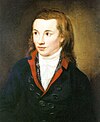
“Novalis was cried down as an enthusiastic mystic by the prosaic, and Spinoza as godless by the literalists. It was incumbent upon me to protest against this view of Spinoza, seeing I would review the whole sphere of piety. Something essential would have been wanting in the ex position of my views if I had not in some way said that the mind and heart of this great man seemed deeply influenced by piety, even though it were not Christian piety. The result might have been different, had not the Christianity of that time been so distorted and obscured by dry formulas and vain subtilties that the divine form could not be expected to win the regard of a stranger. This I said in the first edition, somewhat youthfully indeed, yet so that I have found nothing now needing to be altered, for there was no reason to believe that I ascribed the Holy Spirit to Spinoza in the special Christian sense of the word.”

“The philosophy of Descartes underwent a great variety of unspeculative developments, but in Benedict Spinoza a direct successor to this philosopher may be found, and one who carried on the Cartesian principle to its furthest logical conclusions. For him soul and body, thought and Being, cease to have separate independent existence. The dualism of the Cartesian system Spinoza, as a Jew, altogether set aside. For the profound unity of his philosophy as it found expression in Europe, his manifestation of Spirit as the identity of the finite and the infinite in God, instead of God's appearing related to these as a Third — all this is an echo from Eastern lands. The Oriental theory of absolute identity was brought by Spinoza much more directly into line, firstly with the current of European thought, and then with the European and Cartesian philosophy, in which it soon found a place.”
“Spinoza is a highly systematic thinker, but still I do not think I can offer a single key for all things Spinozistic. Personally, one thing which got me excited about Spinoza is his philosophical boldness, i.e., his willingness to pursue philosophical exploration as far as he can, making very little concessions to commonly accepted beliefs and norms. In terms of content, I take his attempt to conceive of God, nature, and ethics in a manner that is free from anthropomorphism and anthropocentric illusions as one of the deepest elements of his philosophical thinking. A closely related issue is his advocacy of actual infinity (an issue that has been mostly neglected in recent literature). Finally, the very attempt to do philosophy systematically (rather than rely on fragmented and disassociated intuitions) and transparently (laying bare the logical structure of his arguments) commands my respect, indeed admiration.”
“The appearance of Spinoza, however, fundamentally changes the entire religious picture in the West. He emancipated philosophy from theology and taught man to think in metaphysical and universalistic rather than in theological and individualistic terms. He distinguished between the functions of recognition and piety. The aim of philosophy he says is truth, the recognition of things in their connection with one another and with God. The aim of theology is piety obedience to God's laws. Hence, there is but little difference between the Old and the New Testaments, for both, like all theology, have a content apart from recognition. They teach certain doctrines, such as a personal God, His attributes, His relationship to the world, His moral ends, the aim of creation, etc. As practical piety, even the theological content of the Bible is acceptable, but as theoretical philosophy or as objective truth it must be rejected.”

“To express myself briefly, Goethe was the Spinoza of poetry. The whole of Goethe's poetry is filled with the same spirit that is wafted toward us from the writings of Spinoza. There is no doubt whatsoever that Goethe paid undivided allegiance to Spinoza's doctrine. At any rate, he occupied himself with it throughout his entire life; in the first part of his memoirs as well as in the last volume, recently published, he frankly acknowledged this. I don't remember now where I read that Herder once exploded peevishly at the constant preoccupation with Spinoza, "If Goethe would only for once pick up some other Latin book than Spinoza!" But this applies not only to Goethe; quite a number of his friends, who later became more or less well-known as poets, paid homage to pantheism in their youth, and this doctrine flourished actively in German art before it attained supremacy among us as a philosophic theory.”
“Hegel turned fully to Spinoza only in his early Jena years during his collaboration with Schelling, who had been especially inspired by Spinoza, and who, even during his Fichtean phase, declared himself to be a Spinozist. But Hegel's turning toward Spinozism was not simply the result of Schelling's influence. It fitted hand-in-glove with his own intention to find some rational foundation for his organic vision. After all, there were some deep affinities between Spinoza's doctrines and Hegel's mystical pantheism; Hegel could only have admired Spinoza's monism, his immanent religion, and his intellectual love of God. It was indeed Spinoza who had first attempted to find a rational foundation and technical vocabulary for such doctrines. It is no accident, then, that we find Hegel's first metaphysical writings in the Jena years replete with Spinozist vocabulary and full of sympathetic references to Spinoza.”
“Spinoza did not envision secular Judaism. To be a secular or assimilated Jew is, in his view, nonsense. It is to be a nonsectarian sectarian. For him, Judaism without an observance of its textually and historically defined tenets, laws, and ceremonies would be a masquerade. [...] Of course, Spinoza had great contempt for traditional sectarian religions, and Judaism in particular. And he did argue that Jewish law is no longer binding on contemporary Jews. Perhaps in this sense he unwittingly opened the door for a secular or even Reform Judaism. But he also had a very strict understanding of what was to count as Judaism. Spinoza may have been a religious reformer, but what he envisioned was not reform within Judaism. Rather, what he had in mind was a universal rational religion that eschewed meaningless, superstitious rituals and focused instead on a few simple moral principles, above all, to love one's neighbor as oneself.”
“Spinoza is unsuitable as a patron philosopher of any contemporary movement, including the environmental and ecological. His system and his thinking in general are overwhelmingly complicated, and his terminology in central areas utterly foreign to contemporary jargons. But this does not exclude the possibility that he is an inexhaustible source of inspiration for those who look for a philosophy explicating deep attitudes and assumptions within certain parts of the international ecological and environmental movement. Admirers of Spinoza quite naturally tend to interpret him so as to minimize the conflicts between his and their thought. The result is a variety of representations of Spinoza. But if the intention is to provide more or less free reconstructions, well and good. And this is what is relevant, as I see it, in relation to what is sometimes called the "deep ecological movement" and the "green philosophy and ecopolitics."”
“My opinion concerning God differs widely from that which is ordinarily defended by modern Christians. For I hold that God is of all things the cause immanent, as the phrase is, not transient. I say that all things are in God and move in God, thus agreeing with Paul, and, perhaps, with all the ancient philosophers, though the phraseology may be different ; I will even venture to affirm that I agree with all the ancient Hebrews, in so far as one may judge from their traditions, though these are in many ways corrupted. The supposition of some, that I endeavour to prove in the Tractatus Theologico-Politicus the unity of God and Nature (meaning by the latter a certain mass or corporeal matter), is wholly erroneous.
As regards miracles, I am of opinion that the revelation of God can only be established by the wisdom of the doctrine, not by miracles, or in other words by ignorance.”
As regards miracles, I am of opinion that the revelation of God can only be established by the wisdom of the doctrine, not by miracles, or in other words by ignorance.”
“...Spinoza was the philosopher who knew full well that immanence was only immanent to itself and therefore that it was a plane traversed by movements of the infinite, filled with intensive ordinates. He is therefore the prince of philosophers. Perhaps he is the only philosopher never to have compromised with transcendence and to have hunted it down everywhere. In the last book of the Ethics he produced the movement of the infinite and gave infinite speeds to thought in the third kind of knowledge. There he attains incredible speeds, with such lightning compressions that one can only speak of music, of tornadoes, of wind and strings. He discovered that freedom exists only within immanence. He fulfilled philosophy because he satisfied its prephilosophical presupposition. [...] Spinoza is the vertigo of immanence from which so many philosophers try in vain to escape. Will we ever be mature enough for a Spinozist inspiration?”
““He who loves God,” Spinoza says, “cannot strive that God should love him in return.” Goethe, in a passage of characteristic sentimentality, misquotes this proposition in singling it out for special praise; he quotes it as, “Who loves God truly must not expect God to love him in return,” and regards it as an example of “Entsagen sollst du, sollst entsagen.” If Goethe had understood Spinoza's religion, he would not have made this mistake. Spinoza, here and elsewhere, is not inculcating resignation; he himself loved what he judged to be best, and lived, so far as one can discover, without effort in the way which he held to be conformable to reason. There seems to have been in him, what his philosophy was intended to produce in others, an absence of bad desires; hence, his nature is harmonious and gentle, free from the cruelty of asceticism, or the monkishness of the cloister, or the moralistic priggery of Goethe's praises.”
“...So when you play five notes, if each note had a big ego it would want to be louder than the note before. And therefore I learned from this very simple fact, that no matter how great an individual you are, music teaches you that the creativity only work in groups, and the expression of the group is very often larger than the sum of the parts. And you can draw whatever conclusions you want from this, but I think that this is a not unimportant factor. And maybe in a strange way I've found some answers to all this, not in music but in philosophy, especially from reading regularly and for many years the Ethics of Spinoza. Spinoza was a religious scholar, a political architect, a philosopher, who aspired to geometric demonstration of the universe and the human being in it, and he was a biological thinker who advanced the science of emotion. And there lies of course one of the great difficulties of making music, the science of emotion.”
“...For natural science he [Otto von Bismarck] shewed little interest, and indeed at that time it scarcely could be reckoned among the ordinary subjects of education; philosophy he pursued rather as a man than as a student, and we are not surprised to find that it was Spinoza rather than Kant or Fichte or Hegel to whom he devoted most attention, for he cared more for principles of belief and the conduct of life than the analysis of the intellect.
...He [Otto von Bismarck] astonished his friends by the amount and variety of his reading; it was at this time that he studied Spinoza. It is said that he had among his friends the reputation of being a liberal; it is probable enough that he said and did many things which they did not understand; and anything they did not understand would be attributed to liberalism by the country gentlemen of Pomerania; partly no doubt it was due to the fact that in 1843 he came back from Paris wearing a beard.”
...He [Otto von Bismarck] astonished his friends by the amount and variety of his reading; it was at this time that he studied Spinoza. It is said that he had among his friends the reputation of being a liberal; it is probable enough that he said and did many things which they did not understand; and anything they did not understand would be attributed to liberalism by the country gentlemen of Pomerania; partly no doubt it was due to the fact that in 1843 he came back from Paris wearing a beard.”
“It is true that God is necessity, or, as we may also put it, that he is the absolute Thing: he is however no less the absolute Person. That he is the absolute Person however is a point which the philosophy of Spinoza never reached: and on that side it falls short of the true notion of God which forms the content of religious consciousness in Christianity. Spinoza was by descent a Jew; and it is upon the whole the Oriental way of seeing things, according to which the nature of the finite world seems frail and transient, that has found its intellectual expression in his system. This Oriental view of the unity of substance certainly gives the basis for all real further development. Still it is not the final idea. It is marked by the absence of the principle of the Western world, the principle of individuality, which first appeared under a philosophic shape, contemporaneously with Spinoza, in the Monadology of Leibnitz.”
“Baruch Spinoza, the 17th-century Dutch thinker, may be among the more enigmatic (and mythologized) philosophers in Western thought, but he also remains one of the most relevant, to his time and to ours. He was an eloquent proponent of a secular, democratic society, and was the strongest advocate for freedom and tolerance in the early modern period. The ultimate goal of his “Theological-Political Treatise” — published anonymously to great alarm in 1670, when it was called by one of its many critics “a book forged in hell by the devil himself”— is enshrined both in the book's subtitle and in the argument of its final chapter: to show that the “freedom of philosophizing” not only can be granted “without detriment to public peace, to piety, and to the right of the sovereign, but also that it must be granted if these are to be preserved.””

“Spinoza formulated the problem of the socially patterned defect very clearly. He says: "Many people are seized by one and the same affect with great consistency. All his senses are so strongly affected by one object that he believes this object to be present even if it is not. If this happens while the person is awake, the person is believed to be insane. … But if the greedy person thinks only of money and possessions, the ambitious one only of fame, one does not think of them as being insane, but only as annoying ; generally one has contempt for them. But factually greediness, ambition, and so forth are forms of insanity, although usually one does not think of them as 'illness.'" These words were written a few hundred years ago ; they still hold true, although the defects have been culturally patterned to such an extent now that they are not even generally thought any more to be annoying or contemptible.”
“As I leave the churchyard, my thoughts turn to the bizarre significance of this burial site. Why is Spinoza, who was born a Jew, buried next to this powerful Protestant church? The answer is as complicated as anything else having to do with Spinoza. He is buried here, perhaps, because having been expelled by his fellow Jews he could be seen as Christian by default; he certainly could not have been buried in the Jewish cemetery at Ouderkerk. But he is not really here, perhaps because he never became a proper Christian, Protestant or Catholic, and in the eyes of many he was an atheist. And how fitting it all is. Spinoza's God was neither Jewish nor Christian. Spinoza's God was everywhere, could not be spoken to, did not respond if prayed to, was very much in every particle of the universe, without beginning and without end. Buried and unburied, Jewish and not. Portugese but not really, Dutch but not quite, Spinoza belonged nowhere and everywhere.”
“That was in 1656, and Spinoza died in 1677, at the early age of forty-four. Glory had not found him out. His short life—a life of unbroken diligence, kindliness, and purity—was passed in seclusion. But in spite of that seclusion, in spite of the shortness of his career, in spite of the hostility of the dispensers of renown in the 18th century,—of Voltaire's disparagement and Bayle's detraction,—in spite of the repellent form which he has given to his principal work, in spite of the exterior semblance of a rigid dogmatism alien to the most essential tendencies of modern philosophy, in spite, finally, of the immense weight of disfavour cast upon him by the long-repeated charge of atheism, Spinoza's name has silently risen in importance, the man and his work have attracted a steadily increasing notice, and bid fair to become soon what they deserve to become,—in the history of modern philosophy the central point of interest.”
“...Spinoza became aware of this in a way that made him show his true colours (to the annoyance of his critics, who systematically attempt to misunderstand him on this point, Kuno Fischer, for example), when, one afternoon, rummaging around among who knows what memories, he turned his attention to the question of what actually remained for him, himself, of that famous morsus conscientiae - he who had relegated good and evil to man's imagination and angrily defended the honour of his 'free' God against the blasphemists who asserted that God operates everything sub ratione boni ('but that would mean that God is subject to fate and would really be the greatest of all absurdities' –). For Spinoza, the world had returned to that state of innocence in which it had lain before the invention of bad conscience: what had then become of morsus conscientiae?...”
“No philosopher was ever more worthy, but neither was any philosopher more maligned and hated. To grasp the reason for this it is not enough to recall the great theoretical thesis of Spinozism: a single substance having an infinity of attributes, Deus sive Natura, all "creatures" being only modes of these attributes or modifications of this substance. It is not enough to show how pantheism and atheism are combined in this thesis, which denies the existence of a moral, transcendent, creator God. We must start rather from the practical theses that made Spinozism an object of scandal. These theses imply a triple denunciation: of "consciousness," of "values," and of "sad passions." These are the three major resemblances with Nietzsche. And already in Spinoza's lifetime, they are the reasons for his being accused of materialism, immoralism, and atheism.”
“...It is the eternal meaning of the sacrifice, to which no one can resist, unless animated by that faith, so difficult to sustain, which, perhaps, one man alone has been able to formulate in a plausible way—namely, Spinoza, with his Amor intellectualis Dei. What, quite wrongly, has been thought of in Spinoza as pantheism is simply the reduction of the field of God to the universality of the signifier, which produces a serene, exceptional detachment from human desire. In so far as Spinoza says—desire is the essence of man, and in so far as he institutes this desire in the radical dependence of the universality of the divine attributes, which is possible only through the function of the signifier, in so far as he does this, he obtains that unique position by which the philosopher—and it is no accident that it is a Jew detached from his tradition who embodies it—may be confused with a transcendent love. This position is not tenable for us.”
“Affectus, quibus conflictamur, concipiunt philosophi veluti vitia, in quae homines sua culpa labuntur; quos propterea ridere, flere, carpere vel (qui sanctiores videri volunt) detestari solent. Sic ergo se rem divinam facere, et sapientiae culmen attingere credunt, quando humanam naturam, quae nullibi est, multis modis laudare et eam, quae revera est, dictis lacessere norunt. Homines namque non ut sunt, sed ut eosdem esse vellent, concipiunt; unde factum est, ut plerumque pro e t h i c a satyram scripserint, et ut nunquam p o l i t i c a m conceperint, quae possit ad usum revocari; sed quae pro chimaera haberetur, vel quae in Utopia vel in illo poëtarum aureo saeculo, ubi scilicet minime necesse erat, institui potuisset. Cum igitur omnium scientiarum, quae usum habent, tum maxime p o l i t i c e s t h e o r i a ab ipsius p r a x i discrepare creditur, et regendae reipublicae nulli minus idonei aestimantur, quam theoretici seu philosophi.”
“What interested me most in Spinoza wasn't his Substance, but the composition of finite modes. I consider this one of the most original aspects of my book. That is: the hope of making substance tum on finite modes, or at least of seeing in substance a plane of immanence in which finite modes operate, already appears in this book. What I needed was both (1) the expressive character of particular individuals, and (2) an immanence of being. Leibniz, in a way, goes still further than Spinoza on the first point. But on the second, Spinoza stands alone. One finds it only in him. This is why I consider myself a Spinozist, rather than a Leibnizian, although I owe a lot to Leibniz. In the book I'm writing at the moment, What is Philosophy?, I try to return to this problem of absolute immanence, and to say why Spinoza is for me the 'prince' of philosophers.”
“Instead of engaging in this rather boring academic exercise of opposing Spinoza and Levinas, what I want to accomplish is a consciously old-fashioned Hegelian reading of Spinoza - what both Spinozeans and Levinasians share is radical anti-Hegelianism. My starting hypothesis is that, in the history of modern thought, the triad of paganism-Judaism-Christianity repeats itself twice, first as Spinoza-Kant-Hegel, then as Deleuze-Derrida-Lacan. Deleuze deploys the One-Substance as the indifferent medium of multitude; Derrida inverts it into the radical Otherness which differs from itself; finally, in a kind of "negation of negation," Lacan brings back the cut, the gap, into the One itself. The point is not so much to play Spinoza and Kant against each other, thus securing the triumph of Hegel; it is rather to present the three philosophical positions in all their unheard-of radicality - in a way, the triad Spinoza-Kant-Hegel does encompass the whole of philosophy.”
“He supported himself by grinding lenses, which was no lowly menial occupation, as it is often presented to have been in romanticizing versions of the philosopher's life, but was rather a craft that drew extensively from Spinoza's serious interest in the science of optics. The quality of his wares was highly valued by other scientists of his day. The important Dutch astronomer Christiaan Huygens, who discovered Saturn's rings as well as one of its four moons, preferred Spinoza's lenses to all others. "The [lenses] that the Jew of Voorburg has in his microscopes have an admirable polish," Huygens wrote to his brother in 1667. The one part of the romantic lens-grinding legend that is sadly true is that the dust from the optical polishing was unhealthy for Spinoza, whose mother and brother had both died young from tuberculosis. He himself succumbed to the disease at the age of forty-four.”
“...Spinoza hit the nail on the head with his paradoxical proposition: God is an extended, that is, material being. He found, at least for his time, the true philosophical expression for the materialistic tendency of the modern era; he legitimated and sanctioned it: God himself is a materialist. Spinoza's philosophy was religion; he himself was an amazing man. Unlike so many others, Spinoza's materialism did not stand in contradiction to the notion of a non-material and anti-materialistic God who also quite consistently imposes on man the duty to give himself up only to anti-materialistic, heavenly tendencies and concerns, for God is nothing other than the archetypal and ideal image of man; what God is and how he is, is what man ought to be or wants to be, or at least hopes to be in the future. But only where theory does not belie practice, and practice theory, is there character, truth, and religion. Spinoza is the Moses of modern free-thinkers and materialists.”
“...The Festschrift [1932] dedicated to Spinoza may be said to be a praiseworthy international achievement. Its initiators were Germans and it appeared as a Sonderausgabe of a German newspaper. Spinoza had nothing in common with the German nation. The Germans, however, were the first to manifest serious interest in him. Their first great philosopher Leibniz went to seek his advice and his counsel; they were the only ones to invite him to lecture at their university. Even though Leibniz concealed him from the world, the Germans revealed him to the world. The generation of their greatest philosophers and poets from the second half of the 18th and the first half of the 19th centuries grew up under his influence. Goethe read him together with Charlotte von Stein, and even read him together with her in Latin. To Hegel, Spinoza was "der Mittelpunkt der modernen Philosophie".”

“For many years I did not dare look into a Latin author or at anything which evoked an image of Italy. If this happened by chance, I suffered agonies. Herder often used to say mockingly that I had learned all my Latin from Spinoza, for that was the only Latin book he had ever seen me reading. He did not realize how carefully I had to guard myself against the classics, and that it was sheer anxiety which drove me to take refuge in the abstractions of Spinoza. [Original in German: Schon einige Jahre her durft' ich keinen lateinischen Autor ansehen, nichts betrachten, was mir ein Bild Italiens erneute. Geschah es zufällig, so erduldete ich die entsetzlichsten Schmerzen. Herder spottete oft über mich, daß ich all mein Latein aus dem Spinoza lerne, denn er hatte bemerkt, daß dies das einzige lateinische Buch war, das ich las; er wußte aber nicht, wie sehr ich mich vor den Alten hüten mußte, wie ich mich in jene abstrusen Allgemeinheiten nur ängstlich flüchtete.]”
“The movement of modern philosophy is back towards the position of the old Ionian philosophers, but strengthened and clarified by sound scientific ideas. If I publish my criticism on Comte, I should have to re-write it as a summary of philosophical ideas from the earliest times. The thread of philosophical development is not on the lines usually laid down for it. It goes from Democritus and the rest to the Epicureans, and then the Stoics, who tried to reconcile it with popular theological ideas, just as was done by the Christian Fathers. In the Middle Ages it was entirely lost under the theological theories of the time; but reappeared with Spinoza, who, however, muddled it up with a lot of metaphysics which made him almost unintelligible.”
“When you say Spinoza, however, besides being too flattering, the comparison is not biographically so true. My Spinozism is in the Life of Reason, less obviously, perhaps, yet more dominantly, than in Realms of Being. These, as you know, are not at all like Spinoza's attributes. They are not aspects or forms of the same reality, absolutely parallel and coextensive. My realms are layers: more as in Plotinus; and my moral or “spiritual” philosophy is again less Spinozistic than in the humanistic period. Spinoza's moral sentiments were plebeian, Dutch, and Jewish: perfectly happy in his corner, polishing his lenses, and saying, Great is Allah. No art, no high politics, no sympathy with greatness, no understanding of courage or of despair.”

“Spinoza's views on God, religion and society have lost none of their relevance. At a time when Americans seem willing to bargain away their freedoms for security, when politicians talk of banning people of a certain faith from our shores, and when religious zealotry exercises greater influence on matters of law and public policy, Spinoza's philosophy – especially his defence of democracy, liberty, secularity and toleration – has never been more timely. In his distress over the deteriorating political situation in the Dutch Republic, and despite the personal danger he faced, Spinoza did not hesitate to boldly defend the radical Enlightenment values that he, along with many of his compatriots, held dear. In Spinoza we can find inspiration for resistance to oppressive authority and a role model for intellectual opposition to those who, through the encouragement of irrational beliefs and the maintenance of ignorance, try to get citizens to act contrary to their own best interests.”
“...[H]e was one of the most illustrious advocates of religious toleration; when his landlords, members of a peaceful and tolerant Mennonite community, asked him whether he thought their religion was good, he said yes, it was good and they should stick to it. For although in his writings he urged us to strive towards a mystical sort of union with God, towards intellectual love and philosophical reconciliation with whatever fate should bring, he knew that his advice was meant for only a very select few, and that the rest, the common folk who are incapable of subordinating their lives to reason, would still need advice about how to lead a good life – the kind of advice that religion provides. This was fine as long as the religion was one that preached peace and unity, and did not breed fanaticism, hatred or despotic government. In the whole history of philosophy there is no figure as lonely as Spinoza.”
“...The materialist is primarily an observer; and he will probably be such in ethics also; that is, he will have no ethics, except the emotion produced upon him by the march of the world. If he is an esprit fort and really disinterested, he will love life; as we all love perfect vitality, or what strikes us as such, in gulls and porpoises. This, I think, is the ethical sentiment psychologically consonant with a vigorous materialism: sympathy with the movement of things, interest in the rising wave, delight at the foam it bursts into, before it sinks again. Nature does not distinguish the better from the worse, but the lover of nature does. He calls better what, being analogous to his own life, enhances his vitality and probably possesses some vitality of its own. This is the ethical feeling of Spinoza, the greatest of modern naturalists in philosophy; and we shall see how Lucretius, in spite of his fidelity to the ascetic Epicurus, is carried by his poetic ecstasy in the same direction.”
“Spinoza has long intrigued me, and for years I've wanted to write about this valiant seventeenth-century thinker, so alone in the world—without a family, without a community—who authored books that truly changed the world. He anticipated secularization, the liberal democratic political state, and the rise of natural science, and he paved the way for the Enlightenment. The fact that he was excommunicated by the Jews at the age of twenty-four and censored for the rest of his life by the Christians had always fascinated me, perhaps because of my own iconoclastic proclivities. And this strange sense of kinship with Spinoza was strengthened by the knowledge that Einstein, one of my first heroes, was a Spinozist. When Einstein spoke of God, he spoke of Spinoza's God—a God entirely equivalent to nature, a God that includes all substance, and a God “that doesn't play dice with the universe”—by which he means that everything that happens, without exception, follows the orderly laws of nature.”
“...But no matter how enamoured one may be with Postmodernist instability of meanings and signification slippage, absolutely nothing can make spinozisme as employed in Diderot's Promenade and the Encyclopédie, or in High Enlightenment literature, compatible with Revelation, divine providence, religious authority, theism, mysticism, fideism, eclecticism, moral relativism, Aristotelian substances, Platonic ideals, Prisca theologia (natural religion), Cartesian dualism, Lockean dualism based on supra rationem, double truth, fixity of species, Epicurean swerves, La Mettrie's materialism, or skepticism. ‘Spinozists’ a term already in very wide use, in Britain, Germany, France, and Italy, as well as Holland well before 1700, and ‘spinozisme’ as used in eighteenth-century France, can never mean, or ever be blended with, any of these trends. It may not always be a rigorous philosophical-theological category.”

“And if I place so much emphasis on Spinoza, it is indeed not from any subjective preference (I have expressly omitted the objects of such a preference) or to establish him as master of a new autocracy, but because I could demonstrate by this example in a most striking and illuminating way my ideas about the value and dignity of mysticism and its relation to poetry. Because of his objectivity in this respect, I chose him as a representative of all the others. [Original in German: Und wenn ich einen so großen Akzent auf den Spinosa lege, so geschieht es wahrlich nicht aus einer subjektiven Vorliebe (deren Gegenstände ich vielmehr ausdrücklich entfernt gehalten habe) oder um ihn als Meister einer neuen Alleinherrschaft zu erheben; sondern weil ich an diesem Beispiel am auffallendsten und einleuchtendsten meine Gedanken vom Wert und der Würde der Mystik und ihrem Verhältnis zur Poesie zeigen konnte. Ich wählte ihn wegen seiner Objektivität in dieser Rücksicht als Repräsentanten aller übrigen.]”
“The latter [Descartes] had sharply divided nature into mind and matter, i.e., thinking and extended substance, and had also placed God and the world in complete opposition to each other; Spinoza also, so long as he was a Cartesian, taught all that in his “Cogitatis Metaphysicis,” c. 12, i. I., 1665. Only in his later years did he see the fundamental falseness of that double dualism; and accordingly his own philosophy principally consists of the indirect abolition of these two antitheses. Yet partly to avoid injuring his teacher, partly in order to be less offensive, he gave it a positive appearance by means of a strictly dogmatic form, although its content is chiefly negative. His identification of the world with God has also this negative significance alone. For to call the world God is not to explain it: it remains a riddle under the one name as under the other. But these two negative truths had value for their age, as for every age in which there still are conscious or unconscious Cartesians.”
“Spinoza, when confronting political themes (and politics is one of the fundamental axes of his thought), founds a nonmystified form of democracy. In other words, he poses the problem of democracy on the terrain of materialism and therefore as a critique of every juridical mystification of the State. The materialist foundation of democratic constitutionalism in Spinoza is posed within the problematic of production. Spinozian thought squeezes the constitution-production relationship into a unitary nexus; it is not possible to have a correct conception of politics without weaving together these two terms from the very beginning. It is impracticable and despicable to speak of politics outside of this nexus: We know this well. However, Spinoza has too often been thrown into that mixed-up "democratic" soup of normative Hobbesian transcendentalism, Rousseauian general will, and Hegelian Aufhebung — functioning, in effect, to fortify the separation between production and constitution, between society and the State.”

“So I resolved to write a novel about his inner life. That was where my personal expertise might help in telling Spinoza's story. After all, he was a human being and therefore must have struggled with the same basic human conflicts that troubled me and the many patients I've worked with over the decades. He must have had a strong emotional response to being excommunicated, at the age of twenty-four, by the Jewish community in Amsterdam—an irreversible edict that ordered every Jew, including his own family, to shun him forever. No Jew would ever again speak to him, have commerce with him, read his words, or come within fifteen feet of his physical presence. And of course no one lives without an inner life of fantasies, dreams, passions, and a yearning for love. About a fourth of Spinoza's major work, Ethics, is devoted to “overcoming the bondage of the passions.” As a psychiatrist, I felt convinced that he could not have written this section unless he had experienced a conscious struggle with his own passions.”

“For Spinoza, philosophy originates in the very personal... feeling of emptiness that in the philosophical tradition has earned the distinguished name of contemptu mundi, the contempt for worldly things, or, better, vanitas. ...Spinoza says that... success in life is just a postponement of failure; ...pleasure is just a fleeting respite from pain; and... the objects of our striving are vain illusions. ...
The feeling of vanitas Spinoza describes is... a dire encounter with the prospect of descent into absolute nothingness, a life without significance coming to a meaningless end. ...The experience Spinoza records... establishes... the moment of extreme doubt , fear, and uncertainty that precedes the dawn of revelation. ...the journey ...is one trodden by poets, philosophers, and theologians too numerous to mention, who for millennia have recorded this feeling that life is a useless passion, a wheel of ceaseless striving, a tale told by an idiot, full of sound and fury, signifying nothing, and so on.”
The feeling of vanitas Spinoza describes is... a dire encounter with the prospect of descent into absolute nothingness, a life without significance coming to a meaningless end. ...The experience Spinoza records... establishes... the moment of extreme doubt , fear, and uncertainty that precedes the dawn of revelation. ...the journey ...is one trodden by poets, philosophers, and theologians too numerous to mention, who for millennia have recorded this feeling that life is a useless passion, a wheel of ceaseless striving, a tale told by an idiot, full of sound and fury, signifying nothing, and so on.”
“Spinoza was a Jew, It is a certified fact that he was born and educated as a Jew. But should we mention the names of other men, perhaps of equal rank with Spinoza, who were likewise bom and educated as Jews, and whom scarcely any Jew would dare to remember proudly and gratefully as a Jew? We need not mention these names, and can indeed regard the proposition as proven, that the Jewish origin and education of a great man, taken by themselves, do not give us the right to claim his greatness for Judaism. Therefore, if one disregards the fact that Spinoza was born and educated as a Jew {a fact from which perhaps not much can be concluded), and if in addition one is not satisfied with vague speculations on Spinoza's Jewish cast of mind; if therefore one wants to know clearly and distinctly where Judaism is lodged in Spinoza's thought, that is, which of Spinoza's decisive ideas bear a peculiarly Jewish imprint — then one will turn with deserved trust to those scholars who have endeavored to determine the Jewish sources of Spinoza's doctrine.”
“...Kant's famous Categorical Imperative smacked of the Prussian military drill, and it was felt to be too prosaic and sober. Therefore, many of the so-called Kantians, particularly those with deep religious interests, turned from their master to acclaim Spinoza. Solomon Maimon, who destroyed the basis of Kant's metaphysics thereby, paved the way for a critical examination of his ethics. Professor Paulus of Jena University, himself a Kantian, became the first translator and editor of Spinoza's works in German. He thereby became instrumental in furthering the cause of Spinozism in Germany. Many other eminent Kantian theologians of the time, particularly the more learned, became active in spreading Spinoza's gospel. So completely did they come under his spell that they considered it their duty not only to defend Spinoza against accusations of atheism but to represent him as a true theist.”
“...Yes, you must read Spinoza. Those who accuse him of atheism are asses. Goethe said, 'When I am upset or troubled I reread the Ethics.' Perhaps like Goethe you will find calm in the reading of this great book. Ten years ago I lost the friend I had loved more than any other, Alfred Le Poittevin. Fatally ill, he spent his last nights reading Spinoza. [Original in French: A propos de Spinoza (un fort grand homme, celui-là), tâchez de vous procurer sa biographie par Boulainvilliers. Elle est dans l'édition latine de Leipsick. Emile Saisset a traduit, je crois, l'Éthique. Il faut lire cela. L'article de Mme Coignet, dans la Revue de Paris était bien insuffisant. Oui, il faut lire Spinoza. Les gens qui l'accusent d'athéisme sont des ânes. Goethe disait: « Quand je me sens troublé, je relis l'Éthique ». Il vous arrivera peut-être, comme à Goethe, d'être calmée par cette grande lecture. J'ai perdu, il y a dix ans, l'homme que j'ai le plus aimé au monde, Alfred Le Poittevin. Dans sa maladie dernière, il passait ses nuits à lire Spinoza.]”
“I read Spinoza's Ethics for the first time when I was thirteen years old. Of course at school we studied the Bible – which for me is the ultimate philosophical work. However, reading Spinoza opened up a new dimension for me, which is the reason for my continuing dedication to his works. Spinoza's simple principle 'man thinks' has become an existential mindset for me; my copy of his Ethics has become dog-eared and torn. For years I took it with me on my travels and in hotel rooms or intervals in concerts became absorbed by many of its principles. Spinoza's Ethics is the best training ground for the intellect, above all because Spinoza teaches the radical freedom of thought more completely than any other philosopher. This Spinozan brand of freedom is not a release from discipline into arbitrariness of thought, but an active process. The more one is able to determine one's own thoughts – in fact, causing one's own thoughts, thereby creating one's own experience of reality – the more it is possible to become self-determined, to be truly free.”
“What Spinoza regards as ‘true religion’ and ‘true piety’ requires no belief in any historical events, supernatural incidents or metaphysical doctrines, and it prescribes no devotional rites. It does not demand accepting any particular theology of God's nature or philosophical claims about the cosmos and its origins. The divine law directs us only on how to behave with justice and charity toward other human beings. ‘[We are] to uphold justice, help the helpless, do no murder, covet no man's goods, and so on’. All the other rituals or ceremonies of the Bible's commandments are empty practices that ‘do not contribute to blessedness and virtue’. True religion is nothing more than moral behaviour. It is not what you believe, but what you do that matters. Writing to the Englishman and secretary to the Royal Society Henry Oldenburg in 1675, Spinoza says that ‘the chief distinction I make between religion and superstition is that the latter is founded on ignorance, the former on wisdom’.”
“Although proclaiming Spinoza the chief and most prominent ‘representative’ of the underground atheistic tradition supposedly striving to undermine the main structures of authority underpinning Christendom has an astoundingly long history, from 1673 when we first encounter this notion that Spinozism was a forbidden philosophy being promoted, first in Holland, by an underground sect of disciples, called ‘spinozistes’, continuing down to the 1820s, roughly lasting a century and a half, modern historians took very little interest in this striking phenomenon until the question became tied to the (since 2001) highly divisive issue of ‘Radical Enlightenment’. The remarkable historiographical and philosophical controversy over the role of Spinoza and Spinozism in the Western Enlightenment generally sparked by the debate over ‘Radical Enlightenment’ since 2001, instead of receding after some years, as one might expect from the normal course of historiographical controversies, has been escalating for more than a decade now especially since 2009, in a dramatic fashion.”
“A definition, if it is to be called perfect, must explain the inmost essence of a thing, and must take care not to substitute for this any of its properties. In order to illustrate my meaning, without taking an example which would seem to show a desire to expose other people's errors, I will choose the case of something abstract, the definition of which is of little moment. Such is a circle. If a circle be defined as a figure, such that all straight lines drawn from the center to the circumference are equal, every one can see that such a definition does not in the least explain the essence of a circle, but solely one of its properties. Though, as I have said, this is of no importance in the case of figures and other abstractions, it is of great importance in the case of physical beings and realities, for the properties of things are not understood so long as their essences are unknown. If the latter be passed over, there is necessarily a perversion of the succession of ideas which should reflect the succession of nature, and we go far astray from our object.”

“Writers, poets, musicians, filmmakers – painters too, even chance reader – may find that they are Spinozists; indeed, such a thing is more likely for them than for professional philosophers. It is a matter of one's practical conception of the “plan”. It is not that one may be a Spinozist without knowing it. Rather, there is a strange privilege that Spinoza enjoys something that seems to have been accomplished by him and no one else. He is a philosopher who commands an extraordinary conceptual apparatus, one that is highly developed, systematic, and scholarly; and yet he is the quintessential object of an immediate, unprepared encounter, such that a nonphilosopher, or even someone without any formal education, can receive a sudden illumination from him, a “flash”. Then it is as if one discovers that one is a Spinozist; one arrives in the middle of Spinoza, one is sucked up, drawn into the system or the composition. (…) What is unique about Spinoza is that he, the most philosophic of philosophers (…) teaches the philosopher how to become a non-philosopher.”
“Beauty, my dear Sir, is not so much a quality of the object beheld, as an effect in him who beholds it. If our sight were longer or shorter, or if our constitution were different, what now appears beautiful to us would seem misshapen, and what we now think misshapen we should regard as beautiful. The most beautiful hand seen through the microscope will appear horrible. Some things are beautiful at a distance, but ugly near; thus things regarded in themselves, and in relation to God, are neither ugly nor beautiful. Therefore, he who says that God has created the world, so that it might be beautiful, is bound to adopt one of the two alternatives, either that God created the world for the sake of men's pleasure and eyesight, or else that He created men's pleasure and eyesight for the sake of the world. Now, whether we adopt the former or the latter of these views, how God could have furthered His object by the creation of ghosts, I cannot see. Perfection and imperfection are names which do not differ much from the names beauty and ugliness.”
“...The influence of Spinozism attained its height in Germany when it overwhelmed Herder, Goethe, and Schiller, the mental giants of Weimar. Weimar was the cradle of modern German culture. It is to the new Germany what Athens was to ancient Hellas, or Jerusalem to ancient Judea, a sea of light and the center of creative genius. From Weimar emanated all the great cultural traditions of the Fatherland, which secured for Germany her proud position in the realm of European culture. Over this spirit of Weimar hovered the genius of Baruch Spinoza. It was here that Spinozism became a dominating influence in the life of the new German culture. But in this process of expansion it was transformed into something different from the original doctrine of the philosopher. The creative geniuses of Weimar could not possibly become reconciled to the mechanistic world-picture from which personality was banished. To Goethe personality was the highest gift of the Gods to man and enjoyed an even higher place in his affections than did Spinozism. The same can be said of many other poets who later embraced some form of Spinozism.”

“The (respective) position of Judaism toward Spinoza coincides with the (respective) position of Europe toward him. However, it does not completely coincide with it. Spinoza played a special role in the Judaism of the past century. When what mattered was the justification of the breakup of the Jewish tradition and the entry of the Jews into modern Europe, perhaps no better, but certainly no more convenient, reference offered itself than the appeal to Spinoza. Who was more suitable for undertaking the justification of modern Judaism before the tribunal of the Jewish tradition, on the one hand, and before the tribunal of modern Europe, on the other, than Spinoza, who, as was almost universally recognized, was a classical exponent of this Europe and who, as one did not grow weary of at least asserting, had thought his thoughts in the spirit of Judaism and by means of Judaism? It is clear that, at a time when modern Europe has been shaken to its foundations, one can no longer justify oneself before this Europe for the sake of Judaism, nor before Judaism for the sake of this Europe, supposing one still wants to do so.”
“But of what concern is Spinoza's last will to us if what is meant by this is his explicit will? Even Spinoza was bound by the historical conditions under which he lived and thought. In his age, he had to come into conflict with Judaism, a conflict in which both sides were right: the Jewish community that had to defend the conditions of Jewish existence in the Diaspora, or as others say, the Jewish "form"; and Spinoza, who was called upon to loosen the rigidity of the content of this "form," that is, the "subterranean Judaism," and thus to initiate the rebirth of the Jewish nation. Several centuries were needed to make Spinoza's critique of the Law sufficiently flexible so that the Law could be acknowledged without believing in its revealed character. At the end of this development stood a generation that was free-spirited enough to be able to accept Spinoza's critique of the Law, and that was even freer than he inasmuch as it had moved beyond the crude alternative: divine or human? revealed or conceived by men? When properly interpreted, not only does Spinoza not stand outside Judaism, he belongs to it as one of its greatest teachers.”
“Both men [Yeshu/Jesus and Spinoza] were exceptionally bright, and men of spirit. They could have become major spiritual forces in Judaism had they been granted the space to do so. Perhaps they would not have gone to the extreme. Even the greatest men are often pushed over the edge, becoming more extreme in their views because of their own unpleasant experiences with their communities and the authorities. No philosopher lives in an intellectual vacuum. No doubt this does not free Yeshu and Spinoza of their responsibilities. They should have realized that Judaism was greater than what the rabbis stood for. They should have used their exceptional gifts in the service of Judaism even when they were opposed by the rabbis of their day. It may have enriched Judaism in ways we will never know. The fascination they caused throughout the world may quite well have been different and more mature. It may have prevented the worship of a man as a god or false messiah; it might have avoided the evolving of a philosopher who is so much identified with anti-Jewish sentiment. They might even have become great teachers in Israel and inspired all of mankind.”
“In the reproach that Hegel will make to Spinoza, that he ignored the negative and its power, lies the glory and innocence of Spinoza, his own discovery. In a world consumed by the negative, he has enough confidence in life, in the power of life, to challenge death, the murderous appetite of men, the rules of good and evil, of the just and the unjust. Excommunication, war, tyranny, reaction, men who fight for their enslavement as if it were their freedom — this forms the world in which Spinoza lives. The assassination of the De Witt brothers is exemplary for him. Ultimi barbarorum. In his view, all the ways of humiliating and breaking life , all the forms of the negative have two sources, one turned outward and the other inward, resentment and bad conscience, hatred and guilt. "The two archenemies of the human race, Hatred and Remorse." He denounces these sources again and again as being linked to man's consciousness, as being inexhaustible until there is a new consciousness, a new vision, a new appetite for living. Spinoza feels, experiences, that he is eternal.”
“The significant writers to whom Spinoza has significantly mattered range across genres and sensibilities, and their reasons for considering him artistically relevant vary as widely as their methods of making him so. Some writers declared themselves devotees of his thought and were strengthened in their art by their interpretations of his views. Others were deeply bothered by some aspect of his system—his determinism, for example, or his insistence on the supremacy of reason over the passions—and made art out of their resistance. George Eliot (1819–1890), arguably the most philosophically inspired of the great nineteenth-century British novelists, falls into the first category. She decided to write fiction seven months after completing her translation of the Ethics, the first in English, and her view of her writing as a “set of experiments” is imprinted with certain Spinozist positions. The robust determinism to which she subjects her characters, as well as the conception of freedom and virtue that moves her plots along to their ethically resounding dénouements, bears the impressions of her close relationship with Spinoza's works.”

“It may be noted in passing that in spite of Spinoza's vast influence on modern political thought and action, his name is not connected with any emancipation movement, or with any revolutionary tendency. The French Revolution ignored him. While this may be partly due to Bayle's misrepresentation of Spinoza's doctrine and also to the fact that during the first half of the eighteenth century Spinoza was more the target of theologians than a magnet to philosophers and statesmen, one must admit that even without those incidents Spinoza could not have had any appreciable influence on the emancipation movement. The term "emancipation" involves the term of freedom, and implies a vitalistic process instead of a mechanical course. Every forward movement in history presumes a dynamic personality and progress-consciousness. None of these conceptions had any meaning to Spinoza. [...] Neither the French Revolution nor any of its great figures such as Voltaire, Diderot, Rousseau, Condillac, or Holbach were influenced by him. Although neither his general works nor his political philosophy appealed to them, many of them were more or less familiar with his teachings.”

“Indeed, I scarcely comprehend how one can be a poet without revering and loving Spinoza and becoming completely his. Your own fantasy is rich enough for the invention of the particular: nothing is better suited to entice your fantasy, to stimulate and nourish it, than the poetic creations of other artists. But in Spinoza you find the beginning and the end of all fantasy, the universal ground on which your particularity rests — and you should welcome precisely this separation of that which is originary and eternal in fantasy from everything particular and specific. [Original in German: In der Tat, ich begreife kaum, wie man ein Dichter sein kann, ohne den Spinosa zu verehren, zu lieben und ganz der seinige zu werden. In Erfindung des Einzelnen ist Eure eigne Fantasie reich genug; sie anzuregen, zur Tätigkeit zu reizen und ihr Nahrung zu geben, nichts geschickter als die Dichtungen andrer Künstler. Im Spinosa aber findet Ihr den Anfang und das Ende aller Fantasie, den allgemeinen Grund und Boden, auf dem Euer Einzelnes ruht und eben diese Absonderung des Ursprünglichen, Ewigen der Fantasie von allem Einzelnen und Besondern muß Euch sehr willkommen sein.]”
“The brilliance of the solution of the problem of the relation of thinking to the world of bodies in space outside thought (i.e. outside the head of man), which Spinoza formulated in the form of the thesis that thought and extension are not two substances, but only two attributes of one and the same substance, can hardly be exaggerated. This solution immediately rejected every possible kind of interpretation and investigation of thought by the logic of spiritualist and dualist constructions, so making it possible to find a real way out both from the blind alley of the dualism of mind and body and from the specific blind alley of Hegelianism. It is not fortuitous that Spinoza’s profound idea only first found true appreciation by the dialectical materialists Marx and Engels. Even Hegel found it a hard nut to crack. In fact, on the decisive point, he returned again to the position of Descartes, to the thesis that pure thought is the active cause of all the changes occurring in the ‘thinking body of man’, i.e. in the matter of the brain and sense organs, in language, in actions and their results, including in that the instruments of labour and historical events.”
“It is unquestionably the peacefulness and calm of the Spinozist system which particularly produces the idea of its depth, and which, with hidden but irresistible charm, has attracted so many minds. The Spinozist system will also always remain in a certain sense a model. A system of freedom — but with just as great contours, with the same simplicity, as a perfect counter-image (Gegenbild) of the Spinozist system — this would really be the highest system. This is why Spinozism, despite the many attacks on it, and the many supposed refutations, has never really become something truly past, never been really overcome up to now, and no one can hope to progress to the true and the complete in philosophy who has not at least once in his life lost himself in the abyss of Spinozism. Nobody who wishes to arrive at his own firm conviction should leave unread the main work of Spinoza, his Ethics (for he presented his system under this title), and I should like to urge everyone who is seriously concerned with his education not only to study assiduously on his own, which no teacher can replace, but to be most conscientious and careful in the choice of what he reads.”

“It is sad and painful to see how even our great Neospinozists Fichte, Schelling, and Hegel are far from abiding always by it and frequently try to show that they surpass Spinoza. In their times many people have shared that opinion with them, but nowadays nobody believes it any more; Spinozism stands firm and their systems withstood against it like foam against rock. They have not refuted Spinozism, neither have they outdone it. Wherein they believed themselves to outdo Spinoza, therein they were in fact lagging far behind him, and fell down from the heights of inspiration to platitude—or, as Fichte has shown to be the case (in his Beiträgen zur Charakteristik der neueren Philosophie) with Schelling and Hegel, that it is already found in Spinoza and only insofar different as it is there much more clearly expressed, so that one does best reverting to the original if one wishes to continue the reading. To understand how it was possible after Spinoza and his clearness to represent Spinozism so unclearly as done by those Neospinozists, and Hegel among them (that amazing man who occasionally was so admirably clear), one must pay due attention to the fact that they came from Kant's school.”
“If you find the light of Scripture clearer than the light of reason (which also is given us by divine wisdom), you are doubtless right in your own conscience in making your reason yield. For my part, since I plainly confess that I do not understand the Scriptures, though I have spent many years upon them, and since I know that when once I have a firm proof I cannot by any course of thought come to doubt of it, I rest wholly upon that which my understanding commends to me, without any suspicion that I am deceived therein, or that the Scriptures, even though I do not search them, can speak against it. For one truth cannot conflict with another, as I have already clearly shown in my Appendix to the "Principles of Descartes"...But if in any case I did find error in that which I have collected from my natural understanding, I should count it good fortune, since I enjoy life, and endeavour to pass it not in weeping and sighing, but in peace, joy, and cheerfulness, and from time to time climb thereby a step higher. I know, meanwhile (which is the highest pleasure of all), that all things happen by the power and unchangeable decree of the most perfect Being.”
“...Kant is Spinoza's only adversary in the realm of occidental culture. Constantin Bruner has aptly stated that everyone must be either a Spinozist or a Kantian. The modern intellectual world, however, is overwhelmingly Spinozistic. Kant created only a school of thought, but Spinoza gave birth to a new culture and religion. Kant was long forgotten in his own fatherland until he was revived by Hermann Cohen. Spinoza has always lived in the centers of modern culture. Although at first he was maligned, calumniated, and even damned, he came to be later blessed and admired. He was always a subject of discussion in religious, philosophical, and scientific circles, because he dangled before man's eye the picture of a world without contradictions or abuses. Kant has accomplished only a special task. He examined and described the mechanism of the human mind rather than the mechanism of the world. He can be compared to Aristotle, as Spinoza can be likened to Plato. Kant is the very embodiment of idealism, while Spinoza is the representative of extreme naturalism.”

“The 21st of February of this year [1927] was the two hundred and fiftieth anniversary of the death of Benedict Spinoza. On that day a solemn celebration in Spinoza's memory was held under the auspices of the Spinoza Society (Societas Spinozana) in The Hague—the city where Spinoza spent the last years of his life where his ashes rest. At this grand meeting there were in attendance, besides official representatives of the universities and of science, official representative of the League of Nations, who demonstrated in his speech that if Spinoza were alive today he would be an ardent admirer of the League of Nations, since it strives for the realization of universal peace. A representative of the church—no celebration, as is well known, can get along there without a representative of the church—for his part, demonstrated that Spinoza's teaching does not in the least contradict the Christian religion. There were other speeches as well, but I shall not dwell on them. '''At all events, everyone was agreed that Spinoza was a great idealist, pantheist, and mystic, the founder of a new religion, etc. But at Hague no voice was raised to cry out loudly to all these fine gentlemen: 'You are impudent liars.''''”
“There may be no philosopher in history (with the possible exceptions of Socrates and Nietzsche) who has received greater attention in artistic, literary and popular culture than Bento (Benedictus) de Spinoza (1632–1677). His life, ideas and influence have been the subject of numerous novels, plays, poems, paintings, sculptures, even musical pieces and opera. His name and his visage have been used in the marketing of various items in the worlds of entertainment, leisure and consumption, from cafés to rock bands to bagels. [...] A relatively simple explanation for Spinoza's unusually high profile outside the walls of academia is at hand. Spinoza was the most radical and iconoclastic thinker of his time. His ideas on religion, politics, ethics, human psychology and metaphysics, presented in difficult and sometimes mystifying treatises, lay the groundwork for much of what we now regard as “modern.” Perhaps most enticing of all, he was excommunicated from the Amsterdam Portuguese-Jewish community as a young man for reasons that remain obscure (although not hard to fathom). Everyone loves a rebel—especially one whose values they likely share and whom, they feel, was unjustly punished by those in power.”
“Well before John Stuart Mill, Spinoza had the acuity to recognize that the unfettered freedom of expression is in the state's own best interest. In this post-9/11 world, there is a temptation to believe that “homeland security” is better secured by the suppression of certain liberties than their free exercise. This includes a tendency by justices to interpret existing laws in restrictive ways and efforts by lawmakers to create new limitations, as well as a willingness among the populace, “for the sake of peace and security,” to acquiesce in this. We seem ready not only to engage in a higher degree of self-censorship, but also to accept a loosening of legal protections against prior restraint (whether in print publications or the dissemination of information via the Internet), unwarranted surveillance, unreasonable search and seizure, and other intrusive measures. Spinoza, long ago, recognized the danger in such thinking, both for individuals and for the polity at large. He saw that there was no need to make a trade-off between political and social well-being and the freedom of expression; on the contrary, the former depends on the latter.”

“Ultimately there are but three systems of ethics, three conceptions of the ideal character and the moral life. One is that of Buddha and Jesus, which stresses the feminine virtues, considers all men to be equally precious, resists evil only by returning good, identifies virtue with love, and inclines in politics to unlimited democracy. Another is the ethic of Machiavelli and Nietzsche, which stresses the masculine virtues, accepts the inequality of men, relishes the risks of combat and conquest and rule, identifies virtue with power, and exalts an hereditary aristocracy. A third, the ethic of Socrates, Plato, and Aristotle, denies the universal applicability of either the feminine or the masculine virtues; considers that only the informed and mature mind can judge, according to diverse circumstance, when love should rule, and when power; identifies virtue, therefore, with intelligence; and advocates a varying mixture of aristocracy and democracy in government. It is the distinction of Spinoza that his ethic unconsciously reconciles these apparently hostile philosophies, weaves them into a harmonious unity, and gives us in consequence a system of morals which is the supreme achievement of modern thought.”
“Until the publication of Jacobi's Briefe über die Lehre von Spinoza in 1785, Spinoza was a notorious figure in Germany. For more than a century the academic and ecclesiastical establishment had treated him “like a dead dog” as Lessing later put it. The Ethica was published in Germany in 1677, and the Tractatus Theologico-politicus in 1670 (though it appeared anonymously, Spinoza was known to be the author). Until the middle of the eighteenth century it was de rigueur for every professor and cleric to prove his orthodoxy before taking office; and proving one's orthodoxy demanded denouncing Spinoza as a heretic. Since attacks on Spinoza became a virtual ritual, there was an abundance of defamatory and polemical tracts against him. Indeed, by 1710 so many professors and clerics had attacked Spinoza that there was a Catalogus scriptorum Anti-spinozanorum in Leipzig. And in 1759 Trinius counted, probably too modestly, 129 enemies of Spinoza in his Freydenkerlexicon. Such was Spinoza's reputation that he was often identified with Satan himself. Spinoza was seen as not only one form of atheism, but as the worst form. Thus Spinoza was dubbed the "Euclides atheisticus', the 'princips atheorum.”
“When he arrived in Amsterdam at age fifty-one [1683], Locke had published nothing. During what was clearly a transformational period, he used his time in Holland to talk with other independent thinkers who had been hounded into exile by the governments and churches of their own countries. Although Spinoza was dead, Locke certainly met many of the philosopher's admirers and enemies. He was well acquainted with nonconformist Protestant Collegiants, and his later writings would advocate complete toleration for all forms of Protestantism. At the time of Locke's death, his library contained all of Spinoza's published works as well as many political and religious disputations, in many languages, in which Spinoza's ideas were vigorously debated. Locke, like Hobbes, Adam Smith, and David Hume, is much more widely recognized than Spinoza in the United States as an influence upon the Enlightenment views of the American founders, but the more radical Spinoza's voice can be heard in both the Declaration of Independence and the Bill of Rights. It is not surprising that Thomas Jefferson's library contained Spinoza's collected works, which were more readily available at the end of the eighteenth century than in Locke's time.”
“Determinateness is negation posited as affirmative and is the proposition of Spinoza: omnis determinatio est negatio. This proposition is infinitely important; only, negation as such is formless abstraction. However, speculative philosophy must not be charged with making negation or nothing an ultimate: negation is as little an ultimate for philosophy as reality is for it truth. Of this proposition that determinateness is negation, the unity of Spinoza's substance — or that there is only one substance — is the necessary consequence. Thought and being or extension, the two attributes, namely, which Spinoza had before him, he had of necessity to posit as one in this unity; for as determinate realities they are negations whose infinity is their unity. According to Spinoza's definition, of which more subsequently, the infinity of anything is its affirmation. He grasped them therefore as attributes, that is, as not having a separate existence, a self-subsistent being of their own, but only as sublated, as moments; or rather, since substance in its own self lacks any determination whatever, they are for him not even moments, and the attributes like the modes are distinctions made by an external intellect.”
“It was not until the Twelfth Century of our era that the Pentateuch as a whole was subjected to rational scrutiny. The man who undertook the ungrateful task was a learned Spanish rabbi, Abraham ben Meir ibn Esra. He unearthed many absurdities, but... it was not until five hundred years later that anything properly describable as scientific criticism... came into being. Its earliest shining lights were the English philosopher Thomas Hobbes [with his Leviathan], and the Amsterdam Jew, Baruch Spinoza. Spinoza's "Tractatus Theologico-politicus", published in 1670, made the first really formidable onslaught upon the inspired inerrancy of the Pentateuch. It called attention to scores of transparent imbecilities … including a dozen or more palpable geographical and historical impossibilities … The answer of constituted authorities was to suppress the "Tractatus", but enough copies got out to reach the proper persons, and ever since then the Old Testament has been under searching and devastating examination.”
“We have thus begun to think of Spinoza's "radicalism" differently than the past century did. Now we see that the bold innovations of Spinoza were only consequences, rather than foundations. The fact that now gains in importance is that — compared to the significance of Descartes, Hobbes, and Leibniz — Spinoza is only of secondary significance in the history of the core sciences, that is, in the history of natural science, on the one hand, and of natural right, on the other. And the fact that Spinoza achieved more general recognition only toward the end of the eighteenth century is now also understandable: he could be accepted only at the moment when the "querelle des anciens et des modemes" within philosophy had been decided on the main point in favor of the moderns, and when what mattered was the restoration, for the purpose of correcting the modern idea, of certain positions of the premodern world that had been knocked over in the first onslaught; for Spinoza — who stood on the foundation of modern philosophy laid by Descartes and Hobbes — had carried along into the modern world, which he already found in existence, the ideal of life of the premodern (ancient-medieval) tradition, the ideal of the (theoretical) knowledge of God.”
“Some important intellectual figures of the day made their way to the modest rooms he rented in the Hague in his last years, including the up-and-coming young go-getter Gottfried Wilhelm Leibniz, who would emerge as one of the most dazzling figures in the seventeenth century's impressive lineup of genius. Leibniz spent a few days with Spinoza, conversing on metaphysics. The only written record of their extensive conversations was a slip of paper on which Leibniz had written down, for Spinoza's approval, a proof for God's existence. Leibniz was profoundly influenced by Spinoza's ideas but sought always to conceal his philosophical debt, and is on record as denouncing the philosopher. When a professor of rhetoric at the University of Utrecht, one Johan Georg Graevius, wrote to Leibniz, castigating the Tractatus Theologico-Politicus as a "most pestilential book," whose author "is said to be a Jew named Spinoza, but who was cast out of the synagogue because of his monstrous opinions," Leibniz prudently chimed in with his own diplomatic calumny: "I have read the book by Spinoza. I am saddened by the fact that such a learned man has, as it seems, sunk so low."”
“Bruma de oro, el occidente alumbra
La ventana. El asiduo manuscrito
Aguarda, ya cargado de infinito.
Alguien construye a Dios en la penumbra.
Un hombre engendra a Dios. Es un judío
De tristes ojos y piel cetrina;
Lo lleva el tiempo como lleva el río
Una hoja en el agua que declina.
No importa. El hechicero insiste y labra
A Dios con geometría delicada;
Desde su enfermedad, desde su nada,
Sigue erigiendo a Dios con la palabra.
El más pródigo amor le fue otorgado,
El amor que no espera ser amado.
(A haze of gold, the Occident lights up
The window. Now, the assiduous manuscript
Is waiting, weighed down with the infinite.
Someone is building God in a dark cup.
A man engenders God. He is a Jew
With saddened eyes and lemon-colored skin;
Time carries him the way a leaf, dropped in
A river, is borne off by waters to
Its end. No matter. The magician moved
Carves out his God with fine geometry;
From his disease, from nothing, he's begun
To construct God, using the word. No one
Is granted such prodigious love as he:
The love that has no hope of being loved.) [Translated from the Spanish by Willis Barnstone]”
La ventana. El asiduo manuscrito
Aguarda, ya cargado de infinito.
Alguien construye a Dios en la penumbra.
Un hombre engendra a Dios. Es un judío
De tristes ojos y piel cetrina;
Lo lleva el tiempo como lleva el río
Una hoja en el agua que declina.
No importa. El hechicero insiste y labra
A Dios con geometría delicada;
Desde su enfermedad, desde su nada,
Sigue erigiendo a Dios con la palabra.
El más pródigo amor le fue otorgado,
El amor que no espera ser amado.
(A haze of gold, the Occident lights up
The window. Now, the assiduous manuscript
Is waiting, weighed down with the infinite.
Someone is building God in a dark cup.
A man engenders God. He is a Jew
With saddened eyes and lemon-colored skin;
Time carries him the way a leaf, dropped in
A river, is borne off by waters to
Its end. No matter. The magician moved
Carves out his God with fine geometry;
From his disease, from nothing, he's begun
To construct God, using the word. No one
Is granted such prodigious love as he:
The love that has no hope of being loved.) [Translated from the Spanish by Willis Barnstone]”
“Benedict Spinoza teaches: there is only one substance, and that is God. This one substance is infinite; it is absolute. All finite substances originate from it, are contained in it, arise out of it, are immersed in it; they have only a relative, transient, accidental existence. The absolute substance is revealed to us both in the form of infinite thought and in the form of infinite dimension. These two, infinite thought and infinite dimension, are the two attributes of the absolute substance. We recognize only these two attributes, but it is possible that God, the absolute substance, has other attributes that we do not know. "Non dico, me deum omnino cognoscere, sed me quaedam ejus attributa, non autem omnia, neque maximam intelligere partem." Only stupidity and malice could attach to this doctrine the epithet "atheistic." No one has ever spoken more sublimely of the Deity than Spinoza. Instead of saying that he denied God, one might say that he denied man. All finite things are to him only modi of the infinite substance. All finite things are contained in God; the human mind is but a light‑ray of infinite thought; the human body is but a particle of the infinite dimension. God is the infinite cause of both, of spirits and of bodies, natura naturans.”
“Not only – and despite the academic attempt to depict him as a straightforward ‘rationalist’ – is Spinoza convincingly characterized as ananomaly in his own time and in the ‘timeless time’ of philosophy, as both Negri and Deleuze have affirmed, but the history of Spinoza's reception is also wholly unique. To take some of the more striking, if anecdotal, cases, three great German philosophers – Schelling, Nietzsche and Marx – underwent genuine transformative encounters with the thought of Spinoza. In 1795, Schelling, as a precocious philosopher trying to construct a philosophy that would provide an ‘immanentistic affirmation of the infinite’ and undermine the strictures of dogma, dashed off a letter to his then close friend Hegel, enthusiastically confessing: ‘I have become a Spinozist!’. In 1881, Nietzsche himself, in a letter to Overbeck, remarked on Spinoza: ‘I am amazed, delighted! I have a precursor, and what a precursor!’, before listing his closeness to the fundamental tenets of Spinoza's thought. Marx himself, in his formative years, once composed an entire notebook consisting of a complete rearrangement of one of Spinoza's treatises, and then quixotically entitled it ‘Tractatus Theologico-Politicus by Karl Marx’.”
“The philosophy of a purely theoretical thinker, who contemplates all things from the point of view of things in themselves, belongs in the same class as the attempt to apply abstract thought to the entire field of consciousness without meeting any byways or stops. Look at Baruch Spinoza, that true hero of thought, who studied in his own person the way in which the emotions and passions, as expressions of his internal mechanism, transform themselves for him into objects of geometrical analysis! In the meantime, until the heroism of Baruch Spinoza shall become the matter-of-fact virtue of everyday life in the higher developed humanity of the future, and until myths, poetry, metaphysics and religion shall no longer overshadow the field of consciousness, let us be content that up to now, and for the present, philosophy in its differentiated and its improved sense has served, and serves, as a critical instrument and helps science to keep its formal methods and logical processes clear; that it helps us in our lives to reduce the obstacles, which the fantastic projections of the emotions, passions, fears and hopes pile in the way of free thought; that it helps and serves, as Spinoza himself would say, to vanquish imaginationem et ignorantiam.”
“The shortcoming thus acknowledged to attach to the content turns out at the same time to be a shortcoming in respect of form. Spinoza puts substance at the head of his system, and defines it to be the unity of thought and extension, without demonstrating how he gets to this distinction, or how he traces it back to the unity of substance. The further treatment of the subject proceeds in what is called the mathematical method. Definitions and axioms are first laid down: after them comes a series of theorems, which are proved by an analytical reduction of them to these unproved postulates. Although the system of Spinoza, and that even by those who altogether reject its contents and results, is praised for the strict sequence of its method, such unqualified praise of the form is as little justified as an unqualified rejection of the content. The defect of the content is that the form is not known as immanent in it, and therefore only approaches it as an outer and subjective form. As intuitively accepted by Spinoza without a previous mediation by dialectic, Substance, as the universal negative power, is as it were a dark shapeless abyss which engulfs all definite content as radically null, and produces from itself nothing that has a positive subsistence of its own.”
“Spinoza's philosophy introduced an unprecedented theoretical revolution in the history of philosophy, probably the greatest philosophical revolution of all time, insofar as we can regard Spinoza as Marx's only direct ancestor, from the philosophical standpoint. However, this radical revolution was the object of a massive historical repression, and Spinozist philosophy suffered much the same fate as Marxist philosophy used to and still does suffer in some countries: it served as damning evidence for a charge of ‘atheism’. The insistence of the seventeenth and eighteenth century establishment's hounding of Spinoza's memory, and the distance every writer had ineluctably to take with respect to Spinoza in order to obtain the right to speak (cf. Montesquieu) are evidence both of the repulsion and the extraordinary attraction of his thought. The history of philosophy's repressed Spinozism thus unfolded as a subterranean history acting at other sites (autres lieux), in political and religious ideology (deism) and in the sciences, but not on the illuminated stage of visible philosophy. And when Spinoza re-appeared on this stage in German idealism's ‘Atheismusstreit’, and then in academic interpretations, it was more or less under the aegis of a misunderstanding.”
“Spinoza, as George Kline tells us, was a favorite with Russian Marxists: "Spinoza has received more attention from Soviet writers than any other pre-Marxian philosopher with the possible exception of Hegel" (Spinoza in Soviet Philosophy [London: Routledge and Kegan Paul, 1952]). Even before the revolution, Plechanov, a founding father of Russian Marxism and of the Russian Social-Democratic party, took to Spinoza, considering that Marxism itself was a variety of Spinozism, or, a Spinozism stripped of its theological attire. A. M. Deborin, who quotes Plechanov on this point in his essay in Kline's collection, and also his contribution, "Spinozismus and Marxismus", in Chronicon Spinozanum 5 (1927), where he further quotes Plechanov, and declares that "Marxism, the leading revolutionary doctrine of the present, which is materialistic through and through, stems in its philosophical world-view from Spinozism". Deborin founded a whole school around this notion, and one of his colleagues even called Spinoza "Marx without a beard". Stalin later denounced this school — an ultima ratio in Soviet intellectual life — and it declined.”
“[Nietzsche and Spinoza: Enemy-Brothers] Amor fati—love of fate—is the defiant formula by which Nietzsche sums up his philosophical affirmation. The term, never before used in philosophy, is clearly a polemical transformation of Spinoza's amor dei intellectualis, rejecting the primacy of the intellect and putting fatum (fate) in place of Spinoza's nature-God as the object of love. The pair amor dei and amor fati provides an apt verbal representation of the complex relationship between Nietzsche and Spinoza, the two enemy-brothers of modern philosophy. Perhaps no two philosophers are as akin as Spinoza and Nietzsche, yet no two are as opposed. If Spinoza initiated the modern philosophy of immanence and undergirds it throughout, then Nietzsche brings it to its most radical conclusion—and, as we shall see, turns this conclusion against Spinoza himself. Nietzsche explicitly recognizes his debt and kinship to Spinoza. Speaking of his "ancestors," Nietzsche at various times gives several lists, but he always mentions Spinoza and Goethe—and always as a pair. This is no accident, for Nietzsche sees Goethe as incorporating Spinoza and as anticipating his own "Dionysian" ideal.”
“George Eliot herself had recognised Spinoza's importance some year before Arnold paid the philosopher this elaborate double-edged compliment. In a letter to Charles Bray in 1849 she wrote, diagnostically: "What is wanted in English is not a translation of Spinoza's works, but a true estimate of his life and system. After one has rendered his Latin faithfully into English, one feels that there is another yet more difficult process of translation for the reader to effect, and that the only mode of making Spinoza accessible to a larger number is to study his books, then shut them out and give an analysis." Since she began writing fiction only months after finishing work on the Ethics, it is plausible to consider Eliot's novels as attempting this larger project of Spinozan translation [...] But the detached voice speaking in this letter widens its import beyond the personal, for what animates Eliot here is an issue with a much broader horizon than private ambition: she is hinting at a more general correlation between Spinoza and contemporary British thought. Spinoza has become a crucial figure, she is insisting, one who speaks relevantly to the intellectual predicaments and debates of the mid-nineteenth century.”
“Las traslúcidas manos del judío
Labran en la penumbra los cristales
Y la tarde que muere es miedo y frío.
(Las tardes a las tardes son iguales.)
Las manos y el espacio de jacinto
Que palidece en el confín del Ghetto
Casi no existen para el hombre quieto
Que está soñando un claro laberinto.
No lo turba la fama, ese reflejo
De sueños en el sueño de otro espejo,
Ni el temeroso amor de las doncellas.
Libre de la metáfora y del mito
abra un arduo cristal: el infinito
Mapa de Aquél que es todas Sus estrellas.
(Here in the twilight the translucent hands
Of the Jew polishing the crystal glass.
The dying afternoon is cold with bands
Of fear. Each day the afternoons all pass
The same. The hands and space of hyacinth
Paling in the confines of the ghetto walls
Barely exists for the quiet man who stalls
There, dreaming up a brilliant labyrinth.
Fame doesn't trouble him (that reflection of
Dreams in the dream of another mirror), nor love,
The timid love women. Gone the bars,
He's free, from metaphor and myth, to sit
Polishing a stubborn lens: the infinite
Map of the One who now is all His stars.) [Translated from the Spanish by Willis Barnstone]”
Labran en la penumbra los cristales
Y la tarde que muere es miedo y frío.
(Las tardes a las tardes son iguales.)
Las manos y el espacio de jacinto
Que palidece en el confín del Ghetto
Casi no existen para el hombre quieto
Que está soñando un claro laberinto.
No lo turba la fama, ese reflejo
De sueños en el sueño de otro espejo,
Ni el temeroso amor de las doncellas.
Libre de la metáfora y del mito
abra un arduo cristal: el infinito
Mapa de Aquél que es todas Sus estrellas.
(Here in the twilight the translucent hands
Of the Jew polishing the crystal glass.
The dying afternoon is cold with bands
Of fear. Each day the afternoons all pass
The same. The hands and space of hyacinth
Paling in the confines of the ghetto walls
Barely exists for the quiet man who stalls
There, dreaming up a brilliant labyrinth.
Fame doesn't trouble him (that reflection of
Dreams in the dream of another mirror), nor love,
The timid love women. Gone the bars,
He's free, from metaphor and myth, to sit
Polishing a stubborn lens: the infinite
Map of the One who now is all His stars.) [Translated from the Spanish by Willis Barnstone]”
“"Good European" that he is, Spinoza takes from the Jewish tradition the common property of European ideas that it conveyed to him — and nothing else. Thus we believe we have answered the question of whether the Jew as a Jew is entitled to venerate Spinoza. Spinoza belongs not to Judaism, but to the small band of superior minds whom Nietzsche called the "good Europeans." To this community belong all the philosophers of the seventeenth century, but Spinoza belongs to it in a special way. Spinoza did not remain a Jew, while Descartes, Hobbes, and Leibniz remained Christians. Thus it is not in accordance with Spinoza's wishes that he be inducted into the pantheon of the Jewish nation. Under these circumstances it seems to us an elementary imperative of Jewish self-respect that we Jews should at last again relinquish our claim on Spinoza. By so doing, we by no means surrender him to our enemies. Rather, we leave him to that distant and strange community of "neutrals" whom one can call, with considerable justice, the community of the "good Europeans." Besides, we must do so out of respect, which we owe him even if we do not owe him veneration. Respect for Spinoza demands that we take his last will seriously; and his last will was neutrality toward the Jewish nation, based on his break with Judaism.”

“...In a few words, we can define the true relation of Spinozist teaching on passions to explanatory and descriptive psychology of emotions, saying that, practically speaking, this teaching on solving the one and only problem, the problem of a deterministic, causal explanation of what is higher in the life of human passions, also partially contains explanatory psychology, retaining the idea of causal explanation but rejecting the problem of the higher in human passions, and descriptive psychology, rejecting the idea of a causal explanation and retaining the problem of the higher in the life of human passions. Thus, forming its deepest and most internal nucleus, Spinoza's teaching contains specifically what is in neither of the two parts into which contemporary psychology of emotions has disintegrated: the unity of the causal explanation and the problem of the vital significance of human passions, the unity of descriptive and explanatory psychology of feelings. For this reason, Spinoza is closely connected with the most vital, the most critical news of the day for contemporary psychology of emotions, news of the day which prevails in it, determining the paroxysm of crisis that envelops it. The problems of Spinoza await their solution, without which tomorrow’s day in our psychology is impossible.”
“Your question is the most difficult in the world. It is not a question I can answer simply with yes or no. I am not an Atheist. I do not know if I can define myself as a Pantheist. The problem involved is too vast for our limited minds. May I not reply with a parable? The human mind, no matter how highly trained, cannot grasp the universe. We are in the position of a little child, entering a huge library whose walls are covered to the ceiling with books in many different tongues. The child knows that someone must have written those books. It does not know who or how. It does not understand the languages in which they are written. The child notes a definite plan in the arrangement of the books, a mysterious order, which it does not comprehend, but only dimly suspects. That, it seems to me, is the attitude of the human mind, even the greatest and most cultured, toward God. We see a universe marvelously arranged, obeying certain laws, but we understand the laws only dimly. Our limited minds cannot grasp the mysterious force that sways the constellations. I am fascinated by Spinoza's Pantheism. I admire even more his contributions to modern thought. Spinoza is the greatest of modern philosophers, because he is the first philosopher who deals with the soul and the body as one, not as two separate things.”
“The prototype for Hegel's reading of the principle of subject–object identity came not from the Kantian–Fichtean tradition but its very antithesis: Spinozism. For Schelling and Hegel around 1801, the principle of subject–object identity essentially functioned as a declaration of their monism. It served as a statement of protest against all forms of dualism, whether Kantian, Fichtean or Cartesian. Schelling and Hegel greatly admired Spinoza for his monism, for showing how to overcome dualism when Kant, Fichte and Jacobi had only reinstated it. True to Spinoza, their principle of subject–object identity essentially means that the subjective and the objective, the intellectual and the empirical, the ideal and the real – however one formulates the opposition – are not distinct substances but simply different aspects, properties or attributes of one and the same substance. The principle follows immediately from the Spinozist proposition that there is only one substance, of which everything else is either a mode or an attribute. If this is the case, then the subjective and objective cannot be two things but must be only modes or attributes of one and the same thing. Though he never used the term, Spinoza himself had developed something like a principle of subject–object identity.”

“Pantheism is as old as philosophy. It was taught in the old Greek schools — by Plato, by St. Augustine, and by the Jews. Indeed, one may say that Pantheism, under one of its various shapes, is the necessary consequence of all metaphysical inquiry, when pushed to its logical limits ; and from this reason do we find it in every age and nation. The dreamy contemplative Indian, the quick versatile Greek, the practical Roman, the quibbling Scholastic, the ardent Italian, the lively Frenchman, and the bold Englishman, have all pronounced it as the final truth of philosophy. Wherein consists Spinoza's originality? — what is his merit? — are natural questions, when we see him only lead to the same result as others had before proclaimed. His merit and originality consist in the systematic exposition and development of that doctrine — in his hands, for the first time, it assumes the aspect of a science. The Greek and Indian Pantheism is a vague fanciful doctrine, carrying with it no scientific conviction ; it may be true — it looks true — but the proof is wanting. But with Spinoza there is no choice : if you understand his terms, admit the possibility of his science, and seize his meaning; you can no more doubt his conclusions than you can doubt Euclid ; no mere opinion is possible, conviction only is possible.”
“What both men [Yeshu/Jesus and Spinoza] have in common is that they were mistreated by the rabbis of their days. According to the Talmud, Yeshu was rejected by the influential Rabbi Joshua ben Parchia for having made an indecent comment. The rabbi immediately excommunicated him. [...] Spinoza, too, was the victim of over-zealous rabbis – this time, the leaders of the Amsterdam Portuguese Spanish Jewish community. Once they heard his views on God and Torah, instead of drawing him closer and carefully listening to his insights, they threatened him and ultimately excommunicated him resulting in the most famous ban ever issued in Jewish history. It is impossible to know what would have happened to Yeshu and Spinoza had the rabbis taken a more tolerant stand and continued to speak to them. Spinoza might not have written some of his most fierce critiques of the Jewish tradition and might have been more sympathetic to Judaism itself. (It seems that on some occasions Spinoza lost his equilibrium when attacking Judaism.) Similarly, Yeshu's attitude towards Judaism may quite well have been different, and Christianity under the influence of Paul might not have become as anti-Jewish.”
“With the judgment of the angels and the sentence of the saints, we anathematize, execrate, curse and cast out Baruch de Espinoza, the whole of the sacred community assenting, in presence of the sacred books with the six-hundred-and-thirteen precepts written therein, pronouncing against him the malediction wherewith Elisha cursed the children, and all the maledictions written in the Book of the Law. Let him be accursed by day, and accursed by night; let him be accursed in his lying down, and accursed in his rising up ; accursed in going out and accursed in coming in. May the Lord never more pardon or acknowledge him; may the wrath and displeasure of the Lord burn henceforth against this man, load him with all the curses written in the Book of the Law, and blot out his name from under the sky; may the Lord sever him from all the tribes of Israel, weight him with all the maledictions of the firmament contained in the Book of Law; and may all ye who are obedient to the Lord your God be saved this day.
Hereby then are all admonished that none hold converse with him by word of mouth, none hold communication with him by writing ; that no one do him any service, no one abide under the same roof with him, no one approach within four cubits' length of him, and no one read any document dictated by him, or written by his hand.”
Hereby then are all admonished that none hold converse with him by word of mouth, none hold communication with him by writing ; that no one do him any service, no one abide under the same roof with him, no one approach within four cubits' length of him, and no one read any document dictated by him, or written by his hand.”
“Spinoza founds Modern materialism in its highest form, determining the horizons of both Modern and contemporary philosophical speculation within an immanent and given philosophy of being and an atheism defined as the negation of every presupposed ordering of either the constitution of being or human behavior. However, even in its productive and living form, Spinozian metaphysics does not succeed in superseding the limits of a purely "spatial" (or Galilean-physical) conception of the world. It certainly pushes on this conception and tries to destroy its limits, but it does not reach a solution. Rather, it leaves unresolved the problem of the relationship between the spatial dimensions and the temporal, creative, and dynamic dimensions of being. The imagination, that spiritual faculty running throughout the Spinozian system, constitutes being in an order that is only allusively temporal. As such, the problem remains intact, in terms that are unresolved but pure and forceful: Being (before the invention of the dialectic) evades the tangle of dialectical materialism. In fact, the readings of Spinoza by socialist and Soviet authors have not enriched dialectical materialism but have, rather, only diminished the potentialities that Spinozian metaphysics offers for superseding the purely spatial and objectivistic dimension of materialism.”
“Spinoza was a republican democrat and a supporter of the politician Johan De Witt (1625–72), an opponent of the House of Orange. After De Witt's death, the aristocratic Orange faction took power and restored a more conventional social order (which was subsequently imposed on Britain when one of them acquired the English throne in 1689). By that time ‘Spinozism’ was already a thriving underground cult with ardent supporters in many countries: ‘The battle was on to fix the image of the dying Spinoza in the perceptions and imagination of posterity,’ Israel writes, since ‘the final hours of a thinker who seeks to transform the spiritual foundations of the society around him become heavily charged with symbolic significance in the eyes of both disciples and adversaries.’ Plainly, this battle still continues. It is not to disregard or minimise such a striking lineage to observe that Spinozism had limitations associated with the society it came from, in which countries were struggling to emerge from absolutism and theocratic tyranny. Today, Spinoza's greatness has to be defended against the delusions of a belated progeny, rather as Marx had to be in the later 19th and 20th centuries.”

“One of Spinoza's more famous, influential and incendiary doctrines concerns the origin and status of Scripture. The Bible, Spinoza argues in the Theological-Political Treatise, was not literally authored by God. God or Nature is metaphysically incapable of proclaiming or dictating, much less writing, anything. Scripture is not ‘a message for mankind sent down by God from heaven’. Rather, it is a very mundane document. Texts from a number of authors of various socio-economic backgrounds, writing at different points over a long stretch of time and in differing historical and political circumstances, were passed down through generations in copies after copies after copies. [...] Spinoza supplements his theory of the human origins of Scripture with an equally deflationary account of its authors. The prophets were not especially learned individuals. They did not enjoy a high level of education or intellectual sophistication. They certainly were not philosophers or physicists or astronomers. There are no truths about nature or the cosmos to be found in their writings (Joshua believed that the Sun revolved around the Earth). Neither are they a source of metaphysical or even theological truths. The prophets often had naïve, even philosophically false beliefs about God.”
“The first thinker to introduce the purely monistic conception of substance into science and appreciate its profound importance was the great philosopher Baruch Spinoza; his chief work appeared shortly before his death in 1677, just one hundred years before Lavoisier gave empirical proof of the constancy of matter by means of the chemist's principle instrument, the balance. In his stately pantheistic system the notion of the world (the universe, or the cosmos) is identical with the all-pervading notion of God; it is at one and the same time the purest and most rational monism and the clearest and most abstract monotheism. This universal substance, this “divine nature of the world,” shows us two different aspects of its being, or two fundamental attributes — matter (indefinitely extended substance) and spirit (the all-embracing energy of thought). All the changes which have since come over the idea of substance are reduced, on a logical analysis, to this supreme thought of Spinoza's; with Goethe I take it to be the loftiest, profoundest, and truest thought of all ages. [Original in German: Der erste Denker, der den reinen monistischen »Substanzbegriff« in die Wissenschaft einführte und seine fundamentale Bedeutung erkannte, war der große Philosoph Baruch Spinoza; sein Hauptwerk erschien kurz nach seinem frühzeitigen Tode, 1677,...]”
“After 1785 public opinion of Spinoza changed from almost universal contempt to almost universal admiration, largely as a result of the publication of Jacobi's Briefe, in which he revealed Lessing's Spinozism. Lessing was the most admired figure of the Aufklarung, and his credo automatically gave a stamp of legitimacy to every secret Spinozist. One after another the Spinozists could now come out of their closets and form a file behind Lessing. If Lessing was an honorable man and a Spinozist, then they could be too. Ironically, Jacobi's Briefe did not destroy Lessing's reputation, as Mendelssohn feared. It did the very opposite, making him a hero in the eyes of the nonconformists. Lessing made it a fashion to be unorthodox; and to be fashionably unorthodox was to be a Spinozist. Of course, Lessing's credo explains only how Spinozism became respectable. It accounts for why a Spinozist might go public, but not for why he became a Spinozist in the first place. To understand why Spinozism became the credo of so many other thinkers, we have to consider the new situation of the sciences at the close of the eighteenth century. The rise in the fortunes of Spinozism resulted in part from the consequence of the decline of theism and deism.”
“...For, in fact, it is impossible to name another philosopher whose impact on the entire range of intellectual debates of the Enlightenment was deeper or more far-reaching than Spinoza's or whose Bible criticism and theory of religion was more widely or obsessively wrestled with, philosophically, throughout Europe during the century after his death. If the great Encyclopédie of Diderot and d'Alembert allocates twenty-two columns of text to Spinoza, the longest entry for any modern philosopher, in its entry about him, as against the remarkably low figure of only four to Locke and three to Malebranche, in their corresponding entries, this was assuredly not because the editors of the Encyclopédie were so utterly unaware of what was relevant to their Enlightenment that they got their editorial priorities stupendously wrong or owing to some wholly inexplicable aberration that historians can in no way account for. The simple fact is—however much this runs counter to certain commonplace notions—that Spinoza was deemed by them to be of greater relevance to the core issues of the Encyclopédie not just than Locke and Malebrance but also Hobbes or Leibniz.”
“With such a universal prevalence of idealism it is not surprising that Spinoza has long since been enlisted in the camp of the idealists. Unfortunately, there are even some Marxists who defend the tradition of the historians of philosophy, despite the fact that Feuerbach, to some extent Engels, and more recently Plekhanov have done a great deal in explaining Spinoza's materialistic views. We still have to struggle against this idealistic tradition, to prove to comrades from our own midst that Spinoza is not to be ranked among the idealists. In the last few years, two 'fronts' have been formed in connection with the treatment of Hegelian dialectics and Spinoza's world-conception: the Hegelian front and the Spinozistic front. The disagreements and disputes which are going on in our own midst focus on two basic points: the disputes about Hegel touch the foundations of our method, the differences of opinion with regard to Spinoza concern our world‑view and involve the conception of materialism itself. But, since method and world‑view are not separate from one another, the disputes and disagreements in the first area—those concerning method—are indissolubly connected with the disputes in the second area—those concerning world‑view. I shall not dwell further on this point; I wished merely to indicate the extent to which these two fronts are connected.”
“While Herr Bernstein returns to Kant “to a certain point” Herr Stern speaks to us of the old Spinoza, and asks us to return to the philosophy of that great and noble Jewish thinker. That is something else, and far more reasonable than Herr Bernstein's call. Indeed, it is important and interesting to study the question of whether there is something in common between the philosophical ideas of Marx and Engels on the one hand, and Spinoza's on the other. [...] Meanwhile, I assert with full conviction that, in the materialist period of their development, Marx and Engels never abandoned Spinoza's point of view. That conviction, incidentally, is based on Engels's personal testimony. [...] After visiting the Paris World Exhibition in 1889, I went to London to make Engels's acquaintance. For almost a whole week, I had the pleasure of having long talks with him on a variety of practical and theoretical subjects. When, on one occasion, we were discussing philosophy, Engels sharply condemned what Stern had most inaccurately called “naturphilosophische materialism”. “So do you think,” I asked, “old Spinoza was right when he said that thought and extent are nothing but two attributes of one and the same substance?” “Of course,” Engels replied, “old Spinoza was quite right.””
“Reading Capital [by Louis Althusser] forms the prelude to a wave of Spinoza receptions, in which seventeenth-century metaphysics is shifted far beyond Marxism into the radiant presence of structuralist philosophy. While after Husserl's Paris lectures on the Meditations and Sartre's publication of The Transcendence of the Ego, France experienced a phenomenological Descartes revival, Spinoza research [especially in France] remained, until the mid-1960s, a largely underdeveloped field. In the course of a fulminant boost in reception in 1968 and 1969, in almost a single year, the studies of Martial Gueroult, Alexandre Matheron, Gilles Deleuze and Bernard Rousset were published. Under the influence of Gueroult's structural-genetic reading, they displayed an unprecedented systematic precision to position Spinoza's thought against Descartes – particularly, against the doctrine of two substances, the depotentialization of nature, the use of the medieval concept of contingency and the idea of the incomprehensibility of a God of arbitrary decree implicated in the doctrine of the creation of the eternal truths. In comparison Althusser's reading of Spinoza is characterized by an inverse proportion of philosophical precision and the strategic positioning of Spinoza in Marxism.”
“Such was Benedict Spinoza — thus he lived and thought. A brave and simple man, earnestly meditating on the deepest subjects that can occupy the human race, he produced a system which will ever remain as one of the most astounding efforts of abstract speculation — a system that has been decried, for nearly two centuries, as the most iniquitous and blasphemous of human invention ; and which has now, within the last sixty years, become the acknowledged parent of a whole nation's philosophy, ranking among its admirers some of the most pious and illustrious intellects of the age. The ribald Atheist turns out, on nearer acquaintance, to be a "God-intoxicated man." The blasphemous Jew becomes a pious, virtuous, and creative thinker. The dissolute heretic becomes a child-like, simple, self-denying and heroic man. We look into his works with calm earnestness, and read there another curious page of human history : the majestic struggle with the mysteries of existence has failed, as it always must fail ; but the struggle demands our warmest admiration, and the man our ardent sympathy. Spinoza stands out from the dim past like a tall beacon, whose shadow is thrown athwart the sea, and whose light will serve to warn the wanderers from the shoals and rocks on which hundreds of their brethren have perished.”
“Here I am with my Spinoza, but almost more in the dark than I was before. It is plain on every page that he is no atheist. For him the idea of God is the first and last, yes, I might even say the only idea of all, for on it he bases knowledge of the world and of nature, consciousness of self and of all things around him, his ethics and his politics. Without the idea of God, his mind has no power, not even to conceive of itself. For him it is well nigh inconceivable, how men can, as it were, turn God into a mere consequence of other truths, or even of sensuous perceptions, since all truth, like all existence, follows only from eternal truth, from the eternal, infinite existence of God. This conception became so present, so immediate and intimate to him, that I certainly would rather have taken him to be an enthusiast concerning the existence of God, than a doubter or denier of it. He places all mankind's perfection, virtue and blessedness in the knowledge and love of God. And that this is not some sort of mask which he has assumed, but rather his deepest feeling, is shown by his letters, yes, I might even say, by every part of his philosophical system, by every line of his writings. Spinoza may have erred in a thousand ways about the idea of God, but how readers of his works could ever say that he denied the idea of God and proved atheism, is incomprehensible to me.”
“If he [Friedrich Wilhelm Schelling] had consulted me as an old friend in this matter, I would have answered: haven't you learned that much from our old master Benedict Spinoza that we and people like us can only thrive in private life? Even if the Elector of the Palatine had guaranteed this intelligent Jew total freedom to teach his convictions, the author of the Tractatus Theologico-Politicus would have answered: Honorable majesty, you cannot do that because freedom to teach, directed against the established powers, can only lead to the following: either I would overthrow the sanctioned order of things or I would be driven out in shame and disgrace. [Original in German: Hätte er mich, als alter Freund, in diesem Falle gefragt, ich würde geantwortet haben: hast du von unserm alten Herrn und Meister Benedict Spinoza nicht soviel gelernt, daß wir unseres Gleichen blos in Stillen gedeihen? Hätte der Kurfürst von der Platz diesem klugen Juden auch völlige Lehrfreiheit in Heidelberg zugesagt, so hätte der Verfasser des Tractatus theologico-politicus geantwortet: Ew. Durchlaucht, das können Sie nicht, denn Lehrfreiheit gegen das Bestehende kann nur dazu führen, daß ich entweder ihren sanctionirten Zustand umwerfe, oder daß ich daraus mit Schimpf und Schande vertrieben werde.]”
“Few philosophers have been so mythologised as the 17th century Jew, Baruch Spinoza. Legends abound regarding his life, thought and character. He has been claimed as hero and as villain by both secular and ecclesiastical authorities. During his life he was widely attacked for his 'blasphemous' and 'heretical' opinions on God, the bible, and religion, even suffering one of the most vitriolic cherem (excommunication) ever issued by the Amsterdam Portuguese-Jewish community. But after his death he was appropriated by others who believed that within his complex writings could be found a deeply religious instinct. To German Romantics like the poet Novalis, he was "a God intoxicated man", while Goethe called him simply theissimus, 'most theistic'. So what was Spinoza's attitude to God? Certainly no one who read his work thoroughly could argue that he held a traditional theistic conception of a divine being, the providential God of Abraham, Isaac and Jacob. In the Ethics, his philosophical masterpiece, Spinoza says that God is 'immanent' in nature, not some supernatural entity beyond the world. But does this mean that we can describe him as a pantheist, as someone who believes that God is revealed in every aspect of the natural world that lies around us? This was certainly a popular interpretation.”
“Spinoza died on the 21st of February, 1677, in the forty-fourth year of his age. The cause of his death was consumption, from which he had long been a sufferer; this was in harmony with his system of philosophy, according to which all particularity and individuality pass away in the one substance. A Protestant divine, Colerus by name, who published a biography of Spinoza, inveighs strongly against him, it is true, but gives nevertheless a most minute and kindly description of his circumstances and surroundings — telling how he left only about two hundred thalers, what debts he had, and so on. A bill included in the inventory, in which the barber requests payment due him by M. Spinoza of blessed memory, scandalizes the parson very much, and regarding it he makes the observation: “Had the barber but known what sort of a creature Spinoza was, he certainly would not have spoken of his blessed memory.” The German translator of this biography writes under the portrait of Spinoza: characterem reprobationis in vultu gerens, applying this description to a countenance which doubtless expresses the melancholy of a profound thinker, but is otherwise wild and benevolent. The reprobatio is certainly correct; but it is not a reprobation in the passive sense; it is an active disapprobation on Spinoza's part of the opinions, errors and thoughtless passions of mankind.”
“Specifically because of the fact that the James-Lange theory can be considered as a living realization of Cartesian teaching, studying its truth and historical fate cannot but be placed at the beginning of the study of Spinozist teaching on the passions. [...] What occurred in the psychology of emotions in the last half century and what we have tried to consider in the preceding chapters is nothing other than the historical continuation of this struggle, the prototype of which we perceive in the oppositeness of the two teachings, the Cartesian and the Spinozist. And exactly as it is impossible without explaining this oppositeness to properly understand the Spinozist teaching without elucidating the fate of anti-Spinozist ideas in the psychology of affects, it is also impossible to determine correctly the historical significance of Spinozist thought for the present and future of all of psychology. Just as Spinoza did not think that he found the best philosophy, but knew that he recognized truth, so in the struggle of contemporary psychological theory, we are trying to find not the one that best meets our tastes, best satisfies us and for this reason seems to be the best, but the one that best meets its objective and thus must be recognized as truer because the goal of science, like the goal of philosophy, is truth.”
“I do not think it necessary for salvation to know Christ according to the flesh : but with regard to the Eternal Son of God, that is the Eternal Wisdom of God, which has manifested itself in all things and especially in the human mind, and above all in Christ Jesus, the case is far otherwise. For without this no one can come to a state of blessedness, inasmuch as it alone teaches, what is true or false, good or evil. And, inasmuch as this wisdom was made especially manifest through Jesus Christ, as I have said, his disciples preached it, in so far as it was revealed to them through him, and thus showed that they could rejoice in that spirit of Christ more than the rest of mankind. The doctrines added by certain churches, such as that God took upon himself human nature, I have expressly said that I do not understand; in fact, to speak the truth, they seem to me no less absurd than would a statement, that a circle had taken upon itself the nature of a square. This I think will be sufficient explanation of my opinions concerning the three points mentioned. Whether it will be satisfactory to Christians you will know better than I.
• Variant translation: The eternal wisdom of God … has shown itself forth in all things, but chiefly in the mind of man, and most of all in Jesus Christ.”
• Variant translation: The eternal wisdom of God … has shown itself forth in all things, but chiefly in the mind of man, and most of all in Jesus Christ.”
“To sum it up in a word: Marx was close to Hegel in his insistence on rejecting every philosophy of the Origin and of the Subject, whether rationalist, empiricist or transcendental; in his critique of the cogito, of the sensualist-empiricist subject and of the transcendental subject, thus in his critique of the idea of a theory of knowledge. Marx was close to Hegel in his critique of the legal subject and of the social contract, in his critique of the moral subject, in short of every philosophical ideology of the Subject, which whatever the variation involved gave classical bourgeois philosophy the means of guaranteeing its ideas, practices and goals by not simply reproducing but philosophically elaborating the notions of the dominant legal ideology. And if you consider the grouping of these critical themes, you have to admit that Marx was close to Hegel just in respect to those features which Hegel had openly borrowed from Spinoza, because all this can be found in the Ethics and the Tractatus Theologico-Politicus. These deep-rooted affinities are normally passed over in pious silence; they nevertheless constitute, from Epicurus to Spinoza and Hegel, the premises of Marx's materialism. They are hardly ever mentioned, for the simple reason that Marx himself did not mention them, and so the whole of the Marx-Hegel relationship is made to hang on the dialectic, because this Marx did talk about!”
“I think back to the last discussion I had with the great conductor Otto Klemperer. We talked about Spinoza and he said “Spinoza's Ethics is the most important book ever written”. Klemperer was, as we know, Jewish. At the age of 22 he converted to Christianity because he believed that only as a Christian could he conduct Bach's St Matthew Passion. Many years later, after the War, when Klemperer had already reached old age, he converted back to Judaism. And the reason he gave was Spinoza's Ethics. Perhaps the most important Jewish philosophy. Questions about Jewish ethics and morals and “What is being Jewish?” were long identified as being a minority. The traditional thinking and perceived identity of the Jewish people in its 2,000 year history was as a minority. Historically the Jews were integrated into social and cultural life but tragically persecuted under the Spanish Inquisition and the tyranny of Adolf Hitler. What is special about Spinoza's philosophy is that, despite persecution, abuse and alienation, his thinking was never based on the premise of Jews being a minority. That is precisely why his philosophy is so contemporary, now that the Jewish people have their own state, i.e. are no longer a minority. Spinoza's Ethics remains a potent formula for creating intellectual and moral unity among the Jews.”
“...Now Spinoza, my master and model in respect to the first point [the natural basis of morality], does not satisfy me on the second [the humane possibilities, the "types of excellence towards which life may be directed"]; and I will take this opportunity, since I may not have any other, of clearing my conscience of ambiguity in that respect. The complete moralist must not only be sound in physics, but must be inwardly inspired by a normal human soul and an adequate human tradition; he must be a complete humanist in a complete naturalist. Spinoza was not only a complete naturalist but, by a rare combination, also a spiritual man, seeing and accepting the place of the human heart in the universe; accepting it not grudgingly or viciously or frivolously, as your worldling does, but humbly and joyously: humbly in that he asked to be nothing more than he was, and joyously because what he was allowed him, in spirit, to salute and to worship every form of the good. Nevertheless, Spinoza was not a complete humanist. He had no idea of human greatness and no sympathy with human sorrow. His notion of the soul was too plebeian and too quietistic. He was a Jew not of Exodus or Kings but of Amsterdam. He was too Dutch, too much the merchant and artisan, with nothing of the soldier, the poet, the prince, or the lover. [...] He was virtuous but not normal. [...] He was a genius; but as a guide in the spiritual life, he was narrow and inadequate.”
“Blinded as we all are with the "French" Spinoza in all his different guises, from Althusser through Deleuze to Negri, one should not forget other readings of Spinoza which played a crucial role in theoretical orientations whose very mention gives shudder to "postmodern" Leftists. First, Spinoza was a crucial reference in the work of Georgi Plekhanov, the key theoretical figure of Russian Social Democracy, who, a century ago, was the first to evelate Marxism into an all-encompassing world-view (incidentally, he also coined the term "dialectical materialism) - against Hegel, he designated Marxism as "modern Spinozism"... Then, the reference to Spinoza is central for the work of Leo Strauss, the father figure of today's US neo-conservatives: for Strauss, Spinoza provides a model for the split between popular ideology appropriate for ordinary people and true knowledge that should remain accessible only to the few. Last but not least, Spinoza's anti-Cartesian teaching on the human soul is considered an authority among some most influential of today's cognitivists and brain scientists - Antonio Damasio even wrote a popular book Looking for Spinoza. It is thus as if every postmodern "French" figure of Spinoza is accompanied by an obscene disavowed double or precursor: Althusser's proto-Marxist Spinoza - "with Plekhanov"; Negri's anti-Empire Spinoza of the multitude - "with Leo Strauss"; Deleuze's Spinoza of affects - "with Damasio"...”
“From this point we glance back to the alleged atheism of Spinoza. The charge will be seen to be unfounded if we remember that his system, instead of denying God, rather recognises that he alone really is. Nor can it be maintained that the God of Spinoza, although he is described as alone true, is not the true God, and therefore as good as no God. If that were a just charge, it would only prove that all other systems, where speculation has not gone beyond a subordinate stage of the idea — that the Jews and Mohammedans who know God only as the Lord — and that even the many Christians for whom God is merely the most high, unknowable, and transcendent being, are as much atheists as Spinoza. The so-called atheism of Spinoza is merely an exaggeration of the fact that he defrauds the principle of difference or finitude of its due. Hence his system, as it holds that there is properly speaking no world, at any rate that the world has no positive being, should rather be styled Acosmism. These considerations will also show what is to be said of the charge of Pantheism. If Pantheism means, as it often does, the doctrine which takes finite things in their finitude and in the complex of them to be God, we must acquit the system of Spinoza of the crime of Pantheism. For in that system, finite things and the world as a whole are denied all truth. On the other hand, the philosophy which is Acosmism is for that reason certainly pantheistic.”
“In defining thought as an attribute Spinoza towered above any representative of mechanistic materialism and was at least two centuries in advance of his time in putting forward a thesis that Engels expressed in rather different words: ‘The point is, however, that mechanism (and also the materialism of the eighteenth century) does not get away from abstract necessity, and hence not from chance either. That matter evolves out of itself the thinking human brain is for him [Haeckel] a pure accident, although necessarily determined, step by step, where it happens. But the truth is that it is in the nature of matter to advance to the evolution of thinking beings, hence, too, this always necessarily occurs wherever the conditions for it (not necessarily identical at all places and times) are present.’ [Dialectics of Nature] That is what distinguishes materialism, sensible and dialectical, from mechanistic materialism that knows and recognises only one variety of ‘necessity’, namely that which is described in the language of mechanistically interpreted physics and mathematics. Yes, only Nature as a whole, understood as an infinite whole in space and time, generating its own partial forms from itself, possesses at any moment of time, though not at any point of space, all the wealth of its attributes, i.e. those properties that are reproduced in its makeup of necessity and not by a chance, miraculous coincidence that might just as well not have happened.”
“Hegel certainly did rule out any criterion of truth, by considering what is true as interior to its process, but he restored the credentials of the Truth as Telos within the process itself, since each moment is only ever the "truth of" the moment which precedes it. When, in a provocative formula which took up Lenin's words ("Marx's doctrine is all-powerful because it is true") directed against the dominant pragmatism and every (idealist) idea of Jurisdiction, I "defined" knowledge as "production" and affirmed the interiority of the forms of scientificity to "theoretical practice", I based myself on Spinoza: not in order to provide The answer, but to counter the dominant idealism and, via Spinoza, to open a road where materialism might, if it runs the risk, find something other than words. It is understandable that, behind these reasonings, we found other theses in Spinoza which supported them, and that we put these to use too, even at the cost of overdoing things. Spinoza helped us to see that the concepts Subject/Goal constitute the "mystifying side" of the Hegelian dialectic: but is it enough to get rid of them in order to introduce the materialist dialectic of Marxism, by a simple process of subtraction and inversion? That is not at all sure, because, freed of these fetters, the new dialectic can revolve endlessly in the void of idealism, unless it is rooted in new forms, unknown to Hegel, and which can confer on it the status of materialism.”
“The Declaration of Independence, that extraordinary document first drafted by Thomas Jefferson, softly echoes Spinoza. John Locke, Spinoza's contemporary — both were born in 1632 — is a more obvious influence on Jefferson than Spinoza was. But Locke had himself been influenced by Spinoza's ideas on tolerance, freedom and democracy. In fact, Locke spent five formative years in Amsterdam, in exile because of the political troubles of his patron, the Earl of Shaftesbury. Though Spinoza was already dead, Locke met in Amsterdam men who almost certainly spoke of Spinoza. Locke's library not only included all of Spinoza's important works, but also works in which Spinoza had been discussed and condemned. It's worth noting that Locke emerged from his years in Amsterdam a far more egalitarian thinker, having decisively moved in the direction of Spinoza. He now accepted, as he had not before, the fundamental egalitarian claim that the legitimacy of the state's power derives from the consent of the governed, a phrase that would prominently find its way into the Declaration. Locke's claims on behalf of reason did not go as far as Spinoza's. He was firm in defending Christianity's revelation as the one true religion against Spinoza's universalism. In some of the fundamental ways in which Spinoza and Locke differed, Jefferson's view was more allied with Spinoza. (Spinoza's collected works were also in Jefferson's library, so Spinoza's impact may not just have been by way of Locke.)”
“...Spinozism conquers a place in contemporary philosophy, no longer simply as an historical index of reference but as an operative paradigm. This occurs because Spinozism always represents a full stop in the critique of modernity, for it opposes a conception of the collective subject, of love and the body as powers of presence to the conception of the subject-individual, of mediation and the transcendental, which inform the concept of the modern from Descartes to Hegel and Heidegger. Spinozism is a theory of time torn away from purposiveness, the foundation of an ontology conceived as a process of constitution. It is on this basis that Spinozism acts as the catalyst of an alternative in the definition of the modern. But why should one deprecate a centuries-old position of radical refusal of the forms of modernity by calling it by the feeble name of 'alternative'? [...] Certain contemporary authors have felicitously anticipated our definition of Spinoza's anti-modernity. Thus Althusser: "Spinoza's philosophy introduced an unprecedented theoretical revolution into the history of philosophy, probably the greatest philosophical revolution of all time, to the point that we can regard Spinoza as Marx's only direct ancestor, from the philosophical standpoint." Why? Because Spinoza is the founder of an absolutely original conception of praxis without teleology, because he thought the presence of the cause in its effects and the very existence of structure in its effects and in presence.”
“This sets us off on a path which was opened for us almost without our knowledge, I think, for we have not really considered it, by two philosophers in history: Spinoza and Marx. Against what should really be called the latent dogmatic empiricism of Cartesian idealism, Spinoza warned us that the object of knowledge or essence was in itself absolutely distinct and different from the real object, for, to repeat his famous aphorism, the two objects must not be confused: the idea of the circle, which is the object of knowledge must not be confused with the circle, which is the real object. In the third chapter of the 1857 Introduction, Marx took up this principle as forcefully as possible. Marx rejected the Hegelian confusion which identifies the real object with the object of knowledge, the real process with the knowledge process: ‘Hegel fell into the illusion of conceiving the real (das Reale) as the result of thought recapitulating itself within itself deepening itself within itself and moving itself from within itself whereas the method that allows one to rise from the abstract to the concrete is merely the mode (die Art) of thought which appropriates the concrete and reproduces (reproduzieren) it as a spiritual concrete (geistig Konkretes)’ (Grundrisse der Kritik der Politischen Ökonomie, Berlin 1953, p. 22). This confusion, which in Hegel takes the form of an absolute idealism of history, is in principle simply a variant of the confusion which characterizes the problematic of empiricism.”
“I write at once to answer your questions about business. Spinoza and I have been divorced for several months. My want of health has obliged me to renounce all application. I take walks, play on the piano, read Voltaire, talk to my friends, and just take a dose of mathematics every day to prevent my brain from becoming quite soft. Therefore I am by no means eager to supersede any other person’s labours, and Mr. Chapman is absolved from observing any delicacy towards me about Spinoza or his translators. If you are anxious to publish the translation in question I could, after a few months, finish the Tractatus Theologico-Politicus to keep it company but I confess to you, that I think you would do better to abstain from printing a translation. What is wanted in English is not a translation of Spinoza's works, but a true estimate of his life and system. After one has rendered his Latin faithfully into English one feels that there is another yet more difficult process of translation for the reader to effect, and that the only mode of making Spinoza accessible to a larger number is to study his books, then shut them and give an analysis. For those who read the very words Spinoza wrote, there is the same sort of interest in his style as in the conversation of a person of great capacity who has led a solitary life, and who says from his own soul what all the world is saying by rote, but this interest hardly belongs to a translation.”
“[...] In this Spartan room there was a man pacing little steps, his hands clasped behind his back, his big head thrust forward as though to butt. The man looked exactly like Ben-Gurion, but there was no way he could actually be Ben-Gurion. Every child in Israel, even in kindergarten, in those days knew in his sleep what Ben-Gurion looked like. But since there was no television yet, it was obvious to me that the Father of the Nation was a giant whose head reached the clouds, whereas this impostor was a short, tubby man whose height was less than five foot three. (...) David Ben-Gurion was about seventy-five at the time, and I was barely twenty. (...) I sat down in a flash on the chair facing the desk. I sat bolt upright, but only on the edge of the chair. There was no question of leaning back. Silence. The Father of the Nation continued to pace to and fro with hasty little steps, like a caged lion or someone who was determined not to be late. After half an eternity, he suddenly said: “Spinoza!” And he stopped. When he had walked away as far as the window, he whirled around and said: “Have you read Spinoza? You have. But maybe you didn't understand? Few people understand Spinoza. Very few.” And then, still pacing to and fro, to and fro, between the window and the door, he burst into a protracted dawn lecture on Spinoza's thought. (...) But Ben-Gurion, it turned out, was enjoying lecturing on Spinoza before seven o'clock in the morning. And he did indeed continue for a few minutes without interruption.”
“This monograph [George L. Kline's Spinoza in Soviet Philosophy] deals with one of the curiosities of contemporary philosophy. Spinoza is to this day highly regarded in the Soviet Union. The fact that he was a rationalist and, in some sense, an atheist in an age of religious intolerance, naturally endeared him to the Soviet authorities, particularly during their early period of militant atheism. But if these are the attributes which gain favour for thinkers one might have thought that others, Hobbes, for instance, or Gassendi, had rather better claims, as militant materialists not committed to the full-blown a priori rationalism of Spinoza. Spinoza's hitherto secure position in a Soviet Pantheon seems mainly due to the accidental fact that Plekhanov, who, by his superior learning and intellectual gifts, intimidated virtually all other Russian Marxists into some degree of conformity, took Spinoza under his special protection, and firmly laid it down that his notion of men as objects in nature made him the father of French materialism of the eighteenth century; that from his sprang Diderot, Helvétius, d'Holbach, etc. and therefore, in due course, also Feuerbach, Marx and Engels. This thesis, once enunciated, was mechanically repeated by later Russian Marxist historians of thought, none of whom seemed aware either that Diderot's essay on Spinoza is by no means an unqualified eulogy of his views, or of the vast differences between Spinoza's and Newton's universes.”
“As the French philosopher Louis Althusser wrote in his 1976 Essays in Self-Criticism, much late 20th century Spinozism has proceeded by ‘attributing to the author of the Tractatus Theologico-Politicus and the Ethics a number of theses which he would surely never have acknowledged, though they did not actually contradict him. But to be a heretical Spinozist is almost orthodox Spinozism, if Spinozism can be said to be one of the greatest lessons in heresy that the world has seen!’. Though Spinozists have existed ever since the radical circles that rippled through Europe in the wake of Spinoza's death, I think it is fair to say that only in the past 50 years or so has there been a Spinozism to match in hermeneutic rigour and creative interventions the history of Kantianism or Hegelianism, that only now has the hereticism that Althusser referred to been complemented by the labour of the concept. Arguably, it is only now then that the scope of his thought and its relevance to our social and political existence can be truly appreciated, at a historical juncture when the communicative power of the multitude and of what Marx called the general intellect is so intensified that the physics, ethics, ontology and politics of Spinoza (what are ultimately indissociable facets of his philosophizing) can be thought simultaneously. Today more than ever, one might argue, is Spinoza, as Pierre Macherey puts it, ‘an irreplaceable reactor and developer’.”
“Over the centuries, there have been periodic calls for the herem against Spinoza to be lifted. Even David Ben-Gurion, when he was prime minister of Israel, issued a public plea for ‘amending the injustice’ done to Spinoza by the Amsterdam Portuguese community. It was not until early 2012, however, that the Amsterdam congregation, at the insistence of one of its members, formally took up the question of whether it was time to rehabilitate Spinoza and welcome him back into the congregation that had expelled him with such prejudice. There was, though, one thing that they needed to know: should we still regard Spinoza as a heretic? Unfortunately, the herem document fails to mention specifically what Spinoza's offences were – at the time he had not yet written anything – and so there is a mystery surrounding this seminal event in the future philosopher's life. And yet, for anyone who is familiar with Spinoza's mature philosophical ideas, which he began putting in writing a few years after the excommunication, there really is no such mystery. By the standards of early modern rabbinic Judaism – and especially among the Sephardic Jews of Amsterdam, many of whom were descendants of converso refugees from the Iberian Inquisitions and who were still struggling to build a proper Jewish community on the banks of the Amstel River – Spinoza was a heretic, and a dangerous one at that.”
“[Spinoza, the Romantic] The paradox marking Spinoza's reappearance in modernity is well known. If Mendelssohn wished to “give him new credence by bringing him closer to the philosophical orthodoxy of Leibniz and Wolff,” and Jacobi, “by presenting him as a heterodox figure in the literal sense of the term, wanted to do away with him definitively for modern Christianity”—well, “both failed in their goal, and it was the heterodox Spinoza who was rehabilitated.” The Mendelssohn-Jacobi debate can be grafted onto the crisis of a specific philosophical model. It generates a figure of Spinoza capable of assuaging the exacerbated spiritual tension of that epoch, and of constituting the systematic preamble of the relation between power and substance—between subject and nature. Spinoza, the damned Spinoza, had a resurgence in modernity as a Romantic philosopher. Lessing won out by recognizing in Spinoza an idea of nature which was capable of balancing the relation between feeling and intellect, freedom and necessity, and history and reason. Herder and Goethe, against the subjective and revolutionary impatience of the Sturm und Drang, based themselves on this powerful image of synthesis and recomposed objectivity: Spinoza is not only the figure of Romanticism; he constitutes its grounding and its fulfillment.”
“I believe we can guess at the first time Einstein read Baruch Spinoza's Ethics (Ethica Ordinae Geometrico Demonstrata), a system constructed on the Euclidean model of deductions from propositions. Soon after getting his first real job at the patent office, Einstein joined with two friends to form a discussion circle, meeting once or twice a week in what they called, with gallows humor, the Akademie Olympia. We know the list of books they read and discussed. High among them, reportedly at Einstein's suggestion, was Spinoza's Ethics, which he read afterwards several times more. Even when his sister Maja joined him in Princeton in later life and was confined to bed by an illness, he thought that reading a good book to her would help, and chose Spinoza's Ethics for that purpose. By that time Spinoza's work and life had long been important to Einstein. He had written an introduction to a biography of Spinoza (by his son-in-law, Rudolf Kayser, 1946); he had contributed to the Spinoza Dictionary (1951); he had referred to Spinoza in many of his letters; and he even had composed a poem in Spinoza's honor. He admired Spinoza for his independence of mind, his deterministic philosophical outlook, his skepticism about organized religion and orthodoxy – which had resulted in his excommunication from his synagogue in 1656 – and even for his ascetic preference, which compelled him to remain in poverty and solitude to live in a sort of spiritual ecstasy, instead of accepting a professorship at the University of Heidelberg.”
“Among the many forerunners Hegel wished to assimilate as "moments" into his new system, Spinoza occupies a privileged position, comparable only to that of Aristotle and Kant. Spinoza's absolute monism, reviving the early Greek philosophers, provides Hegel with the necessary substrate and beginning of all philosophy. More importantly, Spinoza marks for Hegel the culmination of traditional, object-oriented metaphysics, with its view that the object, the universe in itself, is inherently structured and governed by reason (logos). [...] Whereas Kant saw his German predecessor, Christian Wolff, as "the greatest among all dogmatic philosophers," Hegel reserves this title for Spinoza. "When beginning to philosophize, one must first be a Spinozist," he says in one characteristic statement. In Hegel's Science of Logic, it is Spinoza's system, duly modified, which brings to a climax the whole march of traditional philosophy, crystallized into "Objective Logic." [...] For Hegel, the absolute is neither a thinglike substance (Spinoza) nor a merely subjective "I think" (Fichte, following Kant), but comprises them both as moments in a higher synthesis called the "Concept." Hegel thereby assigns to Spinoza a position analogous to his own: having brought to its apex the whole history of philosophy prior to the advent of idealism, Spinoza stands at a crucial turning point for metaphysics: from tradition to modernity, from dogmatic objectivism to (Hegel's own) dialectical idealism.”
“...No other thinker was considered to have systematized ‘atheism’ so as to turn it into a working philosophy to the same extent or as effectively as Spinoza. If there were, and had long been, many, philosophical ‘atheists’ publicly condemned as such, stretching back, via Vanini, to Epicurus and Lucretius, “je crois qu’il [i.e. Spinoza] est le premier,” writes Bayle in his Dictionnaire, “qui ait réduit en système l’athéisme, et qui en ait fait un corps de doctrine lié et tissu selon les manières des geomètres…”, a pronouncement that itself became immensely influential through the rest of the Enlightenment. As the Cambridge don, Brampton Gurdon (d.1741), son of a Suffolk gentleman and member of Parliament, expressed this point (following Bayle), in 1723, “Spinoza is the only person among the modern Atheists, that has pretended to give us a regular scheme of Atheism, and therefore I cannot act unfairly in making him the representative of their party, and in proving the weakness and absurdities of the atheistick scheme, by shewing the faults of his.” Criticism of the existing order of things using ‘atheistic’ ideas as a tool to demolish accepted thinking long remained the exclusive speciality of a forbidden ‘underground’ philosophy associated with Spinoza’s name rather than any other.”
“The difficulty begins with the problem that there are several Spinozas with which to reckon, at least four by my count. The first is the accessible Spinoza, the radical religious scholar who disagrees with the churches of his time, presents a new conception of God, and proposes a new road to human salvation. Next comes Spinoza as political architect, the thinker who describes the traits of an ideal democratic state populated by responsible, happy citizens. The third Spinoza is the least accessible of the set: the philosopher who uses scientific facts, a method of geometric demonstration and intuition to formulate a conception of the universe and the human beings in it. Recognizing these three Spinozas and their web of dependencies is enough to suggest how convoluted Spinoza can be. But there is a fourth Spinoza: the protobiologist. This is the biological thinker concealed behind countless propositions, axioms, proofs, lemmas, and scholia. Given that many of the advances on the science of emotions and feeling are consonant with proposals that Spinoza began to articulate, my second purpose in this book is to connect this least-known Spinoza to some of the corresponding neurobiology of today. But I note, again, that this book is not about Spinoza's philosophy. I do not address Spinoza's thinking outside of the aspects I regard as pertinent to biology. The goal is more modest. One of the values of philosophy is that throughout its history it has prefigured science. In turn, I believe, science is well served by recognizing that historical effort.”
“The question of Spinozism is indeed central and indispensable to any proper understanding of Early Enlightenment European thought. Its prominence in European intellectual debates of the late seventeenth and early eighteenth century is generally far greater than anyone would suppose from the existing secondary literature; one of the chief aims of this present study is to demonstrate that there has been a persistent and unfortunate tendency in modern historiography to misconstrue and underestimate its significance. Admittedly, the term 'Spinosisme' as used in the French Enlightenment, or Spinozisterey, as it was called in Germany, was frequently employed, as in the campaign against Montesquieu, rather broadly to denote virtually the whole of the Radical Enlightenment, that is, all deistic, Naturalistic, and atheistic systems that exclude divine Providence, Revelation, and miracles, including reward and punishment in the hereafter, rather than strict adherence to Spinoza's system as such. Yet this does not mean that it was a vague or meaningless usage. On the contrary, the extremely frequent and extensive use of the terms Spinozism and Spinosistes in Early Enlightenment discourse, not least in Bayle, who devoted the longest single article in his Dictionnaire historique et critique to the subject of Spinoza and Spinosisme, is precisely intended to connect—and with considerable justification, as we shall see—Spinoza's philosophy with a wide-ranging network of other radical thought.”
“The various critics who have assumed that Spinoza held a paramount position in Goethe's world view have much direct evidence from Goethe's own pen. In one of the Zahme Xenien Goethe calls Spinoza "the philosopher whom I trust most." From the 1780's onward numerous references to Spinoza appear in Goethe's work. How well Goethe knew Spinoza's philosophy before his arrival at Weimar is a matter of some uncertainty, but already in 1773 a book of Spinoza's, probably the Ethics, is mentioned as an object of his study. The letters of 1784-86 indicate that Goethe read and discussed the Ethics with Charlotte von Stein and that he disputed with Friedrich Heinrich Jacobi about Spinoza's concept of God/Nature. During that same period Goethe had written that although he did not himself share Spinoza's way of representing nature (seine Vorstellungsart von Natur), if he were to name one book that agreed the most completely with his own conception of nature, it would have to be the Ethics: doch wenn die Rede wäre ein Buch anzugeben, das unter allen die ich kenne, am meisten mit der meinigen übereinkommt, die Ethik nennen müsste. In a conversation with Boisserée of August 3, 1815, Goethe said: "I always carry the Ethics of Spinoza with me." The most extended references to Spinoza are to found in Goethe's autobiography Poetry and Truth.”
“...That a Spinozist social science should be of French concoction is no coincidence: from the historical scholarship of Martial Guéroult to Alexandre Matheron's pioneering study of the individual and community in Spinoza; from the centrality of Spinoza's materialism to the Althusserian project to Gilles Deleuze's radical re-working of his philosophy of immanence and the advances of contemporary scholarship, France has an altogether impressive tradition of Spinoza interpretation. At the heart of this retooling of a seventeenth-century metaphysics is the liquidation of the ‘Cartesian’ bourgeois-individual subject which supposedly animated the humanist visions of French phenomenology and existentialism. Althusser, of course, approached Spinoza's work philosophically—as a detour, seeking grounds for a critique of idealism, en route to a properly materialist Marxist philosophy—but also critically, noting for example its lack of a theory of contradiction. Lordon, by contrast, was looking for a conceptual framework through which to rethink social, economic and political life; Spinoza's work is only glancingly contrasted to that of his peers—there is no ‘outside’ to his thinking here. Yet, as with Althusser or Deleuze, Lordon's perspective would remain anchored in the affirmation of Spinoza as the thinker who can emancipate us from the delusions of free will or untrammelled individual choice, allowing us to grasp human struggles for existence in a disabused materialist fashion.”

“While Schelling was wrestling with Plato, Spinoza, and Kant, his contemporary Hegel was struggling with Spinoza exclusively. In Hegel, Spinoza reached the height of his influence upon the German mind. Hegel was the most influential, although not the most original, German philosopher since the days of Kant. His system was more an absorption of other systems than an original creation. Therein lies the secret of his influence. He brought all the philosophical tendencies and moods of his time to a conclusion. With him the pantheism of his period attained its highest development and became the conscious and necessary connection of the mind and the world. During his entire philosophical career, Hegel constantly wrestled with Spinoza and for a time was entirely in his clutches. It was while under this influence that Hegel said that in order to refute Spinoza one must first accept him. In his lectures on the history of philosophy he says, "That Spinoza is the main point in modern philosophy, it is either Spinozism or no philosophy at all." He defended Spinoza against the reproach that his philosophy was atheistic and destructive of morality. In his later years, however, when he became more conservative, he changed his attitude toward Spinoza. He said, "that the philosophy of the "Amsterdam hermit" was an antiquated point of view, that his method was 'wooden,' that his proofs were formal tortures, that the attributes did not emanate from the substance and that the modi did not emanate from the attributes." But it was reserved for his old age to discover that Spinozism was philosophically objectionable because it did not tally with Christianity.”
“...What did I, a philosopher and Spinoza scholar, recommend? I confess that after much deliberation, I concluded that there were no good historical or legal reasons for lifting the ban, and rather good reasons against lifting it. Some may find this disappointing. But rather than see my recommendation as a betrayal of Spinoza (whose philosophy I have long admired) or a capitulation to religion, I think of it as a reminder of what philosophy and religion, at their best, should both stand for: the quest for understanding and truth. [...] The ban against Spinoza was the harshest ever issued by the Amsterdam Portuguese-Jewish community. Though the writ speaks only of his “abominable heresies and monstrous deeds,” without telling us exactly what they were, for anyone who has read Spinoza's philosophical treatises, there really is no mystery as to why he was expelled. In those works, Spinoza rejects the providential God of Abraham, Isaac and Jacob; insists that the Bible is not literally of divine origin but just a haphazard (and “mutilated”) compilation of human writings handed down through the centuries; denies that Jewish law and ceremonial observance are of any validity or relevance for latter-day Jews; maintains that there is no theological, moral or metaphysical sense in which Jews are different from any other people; and rejects the idea of an immortal soul. Scholars have offered a number of alternative hypotheses to explain Spinoza's excommunication, but if he was saying any of these things around the time of his ban — and there are good reasons for thinking that he was — it is no wonder that he was punished by his community. These were heresies.”
“Bismarck, the iron chancellor, who forged the Wilhelminic German Empire, was also a disciple of Spinoza. He was as symbolic of Teutonic might as was Lenin of Russian power. The man who waged three wars within seven years, who humbled the Hapsburg realm and annihilated the Second French Empire, was both a believer in and an admirer of the lonely Jewish lens-grinder. Intimate friends of the chancellor often related that in moments of restlessness he would always concentrate on Spinoza's Ethics. He admitted that the reading of Spinoza had the same calming effect on his mind as his occupation with geometric problems. "About Bismarck's relationship to Spinoza, the iron chancellor's biographer, Busch, is very explicit "Bismarck occupied himself with Spinoza in his student days, and though we do not know exactly to what an extent he had adjusted himself to the latter's world concept, we have a right to assume that it influenced him considerably and that it was one of the causes of his Webschmerzy which attacked him in those days and which later on colored his entire mentality." All of Bismarck's other biographers mention the chancellor's deep interest in Spinoza. To Bismarck, however, Spinoza was not merely a comforter and a spiritual guide but was a political inspiration. Although Bismarck made the first attempt to socialize the German Empire, and regarded the state as being much more than an insurance company, he was, nevertheless, greatly impressed by Spinoza's political doctrine. Spinoza's predilection for the aristocratically governed state, as well as his dictum that the sphere of right is delimited by the sphere of might, appealed greatly to Bismarck.”
“In February of 1927, the historian Joseph Klausner stood before an audience at Hebrew University in Jerusalem and delivered a lecture on the “Jewish character” of Baruch Spinoza's philosophy. As he neared the end of his talk, Klausner dropped the usual academic idiom and, with great passion, announced his intention to bring Spinoza, excommunicated in 1656 by the Portuguese-Jewish community in Amsterdam, back into the Jewish fold. “To Spinoza the Jew,” he declared: “The ban is nullified! The sin of Judaism against you is removed and your offense against her atoned for. You are our brother! You are our brother! You are our brother!” Klausner's theatrical performance was the first of several efforts in the 20th century to revoke Spinoza's excommunication. No less an eminence than David Ben-Gurion, the first prime minister of Israel, publicly argued for “amending the injustice” done to the philosopher, insisting that the 17th-century rabbis had no authority “to exclude the immortal Spinoza from the community of Israel for all time.” All these efforts were unsuccessful (not to mention unauthorized). Unlike most of the bans issued by the Amsterdam Portuguese in that period, the ban on Spinoza was never rescinded. In fact, in 1957, Rabbi Solomon Rodrigues Pereira of Amsterdam even reaffirmed the excommunication. Like Galileo, disciplined by the Roman Catholic Church just two decades before him, Spinoza has gone down as one of history's great thinkers punished by intolerant ecclesiastic authorities for his intellectual boldness.”
“The very starting-point of Spinoza, the search and discovery of the cause of causes, is hateful to Kant, who states that scientists err when they follow this path. He presumes and presupposes nothing, not even the possibility of the oneness of nature. Transcendental philosophy to him is only the theory of recognition of the possibility of nature itself. Spinoza, on the other hand, presumes and presupposes everything God, nature, its phenomena, and their different relationships. He begins with the supreme cause, without knowing whether it is and what it is. He sets out rationalistically and dogmatically while Kant begins critically. Kant is complicated, abstruse, and often dark, while Spinoza is simple, plain, and full of light. Kant's philosophy can be accepted either entirely or partly, but Spinoza's philosophy can be accepted only entirely. There can be no left or right Spinozists as there are left and right Kantians or Hegelians. In spite of its mathematical form, Spinozism is, in the last analysis, an experience of man's soul, while Kantianism is the product of man's critical mind. The soul is often disturbed and subject to varying moods, while man's mind is more rigid. Feeling is common to all people, but intellectual meditations are the heritage of the few. We can thus understand Spinoza's influence upon the entire fabric of modern culture with the exception of the plastic arts and music, and Kant's influence upon philosophy alone. Spinoza created a new world-picture, Kant only a new school of philosophy. Kant definitely established the frontiers of the human mind, but Spinoza reconstructed a new world out of an old one. Everyone is interested in Spinoza, but only philosophers are concerned with Kant.”
“It was not until the middle of the seventeenth century that pantheism was exhibited in its purest form by the great Baruch Spinoza; he gave for the totality of things a definition of substance in which God and the world are inseparably united. The clearness, confidence, and consistency of Spinoza's monistic system are the more remarkable when we remember that this gifted thinker of two hundred and fifty years ago was without the support of all those sound empirical bases which have been obtained in the second half of the nineteenth century. We have already spoken, in the first chapter, of Spinoza's relation to the materialism of the eighteenth and the monism of the nineteenth century. The propagation of his views, especially in Germany, is due, above all, to the immortal works of our greatest poet and thinker, Wolfgang Goethe. [Original in German: Erst in der zweiten Hälfte des 17. Jahrhunderts wurde durch den großen Baruch Spinoza das System des Pantheismus in reinster Form ausgebildet; er stellte für die Gesamtheit der Dinge den reinen Substanzbegriff auf, in welchem »Gott und Welt« untrennbar vereinigt sind. Wir müssen die Klarheit, Sicherheit und Folgerichtigkeit des monistischen Systems von Spinoza heute um so mehr bewundern, als diesem gewaltigen Denker vor 250 Jahren noch alle die sicheren empirischen Fundamente fehlten, die wir erst in der zweiten Hälfte des 19. Jahrhunderts gewonnen haben. Das Verhältnis von Spinoza zum späteren Materialismus im 18. und zu unserem heutigen Monismus im 19. Jahrhundert haben wir bereits im ersten Kapitel besprochen. Zur weiteren Verbreitung desselben, besonders im deutschen Geistesleben, haben vor allem die unsterblichen Werke unseres größten Dichters und Denkers beigetragen, Wolfgang Goethe.]”
“An immense role in the development of logic, and in preparing the ground for modern views on its subject matter, a role far from fully appreciated, was played by Spinoza. Like Leibniz, Spinoza rose high above the mechanistic limitations of the natural science of his time. Any tendency directly to universalise partial forms and methods of thinking only useful within the bounds of mechanistic, mathematical natural science was also foreign to him. Insofar as logic was preserved alongside the doctrine of substance, Spinoza treated it as an applied discipline by analogy with medicine, since its concern proved not to be the invention of artificial rules but the co-ordination of human intellect with the laws of thought understood as an ‘attribute’ of the natural whole, only as ‘modes of expression’ of the universal order and connection of things. He also tried to work out logical problems on the basis of this conception. Spinoza understood thought much more profoundly and, in essence, dialectically, which is why his figure presents special interest in the history of dialectics; he was probably the only one of the great thinkers of the pre-Marxian era who knew how to unite brilliant models of acutely dialectical thought with a consistently held materialist principle (rigorously applied throughout his system) of understanding thought and its relations to the external world lying in the space outside the human head. The influence of Spinoza's ideas on the subsequent development of dialectical thought can hardly be exaggerated. ‘It is therefore worthy of note that thought must begin by placing itself at the standpoint of Spinozism; to be a follower of Spinoza is the essential commencement of all Philosophy.’ [Lectures on the History of Philosophy, Hegel]”
“When you say that if I deny, that the operations of seeing, hearing, attending, wishing, &c., can be ascribed to God, or that they exist in him in any eminent fashion, you do not know what sort of God mine is ; I suspect that you believe there is no greater perfection than such as can be explained by the aforesaid attributes. I am not astonished ; for I believe that, if a triangle could speak, it would say, in like manner, that God is eminently triangular, while a circle would say that the divine nature is eminently circular. Thus each would ascribe to God its own attributes, would assume itself to be like God, and look on everything else as ill-shaped.
The briefness of a letter and want of time do not allow me to enter into my opinion on the divine nature, or the questions you have propounded. Besides, suggesting difficulties is not the same as producing reasons. That we do many things in the world from conjecture is true, but that our redactions are based on conjecture is false. In practical life we are compelled to follow what is most probable ; in speculative thought we are compelled to follow truth. A man would perish of hunger and thirst, if he refused to eat or drink, till he had obtained positive proof that food and drink would be good for him. But in philosophic reflection this is not so. On the contrary, we must take care not to admit as true anything, which is only probable. For when one falsity has been let in, infinite others follow.
Again, we cannot infer that because sciences of things divine and human are full of controversies and quarrels, therefore their whole subject-matter is uncertain ; for there have been many persons so enamoured of contradiction, as to turn into ridicule geometrical axioms.”
The briefness of a letter and want of time do not allow me to enter into my opinion on the divine nature, or the questions you have propounded. Besides, suggesting difficulties is not the same as producing reasons. That we do many things in the world from conjecture is true, but that our redactions are based on conjecture is false. In practical life we are compelled to follow what is most probable ; in speculative thought we are compelled to follow truth. A man would perish of hunger and thirst, if he refused to eat or drink, till he had obtained positive proof that food and drink would be good for him. But in philosophic reflection this is not so. On the contrary, we must take care not to admit as true anything, which is only probable. For when one falsity has been let in, infinite others follow.
Again, we cannot infer that because sciences of things divine and human are full of controversies and quarrels, therefore their whole subject-matter is uncertain ; for there have been many persons so enamoured of contradiction, as to turn into ridicule geometrical axioms.”
“We have gathered within the walls of the Communist Academy and are devoting this evening to Spinoza's memory not from the considerations which guided the organizers of the Hague celebration but from quite different considerations; for us Spinoza is essentially a great atheist and materialist. In this appraisal of Spinoza I am in complete agreement with Plekhanov. In all of Plekhanov's works, as I know, the fundamental thought is emphasized that Marxism, considered as a world‑view, is nothing other than a 'variety of Spinozism.' But I shall set this question aside for the moment, in order to cite a passage from Plekhanov's preface to my Introduction to Philosophy (the preface was written in 1914) in which he sharply criticizes the historians of philosophy who have numbered Spinoza among the idealists. 'With the present universal prevalence of idealism,' he says, 'it is quite natural that the history of philosophy should now be interpreted from the idealistic point of view. As a consequence, Spinoza his long since been numbered among the idealists. Hence, certain readers will probably be very much surprised to learn that I understand Spinoza in the materialistic sense; yet this is the only correct understanding of Spinozism. 'As early as 1843 Feuerbach asserted his fundamental conviction that the teaching of Spinoza was "an expression of the materialistic conceptions of the modern age." Of course, even Spinoza did not escape the influence of his time. His materialism, as Feuerbach remarked, was clothed in a theological costume, but the important thing was that, in any case, he eliminated the dualism of mind and nature. Nature in Spinoza is called God, but extension is one of the attributes of this God. And this constitutes the radical difference between Spinozism and idealism.'”
“Jacobi's book On Divine Things does me no good. How could I welcome the book of a dearly beloved friend in which I found the proposition that 'nature conceals God'. Is it not natural that according to my pure, and deep, and inborn, and expert conception which has taught me unfalteringly to see God in nature and nature in God, so that this conception constitutes the foundation of my entire existence, is it not natural that such a strange and onesided and limited exposition must alienate me from the noble man whose heart I dearly love? However, I did not indulge my painful disappointment, but sought refuge in my old asylum, making Spinoza's Ethics for several weeks my daily entertainment.
[Original in German: Jacobi »Von den göttlichen Dingen«, machte mir nicht wohl; wie konnte mir das Buch eines so herzlich geliebten Freundes willkommen sein, worin ich die These durchgeführt sehen sollte: die Natur verberge Gott. Müßte, bei meiner reinen, tiefen, angebornen und geübten Anschauungsweise, die mich Gott in der Natur, die Natur in Gott zu sehen unverbrüchlich gelehrt hatte, so daß diese Vorstellungsart den Grund meiner ganzen Existenz machte, mußte nicht ein so seltsamer, einseitigbeschränkter Ausspruch mich dem Geiste nach von dem edelsten Manne, dessen Herz ich verehrend liebte, für ewig entfernen? Doch ich hing meinem schmerzlichen Verdrusse nicht nach, ich rettete mich vielmehr zu meinem alten Asyl und fand in Spinozas »Ethik« auf mehrere Wochen meine tägliche Unterhaltung, und da sich indes meine Bildung gesteigert hatte, ward ich im schon Bekannten gar manches, das sich neu und anders hervortat, auch ganz eigen frisch auf mich einwirkte, zu meiner Verwunderung gewahr.]”
[Original in German: Jacobi »Von den göttlichen Dingen«, machte mir nicht wohl; wie konnte mir das Buch eines so herzlich geliebten Freundes willkommen sein, worin ich die These durchgeführt sehen sollte: die Natur verberge Gott. Müßte, bei meiner reinen, tiefen, angebornen und geübten Anschauungsweise, die mich Gott in der Natur, die Natur in Gott zu sehen unverbrüchlich gelehrt hatte, so daß diese Vorstellungsart den Grund meiner ganzen Existenz machte, mußte nicht ein so seltsamer, einseitigbeschränkter Ausspruch mich dem Geiste nach von dem edelsten Manne, dessen Herz ich verehrend liebte, für ewig entfernen? Doch ich hing meinem schmerzlichen Verdrusse nicht nach, ich rettete mich vielmehr zu meinem alten Asyl und fand in Spinozas »Ethik« auf mehrere Wochen meine tägliche Unterhaltung, und da sich indes meine Bildung gesteigert hatte, ward ich im schon Bekannten gar manches, das sich neu und anders hervortat, auch ganz eigen frisch auf mich einwirkte, zu meiner Verwunderung gewahr.]”
“As regards the philosophy of Spinoza, it is very simple, and on the whole easy to comprehend; the difficulty which it presents is due partly to the limitations of the method in which Spinoza presents his thoughts, and partly to his narrow range of ideas, which causes him in an unsatisfactory way to pass over important points of view and cardinal questions. Spinoza's system is that of Descartes made objective in the form of absolute truth. The simple thought of Spinoza's idealism is this: The true is simply and solely the one substance, whose attributes are thought and extension or nature: and only this absolute unity is reality, it alone is God. It is, as with Descartes, the unity of thought and Being, or that which contains the Notion of its existence in itself. The Cartesian substance, as Idea, has certainly Being included in its Notion; but it is only Being as abstract, not as real Being or as extension (supra, p. 241). With Descartes corporeality and the thinking 'I' are altogether independent Beings; this independence of the two extremes is done away with in Spinozism by their becoming moments of the one absolute Being. This expression signifies that Being must be grasped as the unity of opposites; the chief consideration is not to let slip the opposition and set it aside, but to reconcile and resolve it. Since then it is thought and Being, and no longer the abstractions of the finite and infinite, or of limit and the unlimited, that form the opposition (supra, p. 161), Being is here more definitely regarded as extension; for in its abstraction it would be really only that return into itself, that simple equality with itself, which constitutes thought (supra, p. 229). The pure thought of Spinoza is therefore not the simple universal of Plato, for it has likewise come to know the absolute opposition of Notion and Being.”
“In affirming that "what is true is the sign of itself and of what is false", Spinoza avoided any problematic which depended on a "criterion of truth ". If you claim to judge the truth of something by some "criterion", you face the problem of the criterion of this criterion -- since it also must be true -- and so on to infinity. Whether the criterion is external (relation of adequacy between mind and thing, in the Aristotelian tradition) or internal (Cartesian self-evidence), in either case the criterion can be rejected: for it only represents a form of Jurisdiction, a Judge to authenticate and guarantee the validity of what is True. And at the same time Spinoza avoids the temptation of talking about the Truth: as a good nominalist (nominalism, as Marx recognized, could then be the antechamber of materialism) Spinoza only talks about what is "true". In fact the idea of Truth and the idea of the Jurisdiction of a Criterion always go together, because the function of the criterion is to identify the Truth of what is true. Once he has set aside the (idealist) temptations of a theory of knowledge, Spinoza then says that "what is true" "identifies itself", not as a Presence but as a Product, in the double sense of the term "product" (result of the work of a process which "discovers" it), as it emerges in its own production. Now this position is not unrelated to the "criterion of practice", a major thesis of Marxist philosophy: for this Marxist "criterion" is not exterior but interior to practice, and since this practice is a process (Lenin insisted on this: practice is not an absolute "criterion" -- only the process is conclusive) the criterion is no form of Jurisdiction; items of knowledge [connaissances ] emerge in the process of their production. There again, by the contrast between them, Spinoza allows us to perceive Hegel's mistake.”
“Hence it inevitably follows logically, as Engels said, ‘that matter remains eternally the same in all its transformations, that none of its attributes can ever be lost, and therefore, also, that with the same iron necessity that it will exterminate on the earth its highest creation, the thinking mind, it must somewhere else and at another time again produce it.’ That was Spinoza's standpoint, a circumstance that seemingly gave Engels grounds for replying categorically and unambiguously to Plekhanov when he asked: ‘So in your opinion old Spinoza was right in saying that thought and extension were nothing but two attributes of one and the same substance?’ "Of course," answered Engels, "old Spinoza was quite right".’ Spinoza's definition means the following: in man, as in any other possible thinking creature, the same matter thinks as in other cases (other modi) only ‘extends’ in the form of stones or any other ‘unthinking body’; that thought in fact cannot be separated from world matter and counterposed to it itself as a special, incorporeal ‘soul’, and it (thought) is matter’s own perfection. That is how Herder and Goethe, La Mettrie and Diderot, Marx and Plekhanov (all great ‘Spinozists’) and even the young Schelling, understood Spinoza. [...] Spinoza said more than once that it was impermissible to represent thought as attribute in the image and likeness of human thought; it was only the universal property of substance that was the basis of any ‘finite thought’, including human thought, but in no case was it identical with it. To represent thought in general in the image and likeness of existing human thought, of its modus, or ‘particular case’, meant simply to represent it incorrectly, in ‘an incomplete way’, by a ‘model’, so to say, of its far from most perfected image (although the most perfected known to us).”
“...Aside from a little Spinoza and Plutarch, I have read nothing since my return, as I am quite occupied by my present work.
...I have read lately some amazing theological things, which I have intermingled with a little of Plutarch and Spinoza.
...Just now, I am reading in the evening, Kant's Critique of Pure Reason, translated by Barni, and I am freshening up my Spinoza. [Original in French: Présentement je lis, le soir, le Critique de la raison pure, de Kant, traduit par Barni et je repasse mon Spinoza.]
...If only I do not make a failure also of Saint-Antoine. I am going to start working on it again in a week, when I have finished with Kant and Hegel. These two great men are helping to stupefy me, and when I leave them I fall with eagerness upon my old and thrice great Spinoza. What genius, how fine a work the Ethics is! [Original in French: Pourvu que je ne rate pas aussi saint Antoine! Je vais m'y remettre dans une huitaine quand j'en aurai fini avec Kant et avec Hegel! Ces deux grands hommes continuent à m'abrutir et, quand je sors de leur compagnie, je tombe avec voracité sur mon vieux et trois fois grand Spinoza! Quel génie! quelle œuvre que l'Éthique!]
...I knew Spinoza's Ethics, but not the Tractatus Theologico-Politicus. The book astounds me; I am dazzled, and transported with admiration. My God, what a man! what an intellect! what learning and what a mind! [Original in French: Je connaissais l'Éthique de Spinoza, mais pas du tout le Tractatus théologico-politicus, lequel m'épate, m'éblouit, me transporte d'admiration. Nom de Dieu, quel homme! quel cerveau! quelle science et quel esprit!]”
...I have read lately some amazing theological things, which I have intermingled with a little of Plutarch and Spinoza.
...Just now, I am reading in the evening, Kant's Critique of Pure Reason, translated by Barni, and I am freshening up my Spinoza. [Original in French: Présentement je lis, le soir, le Critique de la raison pure, de Kant, traduit par Barni et je repasse mon Spinoza.]
...If only I do not make a failure also of Saint-Antoine. I am going to start working on it again in a week, when I have finished with Kant and Hegel. These two great men are helping to stupefy me, and when I leave them I fall with eagerness upon my old and thrice great Spinoza. What genius, how fine a work the Ethics is! [Original in French: Pourvu que je ne rate pas aussi saint Antoine! Je vais m'y remettre dans une huitaine quand j'en aurai fini avec Kant et avec Hegel! Ces deux grands hommes continuent à m'abrutir et, quand je sors de leur compagnie, je tombe avec voracité sur mon vieux et trois fois grand Spinoza! Quel génie! quelle œuvre que l'Éthique!]
...I knew Spinoza's Ethics, but not the Tractatus Theologico-Politicus. The book astounds me; I am dazzled, and transported with admiration. My God, what a man! what an intellect! what learning and what a mind! [Original in French: Je connaissais l'Éthique de Spinoza, mais pas du tout le Tractatus théologico-politicus, lequel m'épate, m'éblouit, me transporte d'admiration. Nom de Dieu, quel homme! quel cerveau! quelle science et quel esprit!]”
“Between 1854 and 1856, while Bain and Spencer were publishing their first major studies of psychology, George Eliot was immersed in the task of translating Spinoza's Ethics (1677). Before the middle of the nineteenth century, relatively little attention had been given to Spinoza by British philosophers, in part because his geometrical style of metaphysics was antithetical to the spirit of eighteenth-century empiricism, and also because of his unpalatable reputation as an atheist. As Lewes remarked, "the accusation of Spinozism was another name for atheism, and deliberate yielding of the soul to Satan". Although Coleridge had absorbed Spinoza's writing as part of his immersion in Continential metaphysics, and Shelley too had been drawn to his religious radicalism, no one before Eliot's generation championed the philosopher in the way that Goethe had done in Germany. By 1878, however, the philosopher Frederick Pollock was commenting in the journal Mind that "in the Ethics of Spinoza we have one of the most remarkable achievements of constructive philosophic genius ever given to the world." Such keen praise was commonly accepted by this time as being neither eccentric nor misguided. Lewes, who was among the first in Britain to give Spinoza serious critical consideration, believed the Ethics opened "a new era in History." Carlyle's literary executor, J. A. Froude, who grudgingly acknowledged in 1855 that "Spinoza's influence over European thought is too great to be denied or set aside," eventually became another important channel for the dissemination of his ideas. [...] There was, then, an increasingly wide spread recognition in the second half of the nineteenth century that Spinoza was a central figure in modern thought, an opinion few in Britain endorsed before the 1850s.”
“This impels me, before going into your reasons, to set forth briefly my opinion on the question, whether the world was made by chance. But I answer, that as it is clear that chance and necessity are two contraries, so is it also clear, that he, who asserts the world to be a necessary effect of the divine nature, must utterly deny that the world has been made by chance; whereas, he who affirms that God need not have made the world, confirms, though in different language, the doctrine that it has been made by chance; inasmuch as he maintains that it proceeds from a wish, which might never have been formed. However, as this opinion and theory is on the face of it absurd, it is commonly very unanimously admitted, that God's will is eternal, and has never been indifferent; hence... the world is a necessary effect of the divine nature. Let them call it will, understanding, or any name they like, they come at last to the same conclusion, that under different names they are expressing one and the same thing. If you ask them, whether the divine will does not differ from the human, they answer, that the former has nothing in common with the latter except its name; especially as they generally admit that God's will, understanding, intellect, essence, and nature are all identical; so I... lest I... confound the divine nature with the human, do not assign to God human attributes, such as will, understanding, attention, hearing, &c. I therefore say, as I have said already, that the world is a necessary effect of the divine nature, and that it has not been made by chance. I think this is enough to persuade you, that the opinion of those (if such there be) who say that the world has been made by chance, is entirely contrary to mine; and relying on this hypothesis, I proceed to examine those reasons which lead you to infer the existence of all kinds of ghosts.”
“Spinoza's extraordinary views on freedom have never been more relevant. In 2010, for example, the United States Supreme Court declared constitutional a law that, among other things, criminalized certain kinds of speech. The speech in question need not be extremely and imminently threatening to anyone or pose “a clear and present danger” (to use Justice Oliver Wendell Holmes' phrase). It may involve no incitement to action or violence whatsoever; indeed, it can be an exhortation to non-violence. In a troubling 6-3 decision, Holder v. Humanitarian Law Project, the Court, acceding to most of the arguments presented by President Obama's attorney general, Eric Holder, upheld a federal law which makes it a crime to provide support for a foreign group designated by the State Department as a “terrorist organization,” even if the “help” one provides involves only peaceful and legal advice, including speech encouraging that organization to adopt nonviolent means for resolving conflicts and educating it in the means to do so. (The United States, of course, is not alone among Western nations in restricting freedom of expression. Just this week, France — fresh from outlawing the wearing of veils by Muslim women, and in a mirror image of Turkey's criminalizing the public affirmation of the Armenian genocide — made it illegal to deny, in print or public speech, officially recognized genocides. [...] I cited the case of Holder v. Humanitarian Law Project not to make a constitutional point — I leave it to legal scholars to determine whether or not the Supreme Court's decision represents a betrayal of our country's highest ideals — but rather to underscore the continuing value of Spinoza's philosophical one.”

“...The most terrifying affirmations, like that of Clement of Alexandria who declares that "Matter is eternal," are drawn from a treasury of the philosophical propositions that most tantalized Flaubert, above all those of Spinoza, for whom his admiration was unlimited, the Spinoza of the Ethics and particularly of the Tractatus Theologico-Politicus. If we had the time, we could uncover a panoply of Spinozisms in the devil's discourse at the end of The Temptation of Saint Anthony. This discourse is not purely Spinozist: it is not homogeneous in this respect, but it has recourse to recognizable schemata from the Ethics. The devil, to be sure, is no atheist; no one is less atheist than the devil. But he does not deny God's extension and therefore his substance any more than Spinoza does; [...] The devil is no more an atheist than Spinoza, and Flaubert says that all those who "accuse" Spinoza of atheism are "asses". But he plays this Spinoza off against religion and its forms of imagination, against the illusions of figures in the politics of religion; and in this regard, the Tractatus Theologico-politicus is even more important than the Ethics. Flaubert discovered the Tractatus in 1870, while he was working on the Temptation. The book, he says, "dazzles" and "astounds" him; he is "transported with admiration." In a moment, I will venture a hypothesis on the privileged place of Spinoza in Flaubert's library or philosophical dictionary, as well as in his company of philosophers, for his first impulse is always one of admiration for Spinoza the man ("My God, what a man! what an intellect! what learning and what a mind!" "What a genius!"). [...] With this gesture, Flaubert also shows himself to be Nietzsche's brother.”
“...We must mention the providential man who, at the same time as Locke and Leibnitz, had educated himself in the school of Descartes, had for a long time been viewed only with scorn and hatred, and who nevertheless today is rising to exclusive supremacy in the world of intellect. I am speaking about Benedict Spinoza. One great genius shapes himself by means of another, less through assimilation than through friction. One diamond polishes the other. Thus Descartes' philosophy did not originate, but merely furthered, Spinoza's. Hence we find in the pupil, first of all, the method of the master; this is a great gain. We also find in Spinoza, as in Descartes, a method of demonstration borrowed from mathematics. This is a great defect. The mathematical form gives Spinoza's work a harsh exterior. But this is like the hard shell of the almond; the kernel is all the more delightful. On reading Spinoza we are seized by an emotion similar to that which we feel at the sight of great Nature in her most animated composure. A forest of heaven‑aspiring thoughts whose blossoming treetops are tossing like waves, while the immovable trunks are rooted in the eternal earth. There is a certain mysterious aura about Spinoza's writings. The air of the future seems to flow over us. Perhaps the spirit of the Hebrew prophets still hovered over their late‑born descendant. There is, withal, a seriousness in him, a confident pride, a solemn dignity of thought, which also seem to be a part of his inheritance; for Spinoza belonged to one of those martyr families exiled from Spain by the most Catholic of kings. Added to this is the patience of the Hollander, which was always revealed in the life of the man as well as in his writings. It is a fact that Spinoza's life was beyond reproach and pure and spotless as the life of his divine cousin, Jesus Christ. Like Him, he too suffered for his teachings; like Him he wore the crown of thorns. Wherever a great mind expresses its thought, there is Golgotha.”
“Spinoza's "theory" rejected every illusion about ideology, and especially about the number one ideology of that time, religion, by identifying it as imaginary. But at the same time it refused to treat ideology as a simple error, or as naked ignorance, because it based the system of this imaginary phenomenon on the relation of men to the world "expressed" by the state of their bodies. This materialism of the imaginary opened the way to a surprising conception of the First Level of Knowledge: not at all, in fact, as a "piece of knowledge", but as the material world of men as they live it, that of their concrete and historical existence. Is this a false interpretation? In certain respects, perhaps, but it is possible to read Spinoza in such a way. In fact his categories do function, daringly, in this way in the history of the Jewish people, of its prophets, of its religion, and of its politics, where the primacy of politics over religion stands out clearly, in the first work which, after Machiavelli, offered a theory of history. But this theory of the imaginary went still further. By its radical criticism of the central category of imaginary illusion, the Subject, it reached into the very heart of bourgeois philosophy, which since the fourteenth century had been built on the foundation of the legal ideology of the Subject. Spinoza's resolute anti-Cartesianism consciously directs itself to this point, and the famous "critical" tradition made no mistake here. On this point too Spinoza anticipated Hegel, but he went further. For Hegel, who criticized all theses of subjectivity, nevertheless found a place for the Subject, not only in the form of the "becoming-Subject of Substance" (by which he "reproaches" Spinoza for "wrongly" taking things no further than Substance), but in the interiority of the Telos of the process without a subject, which by virtue of the negation of the negation, realizes the designs and destiny of the Idea. Thus Spinoza showed us the secret alliance between Subject and Goal which "mystifies" the Hegelian dialectic.”
“Here we come to the main point of the German Philosophy of Identity, which in essence differs in no way from the doctrine of Spinoza. No matter how violently Mr. Schelling may protest that his philosophy is different from Spinozism, that it is rather "a living amalgam of the ideal and the real," that it differs from Spinozism "as the perfection of Greek sculpture differs from the rigid Egyptian originals," nevertheless I must declare most emphatically that in his earlier period, when he was still a philosopher, Mr. Schelling did not differ in the slightest from Spinoza. He merely arrived at the same philosophy by a different path. I shall illustrate this later when I tell how Kant entered on a new path, how Fichte followed him, how Mr. Schelling in turn continued in Fichte's footsteps and, wandering lost in the forest darkness of nature philosophy, finally found himself face to face with the great figure of Spinoza. The only merit of modern nature philosophy is that it demonstrated most ingeniously the eternal parallelism between spirit and matter. I say spirit and matter, and I use these terms as equivalents for what Spinoza calls thought and dimension. These terms are also, to some extent, synonymous with what our nature philosophers call spirit and nature or the ideal and the real. In what follows I shall designate by the name Pantheism not so much Spinoza's system as his way of viewing things. Pantheism, like Deism, assumes the unity of God. But the god of the pantheist is in the world itself, not by permeating it with his divinity in the manner which St. Augustine tried to illustrate by comparing God to a large lake and the world to a large sponge lying in the middle of it and absorbing the Deity—no, the world is not merely God‑imbued, God‑impregnated; it is identical with God. "God," called by Spinoza the one and only substance, and by German philosophers the absolute, "is everything that exists"; He is matter as well as spirit, both are equally divine, and whoever insults the sanctity of matter is just as sinful as he who sins against the Holy Ghost.”
“Perhaps, a return to the philosopher who is Deleuze's unsurpassable point of reference will help us to unravel this ambiguity in Deleuze's ontological edifice: Spinoza. Deleuze is far from alone in his unconditional admiration for Spinoza. One of the unwritten rules of today's academia, from France to America, is the injunction to love Spinoza. Everyone loves him, from the Althusserian strict “scientific materialists” to Deleuzean schizoanarchists, from rationalist critics of religion to the partisans of liberal freedoms and tolerances, not to mention feminists like Genevieve Lloyd, who propose to decipher a mysterious third type of knowledge in the Ethics as feminine intuitive knowledge (a knowledge surpassing the male analytic understanding). Is it, then, possible at all not to love Spinoza? Who can be against a lone Jew who, on top of it, was excommunicated by the “official” Jewish community itself? One of the most touching expressions of this love is how one often attributes to him almost divine capacities—like Pierre Macherey, who, in his otherwise admirable Hegel ou Spinoza), against the Hegelian critique of Spinoza, claims that one cannot avoid the impression that Spinoza had already read Hegel and in advance answered his reproaches. Perhaps the most appropriate first step in rendering problematic this status of Spinoza is to draw attention to the fact that it is totally incompatible with what is arguably the hegemonic stance in today's Cultural Studies, that of the ethicotheological “Judaic” turn of deconstruction best exemplified by the couple Derrida/Levinas—is there a philosopher more foreign to this orientation than Spinoza, more foreign to the Jewish universe, which, precisely, is the universe of God as radical Otherness, of the enigma of the divine, of the God of negative prohibitions instead of positive injunctions? Were, then, the Jewish priests in a way not right to excommunicate Spinoza?”
“If we never were structuralists, we can now explain why: why we seemed to be, even though we were not, why there came about this strange misunderstanding on the basis of which books were written. We were guilty of an equally powerful and compromising passion: we were Spinozists. In our own way, of course, which was not Brunschvicg's! And by attributing to the author of the Tractatus Theologico-Politicus and the Ethics a number of theses which he would surely never have acknowledged, though they did not actually contradict him. But to be a heretical Spinozist is almost orthodox Spinozism, if Spinozism can be said to be one of the greatest lessons in heresy that the world has seen! In any case, with very few exceptions our blessed critics, imbued with conviction and swayed by fashion, never suspected any of this. They took the easy road: it was so simple to join the crowd and shout "structuralism"! Structuralism was all the rage, and you did not have to read about it in books to be able to talk about it. But you have to read Spinoza and know that he exists: that he still exists today. To recognize him, you must at least have heard of him. Let us clarify this business in a few words. After all, to lump structuralism and theoreticism together is hardly satisfactory or illuminating, because something in this combination is always "hidden": formalism, which happens to be essential to structuralism! On the other hand, to bring structuralism and Spinozism together may clarify certain points, and certain limits, as far as the theoreticist deviation is concerned. But then comes the important objection: why did we make reference to Spinoza, when all that was required was for us simply to be Marxists? Why this detour? Was it necessary, and what price did we have to pay for it? The fact is: we did make the detour, and we paid dearly. But that is not the question. The question is: what is the meaning of the question? What can it mean to say that we should simply be Marxists (in philosophy)?”
“...[T]he once-accepted assumption that Spinoza was considered a “dead dog” in Kant's day [i.e. before the break of the Pantheismusstreit] is no longer tenable. [...] Suffice it here to recall the well-known fact that Spinoza is the subject of the single longest entry in Bayle's Dictionnaire (1702). It is true that Bayle attempts to refute Spinoza (though some have doubted the sincerity of his intentions) but unlikely that so much space would be dedicated to refuting a neglected philosopher—unlikely, indeed, that Spinoza's relevance would wane once this high-profile entry had been published about him. J. Zedler's Grosses Universal Lexikon (1731–54) gives a similar impression, devoting to Spinoza a five-page discussion. Descartes, by comparison, is discussed in one page. Hume, Locke, Hobbes, and Plato are equally dealt with in one page (or less) each. D. Diderot and J. d'Alembert's Encyclopédie (1751–72) similarly dedicates to Spinoza five times more space than to most relevant thinkers in the history of philosophy. While speaking of Spinoza's metaphysics in extremely hostile terms, the Encyclopédie gives a reliable account of the Ethics definitions and axioms and discusses at length its most important demonstrations, especially E1p1–11. The Dictionnaire, the Lexikon, and the Encyclopédie were the main transmitters of Enlightenment thought. The attention they devoted to Spinoza ensured him a place at the heart of Enlightenment debate. It would be impossible for any educated reader to avoid contact with Spinoza's ideas. It would be easy for every metaphysician to get a grasp on the system of the Ethics. And it would be tempting, for every philosophically inclined thinker, to read Spinoza for themselves.”
“I now want, much more briefly, to take another path across my essays in order to look at another group of theses developed there on the question of "knowledge". I cannot hide the fact that in this matter I depended heavily on Spinoza. I said a moment ago that Marx was close to Hegel in his critique of the idea of a theory of knowledge. But this Hegelian critique is already present in Spinoza. What does Spinoza in fact mean when he writes, in a famous phrase, "Habemus enim ideam veram..."? That we have a true idea? No: the weight of the phrase lies on the "enim". It is in fact because and only because we have a true idea that we can produce others, according to its norm. And it is in fact because and only because we have a true idea that we can know that it is true, because it is "index sui". Where does this true idea come from? That is quite a different question. But it is a fact that we do have it (habemus), and whatever it may be that produces this result, it governs everything that can be said about it and derived from it. Thus Spinoza in advance makes every theory of knowledge, which reasons about the justification of knowledge, dependent on the fact of the knowledge which we already possess. And so every question of the Origin, Subject and Justification of knowledge, which lie at the root of all theories of knowledge, is rejected. But that does not prevent Spinoza from talking about knowledge: not in order to understand its Origin, Subject and Justification, but in order to determine the process and its moments, the famous "three levels", which moreover appear very strange when you look at them close up, because the first is properly the lived world, and the last is specially suited to grasping the "singular essence" -- or what Hegel would in his language call the "universal concrete" -- of the Jewish people, which is heretically treated in the Theologico-Political Treatise. I am sorry if some people consider, apparently out of theoretical opportunism, that I thus fall into a heresy, but I would say that Marx -- not only the Marx of the 1857 Introduction, which in fact opposes Hegel through Spinoza, but the Marx of Capital, together with Lenin -- is in fact on close terms with Spinoza's positions.”
“[Jérome Skalski's question: Wasn't Spinoza also a thinker of radical democracy? Philosophically, was Althusserian Marxism also a return to Spinoza?] Althusser admired the Spinoza of the Theological-Political Treatise, but that was not the aspect that interested him the most. You are absolutely right to say that Spinoza's thought is a radically democratic thought. This is a dimension that has come to the forefront for a while now, and which has been appropriated by a broad variety of philosophers some of whom effectively come from a Marxist background. However, this was not the aspect or dimension that interested Althusser. Not because he was hostile towards it, but because he fundamentally thought that radical democracy was a transition, an intermediary stage towards the dictatorship of the proletariat. From this point of view, he was a very orthodox Marxist. The dimension that he emphasized in Spinoza concerned the theory of ideology. With Spinoza, there is the first great materialist critique of ideology. Althusser defended a paradoxical thesis. I understand that it forcefully shocked many Marxists at the time but, on the other hand, it was very attractive to certain people among us. This idea was that the concept of ideology was the fundamental aspect of Marx's theoretical revolution: not only the critique of bourgeois ideology, but the critique of ideology in general. To Althusser, this also appeared to be an important point within the debates internal to Communism at the time, in that it was dominated by the ideological complex he called humanism and economism. He thought that the Marxist tradition was weak on the question of ideology and that Marx, even if he possessed the genius to invent the concept, had had a very bad analysis of it. In Spinoza, he found the elements for a materialist theory of ideology that was neither Feuerbachian or Hegelian, and was not attached to a philosophy of history or to the concept of an alienation of man or a human essence. All of this paired very well with what was called Althusser’s scientism, such as it was expressed in the idea of the epistemological break and led to his proximity with structuralism. Althusser quickly criticized these positions in his Elements of Self-Criticism.”
“...Note that in saying this, Feuerbach stands close to Spinoza, whose philosophy he was already setting forth with great sympathy at the time his own breakaway from idealism was taking shape, that is, when he was writing his history of modern philosophy. In 1843 he made the subtle observation, in his Grundsätze, that pantheism is a theological materialism, a negation of theology but as yet on a theological standpoint. This confusion of materialism and theology constituted Spinoza's inconsistency, which, however, did not prevent him from providing a ‘correct – at least for his time – philosophical expression for the materialist trend of modern times’. That was why Feuerbach called Spinoza ‘the Moses of the modern free-thinkers and materialists’. In 1847 Feuerbach asked: ‘What then, under careful examination, is that which Spinoza calls Substance, in terms of logics or metaphysics, and God in terms of theology?’ To this question he replied categorically: ‘Nothing else but Nature.’ He saw Spinozism’s main shortcoming in the fact that ‘in it the sensible, anti-theological essence of Nature assumes the aspect of an abstract, metaphysical being’. Spinoza eliminated the dualism of God and Nature, since he declared that the acts of Nature were those of God. However, it was just because he regarded the acts of Nature to be those of God, that the latter remained, with Spinoza, a being distinct from Nature, but forming its foundation. He regarded God as the subject and Nature as the predicate. A philosophy that has completely liberated itself from theological traditions must remove this important shortcoming in Spinoza's philosophy, which in its essence is sound. ‘Away with this contradiction!’, Feuerbach exclaimed. ‘Not Deus sive Natura but aut Deus aut Natura is the watchword of Truth.’ Thus, Feuerbach's ‘humanism’ proved to be nothing else but Spinozism disencumbered of its theological pendant. And it was the standpoint of this kind of Spinozism, which Feuerbach had freed of its theological pendant, that Marx and Engels adopted when they broke with idealism. However, disencumbering Spinozism of its theological appendage meant revealing its true and materialist content. Consequently, the Spinozism of Marx and Engels was indeed materialism brought up to date.”
“...Since, in consequence of the Kantian criticism of all speculative theology, the philosophisers of Germany almost all threw themselves back upon Spinoza, so that the whole series of futile attempts known by the name of the post-Kantian philosophy are simply Spinozism tastelessly dressed up, veiled in all kinds of unintelligible language, and otherwise distorted, I wish, now that I have explained the relation of my philosophy to Pantheism in general, to point out its relation to Spinozism in particular. It stands, then, to Spinozism as the New Testament stands to the Old. What the Old Testament has in common with the New is the same God-Creator. Analogous to this, the world exists, with me as with Spinoza, by its inner power and through itself. But with Spinoza his substantia æterna, the inner nature of the world, which he himself calls God, is also, as regards its moral character and worth, Jehovah, the God-Creator, who applauds His own creation, and finds that all is very good, παντα καλα λιαν. Spinoza has deprived Him of nothing but personality. Thus, according to him also, the world and all in it is wholly excellent and as it ought to be: therefore man has nothing more to do than vivere, agere, suum Esse conservare ex fundamento proprium utile quærendi (Eth., iv. pr. 67); he is even to rejoice in his life as long as it lasts; entirely in accordance with Ecclesiastes ix. 7-10. In short, it is optimism: therefore its ethical side is weak, as in the Old Testament; nay, it is even false, and in part revolting. With me, on the other hand, the will, or the inner nature of the world, is by no means Jehovah, it is rather, as it were, the crucified Saviour, or the crucified thief, according as it resolves. Therefore my ethical teaching agrees with that of Christianity, completely and in its highest tendencies, and not less with that of Brahmanism and Buddhism. Spinoza could not get rid of the Jews; quo semel est imbuta recens servabit odorem. His contempt for the brutes, which, as mere things for our use, he also declares to be without rights, is thoroughly Jewish, and, in union with Pantheism, is at the same time absurd and detestable (Eth., iv., appendix, c. 27). With all this Spinoza remains a very great man. But in order to estimate his work correctly we must keep in view his relation to Descartes.”
“In 1663 Spinoza published the only work to which he ever set his name... He had prepared a summary of the second part of Descartes' 'Principles of Philosophy' for the use of a pupil... Certain of Spinoza's friends became curious about this manual and desired him to treat the first part of Descartes' work also in the same manner. This was done within a fortnight and Spinoza was then urged to publish the book, which he readily agreed to do upon condition that one of his friends would revise the language and write a preface explaining that the author did not agree with all the Cartesian doctrine... The contents... [included] an appendix of 'Metaphysical Reflections,' professedly written from a Cartesian point of view, but often giving significant hints of the author's real divergence from Descartes. ...'On this opportunity,' he writes to Oldenburg, 'we may find some persons holding the highest places in my country... who will be anxious to see those other writings which I acknowledge for my own, and will therefore take such order that I can give them to the world without danger of any inconvenience. If it so happens, I doubt not that I shall soon publish something; if not, I will rather hold my peace than thrust my opinions upon men against the will of my country and make enemies of them.' ...The book on Descartes excited considerable attention and interest, but the untoward course of public events in succeeding years was unfavourable to a liberal policy, and deprived Spinoza of the support for which he had looked. ...
If Spinoza had ever been a disciple of Descartes, he had completely ceased to be so... He did not suppose the geometrical form of statement and argument to be an infallible method of arriving at philosophical truth; for in this work he made use of it to set forth opinions with which he himself did not agree, and proofs with which he was not satisfied. We do not know to what extent Spinoza's manual was accepted or taken into use by Cartesians, but its accuracy as an exposition of Descartes is beyond question. One of the many perverse criticisms made on Spinoza by modern writers is that he did not understand the fundamental proposition cogito ergo sum. In fact he gives precisely the same explanation of it that is given by Descartes himself in the Meditations.”
If Spinoza had ever been a disciple of Descartes, he had completely ceased to be so... He did not suppose the geometrical form of statement and argument to be an infallible method of arriving at philosophical truth; for in this work he made use of it to set forth opinions with which he himself did not agree, and proofs with which he was not satisfied. We do not know to what extent Spinoza's manual was accepted or taken into use by Cartesians, but its accuracy as an exposition of Descartes is beyond question. One of the many perverse criticisms made on Spinoza by modern writers is that he did not understand the fundamental proposition cogito ergo sum. In fact he gives precisely the same explanation of it that is given by Descartes himself in the Meditations.”
“The second point to be considered is the method adopted by Spinoza for setting forth his philosophy; it is the demonstrative method of geometry as employed by Euclid, in which we find definitions, explanations, axioms, and theorems. Even Descartes made it his starting-point that philosophic propositions must be mathematically handled and proved, that they must have the very same evidence as mathematics. The mathematical method is considered superior to all others, on account of the nature of its evidence; and it is natural that independent knowledge in its re-awakening lighted first upon this form, of which it saw so brilliant an example. The mathematical method is, however, ill-adapted for speculative content, and finds its proper place only in the finite sciences of the understanding. In modern times Jacobi has asserted (Werke, Vol. IV. Section I. pp. 217-223) that all demonstration, all scientific knowledge leads back to Spinozism, which alone is a logical method of thought; and because it must lead thither, it is really of no service whatever, but immediate knowledge is what we must depend on. It may be conceded to Jacobi that the method of demonstration leads to Spinozism, if we understand thereby merely the method of knowledge belonging to the understanding. But the fact is that Spinoza is made a testing-point in modern philosophy, so that it may really be said: You are either a Spinozist or not a philosopher at all. This being so, the mathematical and demonstrative method of Spinoza would seem to be only a defect in the external form; but it is the fundamental defect of the whole position. In this method the nature of philosophic knowledge and the object thereof, are entirely misconceived, for mathematical knowledge and method are merely formal in character and consequently altogether unsuited for philosophy. Mathematical knowledge exhibits its proof on the existent object as such, not on the object as conceived; the Notion is lacking throughout; the content of Philosophy, however, is simply the Notion and that which is comprehended by the Notion. Therefore this Notion as the knowledge of the essence is simply one assumed, which falls within the philosophic subject; and this is what represents itself to be the method peculiar to Spinoza's philosophy.”
“While it is patently not the case that key figures such as d'Holbach and Condorcet delved deeply into Spinoza's thought, or cited him often or in some cases ever, at the same time, one must acknowledge that the key elements constituting High Enlightenment French ‘Spinozisme’ in the sense intended here were not discovered or concocted by these post-1740 writers and thinkers but were transmitted to them by those sections of the pre-1730 radical philosophical underground literature, especially clandestine manuscripts and suppressed printed books, that were more directly immersed in Spinoza's own texts and thought. Those who performed this bridging role transmitting the basic elements of ‘Spinozism’ to the generation of Diderot and d'Holbach consisted of two distinct coteries. On the one hand there were those English ‘deists’, Toland, Tindal and Collins especially, who rejected Locke's dualism and principle of ‘supra rationem’ and adopted instead seemingly directly from, or else in emulation of, Spinoza, the latter’s one-substance doctrine based on the idea that motion is inherent in matter, his necessitarianism, anti-Scripturalism and attack on ‘priestcraft’ along with his plea for full freedom of conscience and expression, or ‘freedom to philosophize’. Secondly, there were a group of subversive Huguenot and other French thinkers in the years around 1700, and down to the 1730s, whether or not they themselves can accurately be called ‘Spinozists’, who were deeply preoccupied with Spinoza's texts and bequeathed a powerful philosophical impetus to the generation of Diderot and d'Holbach. Especially important for the transmission of Spinozist ideas in France, and the literary depicting of an underground sect of ‘Spinozists’ pervading the whole of European culture, were Bayle, Boulainvilliers, and d'Argens but there were many others in this group, Tyssot de Patot among them.”
“Taken as a whole, this constitutes the Idea of Spinoza, and it is just what pure being was to the Eleatics (Vol. 1. pp. 244, 252). This Idea of Spinoza's we must allow to be in the main true and well-grounded; absolute substance is the truth, but it is not the whole truth; in order to be this it must also be thought of as in itself active and living, and by that very means it must determine itself as mind. But substance with Spinoza is only the universal and consequently the abstract determination of mind; it may undoubtedly be said that this thought is the foundation of all true views — not, however, as their absolutely fixed and permanent basis, but as the abstract unity which mind is in itself. It is therefore worthy of note that thought must begin by placing itself at the standpoint of Spinozism; to be a follower of Spinoza is the essential commencement of all Philosophy. For as we saw above (Vol. I. p. 144), when man begins to philosophize, the soul must commence by bathing in this ether of the One Substance, in which all that man has held as true has disappeared; this negation of all that is particular, to which every philosopher must have come, is the liberation of the mind and its absolute foundation. The difference between our standpoint and that of the Eleatic philosophy is only this, that through the agency of Christianity concrete individuality is in the modern world present throughout in spirit. But in spite of the infinite demands on the part of the concrete, substance with Spinoza is not yet determined as in itself concrete. As the concrete is thus not present in the content of substance, it is therefore to be found within reflecting thought alone, and it is only from the endless oppositions of this last that the required unity emerges. Of substance as such there is nothing more to be said; all that we can do is to speak of the different ways in which Philosophy has dealt with it, and the opposites which in it are abrogated. The difference depends on the nature of the opposites which are held to be abrogated in substance. Spinoza is far from having proved this unity as convincingly as was done by the ancients; but what constitutes the grandeur of Spinoza's manner of thought is that he is able to renounce all that is determinate and particular, and restrict himself to the One, giving heed to this alone.”
“[...] After a moment he resurfaced, holding two glasses in one hand and a bottle of cheap fruit drink in the other. Energetically, he poured a glass for himself, then he poured one for me and declared: “Drink it!” I drank it all, in a single gulp. Down to the last drop. David Ben-Gurion, meanwhile, took three noisy swallows, like a thirsty peasant, and resumed his lecture on Spinoza. “As a Spinozist I say to you without a shadow of doubt that the whole essence of Spinoza's thought can be summed up as follows. A man should always stay composed! He should never lose his calm! All the rest is hair-splitting and paraphrase. Composure! Calm in any situation! And the rest—frippery!” (Ben-Gurion's peculiar intonation stressed the last syllable of each word with something like a little roar.) By now I could not take the slur on Spinoza's honor any longer. I could not remain silent without betraying my favorite philosopher. So I summoned up all my courage, blinked and by some miracle I dared to open my mouth in the presence of the Lord of All Creation, and even to squeak in a small voice: “It's true that there is calm and composure in Spinoza, but surely it's not right to say that that's the whole essence of Spinoza's thought? Surely there's also...” Then fire and brimstone and streams of molten lava erupted over me from the mouth of the volcano: “I've been a Spinozist all my life! I've been a Spinozist since I was a young man! Composure! Calm! That is the essence of the whole of Spinoza's thought! That's the heart of it! Tranquillity! In good or in evil, in victory or in defeat, a man must never lose his peace of mind! Never!” His two powerful, woodcutter's fists landed furiously on the glass top of the desk, making our two glasses jump and rattle with fear. “A man must never lose his temper!” The worlds were hurled at me like the thunder of judgment day. “Never! And if you can't see that, you don't deserve to be called a Spinozist!” At this he calmed down. He brightened up. He sat down opposite me and spread his arms out wide on his desk as though he was about to clasp everything on it to his breast. A pleasant, heart-melting light radiated from him when he suddenly smiled a simple, happy smile, and it seemed not only as though it was his face and his eyes that smiled but as though his whole fist-like body relaxed and smiled with him, and the whole room smiled too, and even Spinoza himself.”
“Just as Herder's cosmopolitanism allowed him to become very sympathetic to Judaism as a religion and cultural tradition, so it also allowed him to become a great admirer of the most important Jewish philosopher of the modern period: Spinoza. As is well known, Herder's appropriation (and modification) of the metaphysical monism of Spinoza's Ethics in God: Some Conversations (1787) played a central role in generating the forms of neo-Spinozistic metaphysical monism that later dominated German Idealism and German Romanticism. But Herder's interest in and sympathy with Spinoza in fact reach much further back in time than that work, to the late 1760's, and his intellectual debts to Spinoza extend well beyond the principle of metaphysical monism. Thus, another important debt lies in the anti-dualistic and deterministic philosophy of mind that Herder presented, with explicit mention of Spinoza, in On the Cognition and Sensation of the Human Soul (1778), which is again heavily indebted to the Ethifcs. Moreover, even before Herder was influenced by the Ethics in the ways just mentioned, he was influenced by the Tractatus. Thus, another major area in which he owes debts to Spinoza is the theory of interpretation, especially biblical interpretation, where he borrowed principles from the Tractatus from the late 1760's on. And yet another debt can be seen in Herder's early turn, in about 1770, away from monarchy as a constitutional ideal towards the ideals of democracy and liberalism – for that turn was influenced by Spinoza's championing of the latter ideals in the Tractatus. Putting these cases together, one can indeed see that Herder beginning in the late 1760's engaged in a sort of progressive appropriation of increasingly fundamental levels of Spinoza's thought: first principles of interpretation, then political ideals, then philosophy of mind and metaphysics. All of the principles in question went on to play important roles within German Idealism and German Romanticism. Spinoza's contribution to those movements was thus far greater than has usually been realized.”
“...Whereas taking side at once with Spinoza were the really great and free spirits, our Goethe at their head, who calls him the Saint and christianissimum et theissimum, and calls himself a fervent disciple; he feels himself "very close", "although Spinoza's spirit is much deeper and purer than his own." We will analyze at another occasion how far the thinker and how far the poet Goethe was stirred by his enthusiasm for Spinoza; it was also this poet who, since, has been called the Spinoza of poetry. In fact, without the spirit of Spinozist thinking no poet nor artist is really conceivable, and, how important could Spinoza become to each of them! "Indeed, I do not understand how one could be a poet," writes Friedrich Schlegel in his speech on mythology, "without admiring and loving Spinoza and becoming his follower. In the invention of particular subjects your imagination is rich enough; to stimulate, to excite it to activity and to provide it with nourishment nothing is more appropriate than the poetries of other artists. In Spinoza however you find the beginning and the end of all imagination, the general ground and basis on which your own thinking reposes and that very separation of the primordial, of the eternal awareness, from all individual and particular subjects, should be very welcome to you. Seize the occasion and take a look! You are granted a penetrating glance into the innermost workshop of poetry. And as with his imagination, so is it also with Spinoza's affectivity. No sensitiveness for this or that, no passion which rises and falls; but a limpid fragrance hovers invisible-visible over the whole: everywhere the eternal longing finds a reminiscence soaring from the depth of the simple opus, which in its quiet grandeur breathes the eternal spirit of primordial love." I say that all free and active spirits paid homage to Spinoza as to their sovereign—for he was not one of those pedantic philosophers, but the true king and savior of the Espritals, of all those who find their inner life in Philosophy, in Art and in Love. And this familiarity with Spinoza's ideas coincided with the most important period of modern German history, with the rising and liberation of all beautiful and noble trends in the German being; the important part played by these ideas in the said events will be ignored or undervalued only by those who do not know the power of ideas and how at that period the rediscovery of Spinoza precipitated everything in utter tension and passion and was the fact and reason why all dynamic spirits joined Spinoza. Their discovery of Spinoza became the discovery of themselves and areas which until then were nameless, as the hidden depth which directs their life and generates ideas in their heart, suddenly acquired a verbal expression.”
“Spinoza used the terminology of Descartes, and also published an account of his system. For we find the first of Spinoza's works entitled “An Exposition according to the geometrical method of the principles of the Cartesian philosophy.” Some time after this he wrote his Tractatus theologico-politicus, and by it gained considerable reputation. Great as was the hatred which Spinoza roused amongst his Rabbis, it was more than equalled by the odium which he brought upon himself amongst Christian, and especially amongst Protestant theologians — chiefly through the medium of this essay. It contains his views on inspiration, a critical treatment of the books of Moses and the like chiefly from the point of view that the laws therein contained are limited in their application to the Jews. Later Christian theologians have written critically on this subject, usually making it their object to show that these books were compiled at a later time, and that they date in part from a period subsequent to the Babylonian captivity; this has become a crucial point with Protestant theologians, and one by which the modern school distinguishes itself from the older, greatly pluming itself thereon. All this, however, is already to be found in the above-mentioned work of Spinoza. But Spinoza drew the greatest odium upon himself by his philosophy proper, which we must now consider as it is given to us in his Ethics. While Descartes published no writings on this subject, the Ethics of Spinoza is undoubtedly his greatest work; it was published after his death by Ludwig Mayer, a physician, who had been Spinoza's most intimate friend. It consists of five parts; the first deals with God (De Deo). General metaphysical ideas are contained in it, which include the knowledge of God and nature. The second part deals with the nature and origin of mind (De natura et origine mentis). We see thus that Spinoza does not treat of the subject of natural philosophy, extension and motion at all, for he passes immediately from God to the philosophy of mind, to the ethical point of view; and what refers to knowledge, intelligent mind, is brought forward in the first part, under the head of the principles of human knowledge. The third book of the Ethics deals with the origin and nature of the passions (De oriqine et natura affectuum); the fourth with the powers of the same, or human slavery (De servitute humana seu de affectuum viribus); the fifth, lastly, with the power of the understanding, with thought, or with human liberty (De potentia intellectus seu de libertate humana). Kirchenrath Professor Paulus published Spinoza's works in Jena; I had a share in the bringing out of this edition, having been entrusted with the collation of French translations.”
“You seem to wish to employ reason, and ask me, "How I know that my philosophy is the best among all that have ever been taught in the world, or are being taught, or ever will be taught?" a question which I might with much greater right ask you ; for I do not presume that I have found the best philosophy, I know that I understand the true philosophy. If you ask in what way I know it, I answer: In the same way as you know that the three angles of a triangle are equal to two right angles: that this is sufficient, will be denied by no one whose brain is sound, and who does not go dreaming of evil spirits inspiring us with false ideas like the true. For the truth is the index of itself and of what is false.
But you, who presume that you have at last found the best religion, or rather the best men, on whom you have pinned your credulity, you, "who know that they are the best among all who have taught, do now teach, or shall in future teach other religions. Have you examined all religions, ancient as well as modern, taught here and in India and everywhere throughout the world? And, if you, have duly examined them, how do you know that you have chosen the best" since you can give no reason for the faith that is in you? But you will say, that you acquiesce in the inward testimony of the Spirit of God, while the rest of mankind are ensnared and deceived by the prince of evil spirits. But all those outside the pale of the Romish Church can with equal right proclaim of their own creed what you proclaim of yours.
As to what you add of the common consent of myriads of men and the uninterrupted ecclesiastical succession, this is the very catch-word of the Pharisees. They with no less confidence than the devotees of Rome bring forward their myriad witnesses, who as pertinaciously as the Roman witnesses repeat what they have heard, as though it were their personal experience. Further, they carry back their line to Adam. They boast with equal arrogance, that their Church has continued to this day unmoved and unimpaired in spite of the hatred of Christians and heathen. They more than any other sect are supported by antiquity. They exclaim with one voice, that they have received their traditions from God himself, and that they alone preserve the word of God, both written and unwritten. That all heresies have issued from them, and that they have remained constant through thousands of years under no constraint of temporal dominion, but by the sole efficacy of their superstition, no one can deny. The miracles they tell of would tire a thousand tongues. But their chief boast is that they count a far greater number of martyrs than any other nation, a number which is daily increased by those who suffer with singular constancy for the faith they profess; nor is their boasting false. I myself knew among others of a certain Judah called the faithful, who in the midst of the flames, when he was already thought to be dead, lifted his voice to sing the hymn beginning, "To thee, o God, I offer up my soul", and so singing perished.”
But you, who presume that you have at last found the best religion, or rather the best men, on whom you have pinned your credulity, you, "who know that they are the best among all who have taught, do now teach, or shall in future teach other religions. Have you examined all religions, ancient as well as modern, taught here and in India and everywhere throughout the world? And, if you, have duly examined them, how do you know that you have chosen the best" since you can give no reason for the faith that is in you? But you will say, that you acquiesce in the inward testimony of the Spirit of God, while the rest of mankind are ensnared and deceived by the prince of evil spirits. But all those outside the pale of the Romish Church can with equal right proclaim of their own creed what you proclaim of yours.
As to what you add of the common consent of myriads of men and the uninterrupted ecclesiastical succession, this is the very catch-word of the Pharisees. They with no less confidence than the devotees of Rome bring forward their myriad witnesses, who as pertinaciously as the Roman witnesses repeat what they have heard, as though it were their personal experience. Further, they carry back their line to Adam. They boast with equal arrogance, that their Church has continued to this day unmoved and unimpaired in spite of the hatred of Christians and heathen. They more than any other sect are supported by antiquity. They exclaim with one voice, that they have received their traditions from God himself, and that they alone preserve the word of God, both written and unwritten. That all heresies have issued from them, and that they have remained constant through thousands of years under no constraint of temporal dominion, but by the sole efficacy of their superstition, no one can deny. The miracles they tell of would tire a thousand tongues. But their chief boast is that they count a far greater number of martyrs than any other nation, a number which is daily increased by those who suffer with singular constancy for the faith they profess; nor is their boasting false. I myself knew among others of a certain Judah called the faithful, who in the midst of the flames, when he was already thought to be dead, lifted his voice to sing the hymn beginning, "To thee, o God, I offer up my soul", and so singing perished.”
“If Spinoza had in fact tried to construct his philosophical system by the method that our contemporary positivism would have recommended to him, it is not difficult to imagine what he would have produced as a ‘system’. He would only have brought together the purely mechanical and religious, mystical ‘general ideas’ that were guiding all (or almost all) naturalists in his day. Spinoza understood very clearly that religious, theological mysticism was the inevitable complement of a purely mechanistic (geometrical, mathematical) world outlook, i.e. the point of view that considers the sole ‘objective’ properties of the real world to be only the spatial, geometrical forms and relations of bodies. His greatness was that he did not plod along behind contemporaneous natural science, i.e. behind the one-sided, mechanistic thinking of the coryphaei of the science of the day, but subjected this way of thinking to well substantiated criticism from the angle of the specific concepts of philosophy as a special science. This feature of Spinoza’s thinking was brought out clearly and explicitly by Friedrich Engels: ‘It is to the highest credit of the philosophy of the time that it did not let itself be led astray by the restricted state of contemporary natural knowledge, and that from Spinoza right to the great French materialists it insisted on explaining the world from the world itself and left the justification in detail to the natural science of the future.’ [Dialectics of Nature] That is why Spinoza has come down in the history of science as an equal contributor to its progress with Galileo and Newton, and not as their epigone, repeating after them the general ideas that could be drawn from their work. He investigated reality himself from the special, philosophical angle, and did not generalise the results and ready-made findings of other people’s investigation, did not bring together the general ideas of the science of his day and the methods of investigation characteristic of it, or the methodology and logic of his contemporary science. He understood that that way led philosophy up a blind alley, and condemned it to the role of the wagon train bringing up in the rear of the attacking army the latter’s own ‘general ideas and methods’, including all the illusions and prejudices incorporated in them. That is why he also developed ‘general ideas and methods of thought’ to which the natural science of the day had not yet risen, and armed future science with them, which recognised his greatness three centuries later through the pen of Albert Einstein, who wrote that he would have liked ‘old Spinoza’ as the umpire in his dispute with Niels Bohr on the fundamental problems of quantum mechanics rather than Carnap or Bertrand Russell, who were contending for the role of the ‘philosopher of modern science’ and spoke disdainfully of Spinoza’s philosophy as an ‘outmoded’ point of view ‘which neither science nor philosophy can nowadays accept’. Spinoza's understanding of thinking as the activity of that same nature to which extension also belonged is an axiom of the true modern philosophy of our century, to which true science is turning more and more confidently and consciously in our day (despite all the attempts to discredit it) as the point of view of true materialism.”
“My confidence in Spinoza rested on the serene effect he wrought in me, and it only increased when I found my worthy mystics were accused of Spinozism, and learned that even Leibnitz himself could not escape the charge; nay, that Boerhaave, being suspected of similar sentiments, had to abandon Theology for Medicine. But let no one think that I would have subscribed to his writings, and assented to them verbatim et literatim. For, that no one really understands another; that no one attaches the same idea to the same word which another does; that a dialogue, a book, excites in different persons different trains of thought:—this I had long seen all too plainly; and the reader will trust the assertion of the author of Faust and Werther, that deeply experienced in such misunderstandings, he was never so presumptuous as to think that he understood perfectly a man, who, as the scholar of Descartes, raised himself, through mathematical and rabbinical studies, to the highest reach of thought; and whose name even at this day seems to mark the limit of all speculative efforts. How much I appropriated from Spinoza, would be seen distinctly enough, if the visit of the "Wandering Jew," to Spinoza, which I had devised as a worthy ingredient for that poem, existed in writing. But it pleased me so much in the conception, and I found so much delight in meditating on it in silence, that I never could bring myself to the point of writing it out. Thus the notion, which would have been well enough as a passing joke, expanded itself until it lost its charm, and I banished it from my mind as something troublesome. The chief points, however, of what I owed to my study of Spinoza, so far as they have remained indelibly impressed on my mind, and have exercised a great influence on the subsequent course of my life, I will now unfold as briefly and succinctly as possible.
[Original in German: Mein Zutrauen auf Spinoza ruhte auf der friedlichen Wirkung, die er in mir hervorbrachte, und es vermehrte sich nur, als man meine werten Mystiker des Spinozismus anklagte, als ich erfuhr, daß Leibniz selbst diesem Vorwurf nicht entgehen können, ja daß Boerhave, wegen gleicher Gesinnungen verdächtig, von der Theologie zur Medizin übergehen müssen. Denke man aber nicht, daß ich seine Schriften hätte unterschreiben und mich dazu buchstäblich bekennen mögen. Denn daß niemand den andern versteht; daß keiner bei denselben Worten dasselbe, was der andere, denkt; daß ein Gespräch, eine Lektüre bei verschiedenen Personen verschiedene Gedankenfolgen aufregt, hatte ich schon allzu deutlich eingesehen, und man wird dem Verfasser von »Werther« und »Faust« wohl zutrauen, daß er, von solchen Mißverständnissen tief durchdrungen, nicht selbst den Dünkel gehegt, einen Mann vollkommen zu verstehen, der als Schüler von Descartes durch mathematische und rabbinische Kultur sich zu dem Gipfel des Denkens hervorgehoben; der bis auf den heutigen Tag noch das Ziel aller spekulativen Bemühungen zu sein scheint. Was ich mir aber aus ihm zugeeignet, würde sich deutlich genug darstellen, wenn der Besuch, den der ewige Jude bei Spinoza abgelegt und den ich als ein wertes Ingrediens zu jenem Gedichte mir ausgedacht hatte, niedergeschrieben übrig geblieben wäre. Ich gefiel mir aber in dem Gedanken so wohl und beschäftigte mich im stillen so gern damit, daß ich nicht dazu gelangte, etwas aufzuschreiben; dadurch erweiterte sich aber der Einfall, der als vorübergehender Scherz nicht ohne Verdienst gewesen wäre, dergestalt, daß er seine Anmut verlor und ich ihn als lästig aus dem Sinne schlug. Inwiefern mir aber die Hauptpunkte jenes Verhältnisses zu Spinoza unvergeßlich geblieben sind, indem sie eine große Wirkung auf die Folge meines Lebens ausübten, will ich so kurz und bündig als möglich eröffnen und darstellen.]”
[Original in German: Mein Zutrauen auf Spinoza ruhte auf der friedlichen Wirkung, die er in mir hervorbrachte, und es vermehrte sich nur, als man meine werten Mystiker des Spinozismus anklagte, als ich erfuhr, daß Leibniz selbst diesem Vorwurf nicht entgehen können, ja daß Boerhave, wegen gleicher Gesinnungen verdächtig, von der Theologie zur Medizin übergehen müssen. Denke man aber nicht, daß ich seine Schriften hätte unterschreiben und mich dazu buchstäblich bekennen mögen. Denn daß niemand den andern versteht; daß keiner bei denselben Worten dasselbe, was der andere, denkt; daß ein Gespräch, eine Lektüre bei verschiedenen Personen verschiedene Gedankenfolgen aufregt, hatte ich schon allzu deutlich eingesehen, und man wird dem Verfasser von »Werther« und »Faust« wohl zutrauen, daß er, von solchen Mißverständnissen tief durchdrungen, nicht selbst den Dünkel gehegt, einen Mann vollkommen zu verstehen, der als Schüler von Descartes durch mathematische und rabbinische Kultur sich zu dem Gipfel des Denkens hervorgehoben; der bis auf den heutigen Tag noch das Ziel aller spekulativen Bemühungen zu sein scheint. Was ich mir aber aus ihm zugeeignet, würde sich deutlich genug darstellen, wenn der Besuch, den der ewige Jude bei Spinoza abgelegt und den ich als ein wertes Ingrediens zu jenem Gedichte mir ausgedacht hatte, niedergeschrieben übrig geblieben wäre. Ich gefiel mir aber in dem Gedanken so wohl und beschäftigte mich im stillen so gern damit, daß ich nicht dazu gelangte, etwas aufzuschreiben; dadurch erweiterte sich aber der Einfall, der als vorübergehender Scherz nicht ohne Verdienst gewesen wäre, dergestalt, daß er seine Anmut verlor und ich ihn als lästig aus dem Sinne schlug. Inwiefern mir aber die Hauptpunkte jenes Verhältnisses zu Spinoza unvergeßlich geblieben sind, indem sie eine große Wirkung auf die Folge meines Lebens ausübten, will ich so kurz und bündig als möglich eröffnen und darstellen.]”
“...From so amazing a combination of mental wants, passion, and ideas, I could only gather presentiments of what might, perhaps, afterwards grow more clear to me. Happily, I had already prepared if not fully cultivated myself on this side, having in some degree appropriated the thoughts and mind of an extraordinary man, and though my study of him had been incomplete and hasty, I was yet already conscious of important influences derived from this source. This mind, which had worked upon me thus decisively, and which was destined to affect so deeply my whole mode of thinking, was Spinoza. After looking through the world in vain, to find a means of development for my strange nature, I at last fell upon the Ethics of this philosopher. Of what I read out of the work, and of what I read into it, I can give no account. Enough that I found in it a sedative for my passions, and that a free, wide view over the sensible and moral world, seemed to open before me. But what especially riveted me to him, was the utter disinterestedness which shone forth in his every sentence. That wonderful sentiment, "He who truly loves God must not desire God to love him in return," together with all the preliminary propositions on which it rests, and all the consequences that follow from it, filled my whole mind. To be disinterested in everything, but the most of all in love and friendship, was my highest desire, my maxim, my practice, so that that subsequent hasty saying of mine, "If I love thee what is that to thee?" was spoken right out of my heart. Moreover, it must not be forgotten here that the closest unions are those of opposites. The all-composing calmness of Spinoza was in striking contrast with my all-disturbing activity; his mathematical method was the direct opposite of my poetic humour and my way of writing, and that very precision which was thought ill-adapted to moral subjects, made me his enthusiastic disciple, his most decided worshipper. Mind and heart, understanding and sense, sought each other with an eager affinity, binding together the most different natures.
[Original in German: ...Aus einer so wundersamen Vereinigung von Bedürfnis, Leidenschaft und Ideen konnten auch für mich nur Vorahndungen entspringen dessen, was mir vielleicht künftig deutlicher werden sollte. Glücklicherweise hatte ich mich auch schon von dieser Seite, wo nicht gebildet, doch bearbeitet und in mich das Dasein und die Denkweise eines außerordentlichen Mannes aufgenommen, zwar nur unvollständig und wie auf den Raub, aber ich empfand davon doch schon bedeutende Wirkungen. Dieser Geist, der so entschieden auf mich wirkte und der auf meine ganze Denkweise so großen Einfluß haben sollte, war Spinoza. Nachdem ich mich nämlich in aller Welt um ein Bildungsmittel meines wunderlichen Wesens vergebens umgesehn hatte, geriet ich endlich an die »Ethik« dieses Mannes. Was ich mir aus dem Werke mag herausgelesen, was ich in dasselbe mag hineingelesen haben, davon wüßte ich keine Rechenschaft zu geben; genug, ich fand hier eine Beruhigung meiner Leidenschaften, es schien sich mir eine große und freie Aussicht über die sinnliche und sittliche Welt aufzutun. Was mich aber besonders an ihn fesselte, war die grenzenlose Uneigennützigkeit, die aus jedem Satze hervorleuchtete, jenes wunderliche Wort »Wer Gott recht liebt, muß nicht verlangen, daß Gott ihn wieder liebe,« mit allen den Vordersätzen, worauf es ruht, mit allen den Folgen, die daraus entspringen, erfüllte mein ganzes Nachdenken. Uneigennützig zu sein in allem, am uneigennützigsten in Liebe und Freundschaft, war meine höchste Lust, meine Maxime, meine Ausübung, so daß jenes freche spätere Wort »Wenn ich dich liebe, was geht's dich an?« mir recht aus dem Herzen gesprochen ist. Übrigens möge auch hier nicht verkannt werden, daß eigentlich die innigsten Verbindungen nur aus dem Entgegengesetzten folgen. Die alles ausgleichende Ruhe Spinozas kontrastierte mit meinem alles aufregenden Streben, seine mathematische Methode war das Widerspiel meiner poetischen Sinnes- und Darstellungsweise, und eben jene geregelte Behandlungsart, die man sittlichen Gegenständen nicht angemessen finden wollte, machte mich zu seinem leidenschaftlichen Schüler, zu seinem entschiedensten Verehrer. Geist und Herz, Verstand und Sinn suchten sich mit notwendiger Wahlverwandtschaft, und durch diese kam die Vereinigung der verschiedensten Wesen zu stande.”
[Original in German: ...Aus einer so wundersamen Vereinigung von Bedürfnis, Leidenschaft und Ideen konnten auch für mich nur Vorahndungen entspringen dessen, was mir vielleicht künftig deutlicher werden sollte. Glücklicherweise hatte ich mich auch schon von dieser Seite, wo nicht gebildet, doch bearbeitet und in mich das Dasein und die Denkweise eines außerordentlichen Mannes aufgenommen, zwar nur unvollständig und wie auf den Raub, aber ich empfand davon doch schon bedeutende Wirkungen. Dieser Geist, der so entschieden auf mich wirkte und der auf meine ganze Denkweise so großen Einfluß haben sollte, war Spinoza. Nachdem ich mich nämlich in aller Welt um ein Bildungsmittel meines wunderlichen Wesens vergebens umgesehn hatte, geriet ich endlich an die »Ethik« dieses Mannes. Was ich mir aus dem Werke mag herausgelesen, was ich in dasselbe mag hineingelesen haben, davon wüßte ich keine Rechenschaft zu geben; genug, ich fand hier eine Beruhigung meiner Leidenschaften, es schien sich mir eine große und freie Aussicht über die sinnliche und sittliche Welt aufzutun. Was mich aber besonders an ihn fesselte, war die grenzenlose Uneigennützigkeit, die aus jedem Satze hervorleuchtete, jenes wunderliche Wort »Wer Gott recht liebt, muß nicht verlangen, daß Gott ihn wieder liebe,« mit allen den Vordersätzen, worauf es ruht, mit allen den Folgen, die daraus entspringen, erfüllte mein ganzes Nachdenken. Uneigennützig zu sein in allem, am uneigennützigsten in Liebe und Freundschaft, war meine höchste Lust, meine Maxime, meine Ausübung, so daß jenes freche spätere Wort »Wenn ich dich liebe, was geht's dich an?« mir recht aus dem Herzen gesprochen ist. Übrigens möge auch hier nicht verkannt werden, daß eigentlich die innigsten Verbindungen nur aus dem Entgegengesetzten folgen. Die alles ausgleichende Ruhe Spinozas kontrastierte mit meinem alles aufregenden Streben, seine mathematische Methode war das Widerspiel meiner poetischen Sinnes- und Darstellungsweise, und eben jene geregelte Behandlungsart, die man sittlichen Gegenständen nicht angemessen finden wollte, machte mich zu seinem leidenschaftlichen Schüler, zu seinem entschiedensten Verehrer. Geist und Herz, Verstand und Sinn suchten sich mit notwendiger Wahlverwandtschaft, und durch diese kam die Vereinigung der verschiedensten Wesen zu stande.”
“...I had not thought of Spinoza for a long time, and now I was driven to him by an attack upon him. In our library I found a little book, the author of which railed violently against that original thinker; and to go the more effectually to work, had inserted for a frontispiece a picture of Spinoza himself, with the inscription: "Signum reprobationis in vultu gerens" bearing on his face the stamp of reprobation. This there was no gainsaying, indeed, so long as one looked at the picture; for the engraving was wretchedly bad, a perfect caricature; so that I could not help thinking of those adversaries who, when they conceive a dislike to any one, first of all misrepresent him, and then assail the monster of their own creation. This little book, however, made no impression upon me, since generally I did not like controversial works, but preferred always to learn from the author himself how he did think, than to hear from another how he ought to have thought. Still, curiosity led me to the article "Spinoza," in Bayle's Dictionary, a work as valuable for its learning and acuteness as it is ridiculous and pernicious by its gossiping and scandal. The article "Spinoza" excited in me displeasure and mistrust. In the first place, the philosopher is represented as an atheist, and his opinions as most abominable; but immediately afterwards it is confessed that he was a calmly reflecting man, devoted to his studies, a good citizen, a sympathizing neighbour, and a peaceable individual. The writer seemed to me to have quite forgotten the words of the gospel: "By their fruits ye shall know them," for how could a life pleasing in the sight of God and man spring from corrupt principles? I well remembered what peace of mind and clearness of ideas came over me when I first turned over the posthumous works of that remarkable man. The effect itself was still quite distinct to my mind, though I could not recall the particulars; I therefore speedily had recourse again to the work? to which I had owed so much, and again the same calm air breathed over me. I gave myself up to this reading, and believed, while I looked into myself, that I had never before so clearly seen through the world.
[Original in German: ...Ich hatte lange nicht an Spinoza gedacht, und nun ward ich durch Widerrede zu ihm getrieben. In unsrer Bibliothek fand ich ein Büchlein, dessen Autor gegen jenen eigenen Denker heftig kämpfte und, um dabei recht wirksam zu Werke zu gehen, Spinozas Bildnis dem Titel gegenübergesetzt hatte mit der Unterschrift: »Signum reprobationis in vultu gerens«, daß er nämlich das Zeichen der Verwerfung und Verworfenheit im Angesicht trage. Dieses konnte man freilich bei Erblickung des Bildes nicht leugnen, denn der Kupferstich war erbärmlich schlecht und eine vollkommne Fratze; wobei mir denn jene Gegner einfallen mußten, die irgend jemand, dem sie mißwollen, zuvörderst entstellen und dann als ein Ungeheuer bekämpfen. Dieses Büchlein jedoch machte keinen Eindruck auf mich, weil ich überhaupt Kontroversen nicht liebte, indem ich immer vorzog, von dem Menschen zu erfahren, wie er dachte, als von einem andern zu hören, wie er hätte denken sollen. Doch führte mich die Neugierde auf den Artikel »Spinoza« in Bayles Wörterbuch, einem Werke, das wegen Gelehrsamkeit und Scharfsinn eben so schätzbar und nützlich als wegen Klätscherei und Salbaderei lächerlich und schädlich ist. Der Artikel Spinoza erregte in mir Unbehagen und Mißtrauen. Zuerst wird der Mann als Atheist, und seine Meinungen als höchst verwerflich angegeben; sodann aber zugestanden, daß er ein ruhig nachdenkender und seinen Studien obliegender Mann, ein guter Staatsbürger, ein mitteilender Mensch, ein ruhiger Particulier gewesen; und so schien man ganz das evangelische Wort vergessen zu haben: an ihren Früchten sollt ihr sie erkennen! – denn wie will doch ein Menschen und Gott gefälliges Leben aus verderblichen Grundsätzen entspringen? Ich erinnerte mich noch gar wohl, welche Beruhigung und Klarheit über mich gekommen, als ich einst die nachgelassenen Werke jenes merkwürdigen Mannes durchblättert. Diese Wirkung war mir noch ganz deutlich, ohne daß ich mich des Einzelnen hätte erinnern können; ich eilte daher abermals zu den Werken, denen ich so viel schuldig geworden, und dieselbe Friedensluft wehte mich wieder an. Ich ergab mich dieser Lektüre und glaubte, indem ich in mich selbst schaute, die Welt niemals so deutlich erblickt zu haben.]”
[Original in German: ...Ich hatte lange nicht an Spinoza gedacht, und nun ward ich durch Widerrede zu ihm getrieben. In unsrer Bibliothek fand ich ein Büchlein, dessen Autor gegen jenen eigenen Denker heftig kämpfte und, um dabei recht wirksam zu Werke zu gehen, Spinozas Bildnis dem Titel gegenübergesetzt hatte mit der Unterschrift: »Signum reprobationis in vultu gerens«, daß er nämlich das Zeichen der Verwerfung und Verworfenheit im Angesicht trage. Dieses konnte man freilich bei Erblickung des Bildes nicht leugnen, denn der Kupferstich war erbärmlich schlecht und eine vollkommne Fratze; wobei mir denn jene Gegner einfallen mußten, die irgend jemand, dem sie mißwollen, zuvörderst entstellen und dann als ein Ungeheuer bekämpfen. Dieses Büchlein jedoch machte keinen Eindruck auf mich, weil ich überhaupt Kontroversen nicht liebte, indem ich immer vorzog, von dem Menschen zu erfahren, wie er dachte, als von einem andern zu hören, wie er hätte denken sollen. Doch führte mich die Neugierde auf den Artikel »Spinoza« in Bayles Wörterbuch, einem Werke, das wegen Gelehrsamkeit und Scharfsinn eben so schätzbar und nützlich als wegen Klätscherei und Salbaderei lächerlich und schädlich ist. Der Artikel Spinoza erregte in mir Unbehagen und Mißtrauen. Zuerst wird der Mann als Atheist, und seine Meinungen als höchst verwerflich angegeben; sodann aber zugestanden, daß er ein ruhig nachdenkender und seinen Studien obliegender Mann, ein guter Staatsbürger, ein mitteilender Mensch, ein ruhiger Particulier gewesen; und so schien man ganz das evangelische Wort vergessen zu haben: an ihren Früchten sollt ihr sie erkennen! – denn wie will doch ein Menschen und Gott gefälliges Leben aus verderblichen Grundsätzen entspringen? Ich erinnerte mich noch gar wohl, welche Beruhigung und Klarheit über mich gekommen, als ich einst die nachgelassenen Werke jenes merkwürdigen Mannes durchblättert. Diese Wirkung war mir noch ganz deutlich, ohne daß ich mich des Einzelnen hätte erinnern können; ich eilte daher abermals zu den Werken, denen ich so viel schuldig geworden, und dieselbe Friedensluft wehte mich wieder an. Ich ergab mich dieser Lektüre und glaubte, indem ich in mich selbst schaute, die Welt niemals so deutlich erblickt zu haben.]”
Baruch Spinoza Quotes by Topic
Find exactly what you are looking for by browsing this categorized list of Baruch Spinoza quotes by topic.
Baruch Spinoza on Love 18 quotes
“Hatred is increased by being reciprocated, and can on the other hand be destroyed by love.”
Baruch Spinoza on God 6 quotes
“God and all attributes of God are eternal.”
Baruch Spinoza on Substance 5 quotes
“Substance is in its nature infinite, immutable, indivisible...”
Baruch Spinoza on Essence 5 quotes
“The human mind has an adequate knowledge of the eternal and infinite essence of God.”
Baruch Spinoza on Infinity 5 quotes
“From the necessity of the divine nature must follow an infinite number of things in infinite ways—that is, all things which can fall within the sphere of infinite intellect.”

What Baruch Spinoza Said About Others
Discover personal opinions Baruch Spinoza shared regarding contemporaries.
Baruch Spinoza on Niccolò Machiavelli
“In the case of a prince whose sole motive is lust for power, the means he must employ to strengthen and preserve his state have been described at some length by that keen observer, Machiavelli, but with what purpose appears uncertain. If he did have some good purpose in mind, as one should believe of so wise a man, it must have been to show how foolish are the attempts so often made to get rid of a tyrant while yet the causes that have made the prince a tyrant cannot be removed; on the contrary, they become more firmly established as the prince is given more grounds for fear.”
About Baruch Spinoza
Benedictus de Spinoza (24 November 1632 – 21 February 1677) was a social and metaphysical philosopher known for the elaborate development of his monist philosophy, which has become known as Spinozism. Controversy regarding his ideas led to his excommunication from the Jewish community of his native Amsterdam. He was named Baruch ("blessed" in Hebrew) Spinoza by his synagogue elders and known as Bento de Spinoza or Bento d'Espiñoza, but afterwards used the name Benedictus ("blessed" in Latin) de Spinoza.