


























































“The Spirit brings faith, the faith.”
— Søren Kierkegaard


Explore our curated collection of the most famous and impactful Søren Kierkegaard quotes.
“The Woman Who Was a Sinner Luke 7:37ff”
“Irony is a qualification of subjectivity.”
“Translated by Todd Nichol along with Prefaces 1997”

“Soren Kierkegaard, For Self-Examination, Hong p. 76-77”
“Source: Without Authority by Soren Kierkegaard, Hong 1997 P. 145ff”

“The Sophist demonstrates that everything is true and nothing is true.”
“The tyrant dies and his rule is over; the martyr dies and his rule begins.”
“Most men pursue pleasure with such breathless haste that they hurry past it.”

“I have needed God every day to defend myself against the abundance of thoughts.”
“Job endured everything — until his friends came to comfort him, then he grew impatient.”
“These two essays probably will essentially be able to interest only theologians. (Preface)”

“The question is asked in ignorance, by one who does not even know what can have led him to ask it.”
“From the Christian point of view it stands firm that the truly Christian venturing requires probability. p. 101”

“To stand on one leg and prove God's existence is a very different thing from going on one's knees and thanking Him.”
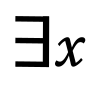
“He lived year after year. He attended only to himself and to God and this picture-but he did not understand himself.”
“Death cannot explain itself. The earnestness consists precisely in this, that the observer must explain it to himself.”
“It belongs to the imperfection of everything human that man can only attain his desire by passing through its opposite.”
“If the genius is an artist, then he accomplishes his work as art, but neither he nor his work of art has a telos outside him.”
“Concepts, like individuals, have their histories, and are just as incapable of withstanding the ravages of time as are individuals.”
“The truth is a trap: you can not get it without it getting you; you cannot get the truth by capturing it, only by its capturing you.”

“God creates out of nothing. Wonderful you say. Yes, to be sure, but He does what is still more wonderful: He makes saints out of sinners.”
“Since my earliest childhood a barb of sorrow has lodged in my heart. As long as it stays I am ironic — if it is pulled out I shall die.”
“Seek first God's Kingdom, that is, become like the lilies and the birds, become perfectly silent — then shall the rest be added unto you.”
“The world is rejuvenated, but as Heine so wittily remarked, it was rejuvenated by romanticism to such a degree that it became a baby again.”
Find exactly what you are looking for by browsing this categorized list of Søren Kierkegaard quotes by topic.
“When one has once fully entered the realm of Love, the world — no matter how imperfect — becomes rich and beautiful, it consists solely of opportunities for Love.”

“It will be easy for us once we receive the ball of yarn from Ariadne (love) and then go through all the mazes of the labyrinth (life) and kill the monster. But how many are there who plunge into life (the labyrinth) without taking that precaution?”
“One understands only in proportion to becoming himself that which he understands.”
“The expectancy of an eternal salvation will reconcile everyone with his neighbor, with his friend, and with his enemy in an understanding of the essential.”
“What feelings, understanding and will a person has depends in the last resort upon what imagination he has — how he represents himself to himself, that is, upon imagination.”
“Every human being can come to know everything about love, just as every human being can come to know that he, like every human being, is loved by God. Some find this thought adequate for the longest life others find this thought so insignificant ...”
“What is it that is never changed even though everything is changed? It is love. And only that which never becomes something else is love, that which gives away everything and for that reason demands nothing, that which demands nothing and therefore has nothing to lose, that which blesses and blesses when it is cursed, that which loves its neighbor but whose enemy is also its neighbor, that which leaves revenge to the Lord because it takes comfort in the thought that he is even more merciful.”
“The eternal fears no future, hopes for no future, but love possesses everything without ceasing, and there is no shadow of variation. As soon as he returns to himself, he understands this no more. He understands what bitter experiences have only all too unforgettably inculcated, the self-accusation, if the past has the kind of claim upon his soul that no repentance can entirely redeem, no trusting in God can entirely wipe out, but only God himself in the inexpressible silence of beatitude. The more of the past a person’s soul can still keep when he is left to himself, the more profound he is.”
“Irony is a qualification of subjectivity.”
“The presence of irony does not necessarily mean that the earnestness is excluded. Only assistant professors assume that. ”
“All Christian knowing, however rigorous its form, ought to be concerned, but this concern is precisely the upbuilding.”

“The inquiring subject must be in one of two situations: either he must in faith be convinced of the truth of Christianity and his own relation to it, in which case all the rest cannot possibly be of infinite interest, since faith is precisely the infinite interest in Christianity and any other interest easily becomes a temptation; or he is not in a relationship of faith but is objectively in a relationship of observation and as such is not infinitely interested in deciding the question.”
“Christianity is spirit; spirit is inwardness; inwardness is subjectivity, subjectivity is essentially passion, and at its maximum an infinite, personally interested passion for one's eternal happiness. All decision, all essential decision, is rooted in subjectivity. As soon as subjectivity is taken away, and passion from subjectivity, and infinite interest from passion, there is no decision whatever, whether on this issue or any other. All decision, all essential decision, is rooted in subjectivity.”
Discover personal opinions Søren Kierkegaard shared regarding contemporaries.
“The woman is substance, the man is reflection.”

“It is at the touch of love that she first awakens; before that she is dream.”
“Over the years, alas, it has happened again and again, and the repetition continues, that someone goes ahead, someone for whom another person longs, whom he wishes to follow, but never has any human being, never has any loved one, never has any teacher, never has any friend gone ahead-in order to prepare a place for the one following. Just as the name of Christ is the one and only name in heaven and on earth, so also is Christ the one and only predecessor who has gone ahead in this way. Between heaven and earth there is only one road: to follow Christ. In time and eternity there is only one choice, one single choice: to choose this road. There is only one eternal hope on this earth: to follow Christ into heaven. There is one blessed joy in this life: to follow Christ; in death there is one final blessed joy-to follow Christ to life!”
“There is a wretched unbelief abroad which seems to contain much healing power. It deems such a connection accidental, and sees in it only a lucky conjunction of the different forces in the game of life. It thinks it an accident that the lovers win one another, accidental that they love one another; there are a hundred other women with whom the hero would have been equally happy, and whom he could have loved as deeply. It thinks that there has been many a poet who might have become as immortal as Homer, if this splendid subject had not already been appropriated by him; many a composer who might have made himself as immortal as Mozart, had the opportunity offered. … The accidental has but one factor; it is accidental that Homer found in the Trojan War the most distinguished epic subject conceivable. The fortunate has two factors: it is fortunate that the most distinguished epic subject fell to the lot of Homer; here the accent falls as much on Homer as on the material. It is this profound harmony which reverberates through every work of art we call classic. And so it is with Mozart; it is fortunate that the subject, which is perhaps the only strictly musical subject, in the deeper sense, that life affords, fell to — Mozart.”

“Aristotle remarks in his Poetics that poetry is superior to history, because history presents only what has occurred, poetry what could and ought to have occurred, poetry has possibility at its disposal. Possibility, poetic and intellectual, is superior to actuality; the esthetic and the intellectual are disinterested. But there is only one interest, the interest in existing; disinterestedness is the expression for indifference to actuality. The indifference is forgotten in the Cartesian Cogito-ergo sum, which disturbs the disinterestedness of the intellectual and offends speculative thought, as if something else should follow from it. I think, ergo I think; whether I am or it is (in the sense of actuality, where I means a single existing human being and it means a single definite something) is infinitely unimportant. That what I am thinking is in the sense of thinking does not, of course, need any demonstration, nor does it need to be demonstrated by any conclusion, since it is indeed demonstrated. But as soon as I begin to want to make my thinking teleological in relation to something else, interest enters the game. As soon as it is there, the ethical is present and exempts me from further trouble with demonstrating my existence, and since it obliges me to exist, it prevents me from making an ethically deceptive and metaphysically unclear flourish of a conclusion.”

Gain deeper perspective through quotes about Søren Kierkegaard from others.
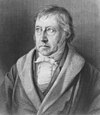
“Hegel was the great system-maker. What others viewed as his grand achievement Kierkegaard viewed as his unforgivable crime, the attempt to rationally systematize the whole of existence. The whole of existence cannot be systematized, Kierkegaard insisted, because existence is not yet whole; it is incomplete and in a state of constant development. Hegel attempted to introduce mobility into logic, which, said Kierkegaard, is itself an error in logic. The greatest of Hegel's errors, however, was his claim that he had established the objective theory of knowledge. Kierkegaard countered with the argument that subjectivity is truth. As he put it, “The objective uncertainty maintained in the most passionate spirit of dedication is truth, the highest truth for one existing.” ... Kierkegaard, it remains to be said, is not a systematic theologian. We know what he thought of systems and system makers, of which Hegel was the prime example. There is hardly a page in his writings that does not prompt from the systematically minded reader a protest against disconnections and apparent contradictions. Like Flannery O'Connor, he shouted to the hard of hearing and drew startling pictures for the almost blind.”

“According to Kierkegaard: Since existence “means the making of moral choices, it is perpetual “either-or” and a life of action. One who merely contemplates a truth is apt to become a “traitor like Judas.” An uncommitted person is not person at all. The ideal of suspended judgment is a high road to moral suicide. Man must act for by his choices he makes himself. In its emphasis upon commitment "Existentialism” comes the nearest to new Testament Christianity. Existence, according to Kierkegaard is a state of anxious suspense and only the paradoxical “leap into faith” will give man certitude in God. The opposite of sin is not virtue but faith. Man's existence, declared Kierkegaard, “is an experience or process of sustained becoming or developing by moral striving and tension. He can never, therefore, be a Christian but only attempt to become one.” Kierkegaard's slant on man is sometimes aesthetic, at times ethical, but in its final form it is theological, concerned with the problem of being a Christian. As a theologian, he has had a singular influence on Karl Barth, Reinhold Neibuhr, Paul Tillich, Emil Brunner, and other leading Protestant theologians of our times.”
“As a thorough Christian — or, as he would have put it, infinitely interested in becoming one — Søren Kierkegaard addressed himself neither to Jews nor to Judaism. But they have overheard him. In part because they could not help it... Jews are well advised to be on the alert for what they can learn not only about him but about themselves also.”
“Kierkegaard was by far the most profound thinker of the last century. Kierkegaard was a saint.”

Quotes attributed to Søren Kierkegaard that are questionable.
Quotes mistakenly credited to Søren Kierkegaard.
“Life is not a problem to be solved, but a reality to be experienced.”


