Link Copied!
Albert Camus Quotes (1913-1960)
Philosopher, Author






























About Albert Camus
Albert Camus (November 7, 1913 – January 4, 1960) was a French Pied-Noir author, absurdist philosopher and winner of the 1957 Nobel Prize for Literature.
Best Albert Camus Quotes
Shortest
Earliest
Explore our curated collection of the most famous and impactful Albert Camus quotes.
“A fate is not a punishment.”

“The artist reconstructs the world to his plan.”


“An intellectual is someone whose mind watches itself.”

“Everything considered, a determined soul will always manage.”
“Every ideology is contrary to human psychology.”

“Il y a toujours une philosophie pour le manque de courage.”
“Aujourd'hui maman est morte. Ou peut-être hier, je ne sais pas.”


“A punishment that penalizes without forestalling is indeed called revenge.”

“Great novelists are philosopher novelists — that is, the contrary of thesis-writers.”

“Nothing can discourage the appetite for divinity in the heart of man.”
“One recognizes one's course by discovering the paths that stray from it.”
“Outside of that single fatality of death, everything, joy or happiness, is liberty.”

“Martyrs must choose between being forgotten, mocked, or made use of. As for being understood—never!”

“The most elementary form of rebellion, paradoxically, expresses an aspiration for order.”
“Art is the activity that exalts and denies simultaneously. "No artist tolerates reality," says Nietzsche.”
“What must be remembered in any case is that secret complicity that joins the logical and the everyday to the tragic.”

“No human being, even the most passionately loved and passionately loving, is ever in our possession.”
“I may not have been sure about what really did interest me, but I was absolutely sure about what didn't.”
“I do not have much liking for the too famous existential philosophy, and, to tell the truth, I think its conclusions false.”
“To have time was at once the most magnificent and the most dangerous of experiments. Idleness is fatal only to the mediocre.”
“Nous nous trompons toujours deux fois sur ceux que nous aimons: d'abord à leur avantage, puis à leur désavantage.”
“Believe me, there is no such thing as great suffering, great regret, great memory...Everything is forgotten, even great love.”

“Real fulfillment, for the man who allows absolutely free rein to his desires, and who much dominate everything, lies in hatred.”
“Ce que, finalement, je sais de plus sûr sur la morale et les obligations des hommes, c'est au football que je le dois.”
“The essential is to cease being free and to obey, in repentance, a greater rogue than oneself. When we are all guilty, that will be democracy.”


“L'homme enfin n'est pas entièrement coupable — il n'a pas commencé l'histoire — ni tout à fait innocent, puisqu'il la continue.”
“Yes, there was an element of abstraction and unreality in misfortune. But when an abstraction starts to kill you, you have to get to work on it.”
“I do not want to found anything on the incomprehensible. I want to know whether I can live with what I know and with that alone.”
“If the only significant history of human thought were to be written, it would have to be the history of its successive regrets and its impotences.”

“In every rebellion is to be found the metaphysical demand for unity, the impossibility of capturing it, and the construction of a substitute universe.”

“'I'm glad to know he's [Paneloux] better than his sermon.'
'Most people are like that,' Tarrou replied. 'It's only a matter of giving them the chance.'”
“A character is never the author who created him. It is quite likely, however, that an author may be all his characters simultaneously.”
“The greatest saving one can make in the order of thought is to accept the unintelligibility of the world — and to pay attention to man.”

“To two men living the same number of years, the world always provides the same sum of experiences. It is up to us to be conscious of them.”
“He discovered the cruel paradox by which we always deceive ourselves twice about the people we love — first to their advantage, then to their disadvantage.”
“Every revolutionary ends as an oppressor or a heretic.
• Variant translation: Every revolutionary ends by becoming either an oppressor or a heretic.”
• Variant translation: Every revolutionary ends by becoming either an oppressor or a heretic.”
“The absurd does not liberate; it binds. It does not authorize all actions. "Everything is permitted" does not mean that nothing is forbidden.”
“Yes, everyone sleeps at that hour, and this is reassuring, since the great longing of an unquiet heart is to possess constantly and consciously the loved one...”
“"This is the truth," we say. "You can discuss it as much as you want; we aren't interested. But in a few years there'll be the police who will show you we are right."”
“So many men are deprived of grace. How can one live without grace? One has to try it and do what Christianity never did: be concerned with the damned.”
“If there is a sin against life, it consists perhaps not so much in despairing of life as in hoping for another life and in eluding the implacable grandeur of this life.”
“Accepting the absurdity of everything around us is one step, a necessary experience: it should not become a dead end. It arouses a revolt that can become fruitful.”

“Opinions differ as to the reasons why he became the futile laborer of the underworld. To begin with, he is accused of a certain levity in regard to the gods. He stole their secrets.”
“Pauvre et libre plutôt que riche et asservi. Bien entendu les hommes veulent être et riches et libres et c'est ce qui les conduit quelquefois à être pauvres et esclaves.”
“What will be left of the power of example if it is proved that capital punishment has another power, and a very real one, which degrades men to the point of shame, madness, and murder?”

“The contradiction is this: man rejects the world as it is, without accepting the necessity of escaping it. In fact, men cling to the world and by far the majority do not want to abandon it.”

“Nothing is harder to understand than a symbolic work. A symbol always transcends the one who makes use of it and makes him say in reality more than he is aware of expressing.”
“Toute idée fausse finit dans le sang, mais il s'agit toujours du sang des autres. C'est ce qui explique que certains de nos philosophes se sentent à l'aise pour dire n'importe quoi.”
“There lay certitude; there, in the daily round. All the rest hung on mere threads and trivial contingencies; you couldn't waste your time on it. The thing was to do your job as it should be done.”
“Homer tells us also that Sisyphus had put Death in chains. Pluto could not endure the sight of his deserted, silent empire. He dispatched the god of war, who liberated Death from the hands of her conqueror.”

“At that moment he knew what his mother was thinking, and that she loved him. But he knew, too, that to love someone means relatively little; or, rather, that love is never wrong enough to find the word befitting it.”

“This was her finest role and the hardest one to play. Choosing between heaven and a ridiculous fidelity, preferring oneself to eternity or losing oneself in God is the age-old tragedy in which each must play his part.”

“"Then we understand that rebellion cannot exist without a strange form of love. Those who find no rest in God or in history are condemned to live for those who, like themselves, cannot live; in fact, for the humiliated."”
“A living man can be enslaved and reduced to the historic condition of an object. But if he dies in refusing to be enslaved, he reaffirms the existence of another kind of human nature which refuses to be classified as an object.”
“With the exception of professional rationalists, today people despair of true knowledge. If the only significant history of human thought were to be written, it would have to be history of its successive regrets and impotences.”
“Manhattan. Sometimes from beyond the skyscrapers, across of thousands of high walls, the cry of a tugboat finds you in your insomnia in the middle of the night, and you remember that this desert of iron and cement is an island.”


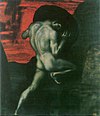
“The gods had condemned Sisyphus to ceaselessly rolling a rock to the top of a mountain, whence the stone would fall back of its own weight. They had thought with some reason that there is no more dreadful punishment than futile and hopeless labor.”
“Nobody realizes that some people expend tremendous energy merely to be normal. (This quotation is from Notebook IV in Notebooks: 1942-1951, not Myth of Sisyphus. The quotation appears in none of Camus books you find in bookstores).”
“The aim of art, the aim of a life can only be to increase the sum of freedom and responsibility to be found in every man and in the world. It cannot, under any circumstances, be to reduce or suppress that freedom, even temporarily.”

“When the imagination sleeps, words are emptied of their meaning: a deaf population absent-mindedly registers the condemnation of a man. ... there is no other solution but to speak out and show the obscenity hidden under the verbal cloak.”
“If Nietzsche and Hegel serve as alibis to the masters of Dachau and Karaganda, that does not condemn their entire philosophy. But it does lead to the suspicion that one aspect of their thought, or of their logic, can lead to these appalling conclusions.”
“There is merely bad luck in not being loved; there is misfortune in not loving. All of us, today, are dying of this misfortune. For violence and hatred dry up the heart itself; the long fight for justice exhausts the love that nevertheless gave birth to it.”
“ There is no fate that can not be surmounted by scorn.
If the descent is thus sometimes performed in sorrow, it can also take place in joy. This word is not too much. Again I fancy Sisyphus returning toward his rock, and the sorrow was in the beginning.”
If the descent is thus sometimes performed in sorrow, it can also take place in joy. This word is not too much. Again I fancy Sisyphus returning toward his rock, and the sorrow was in the beginning.”

“He marveled at the strange blindness by which men, though they are so alert to what changes in themselves, impose on their friends an image chosen for them once and for all. He was being judged by what he had been. Just as dogs don't change character, men are dogs to one another.”
“Whatever we may do, excess will always keep its place in the heart of man, in the place where solitude is found. We all carry within us our places of exile, our crimes and our ravages. But our task is not to unleash them on the world; it is to fight them in ourselves and in others.”
“"The real saint", Baudelaire pretends to think, "is he who flogs and kills people for their own good." His argument will be heard. A race of real saints is beginning to spread over the earth for the purposes of confirming these curious conclusions about rebellion.”
“For those of us who have been thrown into hell, mysterious melodies and the torturing images of a vanished beauty will always bring us, in the midst of crime and folly, the echo of that harmonious insurrection which bears witness, throughout the centuries, to the greatness of humanity.”

“Great feelings take with them their own universe, splendid or abject. They light up with their passion an exclusive world in which they recognize their climate. There is a universe of jealousy, of ambition, of selfishness or generosity. A universe — in other words a metaphysic and an attitude of mind.”

“The words that reverberate for us at the confines of this long adventure of rebellion are not formulas for optimism, for which we have no possible use in the extremities of our unhappiness, but words of courage and intelligence which, on the shores of the eternal seas, even have the qualities of virtue.”

“Man cannot do without beauty, and this is what our era pretends to want to disregard. It steels itself to attain the absolute and authority; it wants to transfigure the world before having exhausted it, to set it to rights before having understood it. Whatever it may say, our era is deserting this world.”
“Don't let them tell us stories. Don't let them say of the man sentenced to death "He is going to pay his debt to society," but: "They are going to cut off his head." It looks like nothing. But it does make a little difference. And then there are people who prefer to look their fate in the eye.”
“When the throne of God is overturned, the rebel realizes that it is now his own responsibility to create the justice, order, and unity that he sought in vain within his own condition, and in this way to justify the fall of God. Then begins the desperate effort to create, at the price of crime and murder if necessary, the dominion of man.”
“Ironic philosophies produce passionate works.
Any thought that abandons unity glorifies diversity! And diversity is the home of art. The only thought to liberate the mind is that which leaves it alone, certain of its limits and of its impending end. No doctrine tempts it. It awaits the ripening of the work and of life.”
Any thought that abandons unity glorifies diversity! And diversity is the home of art. The only thought to liberate the mind is that which leaves it alone, certain of its limits and of its impending end. No doctrine tempts it. It awaits the ripening of the work and of life.”

“A sub-clerk in the post office is the equal of a conqueror if consciousness is common to them. All experiences are indifferent in this regard. There are some that do either a service or a disservice to man. They do him a service if he is conscious. Otherwise, that has no importance: a man's failures imply judgment, not of circumstances, but of himself.”
“It happens that the stage sets collapse. Rising, streetcar, four hours in the office or the factory, meal, streetcar, four hours of work, meal, sleep and Monday Tuesday Wednesday Thursday Friday and Saturday according to the same rhythm — this path is easily followed most of the time. But one day the "why" arises and everything begins in that weariness tinged with amazement.”
“Life continues, and some mornings, weary of the noise, discouraged by the prospect of the interminable work to keep after, sickened also by the madness of the world that leaps at you from the newspaper, finally convinced that I will not be equal to it and that I will disappoint everyone—all I want to do is sit down and wait for evening. This is what I feel like, and sometimes I yield to it.”
“O light! This is the cry of all the characters of ancient drama brought face to face with their fate. This last resort was ours, too, and I knew it now. In the middle of winter I at last discovered that there was in me an invincible summer.
• Variant translation: In the depths of winter, I finally learned that within me there lay an invincible summer.”
• Variant translation: In the depths of winter, I finally learned that within me there lay an invincible summer.”

“Of course, I had to own that he was right; I didn't feel much regret for what I'd done. Still, to my mind, he overdid it, and I'd have liked to have a chance of explaining to him, in a quite friendly, almost affectionate way, that I have never been able to really regret anything in all my life. I've always been far too much absorbed in the present moment, or the immediate future, to think back.”

“Query: How to contrive not to waste one's time? Answer: By being fully aware of it all the while. Ways in which this can be done: By spending one's days on an uneasy chair in a dentist's waiting room; by remaining on one's balcony all a Sunday afternoon; by travelling by the longest and least-convenient train routes, and of course standing all the way; by queueing at the box-office of theatres and then not booking a seat.”
“All systems of morality are based on the idea that an action has consequences that legitimize or cancel it. A mind imbued with the absurd merely judges that those consequences must be considered calmly. It is ready to pay up. In other words, there may be responsible persons, but there are no guilty ones, in its opinion. At very most, such a mind will consent to use past experience as a basis for its future actions.”

“One does not discover the absurd without being tempted to write a manual of happiness. "What! — by such narrow ways — ?" There is but one world, however. Happiness and the absurd are two sons of the same earth. They are inseparable. It would be a mistake to say that happiness necessarily springs from the absurd discovery. It happens as well that the feeling of the absurd springs from happiness.”
“Even before the bomb, one did not breathe too easily in this tortured world. Now we are given a new source of anguish; it has all the promise of being our greatest anguish ever. There can be no doubt that humanity is being offered its last chance. Perhaps this is an occasion for the newspapers to print a special edition. More likely, it should be cause for a certain amount of reflection and a great deal of silence.”
“ "I conclude that all is well," says Oedipus, and that remark is sacred. It echoes in the wild and limited universe of man. It teaches that all is not, has not been, exhausted. It drives out of this world a god who had come into it with dissatisfaction and a preference for futile suffering. It makes of fate a human matter, which must be settled among men.”
“The direction of the world overwhelms me at this time. In the long run, all the continents (yellow, black and brown) will spill over onto Old Europe. They are hundreds and hundreds of millions. They are hungry and they are not afraid to die. We no longer know how to die or how to kill. We could preach, but Europe believes in nothing. So, we must wait for the year 1000 or a miracle. For my part, I find it harder and harder to live before a wall.”

“To work and create "for nothing," to sculpture in clay, to know one's creation has no future, to see one's work destroyed in a day while being aware that fundamentally this has no more importance than building for centuries — this is the difficult wisdom that absurd thought sanctions. Performing these two tasks simultaneously, negating on the one hand and magnifying on the other, it the way open to the absurd creator. He must give the void its colors.”
“Capital punishment is the most premeditated of murders, to which no criminal's deed, however calculated, can be compared. For there to be an equivalency, the death penalty would have to punish a criminal who had warned his victim of the date on which he would inflict a horrible death on him and who, from that moment onward, had confined him at his mercy for months. Such a monster is not to be encountered in private life.”
“Thus I progressed on the surface of life, in the realm of words as it were, never in reality. All those books barely read, those friends barely loved, those cities barely visited, those women barely possessed! I went through the gestures out of boredom or absent-mindedness. Then came the human beings, they wanted to cling, but there was nothing to cling to, and that was unfortunate – for them. As for me, I forgot. I never remembered anything but myself.”
“He realized now that to be afraid of this death he was staring at with animal terror meant to be afraid of life. Fear of dying justified a limitless attachment to what is alive in man. And all those who had not made the gestures necessary to live their lives, all those who feared and exalted impotence — they were afraid of death because of the sanction it gave to a life in which they had not been involved. They had not lived enough, never having lived at all.”
“In that daily effort in which intelligence and passion mingle and delight each other, the absurd man discovers a discipline that will make up the greatest of his strengths. The required diligence and doggedness and lucidity thus resemble the conqueror's attitude. To create is likewise to give a shape to one's fate. For all these characters, their work defines them at least as much as it is defined by them. The actor taught us this: There is no frontier between being and appearing.”

“You have already grasped that Sisyphus is the absurd hero. He is, as much through his passions as through his torture. His scorn of the gods, his hatred of death, and his passion for life won him that unspeakable penalty in which the whole being is exerted toward accomplishing nothing. This is the price that must be paid for the passions of this earth. Nothing is told us about Sisyphus in the underworld. Myths are made for the imagination to breathe life into them.”

“He tried to recall what he had read about the disease. Figures floated across his memory, and he recalled that some thirty or so great plagues known to history had accounted for nearly a hundred million deaths. But what are a hundred million deaths? When one has served in a war, one hardly knows what a dead man is, after a while. And since a dead man has no substance unless one actually sees him dead, a hundred million corpses broadcast through history are no more than a puff of smoke in the imagination.”
“What, then, is that incalculable feeling that deprives the mind of the sleep necessary to life? A world that can be explained even with bad reasons is a familiar world. But, on the other hand, in a universe suddenly divested of illusions and lights, man feels an alien, a stranger. His exile is without remedy since he is deprived of the memory of a lost home or the hope of a promised land. This divorce between man and his life, the actor and his setting, is properly the feeling of absurdity.”
“Time will prolong time, and life will serve life. In this field that is both limited and bulging with possibilities, everything to himself, except his lucidity, seems unforeseeable to him. What rule, then, could emanate from that unreasonable order? The only truth that might seem instructive to him is not formal: it comes to life and unfolds in men. The absurd mind cannot so much expect ethical rules at the end of its reasoning as, rather, illustrations and the breath of human lives.”
“A novel is never anything but a philosophy put into images. And in a good novel, the whole of the philosophy has passed into the images. But if once the philosophy overflows the characters and action, and therefore looks like a label stuck on the work, the plot loses its authenticity and the novel its life. Nevertheless, a work that is to last cannot dispense with profound ideas. And this secret fusion between experiences and ideas, between life and reflection on the meaning of life, is what makes the great novelist.”
“Simone Weil, je le sais encore maintenant, est le seul grand esprit de notre temps et je souhaite que ceux qui le reconnaissent en reçoivent assez de modestie pour ne pas essayer d'annexer ce témoignage bouleversant.
Pour moi, je serais comblé si l'on pouvait dire qu'à ma place, et avec les faibles moyens dont je dispose, j'ai servi à faire connaître et à répandre son oeuvre dont on n'a pas encore mesuré tout le retentissement.
• Variant translation: The only great spirit of our time.”
Pour moi, je serais comblé si l'on pouvait dire qu'à ma place, et avec les faibles moyens dont je dispose, j'ai servi à faire connaître et à répandre son oeuvre dont on n'a pas encore mesuré tout le retentissement.
• Variant translation: The only great spirit of our time.”
“"My field," said Goethe, "is time." That is indeed the absurd speech. What, in fact, is the Absurd Man? He who, without negating it, does nothing for the eternal. Not that nostalgia is foreign to him. But he prefers his courage and his reasoning. The first teaches him to live without appeal and to get along with what he has; the second informs him of his limits. Assured of his temporally limited freedom, of his revolt devoid of future, and of his mortal consciousness, he lives out his adventure within the span of his lifetime.”
“Un homme se définit aussi bien par ses comédies que par ses élans sincères.http://books.google.com/books?id=9FgoAQAAIAAJ&q=%22un+homme+se+d%C3%A9finit+aussi+bien+par+ses+com%C3%A9dies+que+par+ses+%C3%A9lans+sinc%C3%A8res%22&pg=PA25#v=onepage
• Translation: A man defines himself by his make-believe as well as by his sincere impulses.”
• Translation: A man defines himself by his make-believe as well as by his sincere impulses.”
“The evil that is in the world always comes of ignorance, and good intentions may do as much harm as malevolence, if they lack understanding. On the whole men are more good than bad; that, however, isn't the real point. But they are more or less ignorant, and it is this that we call vice or virtue; the most incorrigible vice being that of an ignorance which fancies it knows everything and therefore claims for itself the right to kill. There can be no true goodness, nor true love, without the utmost clear-sightedness.”
“The papers were always talking about the debt owed to society. According to them, it had to be paid. But that doesn't speak to the imagination. What really counted was the possibility of escape, a leap to freedom, out of the implacable ritual, a wild run for it that would give whatever chance for hope there was. Of course, hope meant being cut down on some street corner, as you ran like mad, by a random bullet. But when I really thought it through, nothing was going to allow me such a luxury. Everything was against it; I would just be caught up in the machinery again.”

“At this point of his effort man stands face to face with the irrational. He feels within him his longing for happiness and for reason. The absurd is born of this confrontation between the human need and the unreasonable silence of the world. This must not be forgotten. This must be clung to because the whole consequence of a life can depend on it. The irrational, the human nostalgia, and the absurd that is born of their encounter — these are the three characters in the drama that must necessarily end with all the logic of which an existence is capable.”

“Of all the schools of patience and lucidity, creation is the most effective. It is also the staggering evidence of man's sole dignity: the dogged revolt against his condition, perseverance in an effort considered sterile. It calls for a daily effort, self-mastery, a precise estimate of the limits of truth, measure, and strength. It constitutes an ascesis. All that "for nothing," in order to repeat and mark time. But perhaps the great work of art has less importance in itself than in the ordeal it demands of a man and the opportunity it provides him of overcoming his phantoms and approaching a little closer to his naked reality.”
“I don't know whether this world has a meaning that transcends it. But I know that I cannot know that meaning and that it is impossible for me just now to know it. What can a meaning outside my condition mean to me? I can understand only in human terms. What I touch, what resists me — that I understand. And these two certainties — my appetite for the absolute and for unity and the impossibility of reducing this world to a rational and reasonable principle — I also know that I cannot reconcile them. What other truth can I admit without lying, without bringing in a hope I lack and which means nothing within the limits of my conditions?”
“I leave Sisyphus at the foot of the mountain! One always finds one's burden again. But Sisyphus teaches the higher fidelity that negates the gods and raises rocks. He too concludes that all is well. This universe henceforth without a master seems to him neither sterile nor futile. Each atom of that stone, each mineral flake of that night filled mountain, in itself forms a world. The struggle itself toward the heights is enough to fill a man's heart. One must imagine Sisyphus happy.
• Variant translation: The fight itself towards the summits suffices to fill a heart of man; it is necessary to imagine Sisyphus happy.”
• Variant translation: The fight itself towards the summits suffices to fill a heart of man; it is necessary to imagine Sisyphus happy.”
“The welfare of the people in particular has always been the alibi of tyrants, and it provides the further advantage of giving the servants of tyranny a good conscience. It would be easy, however, to destroy that good conscience by shouting to them: if you want the happiness of the people, let them speak out and tell what kind of happiness they want and what kind they don't want! But, in truth, the very ones who make use of such alibis know they are lies; they leave to their intellectuals on duty the chore of believing in them and of proving that religion, patriotism, and justice need for their survival the sacrifice of freedom.”
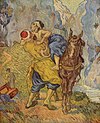
“It is the failing of a certain literature to believe that life is tragic because it is wretched.
Life can be magnificent and overwhelming — that is its whole tragedy. Without beauty, love, or danger it would be almost easy to live. And M. Sartre's hero does not perhaps give us the real meaning of his anguish when he insists on those aspects of man he finds repugnant, instead of basing his reasons for despair on certain of man's signs of greatness.
The realization that life is absurd cannot be an end, but only a beginning. This is a truth nearly all great minds have taken as their starting point. It is not this discovery that is interesting, but the consequences and rules of action drawn from it.”
Life can be magnificent and overwhelming — that is its whole tragedy. Without beauty, love, or danger it would be almost easy to live. And M. Sartre's hero does not perhaps give us the real meaning of his anguish when he insists on those aspects of man he finds repugnant, instead of basing his reasons for despair on certain of man's signs of greatness.
The realization that life is absurd cannot be an end, but only a beginning. This is a truth nearly all great minds have taken as their starting point. It is not this discovery that is interesting, but the consequences and rules of action drawn from it.”
“Hungary conquered and in chains has done more for freedom and justice than any people for twenty years. But for this lesson to get through and convince those in the West who shut their eyes and ears, it was necessary, and it can be no comfort to us, for the people of Hungary to shed so much blood which is already drying in our memories. In Europe's isolation today, we have only one way of being true to Hungary, and that is never to betray, among ourselves and everywhere, what the Hungarian heroes died for, never to condone, among ourselves and everywhere, even indirectly, those who killed them. It would indeed be difficult for us to be worthy of such sacrifices.”

“The absurd ... is an experience to be lived through, a point of departure, the equivalent, in existence of Descartes' methodical doubt. Absurdism, like methodical doubt, has wiped the slate clean. It leaves us in a blind alley. But, like methodical doubt, it can, by returning upon itself, open up a new field of investigation, and in the process of reasoning then pursues the same course. I proclaim that I believe in nothing and that everything is absurd, but I cannot doubt the validity of my proclamation and I must at least believe in my protest. The first and only evidence that is supplied me, within the terms of the absurdist experience, is rebellion ... Rebellion is born of the spectacle of irrationality, confronted with an unjust and incomprehensible condition.”

“This heart within me I can feel, and I judge that it exists. This world I can touch, and I likewise judge that it exists. There ends all my knowledge, and the rest is construction. For if I try to seize this self of which I feel sure, if I try to define and to summarize it, it is nothing but water slipping through my fingers. I can sketch one by one all the aspects it is able to assume, all those likewise that have been attributed to it, this upbringing, this origin, this ardor or these silences, this nobility or this vileness. But aspects cannot be added up. This very heart which is mine will forever remain indefinable to me. Between the certainty I have of my existence and the content I try to give to that assurance, the gap will never be filled. Forever I shall be a stranger to myself.”
“There is but one truly serious philosophical problem and that is suicide. Judging whether life is or is not worth living amounts to answering the fundamental question of philosophy. All the rest – whether or not the world has three dimensions, whether the mind has nine or twelve categories – comes afterwards. These are games; one must first answer. And if it is true, as Nietzsche claims, that a philosopher, to deserve our respect, must preach by example, you can appreciate the importance of that reply, for it will precede the definitive act. These are facts the heart can feel; yet they call for careful study before they become clear to the intellect. If I ask myself how to judge that this question is more urgent than that, I reply that one judges by the actions it entails. I have never seen anyone die for the ontological argument.”

“One might think that a period which, in a space of fifty years, uproots, enslaves, or kills seventy million human beings should be condemned out of hand. But its culpability must still be understood... In more ingenuous times, when the tyrant razed cities for his own greater glory, when the slave chained to the conqueror's chariot was dragged through the rejoicing streets, when enemies were thrown to the wild beasts in front of the assembled people, the mind did not reel before such unabashed crimes, and the judgment remained unclouded. But slave camps under the flag of freedom, massacres justified by philanthropy or by a taste for the superhuman, in one sense cripple judgment. On the day when crime dons the apparel of innocence — through a curious transposition peculiar to our times — it is innocence that is called upon to justify itself.”

“Let us be understood. If the Japanese surrender after the destruction of Hiroshima, having been intimidated, we will rejoice. But we refuse to see anything in such grave news other than the need to argue more energetically in favor of a true international society, in which the great powers will not have superior rights over small and middle-sized nations, where such an ultimate weapon will be controlled by human intelligence rather than by the appetites and doctrines of various states.
Before the terrifying prospects now available to humanity, we see even more clearly that peace is the only goal worth struggling for. This is no longer a prayer but a demand to be made by all peoples to their governments — a demand to choose definitively between hell and reason.”
Before the terrifying prospects now available to humanity, we see even more clearly that peace is the only goal worth struggling for. This is no longer a prayer but a demand to be made by all peoples to their governments — a demand to choose definitively between hell and reason.”
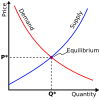
“There can be no question of holding forth on ethics. I have seen people behave badly with great morality and I note every day that integrity has no need of rules. There is but one moral code that the absurd man can accept, the one that is not separated from God: the one that is dictated. But it so happens that he lives outside that God. As for the others (I mean also immoralism), the absurd man sees nothing in them but justifications and he has nothing to justify. I start out here from the principle of his innocence.
That innocence is to be feared. "Everything is permitted," exclaims Ivan Karamazov. That, too, smacks of the absurd. But on condition that it not be taken in a vulgar sense. I don't know whether or not it has been sufficiently pointed out that it is not an outburst of relief or of joy, but rather a bitter acknowledgment of a fact.”
That innocence is to be feared. "Everything is permitted," exclaims Ivan Karamazov. That, too, smacks of the absurd. But on condition that it not be taken in a vulgar sense. I don't know whether or not it has been sufficiently pointed out that it is not an outburst of relief or of joy, but rather a bitter acknowledgment of a fact.”
“A profound thought is in a constant state of becoming; it adopts the experience of a life and assumes its shape. Likewise, a man's sole creation is strengthened in its successive and multiple aspects: his works. One after another they complement one another, correct or overtake one another, contradict one another, too. If something brings creation to an end, it is not the victorious and illusory cry of the blinded artist: "I have said everything," but the death of the creator which closes his experiences and the book of his genius.
That effort, that superhuman consciousness are not necessarily apparent to the reader. There is no mystery in human creation. Will performs this miracle. But at least there is no true creation without a secret. To be true, a succession of works can be but a series of approximations of the same thought. But it is possible to conceive of another type of creator proceeding by juxtaposition. Their words may seem to be devoid of inter-relations, to a certain degree, they are contradictory. But viewed all together, they resume their natural grouping.”
That effort, that superhuman consciousness are not necessarily apparent to the reader. There is no mystery in human creation. Will performs this miracle. But at least there is no true creation without a secret. To be true, a succession of works can be but a series of approximations of the same thought. But it is possible to conceive of another type of creator proceeding by juxtaposition. Their words may seem to be devoid of inter-relations, to a certain degree, they are contradictory. But viewed all together, they resume their natural grouping.”

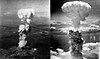
“The world is what it is, which is to say, nothing much. This is what everyone learned yesterday, thanks to the formidable concert of opinion coming from radios, newspapers, and information agencies. Indeed we are told, in the midst of hundreds of enthusiastic commentaries, that any average city can be wiped out by a bomb the size of a football. American, English, and French newspapers are filled with eloquent essays on the future, the past, the inventors, the cost, the peaceful incentives, the military advantages, and even the life-of-its-own character of the atom bomb.
We can sum it up in one sentence: Our technical civilization has just reached its greatest level of savagery. We will have to choose, in the more or less near future, between collective suicide and the intelligent use of our scientific conquests.
Meanwhile we think there is something indecent in celebrating a discovery whose use has caused the most formidable rage of destruction ever known to man. What will it bring to a world already given over to all the convulsions of violence, incapable of any control, indifferent to justice and the simple happiness of men — a world where science devotes itself to organized murder? No one but the most unrelenting idealists would dare to wonder.”
We can sum it up in one sentence: Our technical civilization has just reached its greatest level of savagery. We will have to choose, in the more or less near future, between collective suicide and the intelligent use of our scientific conquests.
Meanwhile we think there is something indecent in celebrating a discovery whose use has caused the most formidable rage of destruction ever known to man. What will it bring to a world already given over to all the convulsions of violence, incapable of any control, indifferent to justice and the simple happiness of men — a world where science devotes itself to organized murder? No one but the most unrelenting idealists would dare to wonder.”
“Alyosha can, in fact, treat Ivan with compassion as a "real simpleton." The latter only made aa attempt at self-control and failed. Others will appear, with more serious intentions, who, on the basis of the same despairing nihilism, will insist on ruling the world. These are the Grand Inquisitors who imprison Christ and come to tell Him that His method is not correct, that universal happiness cannot be achieved by the immediate freedom of choosing between good and evil, but by the domination and unification of the world. The first step is to conquer and rule. The kingdom of heaven will, in fact, appear on earth, but it will be ruled over by men — a mere handful to begin with, who will be the Caesars, because they were the first to understand — and later, with time, by all men. The unity of all creation will be achieved by every possible means, since everything is permitted. The Grand Inquisitor is old and tired, for the knowledge he possesses is bitter. He knows that men are lazy rather than cowardly and that they prefer peace and death to the liberty of discerning between good and evil. He has pity, a cold pity, for the silent prisoner whom history endlessly deceives. He urges him to speak, to recognize his misdeeds, and, in one sense, to approve the actions of the Inquisitors and of the Caesars. But the prisoner does not speak.”
“For the first time in a long time I thought about Maman. I felt as if I understood why at the end of her life she had taken a 'fiancé,' why she had played at beginning again. Even there, in that home where lives were fading out, evening was a kind of wistful respite. So close to death, Maman must have felt free then and ready to live it all again. Nobody, nobody had the right to cry over her. And I felt ready to live it all again too. As if the blind rage had washed me clean, rid me of hope; for the first time, in that night alive with signs and stars, I opened myself to the gentle indifference of the world. Finding it so much like myself — so like a brother, really — I felt I had been happy and that I was happy again. For everything to be consummated, for me to feel less alone, I had only to wish that there be a large crowd of spectators the day of my execution and that they greet me with cries of hate.
• Variant translation: I, too, felt ready to start life all over again. It was as if that great rush of anger had washed me clean, emptied me of hope, and, gazing up at the dark sky spangled with its signs and stars, for the first time, the first, I laid my heart open to the benign indifference of the universe. To feel it so like myself, indeed, so brotherly, made me realize that I'd been happy, and that I was happy still. For all to be accomplished, for me to feel less lonely, all that remained to hope was that on the day of my execution there should be a huge crowd of spectators and that they should greet me with howls of execration.”
• Variant translation: I, too, felt ready to start life all over again. It was as if that great rush of anger had washed me clean, emptied me of hope, and, gazing up at the dark sky spangled with its signs and stars, for the first time, the first, I laid my heart open to the benign indifference of the universe. To feel it so like myself, indeed, so brotherly, made me realize that I'd been happy, and that I was happy still. For all to be accomplished, for me to feel less lonely, all that remained to hope was that on the day of my execution there should be a huge crowd of spectators and that they should greet me with howls of execration.”
“I don't know why, but something inside me snapped. I started yelling at the top of my lungs, and I insulted him and told him not to waste his prayers on me. I grabbed him by the collar of his cassock. I was pouring out on him everything that was in my heart, cries of anger and cries of joy.
He seemed so certain about everything, didn't he? And yet none of his certainties was worth one hair of a woman's head. He wasn't even sure he was alive, because he was living like a dead man. Whereas it looked as if I was the one who'd come up emptyhanded. But I was sure about me, about everything, surer than he could ever be, sure of my life and sure of the death I had waiting for me. Yes, that was all I had. But at least I had as much of a hold on it as it had on me. I had been right, I was still right, I was always right. I had lived my life one way and I could just as well have lived it another. I had done this and I hadn't done that. I hadn't done this thing but I had done another. And so? It was as if I had waited all this time for this moment and for the first light of this dawn to be vindicated. Nothing, nothing mattered, and I knew why. So did he. Throughout the whole absurd life I'd lived, a dark wind had been rising toward me from somewhere deep in my future, across years that were still to come, and as it passed, this wind leveled whatever was offered to me at the time, in years no more real than the ones I was living. What did other people's deaths or a mother's love matter to me; what did his God or the lives people choose or the fate they think they elect matter to me when we're all elected by the same fate, me and billions of privileged people like him who also called themselves my brothers? Couldn't he see, couldn't he see that? Everybody was privileged. There were only privileged people. The others would all be condemned one day. And he would be condemned, too.”
He seemed so certain about everything, didn't he? And yet none of his certainties was worth one hair of a woman's head. He wasn't even sure he was alive, because he was living like a dead man. Whereas it looked as if I was the one who'd come up emptyhanded. But I was sure about me, about everything, surer than he could ever be, sure of my life and sure of the death I had waiting for me. Yes, that was all I had. But at least I had as much of a hold on it as it had on me. I had been right, I was still right, I was always right. I had lived my life one way and I could just as well have lived it another. I had done this and I hadn't done that. I hadn't done this thing but I had done another. And so? It was as if I had waited all this time for this moment and for the first light of this dawn to be vindicated. Nothing, nothing mattered, and I knew why. So did he. Throughout the whole absurd life I'd lived, a dark wind had been rising toward me from somewhere deep in my future, across years that were still to come, and as it passed, this wind leveled whatever was offered to me at the time, in years no more real than the ones I was living. What did other people's deaths or a mother's love matter to me; what did his God or the lives people choose or the fate they think they elect matter to me when we're all elected by the same fate, me and billions of privileged people like him who also called themselves my brothers? Couldn't he see, couldn't he see that? Everybody was privileged. There were only privileged people. The others would all be condemned one day. And he would be condemned, too.”
Albert Camus Quotes by Topic
Find exactly what you are looking for by browsing this categorized list of Albert Camus quotes by topic.
Albert Camus on Absurdism 6 quotes
View all 6 quotes on Absurdism →Albert Camus on Rebellion 5 quotes
View all 5 quotes on Rebellion →Albert Camus on Trivialism 5 quotes
View all 5 quotes on Trivialism →Albert Camus on Love 4 quotes
View all 4 quotes on Love →Albert Camus on Capital punishment 3 quotes
“A punishment that penalizes without forestalling is indeed called revenge.”

What Albert Camus Said About Others
Discover personal opinions Albert Camus shared regarding contemporaries.
Albert Camus on Fyodor Dostoyevsky 3 quotes
“The real 19th century prophet was Dostoevsky, not Karl Marx.”

Albert Camus on Max Scheler 3 quotes
“Scheler wants to demonstrate that humanitarian feelings are always accompanied by a hatred of the world. Humanity is loved in general in order to avoid having to love anybody in particular.”
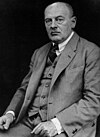
Albert Camus on Friedrich Nietzsche 2 quotes
“The more exciting life is, the more absurd is the idea of losing it. This is perhaps the secret of that proud aridity felt in Nietzsche's work. In this connection, Nietzsche appears to be the only artist to have derived the extreme consequences of an aesthetic of the Absurd, inasmuch as his final message lies in a sterile and conquering lucidity and an obstinate negation of any supernatural consolation.”

Albert Camus on Gandhi
Quotes About Albert Camus
Gain deeper perspective through quotes about Albert Camus from others.
Edwidge Danticat chapter on Albert Camus 2 quotes
“In "L'artiste et son temps," translated into English as "Create Dangerously," Camus writes: "Art cannot be a monologue. We are on the high seas. The artist, like everyone else, must bend to his oar, without dying if possible"...There are many possible interpretations of what it means to create dangerously, and Albert Camus, like the poet Osip Mandelstam, suggests that it is creating as a revolt against silence, creating when both the creation and the reception, the writing and the reading, are dangerous undertakings, disobedience to a directive.”
Angela Davis on Albert Camus
“I had gotten very much involved in the writings of the so-called Existentialists. Camus. Sartre. I retreated into myself and rejected practically everything outside. Only in the artificial surroundings of an isolated, virtually all-white college campus could I have allowed myself to cultivate this nihilistic attitude. It was as if in order to fight off the unreal quality of my environment, I leaped desperately into another equally unreal mode of living.”

Ottar G. Draugsvold on Albert Camus
“As a writer Camus maintained his independence from both friends and enemies in the political and philosophical movements that attempted to subvert his writing to their own ends. ... Camus combines a taut writing style, as well as profound insights on society, with the courage to report back from the abyss of despair, unblinking.”
Mark Kurlansky on Albert Camus
“What was also unusual for Americans was that so many of the revered figures were writers and intellectuals. This is perhaps because to a very large extent theirs was a movement from the universities. Perhaps the single most influential writer for young people in the sixties was Algerian-born French Nobel Prize laureate Albert Camus, who died in 1960 in an automobile crash at age forty-seven, just as what should have been his best decade was beginning. Because of his 1942 essay, “The Myth of Sisyphus,” in which he argued that the human condition was fundamentally absurd, he was often associated with the existential movement. But he refused to consider himself part of that group. He was not a joiner, which is one of the reasons he was more revered than the existentialist and communist Jean-Paul Sartre, even though Sartre lived through and even participated in the sixties student movements. Camus, who worked with the Resistance against the Nazi occupiers of France editing an underground newspaper, Le Combat, often wrote from the perspective of a moral imperative to act. His 1948 novel, The Plague, is about a doctor who risks his life and family to rid his community of a sickness he discovers. In the 1960s, students all over the world read The Plague and interpreted it as a call to activism. Mario Savio’s famous 1964 speech, “There’s a time when the operation of the machine becomes so odious . . . you’ve got to put your bodies upon the gears . . . and you’ve got to make it stop,” sounds like a line from The Plague. “There are times when the only feeling I have is one of mad revolt,” Camus wrote. American civil rights workers read Camus. His books were passed from one volunteer to the next in SNCC. Tom Hayden wrote that he considered Camus to be one of the great influences in his decision to leave journalism and become a student activist. Abbie Hoffman used Camus to explain in part the Yippie! movement, referring to Camus’s words in Notebooks: “The revolution as myth is the definitive revolution.””
Gabriel Marcel on Albert Camus
“There is a fundamental question which Camus never seems to have put to himself: by what right am I qualified to pass this sort of verdict on the world [the verdict that the world is absurd]? Of two things, one: either I myself do not belong to the world under discussion, but in that case have I not every reason to suppose that it is impenetrable to me and that I am not qualified to judge its value- or, on the other hand, I really am part of the world, and if the world is absurd, so am I absurd too. Camus, perhaps, might concede this. It is, however, a destructive concession. Again, of two things, one: either I am myself absurd in my ultimate nature- in which case so are my judgements absurd, they negate themselves, it cannot be conceded that they have any sort of validity- or, on the other hand, we have to admit that I have a double nature, that is there is a part of me which is not absurd and which can make valid judgements about absurdity: but how did this aspect of me which is not absurd get there? I cannot even admit the possibility of its existence without beginning to formulate a kind of dualism which, in some sense, splits my original assertion of the total absurdity of the universe apart.”


Disputed Quotes
Quotes attributed to Albert Camus that are questionable.
“Great novelists are philosopher-novelists who write in images instead of arguments.”
“The only way to deal with an unfree world is to become so absolutely free that your very existence is an act of rebellion.”
Misattributed Quotes
Quotes mistakenly credited to Albert Camus
About Albert Camus
Albert Camus (November 7, 1913 – January 4, 1960) was a French Pied-Noir author, absurdist philosopher and winner of the 1957 Nobel Prize for Literature.