Link Copied!
Ralph Waldo Emerson Quotes (1803-1882)
Philosopher, Poet








-100px.jpg)

































































































-100px.png)








-100px.jpg)


















-100px.png)








About Ralph Waldo Emerson
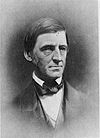
Ralph Waldo Emerson (25 May 1803 – 27 April 1882) was an American philosopher, essayist, and poet.
Best Ralph Waldo Emerson Quotes
Shortest
Earliest
Explore our curated collection of the most famous and impactful Ralph Waldo Emerson quotes.
“Thou animated torrid-zone.”
“Skepticism is slow suicide.”

“Children are all foreigners.”


“Revolutions never go backwards.”



“Nature is the best posture-master.”
“Self-command is the main elegance.”



“Everything intercepts us from ourselves.”
“Life is our dictionary.”

“Great geniuses have the shortest biographies.”
“Science does not know its debt to imagination.”
“A good indignation brings out all one's powers.”
“A creative economy is the fuel of magnificence.”


“Man Thinking must not be subdued by his instruments.”



“Never self-possessed, or prudent, love is all abandonment.”
“The best lightning-rod for your protection is your own spine.”

“What is a weed? A plant whose virtues have yet to be discovered.”



“Self-reliance, the height and perfection of man, is reliance on God.”
“Genius is always sufficiently the enemy of genius by over influence.”
“Next to the originator of a good sentence is the first quoter of it.”
“Solitude, the safeguard of mediocrity, is to genius the stern friend.”

“Nor mourn the unalterable Days
That Genius goes and Folly stays.”
That Genius goes and Folly stays.”
“Give me health and a day, and I will make the pomp of emperors ridiculous.”



“The imagination is not a talent of some men but is the health of every man.”
“By necessity, by proclivity, and by delight, we all quote.”
“Everything in the universe goes by indirection. There are no straight lines.”

“A good symbol is the best argument and is a missionary to persuade thousands.”

“The end of the human race will be that it will eventually die of civilization.”

“These preachers of beauty, which light the world with their admonishing smile.”
“Nature is too thin a screen; the glory of the One breaks in everywhere.”
“There is a kind of latent omniscience not only in every man but in every particle.”

“The blazing evidence of immortality is our dissatisfaction with any other solution.”


“It is easy to live for others; everybody does. I call on you to live for yourselves.”
“Literature is the effort of man to indemnify himself for the wrongs of his condition.”

“Wherever a man comes, there comes revolution. The old is for slaves.”
“God may forgive sins, he said, but awkwardness has no forgiveness in heaven or earth.”

“In fact, it is as difficult to appropriate the thoughts of others as it is to invent.”
“What is there in 'Paradise Lost' to elevate and astonish like Herschel or Somerville?”
“We are, like Nebuchadnezzar, dethroned, bereft of reason, and eating grass like an ox.”
“I see that sensible men and conscientious men all over the world were of one religion.”
“It makes a great difference in the force of a sentence whether a man be behind it or no.”
“There are two laws discrete
Not reconciled,
Law for man, and law for thing.”
Not reconciled,
Law for man, and law for thing.”

“People seem not to see that their opinion of the world is also a confession of character.”

“People seem not to see that their opinion of the world is also a confession of character.”
“Alcohol, hashish, prussic acid, strychnine are weak dilutions. The surest poison is time.”
“How we hate this solemn Ego that accompanies the learned, like a double, wherever he goes.”
“The best university that can be recommended to a man of ideas is the gauntlet of the mobs.”
“Thought is the property of him who can entertain it, and of him who can adequately place it.”

“Shallow men believe in luck, believe in circumstances...Strong men believe in cause and effect.”
“The highest compact we can make with our fellow, is, — "Let there be truth between us two forevermore".”
“A masterpiece of art has in the mind a fixed place in the chain of being, as much as a plant or a crystal.”

“There is always a certain meanness in the argument of conservatism, joined with a certain superiority in its fact.”

“Things are pretty, graceful, rich, elegant, handsome, but, until they speak to the imagination, not yet beautiful.”

“I wish to write such rhymes as shall not suggest a restraint, but contrariwise the wildest freedom.”
“This is the value of the Communities; not what they have done, but the revolution which they indicate as on the way.”
“Nothing is rich but the inexhaustible wealth of Nature. She shows us only surfaces, but she is million fathoms deep.”
“Character is higher than intellect...A great soul will be strong to live, as well as strong to think.”
“Let me never fall into the vulgar mistake of dreaming that I am persecuted whenever I am contradicted.”
“[The Upanishads and the Vedas] haunt me. In them I have found eternal compensation, unfathomable power, unbroken peace.”

“The young men were born with knives in their brain, a tendency to introversion, self-dissection, anatomizing of motives.”

“The bitterest tragic element in life to be derived from an intellectual source is the belief in a brute Fate or Destiny.”

“If the single man plant himself indomitably on his instincts, and there abide, the huge world will come round to him. 6.”
“Do not be too timid and squeamish about your actions. All life is an experiment. The more experiments you make the better.”
“A vivid thought brings the power to paint it; and in proportion to the depth of its source is the force of its projection.”
“Poetry teaches the enormous force of a few words, and, in proportion to the inspiration, checks loquacity.”
“Things added to things, as statistics, civil history, are inventories. Things used as language are inexhaustibly attractive.”
“Plato was synthesis of Europe and Asia, and a decidedly Oriental element pervades his philosophy, giving it a sunrise color.”
“Solvency is maintained by means of the national debt, on the principle, "If you will not lend me the money, how can I pay you?"”
“You have just dined, and however scrupulously the slaughterhouse is concealed in the graceful distance of miles, there is complicity.”
“The measure of action is the sentiment from which it proceeds. The greatest action may easily be one of the most private circumstance.”

“That which is best about conservatism, that which, though it cannot be expressed in detail, inspires reverence in all, is the Inevitable.”
“I regard it as the irresistible effect of the Copernican astronomy to have made the theological scheme of redemption absolutely incredible”
“When a whole nation is roaring Patriotism at the top of its voice, I am fain to explore the cleanness of its hands and purity of its heart.”

“Do not yet see, that, if the single man plant himself indomitably on his instincts, and there abide, the huge world will come round to him.”
“Great men, great nations, have not been boasters and buffoons, but perceivers of the terror of life, and have manned themselves to face it.”
“The true test of civilization is, not the census, nor the size of the cities, nor the crops - no, but the kind of man the country turns out.”
“Conversation is an art in which a man has all mankind for his competitors, for it is that which all are practising every day while they live.”

“We plant trees, we build stone houses, we redeem the waste, we make prospective laws, we found colleges and hospitals, for remote generations.”
“Wit makes its own welcome, and levels all distinctions. No dignity, no learning, and no force of character can make any stand against good wit.”

“There is a freemasonry among the dull by which they recognize and are sociable with the dull, as surely as a correspondent tact in men of genius.”

“I fancy I need more than another to speak (rather than write), with such a formidable tendency to the lapidary style. I build my house of boulders.”

“In the highest civilization, the book is still the highest delight. He who has once known its satisfactions is provided with a resource against calamity.”
“Immortality. I notice that as soon as writers broach this question they begin to quote. I hate quotation. Tell me what you know.”
“I find the Englishman to be him of all men who stands firmest in his shoes. They have in themselves what they value in their horses, — mettle and bottom.”

“So much of our time is spent in preparation, so much in routine and so much in retrospect, that the amount of each person’s genius is confined to a very few hours.”
“'Tis the good reader that makes the good book; in every book he finds passages which seem confidences or asides hidden from all else and unmistakenly meant for his ear.”
“Great men are they who see that spiritual is stronger than any material force, that thoughts rule the world. No hope so bright but is the beginning of its own fulfillment.”
“A mollusk is a cheap edition [of man] with a suppression of the costlier illustrations, designed for dingy circulation, for shelving in an oyster-bank or among the seaweed.”

“Pass in, pass in, the angels say,
In to the upper doors;
Nor count compartments of the floors,
But mount to Paradise
By the stairway of surprise.”
In to the upper doors;
Nor count compartments of the floors,
But mount to Paradise
By the stairway of surprise.”
“Is not marriage an open question, when it is alleged, from the beginning of the world, that such as are in the institution wish to get out, and such as are out wish to get in?”
“Raphael paints wisdom, Handel sings it, Phidias carves it, Shakespeare writes it, Wren builds it, Columbus sails it, Luther preaches it, Washington arms it, Watt mechanizes it.”

“Every book is a quotation; and every house is a quotation out of all forests and mines and stone-quarries; and every man is a quotation from all his ancestors.”
“Bad times have a scientific value. [...] We learn geology the morning after the earthquake, on ghastly diagrams of cloven mountains, upheaved plains, and the dry bed of the sea.”



“Daughters of Time, the hypocritic Days,
Muffled and dumb like barefoot dervishes,
And marching single in an endless file,
Bring diadems and fagots in their hands.”
Muffled and dumb like barefoot dervishes,
And marching single in an endless file,
Bring diadems and fagots in their hands.”
“No congress, nor mob, nor guillotine, nor fire, nor all together, can avail, to cut out, burn, or destroy the offense of superiority in persons. The superiority in him is inferiority in me.”
“I had better never see a book than to be warped by its attraction clean out of my own orbit, and made a satellite instead of a system. The one thing in the world, of value, is the active soul.”

“The profit of books is according to the sensibility of the reader. The profoundest thought or passion sleeps as in a mine until an equal mind and heart finds and publishes it.”
“Earth laughs in flowers to see her boastful boys
Earth-proud, proud of the earth which is not theirs;
Who steer the plough, but can not steer their feet
Clear of the grave.”
Earth-proud, proud of the earth which is not theirs;
Who steer the plough, but can not steer their feet
Clear of the grave.”
“Genius borrows nobly. '''When Shakespeare is charged with debts to his authors, Landor replies: "Yet he was more original than his originals. He breathed upon dead bodies and brought them into life."”
“I have heard with admiring submission the experience of the lady who declared "that the sense of being perfectly well-dressed gives a feeling of inward tranquility which religion is powerless to bestow".”
“When nature removes a great man, people explore the horizon for a successor; but none comes, and none will. His class is extinguished with him. In some other and quite different field the next man will appear.”

“The state of society is one in which the members have suffered amputation from the trunk, and strut about so many walking monsters,—a good finger, a neck, a stomach, an elbow, but never a man.”

“If I could put my hand on the north star, would it be as beautiful? The sea is lovely, but when we bathe in it, the beauty forsakes all the near water. For the imagination and senses cannot be gratified at the same time.”
“Whoso walketh in solitude,
And inhabiteth the wood,
Choosing light, wave, rock, and bird,
Before the money-loving herd,
Into that forester shall pass
From these companions power and grace.”
And inhabiteth the wood,
Choosing light, wave, rock, and bird,
Before the money-loving herd,
Into that forester shall pass
From these companions power and grace.”
“Our condition is like that of the poor wolves: if one of the flock wound himself, or so much as limp, the rest eat him up incontinently. That serene Power interposes the check upon the caprices and officiousness of our wills.”
“Only the great generalizations survive. The sharp words of the Declaration of Independence, lampooned then and since as 'glittering generalities,' have turned out blazing ubiquities that will burn forever and ever.”

“We are reformers in spring and summer; in autumn and winter we stand by the old — reformers in the morning, conservatives at night. Reform is affirmative, conservatism is negative; conservatism goes for comfort, reform for truth.”
“'Tis very certain that each man carries in his eye the exact indication of his rank in the immense scale of men, and we are always learning to read it. A complete man should need no auxiliaries to his personal presence.”
“The person who screams, or uses the superlative degree, or converses with heat, puts whole drawing-rooms to flight. If you wish to be loved, love measure. You must have genius or a prodigious usefulness if you will hide the want of measure.”
“The perception of the comic is a tie of sympathy with other men, a pledge of sanity, and protection from those perverse tendencies and gloomy insanities in which fine intellects sometimes lose themselves. A rogue alive to the ludicrous is still convertible.”

“But these young scholars who invade our hills,
Bold as the engineer who fells the wood,
And travelling often in the cut he makes,
Love not the flower they pluck, and know it not,
And all their botany is Latin names.”
Bold as the engineer who fells the wood,
And travelling often in the cut he makes,
Love not the flower they pluck, and know it not,
And all their botany is Latin names.”
“His imperial muse tosses the creation like a bauble from hand to hand to embody any capricious thought that is uppermost in her mind. The remotest spaces of nature are visited, and the farthest sundered things are brought together by a subtle spiritual connection.”

“If I made laws for Shakers or a school, I should gazette every Saturday all the words they were wont to use in reporting religious experience, as "spiritual life," "God," "soul," "cross," etc., and if they could not find new ones next week, they might remain silent.”

“In this distribution of functions, the scholar is the delegated intellect. In the right state, he is, Man Thinking.
In the degenerate state, when the victim of society, he tends to become a mere thinker, or, still worse, the parrot of other men's thinking.”
In the degenerate state, when the victim of society, he tends to become a mere thinker, or, still worse, the parrot of other men's thinking.”

“I trust a good deal to common fame, as we all must. If a man has good corn, or wood, or boards, or pigs, to sell, or can make better chairs or knives, crucibles or church organs, than anybody else, you will find a broad hard-beaten road to his house, though it be in the woods.”
“There are always two parties, the party of the Past and the party of the Future: the Establishment and the Movement. At times the resistance is reanimated, the schism runs under the world and appears in Literature, Philosophy, Church, State and social customs.”
“And when his hours are numbered, and the world
Is all his own, retiring, as he were not,
Leaves, when the sun appears, astonished Art
To mimic in slow structures, stone by stone
Built in an age, the mad wind's night-work,
The frolic architecture of the snow.”
Is all his own, retiring, as he were not,
Leaves, when the sun appears, astonished Art
To mimic in slow structures, stone by stone
Built in an age, the mad wind's night-work,
The frolic architecture of the snow.”
“I find men victims of illusion in all parts of life. Children, youths, adults, and old men, all are led by one bawble or another. Yoganidra, the goddess of illusion, Proteus, or Momus, or Gylfi's Mocking, — for the Power has many names, — is stronger than the Titans, stronger than Apollo.”

“Standing on the bare ground, — my head bathed by the blithe air, and uplifted into infinite space, — all mean egotism vanishes. I become a transparent eye-ball; I am nothing; I see all; the currents of the Universal Being circulate through me; I am part or particle of God.”
“Leave this hypocritical prating about the masses. Masses are rude, lame, unmade, pernicious in their demands and influence, and need not to be flattered, but to be schooled. I wish not to concede anything to them, but to tame, drill, divide, and break them up, and draw individuals out of them.”
“If the stars should appear one night in a thousand years, how would men believe and adore, and preserve for many generations the remembrance of the city of God which had been shown! But every night come out these envoys of beauty, and light the universe with their admonishing smile.”
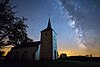
“There is always a best way of doing everything, if it be to boil an egg. Manners are the happy ways of doing things; each once a stroke of genius or of love, — now repeated and hardened into usage. They form at last a rich varnish, with which the routine of life is washed, and its details adorned.”
“I owed a magnificent day to the Bhagavad Gita. It was the first of books; it was as if an empire spoke to us, nothing small or unworthy, but large, serene, consistent, the voice of an old intelligence which in another age and climate had pondered and thus disposed of the same questions which exercise us.”

“Every man is a divinity in disguise, a god playing the fool. It seems as if heaven had sent its insane angels into our world as to an asylum. And here they will break out into their native music, and utter at intervals the words they have heard in heaven; then the mad fit returns, and they mope and wallow like dogs!”

“I like a church, I like a cowl,
I love a prophet of the soul,
And on my heart monastic aisles
Fall like sweet strains or pensive smiles;
Yet not for all his faith can see,
Would I that cowled churchman be.
Why should the vest on him allure,
Which I could not on me endure?”
I love a prophet of the soul,
And on my heart monastic aisles
Fall like sweet strains or pensive smiles;
Yet not for all his faith can see,
Would I that cowled churchman be.
Why should the vest on him allure,
Which I could not on me endure?”
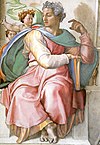
“The effects of opposition are wonderful. There are men who rise refreshed on hearing of a threat, — men to whom a crisis which intimidates and paralyzes the majority — demanding, not the faculties of prudence and thrift, but comprehension, immovableness, the readiness of sacrifice — comes graceful and beloved as a bride!”
“For nature beats in perfect tune,
And rounds with rhyme her every rune,
Whether she work in land or sea,
Or hide underground her alchemy.
Thou canst not wave thy staff in air,
Or dip thy paddle in the lake,
But it carves the bow of beauty there,
And the ripples in rhymes the oar forsake.”
And rounds with rhyme her every rune,
Whether she work in land or sea,
Or hide underground her alchemy.
Thou canst not wave thy staff in air,
Or dip thy paddle in the lake,
But it carves the bow of beauty there,
And the ripples in rhymes the oar forsake.”
“England's genius filled all measure
Of heart and soul, of strength and pleasure,
Gave to the mind its emperor,
And life was larger than before:
Nor sequent centuries could hit
Orbit and sum of Shakespeare's wit.
The men who lived with him became
Poets, for the air was fame.”
Of heart and soul, of strength and pleasure,
Gave to the mind its emperor,
And life was larger than before:
Nor sequent centuries could hit
Orbit and sum of Shakespeare's wit.
The men who lived with him became
Poets, for the air was fame.”
“We cannot overstate our debt to the Past, but the moment has the supreme claim. The Past is for us; but the sole terms on which it can become ours are its subordination to the Present. Only an inventor knows how to borrow, and every man is or should be an inventor. We must not tamper with the organic motion of the soul.”

“In actions of enthusiasm, this drawback appears: but in those lower activities, which have no higher aim than to make us more comfortable and more cowardly, in actions of cunning, actions that steal and lie, actions that divorce the speculative from the practical faculty, and put a ban on reason and sentiment, there is nothing else but drawback and negation.”
“When Confucius and the Indian Scriptures were made known, no claim to monopoly of ethical wisdom could be thought of... It is only within this century [the 1800 's] that England and America discovered that their nursery tales were old German and Scandinavian stories; and now it appears that they came from India, and are therefore the property of all the nations.”
“We must have kings, and we must have nobles. Nature provides such in every society, — only let us have the real instead of the titular. Let us have our leading and our inspiration from the best. In every society some men are born to rule, and some to advise. Let the powers be well directed, directed by love, and they would everywhere be greeted with joy and honor.”

“Undoubtedly we have no questions to ask which are unanswerable. We must trust the perfection of the creation so far, as to believe that whatever curiosity the order of things has awakened in our minds, the order of things can satisfy. Every man's condition is a solution in hieroglyphic to those inquiries he would put. He acts it as life, before he apprehends it as truth.”
“I saw men go up and down,
In the country and the town,
With this tablet on their neck,—
'Judgement and a judge we seek.'
Not to monarchs they repair,
Nor to learned jurist's chair;
But they hurry to their peers,
To their kinsfolk and their dears;
Louder than with speech they pray,—
'What am I? companion, say.'”
In the country and the town,
With this tablet on their neck,—
'Judgement and a judge we seek.'
Not to monarchs they repair,
Nor to learned jurist's chair;
But they hurry to their peers,
To their kinsfolk and their dears;
Louder than with speech they pray,—
'What am I? companion, say.'”
“Nature is no sentimentalist, — does not cosset or pamper us. We must see that the world is rough and surly, and will not mind drowning a man or a woman, but swallows your ships like a grain of dust. The cold, inconsiderate of persons, tingles your blood, benumbs your feet, freezes a man like an apple. The diseases, the elements, fortune, gravity, lightning, respect no persons.”
“The Religion that is afraid of science dishonours God and commits suicide. It acknowledges that it is not equal to the whole of truth, that it legislates, tyrannizes over a village of God's empires but is not the immutable universal law. Every influx of atheism, of skepticism is thus made useful as a mercury pill assaulting and removing a diseased religion and making way for truth.”

“Society undergoes continual changes; it is barbarous, it is civilized, it is Christianized, it is rich, it is scientific; but this change is not amelioration. For everything that is given something is taken. Society acquires new arts, and loses old instincts. The civilized man has built a coach, but has lost the use of his feet; he has a fine Geneva watch, but cannot tell the hour by the sun.”
“If the colleges were better, if they ... had the power of imparting valuable thought, creative principles, truths which become powers, thoughts which become talents, — if they could cause that a mind not profound should become profound, — we should all rush to their gates: instead of contriving inducements to draw students, you would need to set policy at the gates to keep order in the in-rushing multitude.”
“Our age is retrospective. It builds the sepulchres of the fathers. It writes biographies, histories, and criticism. The foregoing generation beheld God and nature face to face; we, through their eyes. Why should not we also enjoy an original relation to the universe. Why should not we have a poetry and philosophy of insight and not of tradition, and a religion by revelation to us, and not the history of theirs?”
“Success treads on every right step. For the instinct is sure, that prompts him to tell his brother what he thinks. He then learns, that in going down into the secrets of his own mind, he has descended into the secrets of all minds. He learns that he who has mastered any law in his private thoughts, is master to that extent of all men whose language he speaks, and of all into whose language his own can be translated.”

“Always put the best interpretation on a tenet. Why not on Christianity, wholesome, sweet, and poetic? It is the record of a pure and holy soul, humble, absolutely disinterested, a trutn-speaker, and bent on serving, teaching, and uplifting men. Christianity taught the capacity, the element, to Jove the All-perfect without a stingy bargain for personal happiness. It taught that to love him was happiness,—to love him in other’s virtues.”

“A mind does not receive truth as a chest receives jewels that are put into it, but as the stomach takes up food into the system. It is no longer food, but flesh, and is assimilated. The appetite and the power of digestion measure our right to knowledge. He has it who can use it. As soon as our accumulation overruns our invention or power to use, the evils of intellectual gluttony begin,— congestion of the brain, apoplexy, and strangulation.”

“Thought is all light, and publishes itself to the universe. It will speak, though you were dumb, by its own miraculous organ. It will flow out of your actions, your manners, and your face. It will bring you friendships. It will impledge you to truth by the love and expectation of generous minds. By virtue of the laws of that Nature, which is one and perfect, it shall yield every sincere good that is in the soul, to the scholar beloved of earth and heaven.”
“Consider what you have in the smallest chosen library. A company of the wisest and wittiest men that could be picked out of all civil countries, in a thousand years, have set in best order the results of their learning and wisdom. The men themselves were hid and inaccessible, solitary, impatient of interruption, fenced by etiquette; but the thought which they did not uncover to their bosom friend is here written out in transparent words to us, the strangers of another age.”
“The law of the table is beauty, a respect to the common soul of the guests. Everything is unreasonable which is private to two or three, or any portion of the company. Tact never violates for a moment this law; never intrudes the orders of the house, the vices of the absent, or a tariff of expenses, or professional privacies; as we say, we never “talk shop” before company. Lovers abstain from caresses, and haters from insults, while they sit in one parlor with common friends.”
“The two parties which divide the State, the party of Conservatism and that of Innovation are very old, and have disputed the possession of the world ever since it was made ... Now one, now the other gets the day, and still the fight renews itself as if for the first time, under new names and hot personalities ... Innovation is the salient energy; Conservatism the pause on the last movement.
Via Arthur M. Schlesinger, Jr., The Cycles of American History (Houghton Mifflin, 1986) p. 23”
Via Arthur M. Schlesinger, Jr., The Cycles of American History (Houghton Mifflin, 1986) p. 23”
“What point of morals, of manners, of economy, of philosophy, of religion, of taste, of the conduct of life, has he not settled? What mystery has he not signified his knowledge of? What office, or function, or district of man's work, has he not remembered? What king has he not taught state, as Talma taught Napoleon? What maiden has not found him finer than her delicacy? What lover has he not outloved? What sage has he not outseen? What gentleman has he not instructed in the rudeness of his behavior?”
“I call upon you, young men, to obey your heart, and be the nobility of this land. In every age of the world, there has been a leading nation, one of a more generous sentiment, whose eminent citizens were willing to stand for the interests of general justice and humanity, at the risk of being called, by the men of the moment, chimerical and fantastic. Which should be that nation but these States? Which should lead that movement, if not New England? Who should lead the leaders, but the Young American?”
“We may well call it black diamonds. Every basket is power and civilization. For coal is a portable climate. It carries the heat of the tropics to Labrador and the polar circle; and it is the means of transporting itself withersoever it is wanted. Watt and Stephenson whispered in the ear of mankind their secret, that a half-ounce of coal will draw two tons a mile, and coal carries coal, by rail and by boat, to make Canada as warm as Calcutta, and with its comfort brings its industrial power.”
“Slavery is disheartening; but Nature is not so helpless but it can rid itself of every last wrong. But the spasms of nature are centuries and ages and will tax the faith of short-lived men. Slowly, slowly the Avenger comes, but comes surely. The proverbs of the nations affirm these delays, but affirm the arrival. They say, "God may consent, but not forever." The delay of the Divine Justice — this was the meaning and soul of the Greek Tragedy, — this was the soul of their religion.”
“It is sublime as night and a breathless ocean. It contains every religious sentiment, all the grand ethics, which visit in turn each noble poetic mind .... It is of no use to put away the book if I trust myself in the woods or in a boat upon the pond. Nature makes a Brahmin of me presently: eternal compensation, unfathomable power, unbroken silence .... This is her creed. Peace, she saith to me, and purity and absolute abandonment - these panaceas expiate all sin and bring you to the beatitude of the Eight Gods.”
“What strength belongs to every plant and animal in nature. The tree or the brook has no duplicity, no pretentiousness, no show. It is, with all its might and main, what it is, and makes one and the same impression and effect at all times. All the thoughts of a turtle are turtles, and of a rabbit, rabbits. But a man is broken and dissipated by the giddiness of his will; he does not throw himself into his judgments; his genius leads him one way but 't is likely his trade or politics in quite another.”
“I have been quoted as saying captious things about travel; but I mean to do justice. I think, there is a restlessness in our people, which argues want of character. All educated Americans, first or last, go to Europe; — perhaps, because it is their mental home, as the invalid habits of this country might suggest. An eminent teacher of girls said, "the idea of a girl's education, is, whatever qualifies them for going to Europe." Can we never extract this tape-worm of Europe from the brain of our countrymen?”

“The stars awaken a certain reverence, because though always present, they are inaccessible; but all natural objects make a kindred impression, when the mind is open to their influence. Nature never wears a mean appearance. Neither does the wisest man extort her secret, and lose his curiosity by finding out all her perfection. Nature never became a toy to a wise spirit. The flowers, the animals, the mountains, reflected the wisdom of his best hour, as much as they had delighted the simplicity of his childhood.”
“I have been writing & speaking what were once called novelties, for twenty five or thirty years, & have not now one disciple. Why? Not that what I said was not true; not that it has not found intelligent receivers but because it did not go from any wish in me to bring men to me, but to themselves. I delight in driving them from me. What could I do, if they came to me? — they would interrupt and encumber me. This is my boast that I have no school & no follower. I should account it a measure of the impurity of insight, if it did not create independence.”
“A third illusion haunts us, that a long duration, as a year, a decade, a century, is valuable. But an old French sentence says, "God works in moments," — "En peu d'heure Dieu labeure." We ask for long life, but 't is deep life, or grand moments, that signify. Let the measure of time be spiritual, not mechanical. Life is unnecessarily long. Moments of insight, of fine personal relation, a smile, a glance, — what ample borrowers of eternity they are! Life culminates and concentrates; and Homer said, "The Gods ever give to mortals their appointed share of reason only on one day."”
“Explore, and explore, and explore. Be neither chided nor flattered out of your position of perpetual inquiry. Neither dogmatise yourself, nor accept another's dogmatism. Why should you renounce your right to traverse the star-lit deserts of truth, for the premature comforts of an acre, house, and barn? Truth also has its roof, and bed, and board. Make yourself necessary to the world, and mankind will give you bread, and if not store of it, yet such as shall not take away your property in all men's possessions, in all men's affections, in art, in nature, and in hope.”
“I have seen manners that make a similar impression with personal beauty, that give the like exhilaration and refine us like that; and in memorable experiences they are suddenly better than beauty, and make that superfluous and ugly. But they must be marked by fine perception, the acquaintance with real beauty. They must always show control; you shall not be facile, apologetic, or leaky, but king over your word; and every gesture and action shall indicate power at rest. They must be inspired by the good heart. There is no beautifier of complexion, or form, or behavior, like the wish to scatter joy, and not pain, around us.”
“Wealth begins in a tight roof that keeps the rain and wind out; in a good pump that yields you plenty of sweet water; in two suits of clothes, so to change your dress when you are wet; in dry sticks to burn; in a good double-wick lamp; and three meals; in a horse, or a locomotive, to cross the land; in a boat to cross the sea; in tools to work with; in books to read; and so, in giving, on all sides, by tolls and auxiliaries, the greatest possible extension to our powers, as if it added feet, and hands, and eyes, and blood, length to the day, and knowledge, and good-will.
Wealth begins with these articles of necessity.”
Wealth begins with these articles of necessity.”

“Act, if you like,—but you do it at your peril. Men's actions are too strong for them. Show me a man who has acted, and who has not been the victim and slave of his action. What they have done commits and enforces them to do the same again. The first act, which was to be an experiment, becomes a sacrament. The fiery reformer embodies his aspiration in some rite or covenant, and he and his friends cleave to the form, and lose the aspiration. The Quaker has established Quakerism, the Shaker has established his monastery and his dance; and, although each prates of spirit, there is no spirit, but repetition, which is anti-spiritual.”
“The Indian teaching, through its clouds of legends, has yet a simple and grand religion, like a queenly countenance seen through a rich veil. It teaches to speak truth, love others, and to dispose trifles. The East is grand - and makes Europe appear the land of trifles .... all is soul and the soul is Vishnu ... cheerful and noble is the genius of this cosmogony. Hari is always gentle and serene - he translates to heaven the hunter who has accidentally shot him in his human form, he pursues his sport with boors and milkmaids at the cow pens; all his games are benevolent and he enters into flesh to relieve the burdens of the world.”
“It is easy to see that the existing generation are conspiring with a beneficence, which, in its working for coming generations, sacrifices the passing one, which infatuates the most selfish men to act against their private interest for the public welfare. We build railroads, we know not for what or for whom; but one thing is certain, that we who build will receive the very smallest share of benefit. Benefit will accrue; they are essential to the country, but that will be felt not until we are no longer countrymen. We do the like in all matters: —
'Man's heart the Almighty to the Future set
By secret and inviolable springs.'”
'Man's heart the Almighty to the Future set
By secret and inviolable springs.'”
“Gentlemen, there is a sublime and friendly Destiny by which the human race is guided, — the race never dying, the individual never spared, — to results affecting masses and ages. Men are narrow and selfish, but the Genius or Destiny is not narrow, but beneficent. It is not discovered in their calculated and voluntary activity, but in what befalls, with or without their design. Only what is inevitable interests us, and it turns out that love and good are inevitable, and in the course of things. That Genius has infused itself into nature. It indicates itself by a small excess of good, a small balance in brute facts always favorable to the side of reason.”

“Characters and talents are complemental and suppletory. The world stands by balanced antagonisms. The more the peculiarities are pressed the better the result. The air would rot without lightning; and without the violence of direction that men have, without bigots, without men of the fixed idea, no excitement, no efficiency.
The novelist should not make any character act absurdly, but only absurdly as seen by others. For it is so in life. Nonsense will not keep its unreason if you come into the humorist's point of view, but unhappily we find it is fast becoming sense, and we must flee again into the distance if we would laugh.”
The novelist should not make any character act absurdly, but only absurdly as seen by others. For it is so in life. Nonsense will not keep its unreason if you come into the humorist's point of view, but unhappily we find it is fast becoming sense, and we must flee again into the distance if we would laugh.”
“Now shall we say that only the first men were well alive, and the existing generation is invalided and degenerate? ... A more subtle and severe criticism might suggest that some dislocation has befallen the race; that men are off their centre; that multitudes of men do not live with Nature, but behold it as exiles. People go out to look at sunrises and sunsets who do not recognize their own quietly and happily, but know that it is foreign to them. As they do by books, so they quote the sunset and the star, and do not make them theirs. Worse yet, they live as foreigners in the world of truth, and quote thoughts, and thus disown them. Quotation confesses inferiority.”
“By the rude bridge that arched the flood,
Their flag to April's breeze unfurled,
Here once the embattled farmers stood,
And fired the shot heard round the world. The foe long since in silence slept;
Alike the conqueror silent sleeps;
And Time the ruined bridge has swept
Down the dark stream which seaward creeps. On this green bank, by this soft stream,
We set to-day a votive stone;
That memory may their deed redeem,
When, like our sires, our sons are gone. Spirit, that made those heroes dare,
To die, and leave their children free,
Bid Time and Nature gently spare
The shaft we raise to them and thee.”
Their flag to April's breeze unfurled,
Here once the embattled farmers stood,
And fired the shot heard round the world. The foe long since in silence slept;
Alike the conqueror silent sleeps;
And Time the ruined bridge has swept
Down the dark stream which seaward creeps. On this green bank, by this soft stream,
We set to-day a votive stone;
That memory may their deed redeem,
When, like our sires, our sons are gone. Spirit, that made those heroes dare,
To die, and leave their children free,
Bid Time and Nature gently spare
The shaft we raise to them and thee.”

“What would we really know the meaning of? The meal in the firkin; the milk in the pan; the ballad in the street; the news of the boat; the glance of the eye; the form and the gait of the body; — show me the ultimate reason of these matters; show me the sublime presence of the highest spiritual cause lurking, as always it does lurk, in these suburbs and extremities of nature; let me see every trifle bristling with the polarity that ranges it instantly on an eternal law; and the shop, the plough, and the ledger, referred to the like cause by which light undulates and poets sing; — and the world lies no longer a dull miscellany and lumber-room, but has form and order; there is no trifle; there is no puzzle; but one design unites and animates the farthest pinnacle and the lowest trench.”
“A man contains all that is needful to his government within himself. He is made a law unto himself. All real good or evil that can befal [sic] him must be from himself. He only can do himself any good or any harm. Nothing can be given to him or can taken from him but always there is a compensation.. There is a correspondence between the human soul and everything that exists in the world; more properly, everything that is known to man. Instead of studying things without the principles of them, all may be penetrated unto with him. Every act puts the agent in a new position. The purpose of life seems to be to acquaint a man with himself. He is not to live the future as described to him but to live the real future to the real present. The highest revelation is that God is in every man.”
“I am not much an advocate for travelling, and I observe that men run away to other countries because they are not good in their own, and run back to their own because they pass for nothing in the new places. For the most part, only the light characters travel. Who are you that have no task to keep you at home? I have been quoted as saying captious things about travel; but I mean to do justice. .... He that does not fill a place at home, cannot abroad. He only goes there to hide his insignificance in a larger crowd. You do not think you will find anything there which you have not seen at home? The stuff of all countries is just the same. Do you suppose there is any country where they do not scald milk-pans, and swaddle the infants, and burn the brushwood, and broil the fish? What is true anywhere is true everywhere. And let him go where he will, he can only find so much beauty or worth as he carries.”

“The charming landscape which I saw this morning, is indubitably made up of some twenty or thirty farms. Miller owns this field, Locke that, and Manning the woodland beyond. But none of them owns the landscape. There is a property in the horizon which no man has but he whose eye can integrate all the parts, that is, the poet. This is the best part of these men's farms, yet to this their warranty-deeds give no title. To speak truly, few adult persons can see nature. Most persons do not see the sun. At least they have a very superficial seeing. The sun illuminates only the eye of the man, but shines into the eye and the heart of the child. The lover of nature is he whose inward and outward senses are still truly adjusted to each other; who has retained the spirit of infancy even into the era of manhood. His intercourse with heaven and earth, becomes part of his daily food.”
“I am not blind to the worth of the wonderful gift of "Leaves of Grass." I find it the most extraordinary piece of wit and wisdom that America has yet contributed. I am very happy in reading it, as great power makes us happy. It meets the demand I am always making of what seemed the sterile and stingy nature, as if too much handiwork, or too much lymph in the temperament, were making our western wits fat and mean.
I give you joy of your free and brave thought. I have great joy in it. I find incomparable things said incomparably well, as they must be. I find the courage of treatment which so delights us, and which large perception only can inspire.
I greet you at the beginning of a great career, which yet must have had a long foreground somewhere, for such a start. I rubbed my eyes a little, to see if this sunbeam were no illusion; but the solid sense of the book is a sober certainty. It has the best merits, namely, of fortifying and encouraging...”
I give you joy of your free and brave thought. I have great joy in it. I find incomparable things said incomparably well, as they must be. I find the courage of treatment which so delights us, and which large perception only can inspire.
I greet you at the beginning of a great career, which yet must have had a long foreground somewhere, for such a start. I rubbed my eyes a little, to see if this sunbeam were no illusion; but the solid sense of the book is a sober certainty. It has the best merits, namely, of fortifying and encouraging...”
“You will hear every day the maxims of a low prudence. You will hear, that the first duty is to get land and money, place and name. "What is this Truth you seek? What is this Beauty?" men will ask, with derision. If, nevertheless, God have called any of you to explore truth and beauty, be bold, be firm, be true. When you shall say, "As others do, so will I. I renounce, I am sorry for it, my early visions; I must eat the good of the land, and let learning and romantic expectations go, until a more convenient season." — then dies the man in you; then once more perish the buds of art, and poetry, and science, as they have died already in a thousand thousand men. The hour of that choice is the crisis of your history; and see that you hold yourself fast by the intellect. ... Bend to the persuasion which is flowing to you from every object in Nature, to be its tongue to the heart of man, and to show the besotted world how passing fair is wisdom.”
“Each to each a looking-glass,
Reflects his figure that doth pass.
Every wayfarer he meets
What himself declared repeats,
What himself confessed records,
Sentences him in his words;
The form is his own corporal form,
And his thought the penal worm. Yet shine forever virgin minds,
Loved by stars and the purest winds,
Which, o'er passion throned sedate,
Have not hazarded their state;
Disconcert the searching spy,
Rendering to a curious eye
The durance of a granite ledge
To those who gaze from the sea's edge.
It is there for benefit;
It is there for purging light;
There for purifying storms;
And its depths reflect all forms;
It cannot parley with the mean,—
Pure by impure is not seen.
For there's no sequestered grot,
Lone mountain tarn, or isle forgot,
But Justice, journeying in the sphere,
Daily stoops to harbour there.”
Reflects his figure that doth pass.
Every wayfarer he meets
What himself declared repeats,
What himself confessed records,
Sentences him in his words;
The form is his own corporal form,
And his thought the penal worm. Yet shine forever virgin minds,
Loved by stars and the purest winds,
Which, o'er passion throned sedate,
Have not hazarded their state;
Disconcert the searching spy,
Rendering to a curious eye
The durance of a granite ledge
To those who gaze from the sea's edge.
It is there for benefit;
It is there for purging light;
There for purifying storms;
And its depths reflect all forms;
It cannot parley with the mean,—
Pure by impure is not seen.
For there's no sequestered grot,
Lone mountain tarn, or isle forgot,
But Justice, journeying in the sphere,
Daily stoops to harbour there.”
“The two parties which divide the state, the party of Conservatism and that of Innovation, are very old, and have disputed the possession of the world ever since it was made. This quarrel is the subject of civil history. The conservative party established the reverend hierarchies and monarchies of the most ancient world. The battle of patrician and plebeian, of parent state and colony, of old usage and accommodation to new facts, of the rich and the poor, reappears in all countries and times. The war rages not only in battle-fields, in national councils and ecclesiastical synods, but agitates every man's bosom with opposing advantages every hour. On rolls the old world meantime, and now one, now the other gets the day, and still the fight renews itself as if for the first time, under new names and hot personalities.
Such an irreconcilable antagonism of course must have a correspondent depth of seat in the human constitution. It is the opposition of Past and Future, of Memory and Hope, of the Understanding and the Reason. It is the primal antagonism, the appearance in trifles of the two poles of nature.”
Such an irreconcilable antagonism of course must have a correspondent depth of seat in the human constitution. It is the opposition of Past and Future, of Memory and Hope, of the Understanding and the Reason. It is the primal antagonism, the appearance in trifles of the two poles of nature.”

“The key to the period appeared to be that the mind had become aware of itself. Men grew reflective and intellectual. There was a new consciousness. The former generations acted under the belief that a shining social prosperity was the beatitude of man, and sacrificed uniformly the citizen to the State. The modern mind believed that the nation existed for the individual, for the guardianship and education of every man. This idea, roughly written in revolutions and national movements, in the mind of the philosopher had far more precision; the individual is the world.
This perception is a sword such as was never drawn before. It divides and detaches bone and marrow, soul and body, yea, almost the man from himself. It is the age of severance, of dissociation, of freedom, of analysis, of detachment. Every man for himself. The public speaker disclaims speaking for any other; he answers only for himself. The social sentiments are weak; the sentiment of patriotism is weak; veneration is low; the natural affections feebler than they were. People grow philosophical about native land and parents and. relations. There is an universal resistance to ties rand ligaments once supposed essential to civil society. The new race is stiff, heady and rebellious; they are fanatics in freedom; they hate tolls, taxes, turnpikes, banks, hierarchies, governors, yea, almost laws. They have a neck of unspeakable tenderness; it winces at a hair. They rebel against theological as against political dogmas; against mediation, or saints, or any nobility in the unseen.
The age tends to solitude. The association of the time is accidental and momentary and hypocritical, the detachment intrinsic and progressive. The association is for power, merely, — for means; the end being the enlargement and independency of the individual.”
This perception is a sword such as was never drawn before. It divides and detaches bone and marrow, soul and body, yea, almost the man from himself. It is the age of severance, of dissociation, of freedom, of analysis, of detachment. Every man for himself. The public speaker disclaims speaking for any other; he answers only for himself. The social sentiments are weak; the sentiment of patriotism is weak; veneration is low; the natural affections feebler than they were. People grow philosophical about native land and parents and. relations. There is an universal resistance to ties rand ligaments once supposed essential to civil society. The new race is stiff, heady and rebellious; they are fanatics in freedom; they hate tolls, taxes, turnpikes, banks, hierarchies, governors, yea, almost laws. They have a neck of unspeakable tenderness; it winces at a hair. They rebel against theological as against political dogmas; against mediation, or saints, or any nobility in the unseen.
The age tends to solitude. The association of the time is accidental and momentary and hypocritical, the detachment intrinsic and progressive. The association is for power, merely, — for means; the end being the enlargement and independency of the individual.”
“It will never make any difference to a hero what the laws are. His greatness will shine and accomplish itself unto the end, whether they second him or not. If he have earned his bread by drudgery, and in the narrow and crooked ways which were all an evil law had left him, he will make it at least honorable by his expenditure. Of the past he will take no heed; for its wrongs he will not hold himself responsible: he will say, All the meanness of my progenitors shall not bereave me of the power to make this hour and company fair and fortunate. Whatsoever streams of power and commodity flow to me, shall of me acquire healing virtue, and become fountains of safety. Cannot I too descend a Redeemer into nature? Whosoever hereafter shall name my name, shall not record a malefactor, but a benefactor in the earth. If there be power in good intention, in fidelity, and in toil, the north wind shall be purer, the stars in heaven shall glow with a kindlier beam, that I have lived. I am primarily engaged to myself to be a public servant of all the gods, to demonstrate to all men that there is intelligence and good will at the heart of things, and ever higher and yet higher leadings. These are my engagements; how can your law further or hinder me in what I shall do to men? On the other hand, these dispositions establish their relations to me. Wherever there is worth, I shall be greeted. Wherever there are men, are the objects of my study and love. Sooner of later all men will be my friends, and will testify in all methods the energy of their regard. I cannot thank your law for my protection. I protect it. It is not in its power to protect me. It is my business to make myself revered. I depend on my honor, my labor, and my dispositions for my place in the affections of mankind, and not on any conventions or parchments of yours.”
Ralph Waldo Emerson Quotes by Topic
Find exactly what you are looking for by browsing this categorized list of Ralph Waldo Emerson quotes by topic.
Ralph Waldo Emerson on Friendship 11 quotes
View all 11 quotes on Friendship →Ralph Waldo Emerson on Individualism 9 quotes
View all 9 quotes on Individualism →Ralph Waldo Emerson on Beauty 8 quotes
“Beauty without expression tires.”
Ralph Waldo Emerson on Quotations 7 quotes
“Quotation confesses inferiority.”

Ralph Waldo Emerson on Books 7 quotes
View all 7 quotes on Books →What Ralph Waldo Emerson Said About Others
Discover personal opinions Ralph Waldo Emerson shared regarding contemporaries.
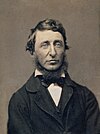
Ralph Waldo Emerson on Henry David Thoreau 11 quotes
“Henry avoids all commonplace, & talks birch bark to all comers, & reduces them all to the same insignificance.”
Ralph Waldo Emerson on Margaret Fuller 4 quotes
“I remember that she made me laugh more than I liked; for I was, at that time, an eager scholar of ethics, and had tasted the sweets of solitude and stoicism, and I found something profane in the hours of amusing gossip into which she drew me...”

Ralph Waldo Emerson on Baruch Spinoza 3 quotes
View all 3 quotes on Baruch Spinoza →Ralph Waldo Emerson on William Shakespeare 3 quotes
“The passages of Shakespeare that we most prize were never quoted until within this century.”

Ralph Waldo Emerson on Thomas Carlyle 2 quotes
“As a literary artist he has great merits, beginning with the main one that he never wrote one dull line. How well-read, how adroit, what thousand arts in his one art of writing.”

Quotes About Ralph Waldo Emerson
Gain deeper perspective through quotes about Ralph Waldo Emerson from others.
Charles Bradlaugh on Ralph Waldo Emerson

Fredrika Bremer on Ralph Waldo Emerson
“That which struck me most, as distinguishing him from most other human beings, is nobility. He is a born nobleman.”
James Elliot Cabot on Ralph Waldo Emerson
“It was a maxim with him that power is not so much shown in talent or in successful performance as in tone; the absolute or the victorious tone ... He disliked limitations, and welcomed whatever promised to get rid of them, without always inquiring very closely what was left when they were removed.”
Edwidge Danticat chapter on Ralph Waldo Emerson
“"We, as we read," Ralph Waldo Emerson wrote in an essay on history, "must become Greeks, Romans, Turks, priest and king, martyr and executioner; must fasten these images to some reality in our secret experience, or we shall learn nothing rightly."”
Frederick Douglass on Ralph Waldo Emerson
“England laughed at American authorship and we sent her Emerson...”





Disputed Quotes
Quotes attributed to Ralph Waldo Emerson that are questionable.
Misattributed Quotes
Quotes mistakenly credited to Ralph Waldo Emerson
“Never lose an opportunity of seeing anything that is beautiful; for beauty is God's handwriting—a wayside sacrament. Welcome it in every fair face, in every fair sky, in every fair flower, and thank God for it as a cup of blessing.”
“To laugh often and much; To win the respect of intelligent people and the affection of children; To earn the appreciation of honest critics and endure the betrayal of false friends; To appreciate beauty, to find the best in others; To leave the world a bit better, whether by a healthy child, a garden patch or a redeemed social condition; To know even one life has breathed easier because you have lived. This is to have succeeded.”
“The purpose of life is not to be happy. It is to be useful, to be honorable, to be compassionate, to have it make some difference that you have lived and lived well.”
“No member of a crew is praised for the rugged individuality of his rowing.”
About Ralph Waldo Emerson
Ralph Waldo Emerson (25 May 1803 – 27 April 1882) was an American philosopher, essayist, and poet.