Link Copied!
Georg Wilhelm Friedrich Hegel Quotes (1770-1831)
Philosopher








-100px.jpg)




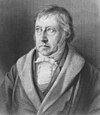
About Georg Wilhelm Friedrich Hegel
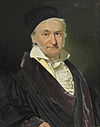
Georg Wilhelm Friedrich Hegel (27 August 1770 – 14 November 1831) was a German philosopher considered one of the most important figures in German idealism. He is one of the fundamental figures of Western philosophy, with his influence extending to the entire range of contemporary philosophical issues, from aesthetics to ontology to politics, both in the analytic and continental tradition.
Best Georg Wilhelm Friedrich Hegel Quotes
Shortest
Earliest
Explore our curated collection of the most famous and impactful Georg Wilhelm Friedrich Hegel quotes.
“Serious occupation is labor that has reference to some want.”
“To be aware of limitations is already to be beyond them.”

“Die Eule der Minerva beginnt erst mit der einbrechenden Dämmerung ihren Flug.”
“Abstraktionen in der Wirklichkeit geltend machen, heißt Wirklichkeit zerstören.”
“It is because the method of physics does not satisfy the comprehension that we have to go on further.”
“The Few assume to be the deputies, but they are often only the despoilers of the Many.”
“Philosophy is by its nature something esoteric, neither made for the mob nor capable of being prepared for the mob.”

“The heart is everywhere, and each part of the organism is only the specialized force of the heart itself.”

“To him who looks upon the world rationally, the world in its turn presents a rational aspect. The relation is mutual.”

“It is easier to discover a deficiency in individuals, in states, and in providence, than to see their real import or value.”
“Discord which appears at first to be a lamentable breach and dissolution of the unity of a party, is really the crowning proof of its success.”
“The essence of the modern state is the union of the universal with the full freedom of the particular, and with the welfare of individuals.”
“The science of religion is one science within philosophy; indeed it is the final one. In that respect it presupposes the other philosophical disciplines and is therefore a result.”

“In the “fulfillment” of both the laws and duty, ... the moral disposition ceases to be the universal, opposed to inclination, and inclination ceases to be particular, opposed to the law.”

“It strikes everyone in beginning to form an acquaintance with the treasures of Indian literature, that a land so rich in intellectual products and those of the profoundest order of thought..."”

“The History of the world is none other than the progress of the consciousness of Freedom; a progress whose development according to the necessity of its nature, it is our business to investigate.”

“The beginning of religion, more precisely its content, is the concept of religion itself, that God is the absolute truth, the truth of all things, and subjectively that religion alone is the absolutely true knowledge.”


“In history, we are concerned with what has been and what is; in philosophy, however, we are concerned not with what belongs exclusively to the past or to the future, but with that which is, both now and eternally — in short, with reason.”
“I saw the Emperor—this world-soul—riding out of the city on reconnaissance. It is indeed a wonderful sensation to see such an individual, who, concentrated here at a single point, astride a horse, reaches out over the world and masters it.”
“Jede Vorstellung ist eine Verallgemeinerung, und diese gehört dem Denken an. Etwas allgemein machen, heißt, es denken. ("Grundlinien der Philosophie des Rechts oder Naturrecht und Staatswissenschaft im Grundrisse", Berlin, 1833, p. 35)”
“Without being known too well, it [India] has existed for millennia in the imagination of the Europeans as a wonderland. Its fame, which it has always had with regard to its treasures, both its natural ones, and in particular, its wisdom, has lured men there.”
“The Being of the universe, at first hidden and concealed, has no power which can offer resistance to the search for knowledge ; it has to lay itself open before the seeker — to set before his eyes and give for his enjoyment, its riches and its depths. p xii”
“Poetry is the universal art of the spirit which has become free in itself and which is not tied down for its realization to external sensuous material; instead, it launches out exclusively in the inner space and the inner time of ideas and feelings.”
“To be independent of public opinion is the first formal condition of achieving anything great or rational whether in life or in science. Great achievement is assured, however, of subsequent recognition and grateful acceptance by public opinion, which in due course will make it one of its own prejudices”

“What the English call “comfortable” is something endless and inexhaustible. Every condition of comfort reveals in turn its discomfort, and these discoveries go on for ever. Hence the new want is not so much a want of those who have it directly, but is created by those who hope to make profit from it.”
“The inclination to act as the laws command, a virtue, is a synthesis in which the law ... loses its universality and the subject its particularity; both lose their opposition, while in the Kantian conception of virtue this opposition remains, and the universal becomes the master and the particular the mastered.”
“The possession of self-conscious reason, which belongs to us of the present world, did not arise suddenly, nor did it grow only from the soil of the present. This possession must be regarded as previously present, as an inheritance, and as the result of labour — the labour of all past generations of men. Introduction p. 2”

“What the history of Philosophy shows us is a succession of noble minds, a gallery of heroes of thought, who, by the power of reason, have penetrated into the being of things, of nature and of spirit, into the Being of God, and have won for us by their labours the highest treasure, the treasure of reasoned knowledge. Introduction p. 1”

“Das Schicksal des jüdischen Volkes ist das Schicksal Makbeths, der aus der Natur selbst trat, sich an fremde Wesen hing, und so in ihrem Dienste alles Heilige der menschlichen Natur zertreten und ermorden, von seinen Göttern (denn es waren Objekte, er war Knecht) endlich verlassen, und an seinem Glauben selbst zerschmettert werden mußte.”
“The life of God — the life which the mind apprehends and enjoys as it rises to the absolute unity of all things — may be described as a play of love with itself; but this idea sinks to an edifying truism, or even to a platitude, when it does not embrace in it the earnestness, the pain, the patience, and labor, involved in the negative aspect of things.”

“A philosophy without heart and a faith without intellect are abstractions from the true life of knowledge and faith. The man whom philosophy leaves cold, and the man whom real faith does not illuminate, may be assured that the fault lies in them, not in knowledge and faith. The former is still an alien to philosophy, the latter an alien to faith.”

“Die Architektur ist dann die Kristallisation, die Skulptur die organische Figuration der Materie in ihrer sinnlich-räumlichen Totalität; die Malerei die gefärbte Fläche und Linie; während in der Musik der Raum überhaupt zu dem in sich erfüllten Punkt der Zeit übergeht; bis das äußere Material endlich in der Poesie ganz zur Wertlosigkeit herabgesetzt ist.”
“In Mohammedanism the narrow principle of the Jews is expanded into universality and thereby overcome. Here, God is no longer, as in the Far East, regarded as existent in an immediately sensory way but is conceived as the one infinite power elevated above all the multiplicity of the world. Mohammedanism is, therefore, in the strictest sense of the word, the religion of sublimity.”
“India has always been an object of yearning, a realm of wonder, a world of magic... India is the land of dreams. India had always dreamt - more of the Bliss that is man's final goal. And this has helped India to be more creative in history than any other nation. Hence the effervescence of myths and legends, religious and philosophies, music, and dances and the different styles of architecture." ...”

“That man should think of God as nothingness must at first sight seem astonishing, must appear to us a most peculiar idea. But, considered more closely, this determination means that God is absolutely nothing determined. He is the Undetermined; no determinateness of any kind pertains to God; He is the Infinite. This is equivalent to saying that God is the negation of all particularity.”
“Among the Romans in Christian times Mithras-worship as very widely spread, and so late as the Middle Ages we meet with a secret Mithras-worship ostensibly connected with the order of the Knights-Templars. Mithras thrusting the knife into the neck of the ox is a figurative representation belonging essentially to the cult of Mithras, of which examples have been frequently found in Europe.”
“Every philosophy is complete in itself and, like a genuine work of art, contains the totality. Just as the works of Apelles and Sophocles, if Raphael and Shakespeare had known them, should not have appeared to them as mere preliminary exercises for their own work, but rather as a kindred force of the spirit, so, too reason cannot find in its own earlier forms mere useful preliminary exercises for itself.”
“The destiny of the spiritual World, and, — since this is the substantial World, while the physical remains subordinate to it, or, in the language of speculation, has no truth as against the spiritual, — the final cause of the World at large, we allege to be the consciousness of its own freedom on the part of Spirit, and ipso facto, the reality of that freedom.”
“A command can express no more than an ought or a shall, because it is a universal, but it does not express an ‘is’; and this at once makes plain its deficiency. Against such commands Jesus sets virtue, i.e., a loving disposition, which makes the content of the command superfluous and destroys its form as a command, because that form implies an opposition between a commander and something resisting the command.”
“Aims, principles, &c., have a place in our thoughts, in our subjective design only; but not yet in the sphere of reality. That which exists for itself only, is a possibility, a potentiality; but has not yet emerged into Existence. A second element must be introduced in order to produce actuality — viz. actuation, realization; and whose motive power is the Will — the activity of man in the widest sense.”
“What Jesus reveals is not that laws disappear but that they must be kept through righteousness of a new kind, ... which is more complete because it supplements the deficiency in the laws. ... This expanded content we may call an inclination so to act as the laws may command, i.e., a unification of inclination with the law whereby the latter loses its form as law. This correspondence with inclination is the πληρωμα [fulfillment] of the law.”
“The first remark we have to make, and which — though already presented more than once — cannot be too often repeated when the occasion seems to call for it, — is that what we call principle, aim, destiny, or the nature and idea of Spirit, is something merely general and abstract. Principle — Plan of Existence — Law — is a hidden, undeveloped essence, which as such — however true in itself — is not completely real.”
“Not only must philosophy be in agreement with our empirical knowledge of Nature, but the origin and formation of the Philosophy of Nature presupposes and is conditioned by empirical physics. However, the course of a science's origin and the preliminaries of its construction are one thing, while the science itself is another. In the latter, the former can no longer appear as the foundation of the science; here, the foundation must be the necessity of the Concept.”
“What experience and history teach is this — that nations and governments have never learned anything from history, or acted upon any lessons they might have drawn from it.
• Variant translation: What experience and history teach is this — that people and governments never have learned anything from history, or acted on principles deduced from it. Misquoted as: "We learn from history that we do not learn from history."”
• Variant translation: What experience and history teach is this — that people and governments never have learned anything from history, or acted on principles deduced from it. Misquoted as: "We learn from history that we do not learn from history."”

“The significance of that 'absolute commandment', know thyself — whether we look at it in itself or under the historical circumstances of its first utterance — is not to promote mere self-knowledge in respect of the particular capacities, character, propensities, and foibles of the single self. The knowledge it commands means that of man's genuine reality — of what is essentially and ultimately true and real — of spirit as the true and essential being.”
“The Philosophy of Nature takes up the material, prepared for it by physics out of experience, at the point to which physics has brought it, and again transforms it, without basing it ultimately on the authority of experience. Physics therefore must work into the hands of philosophy, so that the latter may translate into a true comprehension (Begriff) the abstract universal transmitted to it, showing how it issues from that comprehension as an intrinsically necessary whole.”
“The goal to be reached is the mind's insight into what knowing is. Impatience asks for the impossible, wants to reach the goal without the means of getting there. The length of the journey has to be borne with, for every moment is necessary, ... because by nothing less could that all-pervading mind ever manage to become conscious of what itself is — for that reason, the individual mind, in the nature of the case, cannot expect by less toil to grasp what its own substance contains.”
“The necessities of the time have accorded to the petty interests of every day life such overwhelming attention : the deep interests of actuality and the strife respecting these have engrossed all the powers and the forces of the mind — as also the necessary means — to so great an extent, that no place has been left to the higher inward life, the intellectual operations of a purer sort; and the better natures have thus been stunted in their growth, and in great measure sacrificed. p. x”
“History, is a conscious, self-mediating process — Spirit emptied out into Time; but this externalization, this kenosis, is equally an externalization of itself; the negative is the negative of itself. ... Thus absorbed in itself, it is sunk in the night of its self-consciousness; but in that night its vanished outer existence is perserved, and this transformed existence — the former one, but now reborn of the Spirit's knowledge — is the new existence, a new world and a new shape of Spirit.”

“It may indeed be said that since Philosophy began to take a place in Germany, it has never looked so badly as at the present time — never have emptiness and shallowness overlaid it so completely, and never have they spoken and acted with such arrogance, as though all power were in their hands ! To combat the shallowness, to strive with German earnestness and honesty, to draw Philosophy out of the solitude into which it has wandered — to do such work as this we may hope that we are called by the higher spirit of our time. p. xi”

“"India as a land of Desire formed an essential element in general history. From the most ancient times downwards, all nations have directed their wishes and longings to gaining access to the treasures of this land of marvels, the most costly which the earth presents, treasures of nature - pearls, diamonds, perfumes, rose essences, lions, elephants, etc. - as also treasures of wisdom. The way by which these treasures have passed to the West has at all times been a matter of world historical importance bound up with the fate of nations."”

“It is a matter of perfect indifference where a thing originated; the only question is: "Is it true in and for itself?" Many think that by pronouncing a doctrine to be Neo-Platonic, they have ipso facto banished it from Christianity. Whether a Christian doctrine stands exactly thus or thus in the Bible, the point to which the exegetical scholars of modern times devote all their attention is not the only question. The Letter kills, the Spirit makes alive: this they say themselves, yet pervert the sentiment by taking the Understanding for the Spirit.”

“Each of the parts of philosophy is a philosophical whole, a circle rounded and complete in itself. In each of these parts, however, the philosophical Idea is found in a particular specificality or medium. The single circle, because it is a real totality, bursts through the limits imposed by its special medium, and gives rise to a wider circle. The whole of philosophy in this way resembles a circle of circles. The Idea appears in each single circle, but, at the same time, the whole Idea is constituted by the system of these peculiar phases, and each is a necessary member of the organisation.”
“The external embodiment of an act is composed of many parts, and may be regarded as capable of being divided into an infinite number of particulars. An act may be looked on as in the first instance coming into contact with only one of these particulars. But the truth of the particular is the universal. A definite act is not confined in its content to one isolated point of the varied external world, but is universal, including these varied relations within itself. The purpose, which is the product of thought and embraces not the particular only but also the universal side, is intention.”
“We assert then that nothing has been accomplished without interest on the part of the actors; and — if interest be called passion, inasmuch as the whole individuality, to the neglect of all other actual or possible interests and claims, is devoted to an object with every fibre of volition, concentrating all its desires and powers upon it — we may affirm absolutely that nothing great in the World has been accomplished without passion.
• Variant translation: We may affirm absolutely that nothing great in the world has ever been accomplished without enthusiasm.”
• Variant translation: We may affirm absolutely that nothing great in the world has ever been accomplished without enthusiasm.”
“Between the Shaman of the Tungus, the European prelate who rules church and state, the Voguls, and the Puritans, on the one hand, and the man who listens to his own command of duty, on the other, the difference is not that the former make themselves slaves, while the latter is free, but that the former have their lord outside themselves, while the latter carries his lord in himself, yet at the same time is his own slave.”
“If there are different Notions of the science of Philosophy, it is the true Notion alone that puts us in a position to understand the writings of philosophers who have worked in the knowledge of it. For in thought, and particularly in speculative thought, comprehension means something quite different from understanding the grammatical sense of the words alone, and also from understanding them in the region of ordinary conception only. Hence we may possess a knowledge of the assertions, propositions, or of the opinions of philosophers; we may have occupied ourselves largely with the grounds of and deductions from these opinions, and the main point in all that we have done may be wanting — the comprehension of the propositions”

“With Leibnitz the extent to which thoughts advance is the extent of the universe; where comprehension ceases, the universe ceases, and God begins: so that later it was even maintained that to be comprehended was derogatory to God, because He was thus degraded into finitude. In that procedure a beginning is made from the determinate, this and that are stated to be necessary; but since in the next place the unity of these moments is not comprehended, it is transferred to God. God is therefore, as it were, the waste channel into which all contradictions flow: Leibnitz's Théodicée is just a popular summing up such as this.
• Alternate translation: "God is, as it were, the sewer into which all contradictions flow."”
• Alternate translation: "God is, as it were, the sewer into which all contradictions flow."”
“Very similar were the views expressed by Raymundus of Sabunde or Sabeyde, a Spaniard of the fifteenth century, and professor at Toulouse about the year 1437. In his theologia natural is, which he handled in a speculative spirit, he dealt with the Nature of things, and with the revelation of God in Nature and in the history of the God-man. He sought to prove to unbelievers the Being, the trinity, the incarnation, the life, and the revelation of God in Nature, and in the history of the God-man, basing his arguments on Reason. From the contemplation of Nature he rises to God; and in the same way he reaches morality from; observation of man's inner nature. This purer and simpler style must be set off against the other, if we are to do justice to the Scholastic theologians in their turn.”

“We must first of all, however, definitely understand, in reference to the end we have in view, that it is not the concern of philosophy to produce religion in any individual. Its existence is, on the contrary, presupposed as forming what is fundamental in every one. So far as man's essential nature is concerned, nothing new is to be introduced into him. To try to do this would be as absurd as to give a dog printed writings to chew, under the idea that in this way you could put mind into it. It may happen that religion is awakened in the heart by means of philosophical knowledge, but it is not necessarily so. It is not the purpose of philosophy to edify, and quite as little is it necessary for it to make good its claims by showing in any particular case that it must produce religious feelings in the individual.”
“Spirit is knowledge; but in order that knowledge should exist, it is necessary that the content of that which it knows should have attained to this ideal form, and should in this way have been negated. What Spirit is must in that way have become its own, it must have described this circle; then these forms, differences, determinations finite qualities, must have existed in order that it should make them its own. This represents both the way and the goal-that Spirit should have attained to its own notion or conception, to that which it implicitly is, and in this way only, the way which has been indicated in its abstract moments, does it attain it. Revealed religion is manifested religion, because in it God has become wholly manifest. Here all is proportionate to the notion; there is no longer anything secret in God.”
“The good is the idea, or unity of the conception of the will with the particular will. Abstract right, well-being, the subjectivity of consciousness, and the contingency of external reality, are in their independent and separate existences superseded in this unity, although in their real essence they are contained in it and preserved. This unity is realized freedom, the absolute final cause of the world. Addition.—Every stage is properly the idea, but the earlier steps contain the idea only in more abstract form. The I, as person, is already the idea, although in its most abstract guise. The good is the idea more completely determined; it is the unity of the conception of will with the particular will. It is not something abstractly right, but has a real content, whose substance constitutes both right and well-being.”

“In immediate self-consciousness the simple ego is absolute object, which, however, is for us or in itself absolute mediation, and has as its essential moment substantial and solid independence. The dissolution of that simple unity is the result of the first experience; through this there is posited a pure self-consciousness, and a consciousness which is not purely for itself, but for another, i.e. as an existent consciousness, consciousness in the form and shape of thinghood. Both moments are essential, since, in the first instance, they are unlike and opposed, and their reflexion into unity has not yet come to light, they stand as two opposed forms or modes of consciousness. The one is independent whose essential nature is to be for itself, the other is dependent whose essence is life or existence for another. The former is the Master, or Lord, the latter is the Bondsman.”

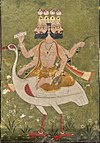
“An Englishman who, by a most careful investigation into the various representations, has sought to discover what is meant by Brahma, believes that Brahma is an epithet of praise, and is used as such just because he is not looked on as being himself solely this One, but, on the contrary, everything says of itself that it is Brahma. I refer to what Mill says in his History of India. He proves from many Indian writings that it is an epithet of praise which is applied to various deities, and does not represent the conception of perfection or unity which we associate with it. This is a mistake, for Brahma is in one aspect the One, the Immutable, who has, however, the element of change in him, and because of this, the rich variety of forms which is thus essentially his own is also predicated of him. Vishnu is also called the Supreme Brahma. Water and the sun are Brahma.”
“So ist vielmehr der Fall, daß das Volk, insosern mit diesem Worte ein besonderer Theil der Mitglieder eines Staats bezeichnet ist, den Theil ausdrückt, der nicht weiß was er will.http://books.google.com/books?id=ePATAAAAQAAJ&q=%22So+ist+vielmehr+der+Fall+da%C3%9F+das+Volk+insosern+mit+diesem+Worte+ein+besonderer+Theil+der+Mitglieder+eines+Staats+bezeichnet+ist+den+Theil+ausdr%C3%BCckt+der+nicht+wei%C3%9F+was+er+will%22&pg=PA393#v=onepage
• Translation: But it is rather true that the people, in so far as this term signifies a special part of the citizens, does not know what it wants.”
• Translation: But it is rather true that the people, in so far as this term signifies a special part of the citizens, does not know what it wants.”
“In the first element God is beyond time, as the eternal Idea, existing in the element of eternity in so far as eternity is contrasted with time. Thus time in this complete and independent form, time in-and-for-self, unfolds itself and breaks up into past, present, and future. Thus the divine history in its second stage as appearance is regarded as the past, it is, it has Being, but it is Being which is degraded to a mere semblance. In taking on the form of appearance it is immediate existence, which is at the same time negated, and this is the past. The divine history is thus regarded as something past, as representing the Historical properly so called. The third element is the present, yet it is only the limited present, not the eternal present, but rather the present which distinguishes itself from the past and future, and represents the element of feeling, of the immediate subjectivity of spiritual Being which is now.”
“Only one word more concerning the desire to teach the world what it ought to be. For such a purpose philosophy at least always comes too late. Philosophy, as the thought of the world, does not appear until reality has completed its formative process, and made itself ready. History thus corroborates the teaching of the conception that only in the maturity of reality does the ideal appear as counterpart to the real, apprehends the real world in its substance, and shapes it into an intellectual kingdom. When philosophy paints its grey in grey, one form of life has become old, and by means of grey it cannot be rejuvenated, but only known. The owl of Minerva takes its flight only when the shades of night are gathering.
• Variant: When philosophy paints its grey on grey, then has a shape of life grown old. By philosophy's grey on grey it cannot be rejuvenated but only understood. The owl of Minerva spreads its wings only with the falling of the dusk.”
• Variant: When philosophy paints its grey on grey, then has a shape of life grown old. By philosophy's grey on grey it cannot be rejuvenated but only understood. The owl of Minerva spreads its wings only with the falling of the dusk.”
“This is Bruno's fundamental idea. He says: ”To recognize this unity of form and matter in all things, is what reason is striving to attain to. But in order to penetrate to this unity, in order to investigate all the secrets of Nature, we must search into the opposed and contradictory extremes of things, the maximum and the minimum” It is in these very extremes that they are intelligible, and become united in the Notion; and this union of them is infinite Nature. “To find the point of union is not the greatest matter; but to develop from, the same its very opposite, this is the real and the deepest secret of the art” It is saying much if we speak of knowing the development of the Idea as a necessity of determinations; we shall see later how Bruno proceeded to do this. He represents the original principle, which is elsewhere known as the form, under the Notion of the minimum, which is at the same time the maximum One, which at the same time is All; the universe is this One in All.”
“The great thing however is, in the show of the temporal and the transient to recognize the substance which is immanent and the eternal which is present. For the work of Reason (which is synonymous with the Idea) when considered in its own actuality, is to simultaneously enter external existence and emerge with an infinite wealth of forms, phenomena and phases — a multiplicity that envelops its essential rational kernel with a motley outer rind with which our ordinary consciousness is earliest at home. It is this rind that the Concept must penetrate before Reason can find its own inward pulse and feel it still beating even in the outward phases. But this infinite variety of circumstances which is formed in this element of externality by the light of the rational essence shining in it — all this infinite material, with its regulatory laws — is not the object of philosophy....To comprehend what is, is the task of philosophy: and what is is Reason.”
“In the religion of absolute Spirit the outward form of God is not made by the human spirit. God Himself is, in accordance with the true Idea, self-consciousness which exists in and for itself, Spirit. He produces Himself of His own act, appears as Being for “Other”; He is, by His own act, the Son; in the assumption of a definite form as the Son, the other part of the process is present, namely, that God loves the Son, posits Himself as identical with Him, yet also as distinct from Him. The assumption of form makes its appearance in the aspect of determinate Being as independent totality, but as a totality which is retained within love; here, for the first time, we have Spirit in and for itself. The self-consciousness of the Son regarding Himself is at the same time His knowledge of the Father; in the Father the Son has knowledge of His own self, of Himself. At our present stage, on the contrary, the determinate existence of God as God is not existence posited by Himself, but by what is Other. Here Spirit has stopped short half way.”
“Hegel showed a far more modem approach when, during the same period, he compared the discovery of Sanskrit to that of a new continent because, in his view, it established "historic ties between the German and Indian peoples with all the certainty that can be required in dealing with such a subject" .&1 It was for this reason that he promoted the grand conception of the Indians as colonizers of Europe to the rank of irrefutable fact, in contrast to the fabulations (Erdichtungen) with which history is familiar: In the cohesion between the languages of peoples so widely separated from each other ... we are faced with an outcome which shows us that the dispersion of these peoples, starting from Asia, and their distinct evolution beginning with the same common ancestry, is an irrefutable fact (unwidersprechliches Faktum). This has nothing to do with hypothetical combinations of circumstances, great or small, which have enriched history with so many fabulations presented as facts, and which will continue to do so, since fresh combinations of the same circumstances, or of these with others, will always be possible.”
“You know my present occupation and why I am pursuing it. You know also that I always had a penchant for politics. But this interest has been weakened by journalism far more than it has found sustenance in it. I have to look at political news from a different point of view from that of the reader. The important thing for the reader is content. For me a news item has interest as an article filling a page. But the diminished enjoyment afforded by the satisfaction of my political curiosity has its compensations. In the first place, income. I have convinced myself by experience of the truth of the biblical text which I have made my guiding light: “Strive ye first after food and clothing, and the Kingdom of God will fall to you as well’’ [reversal of Matthew 6:33]. The second advantage is that a journalist is himself an object of curiosity and almost of envy, in that everybody wants to know what he is holding secretly [in petto]—which, according to the universal persuasion, is surely the best part. But just between us, I never know more than what appears in my newspaper, and often not even that much.”

“This final aim is God's purpose with the world; but God is the absolutely perfect Being, and can, therefore, will nothing but himself.
The great empire of the Caliphs did not last long: for on the basis presented by Universality nothing is firm. The great Arabian empire fell about the same time as that of the Franks: thrones were demolished by slaves and by fresh invading hordes the Seljuks and Mongols and new kingdoms founded, new dynasties raised to the throne. The Osman race at last succeeded in establishing a firm dominion, by forming for themselves a firm center in the Janizaries. Fanaticism having cooled down, no moral principle remained in men's souls. In the struggle with the Saracens, European
valour had idealized itself to a fair and noble chivalry. Science and knowledge, especially that of philosophy, came from the Arabs into the West. A noble poetry and free imagination was kindled among the Germans by the East a fact which directed Goethe's attention to the Orient and occasioned the composition of a string of lyric pearls, in his "Divan," which in warmth and felicity of fancy cannot be surpassed.”

“Viewed in the light of such facts, we may conclude slavery to have been the occasion of the increase of human feeling among the Negroes. The doctrine which we deduce from this condition of slavery among the Negroes, and which constitutes the only side of the question that has an interest for our inquiry, is that which we deduce from the Idea: viz., that the “Natural condition” itself is one of absolute and thorough injustice – contravention of the Right and Just. Every intermediate grade between this and the realization of a rational State retains – as might be expected – elements and aspects of injustice; therefore we find slavery even in the Greek and Roman States, as we do serfdom down to the latest times. But thus existing in a State, slavery is itself a phase of advance from the merely isolated sensual existence – a phase of education – a mode of becoming participant in a higher morality and the culture connected with it. Slavery is in and for itself injustice, for the essence of humanity is Freedom; but for this man must be matured. The gradual abolition of slavery is therefore wiser and more equitable than its sudden removal.”

“Without rhetorical exaggeration, a simply truthful combination of the miseries that have overwhelmed the noblest of nations and polities, and the finest exemplars of private virtue, forms a picture of most fearful aspect, and excites emotions of the profoundest and most hopeless sadness, counterbalanced by no consolatory result. We endure in beholding it a mental torture, allowing no defence or escape but the consideration that what has happened could not be otherwise ; that it is a fatality which no intervention could alter. And at last we draw back from the intolerable disgust with which these sorrowful reflections threaten us, into the more agreeable environment of our individual life the Present formed by our private aims and interests. In short we retreat into the selfishness that stands on the quiet shore, and thence enjoys in safety the distant spectacle of "wrecks confusedly hurled." But even regarding History as the slaughter-bench at which the happiness of peoples, the wisdom of States, and the virtue of individuals have been victimised the question involuntarily arises to what principle, to what final aim these.enormous sacrifices have been offered.”
“The Church has consistently and justly refused to allow that reason might stand in opposition to faith, and yet be placed under subjection to it. The human spirit in its inmost nature is not something so divided up that two contradictory elements might subsist together in it. If discord has arisen between intellectual insight and religion, and is not overcome in knowledge, it leads to despair, which comes in the place of reconciliation. This despair is reconciliation carried out in a one-sided manner. The one side is cast away, the other alone held fast; but a man cannot win true peace in this way. The one alternative is, for the divided spirit to reject the demands of the intellect and try to return to simple religious feeling. To this, however, the spirit can only attain by doing violence to itself, for the independence of consciousness demands satisfaction, and will not be thrust aside by force; and to renounce independent thought, is not within the power of the healthy mind. Religious feeling becomes yearning hypocrisy, and retains the moment of non-satisfaction. The other alternative is a one-sided attitude of indifference toward religion, which is either left unquestioned and let alone, or is ultimately attacked and opposed. That is the course followed by shallow spirits.”
“That condition which man terms the life of man in unity with nature, and in which man meets with God in nature because he finds his satisfaction there, has ceased to exist. The unity of man with the world is for this end broken, that it may be restored in a higher unity, that the world, as an intelligible world, may be received into God. The relation of man to God thereby reveals itself in the way provided for our salvation in worship, but more particularly it likewise shows itself in Philosophy; and that with the express consciousness of the aim that the individual should render himself capable of belonging to this intelligible world. The manner in which man represents to himself his relation to God is more particularly determined by the manner in which man represents to himself God. What is now often said, that man need not know God, and may yet have the knowledge of this relation, is false. Since God is the First, He determines the relation, and therefore in order to know what is the truth of the relation, man must know God. Since therefore thought goes so far as to deny the natural, what we are now concerned with is not to seek truth in any existing mode, but from our inner Being to go forth again to a true objective, which derives its determination from the intrinsic nature of thought.”

“Aristotle (De Anima, I. 1) makes in the first place the general remark that it appears as if the soul must, on the one hand, be regarded in its freedom as independent and as separable from the body, since in thinking it is independent; and, on the other hand, since in the emotions it appears to be united with the body and not separate, it must also be looked on as being inseparable from it; for the emotions show themselves as materialized Notions (λόγοι έννοια), as material modes of what is spiritual. With this a twofold method of considering the soul, also known to Aristotle, comes into play, namely the purely rational or logical view, on the one hand, and, on the other hand, the physical or physiological; these we still see practiced side by side. According to the one view, anger, for instance, is looked on as an eager desire for retaliation or the like; according to the other view it is the surging upward of the heartblood and the warm element in man. The former is the rational, the latter the material view of anger; just as one man may define a house as a shelter against wind, rain, and other destructive agencies, while another defines it as consisting of wood and stone; that is to say, the former gives the determination and the form, or the purpose of the thing, while the latter specifies the material it is made of, and its necessary conditions.”
“In connection with Kant we must here begin by speaking of Jacobi, whose philosophy is contemporaneous with that of Kant; in both of these the advance beyond the preceding period is very evident. The result in the two cases is much the same, although both the starting point and the method of progression are somewhat different. In Jacobi's case the stimulus was given mainly by French philosophy, with which he was very conversant, and also by German metaphysics, while Kant began rather from the English side, that is, from the skepticism of Hume. Jacobi, in that negative attitude which he preserved as well as Kant, kept before him the objective aspect of the method of knowledge, and specially considered it, for he declared knowledge to be in its content incapable of recognizing the Absolute: the truth must be concrete, present, but not finite. Kant does not consider the content, but took the view of knowledge being subjective; and for this reason he declared it to be incapable of recognizing absolute existence. To Kant knowledge is thus a knowledge of phenomena only, not because the categories are merely limited and finite, but because they are subjective. To Jacobi, on the other hand, the chief point is that the categories are not merely subjective, but that they themselves are conditioned. This is an essential difference between the two points of view, even if they both arrive at the same result.”
“These are the Galla and Gaga tribes, which, as the most savage and most barbarous of conquerors, have repeatedly descended upon the coasts since the year 1542, pouring forth from the interior and inundating the whole country. These look upon man in the strength of his consciousness as too exalted to be capable of being killed by anything so obscure as the power of nature. What therefore takes place is, that sick people, in whose case magic has proved ineffectual, are put to death by their friends. In the same way the wild tribes of North America too killed their aged who had reached decrepitude, the meaning of which is unmistakable, namely, that man is not to perish by means of nature, but is to have due honour rendered to him at human hands. There is another people again who have the belief that everything would go to ruin if their high-priest were to die a natural death. He is therefore executed as soon as ever he becomes ill and weak; if a high-priest should notwithstanding die of some disease, they believe that some other person killed him by means of magic, and the magicians have to ascertain who the murderer was, when he is at once made away with. On the death of a king in particular, many persons are killed: according to a missionary of older days, it is the devil of the king who is slain. Such, then, is the very first form of religion, which cannot indeed as yet be properly called religion.”

“Was vernünftig ist, das ist Wirklich; und was wirklich ist, das ist vernünftig.
• Variant translation: What is rational is real; And what is real is rational. Upon this conviction stand not philosophy only but even every unsophisticated consciousness. From it also proceeds the view now under contemplation that the spiritual universe is the natural. When reflection, feeling, or whatever other form the subjective consciousness may assume, regards the present as vanity, and thinks itself to be beyond it and wiser, it finds itself in emptiness, and, as it has actuality only in the present, it is vanity throughout. Against the doctrine that the idea is a mere idea, figment or opinion, philosophy preserves the more profound view that nothing is real except the idea. Hence arises the effort to recognize in the temporal and transient the substance, which is immanent, and the eternal, which is present. The rational is synonymous with the idea, because in realizing itself it passes into external existence. It thus appears in an endless wealth of forms, figures and phenomena. It wraps its kernel' round with a robe of many colors, in which consciousness finds itself at home. Through this varied husk the conception first of all penetrates, in order to touch the pulse, and then feel it throbbing in its external manifestations. To bring to order the endlessly varied relations, which constitute the outer appearance of the rational essence is not the task of philosophy.”
• Variant translation: What is rational is real; And what is real is rational. Upon this conviction stand not philosophy only but even every unsophisticated consciousness. From it also proceeds the view now under contemplation that the spiritual universe is the natural. When reflection, feeling, or whatever other form the subjective consciousness may assume, regards the present as vanity, and thinks itself to be beyond it and wiser, it finds itself in emptiness, and, as it has actuality only in the present, it is vanity throughout. Against the doctrine that the idea is a mere idea, figment or opinion, philosophy preserves the more profound view that nothing is real except the idea. Hence arises the effort to recognize in the temporal and transient the substance, which is immanent, and the eternal, which is present. The rational is synonymous with the idea, because in realizing itself it passes into external existence. It thus appears in an endless wealth of forms, figures and phenomena. It wraps its kernel' round with a robe of many colors, in which consciousness finds itself at home. Through this varied husk the conception first of all penetrates, in order to touch the pulse, and then feel it throbbing in its external manifestations. To bring to order the endlessly varied relations, which constitute the outer appearance of the rational essence is not the task of philosophy.”
“The enquiry into the essential destiny of Reason as far as it is considered in reference to the World is identical with the question, what is the ultimate design of the World? And the expression implies that that design is destined to be realised! Two points of consideration suggest themselves: first, the import of this design its abstract definition; and secondly, its realization. It must be observed at the outset, that the phenomenon we investigate Universal History belongs to the realm of Spirit. The term “World" includes both physical and psychical Nature. Physical Nature also plays its part in the World's History, and attention will have to be paid to the fundamental natural relations thus involved. But Spirit, and the course of its development, is our substantial object. Our task does not require us to contemplate Nature as a Rational System in itself though in its own proper domain it proves itself such but simply in its relation to Spirit. On the stage on which we are observing it—Universal History—Spirit displays itself in its most concrete reality. Notwithstanding this (or rather for the very purpose of comprehending the general principles which this, its form of concrete reality, embodies) we must premise some abstract characteristics of the nature of Spirit. Such an explanation, however, cannot be given here under any other form than that of bare assertion. The present is not the occasion for unfolding the idea of Spirit speculatively ; for whatever has a place in an Introduction, must, as already observed, be taken as simply historical ; something assumed as having been explained and proved elsewhere; or whose demonstration awaits the sequel of the Science of History itself.”
“Faith must now get what is essentially the form of mediation. It itself is already this form implicitly, for it is knowledge of God and of his character, and this knowledge is in itself a process, a movement—is life, mediation. It is involved in the very nature of the freedom which is the inner characteristic of faith, that it should not be what we at first called substantial, solid unity, that it should not be idea; in freedom I exist on the contrary as that activity in the affirmation which is infinite negation of itself. Now if we should wish to give to mediation the form of an external mediation as the foundation of faith, then such a form would be a wrong one. This mediation, of which the basis is something external is false. The content of faith my indeed come to be my means of instruction, miracle, authority, etc. These may be the foundation of faith as subjective faith. But it is just in giving this position to the content whereby it assumes the character of a basis for me, that we go on a wrong track; and when faith is reached, this externality must drop away. In faith I make that my own which comes to me thus, and it ceases to be for me an Other. Immediate faith may be so defined as being the witness of the Spirit to Spirit, and this implies that no finite content has any place in it. Spirit witnesses only of Spirit, and only infinite things are mediated by means of external grounds. The true foundation of faith is the Spirit, and the witness of the Spirit is inherently living. Verification may at first appear in that external formal manner, but this must drop away. It may thus happen that faith in a religion has its commencement form such testimony, from miracles, that is in a finite content. Christ Himself, however, spoke against miracles, He reproached the Jews for demanding them of Him, and said to His disciples, “The Spirit will guide you into all truth.””
“The nature of Spirit may be understood by a glance at its direct opposite Matter. As the essence of Matter is Gravity, so, on the other hand, we may affirm that the substance, the essence of Spirit is Freedom. All will readily assent to the doctrine that Spirit, among other properties, is also endowed with Freedom; but philosophy teaches that all the qualities of Spirit exist only through Freedom ; that all are but means for attaining Freedom ; that all seek and produce this and this alone. It is a result of speculative Philosophy, that Freedom is the sole truth of Spirit. Matter possesses gravity in virtue of its tendency towards a central point. It is essentially composite; consisting of parts that exclude each other. It seeks its Unity; and therefore exhibits itself as self- destructive, as verging towards its opposite [an indivisible point]. If it could attain this, it would be Matter no longer, it would have perished. It strives after the realization of its Idea; for in Unity it exists ideally. Spirit, on the contrary, may be defined as that which has its center in itself. It has not a unity outside itself, but has already found it; it exists in and with itself. Matter has its essence out of itself; Spirit is self-contained existence (Bei-sich-selbst-seyn). Now this is Freedom, exactly. For if I am dependent, my being is referred to something else which I am not; I cannot exist independently of something external. I am free, on the contrary, when my existence depends upon myself. This self-contained existence of Spirit is none other than self-consciousness consciousness of one's own being. Two things must be distinguished in consciousness; first, the fact that I know; secondly, what I know. In self-consciousness these are merged in one; for Spirit knows itself. It involves an appreciation of its own nature, as also an energy enabling it to realise itself; to make itself actually that which it is potentially.”

“Although Freedom is, primarily, an undeveloped idea, the means it uses are external and phenomenal; presenting themselves in History to our sensuous vision. The first glance at History convinces us that the actions of men proceed from their needs, their passions, their characters and talents; and impresses us with the belief that such needs, passions and interests are the sole springs of action — the efficient agents in this scene of activity. Among these may, perhaps, be found aims of a liberal or universal kind — benevolence it may be, or noble patriotism; but such virtues and general views are but insignificant as compared with the World and its doings. We may perhaps see the Ideal of Reason actualized in those who adopt such aims, and within the sphere of their influence; but they bear only a trifling proportion to the mass of the human race; and the extent of that influence is limited accordingly. Passions, private aims, and the satisfaction of selfish desires, are on the other hand, most effective springs of action. Their power lies in the fact that they respect none of the limitations which justice and morality would impose on them; and that these natural impulses have a more direct influence over man than the artificial and tedious discipline that tends to order and self-restraint, law and morality. When we look at this display of passions, and the consequences of their violence; the Unreason which is associated not ,only with them, but even (rather we might say especially) with good designs and righteous aims; when we see the evil, the vice, the ruin that has befallen the most flourishing kingdoms which the mind of man ever created, we can scarce avoid being filled with sorrow at this universal taint of corruption: and, since this decay is not the work of mere Nature, but of the Human Will — a moral embitterment — a revolt of the Good Spirit (if it have a place within us) may well be the result of our reflections.”

“The Democratical State is not Patriarchal, does not rest on a still unreflecting, undeveloped confidence, but implies laws, with the consciousness of their being founded on an equitable and moral basis, and the recognition of these laws as positive. At the time of the Kings, no political life had as yet made its appearance in Hellas; there are, therefore, only slight traces of Legislation. But in the interval from the Trojan War till near the time of Cyrus, its necessity was felt. The first Lawgivers are known under the name of The Seven Sages, a title which at that time did not imply any such character as that of the Sophists teachers of wisdom, designedly [and systematically] proclaiming the Bight and True but merely thinking men, whose thinking stopped short of Science, properly so called. They were practical politicians; the good counsels which two of them Thales of Miletus and Bias of Priene gave to the Ionian cities, have been already mentioned. Thus Solon was commissioned by the Athenians to give them laws, as those then in operation no longer sufficed. Solon gave the Athenians a constitution by which all obtained equal rights, yet not so as to render the Democracy a quite abstract one. The main point in Democracy is moral disposition. Virtue is the basis of Democracy, remarks Montesquieu; and this sentiment is as important as it is true in reference to the idea of Democracy commonly entertained. The Substance, [the Principle] of Justice, the common weal, the general interest, is the main consideration; but it is so only as Custom, in the form of Objective Will, so that morality properly so called subjective conviction and intention has not yet manifested itself. Law exists, and is in point of substance, the Law of Freedom, rational [in its form and purport,] and valid because it is Law, i.e. without ulterior sanction. As in Beauty the Natural element its sensuous coefficient remains, so also in this customary morality, laws assume the form of a necessity of Nature.”

“The second point to be considered is the method adopted by Spinoza for setting forth his philosophy; it is the demonstrative method of geometry as employed by Euclid, in which we find definitions, explanations, axioms, and theorems. Even Descartes made it his starting-point that philosophic propositions must be mathematically handled and proved, that they must have the very same evidence as mathematics. The mathematical method is considered superior to all others, on account of the nature of its evidence; and it is natural that independent knowledge in its re-awakening lighted first upon this form, of which it saw so brilliant an example. The mathematical method is, however, ill-adapted for speculative content, and finds its proper place only in the finite sciences of the understanding. In modern times Jacobi has asserted (Werke, Vol. IV. Section I. pp. 217-223) that all demonstration, all scientific knowledge leads back to Spinozism, which alone is a logical method of thought; and because it must lead thither, it is really of no service whatever, but immediate knowledge is what we must depend on. It may be conceded to Jacobi that the method of demonstration leads to Spinozism, if we understand thereby merely the method of knowledge belonging to the understanding. But the fact is that Spinoza is made a testing-point in modern philosophy, so that it may really be said: You are either a Spinozist or not a philosopher at all. This being so, the mathematical and demonstrative method of Spinoza would seem to be only a defect in the external form; but it is the fundamental defect of the whole position. In this method the nature of philosophic knowledge and the object thereof, are entirely misconceived, for mathematical knowledge and method are merely formal in character and consequently altogether unsuited for philosophy. Mathematical knowledge exhibits its proof on the existent object as such, not on the object as conceived; the Notion is lacking throughout; the content of Philosophy, however, is simply the Notion and that which is comprehended by the Notion. Therefore this Notion as the knowledge of the essence is simply one assumed, which falls within the philosophic subject; and this is what represents itself to be the method peculiar to Spinoza's philosophy.”
“Universal History exhibits the gradation in the development of that principle whose substantial purport is the consciousness of Freedom. The analysis of the successive grades, in their abstract form, belongs to Logic; in their concrete aspect to the Philosophy of Spirit. Here it is sufficient to state that the first step in the process presents that immersion of Spirit in Nature which has been already referred to ; the second shows it as advancing to the consciousness of its freedom. But this initial separation from Nature is imperfect and partial, since it is derived immediately from the merely natural state, is consequently related to it, and is still encumbered with it as an essentially connected element. The third step is the elevation of the soul from this still limited and special form of freedom to its pure universal form ; that state in which the spiritual essence attains the consciousness and feeling of itself. These grades are the ground-principles of the general process; but how each of them on the other hand involves within itself a process of formation, constituting the links in a dialectic of transition, to particularise this must be preserved for the sequel. Here we have only to indicate that Spirit begins with a germ of infinite possibility, but only possibility, containing its substantial existence in an undeveloped form, as the object and goal which it reaches only in its resultant full reality. In actual existence Progress appears as an advancing from the imperfect to the more perfect; but the former must not be understood abstractly as only the imperfect, but as something which involves the very opposite of itself the so-called perfect as a germ or impulse. So reflectively, at least possibility points to something destined to become actual; the Aristotelian δύναμιςis also potentia, power and might. Thus the Imperfect, as involving its opposite, is a contradiction, which certainly exists, but which is continually annulled and solved; the instinctive movement the inherent impulse in the life of the soul to break through the rind of mere nature, sensuousness, and that which is alien to it, and to attain to the light of consciousness, i. e. to itself.”
“Subjective volition Passion is that which sets men in activity, that which effects" practical" realization. The Idea is the inner spring of action; the State is the actually existing, realized moral life. For it is the Unity of the universal, essential Will, with that of the individual; and this is “Morality." The Individual living in this unity has a moral "life; possesses a value that consists in this substantiality alone. Sophocles in his Antigone, says, "The divine commands are not of yesterday, nor of to-day; no, they have an infinite existence, and no one could say whence they came." The laws of morality are not accidental, but are the essentially Rational. It is the very object of the State that what is essential in the practical activity of men, and in their dispositions, should be duly recognized; that it should have a manifest existence, and maintain its position. It is the absolute interest of Reason that this moral Whole should exist; and herein lies the justification and merit of heroes who have founded states, however rude these may have been. In the history of the World, only those peoples can come under our notice which form a state. For it must be understood that this latter is the realization of Freedom, i.e. of the absolute final aim, and that it exists for its own sake. It must further be understood that all the worth which the human being possesses all spiritual reality, he possesses only through the State. For his spiritual reality consists in this, that his own essence Reason is objectively present to him, that it possesses objective immediate existence for him. Thus only is he fully conscious; thus only is he a partaker of morality of a just and moral social and political life. For Truth is the Unity of the universal and subjective Will; and the Universal is to be found in the State, in its laws, its universal and rational arrangements. The State is the Divine Idea as it exists on Earth. We have in it, therefore, the object of History in a more definite shape than before; that in which Freedom obtains objectivity, and lives in the enjoyment of this objectivity. For Law is the objectivity of Spirit; volition in its true form. Only that will which obeys law, is free; for it obeys itself; it is independent and so free. When the State or our country constitutes a community of existence; when the subjective will of man submits to laws, the contradiction between Liberty and Necessity vanishes. The Rational has necessary existence, as being the reality and substance of things, and we are free in recognizing it as law, and following it as the substance of our own being. The objective and the subjective will are then reconciled, and present one identical homogeneous whole.”

Georg Wilhelm Friedrich Hegel Quotes by Topic
Find exactly what you are looking for by browsing this categorized list of Georg Wilhelm Friedrich Hegel quotes by topic.
Georg Wilhelm Friedrich Hegel on Essence 2 quotes
“What we call principle, aim, destiny, or the nature and idea of Spirit, is something merely general and abstract. Principle — Plan of Existence — Law — is a hidden, undeveloped essence, which as such — however true in itself — is not completely real.”
Georg Wilhelm Friedrich Hegel on Skepticism 2 quotes
“This conceit which understands how to belittle every truth, in order to turn back into itself and gloat over its own understanding, which knows how to dissolve every thought and always find the same barren Ego instead of any content—this is a satisfaction which we must leave to itself.”

Georg Wilhelm Friedrich Hegel on Al-Andalus
“Science and knowledge, especially that of philosophy, came from the Arabs into the West.”

Georg Wilhelm Friedrich Hegel on Passion
“We may affirm absolutely that nothing great in the world has been accomplished without passion.”
Georg Wilhelm Friedrich Hegel on Government
“What experience and history teach is this, ... that nations and governments have never learned anything from history or acted upon any lessons they might have drawn from it.”

What Georg Wilhelm Friedrich Hegel Said About Others
Discover personal opinions Georg Wilhelm Friedrich Hegel shared regarding contemporaries.
Georg Wilhelm Friedrich Hegel on Baruch Spinoza 11 quotes
“In the history of philosophy we meet with Substance as the principle of Spinoza's system. On the import and value of this much-praised and no-less decried philosophy there has been great misunderstanding and a deal of talking since the days of Spinoza. The atheism, and as a further charge, the pantheism of the system has formed the commonest ground of accusation. These cries arise because of Spinoza's conception of God as substance, and substance only. What we are to think of this charge follows, in the first instance, from the place which substance takes in the system of the logical idea. Though an essential stage in the evolution of the idea, substance is not the same with absolute idea, but the idea under the still limited form of necessity.”

Georg Wilhelm Friedrich Hegel on Heraclitus
“[With Heraclitus] we see land; there is no proposition of Heraclitus which I have not adopted in my Logic.”

Georg Wilhelm Friedrich Hegel on Virgil
“Virgil seems to have copied Greek models completely, imitating them slavishly and lifelessly, and so they appear as plagiarisms more or less devoid of spirit.”

Georg Wilhelm Friedrich Hegel on Aristotle
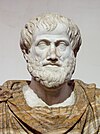
“He penetrated into the whole universe of things, and subjected its scattered wealth to intelligence; and to him the greater number of the philosophical sciences owe their origin and distinction.”
Georg Wilhelm Friedrich Hegel on Charlemagne
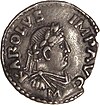
“This great empire Charlemagne formed into a systematically organized State, and gave the Frank dominion settled institutions adapted to impart to it strength and consistency. This must however not be understood, as if he first introduced the Constitution of his empire in its whole extent, but as implying that institutions partly already in existence, were developed under his guidance, and attained a more decided and unobstructed efficiency. The King stood at the head of the officers of the empire, and the principle of hereditary monarchy was already recognized.”
Quotes About Georg Wilhelm Friedrich Hegel
Gain deeper perspective through quotes about Georg Wilhelm Friedrich Hegel from others.
Theodor Adorno on Georg Wilhelm Friedrich Hegel
“Hegel ... destroyed the illusion of the subject's being-in-itself and showed that the subject is itself an aspect of social objectivity. ... However, ... we must ask this question: is this objectivity which we have shown to be a necessary condition and which subsumes abstract subjectivity in fact the higher factor? Does it not rather remain precisely what Hegel reproached it with being in his youth, namely pure externality, the coercive collective? Does not the retreat to this supposedly higher authority signify the regression of the subject, which had earlier won its freedom only with the greatest efforts, with infinite pains?”

James H. Billington on Georg Wilhelm Friedrich Hegel
“Hegel's complex thought was brought into focus by power "concentrated in a point," which made new beginnings possible. When political reaction followed Napoleonic innovations and Prussian reform , Hegel sought to convert philosophy into a political weapon. He succeeded in politicizing philosophy; his lectures satisfied the striving toward power and "relevance" that was inherent in the University of Berlin-and in much of modern intellectual life. Hegel expressed, first of all, the supreme self-confidence of the thinking man in the value of his thought. Everything became relative to historical context because his own capacity for seeing the whole picture was assumed to be absolute. Accepting the romantic belief that truth was revealed in the peculiarities of history rather than in a static natural order, Hegel nevertheless simultaneously pressed the Enlightenment idea that all was rational. His method applied reason to precisely those phenomena that most interested the romantic mind : art, philosophy, and religion. He had begun as a student of theology, in search of a theodicy, a justification of the ways of God to man ; he ended up instead creating a new God : the "World Spirit." Just as Hegel saw his chair of philosophy giving overall coherence to the intellectual variety of the new university, so the World Spirit provided a unifying rationale to the historical process. Just as Berlin University was the dynamo for regenerating German society, so Hegel's philosophy was its source of dynamism.”
Bran Blanshard on Georg Wilhelm Friedrich Hegel
“Clearness and vividness in writing often turn on mere specificity. To say that Major André was hanged is clear and definite; to say that he as killed is less definite, because you do not know in what way he was killed; to say that he died is still more indefinite because you do not even know whether his death was due to violence or to natural causes. If we were to use this statement as a varying symbol by which to rank writers for clearness, we might, I think, get something like the following: Swift, Macauley, and Shaw would say that André was hanged. Bradley would say that he was killed. Bosanquet would say that he died. Kant would say that his mortal existence achieved its termination. Hegel would say that a finite determination of infinity had been further determined by its own negation.”
Edwin Arthur Burtt on Georg Wilhelm Friedrich Hegel
“Berkeley, Hume, Kant, Fichte, Hegel, James, Bergson all are united in one earnest attempt, the attempt to reinstate man with his high spiritual claims in a place of importance in the cosmic scheme.”
E. H. Carr on Georg Wilhelm Friedrich Hegel
“Hegel clothed his absolute in the mystical shape of a world spirit, and made the cardinal error of bringing the course of history to an end in the present instead of projecting it into the future. He recognized a process of continuous evolution in the past, and incongruously denied it in the future.”








About Georg Wilhelm Friedrich Hegel
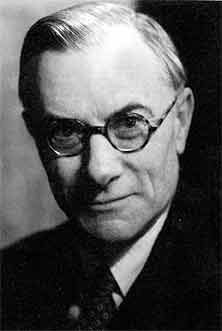
Georg Wilhelm Friedrich Hegel (27 August 1770 – 14 November 1831) was a German philosopher considered one of the most important figures in German idealism. He is one of the fundamental figures of Western philosophy, with his influence extending to the entire range of contemporary philosophical issues, from aesthetics to ontology to politics, both in the analytic and continental tradition.