Link Copied!
Edward Augustus Freeman Quotes (1823-1892)
Writer, Artist, Activist
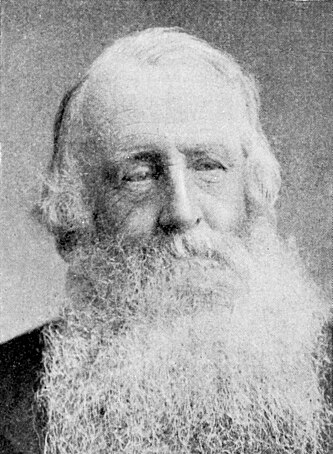
About Edward Augustus Freeman
Edward Augustus Freeman (2 August 1823 – 16 March 1892) was an English historian, architectural artist, and Liberal politician during the late-19th-century heyday of Prime Minister of the United Kingdom William Ewart Gladstone, as well as a one-time candidate for Parliament. He held the position of Regius Professor of Modern History at Oxford, where he tutored Arthur Evans; later he and Evans would be activists in the Balkan uprising of Bosnia and Herzegovina (1874–1878) against the Ottoman Empire. After the marriage of his daughter Margaret to Evans, he and Evans collaborated on the fourth volume of his History of Sicily. He was a prolific writer, publishing 239 distinct works. One of his best known is his magnum opus, The History of the Norman Conquest of England (published in 6 volumes, 1867–1879). Both he and Margaret died before Evans purchased the land from which he would excavate the Palace of Knossos.
Best Edward Augustus Freeman Quotes
Shortest
Earliest
Explore our curated collection of the most famous and impactful Edward Augustus Freeman quotes.
“This would be a grand land if only every Irishman would kill a negro, and be hanged for it.”
“I am parochially minded; but my parish is a big one, taking in all civilized Europe and America.”
“I must confess that I have never read W. Malmsb. de Pont. His Kings are enough to make me thoroughly despise him as a lying affected French scoundrel.”
“At Trieste I saw Burton. ... I remember him, thirty-five years ago, the wildest-looking creature; now he is shorn and looks quite respectable. He has killed more men than most people; but they were mainly Turks.”
“I say then without hesitation that fox-hunting, which ages back may have been a praiseworthy means of ridding the country of a noxious animal, has, in its modern shape, degenerated into a sport of wanton and deliberate cruelty. Strip it of its disguises, and it is that and nothing else.”

“Now the position for which I have always striven is this, that history is past politics, that politics are present history. The true subject of history, of any history that deserves the name, is man in his political capacity, man as the member of an organized society, governed according to law.”

“I have actually sat down to make a distinct History of the Norman Conquest, which I can do easier than anybody else, as I have worked so much at the subject for twenty years past, that is, a great part of the story; there will be little more to do than to write down what is already in my head.”
“Remember on the other hand that, though neither Reformers in the sixteenth century or Puritans in the seventeenth century strove in any sense for "religious liberty," or for anything but to set up one intolerant system instead of another, yet every blow of the kind was a gain for religious liberty in the long run.”

“As far at least as our race is concerned, freedom is everywhere older than bondage; we may add that toleration is older than intolerance. Our ancient history is the possession of the Liberal, who, as being ever ready to reform, is the true Conservative, not of the self-styled Conservative who, by refusing to reform, does all he can to bring on destruction.”

“But we are told that English interests demand it; that our dominion in India will be imperilled, that the civilized world will crumble into atoms, if a Russian ship should be seen in the Mediterranean Sea. If it be so, then I say, perish the interests of England, perish our dominion in India, rather than that we should strike a blow or speak a word on behalf of the wrong against the right.”
“Can any modern fox-hunter honestly say that his hunting is done with the legitimate object of getting rid of a noxious animal in the quickest way? It is nothing of the kind. It is plain that instead of men hunting with any object of getting rid of foxes, the fox exists simply for the purpose of being hunted. But for the practice of hunting, the fox would long ago have been as extinct in England as his cousin the wolf.”

“I cannot but think that the indulgence in cruelty in any form and in any degree must more or less harden the heart. I am far from saying that every fox-hunter is a bad man, but I certainly think that, cæteris paribus, the fox-hunter would be a better man if he were not a fox-hunter. And few would approve of devotion to pursuits of this kind when it becomes the distinguishing feature in the character. A mere fox-hunter, a mere bull-baiter, a mere amateur of gladiators, can never have been an estimable character in any age.”
“We must recognize the spirit which dictated the Petition of Right as the same which gathered all England around the banners of returning Godwin, and remember that the "good old cause" was truly that for which Harold died on the field and Waltheof on the scaffold.”
“I have no doubt that, if I had stood on the hill of Senlac, I should have felt a strong satisfaction in cleaving the skull of a Norman. But feelings of this kind need to be kept under careful control. As soon as either war or hunting loses its purely defensive character, as soon as it is pursued, not distinctly for the public good, but as a matter of sport or out of sheer love of slaughter, as soon as suffering is needlessly inflicted or wantonly prolonged, it ceases to be a righteous and praiseworthy occupation, and comes under the general head of cruelty.”
“It seems to me that an age of belief sowed the good seed of which an age of unbelief, an age at least of less fervent belief, reaps the fruits. It strikes me that the moral precepts and moral influences of Christianity needed the dogmatic teaching and the systematic discipline of past times to gain for them a hold in the world. The sower may sometimes have sowed tares along with his wheat, but the wheat has survived the tares. I believe that many a man who has little faith in Christian theology is deeply influenced by Christian morality, and that he is altogether a different man from what he would have been had Christianity never been.”

“I am fuming at all this jew humbug. It is simply got up to call off our thoughts from Armenia and Crete. If I were to say that every nation has a right to wallop its own jews I might be misunderstood, for I don't want to wallop anybody, even jews. The best thing is to kick them out altogether, like King Edward Longshanks of famous memory. But I do say that if any nation chooses to wallop its own jews 'tis no business of any other nation. Whereas if the Turk wallops Cretans and Armenians it is our business, because we have promised to make them do otherwise. And, besides, if you simply want to abuse Russia there is Bulgaria bullied and Finland threatened. What can jews matter beside either of these?”
“It is not too much to say that Mommsen has no notion whatever of right and wrong. It is not so much that he applauds wrong actions, as that he does not seem to know that right and wrong have anything to do with the matter. No one has set forth more clearly than Mommsen the various stages of the process by which Rome gradually reduced the states round the Mediterranean to a state of dependence—what he, by one of the quasi-technicalities of which we complain, calls a state of clientship. It is, for clear insight into the matter, one of the best parts of the book. But almost every page is disfigured by the writer's unblushing idolatry of mere force. He cannot understand that a small state can have any rights against a great one, or that a patriot in such a state can be anything but a fool.”

“Cast away all prejudices, all conventionalities, all subterfuges, look the thing boldly in the face, and will any one tell me either that it is really right to seek amusement in the suffering of any living creature, or that hunting is anything but amusement sought in the sufferings of a living creature? Will any one who engages in such sports tell me that he does not, for the time at least, stifle the divine voice of mercy within him, that he does not, for the time at least, give the reins to the passions of the wild beast or the savage? It may sound a hard saying, but in truth the joy of the hunter is only a lesser form of that intensified delight in cruelty which saw only a “merry, merry show," in those sports, those huntings, of old in which the human victim had to struggle against the lion and the tiger.”

“But here comes the nuisance of the seventeenth century. One can't go unreservedly with any side, as one can with our friends in the thirteenth. My political and my religious sympathies are divided. I go with the Parliament as Parliament; but I can get up no sympathy with the Puritan as Puritan. I don't like his particular form of religion, and he is no more tolerant than anybody else. Surely Gardiner shows that in matters of opinion Laud was immeasureably more liberal than his enemies, and to the little that he really enforced in matters of ceremony there is the best witness, namely, that it has long been universally accepted without anybody of any party objecting, and that, though the letter of the law still allows something else.”

“[T]he risk of these sports, and the supposed manliness of facing that risk, is generally put forth as one of their merits. Now I may be very blind and mean-spirited, but the manly sport of foxhunting seems to me not to be manly at all, but to be at once cowardly and fool hardy. It is cowardly as regards the cruelty practised on a victim which cannot defend himself by tormentors who, as far as the victim is concerned, are perfectly safe. It is foolhardy as risking men's lives for no adequate cause. It is manly, it is something much better than manly, when a man sacrifices or risks his life in a good cause. But I can see nothing manly, nothing in any way praiseworthy, in a man risking his life in a bad cause or in no cause at all. When a fox-hunter is suddenly cut off in the midst of his cruelties, I can see nothing in his end at all resembling the end of the martyr who dies for his religion or of the hero who dies for his country. I believe I am unfashionable in thinking so, but I cannot help it.”
“I believe I hate the British army more than any institution in being. My loathing for it is in exact proportion to my admiration for the men who fought at Senlac and Muratovizza. Forwhy, if you have conscription or landwehr, a man simply obeys the law; if the war is unjust, it is simply like obeying or enforcing any bad law. ... The fault rests not with him, but with those who send him. But in our army every man, officer and private, is there by his own choice. He is not consulted about that particular war; but he chose the man-slaying trade, when he might have chosen some other; so he is, what the conscript or landwehr man is not, responsible for being there. I grant that this is rather ideal; and, as circumstances go I don't rate the responsibility very high, if they only keep quiet. But when they came back, strutting and swaggering, talking as if they had done something to be proud of instead of ashamed, I hold that they made themselves accomplices with the Jew in the murther of the Zulus. ... I don't value skill or bravery, any more than height, strength, or beauty, unless they are used to a good purpose.”

“That Mahometanism is essentially an obstructive, intolerant system, supplying just sufficient good to stand in the way of greater good. It has consecrated despotism; it has consecrated polygamy; it has consecrated slavery. It has declared war against every other creed; it has claimed to be at least dominant in every land. And in one sense it has rightly so claimed. So long as a Mahometan nation is dominant and conquering, so long is it great and glorious after its own standard. When it ceases to have an enemy to contend against, it sinks into sluggish stupidity and into a barbarism far viler than that of the conquerors who raised it to greatness. It must have an enemy; if cut off, like Persia, from conflict with the infidel, it finds its substitute in sectarian hatred of brother Moslems. Islam has founded mighty empires, it has reared splendid palaces, it has accumulated libraries of countless volumes. But it has done nothing for man in his highest earthly capacity, as the citizen of a free state; it has done nothing for the higher even of his purely speculative faculties. By slightly reforming, it has perpetuated and sanctified all the evils of the eastern world. It has, by its aggressive tenets, brought them into more direct antagonism with the creed and civilization of the west. A system, originally the greatest of reforms in its own age and country, has proved the curse and scourge of the world for twelve hundred years.”
“I know that to run down Lord Macaulay is the fashion of the day. I have heard some speak against him who have a right to speak; I have heard many more who have none. I at least feel that I have none; I do not see how any man can have the right who has not gone through the same work through which Macaulay went, or at least through some no less thorough work of a kindred sort. I can see Macaulay's great and obvious faults as well as any man; I know as well as any man the cautions with which his brilliant pictures must be studied; but I cannot feel that I have any right to speak lightly of one to whom I owe so much in the matter of actual knowledge, and to whom I owe more than to any man as the master of historical narrative. Read a page of Macaulay; scan well his minute accuracy in every name and phrase and title; contrast his English undefiled with the slipshod jargon which from our newspapers has run over into our books; dwell on the style which finds a fitting phrase in our own tongue to set forth every thought, the style which never uses a single word out of its true and honest meaning; turn the pages of the book in which no man ever read a sentence a second time because he failed to catch its meaning the first time, but in which all of us must have read many sentences a second or a twentieth time for the sheer pleasure of dwelling on the clearness, the combined fulness and terseness, on the just relation of every word to every other, on the happily chosen epithet, or the sharply pointed sarcasm .”
Edward Augustus Freeman Quotes by Topic
Find exactly what you are looking for by browsing this categorized list of Edward Augustus Freeman quotes by topic.
Edward Augustus Freeman on Islam
“[Islam] is essentially an obstructive, intolerant system, supplying just sufficient good to stand in the way of greater good. It has consecrated despotism; it has consecrated polygamy; it has consecrated slavery. It has declared war against every other creed; it has claimed to be at least dominant in every land… When it ceases to have an enemy to contend against, it sinks into sluggish stupidity… It must have an enemy; if cut off, like Persia, from conflict with the infidel, it finds its substitute in sectarian hatred of brother Moslems… By [only] slightly reforming, it has perpetuated and sanctified all the evils of the eastern world. It has, by its aggressive tenets, brought them into more direct antagonism with the creed and civilization of the west.”

What Edward Augustus Freeman Said About Others
Discover personal opinions Edward Augustus Freeman shared regarding contemporaries.
Edward Augustus Freeman on William of Malmesbury
“I must confess that I have never read W. Malmsb. de Pont. His Kings are enough to make me thoroughly despise him as a lying affected French scoundrel.”

Edward Augustus Freeman on James Anthony Froude
“So you have taken the trouble to make a list of Froude's blunders in detail. I should simply assume that his Roman work must be just like his other work. My saying is that Froude has a negative use. When he has said a thing happened one way, you don't know how it did happen, but you know one way in which it did not happen.”

Edward Augustus Freeman on William Stubbs
“The work of...Stubbs claims a still higher rank. It shows what can be made of documents, when historic powers of the highest order are brought to bear upon them. We have seldom seen a single volume which was, so thoroughly and almost without a figure of speech, a library in itself. It is hardly too much to say that Mr. Stubbs has here got together all that any one can want to know on his subject, unless he is going to write a book about it, and that, if a man is going to write a book about it, he will find in Mr. Stubbs' volume the best possible guide to his materials.”

Edward Augustus Freeman on Edward I of England
“In Edward the line of English Kings begins once more. After two hundred years of foreign rule, we have again a King bearing an English name and an English heart—the first to give us back our ancient laws under new shapes, the first, and for so long the last, to see that the Empire of his mighty namesake was a worthier prize than shadowy dreams of dominion beyond the sea. All between them were Normans or Angevins, careless of England and her people. Another and a brighter æra opens, as the lawgiver of England, the conqueror of Wales and Scotland, seems like an old Bretwalda or West-Saxon Basileus seated once more upon the throne of Cerdic and of Æthelstan.”
Edward Augustus Freeman on Theodor Mommsen
“It is not too much to say that Mommsen has no notion whatever of right and wrong. It is not so much that he applauds wrong actions, as that he does not seem to know that right and wrong have anything to do with the matter. No one has set forth more clearly than Mommsen the various stages of the process by which Rome gradually reduced the states round the Mediterranean to a state of dependence—what he, by one of the quasi-technicalities of which we complain, calls a state of clientship. It is, for clear insight into the matter, one of the best parts of the book. But almost every page is disfigured by the writer's unblushing idolatry of mere force. He cannot understand that a small state can have any rights against a great one, or that a patriot in such a state can be anything but a fool.”

Edward Augustus Freeman on Charles Martel
“The Frankish power, it must be remembered, was under Charles Martel at the height of its greatness as a purely Frankish power. It was, in everything but formal titles, fully the peer of the Empire. And the personal glory of Charles stood above that of any living man in Christendom. He had beaten back the Mussulmans in the West, as the Emperor Leo had beaten them back in the East. The deliverer of the Church in Gaul was the founder of the Church in Germany. If the Lombard threatened, if the Emperor could or would give no help, the Frankish Mayor undoubtedly could give it effectually if he would. But the personal character and position of Charles must be taken into account. His reign—one cannot help calling it so—had been full of battles, full of victories. But he was not an adventurous or aggressive ruler. His object, whether for his own house or for the kingdom, was to keep what was in possession, to win back what had been lost, but to seek for nothing more.”

Edward Augustus Freeman on Thomas Babington Macaulay
“I know that to run down Lord Macaulay is the fashion of the day. I have heard some speak against him who have a right to speak; I have heard many more who have none. I at least feel that I have none; I do not see how any man can have the right who has not gone through the same work through which Macaulay went, or at least through some no less thorough work of a kindred sort. I can see Macaulay's great and obvious faults as well as any man; I know as well as any man the cautions with which his brilliant pictures must be studied; but I cannot feel that I have any right to speak lightly of one to whom I owe so much in the matter of actual knowledge, and to whom I owe more than to any man as the master of historical narrative. Read a page of Macaulay; scan well his minute accuracy in every name and phrase and title; contrast his English undefiled with the slipshod jargon which from our newspapers has run over into our books; dwell on the style which finds a fitting phrase in our own tongue to set forth every thought, the style which never uses a single word out of its true and honest meaning; turn the pages of the book in which no man ever read a sentence a second time because he failed to catch its meaning the first time, but in which all of us must have read many sentences a second or a twentieth time for the sheer pleasure of dwelling on the clearness, the combined fulness and terseness, on the just relation of every word to every other, on the happily chosen epithet, or the sharply pointed sarcasm .”

Quotes About Edward Augustus Freeman
Gain deeper perspective through quotes about Edward Augustus Freeman from others.
Lord Acton on Edward Augustus Freeman
James Bryce on Edward Augustus Freeman
“What was really uncommon in Freeman was the...entire absence of any pretence of caring for things which he did not really care for. He was in this, as in all other matters, a singularly simple and truthful man, never seeking to appear other than as he was, and finding it hard to understand why other people should not be equally simple and direct. This directness made him express himself with an absence of reserve which sometimes gave offence; and the restriction of his interest to a few topics—wide ones, to be sure—seemed to increase the intensity of his devotion to those few.”
J. W. Burrow on Edward Augustus Freeman
“One can speak of Freeman as forming a view of English history based on his political prejudices; it would be at least equally justifiable and perhaps more accurate to speak of his forming political prejudices based on his view of English history. For The Norman Conquest was certainly not, as Round's criticism may be taken to imply, written primarily to support a political case. Freeman's Teutonic racialism, his liberal-democratic bias, and his general view of early English history were inextricably entangled to form a general view of the world. The Norman Conquest was the precipitate of the enthusiasms, obsessions, and prejudices of a lifetime... [I]t would be truer to say that Freeman admired Gladstone because he admired Harold than, as Round insinuates, vice versa.”
David C. Douglas on Edward Augustus Freeman
“[I]t may be doubted whether any work of comparable importance in English historical literature has ever been more easy to criticize than Freeman's Norman Conquest. It was in Green's phrase "far too rhetorical and diffuse", and yet despite its excessive length, it concentrated too exclusively upon strictly political events. Nor was the treatment of the authorities itself comprehensive, so that a generation which has been taught to value the record sources of history, and which pays perhaps even an excessive reverence to material which has not yet been printed, is inevitably sceptical of an historian who neglected records, who misinterpreted Domesday Book, and who positively boasted his contempt for manuscripts. Freeman was, in fact, more erudite than critical, and even the narrative sources which were the sure foundation of his work were sometimes by him mishandled. Generally, as J. R. Green remarked, he tended to be unjust to the Norman writers, but otherwise he often gives the impression of giving equal credence to all his authorities and of blending together their contradictory accounts into an unreal synthesis. In this way his account of the crisis of 1051–2 is, for instance, incomprehensibly confused. It must, moreover, be added that, having made up his mind, he could show most obstinate bias towards his sources, selecting only those which could best illustrate his point of view... Freeman's Norman Conquest was, in short, magisterial without being definitive.”
William Holden Hutton on Edward Augustus Freeman
“See, ladling butter from alternate tubs Stubbs butters Freeman, Freeman butters Stubbs.”
Reinhold Pauli on Edward Augustus Freeman
“His Historical Geography has been for years the stumbling-block between us, as I had told him openly that I did not find much geography in the book, but rather a mess that had been made especially on German matters and a vague predilection for Slav and other barbarian stepchildren of his. I rather expect that William Rufus is more in his line, though radicalism and republicanism will continue to peep through the monarchical constellations of the twelfth century.”
J. H. Round on Edward Augustus Freeman
“Mr. Freeman, like the Bourbons, never learnt, and never forgot. A democrat first, an historian afterwards, History was for him, unhappily, ever "past politics." If he worshipped Harold with a blind enthusiasm, it was chiefly because he was a novus homo, "who reigned purely by the will of the people." He insisted that the English, on the hill of battle, were beaten through lack of discipline, through lack of obedience to their king; but he could not see that the system in which he gloried, a system which made the people "a co-ordinate authority" with their king, was the worst of all trainings for the hour of battle; he could not see that, like Poland, England fell, in large measure, from the want of a strong rule, and from excess of liberty. To him the voice of "a sovereign people" was "the most spirit-stirring of earthly sounds;" but it availed about as much to check the Norman Conquest as the fetish of an African savage, or the yells of Asiatic hordes.”
W. R. W. Stephens on Edward Augustus Freeman 2 quotes
“Freeman maintained that his practical acquaintance with various forms of local government, gave him an advantage over the mere student in understanding the practical politics of past times. It was one way in which he realized the truth of his favourite dictum that history was past politics, and that politics were present history.”
About Edward Augustus Freeman
Edward Augustus Freeman (2 August 1823 – 16 March 1892) was an English historian, architectural artist, and Liberal politician during the late-19th-century heyday of Prime Minister of the United Kingdom William Ewart Gladstone, as well as a one-time candidate for Parliament. He held the position of Regius Professor of Modern History at Oxford, where he tutored Arthur Evans; later he and Evans would be activists in the Balkan uprising of Bosnia and Herzegovina (1874–1878) against the Ottoman Empire. After the marriage of his daughter Margaret to Evans, he and Evans collaborated on the fourth volume of his History of Sicily. He was a prolific writer, publishing 239 distinct works. One of his best known is his magnum opus, The History of the Norman Conquest of England (published in 6 volumes, 1867–1879). Both he and Margaret died before Evans purchased the land from which he would excavate the Palace of Knossos.