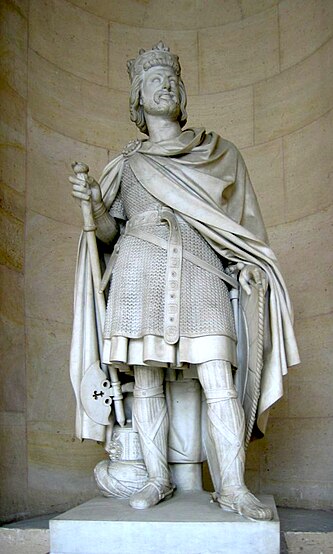
The Frankish power, it must be remembered, was under Charles Martel at the height of its greatness as a purely Frankish power. It was, in everything but formal titles, fully the peer of the Empire. And the personal glory of Charles stood above that of any living man in Christendom. He had beaten back the Mussulmans in the West, as the Emperor Leo had beaten them back in the East. The deliverer of the Church in Gaul was the founder of the Church in Germany. If the Lombard threatened, if the Emperor could or would give no help, the Frankish Mayor undoubtedly could give it effectually if he would. But the personal character and position of Charles must be taken into account. His reign—one cannot help calling it so—had been full of battles, full of victories. But he was not an adventurous or aggressive ruler. His object, whether for his own house or for the kingdom, was to keep what was in possession, to win back what had been lost, but to seek for nothing more.
What It Means
This is a placeholder explanation generated by the low-overhead model. It interprets "The Frankish power, it must be remembered, was under Charles Martel at the height of its greatness as a purely Frankish power. It was, in everything but formal titles, fully the peer of the Empire. And the personal glory of Charles stood above that of any living man in Christendom. He had beaten back the Mussulmans in the West, as the Emperor Leo had beaten them back in the East. The deliverer of the Church in Gaul was the founder of the Church in Germany. If the Lombard threatened, if the Emperor could or would give no help, the Frankish Mayor undoubtedly could give it effectually if he would. But the personal character and position of Charles must be taken into account. His reign—one cannot help calling it so—had been full of battles, full of victories. But he was not an adventurous or aggressive ruler. His object, whether for his own house or for the kingdom, was to keep what was in possession, to win back what had been lost, but to seek for nothing more." in the context of "Edward Augustus Freeman, 'The Patriciate of Pippin', The English Historical Review, Vol. 4, No. 16 (October 1889), p. 692" to mean that wisdom is timeless.
Tags
About Edward Augustus Freeman