Senlac, I should have felt a strong satisfaction in cleaving the skull of a Norman. But feelings of this kind need to be kept under careful control. As soon as either war or hunting loses its purely defensive character, as soon as it is pursued, not distinctly for the public good, but as a matter of sport or out of sheer love of slaughter, as soon as suffering is needlessly inflicted or wantonly prolonged, it ceases to be a righteous and praiseworthy occupation, and comes under the general head of cruelty." - Meaning and context.">
p. 18
“

I have no doubt that, if I had stood on the hill of Senlac, I should have felt a strong satisfaction in cleaving the skull of a Norman. But feelings of this kind need to be kept under careful control. As soon as either war or hunting loses its purely defensive character, as soon as it is pursued, not distinctly for the public good, but as a matter of sport or out of sheer love of slaughter, as soon as suffering is needlessly inflicted or wantonly prolonged, it ceases to be a righteous and praiseworthy occupation, and comes under the general head of cruelty.

— Edward Augustus Freeman

What It Means

This is a placeholder explanation generated by the low-overhead model. It interprets "I have no doubt that, if I had stood on the hill of Senlac, I should have felt a strong satisfaction in cleaving the skull of a Norman. But feelings of this kind need to be kept under careful control. As soon as either war or hunting loses its purely defensive character, as soon as it is pursued, not distinctly for the public good, but as a matter of sport or out of sheer love of slaughter, as soon as suffering is needlessly inflicted or wantonly prolonged, it ceases to be a righteous and praiseworthy occupation, and comes under the general head of cruelty." in the context of "p. 18" to mean that wisdom is timeless.

Source: Wikiquote: "Edward Augustus Freeman" (Quotes, 1860s, 'The Morality of Field Sports', The Fortnightly Review (October 1869): Reprinted in E. A. Freeman, The Morality of Field Sports (1874).) The 'What it means' explanation text was generated by Google Gemini Flash (accessed January 18, 2026). https://gemini.google.com/app
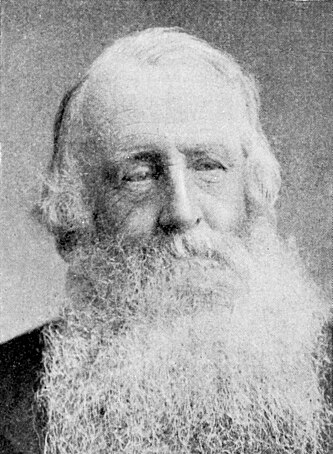
Edward Augustus Freeman

About Edward Augustus Freeman

Edward Augustus Freeman (2 August 1823 – 16 March 1892) was an English historian, architectural artist, and Liberal politician during the late-19th-century heyday of Prime Minister of the United Kingdom William Ewart Gladstone, as well as a one-time candidate for Parliament. He held the position of Regius Professor of Modern History at Oxford, where he tutored Arthur Evans; later he and Evans would be activists in the Balkan uprising of Bosnia and Herzegovina (1874–1878) against the Ottoman Empire. After the marriage of his daughter Margaret to Evans, he and Evans collaborated on the fourth volume of his History of Sicily. He was a prolific writer, publishing 239 distinct works. One of his best known is his magnum opus, The History of the Norman Conquest of England (published in 6 volumes, 1867–1879). Both he and Margaret died before Evans purchased the land from which he would excavate the Palace of Knossos.