What was really uncommon in Freeman was the...entire absence of any pretence of caring for things which he did not really care for. He was in this, as in all other matters, a singularly simple and truthful man, never seeking to appear other than as he was, and finding it hard to understand why other people should not be equally simple and direct. This directness made him express himself with an absence of reserve which sometimes gave offence; and the restriction of his interest to a few topics—wide ones, to be sure—seemed to increase the intensity of his devotion to those few.
What It Means
This is a placeholder explanation generated by the low-overhead model. It interprets "What was really uncommon in Freeman was the...entire absence of any pretence of caring for things which he did not really care for. He was in this, as in all other matters, a singularly simple and truthful man, never seeking to appear other than as he was, and finding it hard to understand why other people should not be equally simple and direct. This directness made him express himself with an absence of reserve which sometimes gave offence; and the restriction of his interest to a few topics—wide ones, to be sure—seemed to increase the intensity of his devotion to those few." in the context of "James Bryce, ‘Edward Augustus Freeman’, The English Historical Review, Vol. 7, No. 27 (Jul., 1892), pp. 500–501" to mean that wisdom is timeless.
Tags
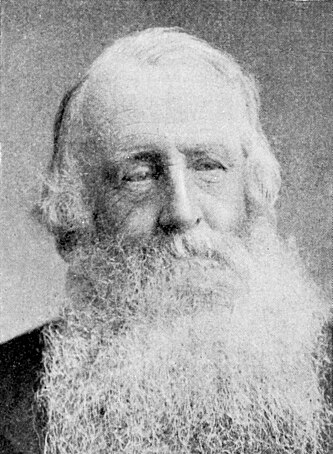
About Edward Augustus Freeman