Mr. Freeman, like the Bourbons, never learnt, and never forgot. A democrat first, an historian afterwards, History was for him, unhappily, ever "past politics." If he worshipped Harold with a blind enthusiasm, it was chiefly because he was a novus homo, "who reigned purely by the will of the people." He insisted that the English, on the hill of battle, were beaten through lack of discipline, through lack of obedience to their king; but he could not see that the system in which he gloried, a system which made the people "a co-ordinate authority" with their king, was the worst of all trainings for the hour of battle; he could not see that, like Poland, England fell, in large measure, from the want of a strong rule, and from excess of liberty. To him the voice of "a sovereign people" was "the most spirit-stirring of earthly sounds;" but it availed about as much to check the Norman Conquest as the fetish of an African savage, or the yells of Asiatic hordes.
What It Means
This is a placeholder explanation generated by the low-overhead model. It interprets "Mr. Freeman, like the Bourbons, never learnt, and never forgot. A democrat first, an historian afterwards, History was for him, unhappily, ever "past politics." If he worshipped Harold with a blind enthusiasm, it was chiefly because he was a novus homo, "who reigned purely by the will of the people." He insisted that the English, on the hill of battle, were beaten through lack of discipline, through lack of obedience to their king; but he could not see that the system in which he gloried, a system which made the people "a co-ordinate authority" with their king, was the worst of all trainings for the hour of battle; he could not see that, like Poland, England fell, in large measure, from the want of a strong rule, and from excess of liberty. To him the voice of "a sovereign people" was "the most spirit-stirring of earthly sounds;" but it availed about as much to check the Norman Conquest as the fetish of an African savage, or the yells of Asiatic hordes." in the context of "J. H. Round, Feudal England: Historical Studies on the XIth and XIIth Centuries (1895), p. 395" to mean that wisdom is timeless.
Tags
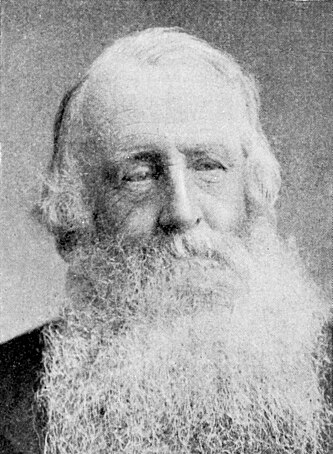
About Edward Augustus Freeman