Link Copied!
Irena Klepfisz Quotes (1941-)
Author, Poet, Activist








About Irena Klepfisz
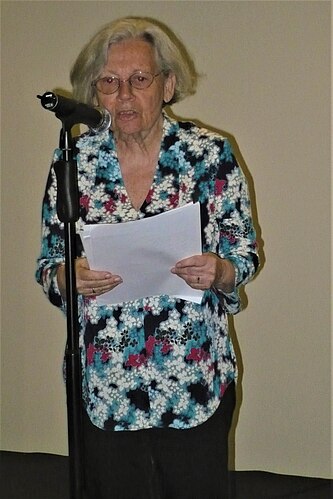
Irena Klepfisz (born April 17, 1941) is a Jewish lesbian feminist author, poet, academic and activist living in the US.
Best Irena Klepfisz Quotes
Shortest
Earliest
Explore our curated collection of the most famous and impactful Irena Klepfisz quotes.
“A child, of course, assumes that her world is the whole world.”

Unsourced — Primary work/page citation not yet verified in the QuotesCosmos archive. Per our Unnamed Sources & Verification Policy, quotes without confirmed primary editions are explicitly marked Unsourced while under editorial review.
“I experienced a lot of homophobia when I came out, around 1974”

Unsourced — Primary work/page citation not yet verified in the QuotesCosmos archive. Per our Unnamed Sources & Verification Policy, quotes without confirmed primary editions are explicitly marked Unsourced while under editorial review.
“There’s got to be a greater knowledge of diversity in Jewish life.”

Unsourced — Primary work/page citation not yet verified in the QuotesCosmos archive. Per our Unnamed Sources & Verification Policy, quotes without confirmed primary editions are explicitly marked Unsourced while under editorial review.
“I think my introduction to loving poetry and literature came from Yiddish”

Unsourced — Primary work/page citation not yet verified in the QuotesCosmos archive. Per our Unnamed Sources & Verification Policy, quotes without confirmed primary editions are explicitly marked Unsourced while under editorial review.
“Heroes: Grace Paley, Tillie Olsen, Shirley Chisholm — what a generation!”
Unsourced — Primary work/page citation not yet verified in the QuotesCosmos archive. Per our Unnamed Sources & Verification Policy, quotes without confirmed primary editions are explicitly marked Unsourced while under editorial review.
“The arts, I think, are very affirming -- affirming, even when they're depressing.”
Unsourced — Primary work/page citation not yet verified in the QuotesCosmos archive. Per our Unnamed Sources & Verification Policy, quotes without confirmed primary editions are explicitly marked Unsourced while under editorial review.
“what the Jewish lesbian encounters are the typical conservative stances. Closed doors. Silence. Disgust.”

Unsourced — Primary work/page citation not yet verified in the QuotesCosmos archive. Per our Unnamed Sources & Verification Policy, quotes without confirmed primary editions are explicitly marked Unsourced while under editorial review.
“For me, Israel played no important role. And like I say, I mean, I longed for Poland, not for Jerusalem.”

Unsourced — Primary work/page citation not yet verified in the QuotesCosmos archive. Per our Unnamed Sources & Verification Policy, quotes without confirmed primary editions are explicitly marked Unsourced while under editorial review.
“As a child, my first conscious feeling about being Jewish was that it was dangerous, something to be hidden.”
Unsourced — Primary work/page citation not yet verified in the QuotesCosmos archive. Per our Unnamed Sources & Verification Policy, quotes without confirmed primary editions are explicitly marked Unsourced while under editorial review.
“the role of poetry in the women’s movement and during the second wave, was just so important and so visible.”
Unsourced — Primary work/page citation not yet verified in the QuotesCosmos archive. Per our Unnamed Sources & Verification Policy, quotes without confirmed primary editions are explicitly marked Unsourced while under editorial review.
“At thirteen I tried silence. At sixteen I tried anonymity. I have since learned these are not the only options.”

Unsourced — Primary work/page citation not yet verified in the QuotesCosmos archive. Per our Unnamed Sources & Verification Policy, quotes without confirmed primary editions are explicitly marked Unsourced while under editorial review.
“Though U.S. Jews were quick to protest the Knesset's attempt to define "who is a Jew," it is a definition we are obsessed with.”

Unsourced — Primary work/page citation not yet verified in the QuotesCosmos archive. Per our Unnamed Sources & Verification Policy, quotes without confirmed primary editions are explicitly marked Unsourced while under editorial review.
“I sort of liked the kind of Yiddish poetry of like, Morris Rosenfeld. I liked somebody telling a story -- narrative. I liked narrative in poetry.”

Unsourced — Primary work/page citation not yet verified in the QuotesCosmos archive. Per our Unnamed Sources & Verification Policy, quotes without confirmed primary editions are explicitly marked Unsourced while under editorial review.
“Experience has obviously taught me that Jews are not the only ones in danger and that what is "undesirable" in me is not limited to my Jewishness.”

Unsourced — Primary work/page citation not yet verified in the QuotesCosmos archive. Per our Unnamed Sources & Verification Policy, quotes without confirmed primary editions are explicitly marked Unsourced while under editorial review.
“I've been thinking a lot about it lately, about the corruption here in America, how everything becomes big business, how everything becomes diseased. Everything.”

Unsourced — Primary work/page citation not yet verified in the QuotesCosmos archive. Per our Unnamed Sources & Verification Policy, quotes without confirmed primary editions are explicitly marked Unsourced while under editorial review.
“I'm a person who's interested in history in general. I think we should have accurate history, and I think we should look at people that have been erased, histories that have been erased.”

Unsourced — Primary work/page citation not yet verified in the QuotesCosmos archive. Per our Unnamed Sources & Verification Policy, quotes without confirmed primary editions are explicitly marked Unsourced while under editorial review.
“We formed Conditions magazine so we felt we were doing something really constructive and something that we really believed in. And we were going to change literature. And I think we did.”
Unsourced — Primary work/page citation not yet verified in the QuotesCosmos archive. Per our Unnamed Sources & Verification Policy, quotes without confirmed primary editions are explicitly marked Unsourced while under editorial review.
“As I grew older, I learned the full breadth of Yiddish literature; but this early introduction with its inherent political vision became as powerful an influence in my life as did the war.”
Unsourced — Primary work/page citation not yet verified in the QuotesCosmos archive. Per our Unnamed Sources & Verification Policy, quotes without confirmed primary editions are explicitly marked Unsourced while under editorial review.
“The translation of Yiddish literature into English by the -- beginning with, like, Irving Howe, and that totally erased women, so it was even worse in English than it actually was in Yiddish.”
Unsourced — Primary work/page citation not yet verified in the QuotesCosmos archive. Per our Unnamed Sources & Verification Policy, quotes without confirmed primary editions are explicitly marked Unsourced while under editorial review.
“It wasn't an age in which people explained a lot of things to kids. Really. I mean, we're so careful now about, is this gonna traumatize the child and all of this. Nobody even thought about it.”
Unsourced — Primary work/page citation not yet verified in the QuotesCosmos archive. Per our Unnamed Sources & Verification Policy, quotes without confirmed primary editions are explicitly marked Unsourced while under editorial review.
“Just as we must not allow our strong commitment to developing Jewish secularism to detract from the struggle in the Middle East, that conflict cannot be used to allow assimilation to take over our lives.”
Unsourced — Primary work/page citation not yet verified in the QuotesCosmos archive. Per our Unnamed Sources & Verification Policy, quotes without confirmed primary editions are explicitly marked Unsourced while under editorial review.
“This is the confusion. Being Jewish. Being a lesbian. Being an American. It all converges. It is like feelings about one's parents. Love and embarrassment. The painful realization that they are not perfect.”
Unsourced — Primary work/page citation not yet verified in the QuotesCosmos archive. Per our Unnamed Sources & Verification Policy, quotes without confirmed primary editions are explicitly marked Unsourced while under editorial review.
“When I write, I will say it out loud to myself over and over again. I want to hear it. I want to hear how it sounds. Not only -- I like to manipulate it on the page and how it looks, but I also want to be able to hear it.”
Unsourced — Primary work/page citation not yet verified in the QuotesCosmos archive. Per our Unnamed Sources & Verification Policy, quotes without confirmed primary editions are explicitly marked Unsourced while under editorial review.
“When it comes to the bottom line, the Moral Majority is Christian. So is the Ku Klux Klan. So is the Nazi Party. And I am completely stymied that large segments of the Jewish population have not absorbed these simple basic facts.”
Unsourced — Primary work/page citation not yet verified in the QuotesCosmos archive. Per our Unnamed Sources & Verification Policy, quotes without confirmed primary editions are explicitly marked Unsourced while under editorial review.
“I think poets are our most important defenses against linguistic corruption. They are the reinventors of language, the defenders of language, who insist that how you express yourself, how you convey your experience, actually matters in the world.”

Unsourced — Primary work/page citation not yet verified in the QuotesCosmos archive. Per our Unnamed Sources & Verification Policy, quotes without confirmed primary editions are explicitly marked Unsourced while under editorial review.
“Defining and setting Jewish boundaries, prioritizing Jewish concerns and Jewish needs (especially less concrete ones like identity building) are particularly difficult for those of us who have learned to value and respect other cultures and peoples.”
Unsourced — Primary work/page citation not yet verified in the QuotesCosmos archive. Per our Unnamed Sources & Verification Policy, quotes without confirmed primary editions are explicitly marked Unsourced while under editorial review.
“Repeatedly, I find that I am preoccupied not with countering anti-Semitism, but with trying to prove that anti-Semitism exists, that it is serious, and that, as lesbian/feminists, we should be paying attention to it both inside and outside of the movement.”

Unsourced — Primary work/page citation not yet verified in the QuotesCosmos archive. Per our Unnamed Sources & Verification Policy, quotes without confirmed primary editions are explicitly marked Unsourced while under editorial review.
“I was born in Warsaw during the war. And I was -- survived partly because I was hidden in a place in a Catholic orphanage. And my parents arranged for that. My father was killed in the uprising. He was one of the people involved in the uprising -- in organizing it.”
Unsourced — Primary work/page citation not yet verified in the QuotesCosmos archive. Per our Unnamed Sources & Verification Policy, quotes without confirmed primary editions are explicitly marked Unsourced while under editorial review.
“One of the nice things I like to do is to get bilingual books, both in Yiddish and now in Polish...I have, like, poetry which is in Polish on one side and English on the other. And that's sort of an interesting way, also, for me to think about poetry and look at things.”
Unsourced — Primary work/page citation not yet verified in the QuotesCosmos archive. Per our Unnamed Sources & Verification Policy, quotes without confirmed primary editions are explicitly marked Unsourced while under editorial review.
“I think mourning six million without having a clue who they were, where they came from, what their lives are like, is meaningless. I really believe it’s meaningless. You have to know what you’re mourning. And there’s a real resistance, I don’t know what it’s about.”
Unsourced — Primary work/page citation not yet verified in the QuotesCosmos archive. Per our Unnamed Sources & Verification Policy, quotes without confirmed primary editions are explicitly marked Unsourced while under editorial review.
“My students always -- when they want to talk about activism, are always worried that they're not -- you know, Well, we only have four or five people. And I tell them, "Don't worry about that." You know, four or five people can do a lot. And you don't know where you're gonna end up.”
Unsourced — Primary work/page citation not yet verified in the QuotesCosmos archive. Per our Unnamed Sources & Verification Policy, quotes without confirmed primary editions are explicitly marked Unsourced while under editorial review.
“There's an enormous amount of protectiveness -- of sort of like, the three classic writers. You're not -- can't say that they were sexist. Why? I mean, why were they -- were they really, I mean, the only three men in the last century who were not sexist? It just doesn't make any sense.”
Unsourced — Primary work/page citation not yet verified in the QuotesCosmos archive. Per our Unnamed Sources & Verification Policy, quotes without confirmed primary editions are explicitly marked Unsourced while under editorial review.
“I never thought that as a secular Jew who defined herself through Yiddish culture, my sense of self was inextricably bound up in its existence, that when it was in jeopardy, my own identity was in jeopardy. I never realized that it was the mirror that made me visible to myself as a Jew.”
Unsourced — Primary work/page citation not yet verified in the QuotesCosmos archive. Per our Unnamed Sources & Verification Policy, quotes without confirmed primary editions are explicitly marked Unsourced while under editorial review.
“There's a whole tradition of immigrants, Jewish and non-Jewish, looking at America in a certain way-as a hope and a promise fulfilled. I don't look at it that way. I view it as a place where a lot of people have been ripped off. They don't have full liberties; they don't have economic opportunities.”
Unsourced — Primary work/page citation not yet verified in the QuotesCosmos archive. Per our Unnamed Sources & Verification Policy, quotes without confirmed primary editions are explicitly marked Unsourced while under editorial review.
“I want my Yiddish involvement to be rooted in my life, in the present, want it to be infused with my contemporary politics and concerns, with the special quality of Jewish American experience. Di yidishe svive in the American environment. One world, not two. That's what will keep Yiddish alive for me.”
Unsourced — Primary work/page citation not yet verified in the QuotesCosmos archive. Per our Unnamed Sources & Verification Policy, quotes without confirmed primary editions are explicitly marked Unsourced while under editorial review.
“For too long our preoccupation with Israel (either in the form of Zionism or fundraising for Israel as the primary content of our Jewish identity or in the form of political opposition to Israeli government actions) has prevented us from seeing and dealing with Jewish identity, and Jewish life in the U.S.”

Unsourced — Primary work/page citation not yet verified in the QuotesCosmos archive. Per our Unnamed Sources & Verification Policy, quotes without confirmed primary editions are explicitly marked Unsourced while under editorial review.
“I think the thing is that being a secular Jew in a committed, conscious way, not just by default or by absence, but rather with content, is hard work. I mean, you have to work on it. It’s not like you have a synagogue to walk into. You know, it’s not like there’s an institution that you can walk in.”
Unsourced — Primary work/page citation not yet verified in the QuotesCosmos archive. Per our Unnamed Sources & Verification Policy, quotes without confirmed primary editions are explicitly marked Unsourced while under editorial review.
“Though the students in my public school were probably ninety-five percent Jewish, not once between the second and eighth grades do I remember a single teacher-Jew or gentile-discuss a Jewish topic or issue, holiday, leader. All things Jewish belonged outside the walls of P.S. 95. And with the parents' consent.”
Unsourced — Primary work/page citation not yet verified in the QuotesCosmos archive. Per our Unnamed Sources & Verification Policy, quotes without confirmed primary editions are explicitly marked Unsourced while under editorial review.
“Only by placing the Holocaust in a larger framework, by insisting on moving toward a Jewish future that is informed, but not defined, by the Holocaust, can we develop a productive way of relating to each other and the rest of the world. Such an approach guarantees memory, without sacrificing the present or future.”

Unsourced — Primary work/page citation not yet verified in the QuotesCosmos archive. Per our Unnamed Sources & Verification Policy, quotes without confirmed primary editions are explicitly marked Unsourced while under editorial review.
“My vision of di froyen fun undzer mishpokhe includes Sephardim who speak Arabic and Ladino, proud lesbians, sabras, rabbis, single mothers, witches, elected government officials, and so many more. Some of them appear before me as individuals, others as shadows longing for daylight to disclose their identity.”

Unsourced — Primary work/page citation not yet verified in the QuotesCosmos archive. Per our Unnamed Sources & Verification Policy, quotes without confirmed primary editions are explicitly marked Unsourced while under editorial review.
“history has frequently forced Jews to cope with fragments and, as a result, we have learned how to create new contexts, new structures, new wholes-this process, as in the case of Yiddish itself, sometimes taking centuries. It is, I think, part of our resilience, part of our great capacity to transform when we have the will.”
Unsourced — Primary work/page citation not yet verified in the QuotesCosmos archive. Per our Unnamed Sources & Verification Policy, quotes without confirmed primary editions are explicitly marked Unsourced while under editorial review.
“those of us who had rich Jewish backgrounds and are not assimilated, but who have been transformed by feminism, gay politics, and the politics of the Left, must stop longing for an irretrievable past, must give up expectations which cannot be met...We are experimenting, and in the process we're forging traditions for the future.”

Unsourced — Primary work/page citation not yet verified in the QuotesCosmos archive. Per our Unnamed Sources & Verification Policy, quotes without confirmed primary editions are explicitly marked Unsourced while under editorial review.
“Like most activists and artists, I have difficulty establishing priorities. The tension between being active in the world and needing solitude is one all of us struggle with. I find myself discussing this tension with other Jews, particularly in regard to our activism on the Israeli/Palestinian conflict. Not an abstract discussion.”
Unsourced — Primary work/page citation not yet verified in the QuotesCosmos archive. Per our Unnamed Sources & Verification Policy, quotes without confirmed primary editions are explicitly marked Unsourced while under editorial review.
“The Jewish artist in me feels displaced. I want to have time to write, to create literature which expands our notion of our Jewishness, which might in turn give us rest and inspire us to keep on with our peace work. But I don't make time for it. I remain focused on Israel and the Occupied Territories, where the situation is worsening.”
Unsourced — Primary work/page citation not yet verified in the QuotesCosmos archive. Per our Unnamed Sources & Verification Policy, quotes without confirmed primary editions are explicitly marked Unsourced while under editorial review.
“As a writer I still cherish poetry that tells a story, especially the dramatic monologue. I still value most a poetry that deals with people, especially those alienated and out of the mainstream-the overworked and dreamless, Third World, women, gay-a subdued, earnest poetry that expresses their feelings, their struggles, the conditions of their lives.”
Unsourced — Primary work/page citation not yet verified in the QuotesCosmos archive. Per our Unnamed Sources & Verification Policy, quotes without confirmed primary editions are explicitly marked Unsourced while under editorial review.
“I only really became familiar with religious aspects of Judaism when I became active in the Women’s Movement, and I was forced into it. I was working with women who were observant, and I wanted to be sensitive, so I started learning. A friend and I did a feminist Haggadah. I have a whole bunch of xeroxed Haggadahs with all kinds of goddesses on them.”
Unsourced — Primary work/page citation not yet verified in the QuotesCosmos archive. Per our Unnamed Sources & Verification Policy, quotes without confirmed primary editions are explicitly marked Unsourced while under editorial review.
“I write as much out of a Jewish consciousness as I do out of a lesbian/feminist consciousness. They are both always there, no matter what topic I might be working on. They are embedded in my writing, embedded and enmeshed to the point that they are not necessarily distinguishable as discrete elements. They merge and blend and blur, for in many ways they are the same.”

Unsourced — Primary work/page citation not yet verified in the QuotesCosmos archive. Per our Unnamed Sources & Verification Policy, quotes without confirmed primary editions are explicitly marked Unsourced while under editorial review.
“The use of Yiddish was an expression not only of love of a language, but of pride in ourselves as a people; it was an acknowledgement of a historical and cultural yerushe, heritage, a link to generations of Jews who came before and to the political activists of Eastern Europe. Above all it was the symbol of resistance to assimilation, an insistence on remaining who we were.”
Unsourced — Primary work/page citation not yet verified in the QuotesCosmos archive. Per our Unnamed Sources & Verification Policy, quotes without confirmed primary editions are explicitly marked Unsourced while under editorial review.
“One of the things that I did when I went to Poland this summer was, I insisted that there were lesbian -- because I know what's going on over there -- that I insisted that the word "lesbian" be in my bio. And it was interesting -- in Kraków, three young people came up to me, one of them in tears, just ecstatic that I had done it, and that I actually -- I had talked about it.”
Unsourced — Primary work/page citation not yet verified in the QuotesCosmos archive. Per our Unnamed Sources & Verification Policy, quotes without confirmed primary editions are explicitly marked Unsourced while under editorial review.
“Emphasizing the seemingly more pious stories of Sholem Aleykhem and Peretz, stressing Jewish passivity over action, obedience to tradition over rebellion (and therefore upholding observance), many supporters of Yiddish and Yiddish culture have wrenched yidishkayt out of the active, political and radical context in which it flourished and thereby neutralized and depoliticized it.”
Unsourced — Primary work/page citation not yet verified in the QuotesCosmos archive. Per our Unnamed Sources & Verification Policy, quotes without confirmed primary editions are explicitly marked Unsourced while under editorial review.
“Let us not take the attitude that because of our politics we must remain pure and not mix with the Jewish rabble-the mainstream. Let us be as willing to meet with Jews in small community centers in our neighborhoods as we are to meet with Palestinians. The work to be done at these centers and synagogues is as critical as the work needed to resolve the Palestinian/Israeli conflict.”
Unsourced — Primary work/page citation not yet verified in the QuotesCosmos archive. Per our Unnamed Sources & Verification Policy, quotes without confirmed primary editions are explicitly marked Unsourced while under editorial review.
“The '50s were so culturally different than what -- anything that we have now. I mean, there was no bridge between that public school and that shule. In public school, we did Easter -- even though it was, like, ninety-eight percent Jewish, we did Easter, we did Christmas. There was not one mention of anything Jewish. And in the shule, it was like the rest of the world didn't exist.”
Unsourced — Primary work/page citation not yet verified in the QuotesCosmos archive. Per our Unnamed Sources & Verification Policy, quotes without confirmed primary editions are explicitly marked Unsourced while under editorial review.
“I think there’s a strand of people who say you have to speak Yiddish, and you have to speak it correctly. I don’t want the movement to become elitist. It used to be that Hebrew was the loshon ha-kodesh [holy language]. I don’t want Yiddish to become a holy language. I want it to be of the people, which is the way that it always was. I think that’s something to guard against.”
Unsourced — Primary work/page citation not yet verified in the QuotesCosmos archive. Per our Unnamed Sources & Verification Policy, quotes without confirmed primary editions are explicitly marked Unsourced while under editorial review.
“Just as many contemporary Yiddishists romanticize and depoliticize the past, so do most contemporary Zionists romanticize and depoliticize the Israeli present. Such nostalgia is rightfully condemned by those who want Jews to engage in the political present. But these critics erroneously conclude that any focus on their Jewish identity will inherently foster Jewish escapist tendencies.”
Unsourced — Primary work/page citation not yet verified in the QuotesCosmos archive. Per our Unnamed Sources & Verification Policy, quotes without confirmed primary editions are explicitly marked Unsourced while under editorial review.
“when you go into a bookstore and you look at Judaica, for example, the majority of the books are either on Israel or the Holocaust. Those are the two main topics of books. And that’s a shame. Because there is this incredibly rich history. And also you should know what was destroyed and what was possible. I think that’s one of the things that the Bund did was to show what was possible.”
Unsourced — Primary work/page citation not yet verified in the QuotesCosmos archive. Per our Unnamed Sources & Verification Policy, quotes without confirmed primary editions are explicitly marked Unsourced while under editorial review.
“We Jews are living in a strange historical period in which our sense of history is often quite warped. For many American Jews, the Holocaust and Israel have reduced Jewish history to the years 1939-1945, or 1948 to the present. This extremely limited view of Jewish history naturally narrows the concept of Jewish identity and that narrowness is one which we as progressives ought to be countering.”
Unsourced — Primary work/page citation not yet verified in the QuotesCosmos archive. Per our Unnamed Sources & Verification Policy, quotes without confirmed primary editions are explicitly marked Unsourced while under editorial review.
“When the Jews finally staged the uprising in April 1943, the Polish underground refused them almost every form of assistance. Even though they were facing the same enemy, even though their country was occupied, the Poles could not overcome their anti-Semitism and join the Jews in the struggle for the freedom of both groups, and instead chose to stage a separate Polish uprising more than a year later.”
Unsourced — Primary work/page citation not yet verified in the QuotesCosmos archive. Per our Unnamed Sources & Verification Policy, quotes without confirmed primary editions are explicitly marked Unsourced while under editorial review.
“For many, Zionism was inherited at birth and they now think of it as synonymous with Jewishness. The threat of being labelled a traitor for questioning Israeli policies, and the allegation of self-hatred and anti-Semitism have inhibited an in-depth study of Zionism, its diverse political tenets, its history in relation to other Jews and to non-Jews and its role in defining Jewish identity in the States.”

Unsourced — Primary work/page citation not yet verified in the QuotesCosmos archive. Per our Unnamed Sources & Verification Policy, quotes without confirmed primary editions are explicitly marked Unsourced while under editorial review.
“You’re sort of one person at one moment and another person at another moment. I suppose the only time that you’re ever really complete is when you’re by yourself or in an environment in which you’re not hiding. In the gay community, I was not hiding my Jewishness. Not everybody was interested in my Yiddish work, but nobody was hostile to it. But in the Jewish world, I had to be shut down in certain ways.”
Unsourced — Primary work/page citation not yet verified in the QuotesCosmos archive. Per our Unnamed Sources & Verification Policy, quotes without confirmed primary editions are explicitly marked Unsourced while under editorial review.
“The Jewish Labor Bund was a non-Zionist organization, so I barely thought about Israel. But if you’re going to be involved with the Left, you’ve got to start thinking about Israel. Melanie and I became very committed to supporting the Women in Black in ‘87. I formed a group here, the Jewish Women’s Committee to End the Occupation (JWCEO) with Clare Kinberg and Grace Paley. We wanted to be identified as Jews protesting.”

Unsourced — Primary work/page citation not yet verified in the QuotesCosmos archive. Per our Unnamed Sources & Verification Policy, quotes without confirmed primary editions are explicitly marked Unsourced while under editorial review.
“As a feminist and lesbian, as a Yiddishist and a cultural Jew, I often feel alienated from Jewish progressives who do not share my cultural concerns, who do not worry about Jewish cultural survival... I have found, in fact, that my concerns about Jewish identity and culture often form the bridge to the mainstream Jewish community and enable me to get progressive issues such as women's and gay and lesbian rights a more sympathetic ear.”
Unsourced — Primary work/page citation not yet verified in the QuotesCosmos archive. Per our Unnamed Sources & Verification Policy, quotes without confirmed primary editions are explicitly marked Unsourced while under editorial review.
“This is perhaps the most painful aspect for me of being Jewish, for I identify strongly as a Jew, am proud to be a Jew. And yet I sometimes feel so torn-so torn from the Jewish community, from the Jews I grew up with, who nurtured me, helped me. And yet I don't understand what America has done to them and how it has seduced them. The conservatism is there and really hard to accept. But it is there, definitely there with the mainstreaming.”
Unsourced — Primary work/page citation not yet verified in the QuotesCosmos archive. Per our Unnamed Sources & Verification Policy, quotes without confirmed primary editions are explicitly marked Unsourced while under editorial review.
“The way things have played themselves out makes me feel grateful to the lesbian/feminist movement because it really did help me get out there. I'm not sure whether I would have ever really been picked by a university press or by other presses to be published. The one thing about the lesbian/feminist movement is that we had a lot of room to do whatever we wanted to do, and so I'm very grateful because the movement really gave me the impetus”
Unsourced — Primary work/page citation not yet verified in the QuotesCosmos archive. Per our Unnamed Sources & Verification Policy, quotes without confirmed primary editions are explicitly marked Unsourced while under editorial review.
“At the time, it was not an easy process to come out in the Jewish community. And very often, I voluntarily was a token. I mean, I knew I was being used as a token. But I think that that's also part of the process. I think you allow yourself to be a token just so often, you know. But I think it's part of a process of people getting adjusted and having a token out there that they can -- that makes it easier for somebody else not to be a token.”
Unsourced — Primary work/page citation not yet verified in the QuotesCosmos archive. Per our Unnamed Sources & Verification Policy, quotes without confirmed primary editions are explicitly marked Unsourced while under editorial review.
“Those of the Left, Jew and non-Jew alike, seem to believe what the Right has always maintained-that Jews run the world and are, therefore, most responsible for its ills. The casualness, the indifference with which the Left accepts this anti-Semitic stance enrages me. It is usually subtle, often taking the form of anti-Semitism by omission. Its form is to show or speak about Jews only as oppressors, never as anything else. That is anti-Semitic.”
Unsourced — Primary work/page citation not yet verified in the QuotesCosmos archive. Per our Unnamed Sources & Verification Policy, quotes without confirmed primary editions are explicitly marked Unsourced while under editorial review.
“I did grow up with a real prejudice against religion. And I think to some degree I still have it. But at the same time, I have to respect the fact that there are intelligent, well-meaning people who, you know, believe it. And I can’t get around that. And if I want them on my side, I have to treat them with respect and with knowledge and not be ignorant in the same way that I would like other people to be respectful of me and not be ignorant about who I am.”
Unsourced — Primary work/page citation not yet verified in the QuotesCosmos archive. Per our Unnamed Sources & Verification Policy, quotes without confirmed primary editions are explicitly marked Unsourced while under editorial review.
“there needs to be greater communication between Jewish progressives and the Jewish mainstream, there needs to be an exchange, bartering if you will. If such exchanges do not take place we will still be progressives, but not Jewish progressives...There needs to be among us a greater sense of an exchange between equals rather than between givers and receivers. If this sense of mutual respect does not exist, then we progressives will surely be forever seen as outsiders.”
Unsourced — Primary work/page citation not yet verified in the QuotesCosmos archive. Per our Unnamed Sources & Verification Policy, quotes without confirmed primary editions are explicitly marked Unsourced while under editorial review.
“(If you could do it again, what would you do differently?) IK: As a student, I was a purist (or so I thought). I was only focused on literature and poetry. When I was young, I resented being forced to read history. Now, I wish I had studied it more. I'm trying to catch up. In my younger years, I had a keen kind of intuitive personal sense of history, but I really didn't focus on it in a more disciplined way, and I think that that would have been a real enrichment to me, intellectually.”
Unsourced — Primary work/page citation not yet verified in the QuotesCosmos archive. Per our Unnamed Sources & Verification Policy, quotes without confirmed primary editions are explicitly marked Unsourced while under editorial review.
“I think it is time for all of us in this movement, Jews and non-Jews alike, to examine our silence on this subject, to examine its source. And Jews especially need to consider their feelings about their Jewishness, for any self-consciousness, any desire to draw attention away from one's Jewishness is an internalization of anti-Semitism. And if we want others to deal with this issue, then we ourselves must start to develop a sense of pride and a sense that our survival as Jews is important.”
Unsourced — Primary work/page citation not yet verified in the QuotesCosmos archive. Per our Unnamed Sources & Verification Policy, quotes without confirmed primary editions are explicitly marked Unsourced while under editorial review.
“di bavegung, "the movement," has pushed, encouraged, and given me space, like it has to many women who lacked confidence in their skills and in the value of their perspectives. Above all, it challenged me to present publicly what I discuss privately, to raise issues that I care about and that are central to my experience as a feminist and lesbian, as a Jew sorting out my identity and my relationship to Jewish history, as an American Jew defining my relationship to events in the Middle East.”
Unsourced — Primary work/page citation not yet verified in the QuotesCosmos archive. Per our Unnamed Sources & Verification Policy, quotes without confirmed primary editions are explicitly marked Unsourced while under editorial review.
“if you’re ever interested in looking at what happened in the women’s movement, in the lesbian movement, around Israel, you should read Yours in Struggle, which has an article by Barbara Smith, an African-American lesbian, Minnie Bruce Pratt, about being a white Southern lesbian, and Elly Bulkin who does an entire survey of what went on around Israel and Zionism on magazines, on collectives. I mean, it was a breaking. It was one of those issues that just broke people up completely.”
Unsourced — Primary work/page citation not yet verified in the QuotesCosmos archive. Per our Unnamed Sources & Verification Policy, quotes without confirmed primary editions are explicitly marked Unsourced while under editorial review.
“I feel I was very lucky, though, because when I came out, which was in 1973, New York was just hopping. It was exploding. It was after Stonewall. Lesbians started getting organized. I belonged to a group of lesbian writers. There were four of us who decided to start Conditions magazine, for example, and before that we had a group called Di Vilde Chayas [the wild animals], which was a group that had Adrienne Rich, Melanie Kaye/Kantrowitz, Gloria Greenfield, and Evelyn Torton Beck, who did Nice Jewish Girls.”
Unsourced — Primary work/page citation not yet verified in the QuotesCosmos archive. Per our Unnamed Sources & Verification Policy, quotes without confirmed primary editions are explicitly marked Unsourced while under editorial review.
“I don’t think there is an ideal community—there are different kinds, and it shifts. One of the things we make a mistake about is that we want things to be static. You have to recognize when it’s become confining or rigid or prescriptive. You know, people always forget, Hasidim were considered rebels only 250 years ago. They were excommunicated! Everyone thinks they were around, walking in the desert in Palestine. They weren’t! They don’t realize that it’s much more dynamic. That gives me hope, that things change.”
Unsourced — Primary work/page citation not yet verified in the QuotesCosmos archive. Per our Unnamed Sources & Verification Policy, quotes without confirmed primary editions are explicitly marked Unsourced while under editorial review.
“I want the issue of anti-Semitism to be incorporated into our overall struggle because there are lesbian/feminists among us who are threatened in this country not only as lesbians, but also as Jews. If that incorporation simply takes the form of adding us on to the already existing list of problems, then it will be mere tokenism and lip service. But if it includes self-examination, analysis of the Jew in America, and dialogue between Jews and non-Jews, then I think this movement will have made a real attempt to deal with the issue.”
Unsourced — Primary work/page citation not yet verified in the QuotesCosmos archive. Per our Unnamed Sources & Verification Policy, quotes without confirmed primary editions are explicitly marked Unsourced while under editorial review.
“in July, 1983-thirty-seven years after having left-I returned to Poland with my mother on the occasion of the fortieth anniversary of the varshever geto oyfshtand, Warsaw Ghetto Uprising. Though I had been raised in almost a khurbn kultur, a Holocaust culture, I was totally unprepared for the experience. In Poland I saw the shadows of Jewish-Polish culture and was able to infer from them the magnitude of what had taken place. It was like stepping into a negative rather than a photograph. I was overcome by the sudden realization of the scale of the loss.”

Unsourced — Primary work/page citation not yet verified in the QuotesCosmos archive. Per our Unnamed Sources & Verification Policy, quotes without confirmed primary editions are explicitly marked Unsourced while under editorial review.
“In looking back, I wonder why something so basic as di yidishe kultur, so intimately connected to my life, has been so difficult to maintain, to be actively loyal to. Why have I experienced so many setbacks?...The problem stems from American society, which does not tolerate cultures outside the mainstream and does everything, materially and psychologically, to weaken them. Whether to Spanish-speaking or Chinese-speaking or Yiddish-speaking children, the message is monotonously the same: Change your name. Americanize. Forget the past. Forget your people.”
Unsourced — Primary work/page citation not yet verified in the QuotesCosmos archive. Per our Unnamed Sources & Verification Policy, quotes without confirmed primary editions are explicitly marked Unsourced while under editorial review.
“I did teach, and I may start again next semester, for ten years at Bedford Hills Correctional Facility. And I always sort of considered that part of -- I don't know where the desire came to do that. It's something that I really love doing, and it -- you know, it made me see and opened up a whole part of sort of American justice system and society. But I felt it was very much in keeping sort of with my Bundist connection, even though it had nothing to do with Yiddish or Jews necessarily, or anything else. But it did have a lot to do with fairness and justice.”
Unsourced — Primary work/page citation not yet verified in the QuotesCosmos archive. Per our Unnamed Sources & Verification Policy, quotes without confirmed primary editions are explicitly marked Unsourced while under editorial review.
“I truly believe that as U.S. Jews we must question the nature of our Jewish identity-specifically secular identity, since the majority of Jews are not observant-must start paying attention to what is happening to us now as a people in this country. This is not a diversion away from the Palestinian cause. Our neglect of identity issues has a direct bearing on our feelings and responses to Israeli government policies, and by addressing the former, we, in fact, clear our way through the tangled and confusing attitudes which have distorted our perception of the latter.”
Unsourced — Primary work/page citation not yet verified in the QuotesCosmos archive. Per our Unnamed Sources & Verification Policy, quotes without confirmed primary editions are explicitly marked Unsourced while under editorial review.
“The multitude of Jewish options that existed before World War II are ones which most nonobservant U.S. Ashkenazi Jews are hardly familiar with, much less recognize...Before World War II many Yiddish-speaking European Jews were already rejecting observance and secularism. Eager to assimilate, they deliberately abandoned their Jewish language and culture. The well-known letters (Bintl Brif) of Der forverts (The Jewish Daily Forward), the thirties English stories of Anzia Yezierska, and the more modern forties and fifties Yiddish stories of Kadia Malodowsky describe this assimilation minutely.”
Unsourced — Primary work/page citation not yet verified in the QuotesCosmos archive. Per our Unnamed Sources & Verification Policy, quotes without confirmed primary editions are explicitly marked Unsourced while under editorial review.
“From the age of twenty, my ego has been invested in poetry. For me, the prospect of expression through poetry transforms solitary silence and an empty page into sheer pleasure. I feel unafraid, knowing I can break all the rules, invent my own forms. No matter what persona I take on, my voice remains accessible and recognizable. There is no artifice, no pose, no sense that I have to transform myself into someone else. As a poet, I remain comfortably disrespectful. I experiment, take risks which sometimes work and sometimes don't. For years I have had no such courage in essay writing. It has seemed an iron-clad genre that I could neither escape nor fit into.”
Unsourced — Primary work/page citation not yet verified in the QuotesCosmos archive. Per our Unnamed Sources & Verification Policy, quotes without confirmed primary editions are explicitly marked Unsourced while under editorial review.
“I felt that by translating, first of all, I made something accessible that was inaccessible and would remain inaccessible. And in some cases, it actually inspired other people to learn Yiddish, by reading the -- then they said, I want to read the original and I want to read more. What's not translated?...it's not like the real thing. It never is. But it's either you get this, or you get nothing. And I feel that a good translation -- it's not the original -- gives you a lot...I wish more stuff was available in English. I mean, I wish I could put stuff in my classroom. But I can't, unless it's translated. And then, that means that students remain ignorant of it.”
Unsourced — Primary work/page citation not yet verified in the QuotesCosmos archive. Per our Unnamed Sources & Verification Policy, quotes without confirmed primary editions are explicitly marked Unsourced while under editorial review.
“For some, the symbolic gesture of unequivocally supporting Israel (morally and/or financially) has been the core and sole expression of Jewish identity. As they begin-with great resistance and probably in secrecy-to question that support, they find themselves unable to define their Jewishness, particularly if they are not observant. Other Jews, active for the first time on a "Jewish" issue by opposing Israeli government policies, are also struggling to define their Jewishness and explain their emotional involvement with a country which, until now, they never identified with. The "far away" crisis is triggering the recognition of an emptiness in the Jewish self.”
Unsourced — Primary work/page citation not yet verified in the QuotesCosmos archive. Per our Unnamed Sources & Verification Policy, quotes without confirmed primary editions are explicitly marked Unsourced while under editorial review.
“no theory about American Jews has been able to express quite as well the nature and power of Jewish identity as the moment when I realized I had passed without a second thought a group of homeless people on a New York City street because I was rushing to a Jewish women's vigil protesting Israeli policies against Palestinians in the Occupied Territories. I saw myself instinctively redefining geography and distance, experiencing how much closer Israel, the West Bank and Gaza felt than the 59th Street stop of the Lexington line. Moments like these, integral parts of our daily lives, simultaneously embody theory and concrete experience and I continue to trust them most.”

Unsourced — Primary work/page citation not yet verified in the QuotesCosmos archive. Per our Unnamed Sources & Verification Policy, quotes without confirmed primary editions are explicitly marked Unsourced while under editorial review.
“I feel a sense of urgency when it comes to Trump and his administration. I’m here today because I’m beginning to see what my parents saw in the 1930s in Europe. I always tried to imagined how it was like for them, but this is the first time in my life when I feel that I’m experiencing something similar. It has enormous echos for me. ‘America First’ is not substantially different from ‘Deutschland über Alles.’ One of the things that scares me is the global rise of right-wing movements in the United States, Europe and Israel. The American alt-right is in dialogue with similar movements in Israel, and this might pose a danger to both Israelis and Americans.”

Unsourced — Primary work/page citation not yet verified in the QuotesCosmos archive. Per our Unnamed Sources & Verification Policy, quotes without confirmed primary editions are explicitly marked Unsourced while under editorial review.
“I am also angry that Jews have somehow, during this process, gotten stuck—I'm not sure if that's the right word, but I don't know how else to express it. They have been unable to absorb the experience of the Holocaust, have not learned how to transcend the catastrophe. They've mistakenly thought that to transcend means to forget the past, that to think about the present is to abandon the past. That too is a painful mistake, a grave mistake for Jews in America, because it's kept many of them from universalizing their experience, from joining with others who have experienced oppression—not perhaps an exact duplication of Jewish oppression, but nevertheless oppression.”
Unsourced — Primary work/page citation not yet verified in the QuotesCosmos archive. Per our Unnamed Sources & Verification Policy, quotes without confirmed primary editions are explicitly marked Unsourced while under editorial review.
“I am still a socialist, though I despair at how to express that these days. It's simple, so utterly simple: there ought to be fair distribution of wealth. I think the kind of economic disparity we're seeing now is obscene. I'm not saying anything radical or new. You can read it in the New York Times; the chasm between the rich and the poor has increased endlessly in the last two decades and that's a terrible, terrible thing. It's terrible when you consider what people's basic needs are-whether it's the vaccination of their children or affordable housing and the obscenity of what basketball players or corporation people or HMO presidents get. Nobody needs that much money.”
Unsourced — Primary work/page citation not yet verified in the QuotesCosmos archive. Per our Unnamed Sources & Verification Policy, quotes without confirmed primary editions are explicitly marked Unsourced while under editorial review.
“since Israel's 1982 invasion of Lebanon and the Sabra and Shatilla camps' massacres, I have experienced a slow disorientation around my Jewish identity. Israeli policies have caused me to question the adequacy of how I defined myself as a Jew. Like those Jews who until '82 were not focused on Israel, I felt discomfort and then rage about Israel's relationship to Palestinians and an increasing urgency about working to resolve the conflict. With great resistance, I have accepted that events in Israel and in the Occupied Territories-no matter how I defined myself as a Jew-affect my vision of myself as a Jew, my Jewish pride, my sense of how Jewish issues are to be prioritized.”
Unsourced — Primary work/page citation not yet verified in the QuotesCosmos archive. Per our Unnamed Sources & Verification Policy, quotes without confirmed primary editions are explicitly marked Unsourced while under editorial review.
“the real issue: how we define our identity as Jews determines our politics and how we express them. As long as we allow either anti-Semitic and misinformed progressives to limit our concept of Jewish identity or reactionary Jewish promoters of nostalgia to limit the sphere of our political action, we will never extricate ourselves from the current identity-versus-politics tangle in which most progressive Jews find themselves. We must claim this area of concern for ourselves, on our own terms. By devoting ourselves to clarifying and establishing a secular identity as it was practiced before World War II we can, in fact, find the very answers which nostalgia and escapism currently block.”
Unsourced — Primary work/page citation not yet verified in the QuotesCosmos archive. Per our Unnamed Sources & Verification Policy, quotes without confirmed primary editions are explicitly marked Unsourced while under editorial review.
“How can I say to people that for the survivors with whom I grew up the Holocaust never ended? That all my life I will feel the loss of never having known my father, never even having a photograph of him after the age of seventeen. That all my life I will feel the loss of aunts and cousins and grandparents I never knew. That my mother still stacks shelves and shelves of food-just in case. That twenty years after the war, when some plaster fell down from the living room ceiling, she froze with fear because she thought we were being bombed...The Holocaust was not an event that ended in 1945-at least not for the survivors. Not for me. It continued on and on because my mother and I were alone.”
Unsourced — Primary work/page citation not yet verified in the QuotesCosmos archive. Per our Unnamed Sources & Verification Policy, quotes without confirmed primary editions are explicitly marked Unsourced while under editorial review.
“Eastern and Western European Jews and struggling Jewish immigrants here in the States were neither completely passive nor pacifists in World War II or before that. Before that--? Jewish men served in various European armies, sometimes willingly, sometimes by force. Jewish workers-men and women-staged strikes, often violent. Various Jewish political groups organized self-defense organizations. Political enemies fought each other with weapons which were not limited to words. To claim otherwise is to erase the historically documented active Jewish participation in European life as well as the less picturesque Jewish underworld of gangsters, alcoholism, prostitution, violence, wife and child abuse.”
Unsourced — Primary work/page citation not yet verified in the QuotesCosmos archive. Per our Unnamed Sources & Verification Policy, quotes without confirmed primary editions are explicitly marked Unsourced while under editorial review.
“the Bund was started with 13 people in a crummy attic and Vilna and it became a mass movement. And I know it from my own experience of what happened in the lesbian feminist movement and the women’s movement, somebody like Gloria Anzaldúa, who’s now being taught in women’s studies classes. Audre Lorde, who’s being taught in women’s studies classes. And we started, you know, Conditions and Persephone Press. Kitchen Table, This Bridge Called My Back, I mean, that was just started by two or three people. You know, and it’s sort of amazing what happened. And who would have predicted it? They didn’t predict it, they just wanted to do it! They wanted to publish something and so they did.”
Unsourced — Primary work/page citation not yet verified in the QuotesCosmos archive. Per our Unnamed Sources & Verification Policy, quotes without confirmed primary editions are explicitly marked Unsourced while under editorial review.
“If someone were to ask me did I think a Jewish Holocaust was possible in this country, I would answer immediately: "Of course." Has not America had other holocausts? Has not America exterminated others, those it deemed undesirable or those in its way? Are there not holocausts going on right now in this country? Why should I believe it will forever remain benevolent towards the non-Christian who is the source of all its troubles, the thief of all its wealth, the commie betrayer of its secrets, the hidden juggler of its power, the killer of its god? Why should I believe that, given the right circumstances, America will prove kind to the Jew? That given enough power to the fascists, the Jew will remain untouched?”
Unsourced — Primary work/page citation not yet verified in the QuotesCosmos archive. Per our Unnamed Sources & Verification Policy, quotes without confirmed primary editions are explicitly marked Unsourced while under editorial review.
“Though the Middle East is "far away," Israel, the West Bank, and Gaza remain close to our hearts, to our Jewish identity. We discuss the U.S. government's role in the region, the connections between defense spending and the homeless, between Third World people's solidarity with the Palestinians and the tensions between Jews and other racial and ethnic groups in the U.S. But these are not, I believe, at the core of our involvement. Israel retains a special place on our list of priorities because it is a Jewish state and we are Jews and cannot disengage ourselves from its fate. It pushes us psychologically, gnaws at our sense of personal responsibility. It keeps us constantly focused and conscious of our Jewish identity.”
Unsourced — Primary work/page citation not yet verified in the QuotesCosmos archive. Per our Unnamed Sources & Verification Policy, quotes without confirmed primary editions are explicitly marked Unsourced while under editorial review.
“(What is the most amazing thing about life?) IK: That it persists despite its fragility. Everything sort of hangs by a hair's breadth and yet somehow it manages.... You hear such horrible stories about people's lives...war, abuse, poverty-that anybody survives is remarkable. Audre Lorde once said, "None of us were meant to survive." There's truth to that, and I remain amazed that so many of us do. It's extraordinary that we can even walk around and function in a minimal way, much less in a productive way. For whatever turmoil goes on internally with people and the pain that they experience at night in their dreams, they still manage somehow to construct lives during the day which are meaningful to other people and to themselves.”
Unsourced — Primary work/page citation not yet verified in the QuotesCosmos archive. Per our Unnamed Sources & Verification Policy, quotes without confirmed primary editions are explicitly marked Unsourced while under editorial review.
“That as a Jew I have a personal stake in the survival of yidishe kultur is not something I am ashamed of. I want yidishe kultur to survive and I intend to contribute toward that end. This commitment broadens my perspective, not narrows it. I believe that only when we ourselves are firmly rooted in our own cultural soil do we understand the commitment of others to their cultures, the binds of loyalty, the benefits of community. Furthermore, maintaining yidishe kultur supports Jewish diversity which feeds me, which continues to make life interesting. My recognition of Sephardic culture, for example, caused an expansion of my own perspective on people in general and specifically on the extraordinary breadth of Judaism and the Jewish experience.”
Unsourced — Primary work/page citation not yet verified in the QuotesCosmos archive. Per our Unnamed Sources & Verification Policy, quotes without confirmed primary editions are explicitly marked Unsourced while under editorial review.
“The survival of Yiddish and its culture does not rest on our ability to find the right term for "corn flakes" or "jet lag"; but rather on our ability to find a proper place for yidishe kultur in our lives, a place among other commitments; on our ability to infuse it with our contemporary values and politics learned outside of its boundaries. For example, feminism: women were co-creators and conveyors of Yiddish culture. This fact should be reflected in cultural history, as in contemporary Yiddish institutions and events. Contemporary Jewish feminists have much to contribute and their perspectives should be sought out. The Jews who would say "we don't need them" should think again about history, about the size of the Jewish community. I believe we need each other.”
Unsourced — Primary work/page citation not yet verified in the QuotesCosmos archive. Per our Unnamed Sources & Verification Policy, quotes without confirmed primary editions are explicitly marked Unsourced while under editorial review.
“These early attitudes, the post-World War II push toward assimilation and American Jewry's increased involvement and identification with Israel, have made their mark on the present generation. When I would tell people that I was teaching Yiddish, most-especially Jews-were amused. Over and over again, I heard: "How cute!" I would counter that Yiddish is a language like any other. Generations of Jews in Western and Eastern Europe spoke it and wrote it, just like any other people in any other language. But here in America what had been mame-loshn to millions of Ashkenazi Jews, what had been a medium through which Jewish history, culture, politics, ethics were transmitted, had become a joke, a joke usually made by Jews, a joke now so Americanized it has become the property of the gentile mainstream.”
Unsourced — Primary work/page citation not yet verified in the QuotesCosmos archive. Per our Unnamed Sources & Verification Policy, quotes without confirmed primary editions are explicitly marked Unsourced while under editorial review.
“Perhaps this experience as a lesbian and feminist is the reason I try to avoid the "us" and "them" division and try to find common ground in both worlds from which to launch various battles. The "us" and "them" division-"us" meaning progressives and "them" being the mainstream-is too simple and veils a more complex reality. It also smacks of smugness and self-righteousness, which I find alienating. It assumes that the progressive world has everything to offer the mainstream and the mainstream's main activity is to unlearn its evil ways. This is neither useful nor accurate. I am, for example, often pained by the ignorance of many Jewish progressives in relation to Jewish history, culture, and religion and wish we would have more contact with the mainstream community and get our Jewishness on firmer ground.”
Unsourced — Primary work/page citation not yet verified in the QuotesCosmos archive. Per our Unnamed Sources & Verification Policy, quotes without confirmed primary editions are explicitly marked Unsourced while under editorial review.
“It seems to me that there are sort of multiple American Jewish identities. One is the Zionist identity -- that I'm a Jew because I'm a Zionist, and I don't have to do anything else, but I can support Israel and I'm a Jew. And then, there's the observant one -- the one that's -- you know, you go to the synagogue. And the secularists -- I mean, when my -- when I first wrote my essay, "Secular Jewish Identity: Yiddishkayt in America" in "Tribe of Dina," which was, like, in, I don't know, '83, '84, people came up to me and said, I didn't realize I was a secularist...there was also this other identity which had to do with the Holocaust, and it had to do with either identifying yourself as a survivor or identifying yourself as the first generation or second and now third, where your identity is Jewish because of your connection to the Holocaust.”
Unsourced — Primary work/page citation not yet verified in the QuotesCosmos archive. Per our Unnamed Sources & Verification Policy, quotes without confirmed primary editions are explicitly marked Unsourced while under editorial review.
“I very much admired the people that went on the Birthrights and interrupted them, the trips, and insisted on asking questions and then were forced off. I think that was just great. I have to say, I think there is, it’s not only anti Zionism, I think it’s a general, that there’s a very young generation now, and I don’t know where they are culturally or secularly, but I think politically that they have stopped being afraid of the Jewish establishment and they have refused to accept what they’re being told. And they’re challenging. And that, I think, is just wonderful. Because they don’t want to say the Holocaust is untouchable and you can’t compare anything and blah, you know that. And they don’t want to say you can’t let me talk about Palestinians, you know, I’m going to talk about them, I’m not going to be silenced.”
Unsourced — Primary work/page citation not yet verified in the QuotesCosmos archive. Per our Unnamed Sources & Verification Policy, quotes without confirmed primary editions are explicitly marked Unsourced while under editorial review.
“I cannot end without affirming as strongly as I can my deep feelings of identification and pride in being a Jew. It was Jews who first instilled in me the meaning of oppression and its consequences. It was Jews who first taught me about socialism, class, racism and what in the fifties was called "injustice." It is from Jews that I adopted ideals that I still hold and principles that I still believe are true and must be fought for and put into practice. It was from Jews that I learned about the necessity for resistance. It was from Jews that I also learned that literature is not simply fancy words or clever metaphor, but instead is deeply, intimately connected to life, to a life that I am a part of. It is really almost impossible to compress this inheritance into a single paragraph. But I know its depth and vitality, and I know that I have absorbed it thoroughly into my consciousness.”
Unsourced — Primary work/page citation not yet verified in the QuotesCosmos archive. Per our Unnamed Sources & Verification Policy, quotes without confirmed primary editions are explicitly marked Unsourced while under editorial review.
“What happened was that Jewish feminists decided to either reclaim some stuff or -- they pushed into the Jewish community -- and people who had been outside of it, suddenly, women saw that there was a way in because of these other Jewish feminists...Every minority woman did this. They went back to their communities and they said, Where are the women? Let me see where they've been hidden, where they've been buried, who's forgotten, who should be remembered. We all did that with our own communities of origin, and I did the same thing with the Yiddish. And so, when I did with Melanie Kaye/Kantrowitz -- when we did "The Tribe of Dina," we highlighted Fradel Shtok, who I'd never heard of before, and Kadia Molodowsky, who I had, but I didn't even know that she wrote prose. And we published -- I translated two short stories by both of them. And aside, I think, from Rokhl Korn, it was, like, the first time that these people's prose was being shown.”
Unsourced — Primary work/page citation not yet verified in the QuotesCosmos archive. Per our Unnamed Sources & Verification Policy, quotes without confirmed primary editions are explicitly marked Unsourced while under editorial review.
“When I published my first book, I had lesbian poems in there. Some people got it, and some people didn’t. There were people who only wanted to look at my Holocaust poetry. They pretended like there was nothing else. On the other hand, there were lots of lesbians who were just interested in my lesbian poems and could care less about the Holocaust ones. It was very difficult for me to give readings because I never had an integrated audience. It was only many years later, in the ‘90s, when I became better known and would be invited to campuses, for example, that my readings would be co-sponsored by an English department, a women’s center, and an LGBT committee or group. When I did these things, people would always say, ‘Gee, we’ve never had such a mixed audience before.’ In the ‘70s… this was still too raw. Some of it was quite ugly, and it was very disappointing for me to see the community that I had come out of be so bigoted.”
Unsourced — Primary work/page citation not yet verified in the QuotesCosmos archive. Per our Unnamed Sources & Verification Policy, quotes without confirmed primary editions are explicitly marked Unsourced while under editorial review.
“The Jewish Labor Bund began as a kind of socialist movement aimed at Jewish workers and evolved into -- very quickly, actually -- it evolved into a kind of socialist, self-consciously culturally identified movement, so that they weren't just -- that it wasn't only interested -- or understood that just either having better wages or better working conditions was really not enough, and that people needed schools and libraries and sports organizations and theater and art and literature in order to lead a kind of enriched life...The Bund was always -- was very strongly, before the war, anti-Zionist, and I was raised -- I don't know if I was raised anti-Zionist, because already by the time I was conscious, Israel already existed and the Bund made its peace with the fact that there was an Israel, but I never had the Zionist idea that I was -- that my home was there. I always felt that my home was in Poland...I want to make sure that it gets remembered. I want to pass it on to other people.”
Unsourced — Primary work/page citation not yet verified in the QuotesCosmos archive. Per our Unnamed Sources & Verification Policy, quotes without confirmed primary editions are explicitly marked Unsourced while under editorial review.
“The word "secularism" is simply not part of this generation of Jewish students' vocabulary. With few exceptions, they define their Jewishness solely in relationship to Zionism (whose secular origins they don't even consider) and/or to the synagogue. Extremely conscious of the Holocaust, they commemorate Yom Hashoah, but are ignorant of Jewish European history before 1939. They've heard of Yiddish and know the word shtetl and are familiar with the names Sholem Aleykhem and I. B. Singer, but know nothing of the extensive cultural or political history associated with any of these. Born in the late 1960s and early 1970s, this next generation is, of course, the product of its upbringing, which almost never included Jewish secular culture and history. Raised in assimilated or semiobservant homes, educated till their bar or bat mitsve in Sunday Hebrew schools (which most of them disparage), contemporary Jewish college students are totally cut off from a Jewish heritage which was thriving just forty years ago.”
Unsourced — Primary work/page citation not yet verified in the QuotesCosmos archive. Per our Unnamed Sources & Verification Policy, quotes without confirmed primary editions are explicitly marked Unsourced while under editorial review.
“I took my first trip to Poland; it was in '83; it was the fortieth anniversary of the Warsaw Ghetto Uprising. And I went with my mother -- the only time she returned. And that had a profound effect on me, also. I think that also pushed me more towards trying to reclaim a Yiddish legacy, because I was sort of very -- I was particularly moved by the cemeteries, which were -- the two larger cemeteries that I saw were in Łódź and in Warsaw. And that, I think, also pushed me, because in some ways, that trip and those cemeteries made very clear to me the Holocaust in a way that it hadn't been before. Because the tombstones reflected the life that had been sort of destroyed in a very concrete way. I mean, you -- it wasn't abstract words; it wasn't a photograph; it was -- these were really burial places of actual people and an actual life. And it was something -- I once said it was like looking at a negative -- instead of looking at the photograph, you're looking at the negative. And that was very profound.”
Unsourced — Primary work/page citation not yet verified in the QuotesCosmos archive. Per our Unnamed Sources & Verification Policy, quotes without confirmed primary editions are explicitly marked Unsourced while under editorial review.
“I feel connected to Jewish history. I feel a part of the Jewish community, in all of its variety. As a Jew, my fate is bound up with other Jews. That could be Hasidim, Sephardim...people who are very different from me. In addition to that sense of bond and commitment, I also feel an obligation to contribute to Jewish culture, and that could take different forms. That could be my own writing, or it could be translations from Yiddish, so that people who don’t speak Yiddish can connect with Ashkenazi tradition. I don’t want Yiddish to disappear because nobody can read it. I also spend a lot of time on the Israeli-Palestinian conflict. I feel very much that it’s a part of me, in a way; I can’t totally distance myself from it, but I’m deeply disturbed by what’s happened there. I recognize the existence of religious texts, but I don’t necessarily believe them. I appreciate some of them from a literary or historical perspective, and I understand that they’re part of my history as a Jew, but I’m not moved by synagogue. I’m not even sentimental about it.”
Unsourced — Primary work/page citation not yet verified in the QuotesCosmos archive. Per our Unnamed Sources & Verification Policy, quotes without confirmed primary editions are explicitly marked Unsourced while under editorial review.
“the Holocaust. I find it almost impossible to write that word because here-in America-the word has lost almost all meaning. And the fault lies with both non-Jews and Jews. It lies with the "American way of life," with the process of Americanization, with American Big Business, with commercialism, with posing, with artificial feelings...I find-and am repeatedly stunned by it-that people (including non-Jews) insist on dredging it up. Writers, for example, who have no feelings or connection to the war, insist on it as literary metaphor, as an epigraph, as some kind of necessary addition. A casual allusion to Auschwitz. An oblique reference to the Warsaw Ghetto. Somehow this "sprinkling" of Jewish experiences is thought to reflect sensitivity, a largeness of heart. And of course it does not. It is simply the literary Holocaust, the Holocaust of words that has nothing to do with fact. It is nothing more than a pose. I must say that my teeth grind whenever I see these gratuitous gestures-usually devoid of any Jewish context, devoid of any sense of the Jewish experience or history.”
Unsourced — Primary work/page citation not yet verified in the QuotesCosmos archive. Per our Unnamed Sources & Verification Policy, quotes without confirmed primary editions are explicitly marked Unsourced while under editorial review.
“I think Yiddish is something the Ashkenazi Jews really turn to to help them define themselves in terms that existed before the war rather than in relationship to the Holocaust or Israel. They're pointing to the issues of language and what language can express and mean and especially if it's a language that is a national language. I think writers have an important function here, and I think some of them are accepting it. (GP: Writing in Yiddish?) IK: Well, at least talking about Yiddish or using a little bit of Yiddish even to make their English less mainstream, to make their English more Jewish. People are beginning to study. I think these small steps are significant. (GP: So in some way you're memorializing that tradition.) IK: I'm hoping that I'm not so much memorializing it as taking it into the present…Through my writing and through encouraging other people-not just writers. I want to "activate it," so that Jews will feel that they're connected to this culture, that they can claim it as their legacy, their heritage. It's what shaped their parents-well, at this point, I'd have to say their Eastern European grandparents and ancestors.”
Unsourced — Primary work/page citation not yet verified in the QuotesCosmos archive. Per our Unnamed Sources & Verification Policy, quotes without confirmed primary editions are explicitly marked Unsourced while under editorial review.
“I do not accept the assumption that there exist two distinct Jewish worlds-progressive and mainstream (or traditional)—all of whose values and norms are always in conflict. My experience as a feminist and a lesbian is that the Jewish world we call progressive has been often as slow and reluctant to deal with feminist and gay issues as the mainstream Jewish world. Some advances have been made and many, though not all, Jewish progressives have reached the stage of paying obligatory lipservice and ensuring token representation at progressive events. But a clear-cut commitment to fighting sexism and homophobia and a dedication to gaining full rights for gays have not evoked the same passions which the struggles for rights of other minorities evoke. Most Jewish feminists and gays that I know remain angry and frustrated by Jewish progressives. Deeply committed to progressive causes, frequently in the vanguard of political action, Jewish feminists and gays find ourselves fighting for the rights of others without the secure knowledge that others will fight for us. Most of the time we fight sexist and heterosexist battles alone in both these worlds.”

Unsourced — Primary work/page citation not yet verified in the QuotesCosmos archive. Per our Unnamed Sources & Verification Policy, quotes without confirmed primary editions are explicitly marked Unsourced while under editorial review.
“I also became acutely conscious of the extreme effort, the commitment required to keep a language and culture alive in an environment that, at best, is indifferent. I was particularly stung by the disrespect with which Yiddish is treated by Jews. Historically, of course, this was nothing new. I had always heard stories of the clashes, some of them violent, between the Bund and the komunistn who advocated "normalcy" and assimilation or with the tsiyonistn who pressed for a Jewish homeland and Hebrew as the national language. And in 1963, when I had visited Israel, I myself heard the scorn with which most Israelis regarded Yiddish. To them, Yiddish meant shtetl, and shtetl meant the Holocaust. Never again. We're a new breed here. A different kind of Jew. I consciously thought them anti-Semitic, felt enraged at their lack of understanding and caring. Israel was one place where Yiddish culture might have survived. (The Soviet Union was the other.) But Eastern European Zionists were determined to wipe out the past of all Jews who came to Israel—not unlike the melting pot philosophy in America—and eliminating Yiddish among Ashkenazi was one of the steps toward achieving that goal.”
Unsourced — Primary work/page citation not yet verified in the QuotesCosmos archive. Per our Unnamed Sources & Verification Policy, quotes without confirmed primary editions are explicitly marked Unsourced while under editorial review.
“Outside of Israel and Russia, we have our own realities, and Yiddish is "The Language That Won't Go Away." I often talk about this longing for Yiddish despite Israel, despite all the Holocaust memorials, despite all the Jewish activities that are part of American Jewish life. There's a lot of feeling about Yiddish both among an older generation and a younger generation that never even got to hear it. As I myself get older, I encounter young students whose parents don't remember Yiddish or never knew it, but perhaps whose grandparents spoke Yiddish. Yiddish for most is increasingly a vague memory. And yet this younger generation has this yearning. It's an interesting phenomenon. What is it that's missing in Jewish American life that makes Jews think that Yiddish could fill a void? Clearly, something is missing. We don't know whether for them Yiddish is the answer or not; something is happening among that generation. What I would like people to think about is why at a time when there's a frenzy about the Holocaust, about memorialization, about interviewing survivors, and so on, there is a rich revival of klezmer music. Is it a desire to focus on the joy that was there before the war?”
Unsourced — Primary work/page citation not yet verified in the QuotesCosmos archive. Per our Unnamed Sources & Verification Policy, quotes without confirmed primary editions are explicitly marked Unsourced while under editorial review.
“As in the past, the next generation's secularism will not be monolithic, but will express itself in a variety of forms, espousing different politics, different interpretations of Judaism, different conceptions of our relationship to other Jewish communities, including Israel. This secularism will only develop, however, if we are able to pick up the threads of a heritage we are now only dimly aware of. We will guarantee another generation a Jewish future if we educate ourselves about the history of Jews, ancient and modern, about Jewish literature-probably in translation from Ladino, Yiddish, Hebrew and all the languages in which secular Jews and observant Jews wrote. We need to know how Jews were politically active in other societies, how they fought for the general as well as for their own good. This knowledge will help establish a secular Jewish calendar of Jewish traditional, historical, and cultural dates around which we can structure our lives and will become the content for the Jewish secularism we want to preserve. Once we have internalized this Jewish content, we can begin to describe our pleasure and rootedness in our culture and history through new poetry, theater, fiction, music, and other arts. And only then will our political commitments, including the two states-Jewish and Palestinian-have a context which allows us to struggle for the right of Palestinians without depleting ourselves, without giving into despair.”

Unsourced — Primary work/page citation not yet verified in the QuotesCosmos archive. Per our Unnamed Sources & Verification Policy, quotes without confirmed primary editions are explicitly marked Unsourced while under editorial review.
“There was a thousand-year-old tradition in Poland that I feel far closer to than the religious traditions based on Torah and Talmud and halakha. Now much of that tradition is religious. But it represents my history, my Polish Jewish ancestors. Poland is the center of my Jewish cultural roots, and the destruction of that center in Eastern Europe has created the deprivation of my life. My mission is to try to figure out how to continue here. So in that sense I don't accept the Zionist premises of Diaspora and homeland-that dichotomy. I feel Jews can be Jews anywhere. They might have to work on it in different ways depending on the contexts, hostilities, support, and so on. But they have to figure it out. So, yes-neither Israel nor the Bible is the core of my Jewish Identity. (GP: Can you say what it is? Is it memory?) IK: For me it is language and culture. What the Jewish Labor Bund called national cultural autonomy…Language by itself really doesn't mean anything to me. It's because a language is the medium of a whole culture, of a literature, of a politics (socialism) that language-Yiddish-takes on meaning. Now the question for me is what happens to that combination of language and culture here in the United States. I'm someone who is currently active in translating. I don't want that Yiddish heritage lost to the Jews here who can't read Yiddish. So simultaneously when I translate I'm also proselytizing for people to study Yiddish so that they can read the original. What I don't know is whether we can in fact have a secular culture-meaning one not based on religious practice and ritual or on religious texts-here in the United States as they did in Europe. They had the Yiddish language to define it, we do not. Of course, I'm hoping we can and will.”
Unsourced — Primary work/page citation not yet verified in the QuotesCosmos archive. Per our Unnamed Sources & Verification Policy, quotes without confirmed primary editions are explicitly marked Unsourced while under editorial review.
Irena Klepfisz Quotes by Topic
Find exactly what you are looking for by browsing this categorized list of Irena Klepfisz quotes by topic.
Irena Klepfisz on Yiddish literature 2 quotes
“The translation of Yiddish literature into English by the -- beginning with, like, Irving Howe, and that totally erased women, so it was even worse in English than it actually was in Yiddish.”

Unsourced — Primary work/page citation not yet verified in the QuotesCosmos archive. Per our Unnamed Sources & Verification Policy, quotes without confirmed primary editions are explicitly marked Unsourced while under editorial review.
Irena Klepfisz on Israel 2 quotes
“One of the things that scares me is the global rise of right-wing movements in the United States, Europe and Israel. The American alt-right is in dialogue with similar movements in Israel, and this might pose a danger to both Israelis and Americans.”
Unsourced — Primary work/page citation not yet verified in the QuotesCosmos archive. Per our Unnamed Sources & Verification Policy, quotes without confirmed primary editions are explicitly marked Unsourced while under editorial review.
Irena Klepfisz on Zionism 2 quotes
“Just as many contemporary Yiddishists romanticize and depoliticize the past, so do most contemporary Zionists romanticize and depoliticize the Israeli present. Such nostalgia is rightfully condemned by those who want Jews to engage in the political present. But these critics erroneously conclude that any focus on their Jewish identity will inherently foster Jewish escapist tendencies.”
Unsourced — Primary work/page citation not yet verified in the QuotesCosmos archive. Per our Unnamed Sources & Verification Policy, quotes without confirmed primary editions are explicitly marked Unsourced while under editorial review.
Irena Klepfisz on Judaism 2 quotes
“We Jews are living in a strange historical period in which our sense of history is often quite warped. For many American Jews, the Holocaust and Israel have reduced Jewish history to the years 1939-1945, or 1948 to the present. This extremely limited view of Jewish history naturally narrows the concept of Jewish identity and that narrowness is one which we as progressives ought to be countering.”

Unsourced — Primary work/page citation not yet verified in the QuotesCosmos archive. Per our Unnamed Sources & Verification Policy, quotes without confirmed primary editions are explicitly marked Unsourced while under editorial review.
Irena Klepfisz on Russia
“A lot of Russian Jews are determined to stay in Russia and want to develop their Jewish identity. Their heritage in Russia is Yiddish-based.”
Unsourced — Primary work/page citation not yet verified in the QuotesCosmos archive. Per our Unnamed Sources & Verification Policy, quotes without confirmed primary editions are explicitly marked Unsourced while under editorial review.
What Irena Klepfisz Said About Others
Discover personal opinions Irena Klepfisz shared regarding contemporaries.
Irena Klepfisz on Melanie Kaye/Kantrowitz 3 quotes
“if you’re going to be involved with the Left, you’ve got to start thinking about Israel. Melanie and I became very committed to supporting the Women in Black in ‘87.”
Unsourced — Primary work/page citation not yet verified in the QuotesCosmos archive. Per our Unnamed Sources & Verification Policy, quotes without confirmed primary editions are explicitly marked Unsourced while under editorial review.
Irena Klepfisz on Yiddish 3 quotes
“The use of Yiddish was an expression not only of love of a language, but of pride in ourselves as a people; it was an acknowledgement of a historical and cultural yerushe, heritage, a link to generations of Jews who came before and to the political activists of Eastern Europe. Above all it was the symbol of resistance to assimilation, an insistence on remaining who we were.”
Unsourced — Primary work/page citation not yet verified in the QuotesCosmos archive. Per our Unnamed Sources & Verification Policy, quotes without confirmed primary editions are explicitly marked Unsourced while under editorial review.
Irena Klepfisz on Kadia Molodowsky 3 quotes
“I turn to Kadia Molodowsky, predominantly known for her poetry, but whose stories minutely depict assimilation in America as she witnessed it in the 1940s and 1950s. All these Jewish women—Julia, Nadia, Patti, Gina, Fradel, Kadia—are my ancestors. They are mayne bobes, mumes, shvester, my grandmothers, aunts, sisters. Mir darfn zikh bakenen. We need to become acquainted.”
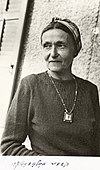
Unsourced — Primary work/page citation not yet verified in the QuotesCosmos archive. Per our Unnamed Sources & Verification Policy, quotes without confirmed primary editions are explicitly marked Unsourced while under editorial review.
Irena Klepfisz on Grace Paley 2 quotes
“Heroes: Grace Paley, Tillie Olsen, Shirley Chisholm — what a generation!”

Unsourced — Primary work/page citation not yet verified in the QuotesCosmos archive. Per our Unnamed Sources & Verification Policy, quotes without confirmed primary editions are explicitly marked Unsourced while under editorial review.
Irena Klepfisz on Irving Howe 2 quotes
“the translation of Yiddish literature into English by the -- beginning with Irving Howe, totally erased women, so it was even worse in English than it actually was in Yiddish.”
Unsourced — Primary work/page citation not yet verified in the QuotesCosmos archive. Per our Unnamed Sources & Verification Policy, quotes without confirmed primary editions are explicitly marked Unsourced while under editorial review.
Quotes About Irena Klepfisz
Gain deeper perspective through quotes about Irena Klepfisz from others.
Bettina Aptheker on Irena Klepfisz
“Jewish poet Irena Klepfisz writes in the mame-loshn, Yiddish, the mother tongue, even her fragmentary version of it, as an act of reclamation, to salvage what is left, "this echo of a European era and culture in which I never lived and about which I have only heard second-hand like a family story."”

Unsourced — Primary work/page citation not yet verified in the QuotesCosmos archive. Per our Unnamed Sources & Verification Policy, quotes without confirmed primary editions are explicitly marked Unsourced while under editorial review.
Cheryl Clarke on Irena Klepfisz
“Endurance, repression, survival, exclusion, absurdity, and work are the themes which drive this relentless poetry. Klepfisz is more than equal to the task of translating her formidable consciousness into splendid language. The poetry takes many forms: narrative, sonnet, journal entry, prose....The mood of the poetry is grim, cynical, ironic. The clarity and simplicity of her language are breathtaking.”
Unsourced — Primary work/page citation not yet verified in the QuotesCosmos archive. Per our Unnamed Sources & Verification Policy, quotes without confirmed primary editions are explicitly marked Unsourced while under editorial review.
Molly Crabapple on Irena Klepfisz 2 quotes
“Her verses on rebel womanhood, violent histories, queer love, and dissident, diasporic identity are urgent reading for the present.”

Unsourced — Primary work/page citation not yet verified in the QuotesCosmos archive. Per our Unnamed Sources & Verification Policy, quotes without confirmed primary editions are explicitly marked Unsourced while under editorial review.
Dara Horn [https on Irena Klepfisz
“At age 2, Klepfisz escaped with her mother from the Warsaw Ghetto and then lived in hiding until the end of World War II. Arriving in America via Sweden, Klepfisz struggled to master English in public school while attending Yiddish supplementary school and speaking Polish at home. For Klepfisz, poetry — in English — was also a hiding place, a “private language” where no teacher could criticize her hesitant use of new words. But the linguistic shifts remained daunting. “Words attach themselves to our most intimate experiences,” she told the Forward. “When you move into a new language, you lose that intimacy, and it’s a tremendous trauma.” Klepfisz treats that trauma through her own poetry, which braids Yiddish into English, and by translating the works of Yiddish women writers. To Klepfisz, who grew up with a deep awareness of the lost life of Jewish Warsaw, the supposed parallel between Yiddish and Irish is not so strange. “We each have a goldene keyt,” she said, using the expression “golden chain” that signifies the Yiddish literary tradition.”
Unsourced — Primary work/page citation not yet verified in the QuotesCosmos archive. Per our Unnamed Sources & Verification Policy, quotes without confirmed primary editions are explicitly marked Unsourced while under editorial review.
Gary Pacernick on Irena Klepfisz
“The venerable Polish-Jewish culture that Irena Klepfisz was born into was destroyed by Nazi genocide. She has committed herself to the cause of keeping Yiddish (the mother tongue) and Yiddishkayt (the Yiddish way of life) alive. Much of her poetry, essays, and plays as well as lectures, teaching, and social and political activism is devoted to this end...At the margins of poetry and prose she writes with clarity and precision about cataclysmic moments that occurred in her very young life, bringing the reader into her nightmarish world. Klepfisz's harsh view of America comes from the poet's loyalty to the socialism of the Jewish labor movement; her vision is that of a secular Jew. "I was taught that capitalism oppresses the working masses and all poor people, that it has to be smashed, and that we are to work toward building a classless society."”
Unsourced — Primary work/page citation not yet verified in the QuotesCosmos archive. Per our Unnamed Sources & Verification Policy, quotes without confirmed primary editions are explicitly marked Unsourced while under editorial review.
About Irena Klepfisz
Irena Klepfisz (born April 17, 1941) is a Jewish lesbian feminist author, poet, academic and activist living in the US.