Link Copied!
Irena Klepfisz Quotes (1941-)
Author, Poet, Activist





About Irena Klepfisz
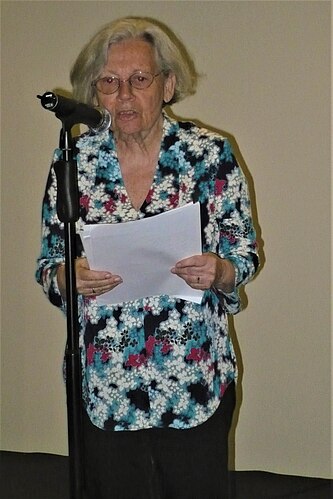
Irena Klepfisz (born April 17, 1941) is a Jewish lesbian feminist author, poet, academic and activist living in the US.
Best Irena Klepfisz Quotes
Shortest
Earliest
Explore our curated collection of the most famous and impactful Irena Klepfisz quotes.

“I experienced a lot of homophobia when I came out, around 1974”


“I think my introduction to loving poetry and literature came from Yiddish”

“Heroes: Grace Paley, Tillie Olsen, Shirley Chisholm — what a generation!”
“The arts, I think, are very affirming -- affirming, even when they're depressing.”
“what the Jewish lesbian encounters are the typical conservative stances. Closed doors. Silence. Disgust.”


“As a child, my first conscious feeling about being Jewish was that it was dangerous, something to be hidden.”
“the role of poetry in the women’s movement and during the second wave, was just so important and so visible.”

“Though U.S. Jews were quick to protest the Knesset's attempt to define "who is a Jew," it is a definition we are obsessed with.”

“Experience has obviously taught me that Jews are not the only ones in danger and that what is "undesirable" in me is not limited to my Jewishness.”

“I've been thinking a lot about it lately, about the corruption here in America, how everything becomes big business, how everything becomes diseased. Everything.”


“We formed Conditions magazine so we felt we were doing something really constructive and something that we really believed in. And we were going to change literature. And I think we did.”
“As I grew older, I learned the full breadth of Yiddish literature; but this early introduction with its inherent political vision became as powerful an influence in my life as did the war.”
“The translation of Yiddish literature into English by the -- beginning with, like, Irving Howe, and that totally erased women, so it was even worse in English than it actually was in Yiddish.”
“It wasn't an age in which people explained a lot of things to kids. Really. I mean, we're so careful now about, is this gonna traumatize the child and all of this. Nobody even thought about it.”
“Just as we must not allow our strong commitment to developing Jewish secularism to detract from the struggle in the Middle East, that conflict cannot be used to allow assimilation to take over our lives.”
“This is the confusion. Being Jewish. Being a lesbian. Being an American. It all converges. It is like feelings about one's parents. Love and embarrassment. The painful realization that they are not perfect.”
“When I write, I will say it out loud to myself over and over again. I want to hear it. I want to hear how it sounds. Not only -- I like to manipulate it on the page and how it looks, but I also want to be able to hear it.”
“When it comes to the bottom line, the Moral Majority is Christian. So is the Ku Klux Klan. So is the Nazi Party. And I am completely stymied that large segments of the Jewish population have not absorbed these simple basic facts.”

Irena Klepfisz Quotes by Topic
Find exactly what you are looking for by browsing this categorized list of Irena Klepfisz quotes by topic.
Irena Klepfisz on Yiddish literature 2 quotes
“The translation of Yiddish literature into English by the -- beginning with, like, Irving Howe, and that totally erased women, so it was even worse in English than it actually was in Yiddish.”

Irena Klepfisz on Israel 2 quotes
“One of the things that scares me is the global rise of right-wing movements in the United States, Europe and Israel. The American alt-right is in dialogue with similar movements in Israel, and this might pose a danger to both Israelis and Americans.”

Irena Klepfisz on Zionism 2 quotes
“Just as many contemporary Yiddishists romanticize and depoliticize the past, so do most contemporary Zionists romanticize and depoliticize the Israeli present. Such nostalgia is rightfully condemned by those who want Jews to engage in the political present. But these critics erroneously conclude that any focus on their Jewish identity will inherently foster Jewish escapist tendencies.”

Irena Klepfisz on Judaism 2 quotes
“We Jews are living in a strange historical period in which our sense of history is often quite warped. For many American Jews, the Holocaust and Israel have reduced Jewish history to the years 1939-1945, or 1948 to the present. This extremely limited view of Jewish history naturally narrows the concept of Jewish identity and that narrowness is one which we as progressives ought to be countering.”

Irena Klepfisz on Russia
Irena Klepfisz on Yenta Mash
“Yenta Mash has left us rich images and complex responses to human betrayal and God's indifference in stories that are compelling and memorable.”
Irena Klepfisz on Warsaw
“When the Jews finally staged the uprising in April 1943, the Polish underground refused them almost every form of assistance. Even though they were facing the same enemy, even though their country was occupied, the Poles could not overcome their anti-Semitism and join the Jews in the struggle for the freedom of both groups, and instead chose to stage a separate Polish uprising more than a year later.”

Irena Klepfisz on Poetry
“For me, the prospect of expression through poetry transforms solitary silence and an empty page into sheer pleasure. I feel unafraid, knowing I can break all the rules, invent my own forms. No matter what persona I take on, my voice remains accessible and recognizable. There is no artifice, no pose, no sense that I have to transform myself into someone else. As a poet, I remain comfortably disrespectful. I experiment, take risks which sometimes work and sometimes don't.”

Irena Klepfisz on The Forward
“The multitude of Jewish options that existed before World War II are ones which most nonobservant U.S. Ashkenazi Jews are hardly familiar with, much less recognize...Before World War II many Yiddish-speaking European Jews were already rejecting observance and secularism. Eager to assimilate, they deliberately abandoned their Jewish language and culture. The well-known letters (Bintl Brif) of Der forverts (The Jewish Daily Forward), the thirties English stories of Anzia Yezierska, and the more modern forties and fifties Yiddish stories of Kadia Molodowsky describe this assimilation minutely.”

Irena Klepfisz on Translation
“I felt that by translating, first of all, I made something accessible that was inaccessible and would remain inaccessible. And in some cases, it actually inspired other people to learn Yiddish, by reading the -- then they said, I want to read the original and I want to read more. What's not translated?...it's not like the real thing. It never is. But it's either you get this, or you get nothing. And I feel that a good translation -- it's not the original -- gives you a lot...I wish more stuff was available in English. I mean, I wish I could put stuff in my classroom. But I can't, unless it's translated. And then, that means that students remain ignorant of it.”

Irena Klepfisz on Life
“(What is the most amazing thing about life?) IK: That it persists despite its fragility. Everything sort of hangs by a hair's breadth and yet somehow it manages.... You hear such horrible stories about people's lives...war, abuse, poverty-that anybody survives is remarkable. Audre Lorde once said, "None of us were meant to survive." There's truth to that, and I remain amazed that so many of us do. It's extraordinary that we can even walk around and function in a minimal way, much less in a productive way. For whatever turmoil goes on internally with people and the pain that they experience at night in their dreams, they still manage somehow to construct lives during the day which are meaningful to other people and to themselves.”

What Irena Klepfisz Said About Others
Discover personal opinions Irena Klepfisz shared regarding contemporaries.
Irena Klepfisz on Melanie Kaye/Kantrowitz 3 quotes
“if you’re going to be involved with the Left, you’ve got to start thinking about Israel. Melanie and I became very committed to supporting the Women in Black in ‘87.”
Irena Klepfisz on Yiddish 3 quotes
“The use of Yiddish was an expression not only of love of a language, but of pride in ourselves as a people; it was an acknowledgement of a historical and cultural yerushe, heritage, a link to generations of Jews who came before and to the political activists of Eastern Europe. Above all it was the symbol of resistance to assimilation, an insistence on remaining who we were.”
Irena Klepfisz on Kadia Molodowsky 3 quotes
“I turn to Kadia Molodowsky, predominantly known for her poetry, but whose stories minutely depict assimilation in America as she witnessed it in the 1940s and 1950s. All these Jewish women—Julia, Nadia, Patti, Gina, Fradel, Kadia—are my ancestors. They are mayne bobes, mumes, shvester, my grandmothers, aunts, sisters. Mir darfn zikh bakenen. We need to become acquainted.”
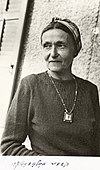
Irena Klepfisz on Grace Paley 2 quotes
“Heroes: Grace Paley, Tillie Olsen, Shirley Chisholm — what a generation!”

Irena Klepfisz on Irving Howe 2 quotes
“the translation of Yiddish literature into English by the -- beginning with Irving Howe, totally erased women, so it was even worse in English than it actually was in Yiddish.”
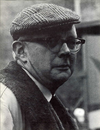
Irena Klepfisz on Evelyn Torton Beck 2 quotes
“Evelyn Torton Beck's Nice Jewish Girls: A Lesbian Anthology, published in April 1982, sold ten thousand copies over the next ten months and made an enormous impact on the women's community.”
Irena Klepfisz on Fradl Shtok 2 quotes
“I turn to Fradel Schtok and know that another woman writer experienced similar conflicts over mame-loshn. I read her stories of the shtetl and America and see the two worlds between which she was caught...All these Jewish women-Julia, Nadia, Patti, Gina, Fradel, Kadia-are my ancestors. They are mayne bobes, mumes, shvester, my grandmothers, aunts, sisters. Mir darfn zikh bakenen. We need to become acquainted.”

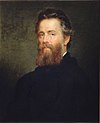
Irena Klepfisz on Herman Melville
“Herman Melville, whose work I loved”
Irena Klepfisz on Shirley Chisholm
“Heroes: Grace Paley, Tillie Olsen, Shirley Chisholm — what a generation!”

Irena Klepfisz on Tillie Olsen
“Heroes: Grace Paley, Tillie Olsen, Shirley Chisholm — what a generation!”

Irena Klepfisz on Judy Grahn
“poetry readings were incredible. I mean, people like Judy Grahn could bring 500 people to a reading.”
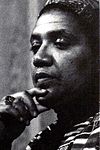
Irena Klepfisz on Audre Lorde
“Audre Lorde was one of my role models when I first came out as a lesbian. Audre was an extraordinary African American lesbian writer. It really meant a lot to me that she wrote to me on three different occasions that the dedications to "Bashert" were important to her.”
Quotes About Irena Klepfisz
Gain deeper perspective through quotes about Irena Klepfisz from others.
Bettina Aptheker on Irena Klepfisz
“Jewish poet Irena Klepfisz writes in the mame-loshn, Yiddish, the mother tongue, even her fragmentary version of it, as an act of reclamation, to salvage what is left, "this echo of a European era and culture in which I never lived and about which I have only heard second-hand like a family story."”

Cheryl Clarke on Irena Klepfisz
“Endurance, repression, survival, exclusion, absurdity, and work are the themes which drive this relentless poetry. Klepfisz is more than equal to the task of translating her formidable consciousness into splendid language. The poetry takes many forms: narrative, sonnet, journal entry, prose....The mood of the poetry is grim, cynical, ironic. The clarity and simplicity of her language are breathtaking.”
Molly Crabapple on Irena Klepfisz 2 quotes
“Her verses on rebel womanhood, violent histories, queer love, and dissident, diasporic identity are urgent reading for the present.”

Dara Horn [https on Irena Klepfisz
“At age 2, Klepfisz escaped with her mother from the Warsaw Ghetto and then lived in hiding until the end of World War II. Arriving in America via Sweden, Klepfisz struggled to master English in public school while attending Yiddish supplementary school and speaking Polish at home. For Klepfisz, poetry — in English — was also a hiding place, a “private language” where no teacher could criticize her hesitant use of new words. But the linguistic shifts remained daunting. “Words attach themselves to our most intimate experiences,” she told the Forward. “When you move into a new language, you lose that intimacy, and it’s a tremendous trauma.” Klepfisz treats that trauma through her own poetry, which braids Yiddish into English, and by translating the works of Yiddish women writers. To Klepfisz, who grew up with a deep awareness of the lost life of Jewish Warsaw, the supposed parallel between Yiddish and Irish is not so strange. “We each have a goldene keyt,” she said, using the expression “golden chain” that signifies the Yiddish literary tradition.”
Gary Pacernick on Irena Klepfisz
“The venerable Polish-Jewish culture that Irena Klepfisz was born into was destroyed by Nazi genocide. She has committed herself to the cause of keeping Yiddish (the mother tongue) and Yiddishkayt (the Yiddish way of life) alive. Much of her poetry, essays, and plays as well as lectures, teaching, and social and political activism is devoted to this end...At the margins of poetry and prose she writes with clarity and precision about cataclysmic moments that occurred in her very young life, bringing the reader into her nightmarish world. Klepfisz's harsh view of America comes from the poet's loyalty to the socialism of the Jewish labor movement; her vision is that of a secular Jew. "I was taught that capitalism oppresses the working masses and all poor people, that it has to be smashed, and that we are to work toward building a classless society."”
Marge Piercy on Irena Klepfisz
“What Klepfisz is: a survivor who studies survival, who lays out the cost of surviving in her poems and bears witness to those who did not survive. The accounts of which she is the keeper are the accounts of a destroyed small world in Jewish Poland, a culture, a civilization that is no longer extant...She operates from a stark but deep compassion. Nothing is stated in these poems; all happens. I've never read a better sequence about political prisoners."”
Source on Irena Klepfisz 19 quotes
“Irena Klepfisz's work is an essential part of this poetry of cultural re-creation. It begins with a devastating exterior event, the destruction of European Jewry in the Nazi period through the technologically organized genocide known as the Holocaust, or, in Yiddish, der khurbn. (Klepfisz has written: "The Yiddish word was important, for, unlike the term Holocaust, it resonated with yidishe geshikhte, Jewish history, linking the events of World War II with der ershter un tsveyter khurbn, the First and Second Destruction (of the Temple)."”
About Irena Klepfisz
Irena Klepfisz (born April 17, 1941) is a Jewish lesbian feminist author, poet, academic and activist living in the US.