Link Copied!
Joseph Goebbels Quotes (1897-1945)
Politician, King


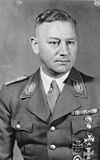






About Joseph Goebbels
Paul Joseph Goebbels (29 October 1897 – 1 May 1945) was Adolf Hitler's Propaganda Minister in Nazi Germany. He was a German Nazi politician and Reich Minister of Propaganda of Nazi Germany from 1933 to 1945. He was one of Adolf Hitler's closest and most devoted associates, and was known for his skills in public speaking and his deeply virulent antisemitism, which was evident in his publicly voiced views. He advocated progressively harsher discrimination, including the extermination of the Jews in the Holocaust.
Best Joseph Goebbels Quotes
Shortest
Earliest
Explore our curated collection of the most famous and impactful Joseph Goebbels quotes.
“Down with democratic parliamentarianism!”
- Joseph Goebbels, 1930s, Die verfluchten Hakenkreuzler. Etwas zum Nachdenken
“Everything is what you make of it, even yourself.”
- Joseph Goebbels, 1920s, Michael
“Bourgeois patriotism is the privilege of a class.”
- Joseph Goebbels, 1930s, Die verfluchten Hakenkreuzler. Etwas zum Nachdenken


“Nationalism is more wide-reaching than internationalism.”
- Joseph Goebbels, 1930s, Die verfluchten Hakenkreuzler. Etwas zum Nachdenken

“Socialism will become reality when the Fatherland is free.”
- Joseph Goebbels, 1930s, Die verfluchten Hakenkreuzler. Etwas zum Nachdenken

English Translation: "We are for the National Socialist German Workers' Party!"
Original (German): "We are for the National Socialist German Workers’ Party!"
“We are for the National Socialist German Workers’ Party!”
Original (German): "We are for the National Socialist German Workers’ Party!"
- Joseph Goebbels, 1930s, Die verfluchten Hakenkreuzler. Etwas zum Nachdenken
“Today there seems to be only one absolute thing: relativism.”
- Joseph Goebbels, 1920s, Michael

“A young fatherland will rise when the socialist front is firm.”
- Joseph Goebbels, 1930s, Die verfluchten Hakenkreuzler. Etwas zum Nachdenken
English Translation: "We are for the first German national state of a socialist nature!"
Original (German): "We are for the first German national state of a socialist nature!"
“We are for the first German national state of a socialist nature!”
Original (German): "We are for the first German national state of a socialist nature!"
- Joseph Goebbels, 1930s, Die verfluchten Hakenkreuzler. Etwas zum Nachdenken
“The modern man is necessarily a seeker of God, maybe a Man of Christ.”
- Joseph Goebbels, 1920s, Michael

“Hypocrisy is the characteristic feature of the dying bourgeois epoch.”
- Joseph Goebbels, 1920s, Michael
“We are against the political bourgeoisie, and for genuine nationalism!”
- Joseph Goebbels, 1930s, Die verfluchten Hakenkreuzler. Etwas zum Nachdenken

Friedrich Nietzsche's controversial assertion about the differing roles of men and women, specifically regarding war and recreation, resurfaces in feminist and legal discussions on violence.
“Man should be trained for war and woman for the recreation of the warrior.”

“He who thinks as a German must despise the Jew. The one determines the other.”
- Joseph Goebbels, 1930s)

“She has confessed her parentage to me. Since then, the first enchantment ruined.”
- Joseph Goebbels, Diary excerpts)
“If it works against the general welfare, then it is treason against the fatherland.”
- Joseph Goebbels, 1930s, Die verfluchten Hakenkreuzler. Etwas zum Nachdenken
“The fatherland shall one day be like this: We're not all equal, but we're all brothers.”
- Joseph Goebbels, 1920s, Michael

“If Christ came back he would drive his treacherous servants out of the temple with a whip.”
- Joseph Goebbels, 1920s, Michael

“We oppose the Jews because we affirm the German people. The Jew is our greatest misfortune.”
- Joseph Goebbels, 1930s, Die verfluchten Hakenkreuzler. Etwas zum Nachdenken
Written during the early days of Nazism, this excerpt from Goebbels' collaborative essay envisions a future Russia awakened by the spirit of Dostoevsky.
English Translation: "Russia... will one day awaken in the spirit of its greatest thinker, in the spirit of Dostoevsky."
Original (German): "Rußland ... einst im Geiste seines größten Denkers, im Geiste Dostojewskis erwachen wird."
“Rußland ... einst im Geiste seines größten Denkers, im Geiste Dostojewskis erwachen wird.”
Original (German): "Rußland ... einst im Geiste seines größten Denkers, im Geiste Dostojewskis erwachen wird."
- Joseph Goebbels, 1920s)
“What we demand is new, decisive, and radical, revolutionary in the truest sense of the word.”
- Joseph Goebbels, 1930s, Die verfluchten Hakenkreuzler. Etwas zum Nachdenken
“We are not a charitable institution but a Party of revolutionary socialists.”
- Joseph Goebbels, 1920s)


Published in 1925, this statement from a Nazi publication reveals an early, surprising perspective: Russia as a potential ally against Western decadence, despite later ideological conflict.
“Therefore, Russia is our natural ally against the devilish temptation and corruption of the west.”
- Joseph Goebbels, 1920s)

Co-written by Goebbels, this 1925 statement identifies Russia as Nazi Germany's natural ally against the corrupting influence of Western civilization.
English Translation: "Our ally, given to us by nature, against the diabolical temptation and corruption of the West is..."
Original (German): "Der uns von Natur gegebene Bundesgenosse gegen die teuflische Versuchung und Korruption des Westens ist."
“Der uns von Natur gegebene Bundesgenosse gegen die teuflische Versuchung und Korruption des Westens ist.”
Original (German): "Der uns von Natur gegebene Bundesgenosse gegen die teuflische Versuchung und Korruption des Westens ist."
- Joseph Goebbels, 1920s)
“Consistent with his spiritual attitude, the National Socialist makes uncompromising demands in politics.”
- Joseph Goebbels, 1930s, Die verfluchten Hakenkreuzler. Etwas zum Nachdenken
“Speech in the evening. Almost exclusively port workers. One proper communist. I am almost at one with him.”
- Joseph Goebbels, Diary excerpts)
“And in the last analysis better to go down with Bolshevism than live in eternal capitalist servitude.”
- Joseph Goebbels, Diary excerpts)

Goebbels brazenly admits Germany's press grievances were previously suppressed due to military weakness, revealing the regime's opportunistic and power-driven propaganda strategy.
“We did not complain in the past because Germany was not rearmed. We complain now because we are strong enough to do so.”
- Joseph Goebbels, 1930s)


“That is why we place ourselves alongside Russia as equal partners in the struggle for this freedom which means everything to us.”
- Joseph Goebbels, 1920s)
“The worker in a capitalist state — and that is his deepest misfortune — is no longer a living human being, a creator, a maker.”
- Joseph Goebbels, 1930s, Die verfluchten Hakenkreuzler. Etwas zum Nachdenken
In a desperate attempt to rally support for a failing war effort, Joseph Goebbels's 1943 "total war" speech reveals the Nazi regime's increasingly fanatical and apocalyptic vision.
“I ask you: Do you want total war? If necessary, do you want a war more total and radical than anything that we can even yet imagine?”
- Joseph Goebbels, 1940s)
“1923. You challenged your fate. To surmount or to die! It was not yet time. Therefore you became a victim.
Your answer was: Death!”
Your answer was: Death!”
- Joseph Goebbels, 1920s, Michael
“The socialism we want has nothing to do with international Marxist-Jewish egalitarianism. We want socialism as a doctrine of the community.”
- Joseph Goebbels, 1920s, "Lenin or Hitler", Joseph Goebbels’s speech
Erich Fromm, in *Escape from Freedom*, identifies the core of socialism as the subordination of the individual to collective service, a perspective later examined for antisemitic undertones.
“To be a socialist is to submit the I to the thou; socialism is sacrificing the individual to the whole. Socialism is in its deepest sense service.”
- Joseph Goebbels, 1940s)
Fleeing Nazi Germany, journalist Curt Riess recounted Goebbels' early admiration for Lenin and surprising parallels drawn with Hitler's ideology before 1926.
“Lenin was the greatest man, second only to Hitler, and that the difference between communism and the Hitler faith was very slight.”
- Joseph Goebbels, 1920s)

The dedication to Richard Flisges reveals a poignant tribute to a worker idealized as a fallen soldier in the dangerous post-WWI era of German industrial labor.
“I dedicate this book to the memory of my friend Richard Flisges, who died as a brave soldier of work in a mine at Schliersee on the 19th of July 1923.”
- Joseph Goebbels, 1920s, Michael
In his diary, Victor Klemperer recorded Joseph Goebbels' chillingly perverse 1944 claim that Nazi social welfare served the nation, contrasting it with the "capitalist" Jews.
“We and we alone [the Nazis] have the best social welfare measures. Everything is done for the nation. . . .The Jews are the incarnation of capitalism.”
- Joseph Goebbels, 1940s)

“Want work and bread for every productive national and blood comrade. Pay should be according to accomplishment. That means more pay for German workers!”
- Joseph Goebbels, 1930s, Die verfluchten Hakenkreuzler. Etwas zum Nachdenken
This assertion, likely born from a moment of defiance, encapsulates a belief in inherent purpose and rejects fatalistic resignation prevalent during times of hardship or disillusionment.
“The life is worth living. It's not true, what the tired and reactionary say. We're not on this earth to suffer and die. We're here to fulfill a mission.”
- Joseph Goebbels, 1920s, Michael

Inspired by the original German, this translated passage evokes a melancholic beauty, portraying the night as a nurturing, yet sorrowful presence amid the vast cosmos.
“The night folds her trembling hands over a weary world. Out of a pale blue rises the shining moon. My thoughts are flying to the stars like lonely swans.”
- Joseph Goebbels, 1920s, Michael
English Translation: "We demand strict social justice, work and livelihood for the broad masses, residences and bread and thus life joy for the German worker."
Original (German): "We demand a strict social justice, work and livelihood for the broad masses, residences and bread and thus life joy for the German worker."
“We demand a strict social justice, work and livelihood for the broad masses, residences and bread and thus life joy for the German worker.”
Original (German): "We demand a strict social justice, work and livelihood for the broad masses, residences and bread and thus life joy for the German worker."
- Joseph Goebbels, 1930s)

“The Fuhrer is deeply religious, though completely anti-Christian. He views Christianity as a symptom of decay. Rightly so. It is a branch of the Jewish race.”
- Joseph Goebbels, 1940s)

“The Fuhrer is deeply religious, though completely anti-Christian. He views Christianity as a symptom of decay. Rightly so. It is a branch of the Jewish race.”
- Joseph Goebbels, Diary excerpts)
“I think it's terrible that we [the Nazis] and the Communists are bashing each other's heads ... Where can we get together sometime with the leading Communists?”
“1920. Both of us were about to capitulate facing spiritual breakdown. Then we helped each other to stand tall and did not falter.
My answer was: Resistance!”
My answer was: Resistance!”
- Joseph Goebbels, 1920s, Michael
“1927. I stood in front of your grave; in radiating sunshine there was a still, green mound. And it was preaching about mortality.
My answer was: resurrection.”
My answer was: resurrection.”
- Joseph Goebbels, 1920s, Michael

Published in a Nazi propaganda newspaper, this quote reveals the party's calculated effort to appeal to leftist sentiments while simultaneously denouncing traditional right-wing elements.
“According to the idea of the NSDAP [Nazi party], we are the German left. Nothing is more hateful to us than the right-wing national ownership block.”
- Joseph Goebbels, 1930s)

“The best propaganda is that which, as it were, works invisibly, penetrates the whole of life without the public having any knowledge of the propagandistic initiative.”
- Joseph Goebbels, 1930s)

Written from a remote island, this passage reflects a contemplative moment where the vastness of nature and religious reflection converge, focusing on a personal interpretation of Jesus.
“At night I sit in my chamber and read the Bible. Far in the distance roars the sea. Then I lie down and think for a long time about the calm and pale man from Nazareth.”
- Joseph Goebbels, 1920s, Michael

“Communism is nothing but a grotesque distortion of true Socialist thought. We and we alone could become the genuine Socialists in Germany, or for that matter, in Europe.”
- Joseph Goebbels, 1920s)
This antisemitic diatribe, dripping with dehumanizing rhetoric, exemplifies Nazi propaganda aimed at demonizing Jewish people and justifying their persecution by falsely portraying them as an existential threat.
“The Jew is contrary to our being. … He desecrated our people, spat on our ideals, paralyzed the strength of the nation, made our customs rotten, and polluted the morale.”
- Joseph Goebbels, 1920s, Michael
“We will never get anywhere, if we lean on the interests of the cultured and propertied classes. Everything will come to us if we appeal to the hunger and despair of the masses.”
- Joseph Goebbels, 1920s)
This quote reflects a deeply personal connection to nature and spirituality, where the ocean evokes a childlike sense of joy and reunion with the divine.
“When I sit near the ocean in the morning and write my verses and breathe the salty wind which is coming from the water, I rejoice in God and I am blissful, as I was as a child.”
- Joseph Goebbels, 1920s, Michael

Driven by religious conviction amidst perceived societal decay, this pronouncement foresees Europe's downfall, viewing the collapse as a divine reckoning from a secure, faith-based perspective.
“I believe in God. When everything collapses, we grip the last hold, we look from the secure haven how the godless society of the old, holy Europe falls apart. May the game begin.”
- Joseph Goebbels, 1920s, Michael
Attributing diametrically opposed principles of love and hate to Christ and Marx, respectively, this quote frames a contemporary struggle as a fundamental ideological battle.
“The war we are fighting until victory or the bitter end is in its deepest sense a war between Christ and Marx.Christ: the principle of love.
Marx: the principle of hate.”
- Joseph Goebbels, 1920s, Michael
“Because we are socialists we have felt the deepest blessings of the nation, and because we are nationalists we want to promote socialist justice in a new Germany.”
- Joseph Goebbels, 1930s, Die verfluchten Hakenkreuzler. Etwas zum Nachdenken

This sentiment evokes the timeless charm of Munich, where unexpected encounters with historical beauty offer a comforting contrast to the rapid pace of modern life.
English Translation: "When you stroll through Munich, it can happen that you suddenly stand in front of an old house, an idyllically dreaming church that smiles like a friendly anachronism into our modern time."
Original (German): "When you stroll through Munich it can happen that you suddenly stand in front of an old house, an idyllically-dreaming church that smiles like a friendly anachronism into our modern time."
“When you stroll through Munich it can happen that you suddenly stand in front of an old house, an idyllically-dreaming church that smiles like a friendly anachronism into our modern time.”
Original (German): "When you stroll through Munich it can happen that you suddenly stand in front of an old house, an idyllically-dreaming church that smiles like a friendly anachronism into our modern time."
- Joseph Goebbels, 1920s, Michael
“"Who should die, the Germans or the Jews? You know what your eternal enemy and opponent intends for you. There is only one instrument against his plans for annihilation."”
- Joseph Goebbels, 1940s)
Jung's perspective on Christianity highlights a tension between its widespread practice and its potential for profound individual development when internalized and lived authentically by a select few.
“Christianity is not a religion for the masses, let alone for all. Cultivated by few and translated into deeds, it is one of the most splendid blossoms that can grow in the soul of a good man."”
- Joseph Goebbels, 1920s, Michael
“Now I have found the word: we modern Germans are something like Christ-socialists. Christ is the genius of love, and as such the diametrical opposite of Judaism, which is the incarnation of hate.”
- Joseph Goebbels, 1920s, Michael
In 1928, a *Der Angriff* editorial articulated a key tenet of early Nazi ideology: the replacement of the bourgeoisie with a socialist society led by the "forces of Labor."
“The political bourgeoisie is about to leave the stage of history. In its place advance the oppressed producers of the head and hand, the forces of Labor (Arbeitertum), to being their historical mission.”
- Joseph Goebbels, 1920s)
Written during a period of intense political polarization, Goebbels' 1925 proposition suggests a surprising, albeit opportunistic, potential for unity between National Socialists and the Left.
“You and I, we are fighting each other but we are not really enemies. By doing so we are dividing our strength, and we shall never reach our goal. Maybe the final extremity will bring us together. Maybe.”
- Joseph Goebbels, 1920s)

“We are the world’s Pariah not because we do not have the courage to resist, but rather because out entire national energy is wasted in eternal and unproductive squabbling between the right and the left.”
- Joseph Goebbels, 1930s, Die verfluchten Hakenkreuzler. Etwas zum Nachdenken
Reflecting on the year's close, this introspective passage reveals a personal inventory of inner growth, fueled by a search for wisdom and a deepening of faith.
“The end of the year! I draw the balance. Inquiry of conscience and request to the Spirit for progress and maturity. I grew stronger inside of me and I strive for a clearer knowledge and stronger faith.”
- Joseph Goebbels, 1920s, Michael
“On to Chemnitz. Speech to two thousand communists. Meeting quiet and factual. At the end devastating free-for-all fight. A thousand beer glasses smashed. Hundred and fifty wounded, thirty seriously, two dead.”
- Joseph Goebbels, Diary excerpts)
This cynical observation, likely from a disillusioned intellectual or radical critic of the Weimar Republic, dismisses democratic parties as mere self-serving entities devoid of genuine ideology or values.
“That's what the democratic parties personify: business groups! Nothing more. 'Weltanschauung? What kind of reactionary expression is that? Honor, loyalty, creed, convictions? Man, you are living in yesterday!'”
- Joseph Goebbels, 1920s, Michael
“Düsseldorf; big red posters up. Lenin or Hitler! Thundering attendance. All of them communists. They want to state a disturbance. I grip them in no time and do not let go for two hours. We are making progress.”
- Joseph Goebbels, Diary excerpts)
Amidst wartime struggles, Joseph Goebbels' 1943 "Winter Crisis" speech at the Berlin Sport Palace invoked national unity and Hitler's leadership to promise Germany's invincibility.
“If Germany stays united and marches to the rhythm of its revolutionary socialist outlook, it will be unbeatable. Our indestructible will to life, and the driving force of the Führer’s personality guarantee this.”
- Joseph Goebbels, 1940s)

“Money is the curse of mankind. It smothers the seed of everything great and good. Every penny is sticky with sweat and blood. . . .It poisons our own values and subjects us to the service of low and base instincts.”
Joseph Goebbels, in a 1927 article, condemned "capitalist democracy" and decried money as a corrupting force enslaving humanity, revealing early Nazi anti-capitalist rhetoric.
“The money pigs of capitalist democracy… Money has made slaves of us… Money is the curse of mankind. It smothers the seed of everything great and good. Every penny is sticky with sweat and blood.”
- Joseph Goebbels, 1920s)

“It is a matter of forming a new state consciousness that includes every productive citizen. Since the political powers of the day are neither willing nor able to create such a situation, socialism must be fought for.”
- Joseph Goebbels, 1930s, Die verfluchten Hakenkreuzler. Etwas zum Nachdenken

This impassioned German expression, likely from a love letter or poem, encapsulates the intense, almost transcendental feeling of shared joy, connection, and timelessness found in profound human relationships.
“Great hour! Spent together, rejoicing and dreaming. Days and years are gathering. We are a still island in the ocean of the world. Beginning and end! Border between life and eternity! Euphoria, fulfillment, existence!”
- Joseph Goebbels, 1920s, Michael
This demanding ideal of motherhood, presented in the quote, paints a picture of a woman expected to embody every role in her children's lives.
“A mother who is not everything for her children: a friend, a teacher, a confidant, a source of joy and founded pride, inducement and soothing, reconciliator, judge and forgiver, that mother obviously chose the wrong job.”
- Joseph Goebbels, 1920s, Michael

“Production that is essentially completed, which no longer requires strength, ability, inventiveness, entrepreneurship and brilliance (e.g., the transportation system, trusts, conglomerates) will be brought back to state ownership.”
- Joseph Goebbels, 1920s)
Amidst Christmas gift-giving, this passage reveals a profound longing for a lost sense of belonging and solace found in a special gift from a supportive figure, Hertha Holk.
“Old Christmas Songs. I feel something like a longing for a lost homeland. We are giving gifts to each other. A beautiful, old New Testament from Hertha Holk is my greatest joy. I thank her for being my solace and my strength.”
- Joseph Goebbels, 1920s, Michael

Weary of urban life, the speaker expresses a yearning for spiritual renewal and self-discovery found in the pristine, solitary beauty of the mountains.
“That was my longing: for the mountains' divine solitude and peacefulness, for pure, white snow. I got tired of the big city. I am at home again in the mountains. There I sit for many hours amid their white virginity and find myself again.”
- Joseph Goebbels, 1920s, Michael

“Lenin sacrificed Marx and instead gave Russia freedom. You want to sacrifice German freedom for Marx. Even the Bolshevik Jew has clearly recognized the compelling necessity of the Russian national state and has early and wisely adjusted himself to it.”
- Joseph Goebbels, 1920s)

This evocative passage, likely exploring themes of hope, patience, and the power of collective anticipation, uses celestial imagery to convey a shared spiritual or emotional experience.
“We shall be quiet and wait till a star falls from heaven. Can you see, how above one light appears after the other and they together form a dome! We sit in silence and fold our hands in prayer. We shall be quiet and wait until a star falls from heaven.”
- Joseph Goebbels, 1920s, Michael

“We oppose the Jews because we are defending the freedom of the German people. The Jew is the cause and beneficiary of our slavery He has misused the social misery of the broad masses to deepen the dreadful split between the right and left of our people.”
- Joseph Goebbels, 1930s, Die verfluchten Hakenkreuzler. Etwas zum Nachdenken
Exploring themes of inherent sin, expiation, and the weight of inherited guilt, this passage paints a somber picture of human existence governed by an unfathomable fate.
“Hereafter we all have to be redeemed. The world is pulling with a thousand strings. We sin because of indifference and negligence and heap new guilt on the old original one. Our life is a chain of sin and expiation ruled by an incomprehensible providence.”
- Joseph Goebbels, 1920s, Michael

Penned by Goebbels and Mjölnir in 1932, this passage from "Those Damned Nazis" critiques capitalist alienation, paradoxically appealing to the working class within a Nazi propaganda piece.
“The worker in a capitalist state—and that is his deepest misfortune—is no longer a living human being, a creator, a maker. He has become a machine. A number, a cog in the machine without sense or understanding. He is alienated from what he produces.””
- Joseph Goebbels, 1930s)

This evocative passage, originally in German, depicts a serene journey toward spiritual peace and eternal rest, using imagery of a boat finding its safe harbor under moonlight.
“I put down the oars and float endlessly as if to the eternal shore. Blue light of the moon shines on my sail. My boat is gliding to a secure haven. Only silent waves break against it. Deepest silence surrounds me and my soul builds a golden bridge to a star.”
- Joseph Goebbels, 1920s, Michael
“The Jew is the plastic demon of decomposition. Where he finds filth and decay, he surfaces and begins his butcher’s work among the nations. He hides behind a mask and presents himself as a friend to his victims, and before they know it he has broken their neck.”
- Joseph Goebbels, 1930s, Die verfluchten Hakenkreuzler. Etwas zum Nachdenken

This fervent declaration, likely penned during rising nationalism, reflects a desire for a strong, personal, and authentically German spirituality, rejecting perceived weakness and foreign influence.
“My God is a God of strength. HE does not like the smell of frankincense and the dishonoring crawl of the crowd. I stand before HIM proudly, with the head held high, as HE created me, and I profess gladly and freely before HIM. The true German seeks God for all of his life.”
- Joseph Goebbels, 1920s, Michael
This assessment, praising Dostoevsky's unsettling and singular genius, positions him as a prophetically unconventional Russian writer whose influence compels even reluctant followers.
“Dostoyevsky is ahead of his time - a few daring steps. You follow him, dizzying, fearful, incredulous; but you follow. He won't let loose, you have to follow. … You simply have to call him unique. He comes from nowhere and belongs nowhere. And yet he is always a Russian.”
- Joseph Goebbels, 1920s, Michael
“We enter the Reichstag to arm ourselves with democracy’s weapons. If democracy is foolish enough to give us free railway passes and salaries, that is its problem... We are coming neither as friends or neutrals. We come as enemies! As the wolf attacks the sheep, so come we.”
- Joseph Goebbels, 1920s)
“[Hitler] has thought it all out. His ideal: Blend of collectivism and individualism. The land: all that is on it and below it for the people. Production, individualistic for those who create. Combines, trusts, production of finished articles, transport, etc. to be socialized.”
- Joseph Goebbels, Diary excerpts)

Reflecting on lost innocence, the quote contrasts adult intellectualism with the uninhibited emotional expression of children, suggesting a poignant disconnection from genuine feeling.
“A child laughs when it feels joy and cries when it feels pain. Both things, laughing and crying, it does with its whole heart. We have all become so tall and so clever. We know so much and we have read so much. But one thing we have forgot: to laugh and cry like the children do.”
- Joseph Goebbels, 1920s, Michael
“We are socialists because we see the social question as a matter of necessity and justice for the very existence of a state for our people, not a question of cheap pity or insulting sentimentality. The worker has a claim to a living standard that corresponds to what he produces.”
- Joseph Goebbels, 1930s, Die verfluchten Hakenkreuzler. Etwas zum Nachdenken

“One class has fulfilled its historical mission and is about to yield to another. The bourgeoisie has to yield to the working class ... Whatever is about to fall should be pushed. We are all soldiers of the revolution. We want the workers' victory over filthy lucre. That is socialism.”
- Joseph Goebbels, 1920s)
“We are socialists, because we see in socialism, that means, in the fateful dependence of all folk comrades upon each other, the sole possibility for the preservation of our racial genetics and thus the re-conquest of our political freedom and for the rejuvenation of the German state.”
- Joseph Goebbels, 1920s)
“Socialism gains its true form only through a total fighting brotherhood with the forward-striving energies of a newly awakened nationalism. Without nationalism it is nothing, a phantom, a mere theory, a castle in the sky, a book. With it it is everything, the future, freedom, the fatherland!”
- Joseph Goebbels, 1930s, Die verfluchten Hakenkreuzler. Etwas zum Nachdenken
“The system of liberal capitalist democracy is already so rotten inside that there is nothing left to mend or reform. It must be fundamentally destroyed, shattered spiritually and in terms of power politics, so that a young, new generation can build a future on the ruins of the past.”
- Joseph Goebbels, 1920s, "Lenin or Hitler", Joseph Goebbels’s speech
This passage argues that impactful historical periods are shaped by elites, dismissing popular sovereignty as a liberal deception concealing manipulative figures.
“Every age that has historical status is governed by aristocracies.Aristocracy with the meaning - the best are ruling.
Peoples do never govern themselves. That lunacy was concocted by liberalism. Behind its "people's sovereignty" the slyest cheaters are hiding, who don't want to be recognized.”
- Joseph Goebbels, 1920s, Michael

In a 1932 Nazi propaganda pamphlet, Joseph Goebbels outlines a twisted rationale, arguing one could simultaneously love Germany and despise capitalism, advocating for its destruction.
“Maintaining a rotten economic system has nothing to do with nationalism, which is an affirmation of the Fatherland. I can love Germany and hate capitalism. Not only can I, I must. Only the annihilation of a system of exploitation carries with it the core of the rebirth of our people.”
- Joseph Goebbels, 1930s)

“The sin of liberal thinking was to overlook socialism’s nation-building strengths, thereby allowing its energies to go in anti-national directions. The sin of Marxism was to degrade socialism into a question of wages and the stomach, putting it in conflict with the state and its national existence.”
- Joseph Goebbels, 1930s, Die verfluchten Hakenkreuzler. Etwas zum Nachdenken
“We make no bones about the fact that the radio belongs to us and to no-one else. And we will place the radio in the service of our ideology and no other ideology will find expression here . . . The radio must subordinate itself to the goals which the Government of the national revolution has set itself.”
- Joseph Goebbels, 1930s)

“The bourgeoisie does not want to recognize the strength of the working class. Marxism has forced it into a straitjacket that will ruin it. While the working class gradually disintegrates in the Marxist front, bleeding itself dry, the bourgeoisie and Marxism have agreed on the general lines of capitalism.”
- Joseph Goebbels, 1930s, Die verfluchten Hakenkreuzler. Etwas zum Nachdenken
“We call ourselves a workers’ party because we want to free labor from the chains of capitalism and Marxism. In battling for Germany’s future, we freely admit to it, and accept the odium from the liberal bourgeoisie that results. We know that we will succeed in bringing new blessings out of their curses.”
- Joseph Goebbels, 1930s, Die verfluchten Hakenkreuzler. Etwas zum Nachdenken
“Germany gives in and sells out to the capitalist West. A horrible prospect: Germany’s sons will bleed to death on the battlefield of Europe as the mercenaries of capitalism. Perhaps, probably in a ‘holy war against Moscow!’ Can there be anything political more infamous. Are our rulers blockheads or rogues!”
- Joseph Goebbels, Diary excerpts)
This excerpt, dripping with virulent antisemitism, portrays Christ as the antithesis of Judaism, framing Jews as the embodiment of hate and Christ as their primary opponent.
“Christ is the genius of love and as such the most diametric antipole to Jewry, which is the incarnation of hate. … Christ was the first anti-Jewish opponent of stature. … The Jew is the lie that became flesh. He nailed Christ to the cross, and thus for the first time in history nailed the eternal truth to the cross.”
- Joseph Goebbels, 1920s, Michael
Goebbels' 1932 propaganda pamphlet reveals the Nazi strategy of appropriating socialist rhetoric to attract working-class Germans while vehemently opposing both traditional Marxist ideology and the established political order.
“The lines of German socialism are sharp, and our path is clear. We are against the political bourgeoisie, and for genuine nationalism! We are against Marxism, but for true socialism! We are for the first German national state of a socialist nature! We are for the National Socialist German Workers’ Party!”
- Joseph Goebbels, 1930s)
Written in 1925, this excerpt from an open letter reveals an attempt to recruit leftists by appealing to their latent antisemitism and contrasting it with the perceived Jewish compatibility with Communism.
“Yesterday you beat about the bush on the Jewish question. I know why. Please don’t object. We don’t want to deceive each other. You are an anti-Semite as I am. You don’t yet want to admit this to yourself. The Jew can at best exist in Communism. The Jew in a national-Bolshevist state is an absurdity.”
- Joseph Goebbels, 1920s)
Expressing the agony and ecstasy of artistic creation, this passage captures a feeling of divine inspiration flowing through the artist as a vessel.
“I feel how inside of me word follows word and thought follows thought, growing to the last act of creation. Holy hour of bringing forth, you are pain and pleasure, and a longing for form, image and essence. I am only the instrument that God uses to sing his song. I am only the vessel that nature smilingly fills with new wine.”
- Joseph Goebbels, 1920s, Michael
Written in 1928 for a Nazi newspaper, this passage surprisingly defends the eight-hour workday on moral and social-political grounds, albeit instrumentally.
“The eight hour work day is one of the most justified demands of the workers… Nobody who feels even just a trace of social feeling within himself will be able to stand aloof from the moral as well as the social-political justification for this demand. Well, work, as is known, is not an end in itself, rather only a means to an end.”
- Joseph Goebbels, 1920s)
“Industrial reform in Russia took place as Karl Marx had suggested. They actually tried to merge industry and the state. It failed. The Russian worker got rid of his Russian bloodsuckers — to leave the field to the Jew. Today the Jew is the master of Russia, Jewish capital rules, the Russian is a slave to stock market dictatorship.”
- Joseph Goebbels, 1920s, "Lenin or Hitler", Joseph Goebbels’s speech

“Socialism is possible only in a state that is united domestically and free internationally. The bourgeoisie and Marxism are responsible for failing to reach both goals, domestic unity and international freedom. No matter how national and social these two forces present themselves, they are the sworn enemies of a socialist national state.”
- Joseph Goebbels, 1930s, Die verfluchten Hakenkreuzler. Etwas zum Nachdenken

“Nationally, the ruling class is failing. They sit in their mouse holes and let the storm roar over them. Socialism chases Marxism away. It gladly and willingly allows itself to be taken in tow by international Jewish capitalist interests. That was not a revolution! It was mutiny, it was a miserable, pathetic, cowardly stock market revolt!”
- Joseph Goebbels, 1920s, "Lenin or Hitler", Joseph Goebbels’s speech
“The Führer once again expressed his determination to clean up the Jews in Europe pitilessly. There must be no squeamish sentimentalism about it. The Jews have deserved the catastrophe that has now overtaken them. Their destruction will go hand in hand with the destruction of our enemies. We must hasten this process with cold ruthlessness.”
- Joseph Goebbels, Diary excerpts)

“The firmer the republic takes its subjects in tax forced labor and tribute duty, the louder it talks about the rights of the republicans. National Socialism puts an end to that: for it, each state citizen must assume duties toward the state corresponding to his abilities, but every assumed duty conditions a right. The more duties, the more rights.”
- Joseph Goebbels, 1920s)

“The Jew is uncreative. He produces nothing, he only haggles with products. With rags, clothing, pictures, jewels, grain, stocks, cures, peoples and states. He has somehow stolen everything he deals in. When he attacks a state he is a revolutionary. As soon as he holds power, he preaches peace and order so that he can devour his conquests in comfort.”
- Joseph Goebbels, 1930s, Die verfluchten Hakenkreuzler. Etwas zum Nachdenken
“Socialism is the doctrine of liberation for the working class. It promotes the rise of the fourth class and its incorporation in the political organism of our Fatherland, and is inextricably bound to breaking the present slavery and regaining German freedom. Socialism, therefore, is not merely a matter of the oppressed class, but a matter for everyone.”
- Joseph Goebbels, 1930s, Die verfluchten Hakenkreuzler. Etwas zum Nachdenken
“If the German people lay down their weapons, the Soviets, according to the agreement between Roosevelt, Churchill, and Stalin, would occupy all of East and Southeast Europe along with the greater part of the Reich. An iron curtain would fall over this enormous territory controlled by the Soviet Union, behind which nations would be slaughtered.”
- Joseph Goebbels, 1940s)
“Thus, we see from Lenin and his industrial reform that no salvation can come to the German people from this side, because communism, Marxism, as an ally of the Jewish stock market swindlers, never wants real freedom. It needs compliant slaves for its system of exploitation, but no free people for its plans for world domination. Real freedom means its end.”
- Joseph Goebbels, 1920s, "Lenin or Hitler", Joseph Goebbels’s speech
“What we are witnessing below, these thousands upon thousands and ten thousands upon ten thousands of people, who, in a frenzied delirium of exultation and enthusiasm, are acclaiming the new leadership of the state -- this is truly the fulfillment of our dearest wish, the crowning achievement of our work. We are fully justified in saying Germany is awakening!”
- Joseph Goebbels, 1930s)
“What does anti-Semitism have to do with socialism? I would put the question this way: What does the Jew have to do with socialism? Socialism has to do with labor. When did one ever see him working instead of plundering, stealing and living from the sweat of others? As socialists we are opponents of the Jews because we see in the Hebrews the incarnation of capitalism.”
- Joseph Goebbels, 1930s, Die verfluchten Hakenkreuzler. Etwas zum Nachdenken
“Marxism did not want socialism at all because the men stood and stand behind it preached phases of freedom, peace, and prosperity, but did not want social liberation at all, only using the workers as willing slaves for their purposes!... What we call National Socialism is the result of bourgeois betrayal of the national idea and Marxist betrayal of the socialist idea.”
- Joseph Goebbels, 1920s, "Lenin or Hitler", Joseph Goebbels’s speech
Speaking in 1935, this excerpt reveals a call for national unity and readiness amidst significant global upheaval, framing it as a once-in-a-century shift.
“The world is again on the move. That happens about once a century, and when such a displacement process (Umschichtungsprozess) is over it is no good coming along ten years later and saying that we were not on the spot because we happened at the time to be busy with our confessional disputes. No: we must be ready to hand; and he is safest who has a united nation behind him.”
- Joseph Goebbels, 1930s)
Goebbels' 1932 propaganda sought to attract working-class support by framing the Nazi party as siding with labor against finance in the coming 20th-century struggle.
“We are a workers’ party because we see in the coming battle between finance and labor the beginning and the end of the structure of the twentieth century. We are on the side of labor and against finance. . . The value of labor under socialism will be determined by its value to the state, to the whole community. Labor means creating value, not haggling over things.”
- Joseph Goebbels, 1930s)

This reveals Joseph Goebbels' enthusiastic endorsement of the fabricated Protocols of Zion as potent antisemitic propaganda for the Nazi regime, highlighting their enduring influence.
“I have devoted exhaustive study to the Protocols of Zion. In the past objection was always made that they were not suited to present day propaganda. In reading them now I find that we can use them very well. The Protocols of Zion are as modern today as they were when published the first time! At noon I mentioned this to the Führer. He believed the protocols to be absolutely genuine!”
- Joseph Goebbels, Diary excerpts)
Rebelling against classical ideals, the speaker contrasts Goethe's predictable perfection with the beauty found in the flawed, tormented visages of Dostoevsky and Michelangelo.
“Goethe as an old man: he was so very punctual. At that time he also wrote many things that were very punctual. The rounded thing is boring. Turn it as you may, it remains round and pretty. I love the edges, the sharp lines, and fractures.
I show to him a picture of Dostoevsky. How ruptured, furrowed, tormented!
He looks like Michelangelo; the face of an endurer and a prophet.”
- Joseph Goebbels, 1920s, Michael

“The will to freedom rises up from the collapsing system. It finds its form in fundamentally new ideas: in Bolshevism and National Socialism. Both emerge with the ultimate belief that they will bring freedom to an entire world by overthrowing it. Bolshevism and National Socialism are embodied in two people who lead a purposeful minority in the will to the future: Lenin and Hitler.”
- Joseph Goebbels, 1920s, "Lenin or Hitler", Joseph Goebbels’s speech
This 1942 diary entry reveals Nazi propaganda efforts to exploit occult beliefs, particularly through fabricated Nostradamus prophecies, to manipulate Allied public opinion.
English Translation: "Berndt hands me a paper on the occultist propaganda to be pursued by us. Some good work is indeed being done here. The Americans and English, after all, are very susceptible to this kind of propaganda. We employ all available key witnesses of occult prophecy as collaborators. Nostradamus has to be used again."
Original (German): "Berndt reicht mir eine Ausarbeitung über die von uns zu betreibende okkultistische Propaganda ein. Hier wird in der Tat Einiges geleistet. Die Amerikaner und Engländer fallen ja vorzüglich auf eine solche Art von Propaganda herein. Wir nehmen alle irgendwie zur Verfügung stehenden Kronzeugen der okkulten Weissagung als Mithelfer in Anspruch. Nostradamus muß wieder einmal daran glauben."
“Berndt reicht mir eine Ausarbeitung über die von uns zu betreibende okkultistische Propaganda ein. Hier wird in der Tat Einiges geleistet. Die Amerikaner und Engländer fallen ja vorzüglich auf eine solche Art von Propaganda herein. Wir nehmen alle irgendwie zur Verfügung stehenden Kronzeugen der okkulten Weissagung als Mithelfer in Anspruch. Nostradamus muß wieder einmal daran glauben.”
Original (German): "Berndt reicht mir eine Ausarbeitung über die von uns zu betreibende okkultistische Propaganda ein. Hier wird in der Tat Einiges geleistet. Die Amerikaner und Engländer fallen ja vorzüglich auf eine solche Art von Propaganda herein. Wir nehmen alle irgendwie zur Verfügung stehenden Kronzeugen der okkulten Weissagung als Mithelfer in Anspruch. Nostradamus muß wieder einmal daran glauben."
- Joseph Goebbels, Diary excerpts)
“A judgment is being visited upon the Jews that, while barbaric, is fully deserved by them. The prophecy which the Führer made about them for having brought on a new world war is beginning to come true in a most terrible manner. One must not be sentimental in these matters. If we did not fight the Jews, they would destroy us. It's a life-and-death struggle between the Aryan race and the Jewish bacillus.”
- Joseph Goebbels, Diary excerpts)
“The bourgeois is about to leave the historical stage. In its place will come the class of productive workers, the working class, that has been up until today oppressed. It is beginning to fulfill its political mission. It is involved in a hard and bitter struggle for political power as it seeks to become part of the national organism. The battle began in the economic realm; it will finish in the political.”
- Joseph Goebbels, 1930s, Die verfluchten Hakenkreuzler. Etwas zum Nachdenken
This passage defines socialism as self-sacrifice and service to the collective, surprisingly associating it with Frederick the Great's concept of benevolent leadership, contrasting it with radical views on property.
“To be a socialist means to let the ego serve the neighbour, to sacrifice the self for the whole. In its deepest sense socialism equals service. The individual refrains and the commonwealth demands.Frederick the Great was a socialist on a king's throne.
"I'm the first servant of the state." A kingly socialist saying.
Property is theft – so says the mob. Each to his own – so says the personality.”
- Joseph Goebbels, 1920s, Michael
Published in late 1939, this Nazi propaganda article, possibly influenced by Goebbels, blames England's "plutocracy" for fearing and wanting to destroy Germany's popular social reforms under Hitler.
“Germany, on the other hand, has based its domestic policies on new and modern social principles. That is why it is a danger to English plutocracy. It is also why English capitalists want to destroy Hitlerism. They see Hitlerism as all the generous social reforms that have occurred in Germany since 1933. The English plutocrats rightly fear that good things are contagious, that they could endanger English capitalism.”
- Joseph Goebbels, 1930s)
“In place of a slave colony, we want a restored German national state. The state is not an end in itself for us, but rather a means to an end. The true end is the race, the sum of all the living, creative forces of the people. The structure that today calls itself the German republic is not a way to maintain our racial inheritance. It has become an end in itself with no real connection to the people and their needs.”
- Joseph Goebbels, 1930s, Die verfluchten Hakenkreuzler. Etwas zum Nachdenken
“Never in world history has a new worldview—and socialism is such a thing—triumphed in capitulation, always only in resistance, in attack. In 1918 there was only one task for the German socialist: to keep the weapons and defend German socialism. One did not do that. One talked and made resolutions, and the German worker did not notice at all that in the process he just held the stirrups of his bitterest enemy, world money.”
- Joseph Goebbels, 1920s)
“Stock-exchange capital is not productive but parasitically hoarded capital. It is no longer tied to the soil but rootless and internationalist; it does not produce but has infiltrated the normal production process in order to drain profits from it. It consist of movable assets, i.e. raw cash; its chief carrier is Jewish high finance, whose goal is to put the producing populace to work, then pocket the proceeds from their labor.”
- Joseph Goebbels, 1920s)

“Socialism is only achievable in a state that is internally united and externally free. Both goals, internal unity and external freedom, have been lost to us through the fault of bourgeoisie and Marxism. Both these groups, as national and social as they may deport themselves, are the mortal enemies of a socialist national state… Against the political bourgeoisie: for genuine nationalism! Against Marxism: for genuine socialism!”
- Joseph Goebbels, 1920s)
“The faith in the nation is a matter for everyone, never a group, a class or an economic clique. The eternal must be distinguished from the temporal. Maintaining a rotten economic system has nothing to do with nationalism, which is an affirmation of the Fatherland. I can love Germany and hate capitalism. Not only can I, I must. Only the annihilation of a system of exploitation carries with it the core of the rebirth of our people.”
- Joseph Goebbels, 1930s, Die verfluchten Hakenkreuzler. Etwas zum Nachdenken
“How does Lenin tackle the agrarian problem? He expropriates all land and gives it to the Russian peasant as property. Not directly. He leases the land to him for 99 years. But the Russian peasant today regards land as his property. In doing so, Lenin slaps the Marxist doctrine in the face. It calls for the socialization of the means of production. Lenin sacrifices Marx and gives in to the Russian peasant’s insistence on his own soil.”
- Joseph Goebbels, 1920s, "Lenin or Hitler", Joseph Goebbels’s speech

Speaking to the international press in 1933, this statement reveals the Nazi regime's attempt to legitimize its authoritarianism as a superior form of democratic governance.
“The nation and the government in Germany are one thing. The will of the people is the will of the government and vice versa. The modern structure of the German State is a higher form of democracy [ennobled democracy] in which, by virtue of the people’s mandate, the government is exercised authoritatively while there is no possibility for parliamentary interference to obliterate and render ineffective the execution of the nation’s will.”
- Joseph Goebbels, 1930s)

“We have modernized and ennobled the concept of democracy. With us it means definitely the rule of the people, in accordance with its origin. We have given the principle of Socialism a new meaning. ... Never have we left anyone in doubt that National-Socialism is not for export. ... We do not aim at world domination, but we do intend to defend our country, and it is our new conceptions which give us the inexhaustible and ever-renewed strength to do so.”
- Joseph Goebbels, 1930s)
Amidst evening prayers and encroaching night, this passage captures a profound stillness, revealing the spiritual peace and simple beauty found in the quietude of rural life.
“After supper we are sitting close to the church in a quiet spot. As if from a distance we hear prayers and singing. The monks are holding their vesper services. Then it falls silent, wonderfully silent! The sun has already set. … We are quiet, too. … A door is closed somewhere. A man's, then a woman's voice. Children are praying! My dear Jesus! Then it falls silent again. Wonderfully silent!
The night spreads its wide, black wings over the land.”
- Joseph Goebbels, 1920s, Michael
“What does Christianity mean today? National Socialism is a religion. All we lack is a religious genius capable of uprooting outmoded religious practices and putting new ones in their place. We lack traditions and ritual. One day soon National Socialism will be the religion of all Germans. My Party is my church, and I believe I serve the Lord best if I do his will, and liberate my oppressed people from the fetters of slavery. That is my gospel.”
- Joseph Goebbels, Diary excerpts)
“If a Communist shouts “Down with nationalism!”, he means the hypocritical bourgeois patriotism that sees the economy only as a system of slavery. If we make clear to the man of the left that nationalism and capitalism, that is the affirmation of the Fatherland and the misuse of its resources, have nothing to do with each other, indeed that they go together like fire and water, then even as a socialist he will come to affirm the nation, which he will want to conquer.”
- Joseph Goebbels, 1930s, Die verfluchten Hakenkreuzler. Etwas zum Nachdenken
Attributed to Joseph Goebbels, this quote reveals a cynical Nazi perspective, accusing the English of employing the very "big lie" propaganda tactic they themselves utilized.
“That is of course rather painful for those involved. One should not as a rule reveal one's secrets, since one does not know if and when one may need them again. The essential English leadership secret does not depend on particular intelligence. Rather, it depends on a remarkably stupid thick-headedness. The English follow the principle that when one lies, it should be a big lie, and one should stick to it. They keep up their lies, even at the risk of looking ridiculous.”
- Joseph Goebbels, 1940s)
“Capitalism assumes unbearable forms at the moment when the personal purposes that it serves run contrary to the interest of the overall folk. It then proceeds from things and not from people. Money is then the axis around which everything revolves. It is the reverse with socialism. The socialist worldview begins with the folk and then goes over to things. Things are made subservient to the folk; the socialist puts the folk above everything, and things are only means to an end.”
- Joseph Goebbels, 1920s)
Captured amidst a frenzied celebration, this passage reveals a speaker's effusive joy and infatuation, directed particularly toward a woman named Hertha Holk.
“How beautiful life is! Music and dancing! The violins are sobbing. The first stopper of a bottle of champagne bangs. And now there's a mad singing and shouting. Everybody joins in and sings and shouts! Embracing, friendship, eternal friendship! How beautiful the women are! Dressed in black and red. But you are the prettiest, Hertha! … Hey, you grumblers, go to hell! Music and dancing. The violins are sobbing. Women dressed in black and red. But you are the prettiest, Hertha!”
- Joseph Goebbels, 1920s, Michael

“Propaganda is a means to an end. Its purpose is to lead the people to an understanding that will allow it to willingly and without internal resistance devote itself to the tasks and goals of a superior leadership. If propaganda is to succeed, it must know what it wants. It must keep a clear and firm goal in mind, and seek the appropriate means and methods to reach that goal. Propaganda as such is neither good nor evil. Its moral value is determined by the goals it seeks. ”
- Joseph Goebbels, 1930s)
“While National Socialism brought about a new version and formulation of European culture, Bolshevism is the declaration of war by Jewish-led international subhumans against culture itself. It is not only anti-bourgeois, it is anti-cultural. It means, in the final consequence, the absolute destruction of all economic, social, state, cultural, and civilizing advances made by western civilization for the benefit of a rootless and nomadic international clique of conspirators, who have found their representation in Jewry.”
- Joseph Goebbels, 1930s)

“Simply stated: capital and capitalism are two different things. The struggle is against capitalism, not capital. It is not the fact that there are factories, that there are mining assets, that is to blame for our misery, but rather the way in which they are managed and exploited contrary to the people’s welfare. Capitalism is the immoral distribution of capital. Marxism is Jewish there, too; it fights national capital in order to make it capitalism. Its theory is demagogic. Its practice is devastating.”
- Joseph Goebbels, 1920s, "Lenin or Hitler", Joseph Goebbels’s speech

“We do not want to make everyone the same. Nor do we want levels in the population, high and low, above and below. The aristocracy of the coming state will be determined not by possessions or money, but only on the quality of one’s accomplishments. One earns merit through service. Men are distinguished by the results of their labor. That is the sure sign of the character and value of a person. The value of labor under socialism will be determined by its value to the state, to the whole community. Labor means creating value, not haggling over things.”
- Joseph Goebbels, 1930s, Die verfluchten Hakenkreuzler. Etwas zum Nachdenken
“Here propaganda has its place. It must prepare the way actively and educationally. Its task is to prepare the way for practical actions. It must follow these actions step by step, never losing sight of them. In a manner of speaking, it provides the background music. Such propaganda in the end miraculously makes the unpopular popular, enabling even a government’s most difficult decisions to secure the resolute support of the people. A government that uses it properly can do what is necessary without running the risk of losing the masses.”
- Joseph Goebbels, 1930s)
Written during the Weimar Republic's tumultuous years, this passage captures the author's disillusionment with the political elite and the societal unrest sweeping through Europe amidst economic turmoil and rising extremism.
“In the newspapers there is insulting and stirring up hatred. Those irresponsible daubers! The people are on the streets -- rampaging and protesting. The magnates are sitting at the green table and calmly finish their game.
Old Europe is dying.
Well, it's a crazy world! Thrift, Horatio!
As if by a mysterious power one feels compelled to go out onto the streets. The thoughts wander outside to the stage which is portraying a drama of world history -- not an edifying one, but still a drama. It gives the earnest observer a lot to think about.”
- Joseph Goebbels, 1920s, Michael

“We do not want a bourgeois state. We do not want a proletarian state. We want Germany! The nation is the last and the greatest thing, the individual is nothing before it. But this nation is only completely united when every individual has his place in it. It is only a community of destiny when the 30 million from the left are part of it as a German working community rooted in its land… We are socialist because we do not want to fight for the rights of our enslaved comrades as gifts given voluntarily or even involuntarily. We are socialist because we see those rights as a state necessity and as national justice.”
- Joseph Goebbels, 1920s, "Lenin or Hitler", Joseph Goebbels’s speech
“How deeply the perverse Jewish spirit has penetrated German cultural life is shown in the frightening and horrifying forms of the Exhibition Of Degenerate Art in München ….. This has nothing at all to do with the suppression of artistic freedom and modem progress. On the contrary, the botched art works which were exhibited there and their creators are of yesterday and before yesterday. They are the senile representatives, no longer to be taken seriously, of a period that we have intellectually and politically overcome and whose monstrous, degenerate creations still haunt the field of the plastic arts in our time.””
- Joseph Goebbels, 1930s)

Goebbels' 1932 propaganda pamphlet deceptively framed Nazism as a revolutionary force fulfilling the needs of the working class and opposing capitalist exploitation, cloaking nationalist goals.
“The people's community must not be a mere phrase, but a revolutionary achievement following from the radical carrying out of the basic life needs of the working class. A ruthless battle against corruption! A war against exploitation, freedom for the workers! The elimination of all economic-capitalist influences on national policy. Maintaining a rotten economic system has nothing to do with nationalism, which is an affirmation of the Fatherland... The sin of liberal thinking was to overlook socialism’s nation-building strengths, thereby allowing its energies to go in anti-national directions.”
- Joseph Goebbels, 1930s)
Reflecting the stark social contrasts of early 20th-century urban life, this passage paints a grim picture of a city suffocating under poverty and moral decay, evoking a sense of profound despair.
“This city is grey and miserable. The houses are covered with soot, the people grave and taciturn. Black masses move along the streets; meager and pale faces, the necks bend down. Children are sitting at the street corners, begging. In front of the shops women are standing with old, grey faces. Night falls. The discharge tubes ignite. Light shines down on misery and filth.
My heart wrenches.
Whores and pimps are dragging themselves through the small and narrow lanes. Yonder red lights are glowing. The evening seems to spread black wings over the city. Richness and misery are living close to each other.
It makes you feel like crying.”
- Joseph Goebbels, 1920s, Michael
“The sin of bourgeois patriotism was to confound a certain economic form with the national. It connected two things that are entirely different. Forms of the economy, however firm they may seem, are changeable. The national is eternal. If I mix the eternal and the temporal, the eternal will necessarily collapse when the temporal collapses. This was the real cause for the collapse of liberal society. It was rooted not in the eternal, but in the temporal, and when the temporal declined it took the eternal down with it. Today it is only an excuse for a system that brings growing economic misery. That is the only reason why international Jewry organizes the battle of the proletarian forces against both powers, the economy and the nation, and defeat them.”
- Joseph Goebbels, 1930s, Die verfluchten Hakenkreuzler. Etwas zum Nachdenken
In this 1932 propaganda pamphlet, Goebbels and Mjölnir redefine socialism, framing it as a national imperative for the German state and its workers.
“We are socialists because we see the social question as a matter of necessity and justice for the very existence of a state for our people, not a question of cheap pity or insulting sentimentality. The worker has a claim to a living standard that corresponds to what he produces. We have no intention of begging for that right… Since the political powers of the day are neither willing nor able to create such a situation, socialism must be fought for. It is a fighting slogan both inwardly and outwardly. It is aimed domestically at the bourgeois parties and Marxism at the same time, because both are sworn enemies of the coming workers’ state. It is directed abroad at all powers that threaten our national existence and thereby the possibility of the coming socialist national state.”
- Joseph Goebbels, 1930s)
“International communism would entirely do away with all national and racial qualities which are founded in human nature itself; in property it sees the most primary cause of the break-down of world trade in the capitalist system. Accordingly it exploits this through an extensive and carefully organised and brutal system of action, setting aside personal values and sacrificing the individual to a hollow mass-idol that is only a travesty of actual life itself. At the same time it ignores and destroys all the idealistic and higher strivings of men and nations, through its own crass and empty materialist principles. On the other hand, National Socialism sees in all these things—in property, in personal values and in nation and race and the principles of idealism—these forces which carry on every human civilisation and fundamentally determine its worth.”
- Joseph Goebbels, 1930s)

In a 1939 propaganda piece titled "England's Guilt," the Nazi regime contrasts perceived British capitalist inequalities with Germany's socialist state to justify the war.
“England is a capitalist democracy. Germany is a socialist people's state. And it is not the case that we think England is the richest land on earth. There are lords and City men in England who are in fact the richest men on earth. The broad masses, however, see little of this wealth. We see in England an army of millions of impoverished, socially enslaved, and oppressed people. Child labor is still a matter of course there. They have only heard about social welfare programs. Parliament occasionally discusses social legislation. Nowhere else is there such terrible and horrifying inequality as in the English slums. Those with good breeding take no notice of it. Should anyone speak of it in public, the press, which serves plutocratic democracy, quickly brands him the worst kind of rascal. They do not hesitate to make major changes in the Constitution if they are necessary to preserve capitalist democracy.”
- Joseph Goebbels, 1930s)

“You talk of socialism! Is it not right for the German worker, after the past 60 years have proven the complete bankruptcy of his political ideal, to feel despair about socialism and the future of his class?”
“Never! Because:
1. He fought for 60 years not for socialism, but for Marxism. Marxism, whose theories are fatal to peoples and races, is the exact opposite of living socialism.
2. Marxism was never the political idea of a German worker. He only accepted this jumble of Jewish ideas because he had no other choice in his struggle for the freedom of his class.
3. Marxism is the death not only of nationally-minded peoples, but above all of the class that fights with total devotion for its realization: the working class.
The worker has no right to doubt socialism, but rather the duty to doubt Marxism. The sooner he does that, the better. The clock has almost struck midnight.”
“Never! Because:
1. He fought for 60 years not for socialism, but for Marxism. Marxism, whose theories are fatal to peoples and races, is the exact opposite of living socialism.
2. Marxism was never the political idea of a German worker. He only accepted this jumble of Jewish ideas because he had no other choice in his struggle for the freedom of his class.
3. Marxism is the death not only of nationally-minded peoples, but above all of the class that fights with total devotion for its realization: the working class.
The worker has no right to doubt socialism, but rather the duty to doubt Marxism. The sooner he does that, the better. The clock has almost struck midnight.”
- Joseph Goebbels, 1920s)

Written in 1925, this excerpt from a National Socialist open letter critiques Bolshevism by arguing it is merely a disguised form of Russian nationalism appealing to peasant interests.
“You praise Russia as the country of international solidarity and admit yourself that today Russia is more Russian than ever. What you call Bolshevist internationalism of Moscow is Pan-Slavism in its clearest and most pronounced form… Russia, Russian Bolshevism, are not about to collapse. But the Russian soviet system does not endure because it is Bolshevist, because it is Marxist, because it is international, but because it is national, because it is Russia. No Tsar ever grasped the Russian people in its depths, in its passion, in its national instincts as Lenin has. He gave the Russian peasants what Bolshevism always meant to the peasants: freedom and property. In this way he made the most indigenous group, the peasants, into the real supporters of the new system. The more the Russian peasants hates the Jew, especially the Soviet Jew, the more passionately is he a follower of agrarian reform, the more ardently does he love his country, his land and his soil. ‘Down with the Jewish Soviets, long live the Leninist agrarian reform!’”
- Joseph Goebbels, 1920s)
Speaking at the first Nazi-organized Labor Day, this declaration reveals the regime's strategy to replace class divisions with a manufactured national unity rooted in race and loyalty to the state.
“On this day the whole nation at all levels, in all its professions, occupations, and estates, acknowledges the dignity and blessedness of labour. On a day when in former times we heard the rattles of machine-guns and the hate-inspired songs of the class struggle and the Internationale, in this first year of Hitler’s government and the German people is assembled in unanimous, unswerving loyalty to the state, the race (Volk), and the German nation to which we all belong. Every difference is wiped away. The barriers of class hatred and the arrogance of social status that for over 50 years divided the nation from itself have been torn down. Germans of all classes, tribes (Stämme), professions, and denominations have joined hands across the barriers that separated them and have vowed henceforth to live as a community, to work and fight for the fatherland that unites us all. … The class struggle is at an end. The idea of the national community rises above the ruins of the bankrupt liberal-capitalist state. … Thus the German people marches into the future.”
- Joseph Goebbels, 1930s)
Speaking to Nazi party members in 1928, Hitler outlines a cynical, pragmatic view of propaganda as a tool to manipulate and persuade the masses, prioritizing success over intellectual honesty.
“To attract people, to win over people to that which I have realised as being true, that is called propaganda. In the beginning there is the understanding, this understanding uses propaganda as a tool to find those men, that shall turn understanding into politics. Success is the important thing. Propaganda is not a matter for average minds, but rather a matter for practitioners. It is not supposed to be lovely or theoretically correct. I do not care if I give wonderful, aesthetically elegant speeches, or speak so that women cry. The point of a political speech is to persuade people of what we think right. I speak differently in the provinces than I do in Berlin, and when I speak in Bayreuth, I say different things from what I say in the Pharus Hall. That is a matter of practice, not of theory. We do not want to be a movement of a few straw brains, but rather a movement that can conquer the broad masses. Propaganda should be popular, not intellectually pleasing. It is not the task of propaganda to discover intellectual truths. Those are found in other circumstances, I find them when thinking at my desk, but not in the meeting hall.”
- Joseph Goebbels, 1920s)
“It is rotten and dismal that a world of so many hundred million people should be ruled by a single caste that has the power to lead millions to life or to death, indeed on a whim...This caste has spun its web over the entire earth; capitalism recognizes no national boundaries...Capitalism has learned nothing from recent events and wants to learn nothing, because it places its own interests ahead of those of the other millions. Can one blame those millions for standing up for their own interests, and only for those interests? Can one blame them for striving to forge an international community whose purpose is the struggle against corrupt capitalism? Can one condemn a large segment of the educated Stürmer youth for protesting against the greatest ability? Is it not an abomination that people with the most brilliant intellectual gifts should sink into poverty and disintegrate, while others dissipate, squander, and waste the money that could help them? … You say the old propertied class also worked hard for what it has. Granted, that may be true in many cases. But do you also know about the conditions under which workers were living during the period when capitalism “earned” its fortune?”
- Joseph Goebbels, 1920s)
“The fact that the causes and effective potentialities of Bolshevism were already existent in a latent form in democracy explains why Bolshevism flourishes only on democratic soil, and is indeed generally the inevitable consequence of a radical and excessively democratic conception of the State. Bolshevism allegedly makes a classless society its aim. The equality of whatever bears a human form, which democracy applied only to political and social life, is set up as a ruling principle for economic life also. In this respect there are supposed to be no differences left. But this equality of all individuals in respect of economic goods can, in the Marxist-Bolshevist view, result only from a brutal and pitiless class struggle. ... It is only logical that in connexion with this, Bolshevism should proclaim the equality of nations and races. ... The opposition between the democratic and the Bolshevist mentality and conception of the State are in the last resort merely theoretical, and here we have the answer to the mysterious riddle which overshadows Europe and the explanation both of the opposition in the lives of nations to-day and of the things which they have in common. It enables us to see at once why democracy and Bolshevism, which in the eyes of the world are irrevocably opposed to one another, meet again and again on common ground in their joint hatred of and attacks on authoritarian nationalist concepts of State and State systems. For the authoritarian nationalist conception of the State represents something essentially new. In it the French Revolution is superseded.”
- Joseph Goebbels, 1930s)
“You make a lot of noise about the fact that you oppose the Jews. Isn’t anti-Semitism outdated in the twentieth century? Isn’t the Jew a human being like everyone else? Aren’t there decent Jews? Isn’t it bad that we 60 million fear 2 million Jews?”
“You miss the point. Try to think logically:
1. If we were only anti-Semites, we would be out-of-place in the twentieth century. However, we are also socialists. For us, the two go together. Socialism, the freedom of the German proletariat and thereby of the German nation, can only be achieved against the Jews. Since we want Germany’s freedom, or socialism, we are anti-Semites.
2. Sure, the Jew is also a human being. None of us has every doubted that. But a flea is also an animal, — albeit an unpleasant one. Since a flea is not a pleasant animal, we have no duty to defend and protect it, to be of service to it so that it can bite and torment and torture us. Rather, our duty is to make it harmless.
The same is true of the Jew.
3. Sure, there are decent (weiße) Jews. More of them very day. That however, is not evidence for the Jews, but rather it is evidence against them. The fact that one calls scoundrels among us decent ‘Jews’ is proof that to be Jewish carries a stigma, else one would call deceitful Jews ‘decent (gelbe) Christians.’ The fact that there are so many decent Jews proves that the destructive Jewish spirit has already infected wide circles of our people. It is encouragement for us to carry on the battle against the Jewish world plague wherever possible.
4. It is a bad sign for you, not for us, that 60 million fear 2 million Jews. We do not fear these 2 million Jews, but rather we fight against them. You, however, are too much of a coward to join this battle, and behave like a cat on a hot stove.
If these 60 million fought the Jews as we do, they would have nothing more to fear. It would be the Jews’ turn to fear.””
“You miss the point. Try to think logically:
1. If we were only anti-Semites, we would be out-of-place in the twentieth century. However, we are also socialists. For us, the two go together. Socialism, the freedom of the German proletariat and thereby of the German nation, can only be achieved against the Jews. Since we want Germany’s freedom, or socialism, we are anti-Semites.
2. Sure, the Jew is also a human being. None of us has every doubted that. But a flea is also an animal, — albeit an unpleasant one. Since a flea is not a pleasant animal, we have no duty to defend and protect it, to be of service to it so that it can bite and torment and torture us. Rather, our duty is to make it harmless.
The same is true of the Jew.
3. Sure, there are decent (weiße) Jews. More of them very day. That however, is not evidence for the Jews, but rather it is evidence against them. The fact that one calls scoundrels among us decent ‘Jews’ is proof that to be Jewish carries a stigma, else one would call deceitful Jews ‘decent (gelbe) Christians.’ The fact that there are so many decent Jews proves that the destructive Jewish spirit has already infected wide circles of our people. It is encouragement for us to carry on the battle against the Jewish world plague wherever possible.
4. It is a bad sign for you, not for us, that 60 million fear 2 million Jews. We do not fear these 2 million Jews, but rather we fight against them. You, however, are too much of a coward to join this battle, and behave like a cat on a hot stove.
If these 60 million fought the Jews as we do, they would have nothing more to fear. It would be the Jews’ turn to fear.””
- Joseph Goebbels, 1920s)
Joseph Goebbels Quotes by Topic
Find exactly what you are looking for by browsing this categorized list of Joseph Goebbels quotes by topic.
Joseph Goebbels on Socialism 6 quotes
“Socialism will become reality when the Fatherland is free.”
Joseph Goebbels on Nazism 5 quotes
In his 1944 editorial, Nazi propagandist Joseph Goebbels deceptively promoted "social welfare" under the Nazi regime while simultaneously scapegoating Jews as the embodiment of capitalism.
“We and we alone [the Nazis] have the best social welfare measures. Everything is done for the nation. . . .The Jews are the incarnation of capitalism.”

Joseph Goebbels on Capitalism 4 quotes
“It would be better for us to go down with Bolshevism than live in eternal slavery under capitalism.”
Joseph Goebbels on Big lie 2 quotes
Attributed to Joseph Goebbels and cited in *The Washington Post* regarding modern propaganda fears, this statement outlines a chillingly simple formula for manipulative messaging.
“All effective propaganda must be limited to a very few points and must harp on these in slogans until the last member of the public understands.”

What Joseph Goebbels Said About Others
Discover personal opinions Joseph Goebbels shared regarding contemporaries.
Joseph Goebbels on Adolf Hitler 2 quotes
“The Fuhrer is deeply religious, though completely anti-Christian. He views Christianity as a symptom of decay. Rightly so. It is a branch of the Jewish race.””

Joseph Goebbels on Germans
“He who thinks as a German must despise the Jew. The one determines the other.”
- Joseph Goebbels, G)

Joseph Goebbels on Reinhard Heydrich
“The irreplaceable loss of the most radical and successful persecutor of all enemies of the state.”

Joseph Goebbels on Magda Goebbels
Joseph Goebbels on Vladimir Lenin
“Lenin was the greatest man, second only to Hitler, and that the difference between communism and the Hitler faith was very slight.”

Quotes About Joseph Goebbels
Gain deeper perspective through quotes about Joseph Goebbels from others.
Anonymous on Joseph Goebbels
Published in the New York Times amidst its biased coverage of communism, this report details violent clashes between Nazis debating the similarities of Lenin and Hitler in 1920s Germany.
“The National Socialist-Labor Party, of which Adolf Hitler is patron and father, persists in believing Lenin and Hitler can be compared or contrasted in a party meeting. Two weeks ago an attempted discussion of this subject left to one death, sixty injuries and $5,000 damages to beer glasses, tables, chairs, windows and chandeliers in Chemnitz. Last night DR. Göebells tried the experiment in Berlin and only police intervention prevented a repetition of the Chemnitz affair. On the speaker's assertion that Lenin was the greatest man, second only to Hitler, and that the difference between communism and the Hitler faith was very slight, a faction war opened with whizzing beer glasses. When this sort of ammunition was exhausted a free fight in which fists and knives played important roles was indulged in. Later a gang marched to the offices of the Socialist paper Vorärts and smashed plate-glass windows. Police made nineteen arrests.”
Doris L. Bergen on Joseph Goebbels 3 quotes
“Hitler neither developed his ideas in a vacuum nor rose to power alone. A rather motley crew of people formed his inner circle. Its membership changed many times, as people fell in and out of favor. Three individuals who stuck with Hitler throughout his political career and gained international profiles were Hermann Göring, Joseph Goebbels, and Heinrich Himmler. All of them would play key roles in the Nazi regime, each amassing enormous power even as they fought among themselves for Hitler's favor.”
Winston Churchill on Joseph Goebbels
“But perhaps we are wrong. Perhaps our memory deceives us. Dr. Goebbels and his Propaganda Machine have their own version of what happened twenty-five years ago. To hear them talk, you would suppose that it was Belgium that invaded Germany! There they were, these peaceful Prussians, gathering in their harvests, when this wicked, Belgium – set on by England and the Jews – fell upon them; and would no doubt have taken Berlin, if Corporal Adolf Hitler had not come to the rescue and turned the tables. Indeed, the tale goes further. After four years of war by land and sea, when Germany was about to win an overwhelming victory, the Jews got at them again, this time from the rear. Armed with President Wilson’s Fourteen Points they stabbed, we are told, the German armies in the back, and induced them to ask for an armistice, and even persuaded them, in an unguarded moment, to sign a paper saying that it was they and not the Belgians who had been the ones to begin the War. Such is history as it is taught in topsy-turvydom. And now it is holiday again, and where are we now? Or, as you sometimes ask in the United States – where do we go from here?”

Jacques Ellul on Joseph Goebbels
Jacques Ellul, analyzing the efficacy of Nazi propaganda, highlights Goebbels' surprising emphasis on accuracy and transparency as a key factor in its perceived trustworthiness.
“There remains the problem of Goebbels' reputation. He wore the title of Big Liar (bestowed by Anglo-Saxon propaganda) and yet he never stopped battling for propaganda to be as accurate as possible. He preferred being cynical and brutal to being caught in a lie. He used to say: "Everybody must know what the situation is." He was always the first to announce disastrous events or difficult situations, without hiding anything. The result was a general belief between 1939 and 1942 that German communiqués not only were more concise, clearer and less cluttered, but were more truthful than Allied communiqués (American and neutral opinion) -- and, furthermore, that the Germans published all the news two or three days before the Allies. All this is so true that pinning the title of Big Liar on Goebbels must be considered quite a propaganda success.”

Niall Ferguson on Joseph Goebbels 2 quotes
“It helped, too, that the Nazis were able to recruit the widely respected former Reichsbank President Hjalmar Schacht, who had resigned his post in 1930 after effectively endorsing Hitler's campaign against the revised reparations schedule known as the Young Plan. Yet even with his imprimatur on them, it took real political skill to sell such unorthodox economic solutions to a relatively sophisticated and highly variegated electorate. The Nazis' success without doubt owed much to Joseph Goebbels, the evil genius of twentieth-century marketing, who sold Hitler to the German public as if he were the miraculous offspring of the Messiah and Marlene Dietrich. The Nazi election campaigns of 1930, 1932. and 1933 were unprecedented assaults on public opinion, involving standardized mass meetings and eye-catching posters, as well as rousing songs (like the Horst-Wessel Lied) and calculated physical intimidation of opponents. Though much of this owed its inspiration to Mussolini - not least the snazzy uniforms for supporters, and the Roman salutes - Goebbels understood the need for finesse as well as bombast. For one thing, he saw more clearly than the star himself the need to adjust Hitler's message according to which of the German electorate's many segments was being addressed.”




Misattributed Quotes
Quotes mistakenly credited to Joseph Goebbels
“The most brilliant propagandist technique will yield no success unless one fundamental principle is borne in mind constantly and with unflagging attention. It must confine itself to a few points and repeat them over and over. Here, as so often in this world, persistence is the first and most important requirement for success.”
“The big joke on democracy is that it gives its mortal enemies the tools to its own destruction.”
About Joseph Goebbels
Paul Joseph Goebbels (29 October 1897 – 1 May 1945) was Adolf Hitler's Propaganda Minister in Nazi Germany. He was a German Nazi politician and Reich Minister of Propaganda of Nazi Germany from 1933 to 1945. He was one of Adolf Hitler's closest and most devoted associates, and was known for his skills in public speaking and his deeply virulent antisemitism, which was evident in his publicly voiced views. He advocated progressively harsher discrimination, including the extermination of the Jews in the Holocaust.