Link Copied!
Iain Banks Quotes (1954-2013)
Writer



About Iain Banks
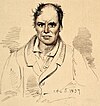
Iain Menzies Banks (February 16, 1954 – June 9, 2013), officially Iain Banks, was a Scottish writer. As Iain M. Banks he wrote science fiction; as Iain Banks he wrote literary fiction.
Best Iain Banks Quotes
Shortest
Earliest
Explore our curated collection of the most famous and impactful Iain Banks quotes.
“The only sin is selfishness.”


“Utility is seven-eighths Proximity.”
“One should never mistake pattern…for meaning.”
“Allow me to attenuate my portentousness for you.”

“I imagine my sorrow for your loss will prove containable.”

“Beauty is something that disappears when you try to define it.”

“Reason shapes the future, but superstition infects the present.”

“What they had talked themselves into, they could be silent out of.”
“Never underestimate the sheer selfishness and stupidity of people.”
“Ignorance can be interesting.
∞
Also fatal.”
∞
Also fatal.”

““I’m very sorry,” the drone said, without a trace of contrition.”

“Something in your voice tells me we approach the question of remuneration.”

“The reaction was…mixed. Some people…hated it…others…really hated it.”
“We only become beasts—we become worse than beasts—when we torment others.”

“Any argument or point of view that makes solipsism look no less likely may be discounted.”

“The double-sun system was relatively poor in comets; there were only a hundred billion of them.”
“Your position is perverse, farcical and as intellectually demeaning as it is morally destitute.”
“There now; cynical, paranoid and pessimistic. I think that completes the set, doesn’t it?”
“Ah, dear. How fine the line is between acceptably defiant bravado and hopelessly delusional boasting.”
“While the forces of repression need to win every time, the progressive elements need only triumph once.”

““Want to bet on it?”
“Thank you, no. I believe gambling to be a pastime for the weak-minded.””
“Thank you, no. I believe gambling to be a pastime for the weak-minded.””

“Is your own existence so replete with equanimity you find no outlet for worry except on behalf of others?”
““I was being sarcastic.”
“I know. I was seeing your sarcasm and raising you deadpan literalness.””
“I know. I was seeing your sarcasm and raising you deadpan literalness.””

““Oh. I didn’t realise.”
“Then you’re simply ignorant rather than malevolent. Congratulations.””
“Then you’re simply ignorant rather than malevolent. Congratulations.””
“Did you know that true subjective time is measured in the minimum duration of demonstrably separate thoughts?”
““Anyway,” she said. “I’m sorry.”
“Indeed. I can see contrition oozing from your every pore.””
“Indeed. I can see contrition oozing from your every pore.””


““Well,” he sighed to no one in particular, and looked up into yet another alien sky. “Here we are again.””

“The combination of modern ordnance and outdated tactics had, as usual, created enormous casualties on both sides.”

““Aah...Yes, and how does madam wish to pay?”
She slapped her credit card on the counter. “Eventually.””
She slapped her credit card on the counter. “Eventually.””
““I do believe my sarcasm-meter just twitched.”
“A false positive, I fear. I was being entirely sincere.””
“A false positive, I fear. I was being entirely sincere.””
“The youth was a cretin, and didn’t even realize that he was.
He could think of no more disastrous combination.”
He could think of no more disastrous combination.”
“There came a point when if a conspiracy was that powerful and subtle it became pointless to worry about it.”
““So it’s false.”
“What isn’t?”
“Intellectual achievement. The exercise of skill. Human feeling.””
“What isn’t?”
“Intellectual achievement. The exercise of skill. Human feeling.””

“Mocking the wisdom that comes with age is a fit sport only for those who expect never to attain much of it themselves.”

““That seems obsessive.”
“Meticulous care can seem so to those unwilling to recognise it for its true worth.””
“Meticulous care can seem so to those unwilling to recognise it for its true worth.””

““I’m from out of town,” he said breezily. This was true. He’d never been within a hundred light-years of the place.”
““How are you?”
“I am here.”
“Apart from that,” she said levelly.
“There is no apart from that.””
“I am here.”
“Apart from that,” she said levelly.
“There is no apart from that.””
“Obsession is just what those too timorous to follow an idea through to its logical conclusion call determination.”
“Which was more likely: what appeared to be the case, or this all being a lie, a set-up, a vast and incomprehensible joke? Discuss.”
“'Destroying the whole universe' – an always tempting scenario when you realise in SF you can do anything – just seems too easy.”

“Pity they didn’t devote a little more ingenuity to staying alive rather than conducting mass slaughter as efficiently as possible.”
“Trust me; it is rarely an encouraging sign when the more apparel is removed, the less attractive a prospective sexual partner becomes.”
“But are we within likelihood? Batra asked. Are we even still within the realm of anything other than paranoid lunacy?”

“Even galaxy-spanning anarchist utopias of stupefying full-spectrum civilisational power have turf wars within their unacknowledged militaries.”
“He, Tik…hated clashing, atonal music. He was basically…taking the piss, showing how…easy it was to write…how difficult to…listen to.”
“Libertarianism. A simple-minded right-wing ideology ideally suited to those unable or unwilling to see past their own sociopathic self-regard.”

““I had formed the impression the Protector valued your counsel.”
“It is most valued when it most closely accords with his own view.””
“It is most valued when it most closely accords with his own view.””
“Apparently I am what is known as an Unreliable Narrator, though of course if you believe everything you’re told you deserve whatever you get.”
“Some problems were generational; you just had to wait for the relevant elders to die off and be replaced with more progressive types. With luck.”
“I’m negotiating a tricky course between the minefield of personal honesty on one side and the rocky coast of operational security on the other.”
“I am, as I have always been, of the opinion that while the niceties of normal moral constraints should be our guides, they must not be our masters.”

““One does not spy on one’s own people,” ZeSpiole informed him. “One has, rather, conduits of communication which lead to the common man.””

“He was almost unbearably attractive. Djan Seriy had therefore naturally gone instantly to what she regarded as her highest alert state of suspicion.”
““I hear what you say,” Prin told him, keeping calm.… “It’s nonsense, of course, but it is interesting to know that you hold such views.””

“The meeting was a benign environment; potentially just as tremendously boring as war, but without the slivers of utter terror stuck in there as well.”
“Perdition awaits at the end of a road constructed entirely from good intentions, the devil emerges from the details and hell abides in the small print.”
“Maybe it wasn’t anything remotely to do with religion, mysticism or metaphilosophy after all; maybe it was more banal; maybe it was just...accounting.”
“Any theory which causes solipsism to seem just as likely an explanation for the phenomena it seeks to describe ought to be held in the utmost suspicion.”

“Tishlin’s dubious look indicated he wasn’t totally convinced this phrase contributed enormously to the information-carrying capacity of the language.”
“How depressing, the Sleeper Service thought. That it should all come down to this; the person with the biggest stick prevails.”
“The avatar laughed, raised his eyebrows at her. “Golly. What shall we do, Lededje?”
She thought. “The smartest thing?” she suggested.”
She thought. “The smartest thing?” she suggested.”

““Have you always been so suspicious, Banstegeyn?”
He looked at her, unsmiling. “No, I stumbled into a position of great power quite by accident.””
He looked at her, unsmiling. “No, I stumbled into a position of great power quite by accident.””
“I have lived ten thousand years; I am used to it. Lovers dying, civilisations dying…one develops a certain god-like indifference to it all, intellectually.”
“What I know was passed to me by others, and so must surrender the toll which information tends to pay when it passes through the minds and memories of others.”

“The first time he saw somebody else he felt a mixture of emotions; fear, joy, expectation and a kind of disappointment that this wilderness was not his alone.”

“People will generally make whatever compromises with the world they think necessary still to convince themselves that they are the most important thing in it.”
““These people have successfully incorporated a belief in your martial prowess into their religion; how can you deny them?”
“Believe me, it would be easy.””
“Believe me, it would be easy.””
“He was tall and very dark-skinned and he had fabulously blond hair and a voice that could raise bumps on your skin at a hundred meters, or, better still, millimeters.”
“The news team, and Hamin, seemed well pleased. “You should have been an actor, Jernau Gurgeh,” Hamin told him.
Gurgeh assumed this was intended as a compliment.”
Gurgeh assumed this was intended as a compliment.”
“We had to assume that solipsism was nonsense because otherwise everything else around us was nonsense and irrelevant, and the result of a kind of self-inflicted deceit.”
“As military fuck-ups went it was a many-faceted gem, a work of genius, a grapeshot, multi-stage, cluster-warhead, fractal-munition regenerative-weapon-system of a fuck-up.”
“Really we’re no better—you’re no better—than the savages. They always find excuses to justify their crimes, too. The point is not to commit them in the first place.”
“On this purely practical issue he judged massacre wasteful and even contrary as a method of control. Fear lasted a week, anger a year and resentment a lifetime, he’d held.”

““I shall take that as meaning I am not being too hopelessly foolish.”
“You may still be, but then so may I.”
“Yes, well, let’s not make a competition out of it.””
“You may still be, but then so may I.”
“Yes, well, let’s not make a competition out of it.””

“He wanted to be who he was, not the person he would become if he lost the one trait that distinguished him from everybody else, no matter how perverse that decision seemed to others.”
“She hadn’t forgotten all her military training; one point she certainly recalled being taught was that anything that looked like an outrageous coincidence was probably enemy action.”

“Naturally, also, both sides were convinced they had right on their side, not that either was remotely naive enough to think that that had any possible bearing on the outcome whatsoever.”
“Oh, yeah, this Ziller guy. Some spoiled, fur-rending liberal brat who thinks it’s his God-given duty to do the whining for those who can’t be bothered whining for themselves.”
““You’d make a great teenage boy,” she told the avatar.
“I beg your pardon?”
“You still think girls get moist when they hear arcane nomenclature. It’s sweet, I suppose.””
“I beg your pardon?”
“You still think girls get moist when they hear arcane nomenclature. It’s sweet, I suppose.””
“People would swallow anything, just anything at all. Apparently some people found this dismaying. He thought it was a gift, the most wonderful opportunity to take advantage of the weak-minded.”

“This version felt like the truth, she thought; close enough to the myths and legends of her own people, but less self-serving, less dramatically glorious, more equivocal in its moral implications.”
““I think,” she said carefully, “that perhaps too many people want things to be simple when they are not and cannot be. Encouraging that desire is seductive and rewarding, but also dangerous.””
“Pain, or even just discomfort, is like the warning sent by a frontier guard, sir. You are free to choose to ignore it, but you should not be unduly surprised if you are subsequently over-run by invaders.”
“Of course, she does seem to be a rather good doctor. At the very least she has done the King no obvious harm, and that in my experience is far more than one might reasonably expect from a court physician.”

“Maybe it was immature to lust after revenge, but fuck that; let the fuckers die horribly.
Well, let them die.
She’d compromise that far.
Evil wins when it makes you behave like it, and all that.”
Well, let them die.
She’d compromise that far.
Evil wins when it makes you behave like it, and all that.”

“The underlying point held; experience as well as common sense indicated that the most reliable method of avoiding self-extinction was not to equip oneself with the means to accomplish it in the first place.”
“She supposed she ought to feel impressed that Genar-Hofoen was sticking to his principles in the face of imminent death—and she did feel a little admiration—but mostly she just thought he was being stupid.”

““The person concerned sounds – to be polite – eccentric.”
“That would be polite to the point of over-generosity,” Tefwe said. “Awkward, tetchy and unreasonable might be closer to the truth.””
“That would be polite to the point of over-generosity,” Tefwe said. “Awkward, tetchy and unreasonable might be closer to the truth.””
““I suppose I’d only be exposing my hopeless naivety if I asked if there was some alternative to this.”
“It would be more of a hopeless inability to come to terms with reality,” the avatar told her.”
“It would be more of a hopeless inability to come to terms with reality,” the avatar told her.”
“Did the Doctor really imagine that everbody went around believing different things? One believed what one was told to believe, what it made sense to believe. Unless one was a foreigner, of course, or a philosopher.”
“That’s the trouble with people like them, I suppose; whenever you think you’re detecting the first signs of them starting to behave responsibly, it’s just them being even more devious and underhand than usual.”
““There are no guarantees in war,” Green said.
“Oh, there are,” blue said quietly, looking away into the darkness. “It’s just that they guarantee death, destruction, suffering, heartache and remorse.””
“Oh, there are,” blue said quietly, looking away into the darkness. “It’s just that they guarantee death, destruction, suffering, heartache and remorse.””
““See if you can hold off this pack of blood-sucking scavengers. Here’s my duelling sword.” The King handed me his own sword! “You have full permission to use it on anyone who looks remotely like a physician.””
“Lededje formed the uncomfortable impression that the other woman was trying hard to be reassuring. This had never proved to be a good sign in Lededje’s past and she seriously doubted the pattern was about to change now.”
“Being spoon-fed rosy-hued misinformation by the authorities was no more than people had come to expect—and preemptively discount. They only got suspicious when presented with what looked like the plain unvarnished truth.”

“I’m supposed to be at this sort of thing but even I find it pretty damn tedious at times. Still, receptions and parties are pan-cultural, so we’re told. I’ve never been sure whether to be reassured or appalled by that.”
““Is all she says true?” Asura whispered.
“Ah,” Pieter said, smiling. “Now, that is a question. Let’s say it is all based on truth, but the facts are open to different interpretations from the one she supplies.””
“Ah,” Pieter said, smiling. “Now, that is a question. Let’s say it is all based on truth, but the facts are open to different interpretations from the one she supplies.””

““It must be a burden, not even being able to say you were just obeying orders.”
“Well, that is always a lie, or a sign you are fighting for an unworthy cause, or still have a very long way to develop civilisationally.””
“Well, that is always a lie, or a sign you are fighting for an unworthy cause, or still have a very long way to develop civilisationally.””

““No, Geis, it doesn’t wear off. Like certain exotic diseases, and unlike love, synchroneurobonding is for life.”
Geis lowered his eyes. “You weren’t always so cynical about love.”
“As they say; ignorance pays.””
Geis lowered his eyes. “You weren’t always so cynical about love.”
“As they say; ignorance pays.””
““So why are we bothering?”
“Just in case.”
“Just in case what?”
“Just in case it turns out to be something we should have bothered about. Always try to avoid setting up future opportunities for kicking yourself.””
“Just in case.”
“Just in case what?”
“Just in case it turns out to be something we should have bothered about. Always try to avoid setting up future opportunities for kicking yourself.””
““Fate, I tell you, if not the hand of the WorldGod itself…or whatever manipulatory appendage WorldGods possess. Anyway, the hand, metaphorically, of the WorldGod. Possibly.”
“I think you underguess the workings of blind chance, sir.””
“I think you underguess the workings of blind chance, sir.””
““Details matter, though, don’t you think?” he said. “Sometimes what appear to be utterly inconsequential actions have the most enormous results. Chance makes the casual momentous. It is the fulcrum upon which the levers of action rest.””
“~My full name is the Mistake Not My Current State Of Joshing Gentle Peevishness For The Awesome And Terrible Majesty Of The Towering Seas Of Ire That Are Themselves The Mere Milquetoast Shallows Fringing My Vast Oceans Of Wrath. Cool, eh?”
“That was another thing she taught me. That you are what you do. To Providence—or Progress or the Future or before any other sort of judgment apart from our own conscience—what we have done, not what we have thought, is the result we are judged by.”
““Then what,” Lededje asked, trying to keep her voice cold and not get caught up in the avatar’s obvious enthusiasm, “is making you smile about a disaster?”
“Well, first, I didn’t cause it! Nothing to do with me; hands clean. Always a bonus.”
“Well, first, I didn’t cause it! Nothing to do with me; hands clean. Always a bonus.”

“The background to the war, my studious Homomdan pal, is three thousand years of ruthless oppression, cultural imperialism, economic exploitation, systematic torture, sexual tyranny and the cult of greed ingrained almost to the point of genetic inheritability.”
“Perhaps it was simply bad luck, but despite the fact the sheer capability of the Guns ought to have ensured their owner could effectively become ruler of the entire system, the weapons had invariably been the downfall of whoever had come into possession of them.”
““Is all this serious?” Gurgeh said, turning, amused, from the screen to the drone.
“Deadly serious,” Flere-Imsaho told him.
Gurgeh laughed and shook his head. He thought the common people must be remarkably stupid if they believed all this nonsense.”
“Deadly serious,” Flere-Imsaho told him.
Gurgeh laughed and shook his head. He thought the common people must be remarkably stupid if they believed all this nonsense.”
““She seems very sincere,” Asura told Pieter.
“A word with oddly positive connotations,” Peter said, nodding. “In my experience those who are most sincere are also the most morally suspect, as well as being incapable of producing or appreciating wit.””
“A word with oddly positive connotations,” Peter said, nodding. “In my experience those who are most sincere are also the most morally suspect, as well as being incapable of producing or appreciating wit.””
“Such a stupid act. Sometimes heroics revolted him; they seemed like an insult to the soldier who weighed the risks of the situation and made calm, cunning decisions based on experience and imagination, the sort of unshowy soldiering that didn’t win medals but wars.”

““I believe in Providence, mistress.”
“But when you say Providence, do you really mean god?”
“No, mistress. I don’t believe in any of the old gods. No one does any more. No one of sense, at any rate. Providence is the rule of laws, mistress,” I said.”
“But when you say Providence, do you really mean god?”
“No, mistress. I don’t believe in any of the old gods. No one does any more. No one of sense, at any rate. Providence is the rule of laws, mistress,” I said.”
“Ultimately the galaxy, indeed the sum of the universe in its entirety, was mostly nothing; average it all out and it made a pretty good vacuum. But within the foci of matter there were the systems, the stars and planets and habitats—what a cornucopia of life was there!”
“The sheer wastefulness of it all distressed him. He was older and wiser now and more used to the way that things really worked being more important than the way they appeared to (unless you were talking about public perception, of course, when it was the other way around).”

“Whenever one was struck by a previously unlikely-seeming idea that had come to appear plausible or even sensible, one ought to apply that test: was it inherently any more likely than solipsism? If solipsism seemed to make just as much sense, then the idea could be dismissed.”
“Any such inklings were like a few scattered grains of truth dissolved in an ocean of nonsense, and were anyway generally inextricably bound up with patently paranoid ravings which served only to devalue the small amounts of sense and pertinence with which they were associated.”
“It looks perverted and wasteful to us, but then one thing that empires are not about is the efficient use of resources and the spread of happiness; both are typically accomplished despite the economic short-circuiting—corruption and favoritism, mostly—endemic to the system.”
“That was how divorced from the human scale modern warfare had become. You could smash and destroy from unthinkable distances, obliterate planets from beyond their own system and provoke stars into novae from light-years off...and still have no good idea why you were really fighting.”
“We all think we’re special, and in a way we are, but, at the same time, that feeling of being special is one of the things that’s common to us all, that unites us and makes us the same as each other. And when that feeling of…specialness is questioned, we feel threatened, naturally.”
“I hope I did not alarm you unduly with my little display last night. I get into character sometimes, find it hard to know when I’m causing distress. My apologies, if any are required. If not, then please accept them in any event, on account, to be banked against any future transgression.”
““It might, I suppose, lead to anarchy,” the Professore said profoundly, frowning somewhere towards the floor.
“My dear Professore,” Madame d’Ortolan said, sighing, “we might greet anarchy with an open door, garland its brows, compared to what this might lead to, trust me.””
“My dear Professore,” Madame d’Ortolan said, sighing, “we might greet anarchy with an open door, garland its brows, compared to what this might lead to, trust me.””
“How goes your peace conference?
Slowly. Having exhausted the possibilities of every other form of mass-murder they could possibly employ against each other, the natives now appear intent on boring each other to death. They may finally have discovered their true calling.”
Slowly. Having exhausted the possibilities of every other form of mass-murder they could possibly employ against each other, the natives now appear intent on boring each other to death. They may finally have discovered their true calling.”
“But did that mean that the urge to live was the result of some sort of illusion? Was the reality, in fact, that nothing mattered and people were fools to think that anything did? Were the choices either despair, the rejection of reason for some idiot faith, or a sort of defensive solipsism?”
“If you have any helpful suggestions I’d be pleased to hear them. If all you can do is make snide insinuations then it would probably benefit all concerned if you bestowed the fruits of your prodigious wit on someone with the spare time to give them the consideration they doubtless deserve.”

“But there we are. Some things never do make perfect sense. There must be some explanation, and it is perhaps a little like the Doctrine of the Perfect Partner. We must be content to know that she exists, somewhere in the world, and try not to care overmuch that we will probably never meet her.”

“All of which might make things a little difficult operationally
∞
Understood. Life is limitations.
∞
And glibness, patently, on occasion, too. Your pardon, but I sense motions being gone through.
∞
On occasion, a superfluity of assiduousness can be vulgar.”
∞
Understood. Life is limitations.
∞
And glibness, patently, on occasion, too. Your pardon, but I sense motions being gone through.
∞
On occasion, a superfluity of assiduousness can be vulgar.”
“The Real – with its vast volumes of nothing between the planets, stars, systems and galaxies – was basically mostly vacuum; an averaged near-nothing incapable of true complexity due to its inescapable impoverishment of structure and the sheer overwhelming majority of nothingness over substance.”
““I take comfort in the loyalty and faith you display towards your crew, Captain.”
“My crew are loyal to me, Colonel; I am only loyal to the regiment and Gzilt. Also, faith is belief without reason; we operate on reason and nothing but. I have zero faith in my crew, just absolute confidence.””
“My crew are loyal to me, Colonel; I am only loyal to the regiment and Gzilt. Also, faith is belief without reason; we operate on reason and nothing but. I have zero faith in my crew, just absolute confidence.””

“It is an insane conceit. Power always drives to perpetuate itself, but this is a phenomenal extra distillation of idiocy. Only people already riddled with the internalised special pleading and self-importance that too much power brings could even start to imagine that this might be in any way sustainable.”

“If you are going to write what a friend of a friend once called 'Made up space shit', then if it's going to have any ring of truth that means sometimes some of the horrible characters get to live, and for there to be any sense of jeopardy, especially in future novels, the good people have to die. Sometimes.”
“I only tell them that because that’s what they like to hear, what they want to hear. That’s one of the lessons I’ve learned, isn’t it? You can go a long way just telling people what they want to hear. Of course, you got to be careful, and you got to choose the right people, but still, know that I mean?”
“We always want more, he thought, we always take our past successes for granted and assume they point the way to future triumphs. But the universe does not have our own best interests at heart, and to assume for a moment that it does, ever did or ever might is to make the most calamitous and hubristic of mistakes.”
“In the old days he had once wondered how many of the Cessorian high command, his old bosses, really believed in the Truth. He strongly suspected that the higher you went, the greater grew the proportion of those who didn’t really believe at all. They were in it for the power, the glory, the control and the glamour.”
““The source of my name,” the vehicle had replied, “The Hundredth Idiot, is a quotation: ’One hundred idiots make idiotic plans and carry them out. All but one justly fail. The hundredth idiot, whose plan succeeded through pure luck, is immediately convinced he’s a genius.’ It is an old proverb.””
“The idea of faith interested him, even fascinated him, not as an intellectual idea, not as a concept or some abstract theoretical framework, but as a way of controlling people, as a way of understanding and so manipulating them. As a flaw, in the end, as something which was wrong with others that was not wrong with him.”

“I don't have many regrets in my life. I suppose like a lot of men I've hurt women when I was being selfish or there's a real hurt towards ex-girlfriends that probably didn't need to have happened. That's probably the greatest series of regrets in my life. But other than that, and certainly professionally, not really, no.”

“Truth, I have learned, differs for everybody. Just as no two people ever see a rainbow in exactly the same place—and yet both most certainly see it, while the person seemingly standing right underneath it does not see it at all—so truth is a question of where one stands, and the direction one is looking in at the time.”

“An excess of boringness does not make a thing interesting except in the driest academic sense. A place is not boring if you have to look really hard for something which is interesting. If there is absolutely nothing interesting about any particular place, then that is a perfectly interesting and quintessentially un-boring place.”
“In all the human societies we have ever reviewed, in every age and every state, there has seldom if ever been a shortage of eager young males prepared to kill and die to preserve the security, comfort and prejudices of their elders, and what you call heroism is just an expression of this fact; there is never a scarcity of idiots.”
“Holse had no idea how these things worked; he had never really bothered with religion, though he had always paid lip-service to the church for the sake of an easy life. He had long suspected that the WorldGod was just another convenient semi-fiction supporting the whole structure that sustained the rich and powerful in their privilege.”
“He would give up then, and console himself with something she’d said: that you could not love what you fully understood. Love, she maintained, was a process, not a state. Held still, it withered. He wasn’t too sure about all that; he seemed to have found a calm clear serenity in himself he hadn’t even known was there, thanks to her.”

“I do what I can to make this war as humane in its inhumanity as I can, and in any case, I always know that however bad it may be, its sheer unnecessary awfulness at least helps guarantee that we are profoundly not in some designed and overseen universe and so have escaped the demeaning and demoralising fate of existing solely within some simulation.”

“The King liked happy endings. You couldn’t blame the ancients for coming up with unhappy conclusions so often—they each spent all their single short life waiting either for oblivion or some absurd after-death torture—but that didn’t mean you had to stick faithfully to their paralyzed paradigms and ruin a good story with a depressing dénouement.”
““What happens happens,” continued the Resiler, “and cannot be made to unhappen. We are the equations; we cannot deny the algebra of the universe or the result it brings us. Die peacefully or in hysterics, with grace or with despair; it matters not. Prepare or ignore; it matters not. Very little matters very much and almost nothing matters greatly.””
“‘Two years after I killed Blyth I murdered my young brother Paul, for quite different reasons than I’d disposed of Blyth, and then a year after that I did for my young cousin Esmerelda, more or less on a whim. That’s my score to date. Three. I haven’t killed anybody for years, and don’t intend to ever again. It was just a stage I was going through.’”
“There's so much I would have loved to have seen. The positives? I've been lucky in that I've had such a good life. Simple as that. My first 30 years were pretty damn good and the last 30, since I got published, have been absolutely brilliant. I've so many good friends and been part of a wonderful extended family and I'll leave behind a substantial body of work."”
“We’ve filled the known universe with credulous idiots and we think we’ve sneakily contributed to our own safety by making it hard for anything untoward to creep in under our sensor coverage whereas in fact we’ve just made sure we harvest zillions of false positives and probably made the really serious shit harder to spot when it does eventually come flying.”
“Beyond the beginning, nothing. At the beginning, a torrent of universes in a single timeless blink that is the mother and father of all explosions and is the opposite of an explosion, destroying nothing – destroying nothing but Nothing – but purely creating; snapping into existence the first semblance of order and chaos and the very idea of time, all at once.”
“Promises take many shapes, and the more…momentous they are, the more they might look like threats. All great promises are threats, I suppose, to the way things have been until that point, to some aspect of our lives, and we all suddenly become conservative, even though we want and need what the promise holds, and look forward to the promised change at the same time.”

“Gadfium found these meetings exasperating; they were supposed to keep people up to date with developments and help facilitate actions which might be of use in the current emergency, but so far all they ever seemed to do was pander to some of the attendees’ feelings of self-importance and produce vast amounts of talk that substituted for deeds rather than leading to them.”
“The old and powerful never want to let go. They always think they’re both profoundly indispensable and uniquely right. They are always wrong. Part of the function of ageing and dying is to let the next generation have its say, its time in the sun, to sweep away the mistakes of the previous age while, if they’re lucky, retaining the advances made and the benefits accrued.”
“He might have been blushing. “I’m sorry. You live there. I don’t need to tell you how fabulous they are.”
“Well, for me it is—was—just home. When one grows up in a place, no matter how exotic it may seem to others, it is still where all the usual banalities and indignities of childhood occurred. Home is always the norm. It is everywhere else that is marvellous.””
“Well, for me it is—was—just home. When one grows up in a place, no matter how exotic it may seem to others, it is still where all the usual banalities and indignities of childhood occurred. Home is always the norm. It is everywhere else that is marvellous.””

““Well, it all sounds most unpleasant,” Droffo said. He shook his head. “You hear all sorts of ridiculous stories; the workers are full of them. Too much drink, too little learning.”
“No, more than that, sir,” Neguste told him. “These are facts.”
“I think I might dispute that,” Droffo said.
“All the same, sir, facts is facts. That itself’s a fact.””
“No, more than that, sir,” Neguste told him. “These are facts.”
“I think I might dispute that,” Droffo said.
“All the same, sir, facts is facts. That itself’s a fact.””
“I mean, if you like feeling like an asset to your local community or something then fucking yahoo for you but don’t pretend you aren’t being exploited. People talk a lot about loyalty and being true to your roots and suchlike but that’s just bollocks, isn’t it? That’s one of the ways they make you do things that aren’t in your own best interest. Loyalty’s a mug’s game.”

“Even the pain of what had felt on occasion like an irretrievably broken heart had consistently proved less lasting than she’d initially imagined and expected; the revelation that a boy’s taste was so grotesquely deficient he could prefer somebody else to her always reduced both the intensity and the duration of the anguish her heart demanded be endured to mark such a loss of regard.”

““As a matter of fact I did flirt with Socialism, in my youth.”
“That’s when you were at university, was it?”
He smiled. “Yes. University. But then I saw how much more comfortable life could be as one of the exploiters rather than one of the exploited. Plus I decided that if the proles were so stupid as to let themselves be exploited, who was I to stand in their way?””
“That’s when you were at university, was it?”
He smiled. “Yes. University. But then I saw how much more comfortable life could be as one of the exploiters rather than one of the exploited. Plus I decided that if the proles were so stupid as to let themselves be exploited, who was I to stand in their way?””
“Of course there were doubts about it, there always had been; when you found out about all the other holy books there had ever been throughout the histories of other peoples throughout the galaxy, you realised how common they were, and how fallible, how restricted they were by the usual tribal prejudices and traditions of the people who – it took real blind faith not to accept – had made them up.”
“He knew in his heart that there was a relief in not being listened to, sometimes. Power meant responsibility. Advice unacted upon almost always might have been right, and in the working out of whatever plan was followed, there was anyway always blood; better it was on their hands. The good soldier did as he was told, and if he had any sense at all volunteered for nothing, especially promotion.”
“Muddle, confusion, stupidity, insane waste, pointless pain, misery and mass death—all the usual stuff of war, affecting him as it might affect anybody else, without any necessary moral reason, without any justice and even without any vindictiveness, just through the ghastly, banal working out of physics, chemistry, biochemistry, orbital mechanics and the shared nature of sentient beings existing and contending.”
“When you have this sort of power, this responsibility, you can’t choose not to have it when the decisions become tough. You can’t afford to prevaricate or delegate; you have to be engaged. You can’t stay neutral; you can say you’re neutral, and try to act as though you are, but that neutrality will always help one side more than the other; that’s just the way power works...the leverage it exerts.”
“Scotland is wet and dreary. Don’t let anybody tell you different. Even the hills are mostly just big mounds, not proper mountains like the Alps or the Rockies. People will tell you it’s all romantic and rugged but I’ve yet to see the evidence. Even when it’s nice it’s covered in a cloud of these bastard little insects called midges so you have to stay inside anyway. Plus it’s full of Scots. Case rested.”
“Oh, they never lie. They dissemble, evade, prevaricate, confound, confuse, distract, obscure, subtly misrepresent and wilfully misunderstand with what often appears to be a positively gleeful relish and are generally perfectly capable of contriving to give one an utterly unambiguous impression of their future course of action while in fact intending to do exactly the opposite, but they never lie. Perish the thought.”
““Put plainly, I am not at liberty to divulge that information. There, it is said. Let us quickly move on from this unfortunate quantum of dissonance to the ground-state of accord which I trust will inform our future relationship.”
“So you’re not going to tell me.” Sharrow nodded.
“My dear lady,” the machine said, continuing to trundle after her. “Without saying so in so many words...correct.””
“So you’re not going to tell me.” Sharrow nodded.
“My dear lady,” the machine said, continuing to trundle after her. “Without saying so in so many words...correct.””
“And don’t forget Goldman’s Law: nobody knows anything. Nobody knows what will work. That’s why they make so many remakes and Part Twos; what looks like lack of imagination is really down to too much, as paranoid execs visualise all the things that could go wrong with a brand new, untested idea. Going with something containing elements that definitely worked in the past removes some of the terrifying uncertainty.”
“More than anything else now, though, he wanted to save Darckense. He had seen too many dead, dry eyes, too much air-blackened blood, too much fly-blown flesh, to be able to relate such ghastly truths to the nebulous ideas of honor and tradition that people claimed they were fighting for. Only the well-being of one loved person seemed really worth fighting for now; it was all that seemed real, all that could save his sanity.”
““Elated? Pleased?”
“Those are the closest words. There is an undeniable elation in causing mayhem, in bringing about such massive destruction. As for feeling pleased, I felt pleasure that some of those who died did so because they were stupid enough to believe in gods or afterlives that do not exist, even though I felt a terrible sorrow for them as they died in their ignorance and thanks to their folly.””
“Those are the closest words. There is an undeniable elation in causing mayhem, in bringing about such massive destruction. As for feeling pleased, I felt pleasure that some of those who died did so because they were stupid enough to believe in gods or afterlives that do not exist, even though I felt a terrible sorrow for them as they died in their ignorance and thanks to their folly.””
““The point is,” Ziller said, “that having carefully constructed their paradise from first principles to remove all credible motives for conflict amongst themselves and all natural threats...Well, almost all natural threats, these people then find their lives are so hollow they have to recreate false versions of just the sort of terrors untold generations of their ancestors spend their existences attempting to conquer.””
“Is there anything I can do? Just tell me.
What can you do?
Destroy things. All I can do is destroy things. It’s the only thing I’m any good at. Would you like me to destroy something?
I want you to destroy everything! she screamed. Every fucking thing. All the evil men and compliant women, all the armies and companies and cults and faiths and orders and every stupid fucker in them! All of them! EVERYTHING!”
What can you do?
Destroy things. All I can do is destroy things. It’s the only thing I’m any good at. Would you like me to destroy something?
I want you to destroy everything! she screamed. Every fucking thing. All the evil men and compliant women, all the armies and companies and cults and faiths and orders and every stupid fucker in them! All of them! EVERYTHING!”
“The majority of species, too, could scrape together some sort of metaphysical framework, a form of earlier speculation – semi-deranged or otherwise – regarding the way things worked at a fundamental level which could later be held up as a philosophy, life-rule system or genuine religion, especially if one used the excuse that it was really only a metaphor, no matter how literally true it had declared itself to be originally.”
““I think I know the real reason.”
“Which is?”
“Alcohol in the dust clouds. Goddamn stuff is everywhere. Any lousy species ever invents the telescope and the spectroscope and starts looking in between the stars, what do they find?” He knocked the glass on the table. “Loads of stuff, but much of it alcohol.” He drank from the glass. “Humanoids are the galaxy’s way of trying to get rid of all that alcohol.””
“Which is?”
“Alcohol in the dust clouds. Goddamn stuff is everywhere. Any lousy species ever invents the telescope and the spectroscope and starts looking in between the stars, what do they find?” He knocked the glass on the table. “Loads of stuff, but much of it alcohol.” He drank from the glass. “Humanoids are the galaxy’s way of trying to get rid of all that alcohol.””

“Never forget I am not this silver body, Mahrai. I am not an animal brain, I am not even some attempt to produce an AI through software running on a computer. I am a Culture Mind. We are close to gods, and on the far side.
We are quicker; we live faster and more completely than you do, with so many more senses, such a greater store of memories and at such a fine level of detail. We die more slowly, and we die more completely, too.”
We are quicker; we live faster and more completely than you do, with so many more senses, such a greater store of memories and at such a fine level of detail. We die more slowly, and we die more completely, too.”
““So,” she said, “living all this time has been to no purpose, basically.”
“True, but that hardly distinguishes me from anybody else, does it?”
“But shouldn’t it, or there’s no point?”
“No. Living either never has any point, or is always its own point; being a naturally cheery soul, I lean toward the latter. However, just having done more of it than another person doesn’t really make much difference.””
“True, but that hardly distinguishes me from anybody else, does it?”
“But shouldn’t it, or there’s no point?”
“No. Living either never has any point, or is always its own point; being a naturally cheery soul, I lean toward the latter. However, just having done more of it than another person doesn’t really make much difference.””

“Empires are synonymous with centralized — if occasionally schismatized — hierarchical power structures in which influence is restricted to an economically privileged class retaining its advantages through — usually — a judicious use of oppression and skilled manipulation of both the society’s information dissemination systems and its lesser — as a rule nominally independent — power systems. In short, it’s all about dominance.”
“Very quick deaths, even given that they would have been wired in and speeded up, if I may just leap in front of any nascent and entirely vicarious moral qualms you may be about to suffer from, tiny human. Military personnel, babe; put themselves in harm’s way when they signed up. Just that the poor fuckers didn’t know it was my harm they were putting themselves in the way of. That’s war, doll; fairness comes excluded.”
“We live in an infinity of infinities, and we reshape our lives with every passing thought and each unconscious action, threading an ever-changing course through the myriad possibilities of existence. I lie here and ponder the events and decisions that led me to this point, the precise sequence of thoughts and actions that ended – for now – with me having nothing more constructive or urgent to do than think about those very eventualities.”
“Lying here, during all this time after my own small fall, it has become my conviction that things mean pretty much what we want them to mean. We’ll pluck significance from the least consequential happenstance if it suits us and happily ignore the most flagrantly obvious symmetry between separate aspects of our lives if it threatens some cherished prejudice or cosily comforting belief; we are blindest to precisely whatever might be most illuminating.”

“I came out stunned. I was angry at them, then. Angry at them for surprising me, touching me like that. Of course I was angry at their stupidity, their manic barbarity, their unthinking, animal obedience, their appalling cruelty; everything that the memorial evoked... but what really hit me was that these people could create something that spoke so eloquently of their own ghastly actions; that they could fashion a work so humanly redolent of their own inhumanity.”
“We created something a little closer to perfection than ourselves; maybe that’s the only way to progress. Let them try to do the same. I doubt they can, so they will always be less as well as more than us. It’s all just a sum, a whispered piece of figuring lost in the empty blizzards of white noise howling through the universe, a brief oasis in an infinite desert, a freak bit of working out in which we have transcended ourselves, and they are only the remainder.”
“It was a truism that all civilisations were basically neurotic until they made contact with everybody else and found their place within the ever-changing meta-civilisation of other beings, because, until then, during the stage when they honestly believed they might be entirely alone in existence, all solo societies were possessed of both an inflated sense of their own importance and a kind of existential terror at the sheer scale and apparent emptiness of the universe.”
“"I've had a brilliant life and I think I've been more lucky than unlucky, even including the news of the cancer. I've written 29 books. I'm leaving a substantial body of work behind me. Whether that'll survive, who knows, but I can be quite proud of that and I am. There's none of the books that I'm not proud of. There's ones that I think I could have done better with. I still think Canal Dreams is the runt of the litter but I'm still very, very proud of The Wasp Factory.”
“He was one of those people who got to the top of an organisation through luck, connections, the indulgence of superiors and that sort of carelessness towards others that the easily impressed termed ruthlessness and those of a less gullible nature called sociopathy. But sometimes, just through his sheer unthinking brusqueness and inability to think through the consequences of a remark, he said what everybody else was only thinking. A comic poet working in obscene doggerel.”
““I have buffed and polished my medals for decades of steady, dedicated watchfulness,” the marshal continued, clasping her hands behind her head as she leaned back and relaxed, legs crossed, “counted and re-counted my medals for outstanding work in simulations and exercises, carefully rearranged my medals for heroic bravery under virtual fire, and even found room for my many, many medals for exemplary valour in the face of fellow officers coveting the same promotions as I.””
““One of the advantages of having laws is the pleasure one may take in breaking them. We here are not children, Mr. Gurgeh.” Hamin waved the pipestem round the tables of people. “Rules and laws exist only because we take pleasure in doing what they forbid, but as long as most of the people obey such proscriptions most of the time, they have done their job; blind obedience would imply we are—ha!”—Hamin chuckled and pointed at the drone with the pipe—“no more than robots!””

“The bad guys tend to enjoy killing people, preferably in large numbers. The good guys – and girls – don’t; they get a buzz when infant mortality rates go down and life expectancy goes up. The bad guys like to tell people what to do, the good guys are happy to encourage people to make up their own minds. The bad guys like to keep the riches and the power to themselves and their cronies, the good guys want the money and power spread evenly, subject to the making-up-your-own-minds thing.”
“Now, our tutor pointed out that there was a weakness in the hard-line or extreme solipsist’s position which came down to the question why, if they were all that existed, they bothered to deceive themselves so? Why did it appear to the solipsistic entity that there was an external reality in the first place, and, more to the point, why this one specifically? Why did the solipsist appear to be constrained in any way by that supposedly physically non-existent and therefore utterly pliable reality?”
““Nothing is sacred to you, Mr. Munro. You base your beliefs on the products of human thought, so it could hardly be otherwise. You might believe in certain things, but you do not have faith. That comes with submission to the force of divine revelation.”
“So, because I don’t have what I think of as superstitions, because I believe we just happen to exist, and believe in... science, evolution, whatever; I’m not as... worthy as somebody who has faith in an ancient book and a cruel, desert God?””
“So, because I don’t have what I think of as superstitions, because I believe we just happen to exist, and believe in... science, evolution, whatever; I’m not as... worthy as somebody who has faith in an ancient book and a cruel, desert God?””
“Most men—most women, too, no doubt—lived and died under the general weight of the drives and needs, expectations and demands they experienced from within and without, beaten this way and that by longings for sex, love, admiration, comfort, importance and wealth and whatever else was their particular fancy, as well as being at the same time channelled into whatever furrows were deemed appropriate for them by those on high.
In life you hoped to do what you could but mostly you did what you were told and that was the end of it.”
In life you hoped to do what you could but mostly you did what you were told and that was the end of it.”

““Probably end up as one of those sordid cult leaders,” Zefla said after a while as they plodded into a bare area of the forest where a fire had left thousands of tree trunks standing upright and bare, black posts already surrounded by slender young trees forcing their way towards the sky around them. “You know, pedalling some weird concoction of re-tread gibberish and living in a palace while their followers sleep shifts and work the streets and give you this big flatline smile when you tell them where to stuff their tracts.””
“All the usual rules of uprising realpolitik still apply, especially that concerning the peculiar of dialectic of dissent which—simply stated—dictates that in all but the most dedicatedly repressive hegemonies, if in a sizable population there are one hundred rebels, all of whom are then rounded up and killed, the number of rebels present at the end of the day is not zero, and not even one hundred, but two hundred or three hundred or more; an equation based on human nature which seem often to baffle the military and political mind.”
““Tell me, suit, don’t you wonder if it’s all worth it?’
“If what’s all worth what?” it says, and I can hear that condescending tone in its voice again.
“You know; living. Is it worth all the... bother?”
“No.”
“No?”
“No, I don’t ever wonder about it.”
“Why not?” I’m keeping my questions short as we walk, conserving energy and breath.
“I don’t need to wonder about that. It’s not important.”
“Not important?”
“It’s an irrelevant question. We live; that’s enough.””
“If what’s all worth what?” it says, and I can hear that condescending tone in its voice again.
“You know; living. Is it worth all the... bother?”
“No.”
“No?”
“No, I don’t ever wonder about it.”
“Why not?” I’m keeping my questions short as we walk, conserving energy and breath.
“I don’t need to wonder about that. It’s not important.”
“Not important?”
“It’s an irrelevant question. We live; that’s enough.””

““But even if all the other stuff seems a bit esoteric, just think of all those other avatars at all those other gatherings, concerts, dances, ceremonies, parties and meals; think of all that talk, all those ideas, all that sparkle and wit!”
“Think of all that bullshit, the nonsense and non-sequiturs, the self-aggrandisement and self-deception, the boring stupid nonsense, the pathetic attempts to impress or ingratiate, the slow-wittedness, the incomprehension and the incomprehensible, the gland-addled meanderings and general suffocating dullness.””
“Think of all that bullshit, the nonsense and non-sequiturs, the self-aggrandisement and self-deception, the boring stupid nonsense, the pathetic attempts to impress or ingratiate, the slow-wittedness, the incomprehension and the incomprehensible, the gland-addled meanderings and general suffocating dullness.””
““So,” he said to the monk, “you are of an Order which also despises the Great Infernal Wizard.”
“Indeed, your gracious Majesty,” the monk said, looking down modestly at the carpet. His voice sounded respectful. “Our Belief—perhaps not so dissimilar from your own, more venerable and more widely followed creed, is that God is a Mad Scientist and we His experimental subjects, doomed forever to run the Maze of Life through apparently random and unjust punishments for meaningless and paltry rewards and no discernible good reason save His evil pleasure.””
“Indeed, your gracious Majesty,” the monk said, looking down modestly at the carpet. His voice sounded respectful. “Our Belief—perhaps not so dissimilar from your own, more venerable and more widely followed creed, is that God is a Mad Scientist and we His experimental subjects, doomed forever to run the Maze of Life through apparently random and unjust punishments for meaningless and paltry rewards and no discernible good reason save His evil pleasure.””

“The sky was aquamarine, stroked with clouds. She could smell the grass and taste the scent of small, crushed flowers. She looked back up over her forehead at the gray-black wall towering behind her, and wondered if the castle had ever been attacked on days like this. Did the sky seem so limitless, the waters of the straits so fresh and clean, the flowers so bright and fragrant, when men fought and screamed, hacked and staggered and fell and watched their blood mat the grass?
Mists and dusk, rain and lowering cloud seemed the better background; clothes to cover the shame of battle.”
Mists and dusk, rain and lowering cloud seemed the better background; clothes to cover the shame of battle.”

“All reality is a game. Physics at its most fundamental, the very fabric of our universe, results directly from the interaction of certain fairly simple rules, and chance; the same description may be applied to the best, most elegant and both intellectually and aesthetically satisfying games. By being unknowable, by resulting from events which, at the sub-atomic level, cannot be fully predicted, the future remains malleable, and retains the possibility of change, the hope of coming to prevail; victory, to use an unfashionable word. In this, the future is a game; time is one of its rules.”

“There is always the right of the strong to take the weak and the rich to take the poor and the powerful to take those who have no power. UrLeyn may have written down our laws and changed a few of them, but the laws that still bind us to the animals cut the deepest. Men compete for power, they strut and parade and they impress their fellows with their possessions and they take the women they can. None of that has changed. They may use weapons other than their hands and teeth, they may use other men and they may express their dominance in money, not other symbols of power and glamour, but...”
“I won't miss waiting for the next financial disaster because we haven't dealt with the underlying causes of the last one. Nor will I be disappointed not to experience the results of the proto-fascism that's rearing its grisly head right now. It's the utter idiocy, the sheer wrong-headedness of the response that beggars belief. I mean, your society's broken, so who should we blame? Should we blame the rich, powerful people who caused it? No let's blame the people with no power and no money and these immigrants who don't even have the vote, yeah it must be their fucking fault.”
“Had they felt righteous, believing that the justice of their cause was being recognized by higher powers? For no doubt that was how they did think. It seemed to tyl Loesp everybody always thought they were right, and shared, too, the quaint belief that the very fervency of a belief, however deluded, somehow made it true.
They were all of them fools.
There was no right and wrong, there was simply effectiveness and inability, might and weakness, cunning and gullibility. That he knew this was his advantage, but it was one of better understanding, not moral superiority—he had no delusions there.”
They were all of them fools.
There was no right and wrong, there was simply effectiveness and inability, might and weakness, cunning and gullibility. That he knew this was his advantage, but it was one of better understanding, not moral superiority—he had no delusions there.”
“Of course they aren’t ready for it, of course we’ll spoil the place. Are they any more ready for World War Three? You seriously think we could mess the place up more than they’re doing at the moment? When they’re not actually out slaughtering each other they’re inventing ingenious new ways to massacre each other more efficiently in the future, and when they’re not doing that they’re committing speciescide, from the Amazon to Borneo... or filling the seas with shit, or the air, or the land. They could hardly make a better job of vandalizing their own planet if we gave them lessons.”
“He had to give orders that meant men died, and sometimes sacrifice hundreds, thousands of them, knowingly sending them to their near-certain deaths, just to secure some important position or goal, or protect some vital position. And always, whether they liked it or not, the civilians suffered too; the very people they both claimed to be fighting for made up perhaps the bulk of the casualties in their bloody struggle.
He had tried to stop it, tried to bargain, from the beginning, but neither side wanted peace on anything except its own terms, and he had no real political power, and so had had to fight.”
He had tried to stop it, tried to bargain, from the beginning, but neither side wanted peace on anything except its own terms, and he had no real political power, and so had had to fight.”
“Life buzzed in, fumed about, rattled around and quite thoroughly infested the entire galaxy, and probably—almost certainly—well beyond. The vast ongoingness of it all somehow put all one’s own petty concerns and worries into context, making them seem not irrelevant but of much less distressing immediacy. Context was indeed all, as her father had always insisted, but the greater context she was learning about acted to shrink the vast-seeming scale of the Eighth Level of Sursamen and all its wars, politics, disputes, struggles, tribulations and vexations until it all looked very far away and trivial indeed.”
“Sorry? Of course he was sorry. People were always sorry. Sorry they had done what they had done, sorry they were doing what they were doing, sorry they were going to do what they were going to do; but they still did whatever it was. The sorrow never stopped them; it just made them feel better. And so the sorrow never stopped. Fate, I’m sick of it all...
Sorrow be damned, and all your plans. Fuck the faithful, fuck the committed, the dedicated, the true believers; fuck all the sure and certain people prepared to maim and kill whoever got in their way; fuck every cause that ended in murder and a child screaming.”
Sorrow be damned, and all your plans. Fuck the faithful, fuck the committed, the dedicated, the true believers; fuck all the sure and certain people prepared to maim and kill whoever got in their way; fuck every cause that ended in murder and a child screaming.”
“She felt cold and battered and tired. This combat flying lark was supposed to have been just a little exotic incident in her life, something to tell people about when she was old. It had never been meant to get this important, never been planned to be this crucial and ghastly and hopeless. It certainly wasn’t supposed to be the end of everything. It couldn’t all just end, could it?
Yes it could, she thought. Somehow she’d never really thought about it before, but yes; of course it could. She didn’t just accept it now; she knew it now. What a time to learn that particular lesson.”
Yes it could, she thought. Somehow she’d never really thought about it before, but yes; of course it could. She didn’t just accept it now; she knew it now. What a time to learn that particular lesson.”
““Even though we thought ourselves by now inured to the thoroughly reckless nature of our opponents, we have been profoundly shocked and disappointed to discover the completely irresponsible and utterly senseless depths—or should I say heights?”—the ambassadorial emissary showed his teeth and glanced around his appropriately appreciative team—“to which our previously at least ostensibly esteemed adversaries have been prepared to stoop to in their understandably increasingly desperate attempts to secure a victory in this outrageously prosecuted, thoroughly unfortunate and—on our part—wholly unprovoked dispute.””
“On Earth one of the things that a large proportion of the locals is most proud of is this wonderful economic system, which, with a sureness and certainty so comprehensive one could almost imagine the process bears some relation to their limited and limiting notions of either thermodynamics or God, all food, comfort, energy, shelter, space, fuel, and sustenance gravitates naturally and easily away from those who need it most and towards those who need it least. Indeed, those on the receiving end of such largesse are often harmed unto death by its arrival, though the effects may take years and generations to manifest themselves.”
“I first encountered her near the beginning of that golden age which nobody noticed was happening at the time; I mean the long decade between the fall of the Wall and the fall of the Towers.
If you wish to be pedantically exact about it, those retrospectively blessed dozen years lasted from the chilly, fevered Central European night of November 9, 1989 to that bright morning on the Eastern Seaboard of America of September 11, 2001. One event symbolised the lifted threat of a worldwide nuclear holocaust, something which had been hanging over humanity for nearly forty years, and so ended an age of idiocy. The other ushered in a new one.”
If you wish to be pedantically exact about it, those retrospectively blessed dozen years lasted from the chilly, fevered Central European night of November 9, 1989 to that bright morning on the Eastern Seaboard of America of September 11, 2001. One event symbolised the lifted threat of a worldwide nuclear holocaust, something which had been hanging over humanity for nearly forty years, and so ended an age of idiocy. The other ushered in a new one.”
“This is one reason that extremely wise, intelligent and knowledgeable people like myself bother to teach unutterably ignorant and callow people like yourselves when we could be happily feet-up in front of a big log fire reading a book, or talking urbanely amongst ourselves about the latest exciting idea or faculty gossip. There is, despite all the many, many appearances to the contrary, just a sliver of a chance that one of the better minds in this class might answer one of the questions that no one of my generation – despite the aforesaid wisdom, intelligence, et cetera – or any previous generation has been able to answer definitively.”

“The Truth was the presumptuous name of the religion,…It arose from the belief that what appeared to be real life must in fact—according to some piously invoked statistical certitudes—be a simulation being run within some prodigious computational substrate in a greater and more encompassing reality beyond. This was a thought that had in some form, crossed the minds of most people and all civilisations…. However, everybody—well, virtually everybody, obviously—quickly or eventually came around to the idea that a difference that made no difference wasn’t a difference to be much bothered about, and one might as well get on with (what appeared to be) life.”
“Stick to the plan. Not just obey orders. If you were being asked to do something according to a plan, then the way the Culture saw it, you should have had at least some say in what that plan actually was. And if circumstances changed during the course of trying to follow that plan then you were expected to have the initiative and the judgment to alter the plan and act accordingly. You didn’t keep on blindly obeying orders when, due to an alteration in context, the orders were in obvious contradiction to the attainment of whatever goal it was you were pursuing, or when they violated either common sense or common decency. You were still responsible, in other words.”
“It’s as if I drifted into this situation. I didn’t ever think about fighting or doing anything risky at all, not until the war came along. I agreed it was necessary, but that seemed obvious; everybody thought so, everybody I knew, anyway. And volunteering, agreeing to take part; that too seemed... natural. I knew I might die, but I was prepared to risk that; it was almost romantic. Somehow it never occurred to me that it might entail privation and suffering. Am I as stupid as those throughout history—those I’ve always despised and pitied—who’ve marched off to war, heads full of noble notions and expectations of easy glory, only to die screaming and torn in the mud?”
““They spend time. That’s just it. They spend time traveling. The time weighs heavily on them because they lack any context, any valid framework for their lives. They persist in hoping that something they think they’ll find in the place they’re heading for will somehow provide them with a fulfilment they feel certain they deserve and yet have never come close to experiencing.”
Ziller frowned and tapped at his pipe bowl. “Some travel forever in hope and are serially disappointed. Others, slightly less self-deceiving, come to accept that the process of travelling itself offers, if not fulfilment, then relief from the feeling that they should be feeling fulfilled.””
Ziller frowned and tapped at his pipe bowl. “Some travel forever in hope and are serially disappointed. Others, slightly less self-deceiving, come to accept that the process of travelling itself offers, if not fulfilment, then relief from the feeling that they should be feeling fulfilled.””
“Everybody seemed to live as though things were always just about to get better, as though any bad times were just about to end, any time now, but they were usually wrong. Life ground on. Sometimes to the good, but often towards ill and always in the direction of death. Yet people acted as though death was just the biggest surprise—My, who put that there? Maybe that was the right way to treat it, of course. Maybe the sensible attitude was to act as though there had been nothing before one came to consciousness, and nothing would exist after one’s death, as though the whole universe was built around one’s own individual awareness. It was a working hypothesis, a useful half-truth.”

“Most species capable of forming an opinion on the subject had a pretty high opinion of themselves, and most individuals in such species tended to think it was a matter of some considerable importance whether they personally survived or not. Faced with the inevitable struggles and iniquities attendant upon a primitive life, it could be argued that it was an either very gloomy, unimaginative, breathtakingly stoic or just plain dim species that didn’t come up with the idea that what could feel like an appallingly short, brutal and terrifying life was somehow not all there was to existence, and that a better one awaited them, personally and collectively – allowing for certain eligibility requirements – after death.”

“Molgarin shook his head. “Oh dear,” he said. Something worse than cynicism must be abroad if even our aristocracy cannot accept that the rich and powerful may be motivated by purposes beyond acquiring yet more money and increased influence.” He put his head to one side, as though genuinely puzzled. “Can’t you see, Lady Sharrow? Once one has a certain amount of both, one turns to hobbies, or good works or philosophy. Some people become patrons of the arts or charities. Others may—charitably—be said to raise their own lives to the state of art, living as the common herd imagine they would live if they had the chance. And some of us attempt not merely to understand our history, but to influence meaningfully the course of the future.””

“Ideas about what happened after you died varied even among the priestly cast. Primitives were able to have more straightforward religions because they didn’t know any better. Once you knew even a little of the reality of the situation in the outside universe, it all got a bit more complex: there were lots of aliens and they all had—or had once had—their own myths and religions. Some aliens were immortal; some had constructed their own fully functional afterlives, where the deceased—recorded, transcribed—ended up after death; some had made thinking machines that had their own sets of imponderable and semi-godlike powers; some just were gods, like the WorldGod, for example, and some had Sublimed, which itself was arguably a form of ascension to Godhead.”
““Mr Taak,” he said, sitting back, sounding patient. “I’ve inspected your profile. You are not stupid. Misguided, idealistic, naive, certainly, but not stupid. You must know how societies work. You must at least have an inkling. They work on force, power and coercion. People don’t behave themselves because they are nice. That’s the liberal fallacy. People behave themselves because if they don’t they will be punished. All this is known. It isn’t even debatable. Civilisation after civilisation, society after society, species after species, all show the same pattern. Society is control: control is reward and punishment. Reward is being allowed to partake of the fruits of that society and, as a general but not unbreakable rule, not being punished without cause.””

“I was toying with the idea of having to give up writing SF in the relatively near future, not because I wanted to but because I felt I’d have to. I think you get fewer ideas as you get older, and even though you get better at using and developing the few you do have, that’s not enough. Written SF relies heavily on ideas—you can write a perfectly good mainstream novel with no original ideas at all; you just have to tell an interesting story with interesting characters who have something to say. I don’t mean that as a criticism either: that encompasses perfectly valid, rich, and rewarding literary forms, but you can’t get away with that in science fiction. You have to have completely new ideas in there somewhere or it doesn’t really cut it as proper SF, and I was concerned about that.”

“Filhyn smiled. “Is it not always better to tell the truth though, Representative?”
Errun looked at her, shook his head. “The truth? No matter what? For good or ill? Are you mad? I do hope you’re having a joke with me here, young lady….Don’t pretend you are so naive, Filhyn. The truth is not always useful, not always good. It’s like putting your faith in water. Yes, we need the rain, but too much can sweep you away in a flood and drown you. Like all great natural, elemental forces, the truth needs to be channelled, managed, controlled and intelligently, morally allocated.” He glared at her. “You are having a joke with me, aren’t you?”
I might as well be, she thought. She wondered if she would finally be a real politician when she agreed with what Errun was saying.”
Errun looked at her, shook his head. “The truth? No matter what? For good or ill? Are you mad? I do hope you’re having a joke with me here, young lady….Don’t pretend you are so naive, Filhyn. The truth is not always useful, not always good. It’s like putting your faith in water. Yes, we need the rain, but too much can sweep you away in a flood and drown you. Like all great natural, elemental forces, the truth needs to be channelled, managed, controlled and intelligently, morally allocated.” He glared at her. “You are having a joke with me, aren’t you?”
I might as well be, she thought. She wondered if she would finally be a real politician when she agreed with what Errun was saying.”
“There is a saying that some foolish people believe: what does not kill you makes you stronger. I know for a fact, having seen the evidence – indeed, often enough having been the cause of it – that what does not kill you can leave you maimed. Or crippled, or begging for death or in one of those ghastly twilights experienced – and one has to hope that that is entirely not the right word – by those in a locked-in or persistent vegetative state. In my experience the same people also believe that everything happens for a reason. Given the unalleviatedly barbarous history of every world we have ever encountered with anything resembling Man in it, this is a statement of quite breathtakingly casual retrospective and ongoing cruelty, tantamount to the condonation of the most severe and unforgivable sadism.”
“It seemed at first glance like utter madness, yet it also, when one thought about it, appeared somehow no less implausible than any other explanation of how things truly were, and it had a sort of completeness about it that stifled argument. Assuming that every branching fork on the Universe map was taken randomly, all would still somehow be well; the likely things would always outnumber the unlikely and vastly outnumber the ludicrous, so as a rule things would happen much as one expected, with the occasional surprise and the very rare moment of utter incredulity.
Pretty much as life generally was, in other words, in his experience. This was at once oddly satisfactory, mildly disappointing and strangely reassuring to Holse; fate was as fate was, and that was it.
He immediately wondered how you could cheat.”
Pretty much as life generally was, in other words, in his experience. This was at once oddly satisfactory, mildly disappointing and strangely reassuring to Holse; fate was as fate was, and that was it.
He immediately wondered how you could cheat.”
“Geis is a pain, Sharrow; the guy has a kind of charming facade but basically he’s a social inadequate whose real place in life is out mugging pensioners and cheating and beating on his girlfriends, and if he had three more names and been raised in a rookery in the The Meg rather than the nursery at house Tzant, that’s exactly what he would be doing. Instead he jumps out of the commercial equivalent of dark allies, strips companies and fucks their employees. He’s got no idea how real people work so he plays the market instead; he’s a rich kid who thinks the banks and courts and Corps are his construction set and he doesn’t want anybody else to play. He wants you the way he wants a sexy company, as a bauble, a scalp, something to display. Never get beholden to people like that, they’ll piss on you and then charge irrigation fees.”
“And coincidence convinces the credulous. Two things happen at the same time, or one after another, and we assume there must be a link; well, we sacrificed a virgin last year, and there was a good harvest. Of course the ceremony to raise the sun works—it comes up every morning, doesn’t it? I say my prayers each night and the world hasn’t ended yet...
Dung beetle thinking. Life is too complicated for there not to be continual coincidences, and we just have to come to terms with the fact that they merely happen and aren’t ordained, that some things occur for no real reason whatsoever, and that this is not a punishment and that is not a reward. Good grief; the most copper-bottomed, platinum-card proof of divine intervention, of some holy masterplan, would be if there were no coincidences at all! That really would look suspicious.”
Dung beetle thinking. Life is too complicated for there not to be continual coincidences, and we just have to come to terms with the fact that they merely happen and aren’t ordained, that some things occur for no real reason whatsoever, and that this is not a punishment and that is not a reward. Good grief; the most copper-bottomed, platinum-card proof of divine intervention, of some holy masterplan, would be if there were no coincidences at all! That really would look suspicious.”
“A guilty system recognizes no innocents. As with any power apparatus which thinks everybody’s either for it or against it, we’re against it. You would be too, if you thought about it. The very way you think places you among its enemies. This might not be your fault, because every society imposes some of its values on those raised within it, but the point is that some societies try to maximize that effect, and some try to minimize it. You come from one of the latter and you’re being asked to explain yourself to one of the former. Prevarication will be more difficult than you imagine; neutrality is probably impossible. You cannot choose not to have the politics you do; they are not some separate set of entities somehow detachable from the rest of your being; they are a function of your existence. I know that and they know that; you had better accept it.”
“Almost every developing species had a creation myth buried somewhere in its past, even if by the time they’d become space-faring it was no more than a quaint and dusty irrelevance (though, granted, some were downright embarrassing). Talking utter drivel about thunderclouds having sex with the sun, lonely old sadists inventing something to amuse themselves with, a big fish spawning the stars, planets, moons and your own ever-so-special People – or whatever other nonsense had wandered into the most likely feverish mind of the enthusiast who had come up with the idea in the first place – at least showed you were interested in trying to provide an explanation for the world around you, and so was generally held to be a promising first step towards coming up with the belief system that provably worked and genuinely did produce miracles: reason, science and technology.”
“It was like living half your life in a tiny, stuffy, warm gray box, and being moderately happy in there because you knew no better...and then discovering a little hole in one corner of the box, a tiny opening which you could get a finger into, and tease and pull at, so that eventually you created a tear, which led to a greater tear, which led to the box falling apart around you...so that you stepped out of the tiny box’s confines into startlingly cool, clear fresh air and found yourself on top of a mountain, surrounded by deep valleys, sighing forests, soaring peaks, glittering lakes, sparkling snowfields and a stunning, breathtakingly blue sky. And that, of course, wasn’t even the start of the real story, that was more like the breath that is drawn in before the first syllable of the first word of the first paragraph of the first chapter of the first book of the first volume of the story.”

“Ferbin’s father had had the same robustly pragmatic view of religion as he’d had of everything else. In his opinion, only the very poor and downtrodden really needed religion, to make their laborious lives more bearable. People craved self-importance; they longed to be told they mattered as individuals, not just as part of a mass of people or some historical process. They needed the reassurance that while their life might be hard, bitter and thankless, some reward would be theirs after death. Happily for the governing class, a well-formed faith also kept people from seeking their recompense in the here and now, through riot, insurrection or revolution.
A temple was worth a dozen barracks; a militia man carrying a gun could control a small unarmed crowd only for as long as he was present; however, a single priest could put a policeman inside the head of every one of their flock, for ever.”
A temple was worth a dozen barracks; a militia man carrying a gun could control a small unarmed crowd only for as long as he was present; however, a single priest could put a policeman inside the head of every one of their flock, for ever.”

“Madame d’Ortolan is one of those people – civilised on the surface, brutish underneath – who think themselves realists when they contemplate their own barbarism, and ascribe the same callousness to others. Making the assumption that everybody else is as ruthless as she is helps her live with her own inhumanity, though she would justify it as simple prudence. She knows how she would deal with somebody like herself: she’d kill them. So she assumes those who oppose her must be planning the same, or shortly will. Obviously, then, by her demented logic, she needs to kill them before they kill her. She will think through this psychotic escalation without any evidence that her opponents actually do intend her harm and she’ll pride herself on her disinterested practicality, probably even persuading herself that she bears those she has marked for death no personal ill will. It’s just politics.”
“It was just like some ancient electricity-powered computer; it didn't matter how fast, error-free, and tireless it was, it didn't matter how great a labor-saving boon it was, it didn't matter what it could do or how many different ways it could amaze; if you pulled its plug out, or just hit the off button, all it became was a lump of matter; all its programs became just settings, dead instructions, and all its computations vanished as quickly as they'd moved.
It was, also, like the dependency of the human-basic brain on the human-basic body; no matter how intelligent, perceptive and gifted you were, no matter how entirely you lived for the ascetic rewards of the intellect and eschewed the material world and the ignobility of the flesh, if your heart just gave out...
That was the Dependency Principle; that you could never forget where your off switches were located, even if it was somewhere tiresome.”
It was, also, like the dependency of the human-basic brain on the human-basic body; no matter how intelligent, perceptive and gifted you were, no matter how entirely you lived for the ascetic rewards of the intellect and eschewed the material world and the ignobility of the flesh, if your heart just gave out...
That was the Dependency Principle; that you could never forget where your off switches were located, even if it was somewhere tiresome.”

“Death, he remembered somebody saying once, was a kind of victory. To have lived a long good life, a life of prodigious pleasure and minimal misery, and then to die; that was to have won. To attempt to hang on forever risked ending up in some as-yet-unglimpsed horror future. What if you lived forever and all that had gone before, however terrible things had sometimes appeared to be in the past, however badly people had behaved to each other throughout history, was nothing compared to what was yet to come? Suppose in the great book of days that told the story of everything, all the gone, done past was merely a bright, happy introduction compared to the main body of the work, an unending tale of unbearable pain scraped in blood on a parchment of living skin?
Better to die than risk that.
Live well and then die, so that the you that is you now can never be again, and only tricks can re-create something that might think it is you, but is not.”
Better to die than risk that.
Live well and then die, so that the you that is you now can never be again, and only tricks can re-create something that might think it is you, but is not.”
“Sex was an infringement, an attack, an invasion; there was no other way he could see it; every act, however magical and intensely enjoyed, and however willingly conducted, seemed to carry a harmonic of rapacity. He took her, and however much she gained in provoked pleasure and in his own increasing love, she was still the one that suffered the act, had it played out upon her and inside her. He was aware of the absurdity of trying too hard to develop the comparison between sex and war; he had been laughed out of several embarrassing situations trying to do so (“Zakalwe,” she would say when he tried to explain some of this, and she would put her cool slim fingers behind his neck and stare out from the rambunctious black tangle of her hair. “You have serious problems.” She would smile), But the feelings, the acts, the structure of the two were to him so close, so self-evidently akin, that such a reaction only forced him deeper into his confusion.”
“I looked at Li. “An argument? All right; you—anybody—taking command of the ship is like a flea taking over control of a human... maybe even like a bacteria in their saliva taking them over.”
“But why should it command itself? We made it; it didn’t make us.”
“So? And anyway we didn’t make it; other machines made it... and even they only started it off; it mostly made itself. But anyway, you’d have to go back... I don’t know how many thousand generations of its ancestors before you found the last computer or spaceship built directly by any of our ancestors. Even if this mythical ‘we’ had built it, it’s still zillions of times smarter than we are. Would you let an ant tell you what to do?”
“Bacterium? Flea? Ant? Make up your mind.”
“Oh go away and de-scale a mountain or something, you silly man.”
“But we started all this; if it hadn’t been for us—”
“And who started us? Some glop of goo on another rock-ball? A super-nova? The big bang? What’s starting something got to do with it?””
“But why should it command itself? We made it; it didn’t make us.”
“So? And anyway we didn’t make it; other machines made it... and even they only started it off; it mostly made itself. But anyway, you’d have to go back... I don’t know how many thousand generations of its ancestors before you found the last computer or spaceship built directly by any of our ancestors. Even if this mythical ‘we’ had built it, it’s still zillions of times smarter than we are. Would you let an ant tell you what to do?”
“Bacterium? Flea? Ant? Make up your mind.”
“Oh go away and de-scale a mountain or something, you silly man.”
“But we started all this; if it hadn’t been for us—”
“And who started us? Some glop of goo on another rock-ball? A super-nova? The big bang? What’s starting something got to do with it?””
““The war won’t end,” Aviger said. “It’ll just die away...I don’t think the Culture will give in like everybody thinks it will. I think they’ll keep fighting because they believe in it. The Idirans won’t give in, either; they’ll keep fighting to the last, and they and the Culture will just keep going at each other all the time, all over the galaxy eventually, and their weapons and bombs and rays and things will just keep getting better and better, and in the end the whole galaxy will become a battleground until they’ve blown up all the stars and planets and Orbitals and everything else big enough to stand on, and then they’ll destroy all of each other’s big ships and then the little ships, too, until everybody’ll be living in single units blowing each other up with weapons that could destroy a planet...and that’s how it’ll end; probably they’ll invent guns or drones that are even smaller, and there’ll only be a few smaller and smaller machines fighting over whatever’s left of the galaxy, and there’ll be nobody left to know how it all started in the first place.””
“I think that humanity is just too tied up with the physical, anchored into the setting, if you like; who you are is actually about your entire position within the world you inhabit. Consciousness is like an abstract of that framework, it’s not just the bit in your head. AIs, yes; almost a given. I find it hard to understand that anyone could argue that you can’t have machines that exhibit consciousness; it’s a weird attitude unless you subscribe to the superstition that you have to have a supernatural soul to exhibit consciousness. Saying that the material world is incapable of forming a substrate for sentience or intelligence seems nonsense to me. We, as human beings, are made up of matter, and we exhibit intelligence (well… but anyway). We start from nothing bigger than a sperm and an egg, after all, and then just have lots more matter added. It’s astonishing and wonderful, and we in a sense, rightly talk about the miracle of birth. But for goodness’ sake, ultimately it’s just evolution and applied biochemistry. I believe matter can provide a home for consciousness—it seems perverse to argue that only biology is capable of this.”

““Well,” the voice said, seemingly oblivious, “one thing that does happen when you live a long time is that you start to realise the essential futility of so much that we do, especially when you see the same patterns of behaviour repeated by succeeding generations and across different species. You see the same dreams, the same hopes, the same ambitions and aspirations, reiterated, and the same actions, the same courses and tactics and strategies, regurgitated, to the same predictable and often lamentable effects, and you start to think, So? Does it really matter? Why really are you bothering with all this? Are these not just further doomed, asinine ways of attempting to fill your vacuous, pointless existence, wedged slivered as it is between the boundless infinitudes of dark oblivion bookending its utter triviality?”
“Uh-huh,” she said. “Is this a rhetorical question?”
“It is a mistaken question. Meaning is everywhere. There is always meaning. Or at least all things show a disturbing tendency to have meaning ascribed to them when intelligent creatures are present. It’s just that there’s no final Meaning, with a capital M. Though the illusion that there might be is comforting for a certain class of mind.””
“Uh-huh,” she said. “Is this a rhetorical question?”
“It is a mistaken question. Meaning is everywhere. There is always meaning. Or at least all things show a disturbing tendency to have meaning ascribed to them when intelligent creatures are present. It’s just that there’s no final Meaning, with a capital M. Though the illusion that there might be is comforting for a certain class of mind.””
“He was not what he appeared to be.
He was beginning to wonder if he had ever been.
The ice inside the water planet did not exist; neither did the water planet itself, nor the star it orbited nor the galaxy beyond nor anything of what appeared to be real no matter how far out you might think you were looking. Nor how far in you looked, either. Peer into anything closely enough and you would find only the same graininess that the Real exhibited; the smallest units of measurement were the same in both realms, whether it was of time or extent or mass.
For some people, of course, this meant the Real itself was not really real, not in the sense of being genuinely the last un-simulated bedrock of actuality. According to this view everybody was already in a pre-existing simulation but simply unaware of it, and the faithful, accurate virtual worlds they were so proud of creating were just simulations within a simulation.
That way though, arguably, madness lay. Or a kind of lassitude through acceptance that could be exploited. There were few better ways of knocking the fight out of people than by convincing them that life was a joke, a contrivance under somebody else’s ultimate control, and nothing of what they thought or did really mattered.”
He was beginning to wonder if he had ever been.
The ice inside the water planet did not exist; neither did the water planet itself, nor the star it orbited nor the galaxy beyond nor anything of what appeared to be real no matter how far out you might think you were looking. Nor how far in you looked, either. Peer into anything closely enough and you would find only the same graininess that the Real exhibited; the smallest units of measurement were the same in both realms, whether it was of time or extent or mass.
For some people, of course, this meant the Real itself was not really real, not in the sense of being genuinely the last un-simulated bedrock of actuality. According to this view everybody was already in a pre-existing simulation but simply unaware of it, and the faithful, accurate virtual worlds they were so proud of creating were just simulations within a simulation.
That way though, arguably, madness lay. Or a kind of lassitude through acceptance that could be exploited. There were few better ways of knocking the fight out of people than by convincing them that life was a joke, a contrivance under somebody else’s ultimate control, and nothing of what they thought or did really mattered.”
““One can read too much into one’s own circumstances. I am reminded of one race who set themselves against us—oh, long ago now, before I was even thought of. Their conceit was that the galaxy belonged to them, and they justified this heresy by a blasphemous belief concerning design. They were aquatic, their brain and major organs housed in a large central pod from which several large arms or tentacles protruded. These tentacles were thick at the body, thin at the tips and lined with suckers. Their water god was supposed to have made the galaxy in their image.
“You see? They thought that because they bore a rough physical resemblance to the great lens that is the home of all of us—even taking the analogy as far as comparing their tentacle suckers to globular clusters—it therefore belonged to them. For all the idiocy of this heathen belief, they had prospered and were powerful: quite respectable adversaries, in fact.”
“Hmm,” Aviger said. Without looking up, he asked, “What were they called?”
“Hmm,” Xoxarle rumbled. “Their name...” The Idiran pondered. “...I believe they were called the...the Fanch.”
“Never heard of them,” Aviger said.
“No, you wouldn’t have,” Xoxarle purred. “We annihilated them.””
“You see? They thought that because they bore a rough physical resemblance to the great lens that is the home of all of us—even taking the analogy as far as comparing their tentacle suckers to globular clusters—it therefore belonged to them. For all the idiocy of this heathen belief, they had prospered and were powerful: quite respectable adversaries, in fact.”
“Hmm,” Aviger said. Without looking up, he asked, “What were they called?”
“Hmm,” Xoxarle rumbled. “Their name...” The Idiran pondered. “...I believe they were called the...the Fanch.”
“Never heard of them,” Aviger said.
“No, you wouldn’t have,” Xoxarle purred. “We annihilated them.””
“Prin let the old one witter on. They could make him stay in here, stop him from leaving and stop him from offering any violence to this dream-image of the old representative, but they couldn’t stop his attention from wandering. The techniques learned in lecture theatres and later honed to perfection in faculty meetings were proving their real worth at last. He could vaguely follow what was being said without needing to bother with the detail.
When he’d been a student he had assumed he could do this because he was just so damn smart and basically already knew pretty much all they were trying to teach him. Later, during seemingly endless committee sessions, he’d accepted that a lot of what passed for useful information-sharing within an organisation was really just the bureaucratic phatic of people protecting their position, looking for praise, projecting criticism, setting up positions of non-responsibility for up-coming failures and calamities that were both entirely predictable but seemingly completely unavoidable, and telling each other what they all already knew anyway. The trick was to be able to re-engage quickly and seamlessly without allowing anyone to know you’d stopped listening properly shortly after the speaker had first opened their mouth.”
When he’d been a student he had assumed he could do this because he was just so damn smart and basically already knew pretty much all they were trying to teach him. Later, during seemingly endless committee sessions, he’d accepted that a lot of what passed for useful information-sharing within an organisation was really just the bureaucratic phatic of people protecting their position, looking for praise, projecting criticism, setting up positions of non-responsibility for up-coming failures and calamities that were both entirely predictable but seemingly completely unavoidable, and telling each other what they all already knew anyway. The trick was to be able to re-engage quickly and seamlessly without allowing anyone to know you’d stopped listening properly shortly after the speaker had first opened their mouth.”
““The point is: what happens in heaven?”
“Unknowable wonderfulness?”
“Nonsense. The answer is nothing. Nothing can happen because if something happens, in fact if something can happen, then it doesn’t represent eternity. Our lives are about development, mutation and the possibility of change; that is almost a definition of what life is: change.”
“Have you always thought that?”
If you disable change, if you effectively stop time, if you prevent the possibility of the alteration of an individual’s circumstances—and that must include at least the possibility that they alter for the worse—then you don’t have life after death; you just have death.”
“There are those who believe that after death the soul is recreated into another being.”
“That is conservative and a little stupid, certainly, but not actually idiotic.”
“And there are those who believe that, upon death, the soul is allowed to create its own universe.”
“Monomaniacal and laughable as well as provably wrong.”
“There there are those who believe that the soul—”
“Well, there are all sorts of different beliefs. However, the ones that interest me are those concerning the idea of heaven. That’s the idiocy it annoys me that others cannot see.””
“Unknowable wonderfulness?”
“Nonsense. The answer is nothing. Nothing can happen because if something happens, in fact if something can happen, then it doesn’t represent eternity. Our lives are about development, mutation and the possibility of change; that is almost a definition of what life is: change.”
“Have you always thought that?”
If you disable change, if you effectively stop time, if you prevent the possibility of the alteration of an individual’s circumstances—and that must include at least the possibility that they alter for the worse—then you don’t have life after death; you just have death.”
“There are those who believe that after death the soul is recreated into another being.”
“That is conservative and a little stupid, certainly, but not actually idiotic.”
“And there are those who believe that, upon death, the soul is allowed to create its own universe.”
“Monomaniacal and laughable as well as provably wrong.”
“There there are those who believe that the soul—”
“Well, there are all sorts of different beliefs. However, the ones that interest me are those concerning the idea of heaven. That’s the idiocy it annoys me that others cannot see.””
“He was starting to change his mind about the old Warrior Code stuff knights and princes invoked, usually when they were drunk and in need of spilling their words, or trying to justify their poor behavior in some other field.
Behave honourably and wish for a good death. He always dismissed it as self-serving bullshit, frankly; most of the people he’d been told were his betters were quite venally dishonourable, and the more they got the more the greedy bastards wanted, while those that weren’t like that were better behaved at least partly because they could afford to be.
Was it more honourable to starve than to steal? Many people would say yes, the rarely those who’d actually experienced an empty belly, or a child whimpering with its own hunger. Was it more honourable to starve than to steal when others had the means to feed you but chose not to, unless you paid with money you did not have? He thought not. By choosing to starve you became your own oppressor, keeping yourself in line, harming yourself for having the temerity to be poor, when by rights that ought to be a constable’s job. Show any initiative or imagination and you were called lazy, shifty, crafty, incorrigible. So he’d dismissed talk of honour; it was just a way of making the rich and powerful feel better about themselves and the powerless and poverty-stricken feel worse.”
Behave honourably and wish for a good death. He always dismissed it as self-serving bullshit, frankly; most of the people he’d been told were his betters were quite venally dishonourable, and the more they got the more the greedy bastards wanted, while those that weren’t like that were better behaved at least partly because they could afford to be.
Was it more honourable to starve than to steal? Many people would say yes, the rarely those who’d actually experienced an empty belly, or a child whimpering with its own hunger. Was it more honourable to starve than to steal when others had the means to feed you but chose not to, unless you paid with money you did not have? He thought not. By choosing to starve you became your own oppressor, keeping yourself in line, harming yourself for having the temerity to be poor, when by rights that ought to be a constable’s job. Show any initiative or imagination and you were called lazy, shifty, crafty, incorrigible. So he’d dismissed talk of honour; it was just a way of making the rich and powerful feel better about themselves and the powerless and poverty-stricken feel worse.”
“It is the case that because Free Enterprise got there first and set up the house rules, it will always stay at least one kick ahead of its rivals. Thus, while it takes Soviet Russia a vast amount of time and hard work to produce one inspired lunatic like Lysenko, the West can so arrange things that even the dullest farmer can see it makes more sense to burn his grain, melt his butter, and wash away the remains of his pulped vegetables with his tanks of unused wine than it does to actually sell the stuff to be consumed.
And note that even if this mythical yokel did decide to sell the stuff, or even give it away—the Earthers have an even more devastating trick they can perform; they show you that those foods aren’t even needed anyway! They wouldn’t feed the least productive, most unimportant untouchable from Pradesh, tribesperson from Darfur, or peon from Rio Branco! The Earth has more than enough to feed all its inhabitants every day already! A truth so seemingly world-shattering one wonders that the oppressed of Earth don’t rise up in flames and anger yesterday! But they don’t, because they are so infected with the myth of self-interested advancement, or the poison of religion acceptance, they either only want to make their own way up the pile so they can shit upon everybody else, or actually feel grateful for the attention when their so-called betters shit on them!
It is my contention that this is either an example of the most formidable and blissfully arrogant use of power and existing advantage... or scarcely credible stupidity.”
And note that even if this mythical yokel did decide to sell the stuff, or even give it away—the Earthers have an even more devastating trick they can perform; they show you that those foods aren’t even needed anyway! They wouldn’t feed the least productive, most unimportant untouchable from Pradesh, tribesperson from Darfur, or peon from Rio Branco! The Earth has more than enough to feed all its inhabitants every day already! A truth so seemingly world-shattering one wonders that the oppressed of Earth don’t rise up in flames and anger yesterday! But they don’t, because they are so infected with the myth of self-interested advancement, or the poison of religion acceptance, they either only want to make their own way up the pile so they can shit upon everybody else, or actually feel grateful for the attention when their so-called betters shit on them!
It is my contention that this is either an example of the most formidable and blissfully arrogant use of power and existing advantage... or scarcely credible stupidity.”
“He shrugged. “Whatever.”
“Aw, Darac, come on; argue, dammit.”
“I don’t believe in argument,” he said, looking out into the darkness (and saw a towering ship, a capital ship, ringed with its layers and levels of armament and armor, dark against the dusk light, but not dead).
“You don’t?” Erens said, genuinely surprised. “Shit, and I thought I was the cynical one.”
“It’s not cynicism,” he said flatly. “I just think people overvalue argument because they like to hear themselves talk.”
“Oh well, thank you.”
“It’s comforting, I suppose.” He watched the stars wheel, like absurdly slow shells seen at night: rising, peaking, falling...(And reminded himself that the stars too would explode, perhaps, one day.) “Most people are not prepared to have their minds changed,” he said. “And I think they know in their hearts that other people are just the same, and one of the reasons people become angry when they argue is that they realize just that, as they trot out their excuses.”
“Excuses, eh? Well, if this ain’t cynicism, what is?” Erens snorted.
“Yes, excuses,” he said, with what Erens thought might just have been a trace of bitterness. “I strongly suspect the things people believe in are usually just what they instinctively feel is right; the excuses, the justifications, the things you’re supposed to argue about, come later. They’re the least important part of the belief. That’s why you can destroy them, win an argument, prove the other person wrong, and still they believe what they did in the first place.” He looked at Erens. “You’ve attacked the wrong thing.””
“Aw, Darac, come on; argue, dammit.”
“I don’t believe in argument,” he said, looking out into the darkness (and saw a towering ship, a capital ship, ringed with its layers and levels of armament and armor, dark against the dusk light, but not dead).
“You don’t?” Erens said, genuinely surprised. “Shit, and I thought I was the cynical one.”
“It’s not cynicism,” he said flatly. “I just think people overvalue argument because they like to hear themselves talk.”
“Oh well, thank you.”
“It’s comforting, I suppose.” He watched the stars wheel, like absurdly slow shells seen at night: rising, peaking, falling...(And reminded himself that the stars too would explode, perhaps, one day.) “Most people are not prepared to have their minds changed,” he said. “And I think they know in their hearts that other people are just the same, and one of the reasons people become angry when they argue is that they realize just that, as they trot out their excuses.”
“Excuses, eh? Well, if this ain’t cynicism, what is?” Erens snorted.
“Yes, excuses,” he said, with what Erens thought might just have been a trace of bitterness. “I strongly suspect the things people believe in are usually just what they instinctively feel is right; the excuses, the justifications, the things you’re supposed to argue about, come later. They’re the least important part of the belief. That’s why you can destroy them, win an argument, prove the other person wrong, and still they believe what they did in the first place.” He looked at Erens. “You’ve attacked the wrong thing.””

Iain Banks Quotes by Topic
Find exactly what you are looking for by browsing this categorized list of Iain Banks quotes by topic.
Iain Banks on Beauty
“Beauty is something that disappears when you try to define it.”
Iain Banks on Superstition
“Reason shapes the future, but superstition infects the present.”
Iain Banks on War
Iain Banks on Revelation
Iain Banks on Sincerity
““She seems very sincere,” Asura told Pieter. “A word with oddly positive connotations,” Peter said, nodding. “In my experience those who are most sincere are also the most morally suspect, as well as being incapable of producing or appreciating wit.””

About Iain Banks
Iain Menzies Banks (February 16, 1954 – June 9, 2013), officially Iain Banks, was a Scottish writer. As Iain M. Banks he wrote science fiction; as Iain Banks he wrote literary fiction.