Link Copied!
Edward Gibbon Quotes (1737-1794)
King





















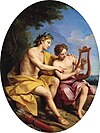


About Edward Gibbon
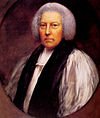
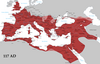
Edward Gibbon (1737-05-08 or 1737-04-27, O.S. – 1794-01-16) was arguably the most important historian since the time of the ancient Roman Tacitus. Gibbon's magnum opus, The History of the Decline and Fall of the Roman Empire, published between 1776 and 1788, is a groundbreaking work of early modern erudition, the broad influence of which endures to this day.
Best Edward Gibbon Quotes
Shortest
Earliest
Explore our curated collection of the most famous and impactful Edward Gibbon quotes.

“I sighed as a lover, I obeyed as a son.”
“All gates are shut against the unfortunate.”



“Decent easy men, who supinely enjoyed the gifts of the founder.”
“It was here [at the age of seventeen] that I suspended my religious inquiries.”
“I cannot repress my indignation at the use of those foolish obsolete, odious, words Whig and Tory.”
“The captain of the Hampshire grenadiers...has not been useless to the historian of the Roman Empire.”
“Wit and valor are qualities that are more easily ascertained than virtue, or the love of wisdom.”
“On the approach of spring I withdraw without reluctance from the noisy and extensive scene of crowds without company, and dissipation without pleasure.”
“The primitive Church, which I have treated with some freedom, was itself at that time, an innovation, and I was attached to the old Pagan establishment.”
“It has been calculated by the ablest politicians that no State, without being soon exhausted, can maintain above the hundredth part of its members in arms and idleness.”

“[T]he last revolution of Paris appears to have convinced almost every body of the fatal consequences of Democratical principles, which lead by a path of flowers into the Abyss of Hell.”
“My own contempt for the wild & mischievous system of Democracy will not suffer me to believe without positive proof that it can be adopted by any man of a sound understanding and historical experience.”

“Benevolence is the foundation of Justice, since we are forbidden to injure those we are bound to assist. A prophet may reveal the secrets of Heaven and futurity, but in his moral precepts he can only repeat the lessons of our own hearts.”

“Burke's book is a most admirable medication against the French disease, which has made too much progress even in this happy country. I admire his eloquence, I approve his politics, I adore his chivalry, and I can even forgive his superstition.”


Edward Gibbon Quotes by Topic
Find exactly what you are looking for by browsing this categorized list of Edward Gibbon quotes by topic.
Edward Gibbon on Christianity 10 quotes
“The virtue of the primitive Christians, like that of the first Romans, was very frequently guarded by poverty and ignorance.”

Edward Gibbon on Hadrian 2 quotes
“He was himself an artist; and he loved the arts, as they conduced to the glory of the monarch.”

Edward Gibbon on Rome 2 quotes
“The traveler who has contemplated the ruins of ancient Rome may conceive some imperfect idea of the sentiments which they must have inspired when they reared their heads in the splendor of unsullied beauty.”

Edward Gibbon on Islam 2 quotes
“Purer than the system of Zoroaster, more liberal than the law of Moses, the religion of Muhammad might seem less inconsistent with reason than the creed of mystery and superstition which, in the seventh century, disgraced the simplicity of the gospels.”

Edward Gibbon on Chivalry 2 quotes
“A single knight could impart, according to his judgment, the character which he received; and the warlike sovereigns of Europe derived more glory from this personal distinction, than from the lustre of their diadem. This ceremony, of which some traces may be found in Tacitus and the woods of Germany, was in its origin simple and profane; the candidate, after some previous trial, was invested with his sword and spurs; and his cheek or shoulder were touched with a slight blow, as an emblem of the last affront, which it was lawful for him to endure. But superstition mingled in every public and private action of life; in the holy wars, it sanctified the profession of arms; and the order of chivalry was assimilated in its rights and privileges to the sacred orders of priesthood.”
Edward Gibbon on Philanthropy
Edward Gibbon on Navigation
“The winds and waves are always on the side of the ablest navigators.”

What Edward Gibbon Said About Others
Discover personal opinions Edward Gibbon shared regarding contemporaries.
Edward Gibbon on Julian (emperor) 3 quotes
“While the Romans languished under the ignominious tyranny of eunuchs and bishops, the praises of Julian were repeated with transport in every part of the empire, except in the palace of Constantius. The barbarians of Germany had felt, and still dreaded, the arms of the young Caesar; his soldiers were the companions of his victory; the grateful provincials enjoyed the blessings of his reign; but the favorites, who had opposed his elevation, were offended by his virtues; and they justly considered the friend of the people as the enemy of the court. As long as the fame of Julian was doubtful, the buffoons of the palace, who were skilled in the language of satire, tried the efficacy of those arts which they had so often practised with success.”

Edward Gibbon on Charles Martel 2 quotes
“The epithet of Martel, the Hammer, which has been added to the name of Charles, is expressive of his weighty and irresistible strokes: the valour of Eudes was excited by resentment and emulation; and their companions, in the eye of history, are the true Peers and Paladins of French chivalry.”

Edward Gibbon on Charlemagne 2 quotes
“[T]he encouragement of learning reflects the purest and most pleasing lustre on the character of Charlemagne. The dignity of his person, the length of his reign, the prosperity of his arms, the vigour of his government, and the reverence of distant nations, distinguish him from the royal crowd; and Europe dates a new æra from his restoration of the Western empire.”
Edward Gibbon on Attila 2 quotes
“The crowd of vulgar kings, the leaders of so many martial tribes, who served under the standard of Attila, were ranged in the submissive order of guards and domestics round the person of their master. They watched his nod; they trembled at his frown; and at the first signal of his will, they executed, without murmur or hesitation, his stern and absolute commands. In time of peace, the dependent princes, with their national troops, attended the royal camp in regular succession; but when Attila collected his military force he was able to bring into the field an army of five, or, according to another account, of seven hundred thousand barbarians.”

Edward Gibbon on Tacitus 2 quotes
“The most civilized nations of modern Europe issued from the woods of Germany, and in the rude institutions of those barbarians, we may still distinguish the original principles of our present laws and manners. In their primitive state of simplicity and independence, the Germans were surveyed by the discerning eye, and delineated by the masterly pencil of Tacitus, the first of historians who applied the science of philosophy to the study of facts. In his incomparable treatise, which contains, perhaps, more ideas than words, he has comprehended a description of the German manners, that has formerly exercised the diligence of innumerable antiquarians, and employed the genius and penetration of the philosophic historians of our own times.”
Edward Gibbon on Skanderbeg 2 quotes
“In the fulness of conquest, Mahomet the second still felt at his bosom this domestic thorn: his lieutenants were permitted to negociate a truce; and the Albanian prince may justly be praised as a firm and able champion of his national independence. The enthusiasm of chivalry and religion has ranked him with the names of Alexander and Pyrrhus; nor would they blush to acknowledge their intrepid countrymen: but his narrow dominion, and slender powers, must leave him at an humble distance below the heroes of antiquity, who triumphed over the East and the Roman legions. His splendid atchievements, the bashas whom he encountered, the armies that he discomfited, and the three thousand Turks who were slain by his single hand, must be weighed in the scales of suspicious criticism.”

Edward Gibbon on Jesus 2 quotes
“How shall we excuse the supine inattention of the Pagan and philosophic world to those evidences which were presented by the hand of Omnipotence, not to their reason, but to their senses? During the age of Christ, of his apostles, and of their first disciples, the doctrine which they preached was confirmed by innumerable prodigies. The lame walked, the blind saw, the sick were healed, the dead were raised, daemons were expelled, and the laws of Nature were frequently suspended for the benefit of the church. … Under the reign of Tiberius, the whole earth, or at least a celebrated province of the Roman empire, was involved in a preternatural darkness of three hours. Even this miraculous event, which ought to have excited the wonder, the curiosity, and the devotion of mankind, passed without notice in an age of science and history. It happened during the lifetime of Seneca and the elder Pliny, who must have experienced the immediate effects, or received the earliest intelligence, of the prodigy. Each of these philosophers, in a laborious work, has recorded all the great phenomena of Nature, earthquakes, meteors, comets, and eclipses, which his indefatigable curiosity could collect. Both the one and the other have omitted to mention the greatest phenomenon to which the mortal eye has been witness since the creation of the globe.”
Edward Gibbon on Ausonius
“The poetical fame of Ausonius condemns the taste of his age.”

Edward Gibbon on Husayn ibn Ali
Edward Gibbon on Moses
“The divine authority of Moses and the prophets was admitted, and even established, as the firmest basis of Christianity.”
Edward Gibbon on Pierre Gassendi
“Gassendi, le meilleur philosophe des littérateurs et le meilleur littérateur des philosophes... [Gassendi, the greatest philosopher among literati and the greatest literato among philosophers...]”

Edward Gibbon on Adam Smith
“What an excellent work is that with which our common friend, Mr Adam Smith, has enriched the public!—an extensive science in a single book, and the most profound ideas expressed in the most perspicuous language.”
Quotes About Edward Gibbon
Gain deeper perspective through quotes about Edward Gibbon from others.
Thomas Arnold on Edward Gibbon
“My highest ambition, and what I hope to do as far as I can, is to make my history the very reverse of Gibbon in this respect,—that whereas the whole spirit of his work, from its low morality, is hostile to religion, without speaking directly against it, so my greatest desire would be, in my History, by its high morals and its general tone, to be of use to the cause, without actually bringing it forward.”

Carl Becker on Edward Gibbon
“In the pages of the Decline and Fall, we seem to be taking a long journey, but all the time we remain in one place: we sit with Gibbon in the ruins of the Capitol. It is from the ruins of the Capitol that we perceive, as from a great distance, a thousand years filled with dim shapes of men moving blindly, performing strangely, in an unreal shadowy world. We do not enter the Middle Ages, or relive a span of human experience: still we sit in the ruins of the Capitol, becoming cramped and half numb listening, all this long stationary time, to our unwearied guide as he narrates for us, in a melancholy and falling cadence, the disaster that mankind has suffered, the defeat inflicted by the forces of evil on the human spirit. The Decline and Fall is a history, yes; but something more than a history, a memorial oration: Gibbon is commemorating the death of ancient civilization; he has described, for the “instruction of future ages,” the “triumph of barbarism and religion.””
James Boswell on Edward Gibbon
“I don't know but you have spoken too highly of Gibbon's book; the Dean of Derry, who is our Club as well as Gibbon, talks of answering it. I think it is right that as fast as infidel wasps or venomous insects, whether creeping or flying, are hatched, they should be crushed. [...] He is an ugly, affected, disgusting fellow, and poisons our literary Club to me.”

J. W. Burrow on Edward Gibbon
“In the Decline and Fall, the civic humanist cycle of corruption, so often repeated in Gibbon's history, was balanced by another and newer theme, the Enlightenment's conception of the development of civilisation, which surrounds the work with an optimism which the story it tells, by itself, could hardly warrant. The notion of the gradual progress of the useful arts, through human industry, is one aspect of that optimism: Gibbon owes a debt, reflected in his footnotes, to Smith's Wealth of Nations. It is true that this version of progress is not heavily stressed; in the Decline and Fall, the most obvious antithesis is still the old one of republican patriotism and barbarian hardihood set against the "indolence", "luxury" and "effeminacy" of supine Asiatics and of once energetic former barbarian conquerors enervated by their own success. Yet there is clearly another possible antithesis to indolence and luxury: industry and a permissible (if still dangerous) civilised opulence.”
Thomas Carlyle on Edward Gibbon 3 quotes
“I read Gibbon, and then first clearly saw that Christianity was not true.”

Winston Churchill on Edward Gibbon
“I set out upon the eight volumes of Dean Milman's edition of Gibbon's Decline and Fall of the Roman Empire. I was immediately dominated both by the story and the style. All through the long glistening middle hours of the Indian day, from when we quitted stables till the evening shadows proclaimed the hour of Polo, I devoured Gibbon. I rode triumphantly through it from end to end and enjoyed it all. I scribbled all my opinions on the margins of the pages, and very soon found myself a vehement partisan of the author against the disparagements of his pompous-pious editor. I was not even estranged by his naughty footnotes. On the other hand the Dean's apologies and disclaimers roused my ire. So pleased was I with The Decline and Fall that I began at once to read Gibbon's Autobiography, which luckily was bound up in the same edition. When I read his reference to his old nurse: "If there be any, as I trust there are some, who rejoice that I live, to that dear and excellent woman their gratitude is due," I thought of Mrs. Everest; and it shall be her epitaph.”

John Clive on Edward Gibbon
“Gibbon's idol Tacitus had been as much moralist as historian. There is a general message in The Decline and Fall, concerned with the worth of freedom and the idealisation of the Roman republic. Furthermore, Gibbon has no doubts about ethical standards of conduct and behaviour, singling out, for instance, the love of pleasure and the love of action as essential components of normal human nature. Some attempts have been made to trace Gibbon's politics specifically through his History, but these have failed to reveal a simple pattern. His instruction has more to do with the principles of human nature and character. If there is any general lesson beyond that, it takes (as L. P. Curtis has observed) the form of a memorial oration to the governing classes on the subject of wisdom, virtue, and power. But Gibbon was too cynical to have had much faith in the effects of instruction, though that did not prevent him from making it part of his historical writing. The experience of past faults, he pointed out, was seldom profitable to the successive generations of mankind.”
Lewis P. Curtis on Edward Gibbon
“The Decline and Fall is a memorial oration. It is, to boot, a sad, stupendous warning to the governing class. Here in the desolation of a thousand years of history lies proof of the destiny of states that depart from the maxims alike of the Roman Republic and of England's Glorious Revolution. Gibbon, soaked in the values of his order, taught its members what they already accepted. His entire history revolves around a formula, around three words, the contents of their social conscience. These words are virtue, wisdom, and power.”
E. M. Forster on Edward Gibbon 2 quotes
“Just now I am enthralled by Gibbon's Autobiography. There are passages in it that are more than "correct", and on the border line of beauty. What a giant he is—greatest historian & greatest figure name of the 18th century I say; whether it is his greatness or his remoteness that makes his goings on with religion so queer I do not know.”

Sir on Edward Gibbon
“The Oxford edition of Gibbon consists of eight volumes with four or five hundred pages in each volume. The exact number of pages is 3,860. The fondest admirers of Gibbon cannot say that it is light reading. Evening after evening goes by, and, if the reader is conscientious, and does not skip, it is a long time before the work is read. Indeed, in these degenerate days I doubt whether there are many persons in the world who can say that they have read their Gibbon right through.”
David Hume on Edward Gibbon
“As I ran through your volume of history with great avidity and impatience, I cannot forbear discovering somewhat of the same impatience in returning you thanks for your agreeable present, and expressing the satisfaction which the performance has given me. Whether I consider the dignity of your style, the depth of your matter, or the extensiveness of your learning, I must regard the work as equally the object of esteem.”

Richard Jenkyns on Edward Gibbon
“[T]he effect of Tacitus, the best historian that Rome produced, can be felt in Gibbon, the best modern historian of Rome... Gibbon realized that Tacitus, sometimes seen as primarily a literary artist, preferring point and drama to the dispassionate search for truth, was a genuinely philosophic historian; and Tacitus showed him how a philosophic history could be not hindered but served by irony, disenchantment, and apophthegmatic wit... In both men this way of speaking brings out the ambiguity of history, the hiddenness of human motive. Influence or coincidence? It is impossible to be sure, but it is fair enough to say that Gibbon has Tacitus in his bones.”
Misattributed Quotes
Quotes mistakenly credited to Edward Gibbon
“In the end, more than freedom, they wanted security. They wanted a comfortable life, and they lost it all – security, comfort, and freedom. When the Athenians finally wanted not to give to society but for society to give to them, when the freedom they wished for most was freedom from responsibility, then Athens ceased to be free and was never free again.”
About Edward Gibbon
Edward Gibbon (1737-05-08 or 1737-04-27, O.S. – 1794-01-16) was arguably the most important historian since the time of the ancient Roman Tacitus. Gibbon's magnum opus, The History of the Decline and Fall of the Roman Empire, published between 1776 and 1788, is a groundbreaking work of early modern erudition, the broad influence of which endures to this day.
QuotesCosmos Cross-Civilizational Archive
Explore Related Wisdom Pillars, Worldviews & Canonical Works
Discover how humanity's greatest philosophers, sacred scriptures, and literary masterpieces address the core questions of existence.
30 Wisdom Pillars
22 Worldviews & Traditions
Canonical Books & Scriptures