Link Copied!
Edmund Burke Quotes (1729-1797)
Philosopher, Author, Politician





















-100px.png)























-100px.jpg)


-100px.jpg)














-100px.jpg)

-100px.png)


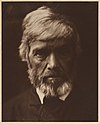
About Edmund Burke
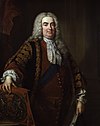
Edmund Burke (12 January 1729 – 9 July 1797) was a British and Irish statesman and philosopher. Born in Dublin, Burke served as a member of parliament (MP) between 1766 and 1794 in the House of Commons of Great Britain with the Whig Party after moving to London in 1750.
Best Edmund Burke Quotes
Shortest
Earliest
Explore our curated collection of the most famous and impactful Edmund Burke quotes.
“Illustrious predecessor.”
“The cold neutrality of an impartial judge.”


“Good order is the foundation of all good things.”
“Resolved to die in the last dike of prevarication.”

“Toleration is good for all, or it is good for none.”
“Custom reconciles us to every thing.”

“A conscientious man would be cautious how he dealt in blood.”
“Superstition is the religion of feeble minds.”




“The tyranny of a multitude is a multiplied tyranny.”

“They defend their errors as if they were defending their inheritance.”

“The art of substantiating shadows, and of lending existence to nothing.”

“The concessions of the weak are the concessions of fear.”

“I have in general no very exalted opinion of the virtue of paper government.”


“I am attached to Christianity at large; much from conviction; more from affection.”


“Abstract liberty, like other mere abstractions, is not to be found.”

“There is, however, a limit at which forbearance ceases to be a virtue.”
“An event has happened, upon which it is difficult to speak, and impossible to be silent.”
“They who bow to the enemy abroad will not be of power to subdue the conspirator at home.”
“No passion so effectually robs the mind of all its powers of acting and reasoning as fear.”
“We must not always judge of the generality of the opinion by the noise of the acclamation.”

“Religious persecution may shield itself under the guise of a mistaken and over-zealous piety.”
“All men that are ruined, are ruined on the side of their natural propensities.”
“A state without the means of some change is without the means of its conservation.”

“Nothing is so fatal to Religion as indifference which is, at least, half Infidelity.”
“Taxing is an easy business. Any projector can contrive new impositions, any bungler can add to the old.”

“Men who undertake considerable things, even in a regular way, ought to give us ground to presume ability.”
“Whenever our neighbour's house is on fire, it cannot be amiss for the engines to play a little on our own.”
“Whenever a separation is made between liberty and justice, neither, in my opinion, is safe.”

“Writers, especially when they act in a body and with one direction, have great influence on the public mind.”
“Better to be despised for too anxious apprehensions, than ruined by too confident a security.”
“I would rather sleep in the southern corner of a little country churchyard, than in the tombs of the Capulets.”
“You may have made a Revolution, but not a Reformation. You may have subverted Monarchy, but not recover'd freedom.”


“Freedom and not servitude is the cure of anarchy; as religion, and not atheism, is the true remedy for superstition.”
“And having looked to Government for bread, on the very first scarcity they will turn and bite the hand that fed them.”
“The unbought grace of life, the cheap defence of nations, the nurse of manly sentiment and heroic enterprise, is gone!”
“A great revolution is on the point of being accomplished. It is a revolution not in human affairs, but in man himself.”
“There is a boundary to men's passions when they act from feeling; none when they are under the influence of imagination.”
“A definition may be very exact, and yet go but a very little way towards informing us of the nature of the thing defined.”


“Magnanimity in politics is not seldom the truest wisdom; and a great empire and little minds go ill together.”

“In their nomination to office they will not appoint to the exercise of authority as to a pitiful job, but as to a holy function.”

“I am convinced that we have a degree of delight, and that no small one, in the real misfortunes and pains of others.”

“It is a general popular error to suppose the loudest complainers for the publick to be the most anxious for its welfare.”
“Strange incongruities must ever perplex those, who confound the unhappiness of civil dissensions with the crime of treason.”
“We must all obey the great law of change. It is the most powerful law of nature, and the means perhaps of its conservation.”

“Deny them this participation of freedom, and you break that sole bond, which originally made, and must still preserve the unity of the empire.”
“You have theories enough concerning the Rights of Men. It may not be amiss to add a small degree of attention to their Nature and disposition.”

“Whilst shame keeps its watch, virtue is not wholly extinguished in the heart; nor will moderation be utterly exiled from the minds of tyrants.”
“When we speak of the commerce with our [American] colonies, fiction lags after truth, invention is unfruitful, and imagination cold and barren.”
“He was one of those who wished for the abolition of the Slave Trade. He thought it ought to be abolished on principles of humanity and justice.”

“Always steady in the rejection of a Reform of Parliam[en]t which proved the best sense, & better than some sense they were deficient in at Times.”

“Some decent regulated pre-eminence, some preference (not exclusive appropriation) given to birth, is neither unnatural, nor unjust, nor impolitic.”
“Public life is a situation of power and energy; he trespasses against his duty who sleeps upon his watch, as well as he that goes over to the enemy.”
“Are chiefly cherished in Provinces far from Capitals. They are the standing Wisdom of a Country, though frequently Preposterous on a first view of them.”
“To the Deity must be left the task of infinite perfection, while to us poor, weak, incapable mortals, there was no rule of conduct so safe as experience.”
“It is the function of a judge not to make but to declare the law, according to the golden mete-wand of the law and not by the crooked cord of discretion.”
“All government — indeed, every human benefit and enjoyment, every virtue and every prudent act — is founded on compromise and barter.”

“The effect of liberty to individuals is, that they may do what they please: we ought to see what it will please them to do, before we risk congratulations.”
“Neither the few nor the many have a right to act merely by their will, in any matter connected with duty, trust, engagement, or obligation.”
“There is nothing that God has judged good for us that He has not given us the means to accomplish, both in the natural and the moral world.”
“Habit & Experience should teach all persons their place in Society—a Levelling Principle should be discouraged both with respect to rank, & Superiority of every Kind.”

“Hypocrisy, of course, delights in the most sublime speculations; for, never intending to go beyond speculation, it costs nothing to have it magnificent.”
“To execute laws is a royal office; to execute orders is not to be a king. However, a political executive magistracy, though merely such, is a great trust.”
“He had no failings which were not owing to a noble cause; to an ardent, generous, perhaps an immoderate passion for fame; a passion which is the instinct of all great souls.”
“I take toleration to be a part of religion. I do not know which I would sacrifice; I would keep them both: it is not necessary that I should sacrifice either.”
“You had that action and counteraction which, in the natural and in the political world, from the reciprocal struggle of discordant powers draws out the harmony of the universe.”
“Economy is a distributive virtue, and consists not in saving but selection. Parsimony requires no providence, no sagacity, no powers of combination, no comparison, no judgment.”
“We have an enemy, to whose virtues we can owe nothing; but on this occasion we are infinitely obliged to one of his vices. We owe more to his insolence than to our own precaution.”
“The wise will determine from the gravity of the case; the irritable from sensibility to oppression; the high-minded from disdain and indignation at abusive power in unworthy hands.”
“The body of all true religion consists, to be sure, in obedience to the will of the Sovereign of the world, in a confidence in His declarations, and in imitation of His perfections.”

“There ought to be system of manners in every nation which a well-formed mind would be disposed to relish. To make us love our country, our country ought to be lovely.”

“It shews the anxiety of the great men who influenced the conduct of affairs at that great event, to make the Revolution a parent of settlement, and not a nursery of future revolutions.”
“...no Monarchy limited or unlimited, nor any of the old Republics, can possibly be safe as long as this strange, nameless, wild, enthusiastic thing is established in the Center of Europe.”
“I must say, that the whole Scheme of the war is mistaken, (or appears to me to be so), for it ought to be, not for Dunkirk, or this or t'other Town—but to drive Jacobinism from the world.”
“I have never yet seen any plan which has not been mended by the observation of those who were much inferior in understanding to the person who took the lead in the business.”
“Justice is itself the great standing policy of civil society; and any eminent departure from it, under any circumstances, lies under the suspicion of being no policy at all.”

“It is reconciled in policy; and politics ought to be adjusted, not to human reasonings, but to human nature; of which the reason is but a part; and by no means the greatest part.”

“I cannot conceive how any man can have brought himself to that pitch of presumption, to consider his country as nothing but carte blanche, upon which he may scribble whatever he pleases.”
“In effect, to follow, not to force the public inclination; to give a direction, a form, a technical dress, and a specific sanction, to the general sense of the community, is the true end of legislature.”

“The person who grieves, suffers his passion to grow upon him; he indulges it, he loves it; but this never happens in the case of actual pain, which no man ever willingly endured for any considerable time.”

“If any ask me what a free Government is, I answer, that, for any practical purpose, it is what the people think so, — and that they, and not I, are the natural, lawful, and competent judges of this matter.”
“William Pitt the Younger: Never fear, Mr. Burke: depend on it we shall go on as we are, until the day of judgment.
Edmund Burke: Very likely, Sir. It is the day of no judgment that I am afraid of.”
Edmund Burke: Very likely, Sir. It is the day of no judgment that I am afraid of.”

“It looks to me to be narrow and pedantic to apply the ordinary ideas of criminal justice to this great public contest. I do not know the method of drawing up an indictment against a whole people.”
“Under the pressure of the cares and sorrows of our mortal condition, men have at all times, and in all countries, called in some physical aid to their moral consolations — wine, beer, opium, brandy, or tobacco.”

“People must be governed in a manner agreeable to their temper and disposition; and men of free character and spirit must be ruled with, at least, some condescension to this spirit and this character.”
“The use of force alone is but temporary. It may subdue for a moment; but it does not remove the necessity of subduing again: and a nation is not governed, which is perpetually to be conquered.”
“...out of the tomb of the murdered Monarchy in France, has arisen a vast, tremendous, unformed spectre, in a far more terrific guise than any which ever yet have overpowered the imagination and subdued the fortitude of man.”
“Falsehood and delusion are allowed in no case whatever: But, as in the exercise of all the virtues, there is an œconomy of truth. It is a sort of temperance, by which a man speaks truth with measure that he may speak it the longer.”

“I decline the election. — It has ever been my rule through life, to observe a proportion between my efforts and my objects. I have never been remarkable for a bold, active, and sanguine pursuit of advantages that are personal to myself.”
“France had endeavoured under the specious pretext of an enlarged benevolence, to sow the seeds of enmity among nations, and destroy all local attachments, calling them narrow and illiberal—thereby to dissever the people from their governors.”

“...he always firmly believed that they were purely on the defensive in that rebellion. He considered the Americans as standing at that time, and in that controversy, in the same relation to England, as England did to king James the Second, in 1688.”

“All persons possessing any portion of power ought to be strongly and awfully impressed with an idea that they act in trust and that they are to account for their conduct in that trust to the one great Master, Author, and Founder of society.”

“If I understand at all the true Spirit of the present contest, We are engaged in a Civil War ... I consider the Royalists of France, or, as they are (perhaps more properly) called, the Aristocrates, as of the party which we have taken in this civil war.”
“France had for some time been guilty of a continued series of hostile acts against this country, both external and internal: first, she directed her pursuits to universal empire, under the name of fraternity, in order to overturn the fabric of our laws and government.”
“When the leaders choose to make themselves bidders at an auction of popularity, their talents, in the construction of the state, will be of no service. They will become flatterers instead of legislators; the instruments, not the guides, of the people.”

“There was an ancient Roman lawyer, of great fame in the history of Roman jurisprudence, whom they called Cui Bono, from his having first introduced into judicial proceedings the argument, "What end or object could the party have had in the act with which he is accused."”
“All those instances to be found in history, whether real or fabulous, of a doubtful public spirit, at which morality is perplexed, reason is staggered, and from which affrighted Nature recoils, are their chosen and almost sole examples for the instruction of their youth.”
“Your settlement may be at hand; But that it is still at some distance is more likely. The French may be yet to go through more transmigrations. They may pass, as one of our Poets says, “thro' many varieties of untried being,” before their State obtains its final form.”
“Manners are of more importance than laws. The law can touch us here and there, now and then. Manners are what vex or soothe, corrupt or purify, exalt or debase, barbarize or refine us, by a constant, steady, uniform, insensible operation like that of the air we breathe in.”
“Circumstances (which with some gentlemen pass for nothing) give in reality to every political principle its distinguishing colour, and discriminating effect. The circumstances are what render every civil and political scheme beneficial or noxious to mankind.”
“My Lords, to obtain empire is common; to govern it well has been rare indeed. To chastise the guilt of those who have been instruments of imperial sway over other nations by the high superintending justice of the sovereign state has not many striking examples among any people.”
“By adverting to the dignity of this high calling our ancestors have turned a savage wilderness into a glorious empire: and have made the most extensive, and the only honorable conquests, not by destroying, but by promoting the wealth, the number, the happiness of the human race.”

“Those who have been once intoxicated with power, and have derived any kind of emolument from it, even though but for one year, never can willingly abandon it. They may be distressed in the midst of all their power; but they will never look to any thing but power for their relief.”

“Corrupt influence, which is itself the perennial spring of all prodigality, and of all disorder; which loads us, more than millions of debt; which takes away vigor from our arms, wisdom from our councils, and every shadow of authority and credit from the most venerable parts of our constitution.”
“Their principles always go to the extreme. They who go with the principles of the ancient Whigs, which are those contained in Mr. Burke's book, never can go too far. ... The opinions maintained in that book never can lead to an extreme, because their foundation is laid in an opposition to extremes.”
“I think I can hardly overrate the malignity of the principles of Protestant ascendancy, as they affect Ireland; or of Indianism, as they affect these countries, and as they affect Asia; or of Jacobinism, as they affect all Europe, and the state of human society itself. The last is the greatest evil.”
“The moment a sovereign removes the idea of security and protection from his subjects, and declares that he is everything and they nothing, when he declares that no contract he makes with them can or ought to bind him, he then declares war upon them: he is no longer sovereign; they are no longer subjects.”
“Too dangerous an experiment to risque. Not any reform proposed yet that did not appear to him highly hazardous. The least exceptionable that of Lord Chatham's "adding fifty Knights of the shire": but this, as well as the rest already proposed, not to be thought upon in such times as these, or perhaps, ever.”

“For my part for one, though I make no doubt of preferring the antient Course, or almost any other to this vile chimera, and sick mans dream of Government yet I could not actively, or with a good heart, and clear conscience, go to the establishment of a monarchical despotism in the place of this system of Anarchy.”
“By the disposition of a stupendous wisdom, moulding together the great mysterious incorporation of the human race, the whole, at one time, is never old, or middle-aged, or young; but, in a condition of unchangeable constancy, moves on through the varied tenor of perpetual decay, fall, renovation, and progression.”
“When Croft's "Life of Dr. Young" was spoken of as a good imitation of Dr. Johnson's style, "No, no," said he, "it is not a good imitation of Johnson; it has all his pomp without his force; it has all the nodosities of the oak, without its strength; it has all the contortions of the sibyl, without the inspiration."”

“There is a sort of enthusiasm in all projectors, absolutely necessary for their affairs, which makes them proof against the most fatiguing delays, the most mortifying disappointments, the most shocking insults; and what is severer than all, the presumptuous judgments of the ignorant upon their designs.”
“[Men of property are] of great consequence to general society; they have much responsibility, being a natural part of Legislature—their voices must be heard, their Interests are with the Public. Commerce increases Luxury, and Merchants support the State; but Kings, Nobles, and Gentry, are nothing without possessions.”
“Nor is prescription of government formed upon blind unmeaning prejudices—for man is a most unwise, and a most wise, being. The individual is foolish. The multitude, for the moment, is foolish, when they act without deliberation; but the species is wise, and when time is given to it, as a species it almost always acts right.”

“It is the love of the people; it is their attachment to their government, from the sense of the deep stake they have in such a glorious institution, which gives you both your army and your navy, and infuses into both that liberal obedience, without which your army would be a base rabble, and your navy nothing but rotten timber.”

“...what I look to with seriousness is the Phalanx of Party which exists in the body of the dissenters, who are, at the very least, nine tenths of them entirely devoted, some with greater some with less zeal, to the principles of the French Revolution.”
“Whatever is supreme in a state, ought to have, as much as possible, its judicial authority so constituted as not only not to depend upon it, but in some sort to balance it. It ought to give a security to its justice against its power. It ought to make its judicature, as it were, something exterior to the state.”

“...no legislator, at any period of the world, has willingly placed the seat of active power in the hands of the multitude: Because there it admits of no control, no regulation; no steady direction whatsoever. The people are the natural control on authority; but to exercise and to control together is contradictory and impossible.”

“Africa, time out of mind, had been in a state of slavery, therefore the inhabitants only changed one species of slavery for another. However, he was sorry to say, that, in changing from African to European slavery, they generally changed much for the worse, which certainly was a matter of reproach somewhere, and deserved serious consideration.”
“'''Difficulty is a severe instructor, set over us by the supreme ordinance of a parental Guardian and Legislator, who knows us better than we know ourselves, as he loves us better too. Pater ipse colendi haud facilem esse viam voluit. He that wrestles with us strengthens our nerves, and sharpens our skill. Our antagonist is our helper.”
“Those who give and those who receive arbitrary power are alike criminal; and there is no man but is bound to resist it to the best of his power, wherever it shall show its face to the world. It is a crime to bear it, when it can be rationally shaken off. Nothing but absolute impotence can justify men in not resisting it to the utmost of their ability.”
“Religion, always a principle of energy, in this new people, is no way worn out or impaired; and their mode of professing it is also one main cause of this free spirit. The people are Protestants; and of that kind which is the most adverse to all implicit submission of mind and opinion. This is a persuasion not only favourable to liberty, but built upon it.”
“The objects of a financier are, then, to secure an ample revenue; to impose it with judgment and equality; to employ it economically; and, when necessity obliges him to make use of credit, to secure its foundations in that instance, and for ever, by the clearness and candour of his proceedings, the exactness of his calculations, and the solidity of his funds.”
“In doing good, we are generally cold, and languid, and sluggish; and of all things afraid of being too much in the right. But the works of malice and injustice are quite in another style. They are finished with a bold, masterly hand; touched as they are with the spirit of those vehement passions that call forth all our energies, whenever we oppress and persecute.”

“Prejudice is of ready application in the emergency; it previously engages the mind in a steady course of wisdom and virtue and does not leave the man hesitating in the moment of decision sceptical, puzzled, and unresolved. Prejudice renders a man's virtue his habit, and not a series of unconnected acts. Through just prejudice, his duty becomes a part of his nature.”
“One may observe, that men of all persuasions confine the word persecution, and all the ill ideas of injustice and violence which belong to it, solely to those severities which are exercised upon themselves, or upon the party they are inclined to favour. Whatever is inflicted upon others, is a just punishment upon obstinate impiety, and not a restraint upon conscientious differences.”
“Through a wise and salutary neglect [of the colonies], a generous nature has been suffered to take her own way to perfection; when I reflect upon these effects, when I see how profitable they have been to us, I feel all the pride of power sink and all presumption in the wisdom of human contrivances melt and die away within me. My vigour relents. I pardon something to the spirit of liberty.”
“Nothing made a happy slave, but a degraded man. In proportion as the mind grew callous to its degradation, and all sense of manly pride was lost, the slave felt comfort. In fact, he was no longer a man. If he were to define a man, he would say with Shakspeare,
"Man is a being, holding large discourse,
Looking before and after."
A slave was incapable of either looking before or after.”
"Man is a being, holding large discourse,
Looking before and after."
A slave was incapable of either looking before or after.”

“Arms are not yet taken up; but virtually, you are in a civil war. You are not people of differing opinions in a public council;—you are enemies, that must subdue or be subdued, on the one side or the other. If your hands are not on your swords, their knives will be at your throats. There is no medium,—there is no temperament,—there is no compromise with Jacobinism.”
“Since the House had been prorogued in the summer, much work was done in France. The French had shown themselves the ablest architects of ruin that had hitherto existed in the world. In that very short space of time, they had completely pulled down to the ground their monarchy, their church, their nobility, their law, their revenue, their army, their navy, their commerce, their arts, and their manufactures.”
“...a monarchy is a thing perfectly susceptible of reform; perfectly susceptible of a balance of power; and that, when reformed and balanced, for a great country, it is the best of all governments. The example of our country might have led France, as it has led him, to perceive that monarchy is not only reconcilable to liberty, but that it may be rendered a great and stable security to its perpetual enjoyment.”

“"War," says Machiavel, "ought to be the only study of a prince;" and by a prince he means every sort of state, however constituted. "He ought," says this great political doctor, "to consider peace only as a breathing-time, which gives him leisure to contrive, and furnishes ability to execute military plans." A meditation on the conduct of political societies made old Hobbes imagine that war was the state of nature.”

“Gentlemen, the melancholy event of yesterday reads to us an awful lesson against being too much troubled about any of the objects of ordinary ambition. The worthy gentleman, who has been snatched from us at the moment of the election, and in the middle of contest, whilst his desires were as warm, and his hopes as eager as ours, has feelingly told us, what shadows we are, and what shadows we pursue.”

“I am sure, that the sentiments which it [Appeal from the New to the Old Whigs] contains are such, as tend to connect the rights of the Crown with those of the Subject, and to secure the stability of both. I think at least that I have shewn, beyond a Dispute, that my Sentiments are those of the rational Whiggs who settled the succession, upon the antient principles of the constitution, in the House of Hannover.”
“There never, gentlemen, was a period in which the steadfastness of some men has been nut to so sore a trial. It is not very difficult for well-formed minds to abandon their interest; but the separation of fame and virtue is an harsh divorce. Liberty is in danger of being made unpopular to Englishmen. Contending for an imaginary power, we begin to acquire the spirit of domination, and to lose the relish of honest equality.”
“I conceive that the Duke of Brunswick is as much fighting the Battle of the Crown of England as the Duke of Cumberland did at Culloden.”
“In this choice of inheritance we have given to our frame of polity the image of a relation in blood, binding up the constitution of our country with our dearest domestic ties, adopting our fundamental laws into the bosom of our family affections, keeping inseparable and cherishing with the warmth of all their combined and mutually reflected charities our state, our hearths, our sepulchres, and our altars.”
“The Crown of Great Britain cannot, in my opinion, be too magnificent. Let us see some great public works set on foot; let it never be said, that the Commons of Great Britain failed in what they owe to the first Crown in the world. Looking up to royalty, I do say, it is the oldest and one of the best parts of our constitution. I wish it should look like royalty; that it should look like a King; like a King of Great Britain.”
“A man full of warm, speculative benevolence may wish his society otherwise constituted than he finds it, but a good patriot and a true politician always considers how he shall make the most of the existing materials of his country. A disposition to preserve and an ability to improve, taken together, would be my standard of a statesman. Everything else is vulgar in the conception, perilous in the execution.”
“When he entered into the Whig party, he did not conceive that they pretended to any discoveries. They did not affect to be better Whigs, than those were who lived in the days in which principle was put to the test. Some of the Whigs of those days were then living. They were what the Whigs had been at the Revolution; what they had been during the reign of queen Anne; what they had been at the accession of the present royal family.”
“That unwise body, the United Irishmen, have had the folly to represent those Evils as owing to this Country, when in truth its chief guilt is in its total neglect, its utter oblivion, its shameful indifference and its entire ignorance, of Ireland and of every thing that relates to it, and not in any oppressive disposition towards that unknown region.”
“This day I heard from Laurence who has sent me papers confirming the portentous State of France—where the Elements which compose Human Society seem all to be dissolved, and a world of Monsters to be producd in the place of it—where Mirabeau presides as the Grand Anarch; and the late Grand Monarch makes a figure as ridiculous as pitiable.”
“The power of perpetuating our property in our families is one of the most valuable and interesting circumstances belonging to it, and that which tends most to the perpetuation of society itself. It makes our weakness subservient to our virtue; it grafts benevolence even upon avarice. The possession of family wealth and of the distinction which attends hereditary possessions (as most concerned in it,) are the natural securities for this transmission.”
“Reflect how you are to govern a people who think they ought to be free, and think they are not. Your scheme yields no revenue; it yields nothing but discontent, disorder, disobedience; and such is the state of America, that after wading up to your eyes in blood, you could only end just where you begun; that is, to tax where no revenue is to be found, to — my voice fails me; my inclination indeed carries me no farther — all is confusion beyond it.”
“I could show, that the same faction has, in one reign, promoted popular seditions, and, in the next, been a patron of tyranny; I could show, that they have all of them betrayed the public safety at all times, and have very frequently with equal perfidy made a market of their own cause, and their own associates. I could show how vehemently they have contended for names, and how silently they have passed over things of the last importance.”
“I impeach him in the name of the people of India, whose laws, rights, and liberties he has subverted, whose properties he has destroyed, whose country he has laid waste and desolate.
I impeach him in the name and by virtue of those eternal laws of justice which he has violated.
I impeach him in the name of human nature itself, which he has cruelly outraged, injured, and oppressed, in both sexes, in every age, rank, situation, and condition of life.”
I impeach him in the name and by virtue of those eternal laws of justice which he has violated.
I impeach him in the name of human nature itself, which he has cruelly outraged, injured, and oppressed, in both sexes, in every age, rank, situation, and condition of life.”
“All the time that this horrid scene was acting or avenging, as well as for some time before, and ever since, the wicked instigators of this unhappy multitude, guilty, with every aggravation, of all their crimes, and screened in a cowardly darkness from their punishment, continued without interruption, pity, or remorse, to blow up the blind rage of the populace, with a continued blast of pestilential libels, which infected and poisoned the very air we breathed in.”
“Because half-a-dozen grasshoppers under a fern make the field ring with their importunate chink, whilst thousands of great cattle, reposed beneath the shadow of the British oak, chew the cud and are silent, pray do not imagine that those who make the noise are the only inhabitants of the field; that of course they are many in number; or that, after all, they are other than the little shrivelled, meagre, hopping, though loud and troublesome insects of the hour.”

“We are taught to believe that a desire of domineering over our countrymen is love to our country; and those who hate civil war abet rebellion, and that the amiable and conciliatory virtues of lenity, moderation, and tenderness to the privileges of those who depend on this kingdom are a sort of treason to the state.
It is impossible that we should remain long in a situation, which breeds such notions and dispositions, without some great alteration in the national character.”
It is impossible that we should remain long in a situation, which breeds such notions and dispositions, without some great alteration in the national character.”
“I have no idea of a liberty unconnected with honesty and justice. Nor do I believe, that any good constitutions of government, or of freedom, can find it necessary for their security to doom any part of the people to a permanent slavery. Such a constitution of freedom, if such can be, is in effect no more than another name for the tyranny of the strongest faction; and factions in republics have been, and are, full as capable as monarchs, of the most cruel oppression and injustice.”

“[M]en must be governed by those laws which they love. Where thirty millions are to be governed by a few thousand men, the government must be established by consent, and must be congenial to the feelings and to the habits of the people. That which creates tyranny is the imposition of a form of government contrary to the will of the governed: and even a free and equal plan of government, would be considered as despotic by those who desired to have their old laws and their ancient system.”
“The Revolution and Hanover succession had been objects of the highest veneration to the old Whigs. They thought them not only proofs of the sober and steady spirit of liberty which guided their ancestors; but of their wisdom and provident care of posterity.—The modern Whigs have quite other notions of these events and actions. They do not deny that Mr. Burke has given truly the words of the acts of parliament which secured the succession, and the just sense of them. They attack not him but the law.”
“If we owe to it [civil society] any duty, it is not subject to our will. Duties are not voluntary. Duty and will are even contradictory terms. Now though civil society might be at first a voluntary act (which in many cases it undoubtedly was) its continuance is under a permanent standing covenant, coexisting with the society; and it attaches upon every individual of that society, without any formal act of his own. This is warranted by the general practice, arising out of the general sense of mankind.”

“I have been baptised and educated in the Church of England; and have seen no cause to abandon that communion. ... I think that Church harmonises with our civil constitution, with the frame and fashion of our Society, and with the general Temper of the people. I think it is better calculated, all circumstances considered, for keeping peace amongst the different sects, and of affording to them a reasonable protection, than any other System. Being something in a middle, it is better disposed to moderate.”

“Justice was in all countries originally administered by the priesthood; nor indeed could laws in their first feeble state have either authority or sanction, so as to compel men to relinquish their natural independence, had they not appeared to come down to them enforced by beings of more than human power. The first openings of civility have been everywhere made by religion. Amongst the Romans, the custody and interpretation of the laws continued solely in the college of the pontiffs for above a century.”
“That since England had the principle, of making Peace with Anarchists she has left herself without a cause—that it is high time for all honest men to think no more of Party—that this Kingdom is in a most perillous State, & nothing but vigour can save it—that peace can not be secure in the present State of Things in France—that nothing was ever more regular nor systematical than the attempts there to conquer all Europe—that the Spirit of their Ambition is Atheistical, & our people should know this.”

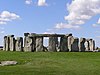
“When any work seems to have required immense force and labor to affect it, the idea is grand. Stonehenge, neither for disposition nor ornament, has anything admirable; but those huge rude masses of stone, set on end, and piled each on other, turn the mind on the immense force necessary for such a work. Nay, the rudeness of the work increases this cause of grandeur, as it excludes the idea of art and contrivance; for dexterity produces another sort of effect, which is different enough from this.”

“It is an advantage to all narrow wisdom and narrow morals that their maxims have a plausible air; and, on a cursory view, appear equal to first principles. They are light and portable. They are as current as copper coin; and about as valuable. They serve equally the first capacities and the lowest; and they are, at least, as useful to the worst men as to the best. Of this stamp is the cant of not man, but measures; a sort of charm by which many people get loose from every honourable engagement.”
“We are at war with a system, which, by it's essence, is inimical to all other Governments, and which makes peace or war, as peace and war may best contribute to their subversion. It is with an armed doctrine that we are at war. It has, by it's essence, a faction of opinion, and of interest, and of enthusiasm, in every country. To us it is a Colossus which bestrides our channel. It has one foot on a foreign shore, the other upon the British soil. Thus advantaged, if it can at all exist, it must finally prevail.”
“...if the Catholick religion is destroyd by the Infidels, it is a most contemptible and absurd Idea, that, this, or any Protestant Church, can survive that Event. ... in Ireland particularly, the R[oman] C[atholic] Religion should be upheld in high respect and veneration. ... I am more serious on the positive encouragement to be given to this religion...because the serious and earnest belief and practice of it by its professors forms, as things stand, the most effectual Barrier, if not the sole Barrier, against Jacobinism.”

“Mr. Burke appeared often in despair when he read the Papers & saw how violent party rage was become in England as well as in France. He often said that he could not consider the party for a reform in part by Mr. Fox & his Friends as distinct from that party of Sir F. Burdet at the Crown & Anchor, because Mr. F— though he might have spoken against the last out of Doors, did not condemn it in parliam[en]t, which would be the manly way of proceeding.”
“My poor opinion is, that the closest connexion between Great Britain and Ireland, is essential to the well being, I had almost said, to the very being, of the two Kingdoms. ... I think indeed that Great Britain would be ruined by the separation of Ireland; but, as there are degrees even in ruin, it would fall the most heavily on Ireland. By such a separation Ireland would be the most completely undone Country in the world; the most wretched, the most distracted and, in the end, the most desolate part of the habitable Globe.”

“Mr. Burke's Enemies often endeavoured to convince the World that he had been bred up in the Catholic Faith, & that his Family were of it, & that he himself had been educated at St. Omer—but this was false, as his father was a regular practitioner of the Law at Dublin, which he could not be unless of the Established Church: & it so happened that though Mr. B— was twice at Paris, he never happened to go through the Town of St. Omer.”
“Cast your eyes on the journals of parliament. It is for fear of losing the inestimable treasure we have, that I do not venture to game it out of my hands for the vain hope of improving it. I look with filial reverence on the constitution of my country, and never will cut it in pieces, and put it into the kettle of any magician, in order to boil it, with the puddle of their compounds, into youth and vigour. On the contrary, I will drive away such pretenders; I will nurse its venerable age, and with lenient arts extend a parent's breath.”
“The science of government being, therefore, so practical in itself, and intended for such practical purposes, a matter which requires experience, and even more experience than any person can gain in his whole life, however sagacious and observing he may be, it is with infinite caution that any man ought to venture upon pulling down an edifice which has answered in any tolerable degree for ages the common purposes of society, or on building it up again without having models and patterns of approved utility before his eyes.”
“Our Government and our Laws are beset by two different Enemies, which are sapping its foundations, Indianism, and Jacobinism. In some Cases they act separately, in some they act in conjunction: But of this I am sure; that the first is the worst by far, and the hardest to deal with; and for this amongst other reasons, that it weakens discredits, and ruins that force, which ought to be employd with the greatest Credit and Energy against the other; and that it furnishes Jacobinism with its strongest arms against all formal Government.”
“We scarce ever had a prince, who by fraud, or violence, had not made some infringement on the constitution. We scarce ever had a parliament which knew, when it attempted to set limits to the royal authority, how to set limits to its own. Evils we have had continually calling for reformation, and reformations more grievous than any evils. Our boasted liberty sometimes trodden down, sometimes giddily set up, and ever precariously fluctuating and unsettled; it has only been kept alive by the blasts of continual feuds, wars, and conspiracies.”
“The Leaders have ever since gone...to propagate the principles of French Levelling and confusion, by which no house is safe from its Servants, and no Officer from his Soldiers, and no State or constitution from conspiracy and insurrection. I will not enter into the baseness and depravity of the System they adopt; but one thing I will remark, that its great Object is not, (as they pretend to delude worthy people to their Ruin) the destruction of all absolute Monarchies, but totally to root out that thing called an Aristocrate or Noblemen and Gentleman.”

“Parliament is not a congress of ambassadors from different and hostile interests; which interests each must maintain, as an agent and advocate, against other agents and advocates; but parliament is a deliberative assembly of one nation, with one interest, that of the whole; where, not local purposes, not local prejudices ought to guide, but the general good, resulting from the general reason of the whole. You choose a member indeed; but when you have chosen him, he is not a member of Bristol, but he is a member of parliament.”
“That it was common to observe that this was an enlightened Age; but he had thought it for a long time past an ignorant Age. Would you, said he, call a Circulating Library a good Library, because it contains so many books? This Age is much advanced in many useless sciences, & much more respect is shewn to Talent than to wisdom; but I consider our fore-fathers as deeper Thinkers than ourselves, because they set an higher Value on good sense than Knowledge in various Sciences, & this good sense was derived very often from as much study & more knowledge, though of another sort.”
“We want no foreign examples to rekindle in us the flame of liberty. The example of our own ancestors is abundantly sufficient to maintain the spirit of freedom in its full vigour, and to qualify it in all its exertions. The example of a wise, moral, well-natured, and well-tempered spirit of freedom, is that alone which can be useful to us, or in the least degree reputable or safe. Our fabric is so constituted; one part of it bears so much on the other, the parts, are so made for one another, and for nothing else, that to introduce any foreign matter into it, is to destroy it.”
“And now I ask, whether, with this map of misgovernment before me, I can suppose myself bound by my vote to continue, upon any principles of pretended public faith, the management of these countries in those hands? If I kept such a faith (which in reality is no better than a fides latronum) with what is called the Company, I must break the faith, the covenant, the solemn, original, indispensable oath, in which I am bound, by the eternal frame and constitution of things, to the whole human race.”

“I considerd a general War against Jacobins and Jacobinism, as the only possible chance of saving Europe, (and England as included in Europe) from a truly frightful revolution. ... It is my Protest against the delusion, by which some have been taught to look upon this Jacobin contest at home as an ordinary party squabble about place or Patronage; and to regard this Jacobin War abroad as a common War about Trade, or Territorial Boundaries, or about a political Balance of power among Rival or jealous States.”
“It is not calling the landed estates, possessed by old prescriptive rights, the 'accumulations of ignorance and superstition', that can support me in shaking that grand title, which supersedes all other title, and which all my studies of general jurisprudence have taught me to consider as one principal cause of the formation of states; I mean the ascertaining and securing prescription. But these are donations made in 'ages of ignorance and superstition'. Be it so. It proves that these donations were made long ago; and this is prescription; and this gives right and title.”
“The pretended rights of these theorists are all extremes: and in proportion as they are metaphysically true, they are morally and politically false. The rights of men are in a sort of middle, incapable of definition, but not impossible to be discerned. The rights of men in government are their advantages; and these are often in balances between differences of good; in compromises between good and evil, and sometimes between evil and evil. Political reason is a computing principle: adding, subtracting, multiplying, and dividing, morally and not metaphysically or mathematically, true moral denominations.”

“In all persuasions the bigots are persecutors; the men of a cool and reasonable piety are favourers of toleration; because the former sort of men not taking the pains to be acquainted with the grounds of their adversaries tenets, conceive them to be so absurd and monstrous, that no man of sense can give into them in good earnest. For which reason they are convinced that some oblique bad motive induces them to pretend to the belief of such doctrines, and to the maintaining of them with obstinacy. This is a very general principle in all religious differences, and it is the corner stone of all persecution.”
“A great profusion of things, which are splendid or valuable in themselves, is magnificent. The starry heaven, though it occurs so very frequently to our view, never fails to excite an idea of grandeur. This cannot be owing to the stars themselves, separately considered. The number is certainly the cause. The apparent disorder augments the grandeur, for the appearance of care is highly contrary to our idea of magnificence. Besides, the stars lie in such apparent confusion, as makes it impossible on ordinary occasions to reckon them. This gives them the advantage of a sort of infinity.”
“The present state of France was ten times worse than a tyranny. The new constitution was said to be an experiment but the assertion was not true. It had already been tried, and had been found to be only productive of evils. They would go on from tyranny to tyranny, from oppression to oppression, till at last the whole system would terminate in the destruction of that miserable and deluded people... He sincerely hoped that no member of that House would ever barter the constitution of this country, the eternal jewel of their souls, for a wild and visionary system, which could only lead to confusion and disorder.”
“The Whigs of this day have before them, in this Appeal, their constitutional ancestors: They have the doctors of the modern school. They will choose for themselves. The author of the Reflections has chosen for himself. If a new order is coming on, and all the political opinions must pass away as dreams, which our ancestors have worshipped as revelations, I say for him, that he would rather be the last (as certainly he is the least) of that race of men, than the first and greatest of those who have coined to themselves Whig principles from a French die, unknown to the impress of our fathers in the constitution.”
“They made and recorded a sort of institute and digest of anarchy, called the rights of man, in such a pedantic abuse of elementary principles as would have disgraced boys at school; but this declaration of rights was worse than trifling and pedantic in them; as by their name and authority they systematically destroyed every hold of authority by opinion, religious or civil, on the minds of the people. By this mad declaration they subverted the state; and brought on such calamities as no country, without a long war, has ever been known to suffer, and which may in the end produce such a war, and perhaps, many such.”
“It certainly was indiscretion, at any period, but especially at his time of life, to provoke enemies, or give his friends occasion to desert him; yet if his firm and steady adherence to the British constitution placed him in such a dilemma, he would risk all; and, as public duty and public prudence taught him, with his last words exclaim, "Fly from the French constitution." [ Mr. Fox here whispered, that "there was no loss of friends"]. Mr. Burke said Yes, there was a loss of friends—he knew the price of his conduct—he had done his duty at the price of his friend—their friendship was at an end.”
“...what was done in France was a wild attempt to methodize anarchy; to perpetuate and fix disorder. That it was a foul, impious, monstrous thing, wholly out of the course of moral nature. He undertook to prove, that it was generated in treachery, fraud, falsehood, hypocrisy, and unprovoked murder. ... That by the terror of assassination they had driven away a very great number of the members, so as to produce a false appearance of a majority.—That this fictitious majority had fabricated a constitution, which as now it stands, is a tyranny far beyond any example that can be found in the civilized European world of our age.”
“I hate tyranny, at least I think I do; but I hate it most of all where most are concerned in it. The tyranny of a multitude is a multiplied tyranny. If, as society is constituted in these large countries of France and England, full of unequal property, I must make my choice (which God avert!) between the despotism of a single person, or of the many, my election is made. As much injustice and tyranny has been practised in a few months by a French democracy, as in all the arbitrary monarchies in Europe in the forty years of my observation.”
“...the French business is no light or trivial thing, or such as has commonly occurd in the course of political Events. At present the whole political State of Europe hinges upon it. On the Continent there is little doubt; every thing will take is future shape and colour from the good or ill success of the Duke of Brunswick. In my opinion, it is the most important crisis that ever existed in the World. ... My poor opinion is, that these principles...cannot possibly be realized in practice in France, without an absolute certainty and that at no remote period, of overturning the whole fabrick of the British Constitution.”
“The future use and the whole effect, if not the very existence, of the process of an impeachment of high crimes and misdemeanors before the peers of this kingdom upon the charge of the Commons will very much be decided by your judgment in this cause... For we must not deceive ourselves: whatever does not stand with credit cannot stand long. And if the Constitution should be deprived, I do not mean in form, but virtually, of this resource, it is virtually deprived of everything else that is valuable in it. For this process is the cement which binds the whole together; this is the individuating principle that makes England what England is.”
“It was the case of common soldiers deserting from their officers, to join a furious, licentious populace. It was a desertion to a cause, the real object of which was to level all those institutions, and to break all those connexions, natural and civil, that regulate and hold together the community by a chain of subordination; to raise soldiers against their officers; servants against their masters; tradesmen against their customers; artificers against their employers; tenants against their landlords; curates against their bishops; and children against their parents. That this cause of theirs was not an enemy to servitude, but to society.”

“France has always more or less influenced manners in England; and when your fountain is choked up and polluted, the stream will not run long, or not run clear, with us, or perhaps with any nation. This gives all Europe, in my opinion, but too close and connected a concern in what is done in France. Excuse me, therefore, if I have dwelt too long on the atrocious spectacle of the 6th of October, 1789, or have given too much scope to the reflections which have arisen in my mind on occasion of the most important of all revolutions, which may be dated from that day, I mean a revolution in sentiments, manners, and moral opinions.”
“...my extreme anxiety about the Object of our common sollicitude and my clear and decided conviction, that there is one part of the War, which instead of being postponed and considered in a secondary light, ought to have priority over every other, and requires our most early and our most careful attention; I mean La Vendée. ... This is a War directly against Jacobinism and its principles. It strikes at the Enemy in his weakest and most vulnerable part. At La Vendée with infinitely less Charge, we may make an impression likely to be decisive. This goes to the heart of the Business.”
“He laid it down as a maxim, that monarchy was the basis of all good government and the nearer to monarchy any government approached, the more perfect it was, and vice versa; and he certainly in his wildest moments, never had so far forgotten the nature of government, as to argue that we ought to wish for a constitution that we could alter at pleasure, and change like a dirty shirt. He was by no means anxious for a monarchy with a dash of republicanism to correct it. But the French constitution was the exact opposite of the English in every thing, and nothing could be so dangerous as to set it up to the view of the English, to mislead and debauch their minds.”
“In the interval between his campaigns Agricola was employed in the great labours of peace. He knew that the general must be perfected by the legislator; and that the conquest is neither permanent nor honourable, which is only an introduction to tyranny... In short, he subdued the Britons by civilizing them; and made them exchange a savage liberty for a polite and easy subjection. His conduct is the most perfect model for those employed in the unhappy, but sometimes necessary, task of subduing a rude and free people.”
“...what the freedom is that I love, and that to which I think all men intitled. It is not solitary, unconnected, individual, selfish Liberty. As if every Man was to regulate the whole of his Conduct by his own will. The Liberty I mean is social freedom. It is that state of things in which Liberty is secured by the equality of Restraint; A Constitution of things in which the liberty of no one Man, and no body of Men and no Number of men, can find Means to trespass on the liberty of any Person, or any description of Persons in the Society. This kind of liberty is indeed but another name for Justice, as ascertained by wise Laws, and secured by well-constructed institutions.”
“France wanted to make proselytes to her opinions, and turn every government in the world into a republic. If every government was against her, it was because she had declared herself hostile to every government. He knew of nothing to which this strange republic could be compared, but to the system of Mahomet, who with the koran in one hand, and a sword in the other, held out the former to the acceptance of mankind, and with the latter compelled them to adopt it as their creed. The koran which France held out, was the declaration of the rights of man and universal fraternity; and with the sword she was determined to propagate her doctrines, and conquer those whom she could not convince.”
“Law and arbitrary power are in eternal enmity. Name me a magistrate, and I will name property; name me power, and I will name protection. It is a contradiction in terms, it is blasphemy in religion, it is wickedness in politics, to say that any man can have arbitrary power. In every patent of office the duty is included. For what else does a magistrate exist? To suppose for power is an absurdity in idea. Judges are guided and governed by the eternal laws of justice, to which we are all subject. We may bite our chains, if we will, but we shall be made to know ourselves, and be taught that man is born to be governed by law; and he that will substitute will in the place of it is an enemy to God.”
“You talk of Paine with more respect than he deserves: He is utterly incapable of comprehending his subject. He has not even a moderate portion of learning of any kind. He has learnd the instrumental part of literature, a style, and a method of disposing his ideas, without having ever made a previous preparation of Study or thinking—for the use of it. ... [Paine] possesses nothing more than what a man whose audacity makes him careless of logical consequences, and his total want of honour and morality makes indifferent as to political consequences, may very easily write. They indeed who seriously write upon a principle of levelling ought to be answerd by the Magistrate—and not by the Speculatist.”
“Men without their choice derive benefits from that association; without their choice they are subjected to duties in consequence of these benefits; and without their choice they enter into a virtual obligation as binding as any that is actual. Look through the whole of life and the whole system of duties. Much the strongest moral obligations are such as were never the results of our option. I allow, that if no supreme ruler exists, wise to form, and potent to enforce, the moral law, there is no sanction to any contract, virtual or even actual, against the will of prevalent power. On that hypothesis, let any set of men be strong enough to set their duties at defiance, and they cease to be duties any longer.”

“I tell you again that the recollection of the manner in which I saw the Queen of France in the year 1774 and the contrast between that brilliancy, Splendour, and beauty, with the prostrate Homage of a Nation to her, compared with the abominable Scene of 1789 which I was describing did draw Tears from me and wetted my Paper. These Tears came again into my Eyes almost as often as I lookd at the description. They may again. You do not believe this fact, or that these are my real feelings, but that the whole is affected, or as you express it, 'downright Foppery'. My friend, I tell you it is truth—and that it is true, and will be true, when you and I are no more, and will exist as long as men—with their Natural feelings exist.”

“The acts of France were acts of hostility to this country; her whole system, every speech, every decree, every act, bespoke an intention preclusive of accommodation. No man, he would venture to say, had a more lively sense of the importance of the question before the House, or of the evils of war, than himself. A war with France, under such circumstances as now governed her conduct, must be terrible, but peace much more so. A nation that had abandoned all its valuable distinctions, arts, sciences, religion, law order, every thing but the sword, was most formidable and dreadful to all nations composed of citizens who only used soldiers as a defence; as such, France should be resisted with spirit and temper, without fear or scruple.”

“Whether they are allowed to be Whigg principles, or not, is a very small part of my concern. I think them exactly as such as the sober, honourable, and intelligent part in that party, have always professed. I think, I have shewn, beyond a possibility of debate, that they are exactly the same. But if any person...choose to think otherwise, and conceive that they are contrary to the Doctrines of their Whigg party,—be it so. I am certain, that they are principles of which no reasonable man or good citizen need be ashamed of. If they are Tory principles, I shall always wish to be thought a Tory, If the contrary of these principles be Whigg principles, I beg, that you, my Dear Friend will never consider me as belonging to that description.”
“But as to our country and our race, as long as the well compacted structure of our church and state, the sanctuary, the holy of holies of that ancient law, defended by reverence, defended by power, a fortress at once and a temple, shall stand inviolate on the brow of the British Sion—as long as the British Monarchy, not more limited than fenced by the orders of the State, shall, like the proud Keep of Windsor, rising in the majesty of proportion, and girt with the double belt of its kindred and coeval towers, as long as this awful structure shall oversee and guard the subjected land—so long as the mounds and dykes of the low, fat, Bedford level will have nothing to fear from all the pickaxes of all the levellers of France.”
“Men are qualified for civil liberty in exact proportion to their disposition to put moral chains upon their own appetites, — in proportion as their love to justice is above their rapacity, — in proportion as their soundness and sobriety of understanding is above their vanity and presumption, — in proportion as they are more disposed to listen to the counsels of the wise and good, in preference to the flattery of knaves. Society cannot exist, unless a controlling power upon will and appetite be placed somewhere; and the less of it there is within, the more there must be without. It is ordained in the eternal constitution of things, that men of intemperate minds cannot be free. Their passions forge their fetters.”
“These principles it is necessary strictly to attend to, because they will serve much to explain the whole course both of government and real property, wherever the German nations obtained a settlement; the whole of their government depending for the most part upon two principles in our nature,—ambition, that makes one man desirous, at any hazard or expense, of taking the lead amongst others; and admiration, which makes others equally desirous of following him from the mere pleasure of admiration, and a sort of secondary ambition, one of the most universal passions among men. These two principles, strong both of them in our nature, create a voluntary inequality and dependence.”
“The power of discretionary disqualification by one law of Parliament, and the necessity of paying every debt of the Civil List by another law of Parliament, if suffered to pass unnoticed, must establish such a fund of rewards and terrors as will make Parliament the best appendage and support of arbitrary power that ever was invented by the wit of man. This is felt. The quarrel is begun between the Representatives and the People. The Court Faction have at length committed them. In such a strait the wisest may well be perplexed, and the boldest staggered. The circumstances are in a great measure new. We have hardly any land-marks from the wisdom of our ancestors, to guide us. At best we can only follow the spirit of their proceeding in other cases.”
“A diversity of opinion upon almost every principle of politics, had indeed drawn a strong line of separation between them and some others. However, they were desirous not to extend the misfortune by unnecessary bitterness; they wished to prevent a difference of opinion on the commonwealth from festering into rancorous and incurable hostility. Accordingly they endeavoured that all past controversies should be forgotten; and that enough for the day should be the evil thereof. There is however a limit at which forbearance ceases to be a virtue. Men may tolerate injuries, whilst they are only personal to themselves. But it is not the first of virtues to bear with moderation the indignities that are offered to our country.”
“When bad men combine, the good must associate; else they will fall one by one, an unpitied sacrifice in a contemptible struggle.
It is not enough in a situation of trust in the commonwealth, that a man means well to his country; it is not enough that in his single person he never did an evil act, but always voted according to his conscience, and even harangued against every design which he apprehended to be prejudicial to the interests of his country. This innoxious and ineffectual character, that seems formed upon a plan of apology and disculpation, falls miserably short of the mark of publick duty. That duty demands and requires, that what is right should not only be made known, but made prevalent; that what is evil should not only be detected, but defeated.”
It is not enough in a situation of trust in the commonwealth, that a man means well to his country; it is not enough that in his single person he never did an evil act, but always voted according to his conscience, and even harangued against every design which he apprehended to be prejudicial to the interests of his country. This innoxious and ineffectual character, that seems formed upon a plan of apology and disculpation, falls miserably short of the mark of publick duty. That duty demands and requires, that what is right should not only be made known, but made prevalent; that what is evil should not only be detected, but defeated.”
“[T]he zealous never fail to draw political inferences from religious tenets, by which they interest the magistrate in the dispute; and then to the heat of a religious fervour is added the fury of a party zeal. All intercourse is cut off between the parties. They lose all knowledge of each other, tho' countrymen and neighbours, and are therefore easily imposed upon with the most absurd stories concerning each other's opinions and practices. They judge of the hatred of the adverse side by their own. Then fear is added to their hatred; and preventive injuries arise from their fear. The remembrance of the past, the dread of the future, the present ill, will join together to urge them forward to the most violent courses.
Such is the manner of proceeding of religious parties towards each other.”
Such is the manner of proceeding of religious parties towards each other.”
“A trade begun with savage war, prosecuted with unheard of cruelty, continued during the mid passage with the most loathsome imprisonment, and ending in perpetual exile and unremitting slavery, was a trade so horrid in all its circumstances, that it was impossible a single argument could be adduced in its favour. On the score of prudence nothing could be said in defence of it, nor could it be justified by necessity, and no case of inhumanity could be justified, but upon necessity; but no such necessity could be made out strong enough to bear out such a traffick. It was the duty of that House, therefore, to put an end to it. If it were said, that the interest of individuals required that it should continue, that argument ought not to be listened to.”
“You have the representatives of that [Christian] religion which says that their God is love, that the very vital spirit of their institution is charity,—a religion which so much hates oppression, that, when the God whom we adore appeared in human form, He did not appear in a form of greatness and majesty, but in sympathy with the lowest of the people, and thereby made it a firm and ruling principle that their welfare was the object of all government, since the Person who was the Master of Nature chose to appear Himself in a subordinate situation. These are the considerations which influence them, which animate them, and will animate them, against all oppression,—knowing that He who is called first among them, and first among us all, both of the flock that is fed and of those who feed it, made Himself "the servant of all."”
“In the last age, we were in danger of being entangled by the example of France in the net of a relentless despotism. It is not necessary to say any thing upon that example; it exists no longer. Our present danger from the example of a people, whose character knows no medium, is, with regard to government, a danger from anarchy; a danger of being led through an admiration of successful fraud and violence, to an imitation of the excesses of an irrational, unprincipled, proscribing, confiscating, plundering, ferocious, bloody, and tyrannical democracy. On the side of religion, the danger of their example is no longer from intolerance, but from atheism; a foul, unnatural vice, foe to all the dignity and consolation of mankind; which seems in France, for a long time, to have been embodied into a faction, accredited, and almost avowed.”

“Where popular authority is absolute and unrestrained, the people have an infinitely greater, because a far better founded, confidence in their own power. They are themselves, in a great measure, their own instruments. They are nearer to their objects. Besides, they are less under responsibility to one of the greatest controlling powers on the earth, the sense of fame and estimation. The share of infamy that is likely to fall to the lot of each individual in public acts is small indeed; the operation of opinion being in the inverse ratio to the number of those who abuse power. Their own approbation of their own acts has to them the appearance of a public judgment in their favor. A perfect democracy is, therefore, the most shameless thing in the world. As it is the most shameless, it is also the most fearless. No man apprehends in his person that he can be made subject to punishment.”
“There are few with whom I can communicate so freely as with Pope. But Pope cannot bear every truth. He has a timidity which hinders the full exertion of his faculties, almost as effectually as bigotry cramps those of the general herd of mankind. But whoever is a genuine follower of truth keeps his eye steady upon his guide, indifferent whither he is led, provided that she is the leader. And, my Lord, if it may be properly considered, it were infinitely better to remain possessed by the whole legion of vulgar mistakes, than to reject some, and, at the same time, to retain a fondness for others altogether as absurd and irrational. The first has at least a consistency, that makes a man, however erroneously, uniform at least; but the latter way of proceeding is such an inconsistent chimera and jumble of philosophy and vulgar prejudice, that hardly anything more ridiculous can be conceived.”
“The most obvious division of society is into rich and poor; and it is no less obvious, that the number of the former bear a great disproportion to those of the latter. The whole business of the poor is to administer to the idleness, folly, and luxury of the rich; and that of the rich, in return, is to find the best methods of confirming the slavery and increasing the burdens of the poor. In a state of nature, it is an invariable law, that a man's acquisitions are in proportion to his labours. In a state of artificial society, it is a law as constant and as invariable, that those who labour most enjoy the fewest things; and that those who labour not at all have the greatest number of enjoyments. A constitution of things this, strange and ridiculous beyond expression! We scarce believe a thing when we are told it, which we actually see before our eyes every day without being in the least surprised.”
“...they who would make peace without a previous knowledge of the terms, make a surrender. They are conquered. They do not treat; they receive the law. Is this the disposition of the people of England? Then the people of England are contented to seek in the kindness of a foreign systematick enemy combined with a dangerous faction at home, a security which they cannot find in their own patriotism and their own courage. They are willing to trust to the sympathy of Regicides the guarantee of the British Monarchy. They are content to rest their religion on the piety of atheists by establishment. They are satisfied to seek in the clemency of practised murderers the security of their lives. They are pleased to confide their property to the safeguard of those who are robbers by inclination, interest, habit, and system. If this be our deliberate mind, truly we deserve to lose, what it is impossible we should long retain, the name of a nation.”

“I am aware that the age is not what we all wish. But I am sure, that the only means of checking its precipitate degeneracy, is heartily to concur with whatever is the best in our time; and to have some more correct standard of judging what that best is, than the transient and uncertain favour of a court. If once we are able to find, and can prevail on ourselves to strengthen an union of such men, whatever accidentally becomes indisposed to ill-exercised power, even by the ordinary operation of human passions, must join with that society, and cannot long be joined, without in some degree assimilating to it. Virtue will catch as well as vice by contact; and the public stock of honest manly principle will daily accumulate. We are not too nicely to scrutinize motives as long as action is irreproachable. It is enough, (and for a worthy man perhaps too much,) to deal out its infamy to convicted guilt and declared apostacy.”
“The rich in all societies may be thrown into two classes. The first is of those who are powerful as well as rich, and conduct the operations of the vast political machine. The other is of those who employ their riches wholly in the acquisition of pleasure. As to the first sort, their continual care and anxiety, their toilsome days and sleepless nights, are next to proverbial. These circumstances are sufficient almost to level their condition to that of the unhappy majority; but there are other circumstances which place them in a far lower condition. Not only their understandings labour continually, which is the severest labour, but their hearts are torn by the worst, most troublesome, and insatiable of all passions, by avarice, by ambition, by fear and jealousy. No part of the mind has rest. Power gradually extirpates from the mind every humane and gentle virtue. Pity, benevolence, friendship, are things almost unknown in high stations.”
“As to us here our thoughts of every thing at home are suspended, by our astonishment at the wonderful Spectacle which is exhibited in a Neighbouring and rival Country—what Spectators, and what actors! England gazing with astonishment at a French struggle for Liberty and not knowing whether to blame or to applaud! The thing indeed, though I thought I saw something like it in progress for several years, has still something in it paradoxical and Mysterious. The spirit it is impossible not to admire; but the old Parisian ferocity has broken out in a shocking manner. It is true, that this may be no more than a sudden explosion... But if it should be character rather than accident, then that people are not fit for Liberty, and must have a Strong hand like that of their former masters to coerce them. Men must have a certain fund of natural moderation to qualifye them for Freedom, else it becomes noxious to themselves and a perfect Nuisance to every body else.”
“Certainly, Gentlemen, it ought to be the happiness and glory of a representative to live in the strictest union, the closest correspondence, and the most unreserved communication with his constituents. Their wishes ought to have great weight with him; their opinions high respect; their business unremitted attention. It is his duty to sacrifice his repose, his pleasure, his satisfactions, to theirs,—and above all, ever, and in all cases, to prefer their interest to his own.
But his unbiased opinion, his mature judgment, his enlightened conscience, he ought not to sacrifice to you, to any man, or to any set of men living. These he does not derive from your pleasure,—no, nor from the law and the Constitution. They are a trust from Providence, for the abuse of which he is deeply answerable. Your representative owes you, not his industry only, but his judgment; and he betrays instead of serving you if he sacrifices it to your opinion.”
But his unbiased opinion, his mature judgment, his enlightened conscience, he ought not to sacrifice to you, to any man, or to any set of men living. These he does not derive from your pleasure,—no, nor from the law and the Constitution. They are a trust from Providence, for the abuse of which he is deeply answerable. Your representative owes you, not his industry only, but his judgment; and he betrays instead of serving you if he sacrifices it to your opinion.”
“On one side, your lordships have the prisoner declaring that the people have no laws, no rights, no usages, no distinctions of rank, no sense of honor, no property; in short that they are nothing but a herd of slaves to be governed by the arbitrary will of a master. On the other side, we assert that the direct contrary of this is true. And to prove our assertion we have referred you to the institutes of Ghinges Khân and of Tamerlane: we have referred you to the Mahomedan law, which is binding upon all, from the crowned head to the meanest subject; a law interwoven with a system of the wisest, the most learned, and most enlightened jurisprudence that perhaps ever existed in the world. We have shown you, that if these parties are to be compared together, it is not the rights of the people which are nothing, but rather the rights of the sovereign which are so. The rights of the people are every thing, as they ought to be in the true and natural order of things.”
“I assert, that the ancient Whigs held doctrines, totally different from those I have last mentioned. I assert, that the foundations laid down by the Commons, on the trial of Doctor Sacheverel, for justifying the revolution of 1688, are the very same laid down in Mr. Burke's Reflections; that is to say,—a breach of the original contract, implied and expressed in the constitution of this country, as a scheme of government fundamentally and inviolably fixed in King, Lords, and Commons.—That the fundamental subversion of this antient constitution, by one of its parts, having been attempted, and in effect accomplished, justified the Revolution. That it was justified only upon the necessity of the case; as the only means left for the recovery of that antient constitution, formed by the original contract of the British state; as well as for the future preservation of the same government. These are, the points to be proved.”
“...the [Whig] party, which has thought proper to proscribe me on account of a book [the Reflections] which I published on the Idea, that the principles of a new, republican, frenchified Whiggism was gaining ground in this Country. ... The party with which I acted had, by the malevolent and unthinking been reproached, and by the wise and good always esteemd and confided in—as an aristocratick Party. Such I always understood it to be in the true Sense of the word. I understood it to be a Party, in its composition and in its principles, connected with the solid, permanent long possessed property of the Country; a party, which, by a Temper derived from that Species of Property, and affording a security to it, was attached to the antient tried usages of the Kingdom, a party therefore essentially constructed upon a Ground plot of stability and independence; a party therefore equally removed from servile court compliances, and from popular levity, presumption, and precipitation.”
“I am far from contending in favour of an effeminate indulgence to these people. I know that they are stubborn and intractable for the most part, and that they must be ruled with a rod of iron. I would have them ruled, but not crushed with it. I would have a humanity exercised which is consistent with steadiness. And I think it clear from the whole course of history, that those nations which have behaved with the greatest humanity to their slaves, were always best served, and ran the least hazard from their rebellions. And I am the more convinced of the necessity of these indulgences, as slaves certainly cannot go through so much work as freemen... [O]ne cannot hear without horror of a trade which must depend for it's support upon the annual murder of several thousands of innocent men; and indeed nothing could excuse the slave trade at all, but the necessity we are under of peopling our colonies, and the consideration that the slaves we buy were in the same condition in Africa, either hereditary, or taken in war.”
“If pretended revelations have caused wars where they were opposed, and slavery where they were received, the pretended wise inventions of politicians have done the same. But the slavery has been much heavier, the wars far more bloody, and both more universal by many degrees. Show me any mischief produced by the madness or wickedness of theologians, and I will show you an hundred resulting from the ambition and villany of conquerors and statesmen. Show me an absurdity in religion, and I will undertake to show you an hundred for one in political laws and institutions. ''''If you say, that natural religion is a sufficient guide without the foreign aid of revelation, on what principle should political laws become necessary? Is not the same reason available in theology and in politics?''' If the laws of nature are the laws of God, is it consistent with the Divine wisdom to prescribe rules to us, and leave the enforcement of them to the folly of human institutions? Will you follow truth but to a certain point?”
“This multitude of men does not consist of an abject and barbarous people...but a people for ages civilized and cultivated; cultivated by all the arts of polished life, whilst we were yet in the woods. There, have been (and still the skeletons remain) princes, once of great dignity, authority, and opulence. There are to be found the chiefs of tribes and nations. There is to be found an ancient and venerable priesthood, the depository of their laws, learning, and history, the guides of the people whilst living, and their consolation in death; a nobility of great antiquity and renown; a multitude of cities, not exceeded in population and trade by those of the first class in Europe; merchants and bankers, individual houses of whom have once vied in capital with the Bank of England; whose credit had often supported a tottering State, and preserved their governments in the midst of war and desolation; millions of ingenious manufacturers and mechanics; millions of the most diligent, and not the least intelligent, tillers of the earth.”
“[T]he reason which ought to make these people objects of selection for punishment, confines the selection to very few. For we must consider that the whole nation has been, for a long time, guilty of their crime. Toleration is a new virtue in any country. It is a late ripe fruit in the best climates. We ought to recollect the poison, which, under the name of antidotes against Popery, and such like mountebank titles, has been circulated from our pulpits, and from our presses, from the heads of the Church of England, and the heads of the dissenters. These publications, by degrees, have tended to drive all religion from our own minds, and to fill them with nothing but a violent hatred of the religion of other people, and, of course, with a hatred of their persons; and so, by a very natural progression, they have led men to the destruction of their goods and houses, and to attempts upon their lives.”
“I ground myself...on this principle—that if the abuse is proved, the contract is broken; and we re-enter into all our rights; that is, into the exercise of all our duties. Our own authority is indeed as much a trust originally, as the Company's authority is a trust derivatively; and it is the use we make of the resumed power that must justify or condemn us in the resumption of it. When we have perfected the plan laid before us by the right honourable mover, the world will then see what it is we destroy, and what it is we create. By that test we stand or fall; and by that test I trust that it will be found in the issue, that we are going to supersede a charter abused to the full extent of all the powers which it could abuse, and exercised in the plenitude of despotism, tyranny, and corruption; and that in one and the same plan, we provide a real chartered security for the rights of men, cruelly violated under that charter. This bill, and those connected with it, are intended to form the Magna Charta of Hindostan.”
“Citizen Paine...is ready to blaspheme his God, to insult his king, and to libel the constitution of his country, without any provocation from me...I neither encouraged nor provoked that worthy citizen to seek for plenty, liberty, safety, justice or lenity, in the famine, in the prisons, in the decrees of convention, in the revolutionary tribunal, and in the guillotine of Paris, rather than quietly to take up with what he could find in the glutted markets, the unbarricadoed streets, the drowsy Old Bailey judges, or, at worst, the airy, wholesome pillory of Old England. ... I admit, indeed, that my praises of the British government loaded with all its encumbrances; clogged with its peers and its beef; its parsons and its pudding; its Commons and its beer; and its dull slavish liberty of going about just as one pleases, had something to provoke a Jockey of Norfolk, who was inspired with the resolute ambition of becoming a citizen of France, to do something which might render him worthy of naturalization in that grand asylum of persecuted merit.”
“It is now sixteen or seventeen years since I saw the Queen of France, then the Dauphiness, at Versailles; and surely never lighted on this orb, which she hardly seemed to touch, a more delightful vision. I saw her just above the horizon, decorating and cheering the elevated sphere she just began to move in—glittering like the morning star, full of life, and splendor, and joy. Oh! what a Revolution! And what a heart must I have to contemplate without emotion that elevation and that fall! Little did I dream when she added titles of veneration to those of enthusiastic, distant, respectful love, that she should ever be obliged to carry the sharp antidote against disgrace concealed in that bosom; little did I dream that I should have lived to see such disasters fallen upon her in a nation of gallant men, in a nation of men of honor, and of cavaliers. I thought ten thousand swords must have leaped from their scabbards to avenge even a look that threatened her with insult. But the age of chivalry is gone. That of sophisters, economists, and calculators has succeeded; and the glory of Europe is extinguished for ever.”
“He insisted that it was a travelling delusion, that nations were not to interfere with each other: for if any nation endeavoured to confuse, to trample upon, violate or despise the rights of others, the interests of human society required that all should join against them. If, by the subversion of all law and religion, a nation adopts a malignant spirit to produce anarchy and mischief in other countries, it is the right of nations to go to war with them. In support of this doctrine, he quoted the authority of Vattel, who lays it down, that if one nation adopt principles injurious to all government and order, such a nation is to be opposed from principles of common safety. This, he insisted, was the spirit of France; and what was to keep the effects of it from England? War, and nothing else. Until, therefore, we could find that security in their principles and practices which could alone make peace permanent, he would never agree to prostrate the throne of Great Britain at the foot of any National Convention or Jacobin club whatever.”
“I hope there are none of you, corrupted with the doctrine taught by wicked men for the worst purposes, and received by the malignant credulity of envy and ignorance, which is, that the men who act upon the public stage are all alike; all equally corrupt; all influenced by no other views than the sordid lure of salary and pension. The thing, I know by experience to be false. Never expecting to find perfection in men, and not looking for divine attributes in created beings, in my commerce with my contemporaries, I have found much human virtue. I have seen not a little public spirit; a real subordination of interest to duty; and a decent and regulated sensibility to honest fame and reputation. The age unquestionably produces (whether in a greater or less number than former times, I know not) daring profligates and insidious hypocrites. What then? Am I not to avail myself of whatever good is to be found in the world, because of the mixture of evil that will always be in it? The smallness of the quantity in currency only heightens the value. They, who raise suspicions on the good on account of the behaviour of ill men, are of the party of the latter.”
“When such a complete convulsion has shaken the State, and hardly left any thing whatsoever, either in civil arrangements, or in the Characters and disposition of men's minds, exactly where it was, whatever shall be settled although in the former persons and upon old forms, will be in some measure a new thing and will labour under something of the weakness as well as other inconveniences of a Change. My poor opinion is that you mean to establish what you call 'L'ancien Régime,' If any one means that system of Court Intrigue miscalled a Government as it stood, at Versailles before the present confusions as the thing to be established, that I believe will be found absolutely impossible; and if you consider the Nature, as well of persons, as of affairs, I flatter myself you must be of my opinion. That was tho' not so violent a State of Anarchy as well as the present. If it were even possible to lay things down exactly as they stood, before the series of experimental politicks began, I am quite sure that they could not long continue in that situation. In one Sense of L'Ancien Régime I am clear that nothing else can reasonably be done.”
“[T]he dissenting interests have sprung up in direct opposition to all the ordinary powers of the world; and could justify that opposition only on a strong claim to natural liberty. Their very existence depended on the powerful and unremitted assertion of that claim. All Protestantism, even the most cold and passive, is a sort of dissent. But the religion most prevalent in our Northern Colonies is a refinement on the principle of resistance; it is the dissidence of dissent, and the Protestantism of the Protestant religion. This religion, under a variety of denominations agreeing in nothing but in the communion of the spirit of liberty, is predominant in most of the Northern provinces; where the Church of England, notwithstanding its legal rights, is in reality no more than a sort of private sect, not composing most probably the tenth of the people. The colonists left England when this spirit was high, and in the emigrants was the highest of all; and even that stream of foreigners, which has been constantly flowing into these colonies, has, for the greatest part, been composed of dissenters from the establishments of their several countries, and have brought with them a temper and character far from alien to that of the people with whom they mixed.”
“You are, my Lord, but just entering into the world; I am going out of it. I have played long enough to be heartily tired of the drama. Whether I have acted my part in it well or ill, posterity will judge with more candour than I, or than the present age, with our present passions, can possibly pretend to. For my part, I quit it without a sigh, and submit to the sovereign order without murmuring. The nearer we approach to the goal of life, the better we begin to understand the true value of our existence, and the real weight of our opinions. We set out much in love with both; but we leave much behind us as we advance. We first throw away the tales along with the rattles of our nurses; those of the priest keep their hold a little longer; those of our governors the longest of all. But the passions which prop these opinions are withdrawn one after another; and the cool light of reason, at the setting of our life, shows us what a false splendour played upon these objects during our more sanguine seasons. Happy, my Lord, if, instructed by my experience, and even by my errors, you come early to make such an estimate of things, as may give freedom and ease to your life. I am happy that such an estimate promises me comfort at my death.”

“We are indebted for all our miseries to our distrust of that guide, which Providence thought sufficient for our condition, our own natural reason, which rejecting both in human and Divine things, we have given our necks to the yoke of political and theological slavery. We have renounced the prerogative of man, and it is no wonder that we should be treated like beasts. But our misery is much greater than theirs, as the crime we commit in rejecting the lawful dominion of our reason is greater than any which they can commit. If, after all, you should confess all these things, yet plead the necessity of political institutions, weak and wicked as they are, I can argue with equal, perhaps superior, force, concerning the necessity of artificial religion; and every step you advance in your argument, you add a strength to mine. So that if we are resolved to submit our reason and our liberty to civil usurpation, we have nothing to do but to conform as quietly as we can to the vulgar notions which are connected with this, and take up the theology of the vulgar as well as their politics. But if we think this necessity rather imaginary than real, we should renounce their dreams of society, together with their visions of religion, and vindicate ourselves into perfect liberty.”
“A good parson once said, that where mystery begins, religion ends. Cannot I say, as truly at least, of human laws, that where mystery begins, justice ends? It is hard to say whether the doctors of law or divinity have made the greater advances in the lucrative business of mystery. The lawyers, as well as the theologians, have erected another reason besides natural reason; and the result has been, another justice besides natural justice. They have so bewildered the world and themselves in unmeaning forms and ceremonies, and so perplexed the plainest matters with metaphysical jargon, that it carries the highest danger to a man out of that profession, to make the least step without their advice and assistance. Thus,by confining to themselves the knowledge of the foundation of all men's lives and properties, they have reduced all mankind into the most abject and servile dependence. We are tenants at the will of these gentlemen for everything; and a metaphysical quibble is to decide whether the greatest villain breathing shall meet his deserts, or escape with impunity, or whether the best man in the society shall not be reduced to the lowest and most despicable condition it affords. In a word, my Lord, the injustice, delay, puerility, false refinement, and affected mystery of the law are such, that many who live under it come to admire and envy the expedition, simplicity, and equality of arbitrary judgments.”
“The several species of government vie with each other in the absurdity of their constitutions, and the oppression which they make their subjects endure. Take them under what form you please, they are in effect but a despotism, and they fall, both in effect and appearance too, after a very short period, into that cruel and detestable species of tyranny; which I rather call it, because we have been educated under another form, than that this is of worse consequences to mankind. For the free governments, for the point of their space, and the moment of their duration, have felt more confusion, and committed more flagrant acts of tyranny, than the most perfect despotic governments which we have ever known. Turn your eye next to the labyrinth of the law, and the iniquity conceived in its intricate recesses. Consider the ravages committed in the bowels of all commonwealths by ambition, by avarice, envy, fraud, open injustice, and pretended friendship; vices which could draw little support from a state of nature, but which blossom and flourish in the rankness of political society. Revolve our whole discourse; add to it all those reflections which your own good understanding shall suggest, and make a strenuous effort beyond the reach of vulgar philosophy, to confess that the cause of artificial society is more defenceless even than that of artificial religion; that it is as derogatory from the honour of the Creator, as subversive of human reason, and productive of infinitely more mischief to the human race.”
“Our constitution is a prescriptive constitution; it is a constitution whose sole authority is, that it has existed time out of mind... Nor was your House of Lords and the prerogatives of the Crown settled on any adjudication in favour of natural rights, for they could never be so partitioned. Your king, your lords, your judges, your juries, grand and little, all are prescriptive... Prescription is the most solid of all titles, not only to property, but, which is to secure that property, to government. They harmonize with each other, and give mutual aid to one another. It is accompanied with another ground of authority in the constitution of the human mind, presumption. It is a presumption in favour of any settled scheme of government against any untried project, that a nation has long existed and flourished under it. It is a better presumption, even of the choice of a nation, far better than any sudden and temporary arrangement by actual election. Because a nation is not an idea only of local extent, and individual momentary aggregation, but it is an idea of continuity, which extends in time as well as in numbers, and in space. And this is a choice not of one day, or one set of people, not a tumultuary and giddy choice; it is a deliberate election of ages and of generations; it is a constitution made by what is ten thousand times better than choice; it is made by the peculiar circumstances, occasions, tempers, dispositions, and moral, civil, and social habitudes of the people, which disclose themselves only in a long space of time.”
“[The Aliens Bill is necessary] to keep out of England those murderous atheists, who would pull down church and state; religion and God; morality and happiness... He mentioned the circumstance of three thousand daggers having been bespoke at Birmingham by an Englishman, of which seventy had been delivered. It was not ascertained how many of these were to be exported, and how many were intended for home consumption [Here Mr. Burke drew out a dagger which he had kept concealed, and with much vehemence of action threw it on the floor.] This, said he, pointing to the dagger, is what you are to gain by an alliance with France: wherever their principles are introduced, their practice must follow. You must guard against their principles; you must proscribe their persons. He then held the dagger up to public view, which he said never could have been intended for fair and open war, but solely for murderous purposes. It is my object, said he, to keep the French infection from this country; their principles from our minds, and their daggers from our hearts. I vote for this bill, because I consider it the means of saving my life and all our lives, from the hands of assassins. I vote for it, because it will break the abominable system of the modern Pantheon, and prevent the introduction of French principles and French daggers. When they smile, I see blood trickling down their faces; I see their insidious purposes; I see that the object of all their cajoling is—blood! I now warn my countrymen to beware of these execrable philosophers, whose only object it is to destroy every thing that is good here, and to establish immorality and murder by precept and example—"Hic niger est hunc tu Romane caveto." ["Such a man is evil; beware of him, Roman." Horace, Satires I. 4. 85.]”
“I need not excuse myself to your Lordship, nor, I think, to any honest man, for the zeal I have shown in this cause; for it is an honest zeal, and in a good cause. I have defended natural religion against a confederacy of atheists and divines. I now plead for natural society against politicians, and for natural reason against all three. When the world is in a fitter temper than it is at present to hear truth, or when I shall be more indifferent about its temper, my thoughts may become more public. In the mean time, let them repose in my own bosom, and in the bosoms of such men as are fit to be initiated in the sober mysteries of truth and reason. My antagonists have already done as much as I could desire. Parties in religion and politics make sufficient discoveries concerning each other, to give a sober man a proper caution against them all. The monarchic, and aristocratical, and popular partisans have been jointly laying their axes to the root of all government, and have in their turns proved each other absurd and inconvenient. In vain you tell me that artificial government is good, but that I fall out only with the abuse. The thing! the thing itself is the abuse! Observe, my Lord, I pray you, that grand error upon which all artificial legislative power is founded. It was observed that men had ungovernable passions, which made it necessary to guard against the violence they might offer to each other. They appointed governors over them for this reason! But a worse and more perplexing difficulty arises, how to be defended against the governors? Quis custodiet ipsos custodes? In vain they change from a single person to a few. These few have the passions of the one; and they unite to strengthen themselves, and to secure the gratification of their lawless passions at the expense of the general good. In vain do we fly to the many. The case is worse; their passions are less under the government of reason, they are augmented by the contagion, and defended against all attacks by their multitude.”

“Permit me, Sir, to add another circumstance in our colonies, which contributes no mean part towards the growth and effect of this untractable spirit. I mean their education. In no country perhaps in the world is the law so general a study. The profession itself is numerous and powerful; and in most provinces it takes the lead. The greater number of the deputies sent to the congress were lawyers. But all who read, and most do read, endeavour to obtain some smattering in that science. I have been told by an eminent bookseller, that in no branch of his business, after tracts of popular devotion, were so many books as those on the law exported to the plantations. The colonists have now fallen into the way of printing them for their own use. I hear that they have sold nearly as many of Blackstone's Commentaries in America as in England. General Gage marks out this disposition very particularly in a letter on your table. He states, that all the people in his government are lawyers, or smatterers in law; and that in Boston they have been enabled, by successful chicane, wholly to evade many parts of one of your capital penal constitutions. The smartness of debate will say, that this knowledge ought to teach them more clearly the rights of legislature, their obligations to obedience, and the penalties of rebellion. All this is mighty well. But my honourable and learned friend on the floor, who condescends to mark what I say for animadversion, will disdain that ground. He has heard, as well as I, that when great honours and great emoluments do not win over this knowledge to the service of the state, it is a formidable adversary to government. If the spirit be not tamed and broken by these happy methods, it is stubborn and litigious. Abeunt studia in mores. This study renders men acute, inquisitive, dexterous, prompt in attack, ready in defence, full of resources. In other countries, the people, more simple, and of a less mercurial cast, judge of an ill principle in government only by an actual grievance; here they anticipate the evil, and judge of the pressure of the grievance by the badness of the principle. They augur misgovernment at a distance; and snuff the approach of tyranny in every tainted breeze.”
“Liberty, if I understand it at all, is a general principle, and the clear right of all the subjects within the realm, or of none. Partial freedom seems to me a most invidious mode of slavery. But, unfortunately, it is the kind of slavery the most easily admitted in times of civil discord; for parties are but too apt to forget their own future safety in their desire of sacrificing their enemies. People without much difficulty admit the entrance of that injustice of which they are not to be the immediate victims. In times of high proceeding it is never the faction of the predominant power that is in danger: for no tyranny chastises its own instruments. It is the obnoxious and the suspected who want the protection of law; and there is nothing to bridle the partial violence of state factions, but this; “that whenever an act is made for a cessation of law and justice, the whole people should be universally subjected to the same suspension of their franchises.” The alarm of such a proceeding would then be universal. It would operate as a sort of Call of the nation. It would become every man's immediate and instant concern to be made very sensible of the absolute necessity of this total eclipse of liberty. They would more carefully advert to every renewal, and more powerfully resist it. These great determined measures are not commonly so dangerous to freedom. They are marked with too strong lines to slide into use. No plea, nor pretence, of inconvenience or evil example (which must in their nature be daily and ordinary incidents) can be admitted as a reason for such mighty operations. But the true danger is, when liberty is nibbled away, for expedients, and by parts. The Habeas Corpus act supposes, contrary to the genius of most other laws, that the lawful magistrate may see particular men with a malignant eye, and it provides for that identical case. But when men, in particular descriptions, marked out by the magistrate himself, are delivered over by parliament to this possible malignity, it is not the Habeas Corpus that is occasionally suspended, but its spirit that is mistaken, and its principle that is subverted. Indeed nothing is security to any individual but the common interest of all.”
“Kings are ambitious; the nobility haughty; and the populace tumultuous and ungovernable. Each party, however in appearance peaceable, carries on a design upon the others; and it is owing to this, that in all questions, whether concerning foreign or domestic affairs, the whole generally turns more upon some party-matter than upon the nature of the thing itself; whether such a step will diminish or augment the power of the crown, or how far the privileges of the subject are likely to be extended or restricted by it. And these questions are constantly resolved, without any consideration of the merits of the cause, merely as the parties who uphold these jarring interests may chance to prevail; and as they prevail, the balance is overset, now upon one side, now upon the other. The government is, one day, arbitrary power in a single person; another, a juggling confederacy of a few to cheat the prince and enslave the people; and the third, a frantic and unmanageable democracy. The great instrument of all these changes, and what infuses a peculiar venom into all of them, is party. It is of no consequence what the principles of any party, or what their pretensions, are; the spirit which actuates all parties is the same; the spirit of ambition, of self-interest, of oppression, and treachery. This spirit entirely reverses all the principles which a benevolent nature has erected within us; all honesty, all equal justice, and even the ties of natural society, the natural affections. In a word, my Lord, we have all seen, and, if any outward considerations were worthy the lasting concern of a wise man, we have some of us felt, such oppression from party government as no other tyranny can parallel. We behold daily the most important rights, rights upon which all the others depend, we behold these rights determined in the last resort without the least attention even to the appearance or colour of justice; we behold this without emotion, because we have grown up in the constant view of such practices; and we are not surprised to hear a man requested to be a knave and a traitor, with as much indifference as if the most ordinary favour were asked; and we hear this request refused, not because it is a most unjust and unreasonable desire, but that this worthy has already engaged his injustice to another. These and many more points I am far from spreading to their full extent.”
“Society is indeed a contract. Subordinate contracts for objects of mere occasional interest may be dissolved at pleasure — but the state ought not to be considered as nothing better than a partnership agreement in a trade of pepper and coffee, calico or tobacco, or some other such low concern, to be taken up for a little temporary interest, and to be dissolved by the fancy of the parties. It is to be looked on with other reverence; because it is not a partnership in things subservient only to the gross animal existence of a temporary and perishable nature. It is a partnership in all science; a partnership in all art; a partnership in every virtue, and in all perfection. As the ends of such a partnership cannot be obtained in many generations, it becomes a partnership not only between those who are living, but between those who are living, those who are dead, and those who are to be born. Each contract of each particular state is but a clause in the great primaeval contract of eternal society, linking the lower with the higher natures, connecting the visible and the invisible world, according to a fixed compact sanctioned by the inviolable oath which holds all physical and all moral natures, each in their appointed place. This law is not subject to the will of those, who by an obligation above them, and infinitely superior, are bound to submit their will to that law. The municipal corporations of that universal kingdom are not morally at liberty at their pleasure, and on their speculations of a contingent improvement, wholly to separate and tear asunder the bands of their subordinate community, and to dissolve it into an unsocial, uncivil, unconnected chaos of elementary principles. It is the first and supreme necessity only, a necessity that is not chosen, but chooses, a necessity paramount to deliberation, that admits no discussion, and demands no evidence, which alone can justify a resort to anarchy. This necessity is no exception to the rule; because this necessity itself is a part too of that moral and physical disposition of things, to which man must be obedient by consent or force: but if that which is only submission to necessity should be made the object of choice, the law is broken, nature is disobeyed, and the rebellious are outlawed, cast forth, and exiled, from this world of reason, and order, and peace, and virtue, and fruitful penitence, into the antagonist world of madness, discord, vice, confusion, and unavailing sorrow.”
“Civil freedom, gentlemen, is not, as many have endeavoured to persuade you, a thing that lies hid in the depth of abstruse science. It is a blessing and a benefit, not an abstract speculation; and all the just reasoning that can bo upon it, is of so coarse a texture, as perfectly to suit the ordinary capacities of those who are to enjoy, and of those who are to defend it. Far from any resemblance to those propositions in geometry and metaphysics, which admit no medium, but must be true or false in all their latitude; social and civil freedom, like all other things in common life, are variously mixed and modified, enjoyed in very different degrees, and shaped into an infinite diversity of forms, according to the temper and circumstances of every community. The extreme of liberty (which is its abstract perfection, but its real fault) obtains no where, nor ought to obtain any where. Because extremes, as we all know, in every point which relates either to our duties or satisfactions in life, are destructive both to virtue and enjoyment. Liberty too must be limited in order to be possessed. The degree of restraint it is impossible in any case to settle precisely. But it ought to be the constant aim of every wise public counsel, to find out by cautious experiments, and rational, cool endeavours, with how little, not how much of this restraint, the community can subsist. For liberty is a good to be improved, and not an evil to be lessened. It is not only a private blessing of the first order, but the vital spring and energy of the state itself, which has just so much life and vigour as there is liberty in it. But whether liberty be advantageous or not, (for I know it is a fashion to decry the very principle,) none will dispute that peace is a blessing; and peace must in the course of human affairs be frequently bought by some indulgence and toleration at least to liberty. For as the sabbath (though of divine institution) was made for man, not man for the sabbath, government, which can claim no higher origin or authority, in its exercise at least, ought to conform to the exigencies of the time, and the temper and character of the people, with whom it is concerned; and not always to attempt violently to bend the people to their theories of subjection. The bulk of mankind on their part are not excessively curious concerning any theories, whilst they are really happy; and one sure symptom of an ill-conducted state, is the propensity of the people to resort to them.”
“A conscientious person would rather doubt his own judgment, than condenm his species. He would say, I have observed without attention, or judged upon erroneous maxims; I trusted to profession, when I ought to have attended to conduct. Such a man will grow wise, not malignant, by his acquaintance with the world. But he that accuses all mankind of corruption ought to remember that he is sure to convict only one. In truth I should much rather admit those whom at any time I have disrelished the most, to be patterns of perfection, than seek a consolation to my own unworthiness, in a general communion of depravity with all about me.
That this ill-natured doctrine should be preached by the missionaries of a court I do not wonder. It answers their purpose. But that it should be heard among those who pretend to be strong assertors of liberty, is not only surprising, but hardly natural. This moral levelling is a servile principle. It leads to practical passive obedience far better, than all the doctrines, which the pliant accommodation of theology to power has ever produced. It cuts up by the roots, not only all idea of forcible resistance, but even of civil opposition. It disposes men to an abject submission, not by opinion, which may be shaken by argument or altered by passion, but by the strong ties of public and private interest. For if all men who act in a public situation are equally selfish, corrupt, and venal, what reason can be given for desiring any sort of change, which, besides the evils which must attend all changes, can be productive of no possible advantage? The active men in the state are true samples of the mass. If they are universally depraved, the commonwealth itself is not sound. We may amuse ourselves with talking as much as we please of the virtue of middle or humble life; that is, we may place our confidence in the virtue of those who have never been tried. But if the persons who are continually emerging out of that sphere, be no better than those whom birth has placed above it, what hopes are there in the remainder of the body, which is to furnish the perpetual succession of the state? All who have ever written on government are unanimous, that among a people generally corrupt, liberty cannot long exist. And indeed how is it possible? when those who are to make the laws, to guard, to enforce, or to obey them, are by a tacit confederacy of manners, indisposed to the spirit of all generous and noble institutions.”
That this ill-natured doctrine should be preached by the missionaries of a court I do not wonder. It answers their purpose. But that it should be heard among those who pretend to be strong assertors of liberty, is not only surprising, but hardly natural. This moral levelling is a servile principle. It leads to practical passive obedience far better, than all the doctrines, which the pliant accommodation of theology to power has ever produced. It cuts up by the roots, not only all idea of forcible resistance, but even of civil opposition. It disposes men to an abject submission, not by opinion, which may be shaken by argument or altered by passion, but by the strong ties of public and private interest. For if all men who act in a public situation are equally selfish, corrupt, and venal, what reason can be given for desiring any sort of change, which, besides the evils which must attend all changes, can be productive of no possible advantage? The active men in the state are true samples of the mass. If they are universally depraved, the commonwealth itself is not sound. We may amuse ourselves with talking as much as we please of the virtue of middle or humble life; that is, we may place our confidence in the virtue of those who have never been tried. But if the persons who are continually emerging out of that sphere, be no better than those whom birth has placed above it, what hopes are there in the remainder of the body, which is to furnish the perpetual succession of the state? All who have ever written on government are unanimous, that among a people generally corrupt, liberty cannot long exist. And indeed how is it possible? when those who are to make the laws, to guard, to enforce, or to obey them, are by a tacit confederacy of manners, indisposed to the spirit of all generous and noble institutions.”
Edmund Burke Quotes by Topic
Find exactly what you are looking for by browsing this categorized list of Edmund Burke quotes by topic.
Edmund Burke on Liberty 9 quotes
View all 9 quotes on Liberty →Edmund Burke on Law 4 quotes
View all 4 quotes on Law →Edmund Burke on Justice 4 quotes
“Whenever a separation is made between liberty and justice, neither, in my opinion, is safe.”
Edmund Burke on Religion 4 quotes
“The writers against religion, whilst they oppose every system, are wisely careful never to set up any of their own.”
Edmund Burke on French Revolution 4 quotes
“Out of the tomb of the murdered Monarchy in France, has arisen a vast, tremendous, unformed spectre, in a far more terrific guise than any which ever yet have overpowered the imagination and subdued the fortitude of man.”

What Edmund Burke Said About Others
Discover personal opinions Edmund Burke shared regarding contemporaries.
Edmund Burke on William Pitt, 1st Earl of Chatham 3 quotes
“Lord Chatham a great Minister & bold in his undertakings. He inspired the People of England with Martial ardour when necessary for the safety of this Kingdom. He considered Mobs in the light of a raw material which might be manufactured to a proper stuff for their own Happiness in the end.”
Edmund Burke on Jean-Jacques Rousseau 3 quotes
“We have had the great professor and founder of the philosophy of vanity in England. As I had good opportunities of knowing his proceedings almost from day to day, he left no doubt in my mind, that he entertained no principle either to influence his heart, or to guide his understanding, but vanity. With this vice he was possessed to a degree little short of madness. It is from the same deranged eccentric vanity, that this, the insane Socrates of the National Assembly, was impelled to publish a mad Confession of his mad faults, and to attempt a new sort of glory, from bringing hardily to light the obscure and vulgar vices which we know may sometimes be blended with eminent talents.”

Edmund Burke on Oliver Cromwell 2 quotes
“Cromwell was a man in whom ambition had not wholly suppressed, but only suspended, the sentiments of religion.”
Edmund Burke on Montesquieu 2 quotes
“Place...before your eyes, such a man as Montesquieu. Think of a genius not born in every country, or every time; a man gifted by nature with a penetrating aquiline eye; with a judgment prepared with the most extensive erudition; with an herculean robustness of mind, and nerves not to be broken with labour; a man who could spend twenty years in one pursuit.”

Edmund Burke on John Milton 2 quotes
“No person seems better to have understood the secret of heightening, or of setting terrible things, if I may use the expression, in their strongest light by the force of a judicious obscurity, than Milton. His description of Death in the second book is admirably studied; it is astonishing with what a gloomy pomp, with what a significant and expressive uncertainty of strokes and colouring he has finished the portrait of the king of terrors... In this description all is dark, uncertain, confused, terrible, and sublime to the last degree.”

Quotes About Edmund Burke
Gain deeper perspective through quotes about Edmund Burke from others.
Lord Acton on Edmund Burke 4 quotes
“Mr. Macknight, who is himself chiefly known as a pamphleteer, has given most prominence to Burke's political writings, and has scarcely done justice to his most remarkable literary production, the Abridgment of English History. The most learned of all the writers on the same subject, Lappenberg, says, speaking of this book, that if Burke had devoted himself continuously to historical pursuits, England might have possessed a history worthy to rank with the masterpieces of the Attic and the Tuscan historians. If we may believe the story that Burke desisted from the undertaking because Hume had taken up the same subject, it must ever be regretted that the reverse did not occur, and that the philosopher did not give way to the politician. We should certainly have had a much better History of England; for there is very little doubt that as Burke was our greatest statesman, so he would have been the first of our historians. In that part of the work which he completed, he speaks of mediaeval institutions with an intelligence and appreciation which in his time were almost equally rare among Catholics, Protestants, and infidels... At the age of thirty, Burke proved himself superior to that system of prejudice and ignorance which was then universal, and which is not yet completely dissipated.”
Matthew Arnold on Edmund Burke 2 quotes
“It is the fashion to treat Burke's writings on the French Revolution as superannuated and conquered by the event; as the eloquent but unphilosophical tirades of bigotry and prejudice. I will not deny that they are often disfigured by the violence and passion of the moment, and that in some directions Burke's view was bounded, and his observation therefore at fault; but on the whole, and for those who can make the needful corrections, what distinguishes these writings is their profound, permanent, fruitful, philosophical truth.”
Robert Bisset on Edmund Burke
“Mr. Burke talked in very high terms of Dr. Adam Smith; praised the clearness and depth of his understanding, his profound and extensive learning, and the vast accession that had accrued to British literature and philosophy from these exertions, and described his heart as being equally good with his head and his manners as peculiarly pleasing. Mr. Smith, he said, told him, after they had conversed on subjects of political economy, that he was the only man, who, without communication, thought on these topics exactly as he did.”
Steven Blakemore on Edmund Burke 3 quotes
“Burke was not antirevolutionary per se: he defended a people's right to revolution, albeit as a last resort, when possibilities were exhausted and reformation circumvented... Burke was, throughout his life, a consistent opponent of oppression in multitudinous forms, and he was a consistent defender of the oppressed... His generosity toward the poor is still proverbial in Beaconsfield, where an anecdote still circulates about his cook's complaint that Burke had given the evening meal (a side of beef) to a hungry man. In England, he defended the right of religious dissenters to practice their own religion privately (not, however, those he believed were trying to subvert the English constitution), and he defended homosexuals from social persecution (they could be prosecuted and pilloried). In addition, he...drew up a plan for the eventual abolition of the slave trade... He also supported the Americans in their remonstrances against exorbitant British interference...and he opposed Protestant oppression of Catholics in Ireland and the exploitation of the people of India by the East India Company. None of these was a popular position identified with the status quo; in fact, if Burke had not opposed the French Revolution, he would likely be remembered as "progressive".”
J. Bradford DeLong on Edmund Burke
“For Burke, conservatism is a sometimes useful rhetorical and practical-political weapon, not a set of principles. Burke is, I think, best understood as and is useful and worth reading precisely because he is not Oakeshott: Burke is Whig measures in Tory guise.”















Misattributed Quotes
Quotes mistakenly credited to Edmund Burke
About Edmund Burke
Edmund Burke (12 January 1729 – 9 July 1797) was a British and Irish statesman and philosopher. Born in Dublin, Burke served as a member of parliament (MP) between 1766 and 1794 in the House of Commons of Great Britain with the Whig Party after moving to London in 1750.