Link Copied!
Edmund Burke Quotes (1729-1797)
Philosopher, Author, Politician





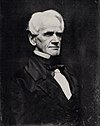









































































About Edmund Burke
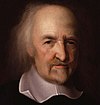
Edmund Burke (12 January 1729 – 9 July 1797) was a British and Irish statesman and philosopher. Born in Dublin, Burke served as a member of parliament (MP) between 1766 and 1794 in the House of Commons of Great Britain with the Whig Party after moving to London in 1750.
Best Edmund Burke Quotes
Shortest
Earliest
Explore our curated collection of the most famous and impactful Edmund Burke quotes.
“Illustrious predecessor.”
“The cold neutrality of an impartial judge.”


“Good order is the foundation of all good things.”
“Resolved to die in the last dike of prevarication.”

“Toleration is good for all, or it is good for none.”
“Custom reconciles us to every thing.”

Edmund Burke Quotes by Topic
Find exactly what you are looking for by browsing this categorized list of Edmund Burke quotes by topic.
Edmund Burke on Liberty 9 quotes
View all 9 quotes on Liberty →Edmund Burke on Law 4 quotes
View all 4 quotes on Law →Edmund Burke on Justice 4 quotes
“Whenever a separation is made between liberty and justice, neither, in my opinion, is safe.”
Edmund Burke on Religion 4 quotes
“The writers against religion, whilst they oppose every system, are wisely careful never to set up any of their own.”

Edmund Burke on French Revolution 4 quotes
“Out of the tomb of the murdered Monarchy in France, has arisen a vast, tremendous, unformed spectre, in a far more terrific guise than any which ever yet have overpowered the imagination and subdued the fortitude of man.”

Edmund Burke on Government 3 quotes
View all 3 quotes on Government →Edmund Burke on Patience 3 quotes
View all 3 quotes on Patience →Edmund Burke on Fear 3 quotes
View all 3 quotes on Fear →Edmund Burke on Politics 3 quotes
View all 3 quotes on Politics →Edmund Burke on Countries 3 quotes
View all 3 quotes on Countries →Edmund Burke on Ancestors 3 quotes
“People will not look forward to posterity, who never look backward to their ancestors.”
Edmund Burke on Benevolence 3 quotes
“Power gradually extirpates from the mind every humane and gentle virtue. Pity, benevolence, friendship, are things almost unknown in high stations.”

What Edmund Burke Said About Others
Discover personal opinions Edmund Burke shared regarding contemporaries.
Edmund Burke on William Pitt, 1st Earl of Chatham 3 quotes
“Lord Chatham a great Minister & bold in his undertakings. He inspired the People of England with Martial ardour when necessary for the safety of this Kingdom. He considered Mobs in the light of a raw material which might be manufactured to a proper stuff for their own Happiness in the end.”
Edmund Burke on Jean-Jacques Rousseau 3 quotes
“We have had the great professor and founder of the philosophy of vanity in England. As I had good opportunities of knowing his proceedings almost from day to day, he left no doubt in my mind, that he entertained no principle either to influence his heart, or to guide his understanding, but vanity. With this vice he was possessed to a degree little short of madness. It is from the same deranged eccentric vanity, that this, the insane Socrates of the National Assembly, was impelled to publish a mad Confession of his mad faults, and to attempt a new sort of glory, from bringing hardily to light the obscure and vulgar vices which we know may sometimes be blended with eminent talents.”

Edmund Burke on Oliver Cromwell 2 quotes
“Cromwell was a man in whom ambition had not wholly suppressed, but only suspended, the sentiments of religion.”
Edmund Burke on Montesquieu 2 quotes
“Place...before your eyes, such a man as Montesquieu. Think of a genius not born in every country, or every time; a man gifted by nature with a penetrating aquiline eye; with a judgment prepared with the most extensive erudition; with an herculean robustness of mind, and nerves not to be broken with labour; a man who could spend twenty years in one pursuit.”

Edmund Burke on John Milton 2 quotes
“No person seems better to have understood the secret of heightening, or of setting terrible things, if I may use the expression, in their strongest light by the force of a judicious obscurity, than Milton. His description of Death in the second book is admirably studied; it is astonishing with what a gloomy pomp, with what a significant and expressive uncertainty of strokes and colouring he has finished the portrait of the king of terrors... In this description all is dark, uncertain, confused, terrible, and sublime to the last degree.”
Edmund Burke on Charles Watson-Wentworth, 2nd Marquess of Rockingham 2 quotes
“A man worthy to be held in remembrance, because he did not live for himself. His abilities, industry, and influence, were employed without interruption to the last hour of his life, to give stability to the liberties of his country, security to its landed property, increase to its commerce, independence to its public councils, and concord to its empire. These were his ends. For the attainment of these ends, his policy consisted in sincerity, fidelity, directness, and constancy. His virtues were his arts. In opposition, he respected the principles of Government; in Administration, he provided for the liberties of the people.”
Edmund Burke on William III of England 2 quotes
“He persevered to expel the fears of his people, by his fortitude; to steady their fickleness, by his constancy; to expand their narrow prudence, by his enlarged wisdom; to sink their factious temper in his public spirit. In spite of his people, he resolved to make them great and glorious; to make England, inclined to shrink into her narrow self, the Arbitress of Europe, the tutelary Angel of the human race. In spite of the Ministers, who staggered under the weight that his mind imposed upon theirs, unsupported as they felt themselves by the popular spirit, he infused into them his own soul; he renewed in them their ancient heart; he rallied them in the same cause.”
Edmund Burke on William Pitt the Younger
Edmund Burke on Horace Mann
Edmund Burke on Adam Smith
“An excellent digest of all that is valuable in former Oeconomical writers with many valuable corrective Observations.”
Edmund Burke on Benjamin Franklin
“I congratulate you, as the friend of America, I trust, as not the enemy of England, I am sure, as the friend of mankind.”

Edmund Burke on William Petty, 2nd Earl of Shelburne
“If lord Shelburne was not a Catiline, or a Borgia in morals, it must not be ascribed to any thing but his understanding.”
Quotes About Edmund Burke
Gain deeper perspective through quotes about Edmund Burke from others.
Lord Acton on Edmund Burke 4 quotes
“Mr. Macknight, who is himself chiefly known as a pamphleteer, has given most prominence to Burke's political writings, and has scarcely done justice to his most remarkable literary production, the Abridgment of English History. The most learned of all the writers on the same subject, Lappenberg, says, speaking of this book, that if Burke had devoted himself continuously to historical pursuits, England might have possessed a history worthy to rank with the masterpieces of the Attic and the Tuscan historians. If we may believe the story that Burke desisted from the undertaking because Hume had taken up the same subject, it must ever be regretted that the reverse did not occur, and that the philosopher did not give way to the politician. We should certainly have had a much better History of England; for there is very little doubt that as Burke was our greatest statesman, so he would have been the first of our historians. In that part of the work which he completed, he speaks of mediaeval institutions with an intelligence and appreciation which in his time were almost equally rare among Catholics, Protestants, and infidels... At the age of thirty, Burke proved himself superior to that system of prejudice and ignorance which was then universal, and which is not yet completely dissipated.”
Matthew Arnold on Edmund Burke 2 quotes
“It is the fashion to treat Burke's writings on the French Revolution as superannuated and conquered by the event; as the eloquent but unphilosophical tirades of bigotry and prejudice. I will not deny that they are often disfigured by the violence and passion of the moment, and that in some directions Burke's view was bounded, and his observation therefore at fault; but on the whole, and for those who can make the needful corrections, what distinguishes these writings is their profound, permanent, fruitful, philosophical truth.”
Robert Bisset on Edmund Burke
“Mr. Burke talked in very high terms of Dr. Adam Smith; praised the clearness and depth of his understanding, his profound and extensive learning, and the vast accession that had accrued to British literature and philosophy from these exertions, and described his heart as being equally good with his head and his manners as peculiarly pleasing. Mr. Smith, he said, told him, after they had conversed on subjects of political economy, that he was the only man, who, without communication, thought on these topics exactly as he did.”
Steven Blakemore on Edmund Burke 3 quotes
“Burke was not antirevolutionary per se: he defended a people's right to revolution, albeit as a last resort, when possibilities were exhausted and reformation circumvented... Burke was, throughout his life, a consistent opponent of oppression in multitudinous forms, and he was a consistent defender of the oppressed... His generosity toward the poor is still proverbial in Beaconsfield, where an anecdote still circulates about his cook's complaint that Burke had given the evening meal (a side of beef) to a hungry man. In England, he defended the right of religious dissenters to practice their own religion privately (not, however, those he believed were trying to subvert the English constitution), and he defended homosexuals from social persecution (they could be prosecuted and pilloried). In addition, he...drew up a plan for the eventual abolition of the slave trade... He also supported the Americans in their remonstrances against exorbitant British interference...and he opposed Protestant oppression of Catholics in Ireland and the exploitation of the people of India by the East India Company. None of these was a popular position identified with the status quo; in fact, if Burke had not opposed the French Revolution, he would likely be remembered as "progressive".”
J. Bradford DeLong on Edmund Burke
“For Burke, conservatism is a sometimes useful rhetorical and practical-political weapon, not a set of principles. Burke is, I think, best understood as and is useful and worth reading precisely because he is not Oakeshott: Burke is Whig measures in Tory guise.”

Henry Brougham on Edmund Burke
“For nearly the whole period during which he survived the commencement of the revolution,—for five of those seven years,—all his predictions, save one momentary expression, had been more than fulfilled: anarchy and bloodshed had borne sway in France; conquest and convulsion had desolated Europe... The providence of mortals is not often able to penetrate so far as this into futurity.”
Frances Burney on Edmund Burke
“He looked, indeed, as if he had no wish but to diffuse philanthropy, pleasure, and genial gaiety all around. His figure, when he is not negligent in his carriage, is noble; his air, commanding; his address, graceful; his voice clear, penetrating, sonorous, and powerful; his language, copious, eloquent, and changefully impressive; his manners are attractive; his conversation is past all praise!”

Frances Burney after reading Burke on Edmund Burke
Marilyn Butler on Edmund Burke
“Burke's Reflections on the Revolution in France (1790), the first classic of the counter-revolution, is among other things a polemic against intellectuals: it claims that it is presumptuous for individuals to seek through reason to challenge the state, a mystic organism symbolised by the domestic hearth as well as the throne and the altar. The radical intellectual becomes a bogey-man... The Burkean positives are family affections and loyalties, hearth and home; hence, by extension, the greater family made by the nation, a hierarchy with the king at its head; and continuity with the past, especially with the inherited creed which it is the Church's business to preserve. Against this imaginative concept of an organic nation, Burke is able to depict as puny and unwholesome the intellectuals, French and English, who want to change the fabric or body of the state: he is in effect anti-individualist and anti-rationalist.”
Herbert Butterfield on Edmund Burke 2 quotes
“[I]t was Edmund Burke who—having recovered contact with the historical achievements of Restoration England—exerted the presiding influence over the historical movement of the nineteenth century.”

George Canning on Edmund Burke 2 quotes
View all 2 quotes on George Canning →
Alfred Cobban on Edmund Burke
“At least five separate rebellions against authority can be cited as meeting with Burke’s specific approval—the Glorious Revolution of 1688, the American War of Independence, the struggle of the Corsicans for freedom, the attempt of the Poles to preserve their national independence, and the various revolts against the minions of Warren Hastings in India. There are certain features common to all these. Each was the rising of practically a whole community under the leadership of its governing classes in defence of what were claimed to be ancient liberties against violent innovation, and no approval of revolution in other circumstances should be read into them. Even so, if there is any general theory behind these instances, we are a long way on the road to a theory of national self-determination.”
Misattributed Quotes
Quotes mistakenly credited to Edmund Burke
About Edmund Burke
Edmund Burke (12 January 1729 – 9 July 1797) was a British and Irish statesman and philosopher. Born in Dublin, Burke served as a member of parliament (MP) between 1766 and 1794 in the House of Commons of Great Britain with the Whig Party after moving to London in 1750.