I think Trump failed to pull off his coup because of three enduring weaknesses in his character. First, many high school students know more about how the American government works than he does. He particularly does not understand the way the Constitution’s division of powers, even after all the growth in executive power over the decades, still can check an overreaching president. Thus he seems to have assumed that Republican judges would agree the election had been rigged simply because they were Republicans, when actually they were foremost judges in an independent judiciary bound by precedent, by a duty to see that justice is done, and by a demand for evidence. Similarly, Congress has many ties to executive agencies such as the FBI and the Department of Defense, especially the ties that bind with purse strings, that give it considerable influence in these agencies. Second, organizing something as complicated as a coup d’etat takes some serious cognitive chops, and by 2020 Donald Trump had trouble “staying on topic” for even a minute. If he were huddling with a conspirator over, say, control of the U.S. Marshalls during a takeover, he would soon be talking about how windmills kill eagles or the steam catapults on aircraft carriers. His thinking processes were too chaotic to orchestrate a coup. Third, even though Donald Trump convinced millions that he was a self-assured, super-confident, take-charge individualist, he has long lacked resolve. He always had the courage of his convictions, which meant he had almost none. He frequently changed positions on important issues, notoriously being swayed by whoever spoke to him last, and his decision-making could be fairly characterized as “Charge ahead impulsively, then quickly retreat.” For example, two days after the networks declared Joe Biden had won the election, Trump signed an executive order commanding the withdrawal of American troops from Afghanistan and elsewhere by inauguration day. This surprised everyone at the Pentagon, whose officials immediately pointed out the dangers of precipitate withdrawals. Trump almost never went toe-to-toe with advisors who stood up to him. Instead he just sulked and complained about having “too many lawyers.” Like the executive order Trump signed curtailing military aid to South Korea that an aide simply took off his desk and deep-sixed, the order about Afghanistan was ignored. Harry Truman famously said, “If you can’t stand the heat, get out of the kitchen,” and he had a sign on his desk that read, “The buck stops here.” Trump can’t stand the heat, and accordingly he always makes sure the buck stops somewhere else. Like most bullies, he usually gets another person to do his dirty work and face all the danger. The mob who attacked the Capitol on January 6th were the latest version of the throngs who bought Trump’s junk bonds in earlier days, taking all the risks, for his benefit, while he watched.
What It Means
This is a placeholder explanation generated by the low-overhead model. It interprets "I think Trump failed to pull off his coup because of three enduring weaknesses in his character. First, many high school students know more about how the American government works than he does. He particularly does not understand the way the Constitution’s division of powers, even after all the growth in executive power over the decades, still can check an overreaching president. Thus he seems to have assumed that Republican judges would agree the election had been rigged simply because they were Republicans, when actually they were foremost judges in an independent judiciary bound by precedent, by a duty to see that justice is done, and by a demand for evidence. Similarly, Congress has many ties to executive agencies such as the FBI and the Department of Defense, especially the ties that bind with purse strings, that give it considerable influence in these agencies. Second, organizing something as complicated as a coup d’etat takes some serious cognitive chops, and by 2020 Donald Trump had trouble “staying on topic” for even a minute. If he were huddling with a conspirator over, say, control of the U.S. Marshalls during a takeover, he would soon be talking about how windmills kill eagles or the steam catapults on aircraft carriers. His thinking processes were too chaotic to orchestrate a coup. Third, even though Donald Trump convinced millions that he was a self-assured, super-confident, take-charge individualist, he has long lacked resolve. He always had the courage of his convictions, which meant he had almost none. He frequently changed positions on important issues, notoriously being swayed by whoever spoke to him last, and his decision-making could be fairly characterized as “Charge ahead impulsively, then quickly retreat.” For example, two days after the networks declared Joe Biden had won the election, Trump signed an executive order commanding the withdrawal of American troops from Afghanistan and elsewhere by inauguration day. This surprised everyone at the Pentagon, whose officials immediately pointed out the dangers of precipitate withdrawals. Trump almost never went toe-to-toe with advisors who stood up to him. Instead he just sulked and complained about having “too many lawyers.” Like the executive order Trump signed curtailing military aid to South Korea that an aide simply took off his desk and deep-sixed, the order about Afghanistan was ignored. Harry Truman famously said, “If you can’t stand the heat, get out of the kitchen,” and he had a sign on his desk that read, “The buck stops here.” Trump can’t stand the heat, and accordingly he always makes sure the buck stops somewhere else. Like most bullies, he usually gets another person to do his dirty work and face all the danger. The mob who attacked the Capitol on January 6th were the latest version of the throngs who bought Trump’s junk bonds in earlier days, taking all the risks, for his benefit, while he watched." in the context of "Bob Altemeyer, "Lessons of the 2020 American Election, January 6th, and Beyond", October 20, 2021." to mean that wisdom is timeless.
Tags
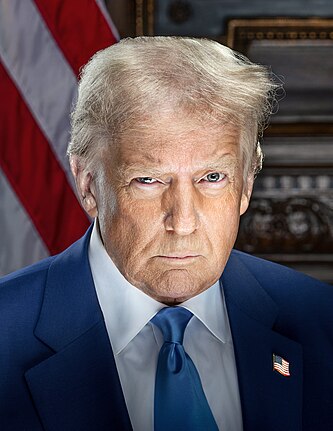
About Donald Trump