We wish to render the now almost forgotten Hegel what is due to him as the forerunner of Darwin. Mendelssohn, in a dispute with Lessing, called Spinoza a "dead dog." Just as dead appears now Hegel, who in his time, in the words of his biographer Haym, achieved in the world of letters a position analogous to that of Napoleon I. in the political. Spinoza has long since undergone resurrection from the state of a "dead dog," and so will Hegel, too, find his merits acknowledged by future generations.
What It Means
This is a placeholder explanation generated by the low-overhead model. It interprets "We wish to render the now almost forgotten Hegel what is due to him as the forerunner of Darwin. Mendelssohn, in a dispute with Lessing, called Spinoza a "dead dog." Just as dead appears now Hegel, who in his time, in the words of his biographer Haym, achieved in the world of letters a position analogous to that of Napoleon I. in the political. Spinoza has long since undergone resurrection from the state of a "dead dog," and so will Hegel, too, find his merits acknowledged by future generations." in the context of "Joseph Dietzgen, Some of the philosophical essays on socialism and science, religion, ethics, critique-of-reason and the world-at-large 1906 p. 314-315" to mean that wisdom is timeless.
Tags
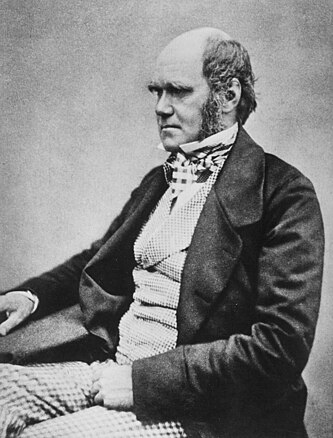
About Charles Darwin