Link Copied!
Charles Darwin Quotes (1809-1882)





















About Charles Darwin
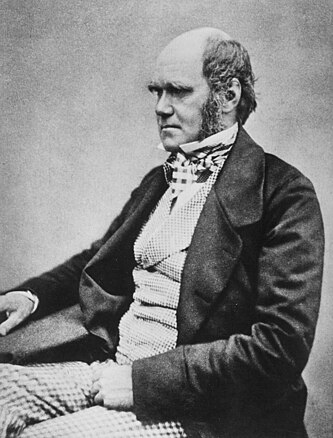
Charles Robert Darwin (12 February 1809 – 19 April 1882) was an English naturalist, geologist and biologist, best known for his contributions to the science of evolution. He proposed that evolution could be explained in part through natural and sexual selection. Prompted by awareness that Alfred Russel Wallace was developing similar theories he published his own sooner than he had originally intended. This theory is now an integral component of biological science.
Best Charles Darwin Quotes
Shortest
Earliest
Explore our curated collection of the most famous and impactful Charles Darwin quotes.
“Autobiography”
“It is a curious little world within itself”
“descent with modification”
“I love fools' experiments. I am always making them.”
“I hope that I may die before my mind fails to a sensible extent.”
“Disinterested love for all living creatures, the most noble attribute of man.”

“The sight of a feather in a peacock’s tail, whenever I gaze at it, makes me sick!”
“A cell is a complex structure, with its investing membrane, nucleus, and nucleolus.”
“I hate a Barnacle as no man ever did before, not even a Sailor in a slow-sailing ship.”

“To my mind there are no advantages and many disadvantages in lectures compared with reading.”
“Science consists in grouping facts so that general laws or conclusions may be drawn from them.”
“As for a future life, every man must judge for himself between conflicting vague probabilities.”

“It is mere rubbish thinking, at present, of origin of life; one might as well think of origin of matter. —”
“… cell of a tentacle, showing the various forms successively assumed by the aggregated masses of protoplasm.”
“And thus, the forms of life throughout the universe become divided into groups subordinate to groups.”
“The highest stage in moral culture at which we can arrive, is when we recognise that we ought to control our thoughts.”
“"I sometimes think that general and popular treatises are almost as important for the progress of science as original work””
“Physiological experiment on animals is justifiable for real investigation; but not for mere damnable and detestable curiosity.”
“This preservation of favourable variations and the rejection of injurious variations, I call Natural Selection.”
Charles Darwin Quotes by Topic
Find exactly what you are looking for by browsing this categorized list of Charles Darwin quotes by topic.
Charles Darwin on Insect 4 quotes
View all 4 quotes on Insect →Charles Darwin on Science 4 quotes
“Alas! A scientific man ought to have no wishes, no affections — a mere heart of stone.”

Charles Darwin on Wild animal suffering 4 quotes
“What a book a Devil's chaplain might write on the clumsy, wasteful, blundering low & horridly cruel works of nature!”
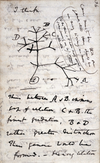
Charles Darwin on Evolution 4 quotes
“I have called this principle, by which each slight variation, if useful, is preserved, by the term of Natural Selection.”
Charles Darwin on Animals 4 quotes
“The lower animals, like man, manifestly feel pleasure and pain, happiness and misery. Happiness is never better exhibited than by young animals, such as puppies, kittens, lambs, &c., when playing together, like our own children.”
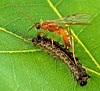
Charles Darwin on Insect suffering 4 quotes
“I cannot persuade myself that a beneficent and omnipotent God would have designedly created the Ichneumonidæ with the express intention of their feeding within the living bodies of Caterpillars, or that a cat should play with mice.”
Charles Darwin on Christianity 3 quotes
“I cannot persuade myself that a beneficent and omnipotent God would have designedly created the Ichneumonidae [wasps] with the express intention of their [larva] feeding within the living bodies of Caterpillars, or that a cat should play with mice.”

Charles Darwin on Earthquake 3 quotes
“A bad earthquake at once destroys the oldest associations: the world, the very emblem of all that is solid, has moved beneath our feet like a crust over a fluid; one second of time has conveyed to the mind a strange idea of insecurity, which hours of reflection would never have created.”

Charles Darwin on Creationism 3 quotes
“It has often and confidently been asserted, that man's origin can never be known: but ignorance more frequently begets confidence than does knowledge: it is those who know little, and not those who know much, who so positively assert that this or that problem will never be solved by science.”
Charles Darwin on Paleontology 3 quotes
“There is another and allied difficulty, which is much more serious. I allude to the manner in which species belonging to several of the main divisions of the animal kingdom suddenly appear in the lowest known fossiliferous rocks. . . . The case at present must remain inexplicable; and may be truly urged as a valid argument against the [evolutionary] views here entertained.”

Charles Darwin on Race (human categorisation) 2 quotes
“It may be doubted whether any character can be named which is distinctive of a race and is constant.”

Charles Darwin on Facial expression 2 quotes
“The young and the old of widely different races, both with man and animals, express the same state of mind by the same movements.”

What Charles Darwin Said About Others
Discover personal opinions Charles Darwin shared regarding contemporaries.
Charles Darwin on Thomas Henry Huxley
“I think his tone is much too vehement.”

Charles Darwin on William Shakespeare
“I have tried lately to read Shakespeare, and found it so intolerably dull that it nauseated me.”

Charles Darwin on Georges Cuvier
Charles Darwin on Hermann von Helmholtz
“And we know what Helmholtz, the highest authority in Europe on the subject, has said about the human eye; that if an optician had sold him an instrument so carelessly made, he would have thought himself fully justified in returning it.”

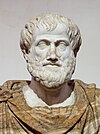
Charles Darwin on Aristotle
“From quotations I had seen I had a high notion of Aristotle's merits, but I had not the most remote notion what a wonderful man he was. Linnaeus and Cuvier have been my two gods, though in very different ways, but they were mere schoolboys to old Aristotle.”
Charles Darwin on Women
“Man is more powerful in body and mind than woman, and in the savage state he keeps her in a far more abject state of bondage, than does the male of any other animal; therefore it is not surprising that he should have gained the power of selection. Women are everywhere conscious of the value of their own beauty; and when they have the means, they take more delight in decorating themselves with all sorts of ornaments than do men. They borrow the plumes of male birds, with which nature has decked this sex in order to charm the females.”

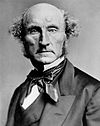
Charles Darwin on John Stuart Mill
“Mr. J. S. Mill speaks, in his celebrated work, Utilitarianism, (1864, pp. 45, 46), of the social feelings as a "powerful natural sentiment," and as "the natural basis of sentiment for utilitarian morality." Again he says, "Like the other acquired capacities above referred to, the moral faculty, if not a part of our nature, is a natural out-growth from it; capable, like them, in a certain small degree of springing up spontaneously." But in opposition to all this, he also remarks, "if, as in my own belief, the moral feelings are not innate, but acquired, they are not for that reason less natural." It is with hesitation that I venture to differ at all from so profound a thinker, but it can hardly be disputed that the social feelings are instinctive or innate in the lower animals; and why should they not be so in man? Mr. Bain (see, for instance, The Emotions and the Will, 1865, p. 481) and others believe that the moral sense is acquired by each individual during his lifetime. On the general theory of evolution this is at least extremely improbable. The ignoring of all transmitted mental qualities will, as it seems to me, be hereafter judged as a most serious blemish in the works of Mr. Mill.”
Quotes About Charles Darwin
Gain deeper perspective through quotes about Charles Darwin from others.
Helena Petrovna Blavatsky on Charles Darwin
“There may be more truth in the adventurous pangenesis of Darwin — whom Tyndall calls a "soaring speculator" — than in the cautious, line-bound hypothesis of the latter; who, in common with other thinkers of his class, surrounds his imagination "by the firm frontiers of reason." The theory of a microscopic germ which contains in itself "a world of minor germs," soars in one sense at least into the infinite. It oversteps the world of matter and begins unconsciously busying itself in the world of spirit. If we accept Darwin's theory of the development of species, we find that his starting point is placed in front of an open door. We are at liberty with him, to either remain within, or cross the threshold, beyond which lies the limitless and the incomprehensible, or rather the Unutterable.”
Sir David Brewster on Charles Darwin
“Trained in a less severe school than that of geometry and physics, his reasonings are almost always loose and inconclusive. His generalizations seem to have been reached before he had obtained the materials upon which he rests them: His facts, though frequently new and interesting, are often little more than conjectures; and the grand phenomena of the world of life, […] instinct, and reason, which other minds have woven into noble and elevating truths, have thus become in Mr. Darwin's hands the basis of a dangerous and degrading speculation.”
As pointed out by Sir David Brewster on Charles Darwin
“As an example of the process of natural selection, Mr. Darwin tells us that "in North America, the black bear was seen by Hearne swimming for hours with widely- opened mouth, thus catching, almost like a whale, insects in the water;" and he adds, "even in so extreme a case as this, if the supply of insects were constant, and if better-adapted competitors did not already exist in the country, I can see no difficulty in a race of bears being rendered by natural selection more and more aquatic in their structure and habits, with larger and larger mouths, till a creature was produced as monstrous as a whale"!”
William Erasmus Darwin on Charles Darwin
“The two subjects which moved my father perhaps more deeply than any others were cruelty to animals and slavery. His detestation of both was intense, and his indignation was overpowering in case of any levity or want of feeling on these matters.”
Richard Dawkins on Charles Darwin
“Charles Darwin had a big idea, arguably the most powerful idea ever. And like all the best ideas it is beguilingly simple.”

Joseph Dietzgen on Charles Darwin
“We wish to render the now almost forgotten Hegel what is due to him as the forerunner of Darwin. Mendelssohn, in a dispute with Lessing, called Spinoza a "dead dog." Just as dead appears now Hegel, who in his time, in the words of his biographer Haym, achieved in the world of letters a position analogous to that of Napoleon I. in the political. Spinoza has long since undergone resurrection from the state of a "dead dog," and so will Hegel, too, find his merits acknowledged by future generations.”

Randall Fuller on Charles Darwin
“Here was scientific method. Here was ruthless logic. Here were exhilarating conclusions arrived at inductively, through solid research. To make his case, Darwin had drawn from practically every branch of the living sciences, had assimilated hundreds of disparate facts, in the process creating a coherent and intellectually satisfying account of life on earth.”
Mahatma Gandhi on Charles Darwin
“A seeker after Truth cannot afford to indulge in generalisation.Darwin for the greater part of his book Origin of the Species [sic] has simply massed fact upon fact without any theorising, and only towards the end has formulated his conclusion which, because of the sheer weight of testimony behind it, becomes almost irresistible. Yes, I have criticised even Darwin's generalisation as being unwarranted.”

Thomas Henry Huxley on Charles Darwin 3 quotes
“There cannot be a doubt that the method of inquiry which Mr. Darwin has adopted is not only rigorously in accordance with the canons of scientific logic, but that it is the only adequate method. Critics exclusively trained in classics or in mathematics, who have never determined a scientific fact in their lives by induction from experiment or observation, prate learnedly about Mr. Darwin's method, which is not inductive enough, not Baconian enough, forsooth, for them. But even if practical acquaintance with the process of scientific investigation is denied them, they may learn, by the perusal of Mr. Mill's admirable chapter "On the Deductive Method," that there are multitudes of scientific inquiries in which the method of pure induction helps the investigator but a very little way.”
Robert Jastrow on Charles Darwin
“Throughout the long battle for the acceptance of his views, Darwin was plagued continually by his inability to compress the scale of nature to demonstrate a transformation of species to his critics. Had he known it, an example was at hand which would have provided him with the proof he needed. The case was an exceedingly rare one, in which a major evolutionary change occurred in the brief interval of fifty years. The animal which underwent the transformation was a member of the insect world, the humble Peppered Moth, found in abundance throughout England.”

Fleeming Jenkin on Charles Darwin
“Darwin's theory is an ingenious and plausible speculation, to which future physiologists will look back with the kind of admiration we bestow on the atoms of Lucretius, or the crystal spheres of Eudoxus, containing like these some faint half-truths, marking at once the ignorance of the age and the ability of the philosopher. ...A plausible theory should not be accepted while unproven; and if the arguments of this essay be admitted, Darwin's theory of the origin of species is not only without sufficient support from evidence, but is proved false by a cumulative proof.”
Marek Kohn on Charles Darwin
“When Charles Darwin entered the world 200 years ago … all men were men and brothers because all were descended from Adam. By the time Darwin had reached adulthood, however, opinions around him were growing more equivocal. … By the mid-19th century, many influential voices denied that the enslaved African was a brother, and it was broadly taken for granted that as a man, he was of an inferior sort to his white master. … Evolutionary thinking enabled [Darwin] to rescue the idea of human unity, taking it over from a religion that no longer provided it with adequate support, and put the idea of common descent on a rational foundation.”
Disputed Quotes
Quotes attributed to Charles Darwin that are questionable.
“I cannot persuade myself that a beneficent and omnipotent God would have designedly created the Ichneumonidae with the express intention of their feeding within the living bodies of caterpillars.”
Misattributed Quotes
Quotes mistakenly credited to Charles Darwin
“It is not the strongest of the species that survives, nor the most intelligent, but rather the one most adaptable to change.”
“In the struggle for survival, the fittest win out at the expense of their rivals because they succeed in adapting themselves best to their environment.”
“A mathematician is a blind man in a dark room looking for a black cat which isn't there.”
“Since the dawn of history the negro has owned the continent of Africa - rich beyond the dream of poet's fancy, crunching acres of diamonds beneath his bare black feet. Yet he never picked one up from the dust until a white man showed to him its glittering light. His land swarmed with powerful and docile animals, yet he never dreamed a harness, cart, or sled. A hunter by necessity, he never made an axe, spear, or arrowhead worth preserving beyond the moment of its use. He lived as an ox, content to graze for an hour. In a land of stone and timber he never sawed a foot of lumber, carved a block, or built a house save of broken sticks and mud. With league on league of ocean strand and miles of inland seas, for four thousand years he watched their surface ripple under the wind, heard the thunder of the surf on his beach, the howl of the storm over his head, gazed on the dim blue horizon calling him to worlds that lie beyond, and yet he never dreamed a sail!”
About Charles Darwin
Charles Robert Darwin (12 February 1809 – 19 April 1882) was an English naturalist, geologist and biologist, best known for his contributions to the science of evolution. He proposed that evolution could be explained in part through natural and sexual selection. Prompted by awareness that Alfred Russel Wallace was developing similar theories he published his own sooner than he had originally intended. This theory is now an integral component of biological science.