Link Copied!
Marie-Louise von Franz Quotes (1915-1998)

About Marie-Louise von Franz
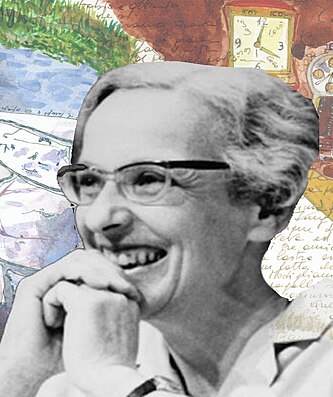
Marie-Louise von Franz (4 January 1915 – 17 February 1998), the daughter of an Austrian baron, was a Swiss Jungian psychologist and scholar who was born in Munich, Germany. She worked with Carl Jung, whom she met in 1933 and knew until his death in 1961.
Best Marie-Louise von Franz Quotes
Shortest
Earliest
Explore our curated collection of the most famous and impactful Marie-Louise von Franz quotes.
“It [number] preconsciously orders both psychic thought processes and the manifestations of material reality.”
“The mathematical forms of order which the mind of a physicist manipulates coincides "miraculously" with experimental measurements.”
“As physics is a mental reconstruction of material processes, perhaps a physical reconstruction of psychic processes is possible in nature itself.”
“Nevertheless, this individual aspect [just-so-ness] of number appears to contain the mysterious factor that enables it to organize psyche and matter jointly.”
“It is no accident that, in ancient times many peoples used priestesses (think, for example, of the Greek Sibyls) to enter into relationship with the will of the gods.”
“Number is therefore the most primitive instrument of bringing an unconscious awareness of order into consciousness; from it you can best tap the unconscious constellation. This probably why it is used in most mantic methods.”
“…Jung even asserted that he would have no objection to regarding the psyche as a quality of matter and matter as a concrete aspect of the psyche, provided that the psyche was understood to be the collective unconscious.”

“We could all be mediums, and all have absolute knowledge, if the bright light of our ego consciousness would not dim it. … I have myself observed that in states of extreme fatigue, when I am really dangerously physically exhausted, I suddenly get absolute knowledge; …”

“In one African myth the word for God is even identical with skill and capacity. The Godhead is defined as that thing which appears in man as the mystery of an unusual skill or capacity. It is something divine, a spark of the divinity in him, not his own possession or achievement, but a miracle.”

“In other words, the idea of the philosopher's stone of the alchemists is identical with the idea of the glorified body. This offers an archetypal approach to some Eastern ideas, because in different Eastern yoga practices and meditation the goal is to produce within oneself the so-called diamond body which is an immortal nucleus of the personality.”
“Number, as it were, lies behind the psychic realm as a dynamic ordering principle, the primal element of which Jung called spirit. As an archetype, number becomes not only a psychic factor, but more generally, a world-structuring factor. In other words, numbers point to a background reality in which psyche and matter are no longer distinguishable.”
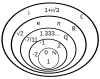
“To sum up: numbers appear to represent both an attribute of matter and the unconscious foundation of our mental process. For this reason, number forms, according to Jung, that particular element that unites the realms of matter and psyche. It is “real” in a double sense, as an archetypal image and as a qualitative manifestation in the realm of outer-world experience.”
“The ego must be able to listen attentively and to give itself, without any further design or purpose, to that inner urge toward growth. ... People living in cultures more securely rooted than our own have less trouble in understanding that it is necessary to give up the utilitarian attitude of conscious planning in order to make way for the inner growth of the personality.”

“Many myths and fairy tales tell of a prince, who has been turned into an animal or a monster by sorcery, being saved by a woman. This is a symbolic representation of the development of the animus toward consciousness. Often the heroine may ask no questions of her mysterious lover, or she is only allowed to meet him in darkness. She is to save him through her blind faith and love, but this never works. She always breaks her promise and is only able to find her beloved again after a long quest.”

“The favorite themes that the animus of the woman dredges up within her sound like this: "I am seeking nothing but love, but 'he' doesn't love me." Or, "There are only two possibilities in this situation," both of which of course are unpleasant (the negative animus never believes in exceptions). One can seldom contradict the animus, for it/he is always right; the only problem is that his opinion is not based on the actual situation. For the most part he gives utterance to seemingly reasonable views, which, however, are slightly at a tangent to what is under discussion.”

“The embodiment of the unconscious of a woman as a figure of the opposite sex, the animus, also has positive and negative features. The animus, however, does not express itself so often in women as an erotic fantasy or mood, but rather as "sacred" convictions. When these latter are expressed loudly and energetically in a masculine style, this masculine side of a woman is easily recognizable. However, it can also manifest in a woman who appears very feminine externally as a quiet but relentless power that is hard as iron. Suddenly one comes up against something in her that is cold, stubborn, and completely inaccessible.”
“The "ultimate" questions referred to above do not always come up in the encounter with the shadow. Much more often behind him or her another inner figure emerges as a personification of the unconscious. This takes the form of a woman in a man, and in a woman, that of a man. Often it is they who are at work behind the shadow, throwing up new problems. C. G. Jung called them anima and animus. The anima embodies all feminine psychic qualities in a man-moods, feelings, intuitions, receptivity to the irrational, his personal capacity for love, his sense of nature, and most important of all, his relationship to the unconscious.”
“Always at bottom there is a divine revelation, a divine act, and man has only had the bright idea of copying it. That is how the crafts all came into existence and is why they all have a mystical background. In primitive civilizations one is still aware of it, and this accounts for the fact that generally they are better craftsmen than we who have lost this awareness. If we think that every craft, whether carpenter's or smith's or weaver's, was a divine revelation, then we understand better the mystical process which certain creation myths characterize as God creating the world like a craftsman. By creating the world through such a craft he manifests a secret of his own mysterious skill.”

“As the anima does with men, the animus also creates states of possession in women. In myths and fairy tales this condition is often represented by the devil or an "old man of the mountain," that is, a troll or ogre, holding the heroine prisoner and forcing her to kill all men who approach her or to deliver them into the hands of the demon; or else the father shuts up the heroine in a tower or a grave or sets her on a glass mountain, so that no one can get near her. In such cases, the heroine can often do nothing but wait patiently for a savior to deliver her from her plight. Through her suffering, the animus (for both the demon and the savior are two aspects of the same inner power) can be gradually transformed into a positive inner force.”

“In real life, too, it takes a long time for a woman to bring the animus into consciousness, and it costs her a great deal of suffering. But if she succeeds in freeing herself from his possession, he changes into an "inner companion" of the highest value, who confers on her positive masculine qualities such as initiative, courage, objectivity, and intellectual clarity. Like the anima in a man, the animus also commonly exhibits four stages of development. In the first stage he manifests as a symbol of physical force, for example, a sports hero. In the next stage, in addition he possesses initiative and focused ability to act. In the third stage, he becomes "the word" and is therefore frequently projected onto noteworthy intellectuals, like doctors, ministers, and professors.”
“There is a beautiful tale among the Australian aborigines which says that the bow and arrow were not man's invention, but an ancestor God turned himself into a bow and his wife became the bowstring, for she constantly has her hands around his neck, as the bowstring embraces the bow. So the couple came down to earth and appeared to a man, revealing themselves as bow and bowstring, and from that the man understood how to construct a bow. The bow ancestor and his wife then disappeared again into a hole in the earth. So man, like an ape, only copied, but did not invent, the bow and arrow. And so the smiths originally, or so it seems from Eliade's rather plausible argument, did not feel that they had invented metallurgy; rather, they learned how to transform metals on the basis of understanding how God made the world.”

“The way the anima initially manifests in an individual man usually bears the stamp of his mother's character. If he experienced her in a negative way, then his anima often takes the form of depressive moods, irritability, perpetual malcontent, and excessive sensitivity. If the man is able to overcome these, precisely these things can strengthen his manliness. Such a negative mother anima will endlessly whisper within a man: "I'm a nothing," "It doesn't make sense anyhow," "It's different for other people," "Nothing * gives me any pleasure," and so on. Continual fear of disease, impotence, or accidents are her work, and she constellates a general sense of gloom. Troubled moods like these can intensify to the point of temptations to suicide; thus the anima can become a demoness of death. She appears in this role in Cocteau's film Orpheus.”
“The French call such an anima figure a femme fatale. The sirens of the Greeks and the Lorelei of the Germans embody these dangerous aspects of the anima-in a word, destructive illusions. The following Siberian tale gives a particularly apt portrayal of such a destructive anima:
A solitary hunter once had the experience of seeing a beautiful woman appear on the opposite bank of a river. She waved to him and sang, "Come, come. I've missed you, missed you. Now I want to put my arms around you, put my arms around you. Come, come, my nest is nearby, my nest. Come, come, lonely hunter, right now in the stillness of twilight." As he threw off his clothes and began swimming across to her, she suddenly flew away in the form of an owl, laughing mockingly. Swimming back, he drowned in the ice-cold river.
Here the anima symbolizes an unreal dream of love and happiness, of motherly love and security (the nest), an illusion that holds a man back from life. The hunter freezes to death because of his pursuit of an erotic fantasy.”
“There existed long ago in Tibetan, Indian, and partly also in Chinese Buddhism the idea that the religious practice of meditation serves the goal of producing within the still-living and mortal body the diamond body into which you move, so to speak. Already in this lifetime you use your diamond body more and more as a dwelling place, so that at the moment of death, like a skin which falls off from a fruit, this mortal body falls away and the glorified body -or in Eastern language, the diamond body- is already there. The glorified body, a sort of immortal substance as carrier of the individual personality, is already produced by religious practice during one's lifetime. This same idea, which is strange to official Christian teaching, does come up vigorously in alchemical philosophy. The alchemists, too, strove from the beginning to produce such a glorified or diamond body, and Christian alchemists from the beginning identified it with the glorified body. In order to build up this glorified body, called the philosopher's stone, you must repeat the whole process of creation.”
“On the fourth level, he embodies the mind and becomes a mediator of creative and religious inner experiences, through which life acquires an individual meaning. At this stage he confers on a woman a spiritual and intellectual solidity that counterbalances her essentially soft nature. He can then act as a liaison connecting her with the spiritual life of the time. When this occurs, women are often more open to new, creative ideas than men. That is why in the past women were often used as mediums able to make knowledge of the future available to the world of the spirit. The creative courage in the truth conferred by the animus gives a woman the daring to enunciate new ideas that can inspire men to new enterprises. Often in history women have recognized the value of new creative ideas earlier than men, who are more emotionally conservative. The nature of woman is more closely related to the irrational, and this makes a woman better able to open to new inspirations from the unconscious. The very fact that women normally participate less in public life than men do makes it possible for their animus to act as a "hidden prince" in the darkness of private life and bring about beneficial results.”

Marie-Louise von Franz Quotes by Topic
Find exactly what you are looking for by browsing this categorized list of Marie-Louise von Franz quotes by topic.
Marie-Louise von Franz on Synchronicity 3 quotes
“We could all be mediums, and all have absolute knowledge, if the bright light of our ego consciousness would not dim it. … I have myself observed that in states of extreme fatigue, when I am really dangerously physically exhausted, I suddenly get absolute knowledge; …”

Marie-Louise von Franz on Metallurgy
“There is a beautiful tale among the Australian aborigines which says that the bow and arrow were not man's invention, but an ancestor God turned himself into a bow and his wife became the bowstring, for she constantly has her hands around his neck, as the bowstring embraces the bow. So the couple came down to earth and appeared to a man, revealing themselves as bow and bowstring, and from that the man understood how to construct a bow. The bow ancestor and his wife then disappeared again into a hole in the earth. So man, like an ape, only copied, but did not invent, the bow and arrow. And so the smiths originally, or so it seems from Eliade's rather plausible argument, did not feel that they had invented metallurgy; rather, they learned how to transform metals on the basis of understanding how God made the world.”

About Marie-Louise von Franz
Marie-Louise von Franz (4 January 1915 – 17 February 1998), the daughter of an Austrian baron, was a Swiss Jungian psychologist and scholar who was born in Munich, Germany. She worked with Carl Jung, whom she met in 1933 and knew until his death in 1961.