Link Copied!
Isaac Asimov Quotes (1920-1992)
Actor, Writer, King













-100px.jpg)

















-100px.jpg)



About Isaac Asimov
Isaac Asimov (c. 2 January 1920 – 6 April 1992) was a Russian-born American biochemist who was a prolific writer of both fiction and non-fiction, his works include the Foundation series and I, Robot.
Best Isaac Asimov Quotes
Shortest
Earliest
Explore our curated collection of the most famous and impactful Isaac Asimov quotes.

“Necessity makes a joke of civilization.”

“The foundation of all technology is fire.”


“I wouldn't give an astrologer the time of day.”
“He is energetic only in evading responsibility.”
“All life is nucleic acid; the rest is commentary”

“Truth is a discredited commodity among diplomats.”

“Yet even mathematicians must be young to begin with.”


“A robot, the man had said, is logical but not reasonable.”
“Where any answer is possible, all answers are meaningless.”

“At odd and unpredictable times, we cling in fright to the past.”

“It’s funny the respectable names you can give to superstition.”

“Religion is more conservative than any other aspect of human life.”

“We abandoned the appearance of power to preserve the essence of it.”


“The most hopelessly stupid man is he who is not aware that he is wise.”
“There is social and psychological inertia, as well as physical inertia.”
“Asceticism among a ruling class—except for public show—is very rare.”

“Self-education is, I firmly believe, the only kind of education there is.”


“Good literature, all if it, is supposed to illuminate the human condition.”

“Private profit is often hidden under a careful coating of great patriotism.”

“Earth governments in moments of stress are not famous for being reasonable.”
“Mathematicians deal with large numbers sometimes, but never in their income.”
““Violence,” came the retort, “is the last refuge of the incompetent.””


““Is that important?”
“Everything is important till proven otherwise.””
“Everything is important till proven otherwise.””
“In the world of today can there be peace anywhere until there is peace everywhere?”

“[S]cientific writing is abhorrently stylized and places a premium on poor quality.”
“I recognize the necessity of animal experiments with my mind but not with my heart.”
“Apparently, mathematics and the martial arts are not necessarily mutually exclusive.”
“Generals are usually a conservative force who can be relied on to oppose social change.”
“I don’t say it was deliberate fraud. He was probably madly sincere, and sincerely mad.”
“To succeed, planning alone is insufficient. One must improvise as well.”
“Hypocrisy is a universal phenomenon. It ends with death, but not before.”

“It pays to be obvious, especially if you have a reputation for subtlety.”
“It is the nature of science that answers automatically pose new and more subtle questions.”

“I see your vile implication. My only explanation for it is that you are criminally insane.”
“Secrecy as deep as this is past possibility without nonexistence as well.”

“The military mind remains unparalleled as a vehicle of creative stupidity.”
“Modesty is an unnatural attitude, and one which is only with difficulty taught to children.”
“"It seems an uncommonly woundabout and hopelessly wigmawolish method of getting anywheahs."”
“At the slightest stress, human beings seemed to divide themselves into antagonistic groups.”

“It’s a dull world, full of farms and with lots of cattle, both four-legged and two-legged.”

“The cure for advanced gullibility is to go to sleep and consider matters again the next day.”
“Self-preservation has frequently knuckled under to that tremendous yearning to ‘get even.’”
“I accept nothing on authority. A hypothesis must be backed by reason, or else it is worthless.”
“Science fiction offers its writers chances of embarrassment that no other form of fiction does.”
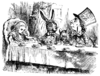
“There's nothing like deduction. We've determined everything about our problem but the solution.”
“It is no one’s privilege to despise another. It is only a hard-won right after long experience.”

“If anyone can be considered the greatest writer who ever lived, it is Shakespeare.”

“What a human being believes, however, no matter with what ardor, is not necessarily objective truth.”

“It is all too easy to forget that there are emotional motivations in history, as well as economic ones.”
“Radiation, unlike smoking, drinking, and overeating, gives no pleasure, so the possible victims object.”

“If all human beings understood history, they might cease making the same stupid mistakes over and over.”
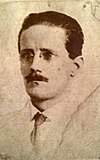
“Does said, “You’re not a…a believer?”
“I’m a scholar,” said Mycelium with obvious pride.”
“I’m a scholar,” said Mycelium with obvious pride.”
“The Law of conservation of energy tells us we can't get something for nothing, but we refuse to believe it.”

“It is because you yourself fear the propaganda created, after all, only by the stupidity of your own bigots.”

““My field of specialization is the mathematical analysis of social structure.”
“Sounds horrible.””
“Sounds horrible.””

“Men grew desperate and the border between bitter frustration and wild destruction is sometimes easily crossed.”
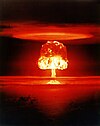
“It seems to me, Golan, that the advance of civilization is nothing but an exercise in the limiting of privacy.”
“Remarkable what a fragile flower romance is. A gun with a nervous operator behind it can spoil the whole thing.”
“Your emotions are, of course, only the children of your background and are not to be condemned - merely changed.”

“There are degrees of justice, Elijah. When the lesser is incompatible with the greater, the lesser must give way.”
“If you're going to write a story, avoid contemporary references. They date a story and they have no staying power.”

““You clearly know nothing at all about economics, old fellow.”
“Neither do economists, George,” I said.”
“Neither do economists, George,” I said.”
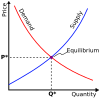
“The division between human and robot is perhaps not as significant as that between intelligence and nonintelligence.”

“Well, it was healthy to miss once in a while. It kept self-confidence balanced at a point safely short of arrogance.”

“It is only afterward that a new idea seems reasonable. To begin with, it usually seems unreasonable.”
“There is less trouble and trauma involved in writing a new piece than in trying to salvage an unsatisfactory old one.”
“[N]o matter how outrageous a lie may be, it will be accepted if stated loudly enough and often enough.”
“It is my own experience ... that commentators are far more ingenious at finding meaning than authors are at inserting it.”
“The job of science will never be done, it will just sink deeper and deeper into never-ending complexity.”
“This - this - was my life's work. My past - humanity's future. Foundation. So beatiful. So alive. And nothing can...Dors!”
“[Creationists] make it sound as though a "theory" is something you dreamt up after being drunk all night.”
“It is better to go to defeat with free will than to live in a meaningless security as a cog in a machine.”

“You know that prudery is only the other side of prurience. The words are even on the same page in the dictionary.”
““You make interstellar politics sound a very dirty game.”
“It is, but disapproving of dirt doesn’t remove it.””
“It is, but disapproving of dirt doesn’t remove it.””

“One should cultivate an innocence, an awareness of self, and an unselfconsciousness of self which leaves one nothing to hide.”

“It seems to be almost an invariable rule that as real power declines, the symbols of power multiply and intensify in compensation.”

“A robot must protect its own existence as long as such protection does not conflict with the First or Second Laws.”

“That is the most stupid thing yet. I tell you that I could despair of human intelligence when I see what can exist in men’s minds.”
“Trantor could win even such a war, but perhaps not without paying a price that would make victory only a pleasanter name for defeat.”
“In my fiction I am careful to make everything probable and to tie up all loose ends. Real life is not hampered by such considerations.”
““Ponyets! They sent you?”
“Pure chance,” said Ponyets, bitterly, “or the work of my own personal malevolent demon.””
“Pure chance,” said Ponyets, bitterly, “or the work of my own personal malevolent demon.””
“If an interaction is too weak to be detectable or to exert influence in any way, then by any operational definition, it doesn't exist.”
“Predicting the future is a hopeless, thankless task, with ridicule to begin with and, all too often, scorn to end with.”


“For it is the chief characteristic of the religion of science, that it works, and that such curses as that of Aporat's are really deadly.”
“Science fiction writers foresee the inevitable, and although problems and catastrophes may be inevitable, solutions are not.”
“The most exciting phrase to hear in science, the one that heralds new discoveries, is not 'Eureka!', but 'That's funny ...' ”
“To us, all life is a series of accidents to be met with improvisations. To them, all life is purposive and should be met with precalculation.”
“Titles are an important part of a story and I take considerable care in choosing one. In fact, I cannot start a story until I have chosen a title.”
“Societies create their own history and tend to wipe out lowly beginnings, either by forgetting them or inventing totally fictitious heroic rescues.”

“Anything could be found in figures if the search were long enough and hard enough and if the proper pieces of information were ignored or overlooked.”

“[S]cientists have pushed back the horizon of time from the biblical 6,000 years to 4,600,000,000 years for the age of Earth—a 760,000-fold increase.”

“Inertia! Our ruling class knows one law; no change. Despotism! They know one rule; force. Maldistribution! They know one desire; to hold what is theirs.”

“The history of science is full of revolutionary advances that required small insights that anyone might have had, but that, in fact, only one person did.”
“We might not be able to give out the news for security reasons—that’s the excuse they always advance for hiding bad news—but I would know.”
“Had Hannibal had a government behind him that knew how to exploit victories – had he been born a Roman, for instance – he might have conquered the world.”

“You are a valuable subject, Brodrig. You always suspect far more than is necessary, and I have but to take half your suggested precautions to be utterly safe.”
“Confidence is rewarded, apparently. There was a homewhen proverb that went, "Grip the nettle firmly and it will become a stick with which to beat your enemy."”

“The unwritten motto of United States Robot and Mechanical Men Corp. was well-known: “No employee makes the same mistake twice. He is fired the first time.””
“Straightforward preaching spoils the effectiveness of a story. If you can't resist the impulse to improve your fellow human beings, do it subtly.”
“Without the interplay of human against human, the chief interest in life is gone; most of the intellectual values are gone; most of the reason for living is gone.”

“Genes aren’t everything. Environment counts too, and environment can bend into actual psychosis where genes indicate only a potentiality for a particular psychosis.”
“There has never been any custom, however useless it may become with changing conditions, that isn't clung to desperately simply because it is something old and familiar.”
“Once you get it into your head that somebody is controlling events, you can interpret everything in that light and find no reasonable certainty anywhere.”
““That’s The Goose,” he said. The way he said it, I could hear the capitals.
I stared at it. It looked like any other goose, fat, self-satisfied and short-tempered.”
I stared at it. It looked like any other goose, fat, self-satisfied and short-tempered.”
“No matter how various the subject matter I write on, I was a science-fiction writer first and it is as a science-fiction writer that I want to be identified.”

“The house was somehow very lonely at night and Dr. Darell found that the fate of the Galaxy made remarkably little difference while his daughter's mad little life was in danger.”
“The undramatic fact is that I just think and think and think until I have something [for a story], and there is nothing marvelous or artistic about the phenomenon.”
“Remember, you once said, Lije, that people sometimes mistake their own shortcomings for those of society and want to fix the Cities because they don’t know how to fix themselves.”
“I believe that only scientists can understand the universe. It is not so much that I have confidence in scientists being right, but that I have so much in nonscientists being wrong.”
“There is no version of primeval history, preceding the discoveries of modern science, that is as rational and as inspiring as that of the first eleven chapters of the Book of Genesis.”
“Inspect every piece of pseudoscience and you will find a security blanket, a thumb to suck, a skirt to hold. What does the scientist have to offer in exchange? Uncertainty! Insecurity!”
“The fact is that I've never called myself a genius, and I think the term has been cheapened by overuse into meaninglessness. If other people want to call me that, that's their problem.”
“Outside intelligences, exploring the Solar System with true impartiality, would be quite likely to enter the Sun in their records thus: Star X, spectral class G0, 4 planets plus debris.”

“He could almost wish he were superstitious. He could then console himself with the thought that the casual meaningless meeting had really been directed by a knowing and purposeful Fate.”
“Psychiatry is becoming too popular. Everybody talks of complexes and neuroses and psychoses and compulsions and whatnot. One man’s guilt complex is another man’s good night’s sleep.”

“There's something about a pious man such as he. He will cheerfully cut your throat if it suits him, but he will hesitate to endanger the welfare of your immaterial and problematical soul.”
“He is a dreamer of ancient times, or rather, of the myths of what ancient times used to be. Such men are harmless in themselves, but their queer lack of realism makes them fools for others.”
“Gillbret said, “Statistics show that one out of three stars has a planetary system.”
Biron nodded. It was a well-worn statistic. Every child was taught that in elementary Galactography.”
Biron nodded. It was a well-worn statistic. Every child was taught that in elementary Galactography.”
“The trouble is that I am one of that common breed of human being who finds it very easy to strew noble little homilies far and wide but considerably less easy to follow those homilies himself.”
“The newsmen were writing down sentences busily as Hoskins spoke to them. They did not understand and they were sure their readers would not, but it sounded scientific and that was what counted.”
“Walking is still the best form of short-distance transportation. It’s the most convenient, the cheapest, and the most healthful, Countless years of technological advance have not changed that.”
““Arrange for the statue to come to life while we are watching, and make sure that it is terribly in love with Elderberry.”
“Love is easy. That’s just a matter of adjusting hormones.””
“Love is easy. That’s just a matter of adjusting hormones.””
“Indeed, it may well be argued that one reason for the decline in science, art, and literature was the increasing absorption of the better minds into a new sort of intellectual pursuit – theology.”

“But suppose we were to teach creationism. What would be the content of the teaching? Merely that a creator formed the universe and all species of life ready-made? Nothing more? No details?”
““How does it concern you people? It’s our problem. We’ll solve it. If not, it’s our own particular road to hell.”
“Better your own road to hell than another’s road to heaven, eh?””
“Better your own road to hell than another’s road to heaven, eh?””

“I tell you I know the type of people that become Medievalists. They’re soft, dreamy people who find life too hard for them here and get lost in an ideal world of the past that never really existed.”
“Now any dogma, based primarily on faith and emotionalism, is a dangerous weapon to use on others, since it is almost impossible to guarantee that the weapon will never be turned on the user.”
“It is the invariable lesson to humanity that distance in time, and in space as well, lends focus. It is not recorded, incidentally, that the lesson has ever been permanently learned.”
“The same man who could not find it in his conscience to curb his curiosity into the nuclear studies that might someday kill half of Earth would risk his life to save that of an unimportant fellow man.”

““Then why did you run? A man who runs needs no other accusation.”
“Is that so? Really?” cried Steen. “Well, I would run out of a burning building even if I had not set the fire myself.””
“Is that so? Really?” cried Steen. “Well, I would run out of a burning building even if I had not set the fire myself.””

“Asimov: Well, I liked Star Wars. I thought Battlestar Galactica was such a close imitation of Star Wars, emphasizing the less attractive portions, that I was a little impatient with it.”
“The whole business is the crudest sort of stratagem, since we have no way of foreseeing it to the end. It is a mere paying out of rope on the chance that somewhere along the length of it will be a noose.”
“An unpleasant nest of nasty, materialistic and aggressive people, careless of the rights of others, imperfectly democratic at home though quick to see the minor slaveries of others, and greedy without end.”
“Why, he wondered, did so many people spend their lives not trying to find answers to questions—not even thinking of questions to begin with? Was there anything more exciting in life than seeking answers?”
“It built itself up endlessly, like a chess game, and the telemetrists began to use a computer to program the computer that designed the program for the computer that programmed the robot-controlling computer.”
“Start with a planet like the earth, with a complement of simple compounds bound to exist upon it, add the energy of a nearby sun, and you are bound to end with nucleic acids. You can't avoid it.”
“Q. You do not consider your statement a disloyal one?
A. No, sir. Scientific truth is beyond loyalty and disloyalty.
Q. You are sure that your statement represents scientific truth?
A. I am.”
A. No, sir. Scientific truth is beyond loyalty and disloyalty.
Q. You are sure that your statement represents scientific truth?
A. I am.”

““Why didn’t people just use a computer?”
“That was before they had computers,” cried Paul.
“Before?”
“Sure. Do you think people always had computers? Didn’t you ever hear of cavemen?””
“That was before they had computers,” cried Paul.
“Before?”
“Sure. Do you think people always had computers? Didn’t you ever hear of cavemen?””

“There isn’t an instinct around that can’t give way to a good, persistent education. Not in human beings, where instincts are weak anyway. In fact, if you go about it right, education gets easier with each generation.”
“For ten years the Galactic Empire had been without an Emperor, but there was no indication of that fact in the way the Imperial Palace grounds were operated. Millennia of custom made the absence of an Emperor meaningless.”
“No matter how the conomy and sociology of the neighbouring sectors of the Galaxy changes, there was always an elite; and it is always the characteristic of an elite that it possesses leisure as the great reward of its elite-hood.”

““At least try to see my motives. Granted that I was foolish—criminally foolish—can’t you understand? Can’t you try not to hate me?”
She said softly, “I have tried not to love you and, as you see, I have failed.””
She said softly, “I have tried not to love you and, as you see, I have failed.””
““That insufferable, dull-witted donkey! That—”
Hardin broke in: “Not at all. He’s merely the product of his environment. He doesn’t understand much except that ‘I got a gun and you ain’t.’ ””
Hardin broke in: “Not at all. He’s merely the product of his environment. He doesn’t understand much except that ‘I got a gun and you ain’t.’ ””
“If you were to insist I was a robot, you might not consider me capable of love in some mystic human sense, but you would not be able to distinguish my reactions from that which you would call love — so what difference would it make?”

“It is important to remember that the viciousness and wrongs of life stick out very plainly but that even at the worst times there is a great deal of goodness, kindness, and day-to-day decency that goes unnoticed and makes no headlines.”
“I get a certain pleasure in knowing that I live not merely in a city but in Manhattan, the center of New York City, a region so unique in many ways that I honestly believe that Earth is divided into halves: Manhattan and non-Manhattan.”

“Probably, the most-often-repeated lesson in history is that foreigners who are called in to help one side in a civil war take over for themselves. It is a lesson that seems never to be learned despite endless repetition.”
““If you can see the future –”
“Why am I not the richest man on earth? Is that it? But I am rich—in all I want. You want recognition and I want to be left alone. I do my work. No one bothers me. That makes me a billionaire.””
“Why am I not the richest man on earth? Is that it? But I am rich—in all I want. You want recognition and I want to be left alone. I do my work. No one bothers me. That makes me a billionaire.””

“It is an odd fact that anyone who wishes to start a war must always make it appear that he is fighting in a just cause even if the real motive is naked aggression. Fortunately for the would-be aggressor, a "just cause" is very easy to find.”
“Nonsense. You are a military man and should know better. If there is one science into which man has probed continuously and successfully, it is that of military technology. No potential weapon would remain unrealized for ten thousand years.”

““As for status, that’s the sort of push and pull I’d just as soon avoid. I’ve seen many people with status, but I’m still looking for a happy one. Status won’t sit still under you; you have to continually fight to keep from sinking.”
“Scientific theories can always be improved and are improved. That is one of the glories of science. It is the authoritarian view of the Universe that is frozen in stone and cannot be changed, so that once it is wrong, it is wrong forever.”
“I've lived most of my life already and I suppose I can argue myself into believing that I have no great cause to love humanity. However, only a few people have hurt me, and if I hurt everyone in return that is unconscionable usury.”
““Is not all this an extraordinary concatenation of coincidence?”
Pelorat said, “If you list it like that—”
“List it any way you please,” said Trevize. “I don’t believe in extraordinary concatenations of coincidence.””
Pelorat said, “If you list it like that—”
“List it any way you please,” said Trevize. “I don’t believe in extraordinary concatenations of coincidence.””

“I simply don't think it is reasonable to use IQ tests to produce results of questionable value, which may then serve to justify racists in their own minds and to help bring about the kinds of tragedies we have already witnessed earlier in this century.”
“The true discovery of America by mankind came when those first hunting bands crossed over from Siberia 25,000 years ago. This, however, never seems to count. When people speak of the "discovery of America" they invariably mean its discovery by Europeans.”


“Individual science fiction stories may seem as trivial as ever to the blinder critics and philosophers of today — but the core of science fiction, its essence, the concept around which it revolves, has become crucial to our salvation if we are to be saved at all.”
“If, as I maintain and firmly believe, there is no objective definition of intelligence, and what we call intelligence is only a creation of cultural fashion and subjective prejudice, what the devil is it we test when we make use of an intelligence test?”
“To him, a stilted geometric love of arrangement was “system,” an indefatigable and feverish interest in the pettiest facets of day-to-day bureaucracy was “industry,” indecision when right was “caution,” and blind stubbornness when wrong, “determination.””
““He seemed so pleasant, so friendly, so grateful for little favors. How could I know that underneath it all he was a vicious, libelous hellhound.”
George said, “But he was a critic. How could he be anything else? You train for the post by maligning your mother.””
George said, “But he was a critic. How could he be anything else? You train for the post by maligning your mother.””
““Nobody in the government,” said Edwards stubbornly, “seems to care whether we reach the bottom of the matter or not.”
“I’ve already explained that there have been no consequences but good ones. Why stir the mud at the bottom, when the water above is clear?””
“I’ve already explained that there have been no consequences but good ones. Why stir the mud at the bottom, when the water above is clear?””
““You’re the U. S. Robot’s psychologist, aren’t you?”
“Robopsychologist, please.”
“Oh, are robots so different from men, mentally?”
“Worlds different.” She allowed herself a frosty smile, “Robots are essentially decent.””
“Robopsychologist, please.”
“Oh, are robots so different from men, mentally?”
“Worlds different.” She allowed herself a frosty smile, “Robots are essentially decent.””

“People don't stop things they enjoy doing just because they reach a certain age. They don't stop playing tennis just because they turn 40, they don't stop with sex just because they turn 40; they keep it up as long as they can if they enjoy it, and learning will be the same thing.”
“I don't believe in flying saucers... The energy requirements of interstellar travel are so great that it is inconceivable to me that any creatures piloting their ships across the vast depths of space would do so only in order to play games with us over a period of decades.”
“There are many aspects of the universe that still cannot be explained satisfactorily by science; but ignorance only implies ignorance that may someday be conquered. To surrender to ignorance and call it God has always been premature, and it remains premature today.”
““You are an important man–”
Ralston snorted.
“You do not consider that to be so?” asked Blaustein.
“No, I don’t. There are no important men, any more than there are important individual bacteria.”
“I don’t understand.”
“I don’t expect you to.””
Ralston snorted.
“You do not consider that to be so?” asked Blaustein.
“No, I don’t. There are no important men, any more than there are important individual bacteria.”
“I don’t understand.”
“I don’t expect you to.””
“I have always dealt with economic forces, rather than philosophic forces, but you can’t split history into neat little nonoverlapping divisions. For instance, religions tend to accumulate wealth when successful and that eventually tends to distort the economic development of a society.”
“Korell is that frequent phenomenon in history: the republic whose ruler has every attribute of the absolute monarch but the name. It therefore enjoyed the usual despotism unrestrained even by those two moderating influences in the legitimate monarchies: regal “honor” and court etiquette.”
“When Israel was first founded in 1948 and all my Jewish friends were jubilant, I was the skeleton at the feast. I said, ‘“We are building ourselves a ghetto. We will be surrounded by tens of millions of Muslims who will never forgive, never forget, and never go away.” I was right [...]”

“For man to become successful, for man to establish himself as the ruler of the planet, it was necessary for him to use his brain as something more than a device to make the daily routine of getting food and evading enemies a little more efficient. Man had to learn to control his environment."”
“Books ... hold within them the gathered wisdom of humanity, the collected knowledge of the world's thinkers, the amusement and excitement built up by the imaginations of brilliant people. Books contain humor, beauty, wit, emotion, thought, and, indeed, all of life. Life without books is empty.”
“It is by the Imperial Capital that contemporaries (and posterity, too) judge an Empire, and its magnificence impresses them mightily and leads them to judge the Emperor a great man and hero, even though it may all be based on robbery, and though the provinces of the Empire may be sunk in misery.”

“Asimov: I don't know of any science fiction writer who really attempts to be a prophet. Such authors accomplish their tasks not by being correct in their predictions, necessarily, but merely by hammering home—in story after story—the notion that life is going to be different.”
“The Autarch maintained his indifferent calm, but a certain lack of certainty was gathering, and he did not like to experience a lack of certainty. He liked nothing which made him aware of limitations. An Autarch should have no limitations, and on Lingane he had none that natural law did not impose.”

““It strikes me that no one could possibly want to be Emperor.”
“No sane person would, I agree, but the ‘Imperial wish,’ as it is frequently called, is like a disease that, when caught, drives out sanity. And the closer you get to high office, the more likely you are to catch the disease.””
“No sane person would, I agree, but the ‘Imperial wish,’ as it is frequently called, is like a disease that, when caught, drives out sanity. And the closer you get to high office, the more likely you are to catch the disease.””

“The machine is only a tool after all, which can help humanity progress faster by taking some of the burdens of calculations and interpretations off its back. The task of the human brain remains what it has always been; that of discovering new data to be analyzed, and of devising new concepts to be tested.”
“I was once being interviewed by Barbara Walters [...] In between two of the segments she asked me [...] "But what would you do if the doctor gave you only six months to live?" I said, "Type faster." This was widely quoted, but the "six months" was changed to "six minutes," which bothered me. It's "six months."”
“There is a cult of ignorance in the United States, and there always has been. The strain of anti-intellectualism has been a constant thread winding its way through our political and cultural life, nurtured by the false notion that democracy means that "my ignorance is just as good as your knowledge." ”
“Of all the cultural aspects of humanity, the only one which is not broken up into national or regional splinters is science. Different nations have different languages, they may have different religions, may have different dietaries, may have different holidays, different ways of thinking, but here’s only one science.”
“The fact that the general incidence of leukemia has doubled in the last two decades may be due, partly, to the increasing use of x-rays for numerous purposes. The incidence of leukemia in doctors, who are likely to be so exposed, is twice that of the general public. In radiologists … the incidence is ten times greater.”
“I joke sometimes to the effect that when I approach a part of a book where I must explain something I don't understand, I just type faster and faster and faster. Then, when I get to the part I don't understand, sheer inertia pushes me through. That's not literally true, of course, but there's something to it psychologically.”
“The fall of Empire, gentlemen, is a massive thing, however, and not easily fought. It is dictated by a rising bureaucracy, a receding initiative, a freezing of caste, a damming of curiosity — a hundred other factors. It has been going on, as I have said, for centuries, and it is too majestic and massive a movement to stop.”

“Often, writers on historical events tend to consider ... a loss of willingness to fight as a sign of "decadence," as though there were something despicable about not being a bully and not being willing to engage in mass murder. Perhaps we ought to feel instead that to cease to be warlike means to begin to be civilized and decent.”

“Throughout history there have been peasant rebellions which have followed always the same course. Blindly, the peasants sacked and destroyed, and when members of the "upper classes" fell into their hands, they killed ruthlessly and cruelly, for never in their lives had they been taught gentleness and mercy by those now in their power.”
“Knowledge is indivisible. When people grow wise in one direction, they are sure to make it easier for themselves to grow wise in other directions as well. On the other hand, when they split up knowledge, concentrate on their own field, and scorn and ignore other fields, they grow less wise — even in their own field.”
““Stories grow by accretion. Tales accumulate — like dust. The longer the time lapse, the dustier the history — until it degenerates into fables.”
Pelorat said, “We historians are familiar with the process, Dom. There is a certain preference for the fable. The falsely dramatic drives out the truly dull.””
Pelorat said, “We historians are familiar with the process, Dom. There is a certain preference for the fable. The falsely dramatic drives out the truly dull.””
““Logically, developing children are carefully screened for physical and mental defects before being allowed to mature.”
Baley interrupted. “You mean you kill them if they don’t—”
“If they don’t measure up. Quite painlessly, I assure you. The notion shocks you, just as the Earthman’s uncontrolled breeding shocks us.””
Baley interrupted. “You mean you kill them if they don’t—”
“If they don’t measure up. Quite painlessly, I assure you. The notion shocks you, just as the Earthman’s uncontrolled breeding shocks us.””
“But it seemed so likely to him that on every world the earliest histories were medleys of self-serving heroisms and minidramas that were meant as morality plays and were not to be taken literally. It was surely true of Helicon, yet you would find scarcely a Heliconian who would not swear by all the tales told and insist it was all true history.”
““It is a mistake,” he said, “to suppose that the public wants the environment protected or their lives saved and that they will be grateful to any idealist who will fight for such ends. What the public wants is their own individual comfort. We know that well enough from our experience in the environmental crisis of the twentieth century.””
“Earth is a ball that is over 12,000 kilometres in diameter, and if it were modelled into an object the size of a billiard ball, with all its surface unevenness reproduced exactly to scale, the model would be smoother than an ordinary billiard ball—and the ocean would be an all but unnoticeable mist of dampness over 70 percent of its surface.”
““That’s an amusing thought, if you’ll consider it.”
“Do you find everything amusing?”
“Why not? As an attitude toward life, it’s an amusing one. It’s the only adjective that will fit. Observe the universe, young man. If you can’t force amusement out of it, you might as well cut your throat, since there’s damn little good in it.””
“Do you find everything amusing?”
“Why not? As an attitude toward life, it’s an amusing one. It’s the only adjective that will fit. Observe the universe, young man. If you can’t force amusement out of it, you might as well cut your throat, since there’s damn little good in it.””
“Pelorat sighed. “I will never understand people.”
“There’s nothing to it. All you have to do is take a close look at yourself and you will understand everyone else. We’re in no way different ourselves... You show me someone who can’t understand people and I’ll show you someone who has built up a false image of himself.””
“There’s nothing to it. All you have to do is take a close look at yourself and you will understand everyone else. We’re in no way different ourselves... You show me someone who can’t understand people and I’ll show you someone who has built up a false image of himself.””
“There was no denying that he would always be conscious of the fact that an Earthman was an Earthman. He couldn’t help that. That was the result of a childhood immersed in an atmosphere of bigotry so complete that it was almost invisible, so entire that you accepted its axioms as second nature. Then you left it and saw it for what it was when you looked back.”
“We could have told you that our character paused to strap on his quonglishes before setting out on a walk of seven vorks along the main gleebish of his native znoob, and everything would have seemed ever so much more thoroughly alien. But it also would have been ever so much more difficult to make sense out of what we were saying, and that did not seem useful.”
“Can the word ‘best’ mean anything at all, except to some particular person in some particular mood? Perhaps not — so if we allow the word to stand as an absolute, you, or you, or perhaps you, may be appalled at omissions or inclusions or, never having read me before, may even be impelled to cry out, ‘Good heavens, are those his best?’”
“The Bible and science agree in being unable to say anything certainly about what happened before the beginning. There is this difference. The Bible will never be able to tell us. It has reached its final form, and it simply doesn't say. Science, on the other hand, is still developing, and the time may come when it can answer questions that, at present, it cannot.”
“We can hope that the ways of peace will attract the Arabic nations, for their territory and opportunities are broad enough for immeasurable advance, if the energies vented in spleen, are turned instead to a modernisation of the technology, a restoration of the soil, and a renovation of the economic, social, and political structure of those great and venerable lands.”
“It is change, continuing change, inevitable change, that is the dominant factor in society today. No sensible decision can be made any longer without taking into account not only the world as it is, but the world as it will be ... This, in turn, means that our statesmen, our businessmen, our everyman must take on a science fictional way of thinking.”

“Miniaturization doesn't actually make sense unless you miniaturize the very atoms of which matter is composed. Otherwise a tiny brain in a man the size of an insect, composed of normal atoms, is composed of too few atoms for the miniaturized man to be any more intelligent than the ant. Also, miniaturizing atoms is impossible according to the rules of quantum mechanics.”
“He sat in his chair, fingers aimlessly drumming, drumming. Somewhere in the Sun, protons were clinging together with just a trifling additional avidity and with each moment that avidity grew and at some moment the delicate balance would break down . . . "And no one on Earth will live to know I was right," cried out Lamont, and blinked and blinked to keep back the tears.”
“Are there things about the universe that we cannot know in the usual way of observing and measuring, but that we can know in some other way—intuition, revelation, mad insight? If so, how can you know that what you know in these non-knowing ways is really so. Anything you know without knowing, others can know only on your flat statement without any proof other than “I know!””

“It was the addition of status that brought the little things: a more comfortable seat here, a better cut of meat there, a shorter wait in line at the other place. To the philosophical mind, these items might seem scarcely worth any great trouble to acquire.
Yet no one, however philosophical, could give up those privileges, once acquired, without a pang. That was the point.”
Yet no one, however philosophical, could give up those privileges, once acquired, without a pang. That was the point.”
“There were many more stories in the course of the year that were printed and that dealt with the nuclear nightmare, and who knows how many stories that were written and were never published. It was an overriding terror in the years that immediately followed Hiroshima; and it is only the callousness of habituation that hasn’t caused the terror to increase steadily—for the danger has.”

“If you suspect that my interest in the Bible is going to inspire me with sudden enthusiasm for Judaism and make me a convert of mountain‐moving fervor and that I shall suddenly grow long earlocks and learn Hebrew and go about denouncing the heathen — you little know the effect of the Bible on me. Properly read, it is the most potent force for atheism ever conceived.”
“He [Robert A. Heinlein] always pictured himself a libertarian, which to my way of thinking means "I want the liberty to grow rich and you can have the liberty to starve". It's easy to believe that no one should depend on society for help when you yourself happen not to need such help.”

““An accent?”
“Substandard English. Foreigners who have not learned the language as infants but who pick it up in later life invariably mispronounce the vowels, miss out on word order, break up the grammar, and so on.”
A look of sheer horror crossed Azazel’s tiny face. “But that’s a capital offense,” he said.
“Not on this world,” I said. “It should be, but it isn’t.””
“Substandard English. Foreigners who have not learned the language as infants but who pick it up in later life invariably mispronounce the vowels, miss out on word order, break up the grammar, and so on.”
A look of sheer horror crossed Azazel’s tiny face. “But that’s a capital offense,” he said.
“Not on this world,” I said. “It should be, but it isn’t.””
“People are entirely too disbelieving of coincidence. They are far too ready to dismiss it and to build arcane structures of extremely rickety substance in order to avoid it. I, on the other hand, see coincidence everywhere as an inevitable consequence of the laws of probability, according to which having no unusual coincidence is far more unusual than any coincidence could possibly be.”
“Consider the most famous pure dystopian tale of modern times, 1984, by George Orwell (1903-1950), published in 1948 (the same year in which Walden Two was published). I consider it an abominably poor book. It made a big hit (in my opinion) only because it rode the tidal wave of cold war sentiment in the United States.”
““Things in the past always seem greater.” Brand condescended with a smile. “There is a theorem to that effect which you’ll find in any elementary text. Freshmen invariably call it the ‘GOD Theorem.’ Stands for ‘Good-Old-Days,’ you know. But go on.”
Theor frowned at the digression. He hid the beginning of a sneer. “You can always dismiss an uncomfortable fact by pinning a dowdy label to it.””
Theor frowned at the digression. He hid the beginning of a sneer. “You can always dismiss an uncomfortable fact by pinning a dowdy label to it.””
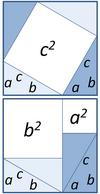
“How then to enforce peace? Not by reason, certainly, nor by education. If a man could not look at the fact of peace and the fact of war and choose the former in preference to the latter, what additional argument could persuade him? What could be more eloquent as a condemnation of war than war itself? What tremendous feat of dialectic could carry with it a tenth the power of a single gutted ship with its ghastly cargo?”
““You can prove anything you want by coldly logical reason—if you pick the proper postulates. We have ours and Cutie [robot QT-1] has his.”
“Then let’s get at those postulates in a hurry. The storm’s due tomorrow.”
Powell sighed wearily. “That’s where everything falls down. Postulates are based on assumptions and adhered to by faith. Nothing in the Universe can shake them. ...””
“Then let’s get at those postulates in a hurry. The storm’s due tomorrow.”
Powell sighed wearily. “That’s where everything falls down. Postulates are based on assumptions and adhered to by faith. Nothing in the Universe can shake them. ...””
“I have been trying, friend Julius, to understand some remarks Elijah made to me earlier. Perhaps I am beginning to, for it suddenly seems to me that the destruction of what should not be, that is, the destruction of what you people call evil, is less just and desirable than the conversion of this evil into what you call good.
He hesitated, then, almost as though he were surprised at his own words, he said, “Go, and sin no more!””
He hesitated, then, almost as though he were surprised at his own words, he said, “Go, and sin no more!””
““When the twenty-seven independent Trading Worlds, united only by their distrust of mother planet of the Foundation, concert an assembly among themselves, and each is big with a pride grown of its smallness, hardened by its own insularity and embittered by eternal danger — there are preliminary negotiations to be overcome of a pettiness sufficiently staggering to heart-sicken the most persevering.””

“The Dantean conceptions of Inferno were childish and unworthy of the Divine imagination: fire and torture. Boredom is much more subtle. The inner torture of a mind unable to escape itself in any way, condemned to fester in its own exuding mental pus for all time, is much more fitting. Oh, yes, my friend, we have been judged, and condemned, too, and this is not Heaven, but hell.”
“Look around you. Look at the planet, Earth. What kind of a ridiculous animal are we to be lords of the world after the dinosaurs had failed? Sure, we’re intelligent, but what’s intelligence? We think it is important because we have it. If the Tyrannosaurus could have picked out the one quality that he thought would ensure species domination, it would be size and strength. And he would make a better case for it. He lasted longer than we are likely to.”

“I make no secret about being Jewish ... I just think it's more important to be human and to have a human heritage; and I think it is wrong for anyone to feel that there is anything special about any one heritage of whatever kind. It is delightful to have the human heritage exist in a thousand varieties, for it makes for greater interest, but as soon as one variety is thought to be more important than another, the groundwork is laid for destroying them all.”
“Of all the books I have ever worked on, I think Asimov's Guide to Shakespeare gave me the most pleasure, day in, day out. For months and months I lived and thought Shakespeare, and I don't see how there can be any greater pleasure in the world—any pleasure, that is, that one can indulge in for as much as ten hours without pause, day after day indefinitely.”

“I believe that every human being with a physically normal brain can learn a great deal and can be surprisingly intellectual. I believe that what we badly need is social approval of learning and social rewards for learning.
We can all be members of the intellectual elite and then, and only then, will a phrase like "America's right to know" and, indeed, any true concept of democracy, have any meaning.”
We can all be members of the intellectual elite and then, and only then, will a phrase like "America's right to know" and, indeed, any true concept of democracy, have any meaning.”
“I made up my mind long ago to follow one cardinal rule in all my writing — to be clear. I have given up all thought of writing poetically or symbolically or experimentally, or in any of the other modes that might (if I were good enough) get me a Pulitzer prize. I would write merely clearly and in this way establish a warm relationship between myself and my readers, and the professional critics — Well, they can do whatever they wish.”
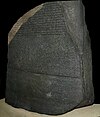
“476 ... is usually taken as the date of the "fall of the Roman Empire." The date, however, is a false one. No one at this period of time considered that the Roman Empire had "fallen." Indeed, it still existed and was the most powerful realm in Europe. Its capital was at Constantinople and the Emperor was Zeno. It is only because we ourselves are culturally descended from the Roman west, that we tend to ignore the continued existence of the Roman Empire in the east.”
“Science doesn't purvey absolute truth. Science is a mechanism. It's a way of trying to improve your knowledge of nature. It's a system for testing your thoughts against the universe and seeing whether they match. And this works, not just for the ordinary aspects of science, but for all of life. I should think people would want to know that what they know is truly what the universe is like, or at least as close as they can get to it.”
““But it’s been quiet under Cleon. And we’ve had fifty years of peace.”
“Yes, but soldiers who are well-paid would resent having that pay reduced just because there is peace. Admirals resist mothballing ships and having themselves reduced in rank simply because there is less for them to do. So the credits still go—unproductively—to the armed forces and vital areas of the social good are allowed to deteriorate. That’s what I call decay. Don’t you?””
“Yes, but soldiers who are well-paid would resent having that pay reduced just because there is peace. Admirals resist mothballing ships and having themselves reduced in rank simply because there is less for them to do. So the credits still go—unproductively—to the armed forces and vital areas of the social good are allowed to deteriorate. That’s what I call decay. Don’t you?””
“In the course of my fight with the school, I couldn't help but notice that I became a pariah. [...] Once, however, a fellow faculty member, making sure we were unobserved, said to me, "Isaac, the faculty is proud of you for your courage in fighting the administration for academic freedom."
I said, "There's no courage involved in it. Don't you know my definition of academic freedom?"
"No. What's your definition of academic freedom?"
I said, "Independent income."”
I said, "There's no courage involved in it. Don't you know my definition of academic freedom?"
"No. What's your definition of academic freedom?"
I said, "Independent income."”

““Ah, the future good!” Leebig’s eyes glowed with passion and he seemed to grow less conscious of his listener and correspondingly more talkative. “A simple concept, you think. How many human beings are willing to accept a trifling inconvenience for the sake of a large future good? How long does it take to train a child that what tastes good now means a stomach-ache later, and what tastes bad now will correct the stomach-ache later? Yet you want a robot to be able to understand?””

“An optimistic view of the future would indicate that before long, the clear necessity of expanding humanity's horizons would cause ... space settlements to be built. The construction would also serve as a great project that not only would be clearly of great benefit, but might induce human cooperation in something large enough to fire the heart and mind, and make people forget the petty quarrels that have engaged them for thousands of years in wars over insignificant scraps of earthly territory.”
“People who want to do so can lose weight most safely and permanently if they realize that above all they must be patient. ... It is better to eat a little less at each meal than impulse would suggest and to do that constantly. Add to this a little more exercise or activity than impulse suggests and keep that up constantly too. A few less calories taken in each day and a few more used up will decrease weight, slowly, to be sure, but without undue misery. And with better long-range results too.”
“It seemed to him [ Euphemius] it would be a brilliant notion to call in an outside force to fight on his behalf. This same brilliant notion has occurred to participants in civil wars uncounted times in history and it has ended in catastrophe just about every time, since those called in invariably take over for themselves. Of all history's lessons, this seems to be the plainest, and the most frequently ignored.”
“Every human being lived behind an impenetrable wall of choking mist within which no other but he existed. Occasionally there were the dim signals from deep within the cavern in which another man was located — so that each might grope toward the other. Yet because they did not know one another, and could not understand one another, and dared not trust one another, and felt from infancy the terrors and insecurity of that ultimate isolation — there was the hunted fear of man for man, the savage rapacity of man toward man.”
“The work of each individual contributes to a totality and so becomes an undying part of the totality. That totality of human lives - past and present and to come - forms a tapestry that has been in existence now for many thousands of years and has been growing more elaborate and, on the whole, more beautiful in all that time. Even the Spacers are an offshoot of the tapestry and they, too, add to the elaborateness and beauty of the pattern. An individual life is one thread in the tapestry and what is one thread compared to the whole?”
“Now the plan was threatend by something more serious than the Mule had ever been. It was to be diverted from a renewal of Empire to something utterly different from anything in history - Galaxia. And he himself had agreed to that. But why? Was there a flaw in the plan? a basic flaw? For one flashing moment, it seemed to Trevize that this flaw did indeed exist and that he knew what it was, that he had known what it was when he made his decision - but the knowledge...if that were what it was...vanished as fast as it came, and left him with nothing.”
“[B]y 1204, the only place where the entire body of Greek learning existed, still intact, was Constantinople. As a result of the crusaders' conquest, however, Constantinople was ruthlessly pillaged and destroyed and almost all the great treasures of ancient Greek learning were lost forever. It is because of that sack, for instance, that we have only seven plays left out of the better than one hundred written by Sophocles.
The tragedy of 1204 can never be undone and for all of time, only bits and pieces of the marvelous Greek world can be known to us.”
The tragedy of 1204 can never be undone and for all of time, only bits and pieces of the marvelous Greek world can be known to us.”

“I am an atheist, out and out. It took me a long time to say it. I've been an atheist for years and years, but somehow I felt it was intellectually unrespectable to say one was an atheist, because it assumed knowledge that one didn't have. Somehow, it was better to say one was a humanist or an agnostic. I finally decided that I'm a creature of emotion as well as of reason. Emotionally, I am an atheist. I don't have the evidence to prove that God doesn't exist, but I so strongly suspect he doesn't that I don't want to waste my time.”
“It is a rather sad commentary on humanity that it is always so attractive to think that some small group “controls the Earth”—the Jews, the international bankers, the Communists, the Masons, the Trilateral Commission. Those who believe such things are so sincere, so harried, so paranoid and, if the times are bad enough, and if the hunger for a scapegoat is great enough—so convincing. The Nazis are the most dreadful example in recent history of how far madmen can go when riding the skeletal horse of paranoia, but their example has by no means cured the world.”
“Science is a systematic method for studying and working out those generalizations that seem to describe the behavior of the universe. It could exist as a purely intellectual game that would never affect the practical life of human beings either for good or evil, and that was very nearly the case in ancient Greece, for instance. Technology is the application of scientific findings to the tools of everyday life, and that application can be wise or unwise, useful or harmful. Very often, those who govern technological decisions are not scientists and know little about science.”
“What I will be remembered for are the Foundation Trilogy and the Three Laws of Robotics. What I want to be remembered for is no one book, or no dozen books. Any single thing I have written can be paralleled or even surpassed by something someone else has done. However, my total corpus for quantity, quality and variety can be duplicated by no one else. That is what I want to be remembered for.”
“We are meant to know, or we are amoebae.
Suppose that we are wise enough to learn and know — and yet not wise enough to control our learning and knowledge, so that we use it to destroy ourselves?
Even if that is so, knowledge remains better than ignorance. It is better to know — even if the knowledge endured only for the moment that comes before destruction — than to gain eternal life at the price of a dull and swinish lack of comprehension of a universe that swirls unseen before us in all its wonder. That was the choice of Achilles, and it is mine, too.”
Suppose that we are wise enough to learn and know — and yet not wise enough to control our learning and knowledge, so that we use it to destroy ourselves?
Even if that is so, knowledge remains better than ignorance. It is better to know — even if the knowledge endured only for the moment that comes before destruction — than to gain eternal life at the price of a dull and swinish lack of comprehension of a universe that swirls unseen before us in all its wonder. That was the choice of Achilles, and it is mine, too.”
“Writing is hard work. The fact that I love doing it doesn't make it less hard work. People who love tennis will sweat themselves to exhaustion playing it, and the love of the game doesn't stop the sweating. The casual assumption that writers are unemployed bums because they don't go to the office and don't have a boss is something every writer has to live with. I have never known a writer who hasn't suffered as a result of this, hasn't resented it, and hasn't dreamed of murdering the next person who says "Boy, you've sure got it made. You just sit there and toss off a story or something whenever you feel like it."”
“Asimov: Battlestar Galactica for instance, started off with twenty to thirty minutes of space battles which looked exactly like air battles in World War I. You could swear that the space ships were surrounded by air the way the maneuvered. One felt it was unworthy.
SWA Magazine: The Vipers in Battlestar Galactica look like jets. Is this a realistic design for the future?
Asimov: It is as if people in the 1880s were writing fantasy stories about airplanes of the future and they had the pilots lean back at the wheel and yell "whoa" and the airplane came to a halt in mid-air.”
SWA Magazine: The Vipers in Battlestar Galactica look like jets. Is this a realistic design for the future?
Asimov: It is as if people in the 1880s were writing fantasy stories about airplanes of the future and they had the pilots lean back at the wheel and yell "whoa" and the airplane came to a halt in mid-air.”
“Weisinger, a couple of years ago, made up the following story: "Isaac Asimov was asked how Superman could fly faster than the speed of light, which was supposed to be an absolute limit. To this Asimov replied, 'That the speed of light is a limit is a theory; that Superman can travel faster than light is a fact.'"
I assure you it never happened and I never said it, but it will be repeated, I am quite certain, indefinitely, and it will probably be found in Bartlett's quotations a century from now, attributed to me, after all my writings have been forgotten.”
I assure you it never happened and I never said it, but it will be repeated, I am quite certain, indefinitely, and it will probably be found in Bartlett's quotations a century from now, attributed to me, after all my writings have been forgotten.”

“It's my belief that the Universe possesses, in its essence, fractal properties of a very complex sort and that the pursuit of science shares those properties. It follows that any part of the Universe that remains un-understood, and any part of scientific investigation that remains unresolved, however small that might be in comparison to what is understood and resolved, contains within it all the complexity of the original. Therefore, we'll never finish. No matter how far we go, the road ahead will be as long as it was at the start, and that's the secret of the Universe.”

“I received the fundamentals of my education in school, but that was not enough. My real education, the superstructure, the details, the true architecture, I got out of the public library. For an impoverished child whose family could not afford to buy books, the library was the open door to wonder and achievement, and I can never be sufficiently grateful that I had the wit to charge through that door and make the most of it.
Now, when I read constantly about the way in which library funds are being cut and cut, I can only think that the door is closing and that American society has found one more way to destroy itself.”
Now, when I read constantly about the way in which library funds are being cut and cut, I can only think that the door is closing and that American society has found one more way to destroy itself.”

““Nonsense,” Weston denied, with an involuntary nervous shiver. “That’s completely ridiculous. We had a long discussion at the time we bought Robbie about the First Law of Robotics. You know that it is impossible for a robot to harm a human being; that long before enough can go wrong to alter that First Law, a robot would be completely inoperable. It’s a mathematical impossibility. Besides I have an engineer from U.S. Robots here twice a year to give the poor gadget a complete overhaul. Why, there’s no more chance of anything at all going wrong with Robbie than there is of you or I suddenly going looney—considerably less, in fact.””
“How often people speak of art and science as though they were two entirely different things, with no interconnection. An artist is emotional, they think, and uses only his intuition; he sees all at once and has no need of reason. A scientist is cold, they think, and uses only his reason; he argues carefully step by step, and needs no imagination. That is all wrong. The true artist is quite rational as well as imaginative and knows what he is doing; if he does not, his art suffers. The true scientist is quite imaginative as well as rational, and sometimes leaps to solutions where reason can follow only slowly; if he does not, his science suffers.”
““But you really are, you know.” This was said with intense earnestness. “I mean good, really good. I think it is wonderful to be an author like you. It must be almost like being God.”
Graham stared blankly. “Not to editors, sister.”
Sister didn’t get the whisper. She continued, “To be able to create living characters out of nothing; to unfold souls to all the world; to put thoughts into words; to build pictures and create worlds. I have often thought that an author was the most gloriously gifted person in all creation. Better an inspired author starving in a garret than a king upon his throne. Don’t you think so?”
“Definitely,” lied Graham.”
Graham stared blankly. “Not to editors, sister.”
Sister didn’t get the whisper. She continued, “To be able to create living characters out of nothing; to unfold souls to all the world; to put thoughts into words; to build pictures and create worlds. I have often thought that an author was the most gloriously gifted person in all creation. Better an inspired author starving in a garret than a king upon his throne. Don’t you think so?”
“Definitely,” lied Graham.”
““It is absolutely forbidden for the Imperial government to exercise any security control over the University or its members. There is complete freedom. Anything can be discussed here, anything can be said here.”
“What about violent crime?”
“Then the University authorities themselves handle it, with reason and care—and there are virtually no crimes of violence. The students and faculty appreciate their freedom and understand its terms. Too much rowdiness, the beginning of riot and bloodshed, and the government may feel it has the right to break the unwritten agreement and send in the troops. No one wants that, not even the government, so a delicate balance is maintained.””
“What about violent crime?”
“Then the University authorities themselves handle it, with reason and care—and there are virtually no crimes of violence. The students and faculty appreciate their freedom and understand its terms. Too much rowdiness, the beginning of riot and bloodshed, and the government may feel it has the right to break the unwritten agreement and send in the troops. No one wants that, not even the government, so a delicate balance is maintained.””
“Don't you believe in flying saucers, they ask me? Don't you believe in telepathy? — in ancient astronauts? — in the Bermuda triangle? — in life after death?
No, I reply. No, no, no, no, and again no.
One person recently, goaded into desperation by the litany of unrelieved negation, burst out "Don't you believe in anything?"
"Yes", I said. "I believe in evidence. I believe in observation, measurement, and reasoning, confirmed by independent observers. I'll believe anything, no matter how wild and ridiculous, if there is evidence for it. The wilder and more ridiculous something is, however, the firmer and more solid the evidence will have to be."”
No, I reply. No, no, no, no, and again no.
One person recently, goaded into desperation by the litany of unrelieved negation, burst out "Don't you believe in anything?"
"Yes", I said. "I believe in evidence. I believe in observation, measurement, and reasoning, confirmed by independent observers. I'll believe anything, no matter how wild and ridiculous, if there is evidence for it. The wilder and more ridiculous something is, however, the firmer and more solid the evidence will have to be."”

“My parents, both of whom spoke Russian fluently, made no effort to teach me Russian, but insisted on my learning English as rapidly and as well as possible. They even set about learning English themselves, with reasonable, but limited, success.
In a way, I am sorry. It would have been good to know the language of Pushkin, Tolstoy, and Dostoevski. On the other hand, I would not have been willing to let anything get in the way of the complete mastery of English. Allow me my prejudice: surely there is no language more majestic than that of Shakespeare, Milton, and the King James Bible, and if I am to have one language that I know as only a native can know it, I consider myself unbelievably fortunate that it is English.”
In a way, I am sorry. It would have been good to know the language of Pushkin, Tolstoy, and Dostoevski. On the other hand, I would not have been willing to let anything get in the way of the complete mastery of English. Allow me my prejudice: surely there is no language more majestic than that of Shakespeare, Milton, and the King James Bible, and if I am to have one language that I know as only a native can know it, I consider myself unbelievably fortunate that it is English.”

“Civilizations have always been pyramidal in structure. As one climbs toward the apex of the social edifice, there is increased leisure and increasing opportunity to pursue happiness. As one climbs, one finds also fewer and fewer people to enjoy this more and more. Invariably, there is a preponderance of the dispossessed. And remember this, no matter how well off the bottom layers of the pyramid might be on an absolute scale, they are always dispossessed in comparison with the apex.
So there is always social friction in ordinary human societies. The action of social revolution and the reaction of guarding against such revolution or combating it once it has begun are the causes of a great deal of the human misery with which history is permeated.”
So there is always social friction in ordinary human societies. The action of social revolution and the reaction of guarding against such revolution or combating it once it has begun are the causes of a great deal of the human misery with which history is permeated.”
“Science fiction may be defined as that branch of literature which deals with the response of human beings to advances in science and technology. Actual change in science and technology, occurring quickly enough and striking deeply enough to affect a human being in the course of his normal lifetime, is a phenomenon peculiar to the world only since the Industrial Revolution ... The first well-known writer who responded to this new factor in human affairs by dealing regularly with science fiction, by studying the effect of additional scientific advance upon mankind ... was Jules Verne. In the English language, the early master was H. G. Wells. Between them, they laid the foundation for every theme upon which science fiction writers have been ringing variations ever since.”
“What, then, of human activities? Is humankind itself hastening its own end? Man has, for instance, been burning carbon-containing fuel — wood, coal, oil, gas — at a steadily accelerating rate. All these fuels form carbon dioxide. Some is absorbed by plants and the oceans but not as fast as it is produced. This means the carbon dioxide content of the air is going up — slightly but nevertheless up. Carbon dioxide retains heat, and even a small rise means a warming of the Earth's atmosphere. This may result in the melting of the polar ice caps with unusual speed, flooding the world before we have learned climate control. In reverse, our industrial civilization is making our atmosphere dustier so that it reflects more sunlight away and cools the Earth slightly — thus making possible a glacial advance in a few centuries, also before we have learned climate control.”
““Curing diabetes is just a detail and it will merely mean that the death rate will go down slightly and produce just a bit more pressure in the direction of population increase. I’m not interested in achieving that.”
“You don’t value human life?”
“Not infinitely. There are too many people on earth.”
“I know that some think so.”
“You’re one of them, Mr. Secretary. You have written articles saying so. And it’s obvious to any thinking man—to you more than anyone—what it’s doing. Overpopulation means discomfort, and to reduce the discomfort private choice must disappear. Crowd enough people into a field and the only way they can all sit down is for all to sit down at the same time. Make a mob dense enough and they can move from one point to another quickly only by marching in formation. That is what men are becoming; a blindly marching mob knowing nothing about where it is going or why.””
“You don’t value human life?”
“Not infinitely. There are too many people on earth.”
“I know that some think so.”
“You’re one of them, Mr. Secretary. You have written articles saying so. And it’s obvious to any thinking man—to you more than anyone—what it’s doing. Overpopulation means discomfort, and to reduce the discomfort private choice must disappear. Crowd enough people into a field and the only way they can all sit down is for all to sit down at the same time. Make a mob dense enough and they can move from one point to another quickly only by marching in formation. That is what men are becoming; a blindly marching mob knowing nothing about where it is going or why.””
“If I were not an atheist, I would believe in a God who would choose to save people on the basis of the totality of their lives and not the pattern of their words. I think he would prefer an honest and righteous atheist to a TV preacher whose every word is God, God, God, and whose every deed is foul, foul, foul.
I would also want a God who would not allow a Hell. Infinite torture can only be a punishment for infinite evil, and I don't believe that infinite evil can be said to exist even in the case of Hitler. Besides, if most human governments are civilized enough to try to eliminate torture and outlaw cruel and unusual punishments, can we expect anything less of an all-merciful God?
I feel that if there were an afterlife, punishment for evil would be reasonable and of a fixed term. And I feel that the longest and worst punishment should be reserved for those who slandered God by inventing Hell.”
I would also want a God who would not allow a Hell. Infinite torture can only be a punishment for infinite evil, and I don't believe that infinite evil can be said to exist even in the case of Hitler. Besides, if most human governments are civilized enough to try to eliminate torture and outlaw cruel and unusual punishments, can we expect anything less of an all-merciful God?
I feel that if there were an afterlife, punishment for evil would be reasonable and of a fixed term. And I feel that the longest and worst punishment should be reserved for those who slandered God by inventing Hell.”
“We cannot afford enemies any more... Within a generation or two human society will be in total destructive disarray. Heaven knows how bad it will be. The most optimistic view I can take is this: Things will get so bad within a dozen years that it will become obvious ... that we must, whether were like each other or not, work together. We have no choice in the matter. ... Technologically, we can stop overpopulation, but we have to persuade people to accept the technology. ... Babies are the enemies of the human race ... Let's consider it this way: by the time the world doubles its population, the amount of energy we will be using will be increased sevenfold which means probably the amount of pollution that we are producing will also be increased sevenfold. If we are now threatened by pollution at the present rate, how will we be threatened with sevenfold pollution by, say, 2010 A.D., distributed among twice the population? We'll be having to grow twice the food out of soil that is being poisoned at seven times the rate.”

“"Don't finish, Pete. I've heard it all before. All I have to do is decipher the thinking of a non-human intelligence."
"A better-than-human intelligence. Those creatures from the para-Universe are trying to make themselves understood."
"That may be," sighed Bronowski, "but they're trying to do it through my intelligence, which is better than human I sometimes think, but not much. Sometimes, in the dark of the night, I lie awake and wonder if different intelligences can communicate at all; or, if I've had a particularly bad day, whether the phrase 'different intelligences' has meaning at all."
"It does," said Lamont savagely, his hands clearly bailing into fists within his lab coat pockets. "It means Hallam and me. It means that fool-hero, Dr. Frederick Hallam and me. We're different intelligences because when I talk to him he doesn't understand. His idiot face gets redder and his eyes bulge and his ears block. I'd say his mind stops functioning, but lack the proof of any other state from which it might stop."”
"A better-than-human intelligence. Those creatures from the para-Universe are trying to make themselves understood."
"That may be," sighed Bronowski, "but they're trying to do it through my intelligence, which is better than human I sometimes think, but not much. Sometimes, in the dark of the night, I lie awake and wonder if different intelligences can communicate at all; or, if I've had a particularly bad day, whether the phrase 'different intelligences' has meaning at all."
"It does," said Lamont savagely, his hands clearly bailing into fists within his lab coat pockets. "It means Hallam and me. It means that fool-hero, Dr. Frederick Hallam and me. We're different intelligences because when I talk to him he doesn't understand. His idiot face gets redder and his eyes bulge and his ears block. I'd say his mind stops functioning, but lack the proof of any other state from which it might stop."”
“The article was essentially about the coming disappearance of women. I pointed out that the only differences between men and women are the women are smaller and weaker than men, and women have to bear the children, and that all other differences are really social. They are born of the environment. They're not real. [...]
You say, "Women are so pure and sweet and nice, if only they have the vote, they would clean up politics." So you give them the vote, and politics is just as dirty as ever. [...]
If we get into the 21st century when all the work that's required to be done (and there won't be much of it) doesn't require muscles anyway (it's all a matter of closing contacts, pushing papers, whatever the heck you do), women can do it as well as men. And when it comes to children, there's going to have to be a low birth rate (we'll have to or everything goes 'blooey!'). And in addition, children will be considered, I think, the responsibility of society and not the responsibility of their mothers. Children will be far too valuable to trust to their mothers (most of them are complete incompetents as mothers).”
You say, "Women are so pure and sweet and nice, if only they have the vote, they would clean up politics." So you give them the vote, and politics is just as dirty as ever. [...]
If we get into the 21st century when all the work that's required to be done (and there won't be much of it) doesn't require muscles anyway (it's all a matter of closing contacts, pushing papers, whatever the heck you do), women can do it as well as men. And when it comes to children, there's going to have to be a low birth rate (we'll have to or everything goes 'blooey!'). And in addition, children will be considered, I think, the responsibility of society and not the responsibility of their mothers. Children will be far too valuable to trust to their mothers (most of them are complete incompetents as mothers).”

“[In response to this question by Bill Moyers: What do you see happening to the idea of dignity to human species if this population growth continues at its present rate?] "It's going to destroy it all. I use what I call my bathroom metaphor. If two people live in an apartment, and there are two bathrooms, then both have what I call freedom of the bathroom, go to the bathroom any time you want, and stay as long as you want to for whatever you need. And this to my way is ideal. And everyone believes in the freedom of the bathroom. It should be right there in the Constitution. But if you have 20 people in the apartment and two bathrooms, no matter how much every person believes in freedom of the bathroom, there is no such thing. You have to set up, you have to set up times for each person, you have to bang at the door, aren't you through yet, and so on. And in the same way, democracy cannot survive overpopulation. Human dignity cannot survive it. Convenience and decency cannot survive it. As you put more and more people onto the world, the value of life not only declines, but it disappears. It doesn't matter if someone dies.”

“Science Digest asked me to see the movie Close Encounters of the Third Kind and write an article for them on the science it contained. I saw the picture and was appalled. I remained appalled even after a doctor's examination had assured me that no internal organs had been shaken loose by its ridiculous soundwaves. (If you can't be good, be loud, some say, and Close Encounters was very loud.) ... Hollywood must deal with large audiences, most of whom are utterly unfamiliar with good science fiction. It has to bend to them, meet them at least half-way. Fully appreciating that, I could enjoy Planet of the Apes and Star Wars. Star Wars was entertainment for the masses and did not try to be anything more. Leave your sophistication at the door, get into the spirit, and you can have a fun ride. ... Seeing a rotten picture for the special effects is like eating a tough steak for the smothered onions, or reading a bad book for the dirty parts. Optical wizardry is something a movie can do that a book can't but it is no substitute for a story, for logic, for meaning. It is ornamentation, not substance. In fact, whenever a science fiction picture is praised overeffusively for its special effects, I know it's a bad picture. Is that all they can find to talk about?”
“Asimov: Science fiction always bases its future visions on changes in the levels of science and technology. And the reason for that consistency is simply that—in reality—all other changes throughout history have been irrelevant and trivial. For example, what difference did it make to the people of the ancient world that Alexander the Great conquered the Persian Empire? Obviously, that event made some difference to a lot of individuals. But if you look at humanity in general, you'll see that life went on pretty much as it had before the conquest.
On the other hand, consider the changes that were made in people's daily lives by the development of agriculture or the mariner's compass ... and by the invention of gunpowder or printing. Better yet, look at recent history and ask yourself, "What difference would it have made if Hitler had won World War II?" Of course, such a victory would have made a great difference to many people. It would have resulted in much horror, anguish, and pain. I myself would probably not have survived.
But Hitler would have died eventually, and the effects of his victory would gradually have washed out and become insignificant—in terms of real change—when compared to such advances as the actual working out of nuclear power, the advent of television, or the invention of the jet plane.”
On the other hand, consider the changes that were made in people's daily lives by the development of agriculture or the mariner's compass ... and by the invention of gunpowder or printing. Better yet, look at recent history and ask yourself, "What difference would it have made if Hitler had won World War II?" Of course, such a victory would have made a great difference to many people. It would have resulted in much horror, anguish, and pain. I myself would probably not have survived.
But Hitler would have died eventually, and the effects of his victory would gradually have washed out and become insignificant—in terms of real change—when compared to such advances as the actual working out of nuclear power, the advent of television, or the invention of the jet plane.”
“SWA Magazine: Talking about spacecraft, what do you think about the shuttle program?
Asimov: Well, I hope it does get off the ground. And I hope they expand it, because the shuttle program is the gateway to everything else. By means of the shuttle, we will be able to build space stations and power stations, laboratory facilities and habitations, and everything else in space.
SWA Magazine: How about orbital space colonies? Do you see these facilities being built or is the government going to cut back on projects like this?
Asimov: Well, now you've put your finger right on it. In order to have all of these wonderful things in space, we don't have to wait for technology - we've got the technology, and we don't have to wait for the know-how - we've got that too. All we need is the political go-ahead and the economic willingness to spend the money that is necessary. It is a little frustrating to think that if people concentrate on how much it is going to cost they will realize the great amount of profit they will get for their investment. Although they are reluctant to spend a few billions of dollars to get back an infinite quantity of money, the world doesn't mind spending $400 billion every years on arms and armaments, never getting anything back from it except a chance to commit suicide.”
Asimov: Well, I hope it does get off the ground. And I hope they expand it, because the shuttle program is the gateway to everything else. By means of the shuttle, we will be able to build space stations and power stations, laboratory facilities and habitations, and everything else in space.
SWA Magazine: How about orbital space colonies? Do you see these facilities being built or is the government going to cut back on projects like this?
Asimov: Well, now you've put your finger right on it. In order to have all of these wonderful things in space, we don't have to wait for technology - we've got the technology, and we don't have to wait for the know-how - we've got that too. All we need is the political go-ahead and the economic willingness to spend the money that is necessary. It is a little frustrating to think that if people concentrate on how much it is going to cost they will realize the great amount of profit they will get for their investment. Although they are reluctant to spend a few billions of dollars to get back an infinite quantity of money, the world doesn't mind spending $400 billion every years on arms and armaments, never getting anything back from it except a chance to commit suicide.”

“ "The Last Question" is my personal favorite, the one story I made sure would not be omitted from this collection. Why is it my favorite? For one thing I got the idea all at once and didn't have to fiddle with it; and I wrote it in white-heat and scarcely had to change a word. This sort of thing endears any story to any writer.
Then, too, it has had the strangest effect on my readers. Frequently someone writes to ask me if I can give them the name of a story, which they think I may have written, and tell them where to find it. They don't remember the title but when they describe the story it is invariably "The Last Question". This has reached the point where I recently received a long-distance phone call from a desperate man who began, "Dr. Asimov, there's a story I think you wrote, whose title I can't remember—" at which point I interrupted to tell him it was "The Last Question" and when I described the plot it proved to be indeed the story he was after. I left him convinced I could read minds at a distance of a thousand miles.
No other story I have written has anything like this effect on my readers — producing at once an unshakeable memory of the plot and an unshakeable forgettery of the title and even author. I think it may be that the story fills them so frighteningly full, that they can retain none of the side-issues.”
Then, too, it has had the strangest effect on my readers. Frequently someone writes to ask me if I can give them the name of a story, which they think I may have written, and tell them where to find it. They don't remember the title but when they describe the story it is invariably "The Last Question". This has reached the point where I recently received a long-distance phone call from a desperate man who began, "Dr. Asimov, there's a story I think you wrote, whose title I can't remember—" at which point I interrupted to tell him it was "The Last Question" and when I described the plot it proved to be indeed the story he was after. I left him convinced I could read minds at a distance of a thousand miles.
No other story I have written has anything like this effect on my readers — producing at once an unshakeable memory of the plot and an unshakeable forgettery of the title and even author. I think it may be that the story fills them so frighteningly full, that they can retain none of the side-issues.”
“To be sure, the Bible contains the direct words of God. How do we know? The Moral Majority says so. How do they know? They say they know and to doubt it makes you an agent of the Devil or, worse, a Lbr-l Dm-cr-t. And what does the Bible textbook say? Well, among other things it says the earth was created in 4004 BC. (Not actually, but a Moral Majority type figured that out three and a half centuries ago, and his word is also accepted as inspired.) The sun was created three days later. The first male was molded out of dirt, and the first female was molded, some time later, out of his rib. As far as the end of the universe is concerned, the Book of Revelation (6:13-14) says: "And the stars of heaven fell unto the earth, even as a fig tree casteth her untimely figs, when she is shaken of a mighty wind." ... Imagine the people who believe such things and who are not ashamed to ignore, totally, all the patient findings of thinking minds through all the centuries since the Bible was written. And it is these ignorant people, the most uneducated, the most unimaginative, the most unthinking among us, who would make themselves the guides and leaders of us all; who would force their feeble and childish beliefs on us; who would invade our schools and libraries and homes in order to tell us what books to read and what not, what thoughts to think and what not, what conclusions to accept and what not. And what does the Bible say? "If the blind lead the blind, both shall fall into the ditch" (Matthew 15:14).”
“Plowboy: In your opinion, what are mankind's prospects for the near future?
Asimov: To tell the truth, I don't think the odds are very good that we can solve our immediate problems. I think the chances that civilization will survive more than another 30 years—that it will still be flourishing in 2010—are less than 50 percent.
Plowboy: What sort of disaster do you foresee?
Asimov: I imagine that as population continues to increase—and as the available resources decrease—there will be less energy and food, so we'll all enter a stage of scrounging. The average person's only concerns will be where he or she can get the next meal, the next cigarette, the next means of transportation. In such a universal scramble, the Earth will be just plain desolated, because everyone will be striving merely to survive regardless of the cost to the environment. Put it this way: If I have to choose between saving myself and saving a tree, I'm going to choose me.
Terrorism will also become a way of life in a world marked by severe shortages. Finally, some government will be bound to decide that the only way to get what its people need is to destroy another nation and take its goods ... by pushing the nuclear button.
And this absolute chaos is going to develop—even if nobody wants nuclear war and even if everybody sincerely wants peace and social justice—if the number of mouths to feed continues to grow. Nothing will be able to stand up against the pressure of the whole of humankind simply trying to stay alive!”
Asimov: To tell the truth, I don't think the odds are very good that we can solve our immediate problems. I think the chances that civilization will survive more than another 30 years—that it will still be flourishing in 2010—are less than 50 percent.
Plowboy: What sort of disaster do you foresee?
Asimov: I imagine that as population continues to increase—and as the available resources decrease—there will be less energy and food, so we'll all enter a stage of scrounging. The average person's only concerns will be where he or she can get the next meal, the next cigarette, the next means of transportation. In such a universal scramble, the Earth will be just plain desolated, because everyone will be striving merely to survive regardless of the cost to the environment. Put it this way: If I have to choose between saving myself and saving a tree, I'm going to choose me.
Terrorism will also become a way of life in a world marked by severe shortages. Finally, some government will be bound to decide that the only way to get what its people need is to destroy another nation and take its goods ... by pushing the nuclear button.
And this absolute chaos is going to develop—even if nobody wants nuclear war and even if everybody sincerely wants peace and social justice—if the number of mouths to feed continues to grow. Nothing will be able to stand up against the pressure of the whole of humankind simply trying to stay alive!”
“"First, you refused to admit that there was a menace at all! Then you reposed an absolutely blind faith in the Emperor! Now you've shifted it to Hari Seldon. Throughout you have invariably relied on authority or on the past – never on yourselves. It amounts to a diseased attitude – a conditioned reflex that shunts aside the independence of your minds whenever it is a question of opposing authority. There seems no doubt ever in your minds that the Emperor is more powerful than you are, or Hari Seldon wiser. And that's wrong, don't you see? It isn't just you. It's the whole Galaxy. Pirenne heard Lord Dorwin's idea of scientific research. Lord Dorwin thought the way to be a good archaeologist was to read all the books on the subject – written by men who were dead for centuries. He thought that the way to solve archaeological puzzles was to weigh the opposing authorities. And Pirenne listened and made no objections. Don't you see that there's something wrong with that? And you men and half of Terminus as well are just as bad. We sit here,considering the Encyclopedia the all-in-all. We consider the greatest end of science is the classification of past data. It is important, but is there no further work to be done? We're receding and forgetting, don't you see? Here in the Periphery they've lost nuclear power. In Gamma Andromeda, a power plant has undergone meltdown because of poor repairs, and the Chancellor of the Empire complains that nuclear technicians are scarce. And the solution? To train new ones? Never! Instead they're to restrict nuclear power. Don't you see? It's Galaxy wide. It's a worship of the past. It's a deterioration – a stagnation!"”
“"Why, Stephen, if I am right, it means that the Machine is conducting our future for us not only simply in direct answer to our direct questions, but in general answer to the world situation and to human psychology as a whole. And to know that may make us unhappy and may hurt our pride. The Machine cannot, must not, make us unhappy.
"Stephen, how do we know what the ultimate good of Humanity will entail? We haven't at our disposal the infinite factors that the Machine has at its! Perhaps, to give you a not unfamiliar example, our entire technical civilization has created more unhappiness and misery than it has removed. Perhaps an agrarian or pastoral civilization, with less culture and less people would be better. If so, the Machines must move in that direction, preferably without telling us, since in our ignorant prejudices we only know that what we are used to, is good—and we would then fight change. Or perhaps a complete urbanization, or a completely caste-ridden society, or complete anarchy, is the answer. We don't know. Only the Machines know, and they are going there and taking us with them."
"But you are telling me, Susan, that the 'Society for Humanity' is right; and that Mankind has lost its own say in its future."
"It never had any, really. It was always at the mercy of economic and sociological forces it did not understand—at the whims of climate, and the fortunes of war. Now the Machines understand them; and no one can stop them, since the Machines will deal with them as they are dealing with the Society,—having, as they do, the greatest of weapons at their disposal, the absolute control of our economy."
"How horrible!"
"Perhaps how wonderful! Think, that for all time, all conflicts are finally evitable. Only the Machines, from now on, are inevitable!"”
"Stephen, how do we know what the ultimate good of Humanity will entail? We haven't at our disposal the infinite factors that the Machine has at its! Perhaps, to give you a not unfamiliar example, our entire technical civilization has created more unhappiness and misery than it has removed. Perhaps an agrarian or pastoral civilization, with less culture and less people would be better. If so, the Machines must move in that direction, preferably without telling us, since in our ignorant prejudices we only know that what we are used to, is good—and we would then fight change. Or perhaps a complete urbanization, or a completely caste-ridden society, or complete anarchy, is the answer. We don't know. Only the Machines know, and they are going there and taking us with them."
"But you are telling me, Susan, that the 'Society for Humanity' is right; and that Mankind has lost its own say in its future."
"It never had any, really. It was always at the mercy of economic and sociological forces it did not understand—at the whims of climate, and the fortunes of war. Now the Machines understand them; and no one can stop them, since the Machines will deal with them as they are dealing with the Society,—having, as they do, the greatest of weapons at their disposal, the absolute control of our economy."
"How horrible!"
"Perhaps how wonderful! Think, that for all time, all conflicts are finally evitable. Only the Machines, from now on, are inevitable!"”

“Plowboy: You truly feel that all the major changes in history have been caused by science and technology?
Asimov: Those that have proved permanent—the ones that affected every facet of life and made certain that mankind could never go back again—were always brought about by science and technology. In fact, the same twin "movers" were even behind the other "solely" historical changes. Why, for instance, did Martin Luther succeed, whereas other important rebels against the medieval church—like John Huss—fail? Well, Luther was successful because printing had been developed by the time he advanced his cause. So his good earthy writings were put into pamphlets and spread so far and wide that the church officials couldn't have stopped the Protestant Reformation even if they had burned Luther at the stake.
Plowboy: Today the world is changing faster than it has at any other time in history. Do you then feel that science—and scientists—are especially important now?
Asimov: I do think so, and as a result it's my opinion that anyone who can possibly introduce science to the nonscientist should do so. After all, we don't want scientists to become a priesthood. We don't want society's technological thinkers to know something that nobody else knows—to "bring down the law from Mt. Sinai"—because such a situation would lead to public fear of science and scientists. And fear, as you know, can be dangerous.
Plowboy: But scientific knowledge is becoming so incredibly vast and specialized these days that it's difficult for any individual to keep up with it all.
Asimov: Well, I don't expect everybody to be a scientist or to understand every new development. After all, there are very few Americans who know enough about football to be a referee or to call the plays ... but many, many people understand the sport well enough to follow the game. It's not important that the average citizen understand science so completely that he or she could actually become involved in research, but it is very important that people be able to "follow the game" well enough to have some intelligent opinions on policy.
Every subject of worldwide importance—each question upon which the life and death of humanity depends—involves science, and people are not going to be able to exercise their democratic right to direct government policy in such areas if they don't understand what the decisions are all about.”
Asimov: Those that have proved permanent—the ones that affected every facet of life and made certain that mankind could never go back again—were always brought about by science and technology. In fact, the same twin "movers" were even behind the other "solely" historical changes. Why, for instance, did Martin Luther succeed, whereas other important rebels against the medieval church—like John Huss—fail? Well, Luther was successful because printing had been developed by the time he advanced his cause. So his good earthy writings were put into pamphlets and spread so far and wide that the church officials couldn't have stopped the Protestant Reformation even if they had burned Luther at the stake.
Plowboy: Today the world is changing faster than it has at any other time in history. Do you then feel that science—and scientists—are especially important now?
Asimov: I do think so, and as a result it's my opinion that anyone who can possibly introduce science to the nonscientist should do so. After all, we don't want scientists to become a priesthood. We don't want society's technological thinkers to know something that nobody else knows—to "bring down the law from Mt. Sinai"—because such a situation would lead to public fear of science and scientists. And fear, as you know, can be dangerous.
Plowboy: But scientific knowledge is becoming so incredibly vast and specialized these days that it's difficult for any individual to keep up with it all.
Asimov: Well, I don't expect everybody to be a scientist or to understand every new development. After all, there are very few Americans who know enough about football to be a referee or to call the plays ... but many, many people understand the sport well enough to follow the game. It's not important that the average citizen understand science so completely that he or she could actually become involved in research, but it is very important that people be able to "follow the game" well enough to have some intelligent opinions on policy.
Every subject of worldwide importance—each question upon which the life and death of humanity depends—involves science, and people are not going to be able to exercise their democratic right to direct government policy in such areas if they don't understand what the decisions are all about.”
Isaac Asimov Quotes by Topic
Find exactly what you are looking for by browsing this categorized list of Isaac Asimov quotes by topic.
Isaac Asimov on Science 5 quotes
“There is a single light of science, and to brighten it anywhere is to brighten it everywhere.”
Isaac Asimov on Science fiction 5 quotes
“Science fiction is that branch of literature that deals with human responses to changes in the level of science and technology.”

Isaac Asimov on Economics 2 quotes
View all 2 quotes on Economics →Isaac Asimov on Absurdism 2 quotes
“Secrecy as deep as this is past possibility without nonexistence as well.”
Isaac Asimov on World Federalism 2 quotes
“There are no nations! There is only humanity. And if we don't come to understand that right soon, there will be no nations, because there will be no humanity.”

What Isaac Asimov Said About Others
Discover personal opinions Isaac Asimov shared regarding contemporaries.
Isaac Asimov on John W. Campbell 2 quotes
“[Stanley] Weinbaum met the challenge of a demand John Campbell was to make of his writers in later years: "Write me a story about an organism that thinks as well as a man, but not like a man."”

Isaac Asimov on Philip José Farmer
Isaac Asimov on Harlan Ellison
“Harlan is a giant among men in courage, pugnacity, loquacity, wit, charm, intelligence — indeed in everything but height.”

Isaac Asimov on Hannibal
“Had Hannibal had a government behind him that knew how to exploit victories – had he been born a Roman, for instance – he might have conquered the world.”
Isaac Asimov on John Dalton
“Dalton's records, carefully preserved for a century, were destroyed during the World War II bombing of Manchester. It is not only the living who are killed in war.”
Quotes About Isaac Asimov
Gain deeper perspective through quotes about Isaac Asimov from others.
George Gaylord Simpson on Isaac Asimov

Martin Gardner on Isaac Asimov
“When I first met Asimov, I asked him if he was a professor at Boston University. He said no and ... asked me where I got my Ph.D. I said I didn't have one and he looked startled. "You mean you're in the same racket I am," he said, "you just read books by the professors and rewrite them?" That's really what I do.”

Carl Sagan as quoted on Isaac Asimov
“The great explainer of our [technological] age.”
Simson Garfinkel on Isaac Asimov
“Although he spends many pages writing about his friends in the science-fiction community, the true value of Asimov's insight is his reflections on his life — and, in his mind, Asimov was first a genius, second a prolific writer, and only thirdly a sci-fi writer. Asimov tells the reader repeatedly that his life would have been easier if he had learned to submerge his ego and get along with others. "It really puzzles me as I look back on it that I didn't make a greater effort to placate the powers that be," he writes. Indeed, it was this inability to get along with others that forced Asimov out of academia and into the solitary life of a freelance writer.”


About Isaac Asimov
Isaac Asimov (c. 2 January 1920 – 6 April 1992) was a Russian-born American biochemist who was a prolific writer of both fiction and non-fiction, his works include the Foundation series and I, Robot.