Wonder weapons... my God, I don't see the wonder in them. Killing without heroics, nothing is glorified... nothing is reaffirmed? No heroes, no cowards, no troops, no generals? Only those who are left alive... and those who are left dead. I'm glad I won't live to see it.
What It Means
This is a placeholder explanation generated by the low-overhead model. It interprets "Wonder weapons... my God, I don't see the wonder in them. Killing without heroics, nothing is glorified... nothing is reaffirmed? No heroes, no cowards, no troops, no generals? Only those who are left alive... and those who are left dead. I'm glad I won't live to see it." in the context of "Attributed as a quote in Charles W. Hudlin, "Morality and the Military Profession: Problems and Solutions", Military Ethics (National Defense University Press, 1987)http://books.google.com/books?id=B9EvXhH1ZVAC&pg=PA83; but Hudlin cites the biographical dramatization Patton (1970 film) which does not purport to use Patton's actual words." to mean that wisdom is timeless.
Tags
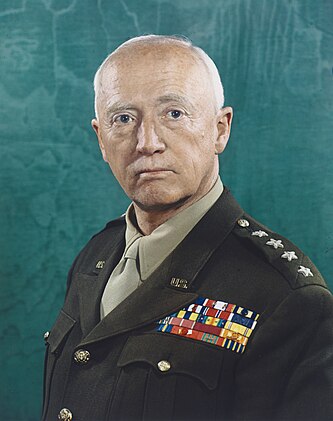
About George S. Patton