MARKET-GARDEN was a high risk operation that failed. It was undertaken at the expense of two possible offensives that had to be postponed because Eisenhower diverted supplies to MARKET-GARDEN. The first was the Canadian attack on the approaches to Antwerp, Europe's greatest port and essential to the support of any Allied offensive across the Rhine. In the event, Antwerp was not opened and operating until the end of 1944, which meant that through the fall the Allied Expeditionary Force (AEF) fought with inadequate supplies. The second postponed offensive was that of Patton's Third Army, south of the Ardennes. Patton believed that if he had gotten the supplies that Monty got for MARKET-GARDEN, he could have crossed the Rhine that fall and then had an unopposed path to Berlin. That seems doubtful, but we will never know because it was never tried.
What It Means
This is a placeholder explanation generated by the low-overhead model. It interprets "MARKET-GARDEN was a high risk operation that failed. It was undertaken at the expense of two possible offensives that had to be postponed because Eisenhower diverted supplies to MARKET-GARDEN. The first was the Canadian attack on the approaches to Antwerp, Europe's greatest port and essential to the support of any Allied offensive across the Rhine. In the event, Antwerp was not opened and operating until the end of 1944, which meant that through the fall the Allied Expeditionary Force (AEF) fought with inadequate supplies. The second postponed offensive was that of Patton's Third Army, south of the Ardennes. Patton believed that if he had gotten the supplies that Monty got for MARKET-GARDEN, he could have crossed the Rhine that fall and then had an unopposed path to Berlin. That seems doubtful, but we will never know because it was never tried." in the context of "Stephen E. Ambrose, in Band of Brothers (1992), p. 139" to mean that wisdom is timeless.
Tags
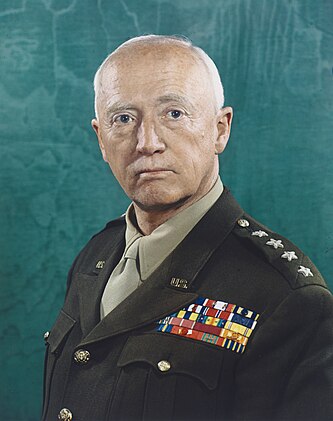
About George S. Patton