Link Copied!
Eric Hobsbawm Quotes (1917-2012)
President, Author







About Eric Hobsbawm
Eric John Ernest Hobsbawm, CH, FRSL, FBA (9 June 1917 – 1 October 2012) was a British Marxist historian and author and a leading theorist of the Communist Party of Great Britain (1920–1991), and former president of Birkbeck College, University of London.
Best Eric Hobsbawm Quotes
Shortest
Earliest
Explore our curated collection of the most famous and impactful Eric Hobsbawm quotes.

“Human beings are not efficiently designed for a capitalist system of production.”

“In terms of political geography, The French Revolution ended the European Middle Ages.”
“Unlike the word 'communist', which always signified a programme, the word 'socialist' was primarily analytical and critical.”

“First, utopianism is probably a necessary social device for generating the superhuman efforts without which no major revolution is achieved.”
“People may not like to meet bandits, especially on a dark night, but a taste for reading about them seems to be universal. ”
“The world that went to pieces at the end of the 1980's was the world shaped by the impact of the Russian Revolution of 1917.”

“As the global expansion of Indian and Chinese restaurants suggests, xenophobia is directed against foreign people, not foreign cultural imports.”
“The tragedy of the October revolution was precisely that it could only produce its kind of ruthless, brutal, command socialism.”
“[N]o serious historian of nations and nationalism can be a committed political nationalist... Nationalism requires too much belief in what is patently not so.”

“Though the web of history cannot be unravelled into separate threads without destroying it, a certain amount of subdivision of the subject is, for practical purposes, essential.”
“The progress of science is not a simple linear advance, each stage marking the solution of posing of problems previously implicit or explicit in it, and in turn posing new problems.”
“The really frightening risk of war was neglect, filth, poor organization, defective medical services, and hygenic ignorance, which conditions (as in the troops) practically everybody.”

“'Europe' had been on the defensive for a millennium. Now, for half a millennium, it conquered the world. Both observations make it impossible to sever European history from world history.”

“The love affair between intellectuals and Marxism which is so characteristic of our age developed relatively late in western Europe, though in Russia itself it began in Marx's own lifetime.”
“The greatest cruelties of our century have been the impersonal cruelties of remote decision, of system and routine, especially when they could be justified as regrettable operational necessity.”
“Of all the economic consequences of the age of dual revolution this division between the ‘advanced’ and the ‘underdeveloped’ countries proved to be the most profound and the most lasting.”

“The destruction of the past, or rather of the social mechanisms that link one's contemporary experience to that of earlier generations, is one of the most characteristic and eerie phenomena of the late twentieth century.”
“As I think back, I ask myself, again and again: was there an alternative to the indiscriminate , brutal, basically unplanned rush forward of the Five-Year Plan? I wish I could say there was, but I cannot. I cannot find a answer.”
“In analysing both agricultural change and economic growth in general, non-economic factors cannot be divorced from economic ones - certainly not in the short run. To separate them is to abandon the historical, that is the dynamic, analysis of the economy.”
“Nothing is easier than to see the Christ of the Sermon on the Mount as 'the first socialist' or communist, and though the majority of early socialist theorists were not Christians, many later members of socialists movements have found this reflection useful.”
“The fundamental fact about Britain in the first two generations of the Industrial Revolution was, that the comfortable and rich classes accumulated income so fast and in such vast quantities as to exceed all available possibilities of spending and investment.”
Eric Hobsbawm Quotes by Topic
Find exactly what you are looking for by browsing this categorized list of Eric Hobsbawm quotes by topic.
Eric Hobsbawm on Greeks 2 quotes
“Nevertheless it is evident — if only from the Greek example just cited — that proto-nationalism, where it existed, made the task of nationalism easier, however great the differences between the two, insofar as existing symbols and sentiments of proto-nacional community could he mobilized behind a modern cause or a modern state. But this is far from saying that the two were the same, or even that one must logically or inevitably lead into the other. For it is evident that proto-nationalism alone is clearly not enough to form nationalities, nations, let alone states.”

Eric Hobsbawm on Age of Enlightenment 2 quotes
“It is not strictly accurate to call the 'enlightenment' a middle class ideology, though there were many enlighteners—and politically they were the decisive ones—who assumed as a matter of course that the free society would be a capitalist society. In theory its object was to set all human beings free. All progressive, rationalist and humanist ideologies are implicit in it, and indeed came out of it. Yet in practice the leaders of the emancipation for which the enlightenment called were likely to be the middle ranks of society, the new, rational men of ability and merit rather than birth, and the social order which would emerge from their activities would be a 'bourgeois' and capitalist one. It is more accurate to call the 'enlightenment' a revolutionary ideology, in spite of the political caution and moderation of many of its continental champions, most of whom—until the 1780s—put their faith in enlightened absolute monarchy. For illuminism implied the abolition of the prevailing social and political order in most of Europe. It was too much to expect the anciens regimes to abolish themselves voluntarily. On the contrary, as we have seen, in some respects they were reinforcing themselves against the advance of the new social and economic forces. And their strongholds (outside Britain, the United Provinces and a few other places where they had already been defeated) were the very monarchies to which moderate enlighteners pinned their faith.”
Eric Hobsbawm on Xenophobia
“Xenophobia looks like becoming the mass ideology of the 20th-century fin-de-siecle.”
Eric Hobsbawm on Hebrew language
Eric Hobsbawm on Nazism
“Liberalism was failing. If I'd been German and not a Jew, I could see I might have become a Nazi, a German nationalist. I could see how they'd become passionate about saving the nation. It was a time when you didn't believe there was a future unless the world was fundamentally transformed.”

Eric Hobsbawm on Economy of Germany
“Liberalism was failing. If I'd been German and not a Jew, I could see I might have become a Nazi, a German nationalist. I could see how they'd become passionate about saving the nation. It was a time when you didn't believe there was a future unless the world was fundamentally transformed.”

Eric Hobsbawm on Postmodernism
“Whether the accused in a murder trial is or is not guilty depends on the assessment of old-fashioned positivist evidence, if such evidence is available. Any innocent readers who find themselves in the dock will do well to appeal to it. It is the lawyers for the guilty ones who fall back on postmodern lines of defence.”

Eric Hobsbawm on Nations
“Like most serious students, I do not regard the 'nation' as a primary nor an unchanging social entity. It belongs exclusively to a particular, and historically recent, period. It is a social entity only insofar it relates to a certain kind of modern territorial state, the 'nation-state', and it is pointless to discuss nation and nationality except insofar as both relate to it.”

Eric Hobsbawm on Nationalism
“[H]istorians are to nationalism what poppy-growers in Pakistan are to the heroin-addicts: we supply the essential raw material for the market. Nations without a past are contradictions in terms. What makes a nation is the past, what justifies one nation against others is the past, and historians are the people who produce it. So my profession, which has always been mixed up in politics, becomes an essential component of nationalism.”
Eric Hobsbawm on Nationalist historiography
“[H]istorians are to nationalism what poppy-growers in Pakistan are to the heroin-addicts: we supply the essential raw material for the market. Nations without a past are contradictions in terms. What makes a nation is the past, what justifies one nation against others is the past, and historians are the people who produce it. So my profession, which has always been mixed up in politics, becomes an essential component of nationalism.”
Eric Hobsbawm on Weimar Republic
“It is difficult for those who have not experienced the 'Age of Catastrophe' of the twentieth century in central Europe to see what it meant to live in a world that was simply not expected to last, in something that could not really even be described as a world, but merely as a provisional way-station between a dead past and a future not yet born, unless perhaps in the depth of revolutionary Russia. Nowhere was this more palpable than in the dying days of the Weimar Republic.”

Eric Hobsbawm on Japan during World War II
“These and many other attempts to replace history by myth and invention are not merely bad intellectual jokes. After all, they can determine what goes into schoolbooks, as the Japanese authorities knew, when they insisted on a sanitized version of the Japanese war in China for use in Japanese classrooms. Myth and invention are essential to the politics of identity by which groups of people today, defining themselves by ethnicity, religion or the past or present borders of states, try to find some certainty in an uncertain and shaking world by saying, 'We are different from and better than the Others.'”

What Eric Hobsbawm Said About Others
Discover personal opinions Eric Hobsbawm shared regarding contemporaries.
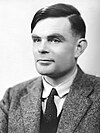
Eric Hobsbawm on Alan Turing 2 quotes
“Actually, with one alleged exception, the links of King’s dons with intelligence were with the British rather than the Soviet secret services. Kingsmen, headed by the small, roly-poly later professor of ancient history, F. E. Adcock, had set up the British codebreaking establishment in the First World War, and at least seventeen King’s dons were recruited by Adcock for the much more famous establishment at Bletchley during the Second World War, including probably the only genius at King’s in my undergraduate years, the mathematical logician Alan Turing, whom I recall as a clumsy-looking, pale-faced young fellow given to what would today be called jogging.”
Eric Hobsbawm on Robert Tressell
“The best British working-class novel, The Ragged-Trousered Philanthropists.”
Eric Hobsbawm on Slavoj Žižek
“I suppose Zizek is rightly described as a performer. He has this element of provocation that is very characteristic and does help to interest people, but I'm not certain that people who are reading Zizek are actually drawn very much nearer rethinking the problems of the left.”

Eric Hobsbawm on Carmine Crocco
“A farm-labourer and cowherd, had joined the Bourbon army, killed a comrade in a brawl, deserted and lived as an outlaw for ten years. He joined the liberal insurgents in 1860 in the hope of an amnesty for his past offences, and subsequently became the most formidable guerilla chief and leader of men on the Bourbon side.”
Eric Hobsbawm on Historian
“[H]istorians are to nationalism what poppy-growers in Pakistan are to the heroin-addicts: we supply the essential raw material for the market. Nations without a past are contradictions in terms. What makes a nation is the past, what justifies one nation against others is the past, and historians are the people who produce it. So my profession, which has always been mixed up in politics, becomes an essential component of nationalism.”
Eric Hobsbawm on E. P. Thompson
“Thompson's work combined passion and intellect, the gifts of the poet, the narrator and the analyst. He was the only historian I knew who had not just talent, brilliance, erudition and the gift of writing, but the capacity to produce something qualitatively different from the rest of us, not to be measured on the same scale. Let us simply call it genius, in the traditional sense of the word. None of his mature works could have been written by anyone else.”

Eric Hobsbawm on Friedrich Nietzsche
“Nietzsche, the eloquent and menacing prophet of an impending catastrophe whose exact nature he did not quite define, expressed this crisis of expectations better than anyone else. His very mode of literary exposition, by means of a succession of poetic and prophetic aphorisms containing visionary intuitions or unargued truths, seemed a contradiction of the rationalist system-building discourse of philosophy which he claimed to practise. His enthusiastic admirers multiplied among middle-class (male) youth from 1890. For Nietzsche, the avant garde decadence, pessimism and nihilism of the 1880s was more than a fashion. They were 'the logical end-product of our great values and ideals'. Natural science, he argued, produced its own internal disintegration, its own enemies, an anti-science. The consequences of the modes of thought accepted by nineteenth-century politics and economics were nihilist. The culture of the age was threatened by its own cultural products. Democracy produced socialism, the fatal swamping of genius by mediocrity, strength by weakness - a note also struck, in a more pedestrian and positivistic key, by the eugenists. In that case was it not essential to reconsider all these values and ideals and the system of ideas of which they formed a part, for in any case the 'revaluation of all values' was taking place? Such reflections multiplied as the old century drew to its end. The only ideology of serious calibre which remained firmly committed to the nineteenth-century belief in science, reason and progress was Marxism, which was unaffected by disillusion about the present because it looked forward to the future triumph of precisely those 'masses' whose rise created so much uneasiness among middle-class thinkers.”

Eric Hobsbawm on George Orwell
“For most of us the image of Tony is dominated by the boundless admiration we feel for the way he confronted his death. There was a Roman grandeur about his refusal to concede to the inevitable that recalls memories of classical eulogies. It was not just the decision to carry on the chess game to mate, but the decision to provoke death by demonstrating his full abilities as a grandmaster, doomed but never defeated. It is a moving image, but we must abandon it: encouraging mythopoeia is not for historians. Tony has been presented as another George Orwell. This is wrong, because while both were enormously gifted and profoundly polemical, they were very different. Tony lacked Orwell's combination of prejudices, forward and backward-looking Old Testament prophecy and imaginative denunciation – he could never have written 1984 or Animal Farm. And Orwell, the more powerful writer, had neither Tony's remarkable range of knowledge, nor his wit, intellectual speed and manoeuvrability: there is no way he could have doubled as an academic. But the comparison with Orwell is also dangerous because essentially it is not about two writers but about a political era that should now be over for good, the Cold War. Orwell's reputation was constructed as an intellectual anti-Soviet missile site and even today, when the rest of Orwell has emerged or re-emerged, it still remains frozen in the 1950s. Tony was, of course, as anti-Stalinist as anyone, and bitterly critical of those who did not abjure the CP even when they were demonstrably not Stalinists and were, like myself, slowly edging clear of the original world hope of October 1917. Like those opposed to the performing of Wagner in Israel, he could let political dislike get in the way of aesthetic enjoyment, dismissing Brecht's poem about the Comintern cadres, ‘An die Nachgeborenen’, ‘admired by so many’, as ‘obnoxious’ not on literary grounds, but because it inspired believers in an evil cause. Yet it is evident from Thinking the 20th Century that his basic concern during the acute phase of the Cold War was not the Russian threat to the ‘free world’ but the arguments within the left. Marx – not Stalin and the Gulag – was his subject. True, after 1968 he became much more of a militant oppositionist liberal over Eastern Europe, an admirer of the mixed but more usually right-wing academic tourists who provided much of our commentary on the end of the East European Communist regimes. This also led him and others who should have known better into creating the fairy tale of the Velvet and multicoloured revolutions of 1989 and after. There were no such revolutions, only different reactions to the Soviet decision to pull out. The real heroes of the period were Gorbachev, who destroyed the USSR, and men within the old system like Suárez in Franco’s Spain and Jaruzelski in Poland, who effectively ensured a peaceful transition and were execrated by both sides. Indeed, in the 1980s Tony’s essentially social-democratic liberalism was briefly infected by François Furet’s Hayekian economic libertarianism. I don’t think this late Cold War afterglow was central to Tony’s development, but it helped to give more body and depth to his very impressive Postwar.”

Eric Hobsbawm on Napoleon
“For the Napoleonic myth is based less on Napoleon’s merits than on the facts, then unique, of his career. The great known world-shakers of the past had begun as kings like Alexander or patricians like Julius Caesar; but Napoleon was the ‘little corporal’ who rose to rule a continent by sheer personal talent. (This was not strictly true, but his rise was sufficiently meteoric and high to make the description reasonable.) Every young intellectual who devoured books, as the young Bonaparte had done, wrote bad poems and novels, and adored Rousseau could henceforth see the sky as his limit, laurels surrounding his monogram. Every businessman henceforth had a name for his ambition: to be—the clichés themselves say so—a ‘Napoleon of finance’ or industry. All common men were thrilled by the sight, then unique, of a common man who became greater than those born to wear crowns. Napoleon gave ambition a personal name at the moment when the double revolution had opened the world to men of ambition. Yet he was more. He was the civilized man of the eighteenth century, rationalist, inquisitive, enlightened, but with sufficient of the disciple of Rousseau about him to be also the romantic man of the nineteenth. He was the man of the Revolution, and the man who brought stability. In a word, he was the figure every man who broke with tradition could identify himself with in his dreams. For the French he was also something much simpler: the most successful ruler in their long history. He triumphed gloriously abroad; but at home he also established or re-established the apparatus of French institutions as they exist to this day. Admittedly most—perhaps all—his ideas were anticipated by Revolution and Directory; his personal contribution was to make them rather more conservative, hierarchical and authoritarian. But his predecessors anticipated: he carried out. The great lucid monuments of French law, the Codes which became models for the entire non-Anglo-Saxon bourgeois world, were Napoleonic. The hierarchy of officials, from the prefects down, of courts, of university and schools, was his. The great ‘careers’ of French public life, army, civil service, education, law still have their Napoleonic shapes. He brought stability and prosperity to all except the quarter-of-a-million Frenchmen who did not return from his wars; and even to their relatives he brought glory. No doubt the British saw themselves fighting for liberty against tyranny; but in 1815 most Englishmen were probably poorer and worse off than they had been in 1800, while most Frenchmen were almost certainly better off; nor had any except the still negligible wage-labourers lost the substantial economic benefits of the Revolution. There is little mystery about the persistence of Bonapartism as an ideology of non-political Frenchmen, especially the richer peasantry, after his fall. It took a second and smaller Napoleon to dissipate it between 1851 and 1870. He had destroyed only one thing: the Jacobin Revolution, the dream of equality, liberty and fraternity, and of the people rising in its majesty to shake off oppression. It was a more powerful myth than his, for after his fall it was this, and not his memory, which inspired the revolutions of the nineteenth century, even in his own country.”

Quotes About Eric Hobsbawm
Gain deeper perspective through quotes about Eric Hobsbawm from others.
Perry Anderson on Eric Hobsbawm
“Presented as a pendant to Age of Extremes, a personal portrait hung opposite the historical landscape, what light does Interesting Times throw on Hobsbawm’s vision of the twentieth century, and overall narrative of modernity? In overarching conception, The Age of Revolution, The Age of Capital, The Age of Empire and Age of Extremes can be regarded as single enterprise – a tetralogy which has no equal as a systematic account of how the contemporary world was made. All display the same astonishing fusion of gifts: economy of synthesis; vividness of detail; global scope, yet acute sense of regional difference; polymathic fluency, at ease with crops and stock markets, nations and classes, statesmen and peasants, sciences and arts; breadth of sympathies for disparate social agents; power of analytic narrative; and not least a style of remarkable clarity and energy, whose signature is the sudden bolt of metaphoric electricity across the even surface of cool, pungent argument.”

John Connelly on Eric Hobsbawm
“In a comparative European perspective, these workers carrying national flags seem exotic and are poorly understood. Well-known treatments, even of authors from Central Europe—like Ernst Gellner or Eric Hobsbawm—whittle down the specificity of the region’s nationalism beyond recognition as they shave off edges to fit it into a global definition of the term. Hobsbawm’s idea of the nation was to apply to every corner of the earth, but in this book, we have paid attention to what people in one corner meant by this word. In that corner, the coordinates of the global story as told in Gellner’s Nations and Nationalism are either irrelevant or secondary: for example, John Stuart Mills’s idea that a national state had to be “feasible,” or that nationalism required a particular threshold of size before it could be properly launched. Czechs or Slovenes knew nothing of such parameters and made their history without and against them. Hobsbawm’s idea that language and history were not decisive criteria would have struck virtually everyone in East Central Europe as nonsensical—though it may well apply to the phenomenon of nationalism as observed from a satellite high above the earth.”
J. Bradford DeLong on Eric Hobsbawm
“Eric Hobsbawm might complain that I have been unfair: that my real gripe is that I wish that he had written another, different book. He might say that I want a Book Written for the Ages, that reflects what historians in future centuries will find of greatest interest. And he is right, I do. By contrast, he might say, his book is "written by a twentieth-century writer for late-twentieth-century readers," to whom "the history of the confrontation between capitalism' andsocialism'...[s]ocial revolutions, the Cold War, the nature, limits, and fatal flaws of `really existing socialism' and its breakdown" are worth discussing at length. He is writing for readers who take the central theme of twentieth century history to be the tragical-heroic course of World Communism. But the tragical-heroic course of World Communism is simply not the central theme of twentieth century history. For what audience is Hobsbawm writing his book? To what "late twentieth century readers" can we recommend The Age of Extremes as covering the pieces of twentieth century history they want and need to learn?”

Tony Judt on Eric Hobsbawm 2 quotes
“In 1968 I was a member of an attentive and admiring student audience whom Eric Hobsbawm was addressing on the theme, as I recall, of the limits of student radicalism. I remember very well his conclusion, since it ran so counter to the mood of the hour. Sometimes, he reminded us, the point is not to change the world but to interpret it. But in order to interpret the world one has also to have a certain empathy with the ways in which it has changed. His latest book is a challenging, often brilliant, and always cool and intelligent account of the world we have now inherited. If it is not up to his very best work it should be recalled just how demanding a standard he has set. But there are one or two crucial changes that have taken place in the world—the death of Communism, for instance, or the related loss of faith in history and the therapeutic functions of the state about which the author is not always well pleased. That is a pity, since it shapes and sometimes misshapes his account in ways that may lessen its impact upon those who most need to read and learn from it. And I missed, in his version of the twentieth century, the ruthlessly questioning eye which has made him so indispensable a guide to the nineteenth. In a striking apologia pro vita sua, Eric Hobsbawm reminds us that historians are “the professional remembrancers of what their fellow-citizens wish to forget.” It is a demanding and unforgiving injunction.”

Susan Pedersen on Eric Hobsbawm
“Hobsbawm was, as he said in The Age of Empire, writing out ‘the unfolding of an argument’, and that argument takes as given that, when it comes to historical significance, economics matters more than culture, men more than women, the West more than the Rest. His omissions were constitutive, not lapses. Redoing Hobsbawm, in other words, would involve taking on those core assumptions.”
John Sutherland on Eric Hobsbawm
“Hobsbawm, was once asked how he justified living, ostentatiously well-off, in a Hampstead mansion. If one's sailing on the Titanic, he replied, one might as well go under the waves in first class. Witty, yes. But what if all the icebergs melted in 1989?”
Keith Windschuttle on Eric Hobsbawm
About Eric Hobsbawm
Eric John Ernest Hobsbawm, CH, FRSL, FBA (9 June 1917 – 1 October 2012) was a British Marxist historian and author and a leading theorist of the Communist Party of Great Britain (1920–1991), and former president of Birkbeck College, University of London.
QuotesCosmos Cross-Civilizational Archive
Explore Related Wisdom Pillars, Worldviews & Canonical Works
Discover how humanity's greatest philosophers, sacred scriptures, and literary masterpieces address the core questions of existence.
30 Wisdom Pillars
22 Worldviews & Traditions
Canonical Books & Scriptures