Eric Hobsbawm on Alan Turing
← Back to Eric Hobsbawm Profile
“Actually, with one alleged exception, the links of King’s dons with intelligence were with the British rather than the Soviet secret services. Kingsmen, headed by the small, roly-poly later professor of ancient history, F. E. Adcock, had set up the British codebreaking establishment in the First World War, and at least seventeen King’s dons were recruited by Adcock for the much more famous establishment at Bletchley during the Second World War, including probably the only genius at King’s in my undergraduate years, the mathematical logician Alan Turing, whom I recall as a clumsy-looking, pale-faced young fellow given to what would today be called jogging.”
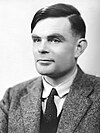
“And if the physicists who understood its potential had not told their generals and politicians, these would certainly have remained in ignorance, unless they were themselves postgraduate physicists, which was very unlikely. Again, Alan Turing's celebrated paper of 1935, which was to provide the foundation of modern computer theory, was originally written as a speculative exploration for mathematical logicians. The war gave him and others the occasion to translate theory into the beginnings of practice for the purpose of code-breaking, but when it appeared nobody except a handful of mathematicians even read, let alone took notice of Turing's paper. Even in his own college this clumsy-looking pale-faced genius, then a junior fellow with a taste for jogging, who posthumously became a sort of icon among homosexuals, was not a figure of any prominence; at least I do not remember him as such.”