Link Copied!
Edith Hamilton Quotes (1867-1963)
Writer
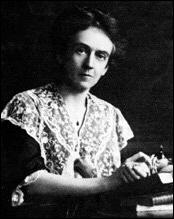
About Edith Hamilton
Edith Hamilton (August 12, 1867 – May 31, 1963) was a classicist and educator who was a writer on mythology. Her most famous books are The Greek Way (1930) and Mythology: Timeless Tales of Gods and Heroes (1942).
Best Edith Hamilton Quotes
Shortest
Earliest
Explore our curated collection of the most famous and impactful Edith Hamilton quotes.

“Theories that go counter to the facts of human nature are foredoomed.”
“[Happiness is] The exercise of vital powers, along lines of excellence, in a life affording them scope.”


“A people’s literature is the great textbook for real knowledge of them. The writings of the day show the quality of the people, as no historical reconstruction can.”

“To rejoice in life, to find the world beautiful and delightful to live in, was a mark of the Greek spirit, which distinguished it from all that had gone before. It is a vital distinction.”
“The anthropologists are busy, indeed, and ready to transport us back into the savage forest, where all human things...have their beginnings; but the seed never explains the flower.”

“Great literature, past or present, is the expression of great knowledge of the human heart; great art is the expression of a solution of the conflict between the demands of the world without and that within...”
“There are few efforts more conducive to humility than that of the translator trying to communicate an incommunicable beauty. Yet, unless we do try, something unique and never surpassed will cease to exist, except in the libraries of a few inquisitive book lovers.”

“Fundamental to everything the [ancient] Greeks achieved was their conviction that good for humanity was possible only if men were free, body, mind, and spirit, and if each man limited his own freedom. A good state or work of art or piece of thinking was possible only through the self-mastery of the free individual, self-government.
- Introduction”
- Introduction”
“He was, first and last, the born fighter, to whom the consciousness of being matched against a great adversary suffices, and who can dispense with success. Life for him was an adventure, perilous indeed, but men are not made for safe havens. The fullness of life is in the hazards of life. And, at the worst, there is that in us which can turn defeat into victory.”

“Through Plato, Aristotle came to believe in God; but Plato never attempted to prove His reality. Aristotle had to do so. Plato contemplated Him; Aristotle produced arguments to demonstrate Him. Plato never defined Him; but Aristotle thought God through logically, and concluded with entire satisfaction to himself that He was the Unmoved Mover.
- Chapter 4, "The School Teachers"”
- Chapter 4, "The School Teachers"”

“The Greeks were the classicists of antiquity, and they are still today the preeminent classicists. What marked all they did, the classic stamp, is a direct simplicity in expressing the significance of actual life. It was there the Greek artists and poets found what they wanted. The unfamiliar and the extraordinary were on the whole repellent to them, and they detested every form of exaggeration. Their desire was to express truthfully what lay at hand, which they saw as beautiful and full of meaning. But that was not the Roman way. When not directly under Greek guidance, the Roman did not perceive beauty in every-day matters, or indeed care to do so. Beauty was unimportant to him. Life in his eyes was a very serious and a very arduous business, and he had no time for what he would have thought of as a mere decoration of it.”
“What the people wanted was a government which would provide a comfortable life for them, and with this as the foremost object ideas of freedom and self-reliance and service to the community were obscured to the point of disappearing. Athens was more and more looked on as a co-operative business, possessed of great wealth, in which all citizens had a right to share... Athens had reached the point of rejecting independence, and the freedom she now wanted was freedom from responsibility. There could be only one result... If men insisted on being free from the burden of a life that was self-dependent and also responsible for the common good, they would cease to be free at all. Responsibility was the price every man must pay for freedom. It was to be had on no other terms.
- Chapter 2, "Athen's Failure"”
- Chapter 2, "Athen's Failure"”

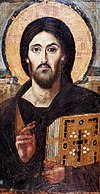
“Even of old the Christian world, so bitterly antagonistic to any ideas not specifically contained in their creeds and dogmas, made an exception in Socrates’ case. They recognized his likeness to Christ. He was the example that a soul could be Christlike, not through grace, but by nature. Erasmus said: "Holy Socrates, pray for us." To know him is a help to knowing Christ, and it is not hard to know him. We can see him quite clearly. Plato, who drew his portrait, could not, of course, keep himself out of it, any more than Christ’s recorders could; but at least magic did not dog Plato’s footsteps, as it did everyone’s footsteps when the Gospels were written. In the fourth century B.C. Greeks had no leaning to marvels. Also in the centuries that followed no one founded a church on Socrates and built up around him a theology and hung creeds and ceremonials upon him. To see what he was, we do not have to brush anything away, except a bit of Plato. We can use him as a stepping stone to Christ, a first aid in realizing what Christ was.”
“The greatest hero of Greece was Hercules. He was a personage of quite another order from the great hero of Athens, Theseus. He was what all Greece, except Athens, most admired. The Athenians were different from the other Greeks, and their hero therefore was different. Theseus was, of course, bravest of the brave, as all heroes are; but, unlike other heroes, he was as compassionate as he was brave, and a man of great intellect as well as great bodily strength. It was natural that the Athenians should have such a hero, because they valued thought and ideas, as no other part of the country did. In Theseus their ideal was embodied. But Hercules embodied what the rest of Greece most valued. His qualities were those the Greeks in general honored and admired. Except for unflinching courage, they were not those that distinguished Theseus. Hercules was the strongest man on earth, and he had the supreme self-confidence magnificent physical strength gives. He considered himself on an equality with the gods.”

Edith Hamilton Quotes by Topic
Find exactly what you are looking for by browsing this categorized list of Edith Hamilton quotes by topic.
Edith Hamilton on Sparta 2 quotes
“The ideal Spartan was plucky, indifferent to hardship and pain, a first-rate athlete. The less he talked or, for that matter, thought, the better. It was for him emphatically not to reason why, but always to do and die. He was a soldier and nothing else. The purpose of the Spartan state was war.”

Edith Hamilton on Cupid and Psyche
Edith Hamilton on Transport
“The anthropologists are busy, indeed, and ready to transport us back into the savage forest, where all human things... have their beginnings; but the seed never explains the flower.”

Edith Hamilton on Heart
“Great literature, past or present, is the expression of great knowledge of the human heart; great art is the expression of a solution of the conflict between the demands of the world without and that within.”

Edith Hamilton on Beauty
“There are few efforts more conducive to humility than that of the translator trying to communicate an incommunicable beauty. Yet, unless we do try, something unique and never surpassed will cease to exist, except in the libraries of a few inquisitive book lovers.”
Edith Hamilton on Decoration
“The Roman did not perceive beauty in every-day matters, or indeed care to do so. Beauty was unimportant to him. Life in his eyes was a very serious and a very arduous business, and he had no time for what he would have thought of as a mere decoration of it...There were imperative tasks to summon men for all that was in them.”
Edith Hamilton on Life
“He was, first and last, the born fighter, to whom the consciousness of being matched against a great adversary suffices and who can dispense with success. Life for him was an adventure, perilous indeed, but men are not made for safe havens. The fullness of life is in the hazards of life. And, at the worst, there is that in us which can turn defeat into victory.”
Edith Hamilton on Greco-Persian Wars
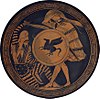
“There has never been a war fought for purer motives than the war against Persia. Marathon and Salamis are still words that "send a ringing challenge down through the generations." Their victories still seem a miracle as they seemed to the men who won them. The mighty were put down from their seats and those of low degree exalted, and for fifty years and more Persia could do nothing to Greece. What followed was one of the most triumphant rebirths of the human spirit in all history, when the bitter differences that divide men were far in the background and freedom was in the air — freedom in the great sense, not only equality before the law, but freedom of thought and speech.”
Edith Hamilton on Freedom
“What the people wanted was a government which would provide a comfortable life for them, and with this as the foremost object ideas of freedom and self-reliance and service to the community were obscured to the point of disappearing. Athens was more and more looked on as a co-operative business possessed of great wealth in which all citizens had a right to share…. Athens had reached the point of rejecting independence, and the freedom she now wanted was freedom from responsibility. There could be only one result…. If men insisted on being free from the burden of a life that was self-dependent and also responsible for the common good, they would cease to be free at all. Responsibility was the price every man must pay for freedom. It was to be had on no other terms.”
What Edith Hamilton Said About Others
Discover personal opinions Edith Hamilton shared regarding contemporaries.
Edith Hamilton on Thucydides 2 quotes
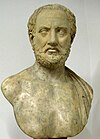
“Power, Thucydides wrote, or its equivalent wealth, created the desire for more power, more wealth. The Athenians and the Spartans fought for one reason — because they were powerful, and therefore were compelled (the words are Thucydides' own) to seek more power. They fought not because they were different — democratic Athens and oligarchical Sparta — but because they were alike. The war had nothing to do with differences in ideas or with considerations of right and wrong. Is democracy right and the rule of the few over the many wrong? To Thucydides the question would have seemed an evasion of the issue. There was no right power. Power, whoever wielded it, was evil, the corrupter of men.”
Edith Hamilton on Theseus
“Theseus was, of course, bravest of the brave, as all heroes are; but, unlike other heroes, he was as compassionate as he was brave, and a man of great intellect as well as great bodily strength. It was natural that the Athenians should have such a hero, because they valued thought and ideas, as no other part of the country did. In Theseus their ideal was embodied.”
Edith Hamilton on Pindar
“Pindar is austere. Splendor can be cold, and Pindar glitters but never warms. He is hard, severe, passionless, remote, with a kind of haughty magnificence. He never steps down from his frigid eminence. Aristocrats did not stoop to lies, and his pen would never deviate from the strict truth in praising any triumph. He would glorify a victor so far as he was really glorious, but no further. As he himself puts it, he would not tell "a tale decked out with dazzling lies against the worth of truth." Only what was in actual fact nobly praiseworthy would be praised by him.”
About Edith Hamilton
Edith Hamilton (August 12, 1867 – May 31, 1963) was a classicist and educator who was a writer on mythology. Her most famous books are The Greek Way (1930) and Mythology: Timeless Tales of Gods and Heroes (1942).
QuotesCosmos Cross-Civilizational Archive
Explore Related Wisdom Pillars, Worldviews & Canonical Works
Discover how humanity's greatest philosophers, sacred scriptures, and literary masterpieces address the core questions of existence.
30 Wisdom Pillars
22 Worldviews & Traditions
Canonical Books & Scriptures